India’s Path to a $30 Trillion Economy by 2050: Strategic Drivers and Policy Imperatives
Introduction
India stands at a pivotal juncture in its economic trajectory, with projections suggesting it could emerge as a $30 trillion economy by 2050.
This vision, articulated by government bodies like NITI Aayog and industry leaders such as Gautam Adani, hinges on sustained GDP growth rates of 7–10% annually, structural reforms, and strategic investments in infrastructure, manufacturing, and human capital.
The transformation from a $3.3 trillion economy in 2024 to a global powerhouse requires addressing systemic challenges—including escaping the middle-income trap, formalizing enterprises, and balancing growth with sustainability—while leveraging demographic advantages and geopolitical neutrality.
Structural Reforms and Economic Modernization
Policy Continuity and Governance Stability
A stable political environment under Prime Minister Narendra Modi’s leadership has been instrumental in driving reforms such as the Goods and Services Tax (GST) and the Insolvency and Bankruptcy Code (IBC).
These measures have streamlined tax compliance, reduced fiscal fragmentation, and improved the ease of doing business.
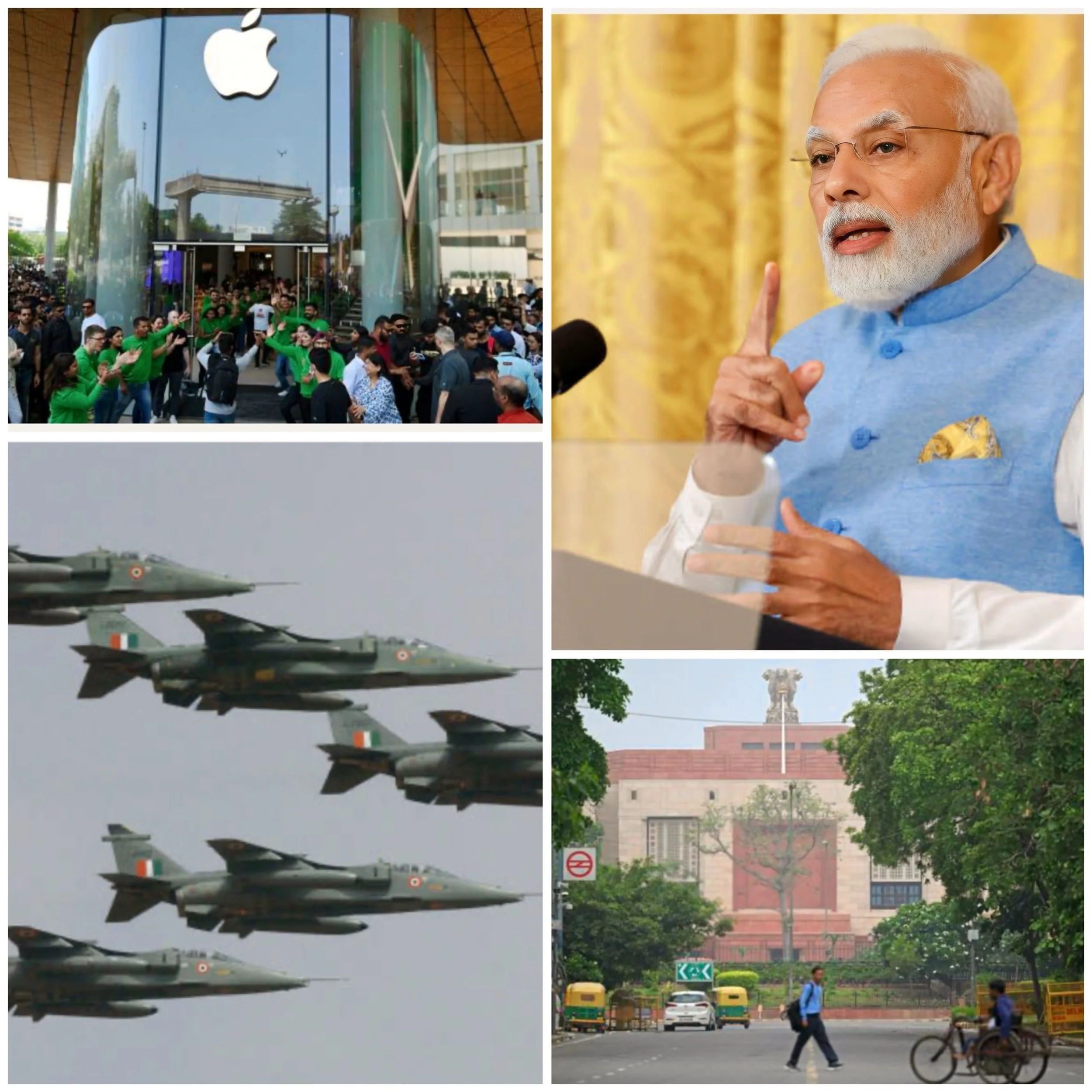
The Modi administration’s focus on “Make in India” has evolved from import substitution to a global supply chain integration strategy, attracting multinational corporations like Apple, which now manufactures 14% of its iPhones in India.
By 2025, this share is projected to rise to 25%, reflecting India’s growing appeal as a manufacturing hub.
Fiscal Consolidation and Tax Rationalization
The government’s commitment to fiscal prudence is evident in its 5.1% fiscal deficit target for FY2025.
Corporate tax reductions—from 30% to 25% for existing firms and 15% for new manufacturing units—have spurred private investments, particularly in technology and pharmaceuticals.
Additionally, plans to merge Foreign Portfolio Investment (FPI) and Foreign Direct Investment (FDI) regulations aim to simplify capital inflows, addressing the recent decline in FDI from $85 billion (2022) to $71 billion (2024).
Demographic Dividend and Labor Market Transformation
Harnessing a Youthful Workforce
With a median age of 28 and a working-age population projected to reach 1.12 billion by 2047, India’s demographic dividend offers unparalleled potential.
However, translating this into economic gains requires creating 90 million non-farm jobs by 2030. The shift from agriculture—which employs 50% of the workforce but contributes only 17% to GDP—to manufacturing and services is critical.
By 2050, the manufacturing sector is expected to employ 20% of workers, up from 11% in 2024, driven by initiatives like the Production-Linked Incentive (PLI) Scheme.
Skill Development and Education Overhaul
The National Education Policy (NEP) 2020 emphasizes vocational training and digital literacy to align education with industry needs.
Programs like Skill India aim to train 400 million workers by 2030, targeting sectors such as renewable energy, robotics, and artificial intelligence.
Bridging the rural-urban skills gap remains a challenge, with only 5% of India’s workforce formally skilled compared to 75% in Germany.
Infrastructure-Led Growth and Urbanization
Mega Projects and Connectivity Enhancements
India’s $1.5 trillion infrastructure investment plan (2021–2030) focuses on expanding highways, railways, and digital networks.
The PM Gati Shakti Initiative, integrating 16 ministries for multimodal connectivity, aims to reduce logistics costs from 14% to 8% of GDP by 2030.
Notable projects include the Delhi-Mumbai Industrial Corridor (DMIC) and the Bharatmala Pariyojana, which will add 34,800 km of highways by 2025.
Urbanization and Smart Cities
By 2050, India is expected to have 200+ cities with populations exceeding 1 million, up from 45 in 2024.
The Smart Cities Mission, with a $30 billion outlay, prioritizes sustainable urban planning, public transit, and affordable housing.
However, urban infrastructure must address challenges like air pollution—responsible for 1.67 million deaths annually—and water scarcity, which affects 600 million people.
Industrial Competitiveness and Export Diversification
Manufacturing Renaissance
The Make in India 2.0 strategy targets increasing the industrial sector’s GDP contribution from 17% to 25% by 2025.
Electronics, pharmaceuticals, and renewable energy are key focus areas.
For instance, India’s solar module production capacity is set to rise from 20 GW to 100 GW by 2030, positioning it as a global leader in green manufacturing.
The PLI Scheme has already attracted $55 billion in investments across 14 sectors, including semiconductors and drones.
Export-Led Growth and Global Integration
India’s exports are projected to grow from $776 billion (2024) to $2.5 trillion by 2030, driven by Free Trade Agreements (FTAs) with the EU, UK, and GCC nations.
The government’s “China+1” strategy has redirected $15 billion in FDI from tech and automotive firms seeking supply chain diversification.
However, non-tariff barriers and low R&D spending (0.7% of GDP) hinder competitiveness compared to South Korea (4.8%) and Israel (5.4%).
Financial Sector Reforms and Capital Mobilization
Banking Sector Strengthening
The Insolvency and Bankruptcy Code (IBC) has resolved $130 billion in stressed assets since 2016, improving banking sector NPA ratios from 11.2% (2018) to 3.9% (2024).
The merger of public sector banks from 27 to 12 has enhanced operational efficiency, while the Bad Bank initiative aims to absorb $40 billion in toxic assets by 2025.
Capital Markets and Innovation
India’s stock market capitalization is projected to surge from $4.5 trillion (2024) to $40 trillion by 2050, driven by retail investor participation and fintech innovations like UPI, which processes 46% of global digital transactions.
The International Financial Services Centre (IFSC) at GIFT City has attracted $50 billion in offshore investments, positioning India as a rival to Singapore and Dubai.
Sustainability and Climate Resilience
Net-Zero Transition and Green Energy
India’s pledge to achieve net-zero emissions by 2070 requires $13 trillion in investments, with renewable energy capacity set to rise from 180 GW (2024) to 500 GW by 2030.
The National Green Hydrogen Mission, backed by $2.3 billion, aims to produce 5 MMT annually by 2030, reducing LNG imports by $15 billion.
However, coal still accounts for 55% of energy needs, necessitating carbon capture technologies and grid modernization.
Circular Economy and Resource Efficiency
Initiatives like the Extended Producer Responsibility (EPR) framework target recycling 60% of plastic waste by 2030, while the National Mission on Sustainable
Agriculture promotes precision farming to reduce water usage by 30%.
Conclusion
Policy Imperatives for Inclusive Growth
Achieving the $30 trillion target demands addressing income inequality (Gini coefficient: 35.7 in 2024), bridging the rural-urban divide, and ensuring women’s labor force participation rises from 23% to 50% by 2047. Key priorities include:
Land and Labor Reforms
Simplifying land acquisition and implementing the Industrial Relations Code to enhance labor flexibility.
Healthcare Access
Expanding Ayushman Bharat to cover 70% of the population by 2030, reducing out-of-pocket expenses from 48% to 25%.
Agricultural Modernization
Doubling farmer incomes through FPOs and agro-processing corridors.
India’s ascent hinges on balancing ambition with equity, ensuring growth benefits all 1.6 billion citizens.
As Finance Minister Nirmala Sitharaman noted, the journey to $30 trillion is not just about scale but about creating a “Viksit Bharat”—a developed India where prosperity is shared and sustainable.