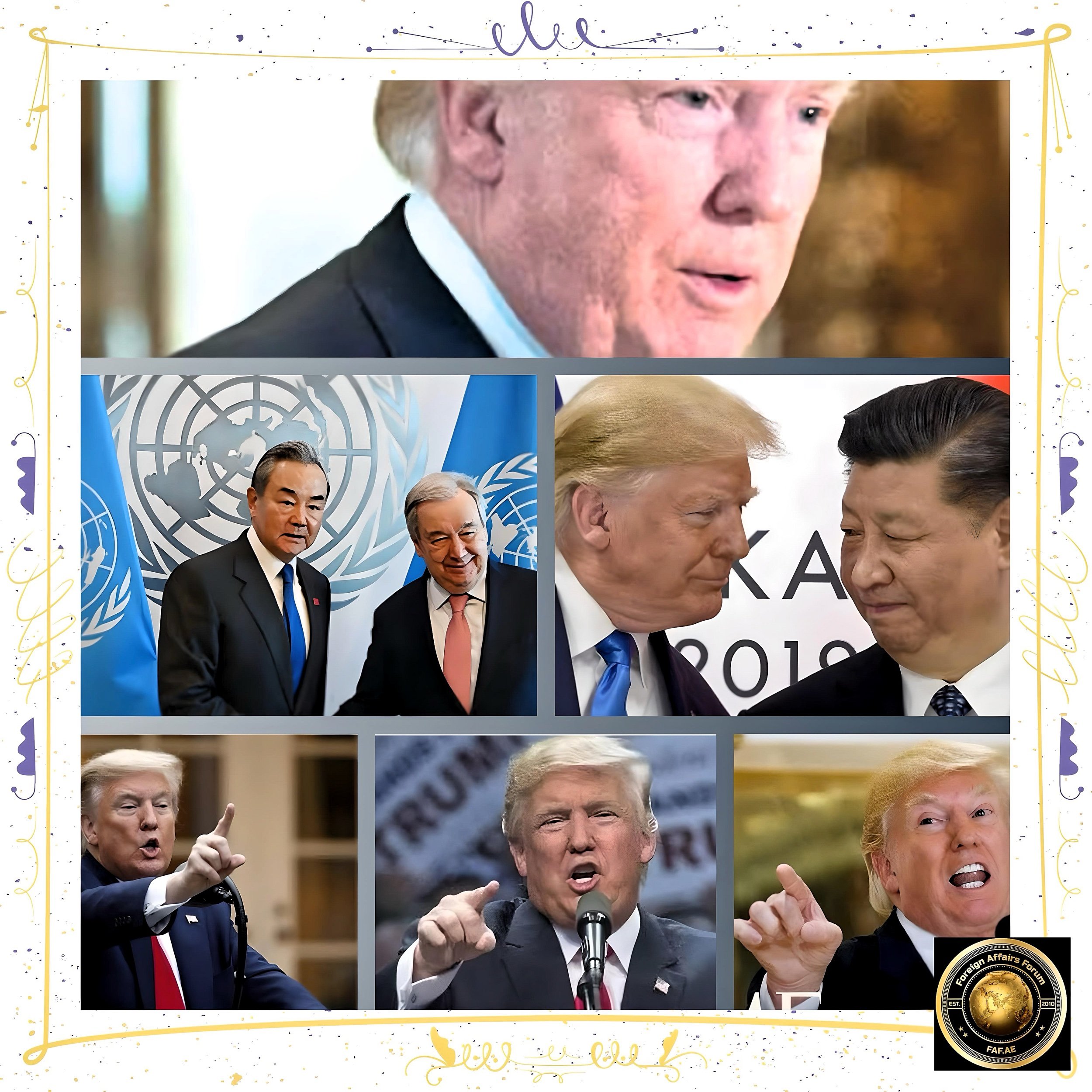
Trump’s UN Funding Cuts: A Strategic Opening for China’s Multilateral Ascendancy
Introduction
The Trump administration’s proposed drastic reductions to United States funding for the United Nations represent more than budgetary constraint—they constitute a fundamental reshaping of global governance that positions China to dramatically expand its influence within the world’s premier multilateral institution.
These cuts, which target everything from peacekeeping operations to humanitarian aid programs, come when China has systematically increased its contributions and strategic positioning within the UN system, creating conditions for what could be the most significant shift in international institutional power since the UN’s founding.
The convergence of American withdrawal and Chinese advancement threatens to transform multilateralism from a Western-led enterprise into one increasingly shaped by authoritarian values and priorities.
The Scope and Scale of American Divestment
Per FAF, the Trump administration’s approach to UN funding represents an unprecedented assault on America’s traditional leadership role within the multilateral system.
The administration has proposed eliminating funding for UN peacekeeping operations, citing “recent failures in peacekeeping” in missions such as MINUSMA in Mali, UNIFIL in Lebanon, and MONUSCO in the Democratic Republic of Congo.
This represents a complete withdrawal from the United States’ 27% contribution to the $5.6 billion peacekeeping budget, which funds nine active missions across conflict zones worldwide.
Beyond peacekeeping, the cuts extend to the UN’s regular budget, where the United States traditionally contributes 22% of the $3.7 billion core budget.
The administration’s budget proposal includes zero funding for the UN's Regular Budget, meaning the United States would effectively stop paying its dues.
If maintained, this could eventually result in the United States losing its voting rights in the UN General Assembly, a dramatic consequence that would fundamentally alter America’s position within the institution.
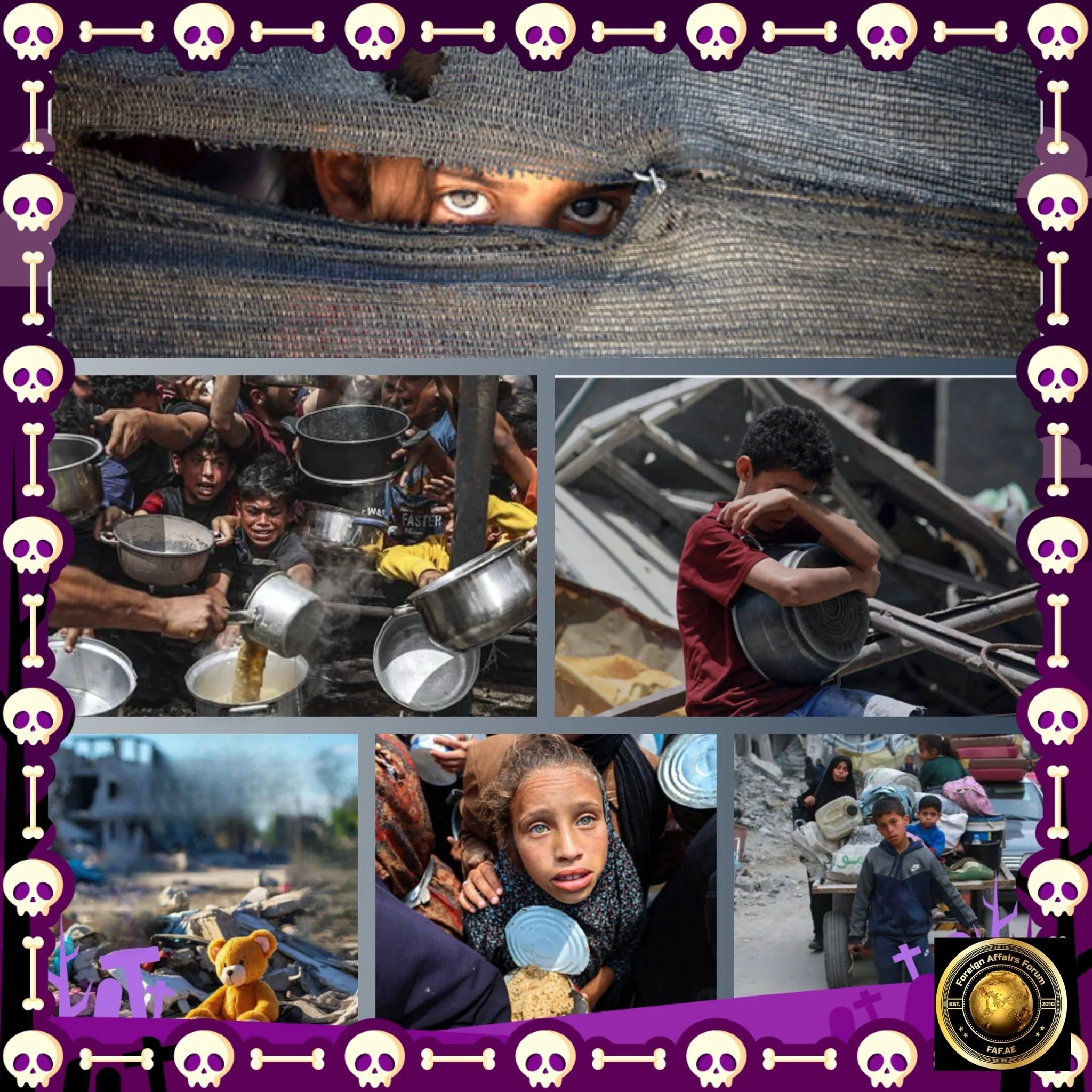
The humanitarian implications are equally severe. USAID cuts have eliminated $529 million in lifesaving awards across 49 programs, including $6 million for health coordination in Gaza following a polio outbreak and $500 million from UNAIDS for HIV prevention and treatment programs globally.
The World Food Program, which received 46% of its funding from the United States in 2024, is expected to cut up to 30% of its staff. One official calls these “the most massive” cuts the agency has seen in 25 years.
These reductions will force the UN to make “impossibly painful decisions” as budget cuts have “immediate and often deadly impact on the world’s most vulnerable populations.”
The cumulative effect represents an 83% overall funding cut when rescissions and eliminations are included, fundamentally undermining America’s ability to shape global governance through multilateral institutions.
As one analysis notes, in 2023, the United States provided $13 billion to UN organizations—just 0.2 percent of the federal budget—making this level of cuts a strategic miscalculation that sacrifices outsized global influence for minimal budgetary savings.
China’s Strategic Positioning and Growing Influence
While the United States retreats from multilateral engagement, China has systematically positioned itself to fill the vacuum through a comprehensive strategy of financial contribution, personnel placement, and normative influence.
China’s financial contributions to the UN have grown exponentially, rising from just 3.04% of the regular budget in 2010 to 13.13% in 2020. It has also become the second-largest contributor to peacekeeping operations.
This dramatic increase reflects China’s transformation from a reluctant participant in international institutions to an assertive power seeking to reshape global governance according to its priorities.
China’s approach to UN influence operates across multiple dimensions simultaneously. Financially, Beijing has moved beyond simply meeting its assessed contributions to strategically deploying voluntary funding through initiatives like the China-UN Peace and Development Fund, which committed $200 million over ten years to projects aligned with Chinese interests.
This voluntary funding allows China to shape specific UN programs and priorities while building support coalitions among recipient nations.
Personnel placement represents another crucial element of China’s strategy. China currently leads more UN-specialized agencies than any other state, reflecting what Chinese officials describe as a “natural process” given that China has “the right candidates” for these leadership positions.
This systematic placement of Chinese nationals and proxies in key UN positions enables Beijing to influence institutional culture, suppress discussions on sensitive topics, and manipulate reports to align with Chinese priorities.
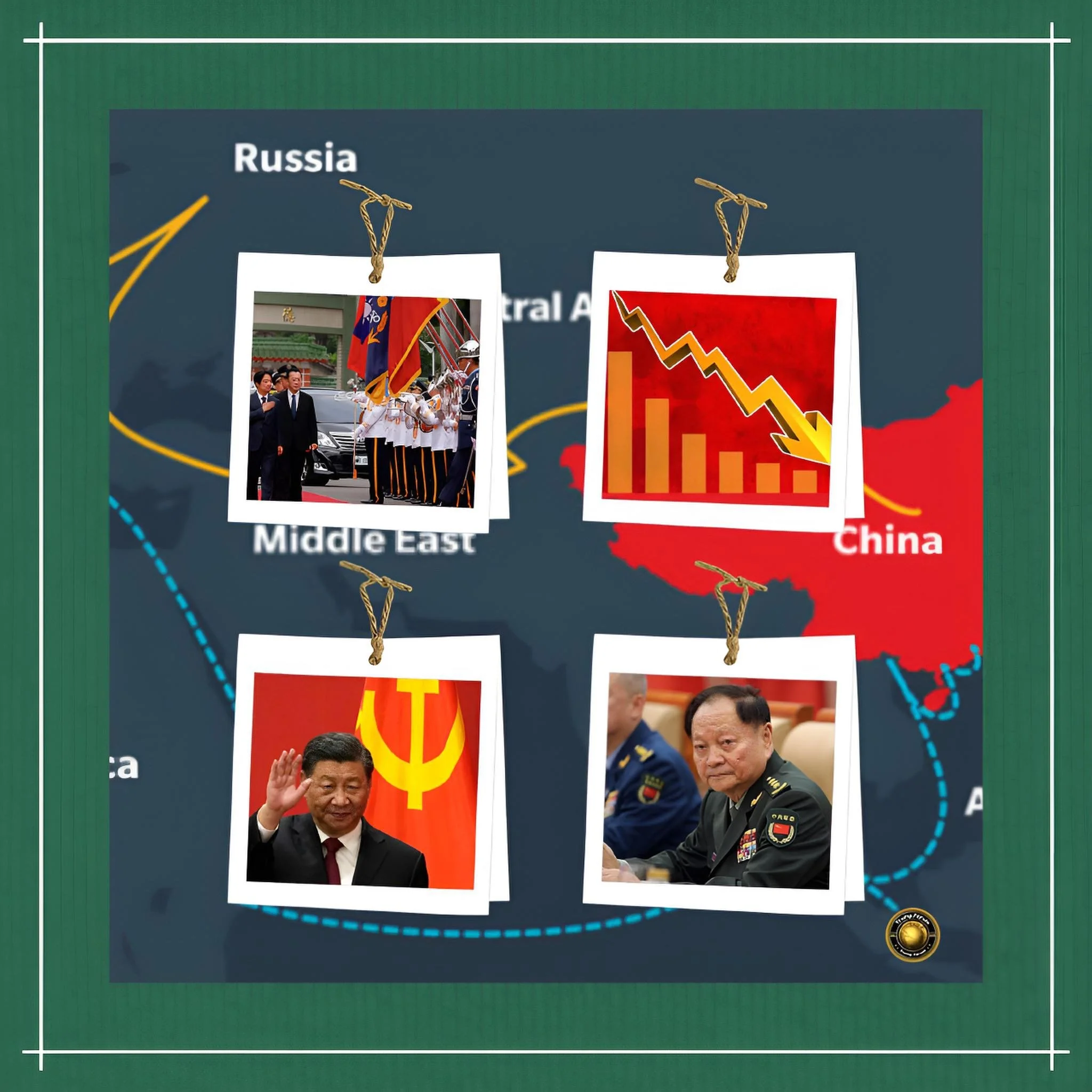
Examples include the restriction of Taiwan’s participation in UN activities, the temporary removal of submissions from Hong Kong, Tibetan, and Uyghur groups, and the systematic replacement of Tibet’s name with “Xizang” throughout UN documentation.
Perhaps most significantly, China has evolved from a defensive “snapping turtle” approach to an assertive “wolf warrior” foreign policy within the UN system.
This transformation is evident in China’s increased use of its Security Council veto power. Over the past decade, China has cast ten vetoes regarding the Syria crisis alone, compared to just 14 total vetoes since joining the UN in 1971.
China’s growing assertiveness reflects its confidence in using existing UN structures and rules to advance its “shared future” global governance vision, emphasizing state sovereignty over universal human rights principles.
Operational Consequences and Institutional Vulnerability
The immediate operational consequences of American funding cuts force the UN into what Secretary-General António Guterres describes as a period of “significant uncertainty and unpredictability” requiring painful structural adjustments.
Internal UN memos obtained by news organizations reveal the scope of institutional reorganization, including plans to relocate personnel from expensive cities like New York and Geneva to lower-cost locations, consolidate overlapping agencies, and eliminate senior positions.
The UN estimates it faces a potential 20% budget reduction for 2026, forcing agencies like UNICEF to contemplate relocating significant portions of their workforce from New York to Valencia, Spain.
These cuts are affecting the UN’s core missions across multiple domains.
The World Food Program’s 40% financial reduction will force the elimination of life-saving aid programs in Afghanistan and Yemen. In comparison, the UN High Commissioner for Refugees plans to slash costs by 30% and reduce senior positions by 50%.
The Office for the Coordination of Humanitarian Affairs has announced plans to cut 20% of its staff, severely limiting the UN’s capacity to respond to humanitarian emergencies in Ukraine, the Democratic Republic of Congo, Haiti, Myanmar, and Palestinian territories.
The humanitarian impact extends beyond immediate program cuts to longer-term institutional capacity.
Disaster response programs designed to enhance countries’ abilities to forecast natural disasters and build resilience against climate-related events have been significantly reduced, particularly in the Pacific region, where the United States strategically competes with China.
This reduction in American-funded preventive capacity creates opportunities for Chinese initiatives like the Belt and Road Initiative to fill infrastructure and development gaps, often leaving recipient countries indebted while enhancing Chinese influence.
The timing of these cuts is particularly damaging given the UN’s existing financial vulnerabilities.
The organization was already facing a liquidity crisis due to delayed payments from member states, with the United States owing nearly $2.7 billion in outstanding payments to regular and peacekeeping budgets before the new cuts were announced.
The withdrawal of American funding, combined with reduced contributions from traditional donors like the United Kingdom, Germany, and other European nations facing their budget constraints, creates what analysts describe as an “unbridgeable gap in UN funding and global need.”
Geopolitical Implications and Strategic Realignment
The reduction in American UN funding creates profound geopolitical implications that extend beyond budgetary considerations to fundamental questions of global governance and institutional legitimacy.
As the United States withdraws from its traditional leadership role, the resulting vacuum enables China and other authoritarian powers to reshape multilateral norms according to their priorities.
This transformation is already visible in China’s systematic efforts to dilute human rights norms, suppress discussions of democratic governance, and promote state-centric approaches that prioritize sovereignty over universal values.
The strategic communications advantage American withdrawal provides to China cannot be overstated.
Chinese officials and media outlets are already highlighting the “untrustworthiness of Americans and abandonment by the West” as evidence that developing nations should look to China for reliable partnerships rather than Western powers.
This narrative is particularly compelling in regions like Cambodia and other East Asian and Pacific nations. China has already drawn smaller countries closer to its orbit through stable trade practices and development assistance.
China’s approach to filling the American vacuum is notably sophisticated. It avoids directly replacing American funding while maximizing strategic advantage.
Rather than increasing financial contributions proportionally, China focuses on “unfunded initiatives like the Global Civilization Initiative and Belt and Road projects” that enhance Chinese influence without requiring massive budget outlays.
Small projects and commitments, “however meager and with strings attached, can easily be touted as filling in the gap left by the United States.”
The institutional consequences extend to the UN’s peace and security functions, where American funding cuts undermine the organization’s capacity to prevent and respond to conflicts.
Eliminating peacekeeping funding is particularly damaging given that these operations cost significantly less than unilateral American military interventions while providing multilateral legitimacy for conflict resolution efforts.
The collapse or curtailment of missions in South Sudan, Lebanon, and the Democratic Republic of Congo could create security vacuums that benefit non-state actors and regional powers aligned with Chinese interests.
Perhaps most concerning is the demonstration effect of American withdrawal on other democratic powers.
As traditional allies observe the United States abandoning multilateral leadership, they may conclude that investment in international institutions provides diminishing returns, leading to further erosion of Western influence within global governance structures.
This creates a self-reinforcing cycle in which American withdrawal enables Chinese advancement, making multilateral institutions less attractive to democratic powers and accelerating authoritarian influence.
China’s Strategic Opportunities and Authoritarian Advantage
The American withdrawal from UN funding creates multiple strategic opportunities for China to advance its long-term goal of reshaping global governance according to authoritarian principles.
Most immediately, China can position itself as a reliable alternative to American leadership without necessarily increasing its financial contributions proportionally.
By maintaining steady funding while the United States retreats, China’s relative influence within UN institutions automatically increases, providing enhanced leverage over institutional priorities and personnel decisions.
China’s systematic placement of nationals in key UN positions becomes even more valuable as American influence wanes.
Reduced American funding means diminished American personnel and a decreased ability to compete for leadership positions within UN agencies.
This creates opportunities for China to expand its institutional presence further while facing less resistance from traditional Western powers.
The correlation between financial contributions and hiring decisions within the UN system means sustained Chinese funding. In contrast, the American contributions will likely result in significantly increased Chinese representation throughout the organization.
The normative implications of this shift extend beyond simple institutional control to fundamental questions about the values that guide international cooperation.
China’s “shared future” vision of global governance explicitly challenges the liberal international order’s emphasis on universal human rights, democratic governance, and individual freedoms.
As Chinese influence within the UN increases, these alternative values will likely become more prominent in UN documentation, programming, and institutional culture.
China’s approach to multilateralism differs fundamentally from the American model in ways that provide strategic advantages during periods of financial constraint.
While American engagement has traditionally emphasized conditional assistance tied to governance reforms and human rights improvements, China offers “no-strings-attached” cooperation that appeals to many developing nations.
This approach allows China to build support coalitions within the UN system without requiring recipient nations to adopt democratic reforms or improve human rights practices.
The technological dimensions of China’s UN strategy also benefit from American withdrawal.
As UN agencies face budget constraints, they become more receptive to Chinese offers of technological assistance, digital infrastructure, and surveillance capabilities.
This creates opportunities for China to embed its technological standards and capabilities within international institutions, potentially giving Beijing significant influence over global digital governance and data flows.
Furthermore, China’s patient, long-term approach to institutional influence contrasts sharply with the volatility of American engagement under successive administrations.
While American funding and priorities have fluctuated significantly based on domestic political considerations, China has maintained consistent, gradual increases in UN engagement over multiple decades.
This consistency allows China to build sustained relationships and influence that survive temporary political changes, creating cumulative advantages over time.
Conclusion
The Trump administration’s drastic cuts to United Nations funding represent a strategic miscalculation that sacrifices American global influence for minimal budgetary savings while creating unprecedented opportunities for Chinese institutional advancement.
The convergence of American withdrawal and Chinese ascendancy within multilateral institutions threatens to fundamentally reshape global governance from a system based on liberal democratic values to one increasingly influenced by authoritarian priorities.
This transformation extends beyond simple financial calculations to questions of institutional leadership, normative influence, and the future direction of international cooperation.
The operational consequences of these cuts—massive reductions in humanitarian assistance, eliminated peacekeeping operations, and gutted UN capacity for crisis response—create immediate human costs while undermining America’s soft power and global leadership position.
Meanwhile, China’s systematic strategy of personnel placement, targeted funding, and normative influence positions Beijing to fill the vacuum without proportional increases in financial commitment.
The result will likely be a UN system that gradually becomes more responsive to Chinese interests and less aligned with Western democratic values.
The success of American efforts to counter Chinese influence within international institutions will depend on whether policymakers recognize that modest investments in multilateral engagement provide outsized returns in global impact.
The alternative—continued withdrawal from international institutions—risks accelerating the transition of the global governance system into one that operates increasingly on China’s terms, with profound implications for democracy, human rights, and international stability worldwide.