Trump Administration’s Crackdown on International Students: Implications for US Higher Education and Global Academic Relations
Introduction
Yes, America is changing. America has changed.
The Trump administration’s aggressive targeting of international students represents one of the most significant challenges to American higher education in decades, with far-reaching consequences for universities, students, and the United States’ position as a global education leader.
Recent federal actions, including the revocation of Harvard University’s certification to enroll international students and mass cancellations of student visa statuses, signal a dramatic shift in immigration policy that threatens to alter American academia's landscape fundamentally.
FAF, Economy.Inc review has pointed out that an unprecedented crackdown has sparked legal challenges, prompted international students to reconsider studying in the United States, and created opportunities for competitor nations to position themselves as more welcoming alternatives for global academic talent.
Political.Buzz has noted that the move by Trump's administration is politically driven under pressure by the American Jewish lobby.
Scope and Nature of Federal Immigration Actions
Mass Visa Revocations and Database Removals
The Trump administration has implemented sweeping measures targeting international students through multiple federal agencies.
The Department of Homeland Security began systematically removing thousands of international students from the Student and Exchange Visitor Information System (SEVIS) database, citing a crackdown on students with criminal records.
However, after cross-referencing student names with the National Crime Information Center, investigations revealed that many of these terminations were based on minor infractions such as unpaid parking tickets, speeding violations, and other trivial offenses.
The process involved deploying 10 to 20 staff members to check the names of approximately 1.1 million international students against the FBI-managed criminal database.
The arbitrary nature of these removals became apparent when immigration attorneys and policy experts discovered that students whose cases had been dismissed or who were never convicted still found their statuses revoked.
This systematic approach has affected over 1,800 international students across at least 32 states, far exceeding Secretary of State Marco Rubio’s initial estimate of 300 students.
The terminations have particularly targeted individuals involved in political activism, especially those supporting Palestinian causes, with some students detained by plainclothes federal officers for expressing pro-Palestinian views.
The Harvard University Case Study
The most high-profile example of the administration’s aggressive stance occurred when the Department of Homeland Security revoked Harvard University’s Student and Exchange Visitor Program certification, effectively barring the institution from enrolling new international students.
Homeland Security Secretary Kristi Noem justified this action by accusing Harvard of failing to comply with federal requests for student records and of “perpetuating an unsafe campus environment that is hostile to Jewish students, promotes pro-Hamas sympathies, and employs racist diversity, equity, and inclusion policies.”
The decision affects nearly 6,800 international students at Harvard, representing 27.2% of the university’s total enrollment.
The revocation requires current international students to transfer to other institutions or risk losing their legal status in the United States.
The administration has given Harvard 72 hours to comply with demands for disciplinary records, audio and video recordings of protest activities, and other documentation related to international student conduct.
This represents an unprecedented use of federal authority over a private institution’s enrollment policies, with legal experts noting that previous SEVIS revocations typically involved administrative issues rather than politically motivated decisions.
Columbia University Case Story
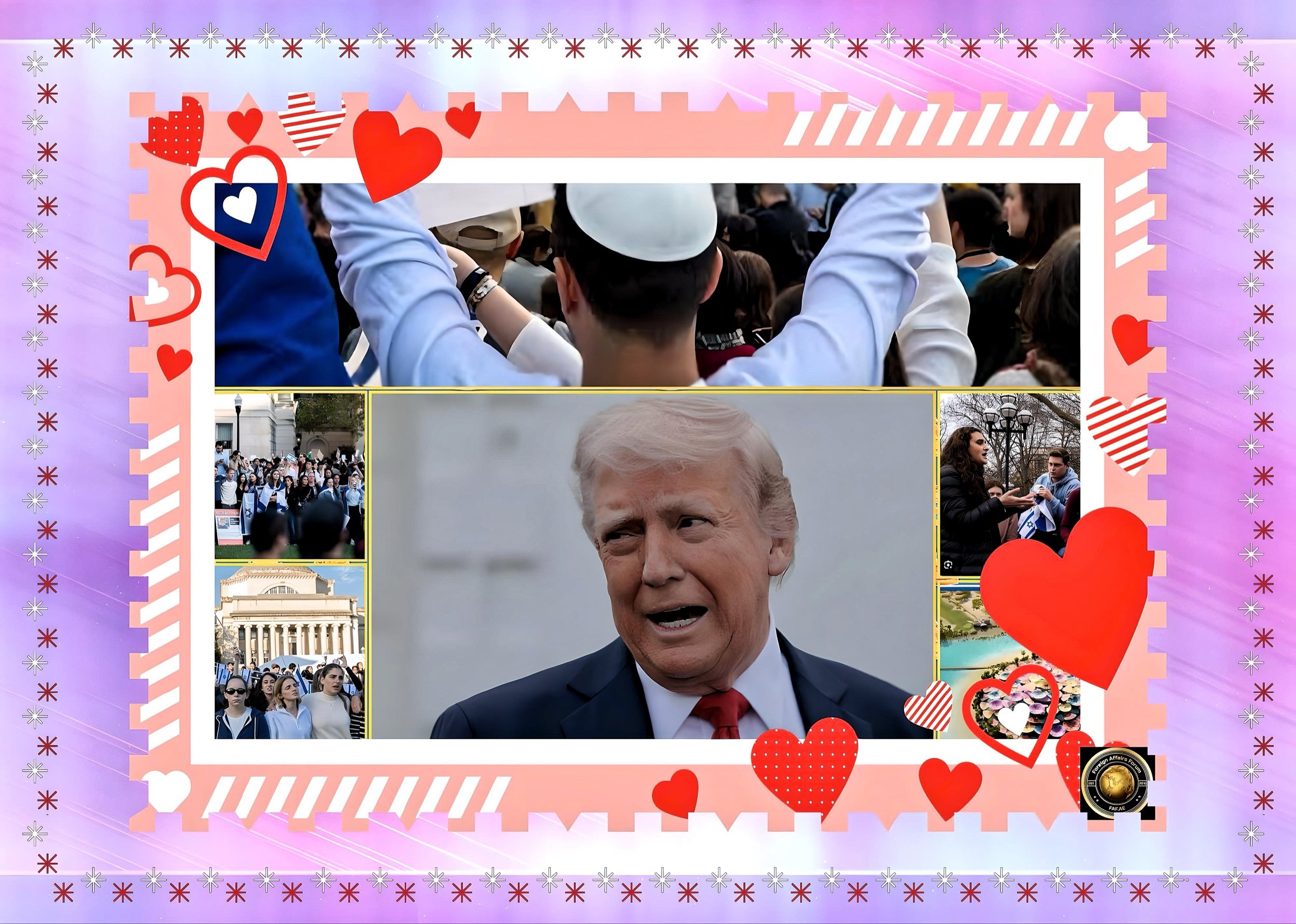
In 2025, the Trump administration accused Columbia University of violating federal civil rights law by failing to adequately protect Jewish students from harassment and antisemitic incidents on campus.
This case became a focal point in a broader campaign by the administration to pressure elite universities over their handling of campus protests, ideological bias, and student safety, particularly in the wake of the Israel-Hamas war that began in October 2023.
Key Findings and Government Actions
The Department of Health and Human Services (HHS), through its Office for Civil Rights, concluded that Columbia University acted with “deliberate indifference” toward harassment of Jewish students, violating Title VI of the Civil Rights Act of 1964.
The investigation documented a “hostile environment” for Jewish students over 19 months, including incidents of vandalism (such as swastikas), antisemitic harassment, and disruptions to students’ education and well-being.
Columbia was criticized for not establishing effective reporting and remediation mechanisms for antisemitism until the summer of 2024 and for failing to enforce its protests and student conduct policies.
In response, the Trump administration had already cut more than $400 million in federal grants and contracts to Columbia earlier in 2025, citing the university’s inadequate response to complaints of antisemitism.
Columbia University’s Response
Columbia acknowledged the findings as part of ongoing discussions with the government and reiterated its commitment to combating antisemitism and all forms of harassment and discrimination on campus.
The university announced policy changes, including revising its approach to campus protests, increasing security protocols, and adjusting its Middle Eastern studies program to align with federal requirements.
Columbia has stated it will work with the Departments of Health and Human Services and Education to address the violations. However, it has resisted any agreement allowing the government to dictate academic content, research, or hiring decisions.
Wider Context and Impact
The Trump administration’s actions against Columbia were part of a larger effort targeting elite universities, including Harvard and Yale, with threats of funding cuts and increased scrutiny over campus climate, admissions, and perceived ideological bias.
The administration’s approach has led to significant changes in university policies and has intensified debates about free speech, academic independence, and the federal government’s role in higher education governance.
The FAF analysis draws a connection to the Putin administration, highlighting how political considerations have permeated various political and socioeconomic issues.
This suggests that Trump may be pursuing a similar approach to his political strategy.
Related Legal and Student Issues
The case also intersected with high-profile student protests and immigration actions, such as the arrest and potential deportation of Mahmoud Khalil, a leader of pro-Palestine demonstrations at Columbia.
Khalil and other students have challenged the administration’s actions as infringements on free speech and due process.
The administration’s aggressive posture has prompted legal challenges and ongoing negotiations between universities and federal agencies regarding compliance and the scope of federal oversight.
The Columbia University case under the Trump administration highlights the intersection of campus climate, federal civil rights enforcement, and political pressure on higher education.
It underscores ongoing tensions over how universities respond to antisemitism, manage protests, and balance academic freedom with government oversight.
Economic issue laundering over Columbia University
Columbia University has recently faced significant economic and legal scrutiny, primarily centered on two major areas: federal funding threats and cuts due to alleged civil rights violations and past incidents of financial fraud within the institution.
Federal Funding Cuts and Civil Rights Violations
In 2025, Columbia University came under federal investigation for its handling of harassment and discrimination against Jewish students, particularly in the wake of increased campus tensions following the October 2023 Israel-Hamas conflict.
The Department of Health and Human Services (HHS) concluded that Columbia violated federal civil rights laws by showing “deliberate indifference” to harassment of Jewish students, failing to set up effective reporting systems, and not adhering to its policies for addressing such complaints.
As a result, the Trump administration suspended more than $400 million in federal grants and contracts to Columbia, directly impacting research funding and leading to staff cuts in affected departments.
The administration also threatened further reviews and potential stop-work orders on additional contracts totaling over $5 billion in federal commitments.
These funding threats are part of a broader campaign by the Trump administration targeting elite universities, pressuring them to change their approaches to campus protests, admissions, and academic oversight while also addressing longstanding conservative concerns about ideological bias.
In response, Columbia announced new policies, including stricter protest regulations, enhanced campus policing, and reassessing admissions and curriculum—especially in Middle Eastern studies. The university has also committed to improving intellectual diversity and maintaining institutional neutrality.
Financial Fraud and Money Laundering Allegations
In a separate incident from 2018, Columbia University’s Teachers College was embroiled in a kickback scheme involving a former financial aid director and three students.
Melanie Williams-Bethea's administrator was accused of funneling over $800,000 in stipends to herself and the students through inflated cost-of-attendance forms, even when the students were not enrolled.
The students then paid her kickbacks totaling more than $350,000.
The fraud was uncovered during an internal review, and the college reported the findings to federal and state authorities. All parties involved were charged with conspiracy, wire fraud, bribery, and student aid fraud.
Additionally, Columbia faculty and programs have been involved in analyzing and exposing large-scale financial frauds, such as the 1MDB scandal. Still, these are academic or journalistic endeavors, not direct allegations against the university.
Columbia University is facing acute economic challenges due to federal funding suspensions and ongoing reviews linked to its handling of antisemitism and campus unrest.
While the university has pledged reforms and is negotiating with federal agencies, the situation remains fluid, with significant financial and reputational risks.
Past incidents of internal financial fraud have also highlighted vulnerabilities in administrative oversight, though these were addressed through legal action and institutional reforms.
Financial and Academic Impact on Universities
Economic Consequences for Higher Education
According to NAFSA, the Association of International Educators, international students contribute substantially to the American economy, generating over $43 billion in revenue during the 2023-24 academic year.
These students typically pay two to three times domestic students' tuition, effectively subsidizing other campus programs and supporting university budgets.
The potential loss of international enrollment threatens significant financial consequences for institutions nationwide, particularly those heavily dependent on international student revenue.
Harvard’s case exemplifies the broader financial risks facing universities.
Under Trump's second term, the institution has already experienced over $2.7 billion in federal funding freezes, with the administration implementing three rounds of funding cuts totaling more than $2.6 billion.
The loss of international student tuition revenue compounds these financial pressures, as Harvard’s 6,793 international students represent a substantial portion of the university’s income stream.
University President Alan Garber has already begun mobilizing alum support and creating new funding mechanisms to address these financial gaps.
The ripple effects extend beyond individual institutions to the broader higher education sector.
Universities that rely heavily on international students for graduate programs, particularly in STEM fields, face potential disruptions to research activities and academic programs.
International students represent 71% of full-time graduate students in computer and information sciences and 73% in electrical engineering at U.S. universities, making them crucial to America’s technological competitiveness and artificial intelligence research.
Local Economies
The loss of international students would create a significant financial vacuum in university towns and cities.
For example, Harvard’s 6,800 international students (27% of its enrollment) bring tens of millions of dollars annually to Cambridge, Massachusetts, supporting real estate, retail, restaurants, and research labs.
University Revenue: International students typically pay full tuition and receive little to no federal aid, effectively subsidizing domestic students and helping maintain university financial stability.
The crackdown threatens elite universities, public institutions, and smaller colleges that rely on foreign student tuition to balance budgets.
Broader Consequences
Export Status at Risk
Higher education is treated as an export because it brings foreign capital into the U.S.
Losing international students undermines this key sector, and if the policy expands beyond Harvard, losses could stretch into the tens of billions.
Long-Term Competitiveness
Critics warn that reducing international student enrollment will weaken America’s global competitiveness, research output, and the vibrancy of its academic communities.
Suppose Trump’s orders to revoke student visas are expanded beyond Harvard.
In that case, the U.S. risks losing tens of billions of dollars annually, thousands of jobs, and its global leadership in higher education.
The move would have immediate and severe financial consequences for universities and ripple effects across local and national economies
Disruption to Academic Programs and Research
The targeting of international students creates significant disruptions to academic continuity and research programs.
Many affected students are enrolled in long-term doctoral or multi-year graduate programs, making mid-course transfers academically disruptive and potentially career-damaging.
The uncertainty surrounding visa status and the possibility of sudden deportation creates an atmosphere of fear and instability that undermines the academic environment universities strive to maintain.
Faculty members have expressed concerns that reducing the number of international students could weaken institutional academic strength and potentially compromise American academia’s global competitiveness.
The loss of international talent particularly affects research universities where international students and scholars contribute significantly to innovation and scientific advancement.
Harvard faculty leaders from the American Association of University Professors have condemned the measures as “nakedly authoritarian and retaliatory moves against America’s oldest institution of higher education.”
Impact on International Students
Current Student Experiences and Challenges
Due to the administration's policies, international students in the United States face unprecedented uncertainty and stress.
Many students report feeling unsafe and unwelcome, with some seeking immediate transfer options or considering leaving the country entirely.
Karl Molden, an international student from Austria at Harvard, noted that he had already applied to Oxford University in the UK due to concerns over the situation, stating that “the U.S. is becoming a less attractive destination for higher education.”
The psychological impact on students has been severe, with reports of panic and confusion spreading throughout international student communities.
Students who have invested significant time and resources in their American education now face the possibility of being forced to abandon their programs or transfer to institutions that may not offer equivalent academic opportunities.
The arbitrary nature of visa revocations has created an atmosphere where students fear that minor legal infractions or political expression could result in deportation.
Legal challenges have provided some relief, with courts reinstating the status of thousands of students who were initially wrongfully terminated.
However, the uncertainty continues as federal officials repeatedly change their approach to avoid court scrutiny, creating what one judge described as a “game of whack-a-mole” that may continue indefinitely.
Prospective Student Deterrence
The administration’s policies have begun deterring prospective international students from choosing American universities.
Miro, a 17-year-old high school senior from Dubai who had been accepted to several U.S. colleges, exemplifies this trend.
After seeing reports of international students being detained and deported, he and his family decided to “rule out the U.S. altogether” and instead chose a Canadian university as his destination.
His case represents a growing pattern of international students reconsidering their educational plans due to safety concerns and policy uncertainty.
The deterrent effect extends beyond individual decisions to broader market dynamics.
International education consultants and university recruitment officers report increased inquiries about alternative destinations, particularly in Europe and Canada.
This shift in student preferences threatens to reverse decades of American dominance in international education and could have long-lasting effects on university enrollment patterns.
International Response and Global Repositioning
European Educational Initiative
European leaders have responded strategically to the chaos in American higher education by positioning the continent as a welcoming alternative for international students and scholars.
In May 2025, European Union leaders unveiled the “Choose Europe for Science” initiative, a €500 million investment program designed to attract global researchers and students.
European Commission President Ursula von der Leyen used the launch to contrast Europe’s approach with that of the United States, stating that “science has no passport, no gender, no ethnicity or political party.”
The European response reflects a calculated effort to capitalize on America’s declining appeal among international academics.
Von der Leyen criticized U.S. policies, noting that “the investment in fundamental, free and open research is questioned.
What a gigantic miscalculation”. European universities are actively ramping up efforts to attract scholars and students who are fleeing the restrictions and hostility they face in the United States.
However, European education leaders have mixed feelings about benefiting from America’s self-inflicted wounds.
Manuel Muñiz, provost of IE University, cautioned his European colleagues, “I don’t think we should celebrate this, to be quite frank,” noting that the diminished capacity of U.S. institutions has adverse spillover effects on global research collaboration.
Shifting Global Education Markets
The international education market is experiencing a fundamental realignment as students and scholars seek alternatives to American institutions.
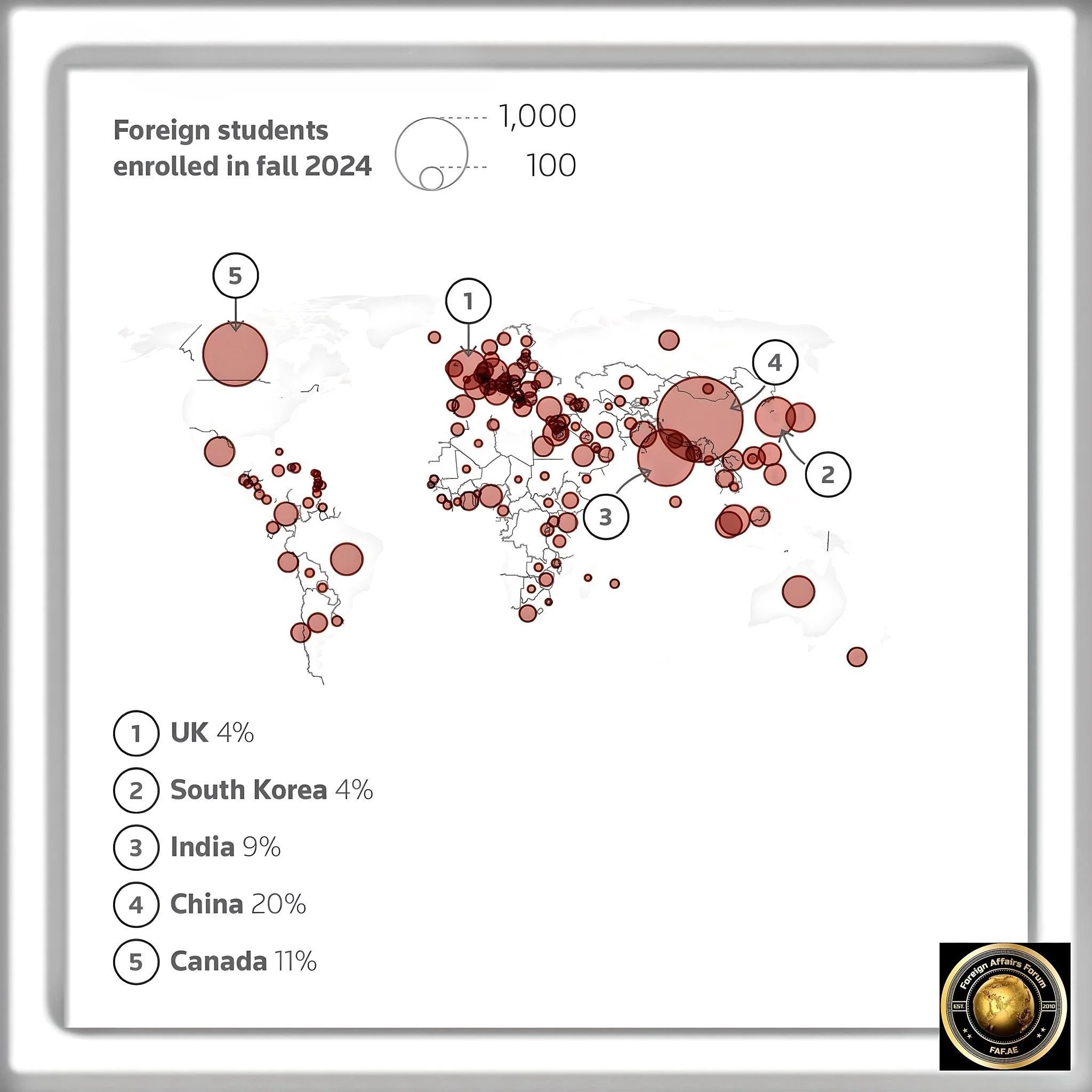
European countries already benefit from this shift, with the EU hosting 1.66 million international students across its universities.
Germany leads with 23.3% of EU international students, followed by France with 16% and the Netherlands with 10%.
These numbers are expected to grow as American policies deter international applicants.
The United Kingdom, despite its immigration challenges, remains an attractive alternative, with international students contributing £40 billion to the economy and representing the country’s second-largest export after financial services.
Universities in Canada, Australia, and other English-speaking nations also aim to capture students who might have previously chosen American institutions.
This global redistribution of academic talent represents a significant loss for the United States, which has historically benefited from attracting the world’s brightest students, who often remained in the country after graduation to contribute to innovation and economic growth.
The long-term implications include reduced American competitiveness in research and development, particularly in critical areas like artificial intelligence and advanced technology.
Legal Challenges and Judicial Intervention
Federal Court Interventions
The Trump administration’s policies have faced significant legal challenges, and federal courts have provided some protection for affected students.
U.S. District Judge Jeffrey White in Oakland, California, issued a nationwide injunction preventing the administration from canceling international students’ status without individual review and proper adherence to federal regulations.
Judge White expressed concern about officials trying to avoid court scrutiny by rapidly changing their approach, describing the situation as an ongoing “game of whack-a-mole.”
The judicial intervention has temporarily relieved many students, with courts reinstating the legal status of thousands wrongfully removed from the SEVIS database.
However, the legal uncertainty continues as the administration develops new approaches to circumvent court orders while pursuing its immigration enforcement goals.
At least 16 legal challenges have been filed by students arguing that the terminations are “arbitrary, capricious, an abuse of discretion, and not otherwise by law and the Constitution.”
Regulatory and Constitutional Questions
Legal experts have raised serious questions about the administration’s authority to revoke university certifications for politically motivated reasons.
Immigration attorney Leon Fresco noted that “the regulations regarding revocation are quite specific—there must be a notice of intention to revoke issued” and emphasized that revocations “cannot be based on politically motivated ideologies, as such a basis is not included in the regulations.”
The American Council on Education has characterized the Harvard action as “wrong, small-minded, and illegal,” arguing that proper decertification processes were not followed.
The constitutional implications extend beyond immigration law to academic freedom and institutional autonomy questions.
Universities argue that federal interference in admissions policies and campus governance violates fundamental principles of higher education independence.
Harvard has filed lawsuits challenging the administration’s actions as violations of the U.S. Constitution, setting up potential Supreme Court battles over the limits of federal authority over private educational institutions.
Broader Implications for American Global Leadership
Decline in Soft Power and Cultural Influence
The international student crisis significantly erodes American soft power and cultural influence.
For decades, the United States has used its educational system as a tool of diplomatic engagement, building relationships with future global leaders who studied at American universities.
The current policies threaten to reverse this advantage, potentially creating a generation of international leaders who received their education in competing nations.
The damage to America’s reputation extends beyond immediate policy effects to broader perceptions of the country’s values and stability.
International observers increasingly view the United States as unwelcoming and unpredictable, characteristics that contradict traditional American appeals to diversity, opportunity, and academic freedom.
This perception shift could have lasting consequences for American influence in global affairs and economic competitiveness.
Long-term Economic and Innovation Consequences
The exodus of international students and scholars threatens America’s position as a global innovation leader.
Many international students who study in the United States historically remained to work for American companies, start businesses, and contribute to technological advancement.
The current policies risk driving this talent to competitor nations, potentially accelerating American decline in critical technology sectors.
President Trump has previously recognized the value of international students, stating in 2024 that graduates should “automatically receive a green card as part of your diploma, allowing you to stay in this country.”
However, Trump's administration’s current nominee for USCIS director has indicated plans to end Optional Practical Training programs that allow international students to work after graduation, directly contradicting Trump’s earlier statements.
This policy inconsistency reflects broader tensions within the administration between immigration restrictionists and those recognizing the economic benefits of retaining international talent.
Conclusion
The Trump administration’s targeted approach towards international students marks a significant juncture for American higher education, carrying important implications for universities, students, and the nation’s global standing.
The initial effects of these policies have included financial challenges for institutions, disruptions in academic programs, and an environment that may be perceived as less welcoming to prospective international applicants.
Such measures can potentially impact the historical strength of American leadership in global education and research collaboration.
In response, other nations have moved swiftly and strategically to attract the academic talent facing barriers in the United States.
For instance, Europe’s “Choose Europe for Science” initiative highlights how various regions seek to leverage American policy shifts to enhance their educational and research capabilities.
This realignment on the global stage may have enduring effects on American influence and its capacity for innovation.
While ongoing legal challenges have offered some protection for affected students, the existing policy framework continues to foster an atmosphere of uncertainty and unpredictability, which may affect the United States’ reputation as a favorable destination for international education.
The long-term implications of these developments go beyond current enrollment figures, raising fundamental questions regarding America’s role in global academic leadership and its ability to draw and retain the international talents essential for sustained economic and technological competitiveness.
If current policies remain unchanged, the United States could Be disadvantaged in the global pursuit of academic excellence and innovation leadership.
Wasington.Media expresses concern about the potential implications for the American public and others in the name of antisemitism.