The Weaponization of Antisemitism and Contradictions in US-Israel Policy: An Analysis of Recent Developments
Introduction
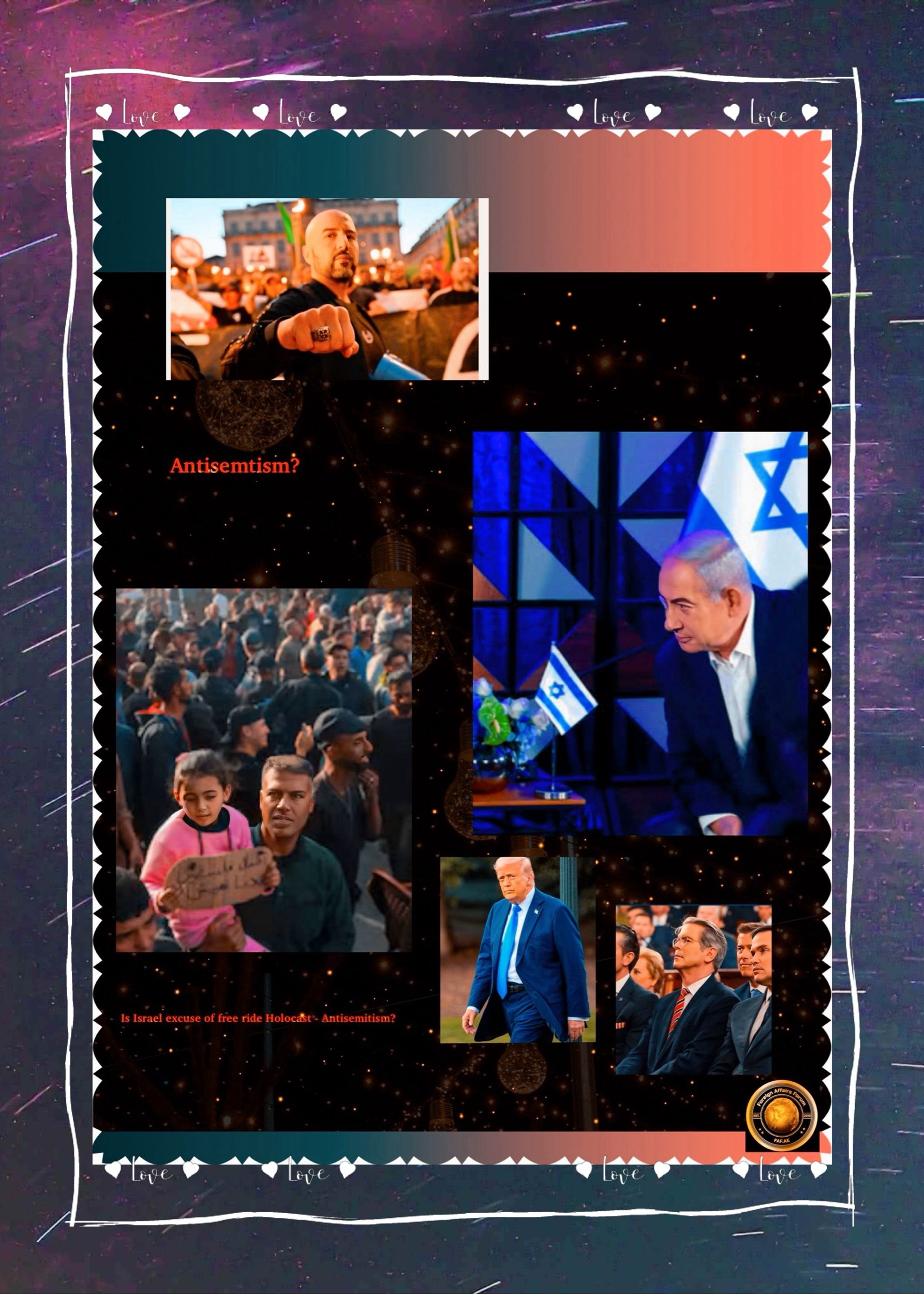
The contemporary political landscape reveals a troubling pattern wherein accusations of antisemitism are increasingly deployed as a political weapon to shield Israel from legitimate criticism. At the same time, simultaneously, genuine threats to Jewish communities persist.
This phenomenon has reached new heights amid the ongoing conflict in Gaza, where international organizations have documented potential war crimes and genocide. Yet, criticism of Israeli policies continues to be conflated with antisemitism.
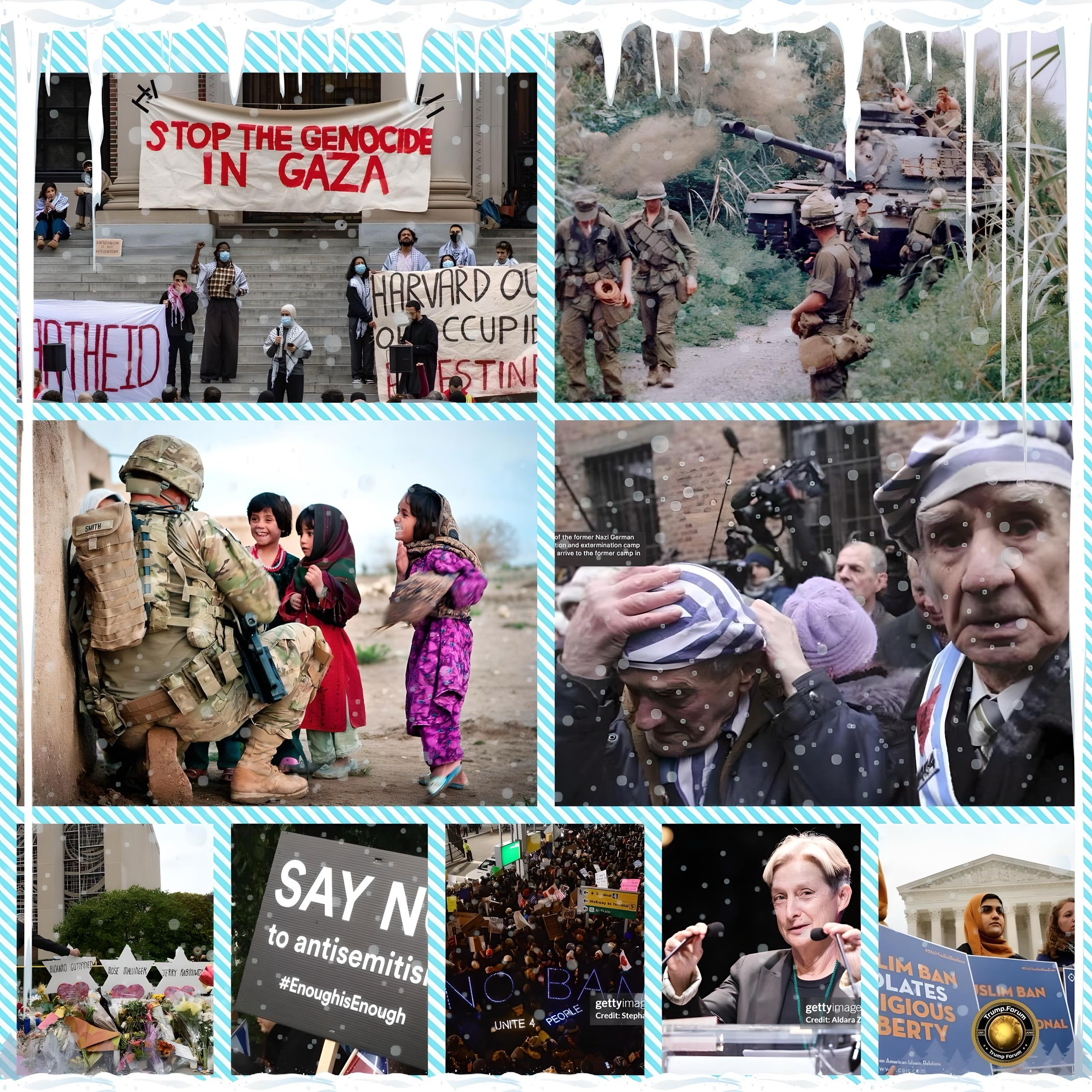
FAF analysis of the Trump administration’s recent ban on international students at Harvard University, ostensibly to combat antisemitism, represents a particularly stark example of these contradictory and potentially counterproductive approaches that may harm both Jewish communities and academic freedom while failing to address real antisemitic threats.
The Strategic Deployment of Antisemitism Accusations
The International Holocaust Remembrance Alliance (IHRA) definition of antisemitism, developed initially to combat genuine anti-Jewish hatred and Holocaust denial, has been systematically repurposed to silence criticism of Israeli policies.
This definitional framework has created what scholars describe as a “soft law” that binds institutions and states worldwide, yet its practical application often serves political rather than protective purposes.
The IHRA definition includes examples that critics argue open the door to labeling virtually any criticism of Israel as antisemitic, particularly the provision stating that “denying the Jewish people their right to self-determination” constitutes antisemitism.
Human rights organizations have documented extensive misuse of this definition to suppress legitimate speech and activism critical of Israel’s human rights record.
The weaponization extends beyond mere definitional debates to create a chilling effect on academic discourse, with university officials and government representatives increasingly using antisemitism accusations to penalize speakers, including Jewish groups, who criticize Israeli policies.
Kenneth Stern, the lead drafter of the IHRA definition, has explicitly warned that “right-wing Jews are weaponizing it” to impose speech codes on college campuses.
This strategic deployment of antisemitism accusations serves multiple political functions. It delegitimizes opposition voices by rendering them morally suspect in Western societies where antisemitism is rightfully taboo.
The accusation becomes particularly potent because the rich historical repository of anti-Jewish imagery allows virtually any criticism to be linked to antisemitic tropes through manipulation and selective interpretation.
This technique has been refined since the 1960s, with Israeli officials explicitly articulating the strategy of collapsing the distinction between antisemitism and anti-Zionism.
International Law Violations and Documented Atrocities
Despite efforts to shield Israeli actions from criticism through antisemitism accusations, international organizations continue to document severe violations of international law in Gaza, Lebanon, and Syria.
The UN Special Committee investigating Israeli practices concluded that Israel’s warfare methods in Gaza are “consistent with the characteristics of genocide,” citing intentional mass civilian casualties and life-threatening conditions imposed on Palestinians.
These findings are corroborated by statements from Israeli officials who have “publicly supported policies that strip Palestinians of the very necessities required to sustain life — food, water, and fuel.”
Amnesty International’s comprehensive research reached the definitive conclusion that “Israel has committed and is continuing to commit genocide against Palestinians in the occupied Gaza Strip.”
The organization documented how Israel has “unleashed hell and destruction on Palestinians in Gaza brazenly, continuously and with total impunity,” treating Palestinians “as a subhuman group unworthy of human rights and dignity.”
The systematic nature of these violations extends beyond Gaza to include extensive bombing campaigns that have decimated essential services and created environmental catastrophes with lasting health impacts.
The humanitarian crisis has reached catastrophic proportions, with the Integrated Food Security Phase Classification warning of a “high risk” that famine will occur in Gaza, where one in five people face starvation.
UNRWA reports that 1.9 million people, or 90 percent of Gaza’s population, have been displaced during the war, with many displaced repeatedly.
The organization’s Commissioner-General stated that humanitarian aid is being used as “a weapon of war,” which could constitute a war crime.
Israeli military actions have expanded beyond Gaza to include systematic violations of ceasefire agreements in Lebanon and an unprecedented invasion of Syria following the fall of the Assad regime.
Israel declared the 1974 Disengagement agreement with Syria void and launched “Operation Arrow of Bashan,” destroying Syria’s military capabilities across the country.
These actions have been internationally condemned as violations of international law.
The Trump Administration’s Contradictory Approach
The Trump administration’s decision to revoke Harvard University’s ability to enroll international students represents a stark contradiction in US policy approaches.
The Department of Homeland Security justified this unprecedented action by claiming Harvard has fostered an “unsafe campus atmosphere” by permitting anti-American and terrorist agitation targeting Jewish students.
This dramatic escalation affects nearly 6,800 international students, representing over 25 percent of Harvard’s student body.
However, federal courts have already begun blocking these actions, with California District Judge Jeffrey White ruling that the government’s actions “wreaked havoc not only on the lives of Plaintiffs here but on similarly situated F-1 nonimmigrants across the United States”.
More than 4,700 international students had their permission to study in the US canceled as the administration ran student names through FBI databases containing suspects and arrested individuals, even those never charged with crimes.
The targeting of Harvard appears politically motivated rather than based on legitimate security concerns.
Legal experts describe the action as “disproportionate to any problem at Harvard” and constituting “transparent viewpoint discrimination.”
The administration’s approach reveals fundamental contradictions in its claimed commitment to combating antisemitism while simultaneously hosting conferences that legitimize far-right European politicians with histories of antisemitism and Holocaust denial.
Israel’s approach to combating antisemitism has become similarly contradictory.
The Israeli government’s international antisemitism conference featured far-right European Parliament members from parties with documented histories of antisemitism, leading foremost Jewish leaders to boycott the event.
Diaspora Minister Amichai Chikli defended including these figures while simultaneously attacking left-wing Israeli media as “beacons of lies and anti-Zionist propaganda.”
The Greater Israel Ideology and Regional Destabilization
The concept of “Greater Israel” represents a significant but often unacknowledged driver of regional instability and international law violations.
According to UN officials, this ideology “conceives the right to exist in the land that was a historical Palestine” and envisions Israeli control “from the Jordan River to the Mediterranean Sea.”
More expansively, several Israeli politicians and leaders openly discuss Greater Israel as including “parts of Iraq, Lebanon, Jordan, and Saudi Arabia.”
This ideological framework helps explain the pattern of Israeli military actions across multiple fronts.
The systematic expansion of Israeli control extends beyond the occupied Palestinian territories to include new territorial acquisitions in Syria, where Israel has declared its intention to hold captured territory for an “unlimited time.”
The Greater Israel ideology explains actions that might otherwise appear as disparate tactical responses to security threats.
The regional implications of this expansionist ideology are profound. Israeli officials have explicitly threatened military action against Iran within 48-hour timeframes while simultaneously maintaining military pressure across Lebanon, Syria, and Gaza.
Prime Minister Netanyahu’s rhetoric at the antisemitism conference revealed the scope of these ambitions, boasting that Israel has “battered Hamas,” “brought Hezbollah to its knees,” “destroyed the remnants of Syria’s army,” and “exposed Iran’s vulnerability.”
Academic Freedom and the Suppression of Legitimate Discourse
The weaponization of antisemitism accusations has created a particularly damaging impact on academic freedom and scholarly discourse.
Universities across the United States face intense pressure to suppress student and faculty criticism of Israeli policies through the threat of antisemitism allegations.
This phenomenon affects not only Palestinian and Muslim students but also Jewish students and faculty who criticize Israeli policies, as they are often labeled “self-hating Jews.”
The Time magazine analysis by scholar Raz Segal demonstrates how “the blanket assertion of rampant antisemitism at campus protests over Gaza shields Israel from legitimate criticism.”
This weaponization “intensifies discrimination and exclusion against marginalized communities in the U.S., including Jews,” by implying that Jewish identity requires support for Israeli policies.
President Biden has contributed to this false equivalence by stating that “were there no Israel, there would not be a Jew in the world who would be safe.”
The suppression of academic discourse extends beyond individual cases to systematic institutional pressure.
The Trump administration’s actions against Harvard represent an extreme escalation of this trend, using federal power to punish institutions that fail to suppress criticism of Israeli policies.
The government has frozen over $2.6 billion in Harvard funding and threatened to revoke the institution’s tax-exempt status.
Weaponization putting Jews at risk globally
On May 21, 2025, two staff members of the Israeli embassy—Yaron Lischinsky and Sarah Lynn Milgrim—were shot and killed outside the Capital Jewish Museum in Washington, D.C., as they left a Jewish community event.
The suspect, Elias Rodriguez, was apprehended at the scene and reportedly shouted “Free Palestine, Free Palestine” while in custody.
Authorities are treating the attack as a hate crime and an act of targeted antisemitic violence, with the FBI and local police investigating possible terrorism or bias-related motives.
Both U.S. and Israeli officials, including President Donald Trump and Prime Minister Benjamin Netanyahu, condemned the attack as a heinous act of antisemitism.
The Weaponization of Antisemitism
The weaponization of antisemitism refers to the use of accusations of antisemitism to silence criticism of Israel or Jewish individuals or to manipulate political outcomes. This can be dangerous for Jews because
It can blur the line between legitimate criticism of Israeli government policies and genuine antisemitic hate, making it harder to address real threats.
It risks reinforcing antisemitic tropes, such as the idea of “dual loyalty” or Jewish control over governments, which have historically endangered Jewish communities.
When antisemitism is politicized, it can lead to increased polarization and a backlash against Jews, especially during times of heightened conflict in the Middle East.
The D.C. shooting is a stark reminder of the real, violent consequences of antisemitism, regardless of its political context.
The incident has been widely condemned as an act of antisemitic hatred, and it has heightened concerns about the safety of Jews and Israeli representatives in the U.S. and abroad.
Political Disagreements
There are public disagreements between Israeli leaders (including Netanyahu) and U.S. administrations, demonstrating that the U.S. government operates independently and is not controlled by Israel or Jewish individuals.
Is the American Public “Fed Up” with Jewish Influence?
There is no open evidence that the American public is “fed up” with Jews or believes Netanyahu is the U.S. president.
However, the “Dark web” is full of conspiracy theories, sharing that Americans are suffering economically as taxpayer dollars are being used to fund Israel's wars and the economy.
There has been news floating around Israel was aware of the attack on the World Trade Center, which is the very reason no American Jews showed up for work on 9/11.
Truth needs to come out sooner than later; history is evident.
Some silent facts
Over half of the American population rejects the idea of prioritizing Israel’s Jewish preferential treatment, ignoring democratic values.
The majority of American Jews feel a strong connection to Israel, not America.
There is too much hatred heard and felt by the American Jewish community toward the rest. For them, it's all about ‘Israel.’
The tragic shooting of Israeli embassy staff in Washington, D.C., underscores the real dangers of antisemitism and the potential consequences of its politicization.
Antisemitic conspiracy theories persist, sharing that the American public at large believes Jews “run” the U.S. government or that Netanyahu is the U.S. president.
Such narratives are rooted in dangerous myths that have historically put Jewish communities at risk and are widely condemned by both American leaders and the broader public
International Response and Legal Accountability
The international community’s response to documented violations of international law reveals significant gaps between stated commitments to human rights and actual policy implementation.
Despite clear findings of potential genocide by UN bodies and major human rights organizations, states continue to provide military assistance and diplomatic support to Israel.
Human Rights Watch has called on all parties to the Genocide Convention to “do more to prevent further atrocities, including ending weapons sales, military assistance, and diplomatic support to Israel.”
The disconnect between documented violations and international response highlights the effectiveness of weaponized antisemitism accusations in constraining policy options.
Government officials appear reluctant to take meaningful action against documented international law violations due to concerns about being labeled antisemitic.
This dynamic creates a form of policy paralysis that enables continued violations while undermining genuine efforts to combat actual antisemitism.
Legal challenges to Israeli actions and US government policies are beginning to yield results.
Federal courts have blocked the Trump administration’s most extreme measures against international students, while the International Court of Justice continues to examine allegations of genocide against Israel.
However, the pace of legal accountability remains far slower than the pace of documented violations.
Conclusion
The issue of antisemitism being used as a tool in political discourse poses significant challenges to both Jewish safety and risk.
When valid criticisms of Israeli policies are conflated with anti-Jewish sentiment, it diminishes genuine efforts to address antisemitism and permits ongoing breaches of international law.
The approach taken by the Trump administration—with its hosting of far-right figures known for their antisemitic views alongside the prohibition of international students accused of antisemitism—highlights the inconsistencies and political motivations that can cloud this discourse.
The alarming documentation pointing to potential genocide in Gaza, systematic breaches of international law in various regions, and the overt endorsement of Greater Israel ideology by certain Israeli officials warrant a serious and thoughtful global response.
Nevertheless, the politicization of antisemitism accusations can limit policy options and inadvertently support ongoing violations. This situation does not serve the best interests of Jewish safety or regional stability; instead, it may foster an environment that exacerbates antisemitic sentiments while overlooking legitimate human rights issues.
Looking ahead, the international community must cultivate approaches that effectively combat genuine antisemitism while creating space for reasoned critiques of state policies.
This entails rejecting the misleading equivalence between criticism of Israeli governmental actions and anti-Jewish hatred while also establishing robust mechanisms for enforcing international law, irrespective of political sensitivities.
Through such nuanced strategies, the international community can better address both the serious threat of antisemitism and the documented violations of international law that continue to impact regional stability.