A Tale of Two Presidencies: Johnson’s Higher Education Legacy and Trump’s University Confrontations
Introduction
It was the year 1965.
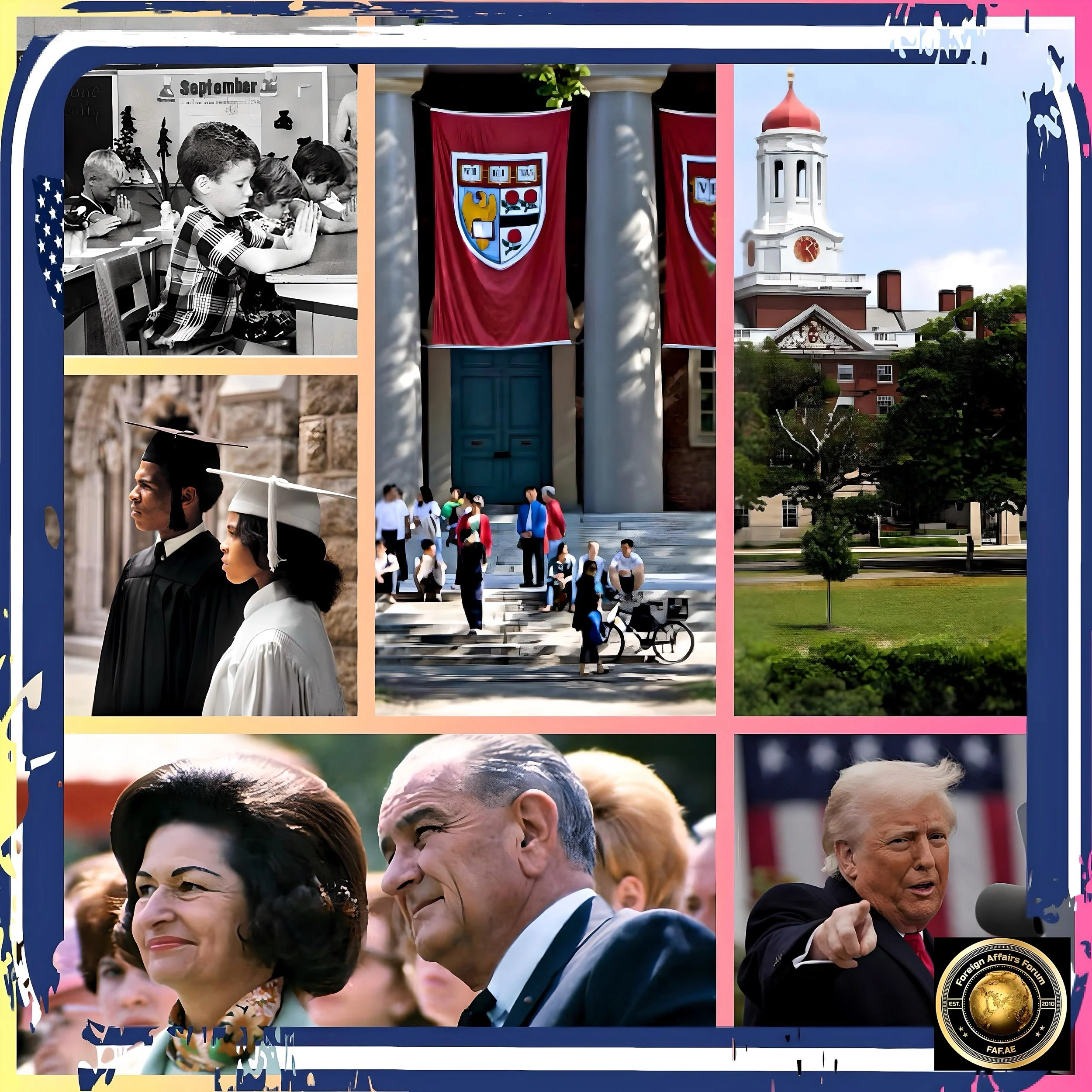
President Lyndon B. Johnson championed higher education through the landmark Higher Education Act, expanding access and affordability for millions of Americans as part of his Great Society vision.
Six decades later, President Donald Trump’s administration has adopted a markedly different approach, leveraging federal funding to influence university policies on issues ranging from foreign funding transparency to campus protests and diversity initiatives.
This stark contrast reflects a fundamental shift in the federal government's view of its relationship with higher education institutions and raises critical questions about the future of American universities.
Johnson’s Vision
Education as a Path to Opportunity
When President Johnson addressed Congress in January 1964, he declared that higher education was “no longer a luxury but a necessity.”
This philosophy formed the cornerstone of his educational policy and reflected his broader commitment to fighting poverty and expanding opportunity in America.
Growing up in poverty and having worked as a teacher, Johnson witnessed firsthand how education could transform lives.
The Higher Education Act of 1965 (HEA), signed into law on November 8, 1965, at Johnson’s alma mater, Texas State University (then Southwest Texas State College), was designed “to strengthen the educational resources of our colleges and universities and to provide financial assistance for students in postsecondary and higher education.”
This comprehensive legislation
Increased federal funding to universities
Created scholarship programs
Provided low-interest loans for students
Established a National Teachers Corps
The driving force behind this legislation was Johnson’s belief that education should be accessible to all Americans, not just the wealthy.
In his education message to Congress, Johnson emphasized the need to " extend the opportunity for higher education more broadly among lower and middle-income families.”
The HEA dramatically expanded the federal government’s role in higher education.
Title IV of the act created the financial assistance programs that would help generations of students afford college.
The Great Society Context
The HEA was enacted as part of Johnson’s broader Great Society domestic agenda to address poverty, discrimination, and inequality in America.
In his January 1965 State of the Union address, Johnson proclaimed that “every child must have the best education that this Nation can provide.”
He requested a new program for schools and students with initial funding of $1.5 billion.
Johnson famously declared an “unconditional war on poverty” and viewed education as a crucial weapon in this fight.
As he said in his 1964 State of the Union address, “It will not be a short or easy struggle; no single weapon or strategy will suffice, but we shall not rest until that war is won.”
This commitment to addressing poverty through education reflected Johnson’s understanding that economic mobility required educational opportunity.
The HEA was structured into eight titles, each addressing different aspects of higher education support, from institutional aid to teacher training programs.
Its passage came after extensive Congressional hearings and consultation with higher education officials, reflecting a collaborative approach to policymaking.
Trump’s Approach
Federal Funding as Leverage
Fast forward to 2025, and the federal approach to higher education has dramatically transformed.
Under President Donald Trump’s second administration, federal university funding has become a powerful tool for influencing campus policies and practices.
In April 2025, Trump signed an executive order demanding transparency regarding foreign influence at American universities.
The order mandates “full and timely disclosure of foreign funding by higher education institutions.” It directs the Secretary of Education to hold non-compliant institutions accountable through “audits, investigations, and enforcement actions.”
This followed concerns about the extent of undisclosed foreign funding, with the White House noting that “a recent report found that $60 billion in foreign gifts and contracts have been funneled into American colleges and universities over the past several decades”.
Beyond foreign funding concerns, the Trump administration has frozen billions in federal research grants to universities over issues related to campus protests, antisemitism, and diversity initiatives.
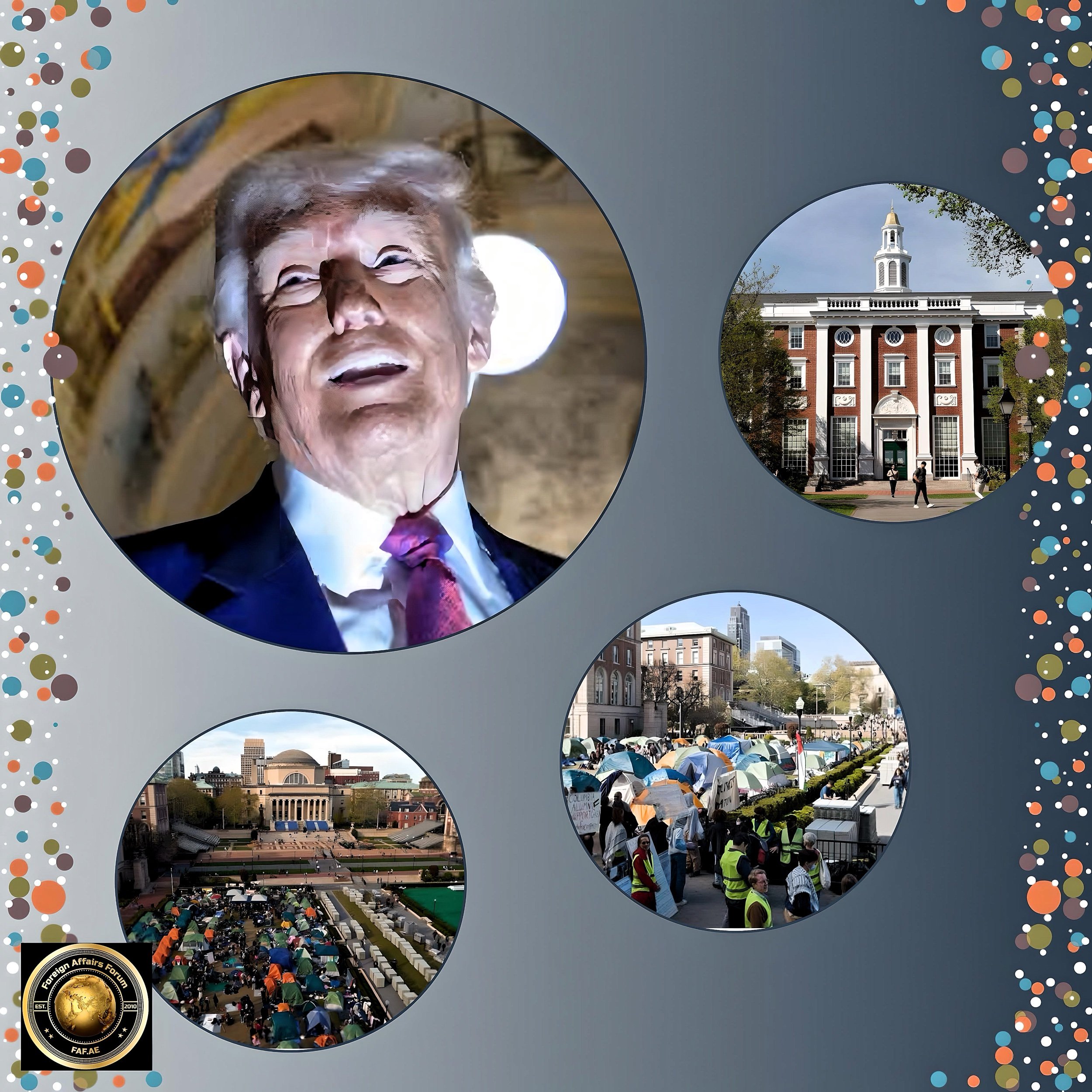
Harvard University saw $2.2 billion in federal funding frozen, while Columbia University faced a $400 million freeze.
The University of Pennsylvania lost $175 million in federal funding in connection with a controversy involving a transgender athlete on the women’s swim team.
Confronting “Woke Ideology”
On April 24, 2025, Trump signed additional executive orders to change how colleges are evaluated and accredited.
These orders prioritize “the actual outcome of education, like how well students perform after graduation, rather than what it terms ‘woke ideology.’”
This reflects the administration’s goal of ensuring universities “are doing their job well and treating all students fairly.”
The scope of these actions is unprecedented, involving multiple federal agencies beyond the Department of Education, including the Departments of Justice, Defense, Energy, and Health and Human Services.
This all-hands-on-deck approach has targeted scientific research grants, which are typically immune from political interference.
Princeton University President Christopher Eisgruber described these actions as entering “whole new territory,” noting that “the government was using its tremendous power over research dollars to try to control what a private university was doing in terms of matters generally considered part of academic freedom.”
Dismantling the Education Department
Perhaps the most dramatic contrast to Johnson’s expansion of federal involvement in education is Trump’s move to dismantle the Department of Education entirely.
In March 2025, Trump signed an executive order titled “Improving Education Outcomes by Empowering Parents, States, and Communities,” which calls for eliminating the department.
This action aligns with longstanding conservative critiques that education should remain under state control rather than federal oversight.
Even before the executive order was signed, Trump’s administration had reduced the department’s staff from 4,133 to approximately 2,183 through resignations and administrative leaves.
The Higher Education Budget Battle
While the Trump administration focuses on restructuring higher education governance and accountability, President Biden’s 2025 budget proposal (prepared before Trump took office) painted a very different vision.
The Biden budget sought to invest in “evidence-based strategies and partnerships that will improve outcomes from cradle to career.”
It included provisions to increase the maximum Pell Grant, support college completion efforts, and provide tuition-free community college.
The contrast between the Biden budget proposal and Trump’s policies highlights the partisan divide over higher education.
While Biden’s plan emphasized increasing access and affordability, Trump’s approach has prioritized accountability and transparency and has challenged what his administration views as liberal bias in academia.
Academia Responds
A United Front
The academic community has not remained silent in the face of these changes. In April 2025, more than 100 university, college, and scholarly society presidents released a joint statement opposing the Trump administration’s approach to higher education institutions.
The statement condemned “unprecedented governmental overreach and political meddling that threatens American higher education.”
University leaders have expressed concern about funding freezes' impact on research.
Princeton’s President Eisgruber warned of “a fundamental threat” to America’s research universities that should worry anyone who “cares about the strength of this country, our economy, our prosperity, our security, our health.”
The HEA Legacy: From Vision to Extensions
Despite the current tensions, Johnson’s Higher Education Act continues influencing American education.
The HEA has been reauthorized multiple times, most recently in 2008. Although it technically expired in 2013, it has operated on temporary extensions.
Programs created through the HEA, such as Pell Grants and Stafford loans, remain vital sources of support for millions of students.
However, the HEA's original vision- to create equal access to higher education—faced challenges.
As one analysis notes, “Instead, student debt ended up disproportionately impacting minority communities.”
The $1.7 trillion student debt crisis currently affects 45 million Americans, raising questions about whether Johnson’s vision has been fully realized.
Conclusion
The Changing Federal-University Relationship
The contrast between Johnson’s and Trump’s approaches to higher education reflects broader shifts in American politics and society.
Johnson’s expansion of federal support for higher education emerged from a post-war consensus about the value of education and its role in fighting poverty and promoting equality.
Trump’s confrontational approach reflects contemporary conservative concerns about ideological bias, foreign influence, and institutional accountability.
As the federal government’s relationship with universities continues to evolve, the fundamental question remains: What is the federal government's proper role in higher education?
How can we balance institutional autonomy with public accountability? And how do we ensure that higher education remains a pathway to opportunity for all Americans?
The answers to these questions will shape the future of American universities and the nation’s ability to develop talent, drive innovation, and maintain global competitiveness in an increasingly knowledge-based economy.