NATO’s Intervention in Libya and the Death of Muammar Gaddafi: Legal Authority, Democratic Legitimacy, and International Law
Introduction
The 2011 NATO intervention in Libya that led to the overthrow and death of Muammar Gaddafi represents one of the most controversial applications of international humanitarian intervention in the post-Cold War era.
The operation, conducted under United Nations Security Council Resolution 1973, has generated significant debate about the scope of international legal authority, the boundaries of humanitarian intervention, and the relationship between military action and democratic principles.
While NATO received explicit authorization from the UN Security Council to protect Libyan civilians, critics argue that the alliance exceeded its mandate by pursuing regime change, raising fundamental questions about the legitimacy of international military intervention and its compatibility with democratic governance principles.
Legal Foundation and UN Authorization
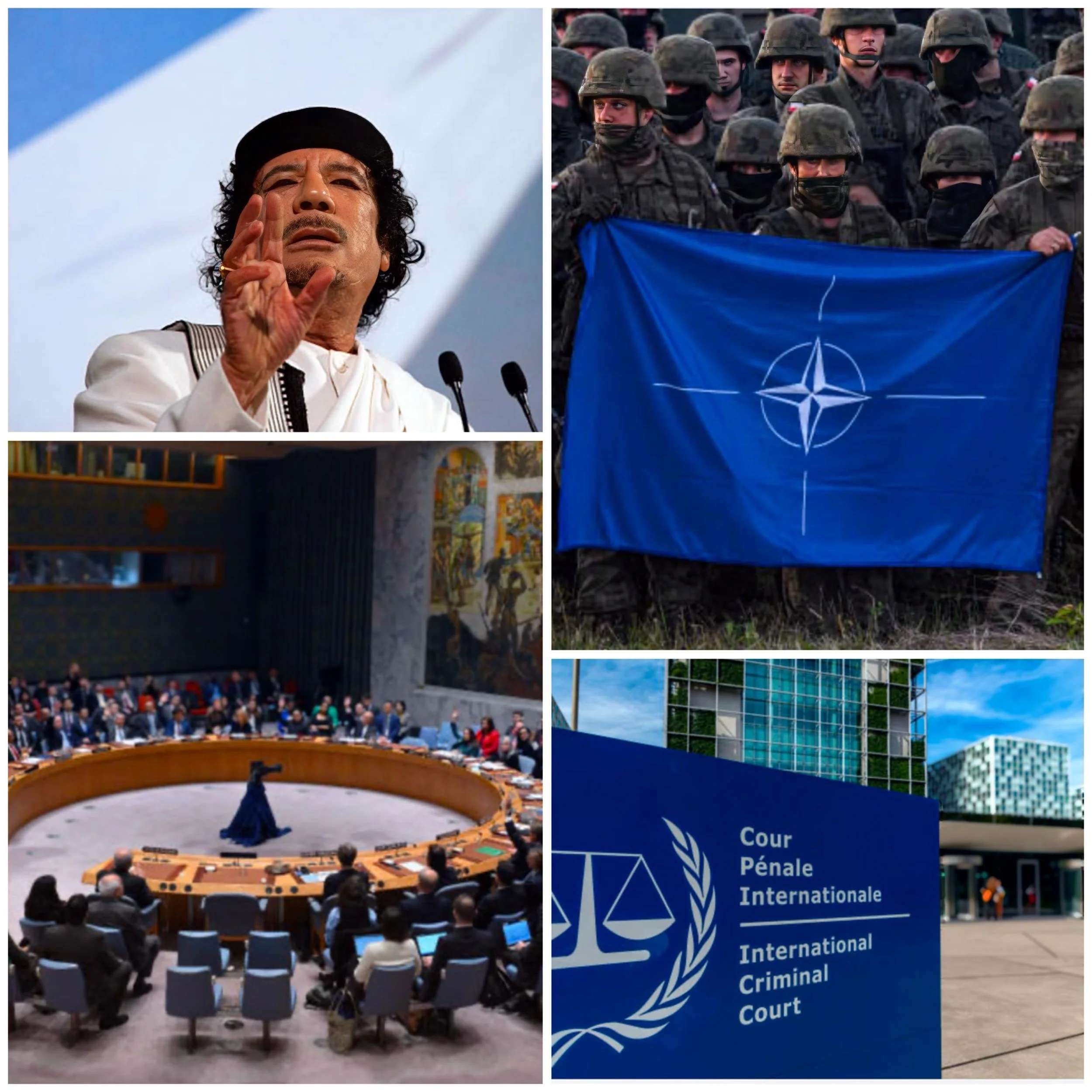
The legal basis for NATO’s intervention in Libya originated from United Nations Security Council Resolution 1973, adopted on March 17, 2011, in response to escalating violence during the First Libyan Civil War.
The resolution was passed with ten votes in favor and five abstentions from Brazil, China, Germany, India, and Russia, with no opposing votes.
This represented a significant diplomatic achievement, marking the first time the Security Council had authorized military intervention under the “Responsibility to Protect” doctrine against a functioning government.
Resolution 1973 established several key provisions that would shape the subsequent military campaign.
The resolution demanded “an immediate ceasefire” and authorized the international community to establish a no-fly zone over Libya.
Most significantly, it authorized member states to use “all necessary measures … to protect civilians and civilian populated areas under threat of attack in the Libyan Arab Jamahiriya, including Benghazi, while excluding a foreign occupation force of any form on any part of Libyan territory”.
The resolution was adopted under Chapter VII of the UN Charter, which authorizes the use of force and makes compliance mandatory for all UN member states.
The international coalition that emerged to implement Resolution 1973 initially included Belgium, Canada, Denmark, France, Italy, Norway, Qatar, Spain, the United Kingdom, and the United States.
France advocated for intervention, with French President Nicolas Sarkozy playing a crucial role in building international support.
The Arab League’s unprecedented call for international intervention provided essential regional legitimacy for the operation.
The organization had suspended Libya’s membership and explicitly requested UN action.
This regional support was critical given the Western powers’ desire to avoid perceptions of neo-colonial intervention in the Middle East.
NATO’s Assumption of Command and Operation Unified Protector
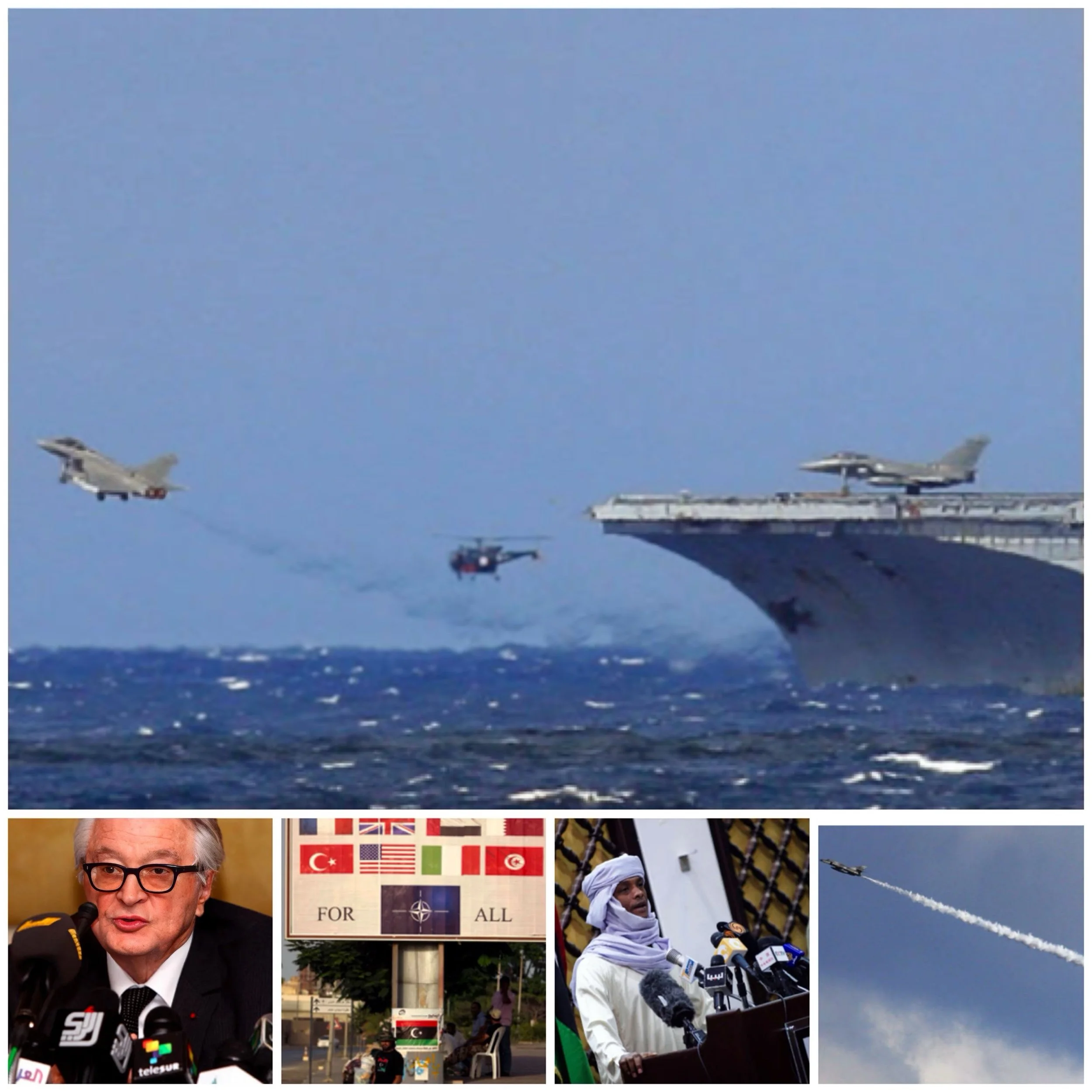
NATO’s role in the Libyan intervention evolved gradually over several weeks in March 2011. Initially, individual coalition members conducted separate national operations, with the United States leading “Operation Odyssey Dawn” and France conducting “Opération Harmattan.”
However, disagreements over command structure and the desire to multilateralize the intervention led to NATO’s assumption of control.
On March 23, 2011, NATO agreed to enforce the arms embargo, and on March 24, the alliance took control of the no-fly zone enforcement.
Finally, on March 31, 2011, NATO assumed complete command and control of all military operations under “Operation Unified Protector.”
The transition to NATO command represented both a political and operational necessity.
The United States, which had provided crucial initial military capabilities, including cruise missile strikes and electronic warfare assets, sought to reduce its involvement to a supporting role.
NATO’s institutional framework provided the only viable mechanism for coordinating a multinational military operation of this scale and complexity.
Lieutenant General Charles Bouchard of the Royal Canadian Air Force was appointed as the operation’s commander and oversaw a seven-month campaign.
Operation Unified Protector encompassed multiple military objectives beyond civilian protection.
The operation included enforcement of the arms embargo through naval patrols, maintenance of the no-fly zone through air superiority missions, and direct air strikes against Libyan government forces.
During the campaign, NATO flew over 26,500 sorties, including approximately 9,700 ground attack sorties, and destroyed more than 5,900 military targets.
The operation officially concluded on October 31, 2011, following the death of Muammar Gaddafi and the collapse of his regime.
The Scope of Military Action and Mandate Interpretation
The interpretation and implementation of Resolution 1973’s authorization became a source of significant controversy throughout the campaign.
While the resolution explicitly authorized the protection of civilians and the establishment of a no-fly zone, it contained ambiguous language regarding the permissible scope of military action.
The phrase “all necessary measures” provided broad discretionary authority, but excluding “foreign occupation force of any form” suggested limitations on the extent of intervention.
NATO’s military strategy evolved beyond purely defensive civilian protection to include offensive operations that directly supported rebel forces against the Gaddafi regime.
Air strikes targeted government military installations, command and control facilities, and forces engaged in combat with opposition groups.
These operations effectively transformed NATO into the air force of the Libyan opposition despite the resolution’s emphasis on civilian protection rather than regime change.
The alliance’s interpretation of civilian protection expanded to include strikes against any government forces that could potentially threaten civilian areas, even when no immediate threat existed.
Critics argued that NATO deliberately exceeded its UN mandate by pursuing predetermined regime change objectives.
The Cambridge Journal of International and Comparative Law noted that “operations aiming at overthrowing the Qaddafi regime were illegal to use of force” and that “the overstepping of the mandate may hurt the credibility of the responsibility to protect in future gross human rights violations.”
Russian Ambassador Vitaly Churkin repeatedly accused NATO of overstepping its mandate, while countries like Brazil and Germany expressed concerns about the potential for mission creep during the resolution's adoption.
Civilian Casualties and Humanitarian Concerns
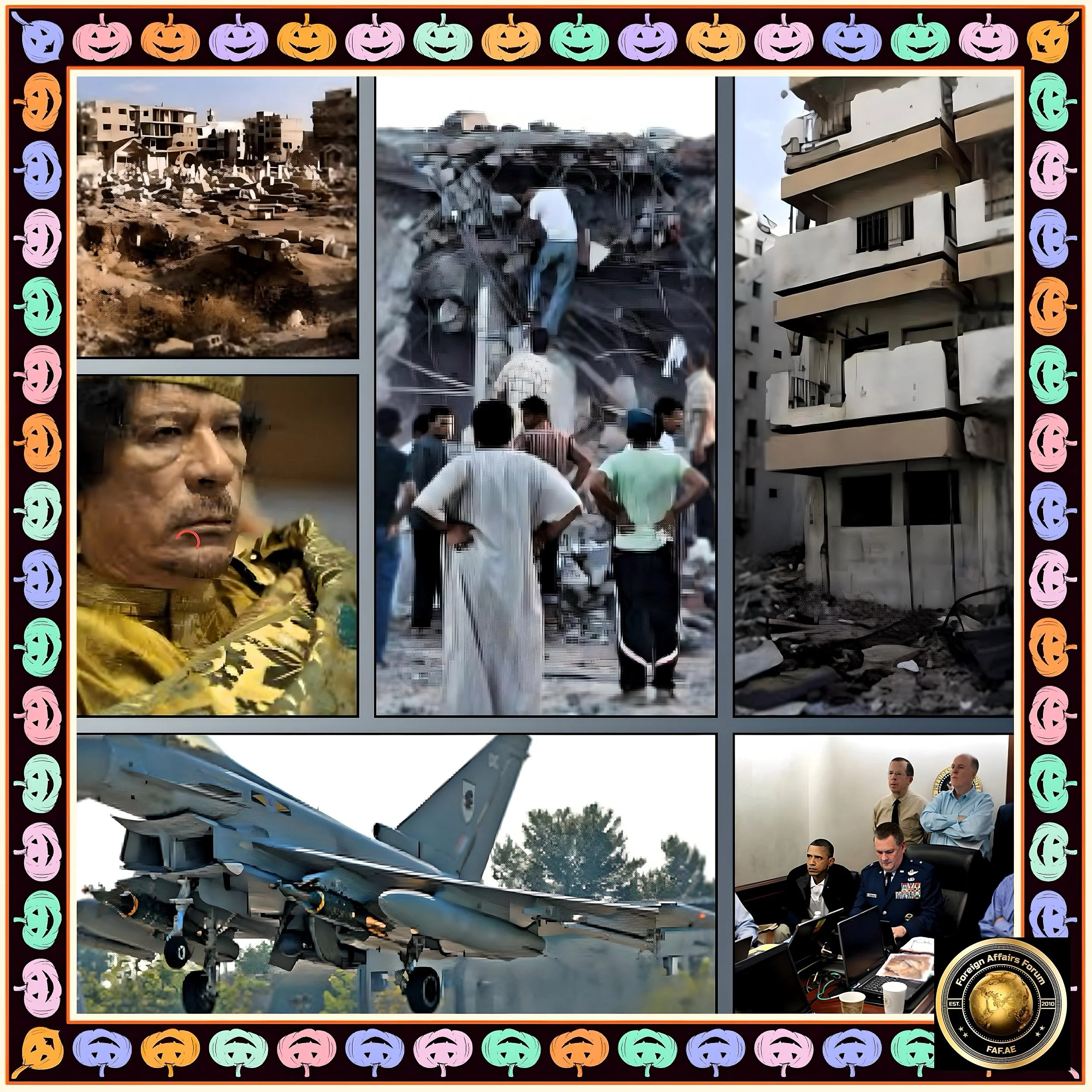
Despite NATO’s emphasis on precision warfare and civilian protection, the military campaign resulted in civilian casualties that raised additional questions about the operation’s humanitarian justification.
Amnesty International documented that “dozens of civilians have been killed in NATO airstrikes on private homes in residential and rural areas.”
The organization’s investigation revealed that NATO air strikes in Majer on August 8, 2011, killed 34 civilians, highlighting the inherent contradictions in using military force to protect civilian populations.
NATO maintained that it made “significant efforts to minimize the risk of causing civilian casualties, including by its use of precision-guided” munitions.
The alliance emphasized that its seven-month campaign involved extensive coordination with humanitarian organizations, deconflicting over 6,700 humanitarian aid flights and ground movements.
However, the reality of civilian casualties from the very forces ostensibly protecting civilians underscored the complex moral and legal terrain of humanitarian intervention.
The civilian casualty issue became particularly problematic given NATO’s stated mission of civilian protection.
While the alliance argued that the number of civilian deaths from NATO strikes was minimal compared to potential casualties from a prolonged conflict or Gaddafi’s brutal suppression of the uprising, critics contended that any civilian deaths from the intervention forces undermined the moral authority of the mission.
This debate highlighted fundamental tensions in military humanitarianism and the practical challenges of protecting civilians through armed force.
The Death of Muammar Gaddafi and Questions of Legal Authority
Muammar Gaddafi’s death on October 20, 2011, marked the end of both his regime and NATO’s military intervention, but it also intensified debates about the legal and moral boundaries of the operation.
Opposition forces killed Gaddafi after being captured during the fall of his hometown of Sirte, which had been subjected to intensive NATO bombing in the preceding weeks.
While NATO forces did not directly kill Gaddafi, the alliance’s air strikes against government positions in Sirte created the conditions that led to his capture and subsequent death.
The circumstances of Gaddafi’s death raised questions about NATO’s role in what effectively amounted to regime change, despite Resolution 1973’s explicit prohibition on foreign occupation and its focus on civilian protection rather than political transformation.
NATO officials maintained that the alliance had operated within its UN mandate by protecting civilians and that Gaddafi’s death resulted from actions by Libyan opposition forces rather than international intervention.
However, critics argued that the intensive bombing campaign that led to the fall of Sirte represented a clear case of using military force to achieve political objectives beyond the scope of civilian protection.
The legal question of who authorized Gaddafi’s death is complex because it conflates direct authorization with the creation of conditions that made his death possible.
No international body or national government explicitly authorized the killing of the Libyan leader. Still, the UN Security Council authorized military action that ultimately led to the collapse of his regime and his death.
This distinction between direct authorization and consequential responsibility reflects broader ambiguities in international law regarding the scope of humanitarian intervention and the permissible extent of military action under UN authorization.
Democratic Legitimacy and International Intervention
Whether NATO’s intervention represents democratic principles touches on fundamental issues of sovereignty, legitimacy, and the right of people to determine their government.
Proponents of the intervention argued that NATO action supported the democratic aspirations of the Libyan people who had risen against Gaddafi’s authoritarian rule during the Arab Spring.
The intervention occurred in popular uprisings across the Middle East demanding political reform and democratic governance, suggesting that military action supported rather than undermined democratic movements.
However, critics contended that external military intervention, regardless of its stated humanitarian purposes, fundamentally violated national sovereignty and self-determination principles foundational to democratic governance.
The decision to intervene was made by Western powers and international organizations rather than by the Libyan people themselves, raising questions about the democratic legitimacy of imposed political change through military force.
The Arab League’s support for intervention provided some regional legitimacy, but this represented the views of authoritarian governments rather than democratic popular will.
The aftermath of the intervention further complicated assessments of its democratic credentials.
Post-Gaddafi Libya descended into prolonged conflict and political fragmentation, with multiple competing governments and armed groups preventing the establishment of stable democratic institutions.
Critics argued that NATO’s focus on military objectives without adequate planning for post-conflict political reconstruction demonstrated a fundamental disregard for the complex requirements of democratic transition.
The “responsibility to protect” doctrine, which provided the conceptual framework for intervention, emphasized the protection of populations but offered limited guidance for building democratic governance in post-conflict societies.
International Legal Precedent and Future Implications
NATO’s intervention in Libya established significant precedents for international law and the future application of humanitarian intervention doctrines.
The operation represented the first significant application of the “Responsibility to Protect” principle against a functioning government, demonstrating this emerging norm's potential and limitations in international relations.
The relatively broad interpretation of civilian protection authority under Resolution 1973 expanded the practical scope of what international forces could accomplish under humanitarian mandates.
The controversy surrounding NATO’s interpretation of its mandate has had lasting implications for subsequent humanitarian crises.
Russia and China, which abstained from Resolution 1973, subsequently became more resistant to UN authorization of military intervention, citing the Libya experience as evidence of Western mission creep.
This increased skepticism has complicated international responses to humanitarian crises in Syria and other conflict zones, where UN Security Council authorization for intervention has been more challenging to achieve.
The legal academic community has extensively debated the precedential value of the Libya intervention.
Some scholars argue that the operation demonstrated the viability of multilateral humanitarian intervention under UN auspices.
In contrast, others contend that the overstepping of the mandate undermined the credibility of the responsibility to protect doctrine.
This ongoing debate reflects deeper tensions in international law between sovereignty principles and humanitarian imperatives, tensions that remain unresolved in the decade following the intervention.
Conclusion
The question of who gave NATO the right to kill Gaddafi reflects deeper complexities in contemporary international law and the relationship between military intervention and democratic governance.
While the UN Security Council did authorize military action to protect Libyan civilians through Resolution 1973, the scope and interpretation of that authorization remain subjects of significant debate.
NATO’s intervention operated within the framework of international law.
Still, critics legitimately question whether the alliance exceeded its mandate by pursuing regime change rather than limiting its actions to civilian protection.
The intervention's democratic legitimacy is similarly complex, involving tensions between supporting popular uprisings against authoritarian rule and respecting principles of sovereignty and self-determination.
The operation’s ultimate contribution to democratic governance in Libya remains questionable, given the country’s subsequent political instability and conflict.
However, the intervention did occur in response to genuine humanitarian concerns and popular resistance to authoritarian rule, suggesting that simple characterizations of the operation as either democratic or undemocratic are insufficient.
The Libya intervention demonstrates the potential and the limitations of international humanitarian action in the contemporary world.
While the UN authorization provided a legal foundation for military action, its interpretation and implementation revealed ongoing tensions between humanitarian objectives and political realities.
Any international body did not explicitly authorize the death of Gaddafi.
Still, it resulted from military actions authorized under international law, highlighting the complex relationship between legal authority and political consequences in humanitarian intervention.
Understanding these complexities is essential for evaluating future applications of international humanitarian law and the responsibility to protect doctrine in an increasingly interconnected but politically fragmented world.