Trump’s Tariffs and Israel’s Gaza Campaign: Competing Global Attention in 2025
Introduction
As the world focuses on the economic impacts of Donald Trump’s sweeping tariff policies, the humanitarian crisis in Gaza continues to unfold with limited international intervention.
FAF, Gulf.Inc, examines the complex interplay between global economic disruption, ongoing conflict, and shifting diplomatic alignments in the Middle East as of May 2025.
The Dual Focus: Economic Disruption and Humanitarian Crisis
While international markets and governments scramble to respond to Trump’s tariff regime, Israel’s military campaign in Gaza has entered a critical phase with devastating humanitarian consequences.
The tariffs have generated significant economic concern, with the Manufacturers Association of Israel warning that Israeli exports to the US alone will take an annual $2.3 billion hit, potentially costing between 18,000 and 26,000 Israeli jobs.
However, this economic story is unfolding alongside a severe humanitarian crisis in Gaza that continues to claim lives and create extreme suffering.
Some analysts argue that Trump’s tariff announcements serve as strategic distractions.
One assessment notes, “Trump, more than any previous US president, has fed on distractions for years to campaign and govern.
He can seamlessly move from one distraction to the next, like a magician preparing for the opportune moment. “
Multiple sources suggest these economic policies may divert attention from other significant developments, including the situation in Gaza.
The Current Humanitarian Crisis in Gaza (May 2025)
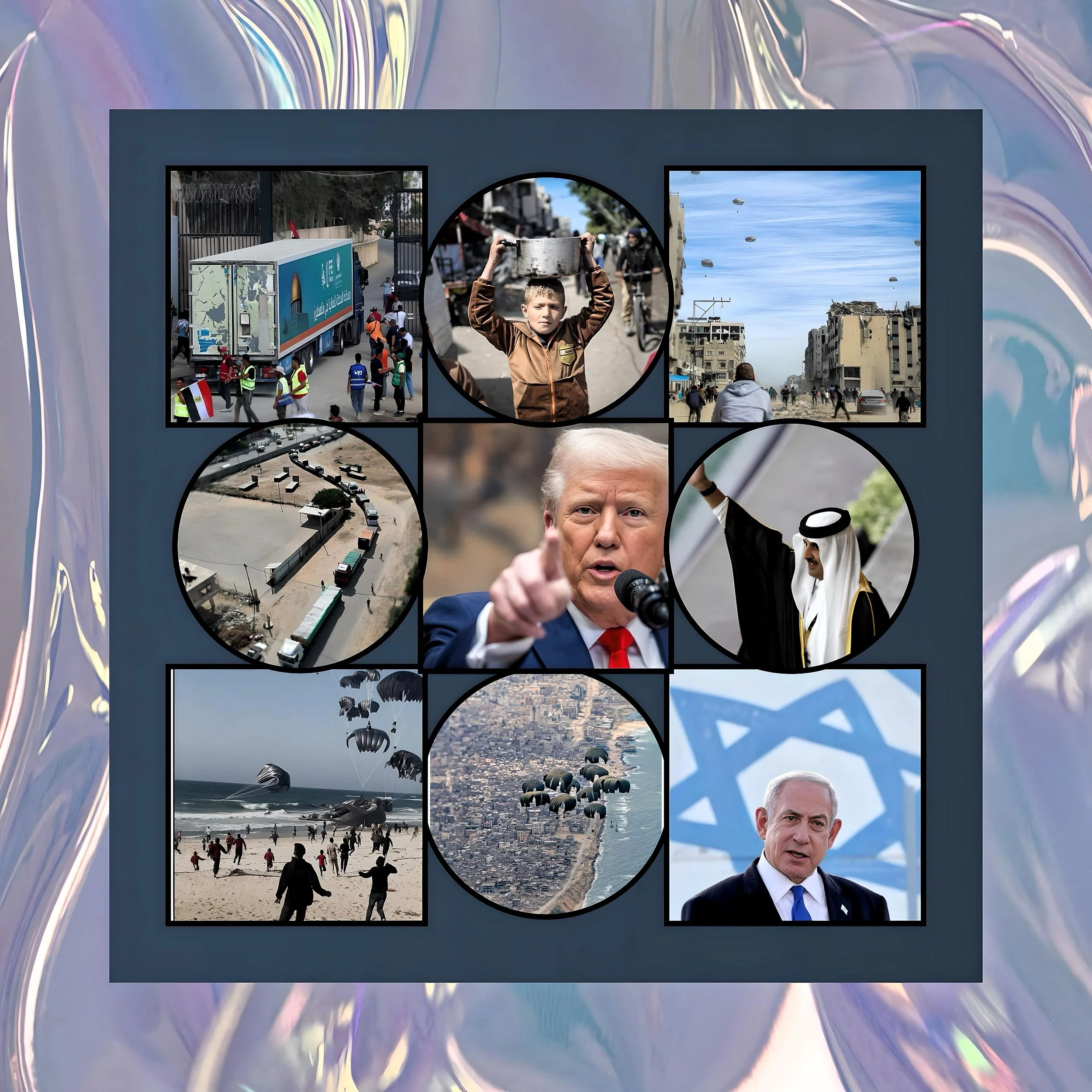
As of May 21, 2025, Palestinians in Gaza find themselves in dire circumstances after Israel imposed a total blockade for over 2.5 months beginning in March.
Recent developments have seen Israel allowing a minimal amount of aid into Gaza, with the Israeli military reporting that only five trucks entered Gaza on Monday and 93 on Tuesday.
United Nations agencies describe this relief as “wholly inadequate” compared to the approximately 600 trucks that delivered aid daily during a previous ceasefire.
The humanitarian situation has reached critical levels, with nearly 500,000 Palestinians at risk of starvation and an additional 1 million struggling to secure enough food.
Despite Prime Minister Netanyahu’s decision to ease the blockade under pressure from allies, local bakeries and aid distribution points report that promised supplies have not materialized.
As one 67-year-old Gaza resident lamented, “There is no water… We used to obtain water from the pump, but now it has ceased functioning. There is no diesel or gas available”.
The conflict has resulted in devastating human costs, with Gaza’s Health Ministry reporting over 53,000 Palestinian deaths since the beginning of the military campaign.
Trump’s Evolving Relationship with Israel
The relationship between Donald Trump and Benjamin Netanyahu has significantly transformed in 2025.
Despite initial enthusiasm in Tel Aviv over Trump’s return to the presidency, which some Israelis described as “Israel’s greatest friend ever to serve in the White House,” recent events indicate growing tensions between the leaders.
Israeli Army Radio reports that Trump has cut off direct contact with Netanyahu amid growing bilateral tensions.
This shift became more apparent when Trump declined to commit to removing the 17% tariffs imposed on Israel during a meeting with Netanyahu in April 2025.
During that meeting, Trump pointedly emphasized American aid to Israel, stating, “We give Israel $4 billion a year, that’s a lot… We give Israel billions of dollars a year. Billions. It’s one of the highest of anyone”.
Further evidence of this distancing appeared in mid-May when Trump conducted a four-day Middle East tour that conspicuously excluded Israel.
Instead, Trump visited the United Arab Emirates, Qatar, and Saudi Arabia, signing “multibillion-dollar agreements” including a “$142bn arms deal with Saudi Arabia”.
During this trip, Trump also met with Syria’s new president, Ahmed al-Sharia, and lifted all sanctions on Syria.
International Responses to Israel’s Actions
While Trump’s relationship with Israel appears to be cooling, other traditional allies have taken more direct actions in response to Israel’s Gaza offensive.
In May 2025, Britain paused free trade talks with Israel, summoned its ambassador, and announced further sanctions.
This move came as the leaders of the UK, France, and Canada expressed being “horrified” by the situation in Gaza.
Similarly, a majority of European Union foreign ministers backed a Dutch proposal to review the bloc’s trade and cooperation with Israel over its actions in Gaza.
These developments suggest a broader reconsideration of international support for Israel’s military campaign.
Media Coverage and Public Awareness
Gaza is complicated by whether the world has “forgotten” the nature of media coverage.
Analysis shows that Western media coverage of the Gaza war has often reinforced biases by underrepresenting Palestinian perspectives and omitting historical context.
Major news outlets, including CNN, MSNBC, FOX News, The New York Times, Washington Post, and Los Angeles Times, have been criticized for favoring the Israeli perspective, “exhibiting consistent bias against Palestinians and paying little attention to their daily suffering.”
As mainstream coverage falls short, social media has emerged as an alternative platform for sharing stories about the humanitarian crisis in Gaza.
This digital activism suggests that while official policy and media attention may have shifted, public awareness of the situation continues through alternative channels.
Analysis: Strategic Distancing or Genuine Policy Shift?
Trump’s apparent distancing from Israel likely reflects both strategic considerations and genuine policy differences.
During his first term, Trump believed he had delivered unprecedented support to Israel by moving the US embassy to Jerusalem, recognizing the city as Israel’s capital, facilitating the Abraham Accords, and supporting Israel in various ways.
However, he reportedly “felt slighted and disappointed” by Netanyahu’s actions, including the Israeli leader’s congratulations to Joe Biden after the 2020 election.
The current distancing may also reflect Trump’s transactional approach to foreign policy.
His emphasis on the financial aid the US provides to Israel suggests he expects a more tangible return on this investment.
Additionally, reports that a senior Hamas official confirmed the militant group is in “direct talks with the Trump administration” over peace in Gaza indicate potential new diplomatic directions that may not align with Netanyahu’s approach.
Conclusion
The world’s attention in May 2025 appears divided between the economic impacts of Trump’s tariff policies and the ongoing humanitarian crisis in Gaza.
While media focus may shift between these issues, the suffering in Gaza continues with a limited but growing international response.
Trump’s distancing from Israel represents a significant shift in US-Israel relations and may be motivated by both personal grievances and strategic recalculations of American interests in the Middle East.
As international criticism of Israel’s actions grows and the humanitarian situation deteriorates further, the coming months will reveal whether global attention and diplomatic pressure will translate into meaningful relief for Gaza’s population and whether Trump’s apparent policy shift will lead to new approaches to the conflict.