The Resurgence of Europe: How the Continent Can Survive American Antagonism and Come Out Stronger
Introduction
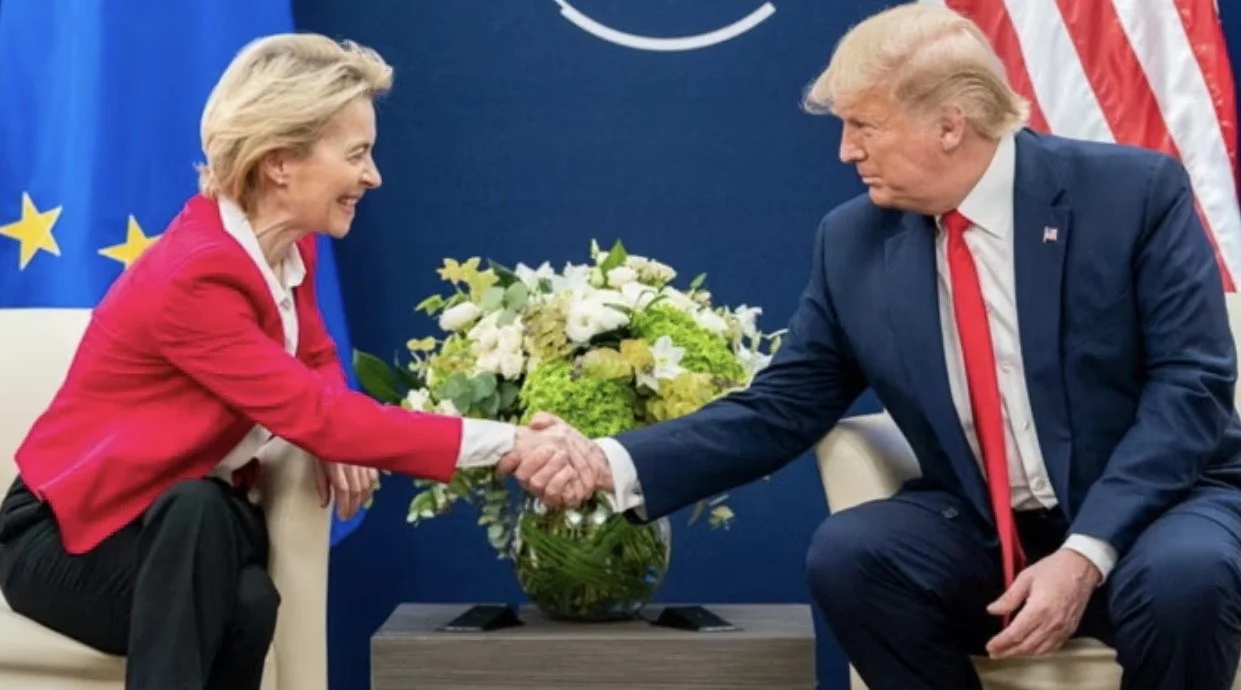
The recent escalation of trade tensions between the United States and Europe marks a critical juncture in transatlantic relations.
As the Trump administration implements wide-ranging tariffs affecting European goods, the EU faces significant challenges and unique opportunities to redefine its position in the global economy.
FAF examines how Europe can weather this storm of American antagonism and potentially emerge more resilient and strategically autonomous.
The Current Trade Conflict: Scale and Implications
The EU-US trade relationship, described as “the most important commercial relationship in the world” with €1.6 trillion in goods and services exchanged in 2023, now faces unprecedented strain.
The Trump administration has imposed 25% tariffs on European steel, aluminum, and automobiles, alongside “reciprocal” tariffs of 10% on almost all other goods.
These measures currently affect approximately 70% of EU-US trade and could expand to impact 97% following additional US investigations into semiconductors and other categories.
The European Union has prepared retaliatory measures targeting American goods, including toilet paper, soybeans, eye makeup, and hundreds of others.
While the EU has temporarily paused implementing these countermeasures during a 90-day moratorium (until July 8, 2025) to allow for negotiations, European Trade Commissioner Maros Sefcovic has emphasized that “all options remain available.”
The economic stakes are substantial. Economic models suggest that Trump’s tariffs will reduce US GDP by approximately 1.0% when accounting for foreign retaliation, with American households facing an average tax increase of more than $1,200 in 2025.
More pessimistic projections from the Wharton Budget Model suggest these tariffs could reduce long-run US GDP by about 6% and wages by 5%.
Global trade flows are expected to contract between 5.5% and 8.5% relative to pre-tariff levels.
Europe’s Strategic Autonomy: From Concept to Implementation
The current trade tensions have accelerated Europe’s pursuit of “strategic autonomy” – the capacity to act independently in strategically important policy areas without dependence on other countries. This concept has evolved significantly since its introduction in 2013:
2013-2016
Initially focused on security and defense matters
2017-2019
Expanded to defending European interests in a hostile geopolitical environment marked by Brexit, the Trump presidency, and China’s growing assertiveness
2020
Shifted toward mitigating economic dependence on foreign supply chains during the COVID-19 pandemic
2021-present
Widened to encompass virtually all EU policy areas, including democratic values
The European Council’s Versailles Declaration of March 2022 expressed political will to achieve greater strategic autonomy in defense, energy, and other critical domains.
The concept has since evolved into what some describe as “open strategic autonomy” – the EU’s ability to make independent choices while shaping the world around it.
From Autonomy to Strategic Interdependence
European policy experts increasingly advocate moving beyond strategic autonomy toward “strategic interdependence” – a proactive strategy of increasing interdependencies with key allies while reducing them with rivals.
One analysis states, “Strategic autonomy is a reactive strategy to confront today’s challenges; strategic interdependence is a proactive way to meet Europe’s needs.”
This approach recognizes that complete autonomy is neither achievable nor desirable in today’s interconnected world.
Instead, Europe must strategically choose its dependencies, strengthening relationships with reliable partners while reducing vulnerability to potentially hostile actors.
Economic Resilience and the Path Forward
Despite the challenging trade environment, Europe’s economic outlook remains cautiously optimistic. Following a 0.7% growth rate in 2024, the euro area’s GDP is forecast to accelerate to 1.3% in 2025 and 1.8% in 2026.
Monetary policy easing, NextGenerationEU spending, and a gradual uptick in exports facilitated by the recent euro depreciation will support this growth.
Performance disparities across European countries are expected to persist, with Spain’s GDP projected to grow by 2.8% in 2025, while Germany anticipates a more modest 0.5% increase.
Central and Eastern European countries are likely to witness a more robust recovery, with GDP growth ranging from 2.0% to 3.5%.
NextGenerationEU: A Blueprint for Resilience
The NextGenerationEU program represents a cornerstone of Europe’s strategy to enhance economic resilience and strategic autonomy.
As “the largest ever stimulus package undertaken in the EU,” it serves as a blueprint for a new growth model based on a clean, innovative, and inclusive economy and digital and technological sovereignty.
The program aims to strengthen Europe's competitive position while reducing dependencies on external actors through investments in healthcare, education, skills development, and support for SMEs and entrepreneurs. Key investment areas include:
Green transition
Digital transformation
Social and territorial cohesion
Innovative, sustainable, and inclusive growth
Health and economic resilience
Trade Diversification: Europe’s Strategic Imperative
The EU has accelerated efforts to diversify its trade relationships in response to American trade antagonism.
EU Trade Commissioner Sefcovic has emphasized that the bloc is focusing on the 87% of global trade that doesn’t involve the United States. “I can assure you that our phones are constantly ringing, as numerous countries wish to hasten free trade agreement discussions with us,” he noted, referencing ongoing negotiations with India, Indonesia, the Philippines, Thailand, and Malaysia.
Research from the Kiel Institute suggests three potential scenarios for EU trade policy:
A sectoral trade agreement with the USA
Deepening existing free trade agreements
Concluding new free trade agreements with partners like India, Australia, or Mercosur
Their analysis indicates that while an agreement limited to the USA would have minimal macroeconomic effects, both deepening existing agreements and establishing new partnerships would lead to robust GDP and export growth – particularly in knowledge-intensive sectors.
The strongest effects would come from combining these approaches, positioning trade diversification as “not a technical detail, but a central instrument of European resilience policy”.
Legal Foundations of Economic Resilience
A critical advantage for Europe in attracting investment and maintaining economic resilience lies in its commitment to the rule of law and effective governance.
While the United States traditionally excelled in this area, recent developments have raised concerns about America’s institutional stability.
In the US, President Trump’s administration has faced at least 328 lawsuits challenging his executive actions as of May 1, 2025, with judges halting his policies far more often than allowing them to proceed.
Trump and his supporters have attacked judges as biased, creating an environment of legal uncertainty.
In contrast, Europe’s consistent legal frameworks and regulatory predictability may become increasingly attractive to investors seeking stability.
Research shows that strong rule of law and intellectual property protections are key factors in attracting foreign direct investment, as they provide predictability, stability, and transparency.
Conclusion
Europe’s Pathway to Resurgence
The current trade tensions with the United States present Europe with both significant challenges and unique opportunities for strategic repositioning.
By pursuing a multi-faceted approach that combines strategic autonomy, trade diversification, and internal economic strengthening, Europe can not only weather American antagonism but potentially emerge more resilient and globally competitive.
The NextGenerationEU program provides a solid foundation for this transformation, investing in key areas that will enhance Europe’s long-term economic strength and reduce external dependencies.
Meanwhile, the continent’s commitment to rule of law and predictable governance may become increasingly attractive assets in a world of growing geopolitical uncertainty.
While the transatlantic relationship remains important, Europe’s focus on diversifying trade partnerships, deepening internal cohesion, and strategically managing interdependencies positions the continent to navigate the current turbulence and potentially emerge stronger on the global stage.
Rather than viewing American antagonism solely as a threat, Europe can use this moment of reckoning as a catalyst for positive transformation and renewed global influence.