The Global Technology Landscape in 2025: Innovations Amid Trade Tensions
Introduction
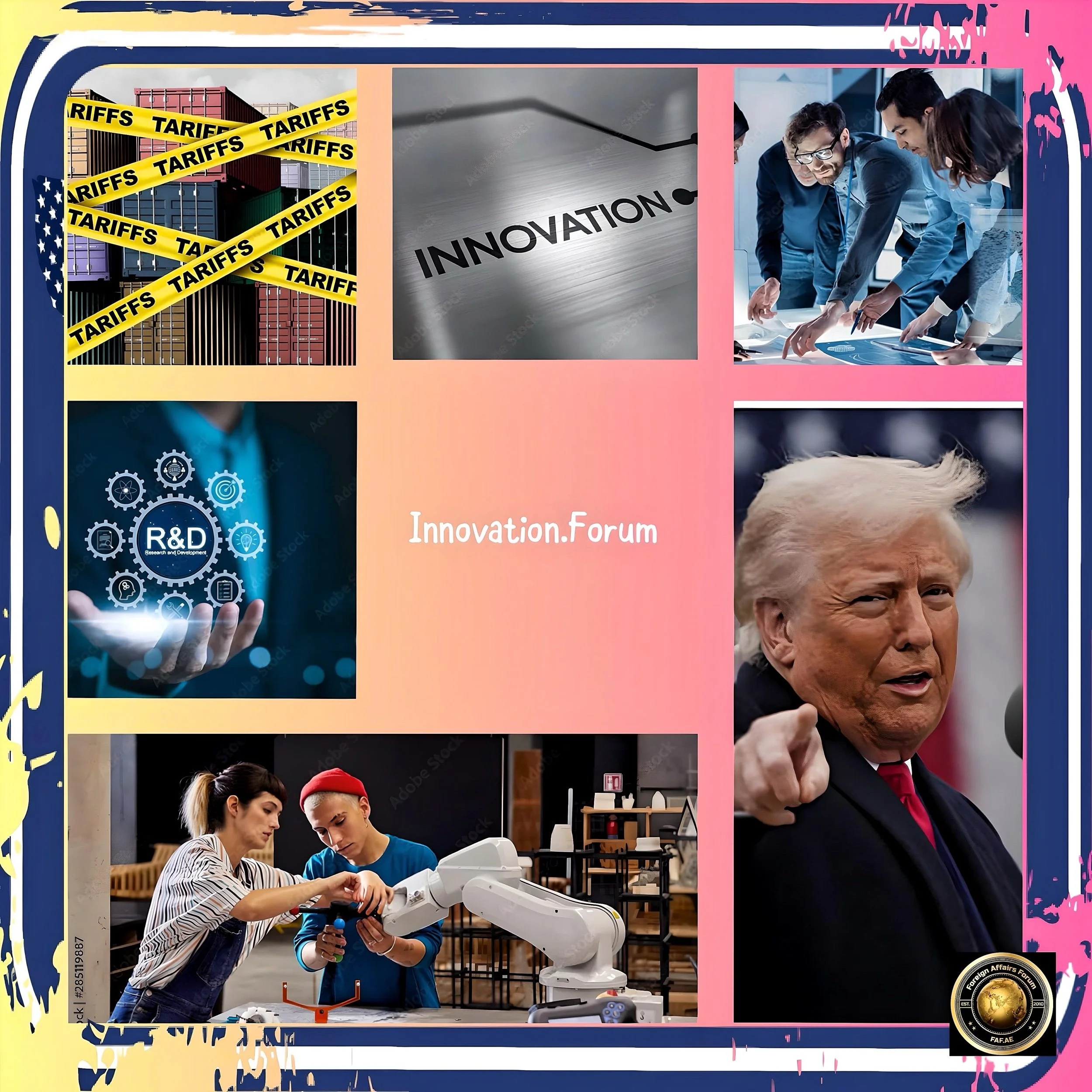
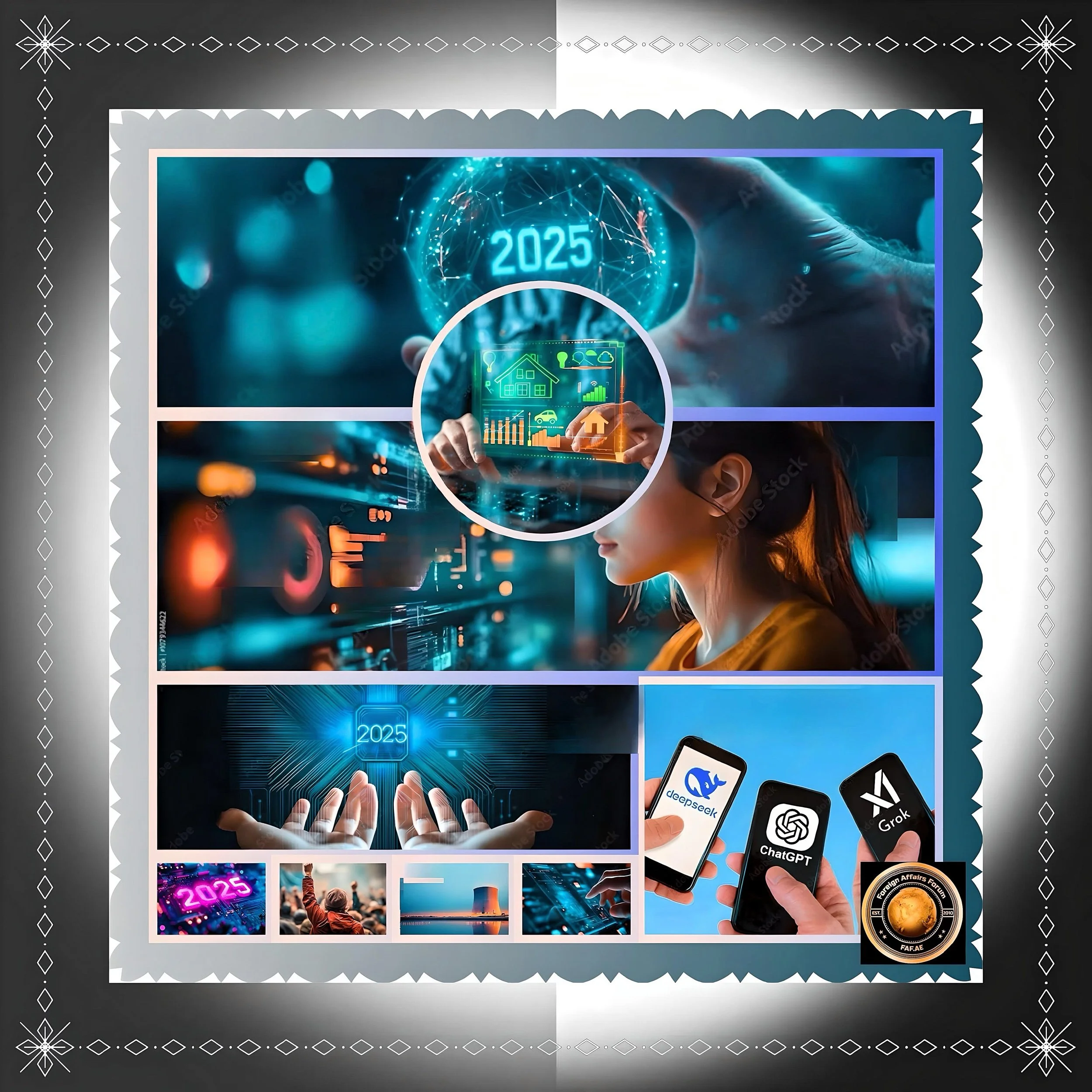
As we navigate through 2025, the technology and innovation landscape continues to evolve rapidly despite being overshadowed by geopolitical developments such as Trump’s tariff policies.
Recent technological advancements promise to reshape industries and everyday life, while ongoing trade tensions present significant challenges to global tech supply chains and market dynamics.
FAF examines the latest technological breakthroughs and the far-reaching implications of Trump’s tariff policies for the global tech sector.
Cutting-Edge Technology Trends of 2025
Generative AI: From Assistant to Collaborator
Artificial intelligence has transcended its role as a mere assistant to become a true collaborator in creativity and problem-solving.
Generative AI is driving enterprise growth and productivity. Forrester predicts it will help businesses generate new revenue streams and reinvent themselves, forcing industries to restructure around the value generated by GenAI.
In 2025, AI will move beyond simple task automation to assist in scientific research, generate hypotheses, analyze data, and automate complex tasks in engineering and healthcare.
Companies increasingly integrate GenAI into their operations to enhance productivity and unlock significant business value. Drunk Elephant, a renowned skincare brand, has already deployed Alibaba Cloud’s GenAI-powered Qwen model in its customer chatbot to enhance customer interactions in China.
This trend exemplifies how AI transforms from a productivity tool to a strategic asset that drives innovation and business growth.
Quantum Computing: A Processing Revolution
Quantum computing represents a fundamental shift in processing power that promises to solve complex problems at unprecedented speeds. IBM projects that quantum computers will process information 100 million times faster than current systems by 2025.
This revolutionary technology will transform cryptography, drug discovery, and climate modeling. Financial institutions are particularly interested in quantum computing for portfolio optimization and risk assessment.
The implications of quantum computing extend far beyond theoretical applications, as businesses and researchers harness this technology to tackle problems previously considered unsolvable.
As quantum systems become more accessible, we can expect breakthroughs across multiple fields that reshape our approach to computation and problem-solving.
Advanced Connectivity: 5G and Beyond
The rollout of 5G technology continues to revolutionize connectivity, offering unprecedented speeds, remarkably reduced latency, and enhanced network reliability.
As 5G expands worldwide, it opens new frontiers in innovation across various sectors, including software development, healthcare, manufacturing, entertainment, and transportation.
This enhanced connectivity serves as the backbone for other emerging technologies, from autonomous vehicles to smart cities, enabling real-time data processing and facilitating more sophisticated IoT applications.
The combination of 5G with edge computing is particularly powerful, as it decentralizes computing and storage closer to data sources like IoT devices, reducing latency for real-time processing in applications such as autonomous vehicles and smart cities.
Sustainable Technology: Innovation for the Planet
Sustainable technology is transforming Sukumar's world by focusing on renewable energy, reducing carbon footprints, and promoting environmental conservation.
Innovations in solar, wind, and hydropower are making renewable energy more efficient and accessible, while energy-efficient appliances and electric vehicles help minimize emissions. Smart home technologies optimize energy use, contributing to the overall sustainability effort.
In 2025, we’ll see sustainable solutions implemented at scale, with renewable energy technologies leading the way.
The circular economy, sustainable agriculture, and water conservation practices have become vital for resource management and waste reduction, reflecting a growing commitment to environmental responsibility in technological development.
Healthcare Revolution: Personalized Medicine
The rise of genomic technology and data-driven healthcare has made treatments tailored to an individual’s genetic makeup increasingly mainstream.
In 2025, we’re witnessing breakthroughs in cancer therapies, rare disease treatments, and vaccines designed to work more effectively for specific demographics.
Wearable health tech and AI are pivotal in monitoring chronic conditions, offering real-time health insights that empower patients and healthcare providers.
This personalized approach to medicine represents a paradigm shift in healthcare delivery, moving away from one-size-fits-all treatments toward individualized care that considers each person’s unique genetic makeup, lifestyle, and health history.
Emerging Technologies: Metaverse, Blockchain, and Digital Twins
The metaverse is among the top technology trends in 2025, fusing virtual and physical realities to revolutionize digital interaction.
By combining elements of AR/VR, blockchain, AI, and customizable avatars, the metaverse creates immersive environments where virtual economies thrive on cryptocurrencies and NFTs. Platforms like Roblox and Horizon Workrooms offer early glimpses into this future.
Blockchain technology continues to extend beyond cryptocurrencies, finding applications in industries like healthcare and finance. Its tamper-resistant nature ensures data integrity and trust among users, with ongoing advancements promising innovations in digital identity, DeFi, NFTs, and sustainability.
Digital twin technology, creating virtual replicas of physical objects by capturing real-time data via IoT sensors, enhances the digital world by enabling predictive maintenance, real-time monitoring, and optimized performance.
This technology facilitates better decision-making, lifecycle management, and process optimization across various industries.
Trump’s Tariffs: Reshaping the Global Tech Landscape
Market Disruption and Supply Chain Challenges
President Trump’s sweeping tariffs have had immediate repercussions on the tech industry. Markets plummeted after the tariffs took effect, with major tech companies tumbling.
The S&P 500 saw its worst day since the COVID-19 pandemic crash in 2020, with the Dow Jones Industrial Average dropping by over 1,600 points and the Nasdaq falling by six percent.
Tech giants felt the impact acutely: Amazon, Nvidia, Meta, and Apple saw their stocks drop by seven percent or more, with Apple losing over $300 billion in market value.
Semiconductor and personal computer markets like Micron, HP, and Dell experienced double-digit losses, highlighting the tariffs’ far-reaching effects on the tech sector.
The tariffs are poised to dramatically reshape global supply chains for tech companies that have long relied on free trade with many affected countries.
Apple, which makes a majority of its iPhone products in China, faces potential price spikes of up to 40 percent for iPhones due to the tariffs.
E-commerce giant Amazon, which relies on products sold by third-party vendors in China, is also feeling the strain.
Manufacturing Shifts: India’s Rising Prominence
In response to Trump’s tariff policies, major tech companies are rethinking their manufacturing strategies.
Apple and Samsung are reportedly shifting a larger part of their global production to India as a direct response to the higher import tariffs.
With the US now imposing a 54 percent duty on Chinese products, 46 percent on Vietnamese goods, and 26 percent on Indian exports, India has emerged as the most viable manufacturing base among the three for shipments to the US.
Apple has been manufacturing iPhones in India for some time, and industry officials suggest that “India’s factories will be increasingly used to ship only to the US” while “demand in other markets such as Europe, Latin America and even Asia will now be catered to from the China factories”.
This shift could bring significant expansion and fresh investments from Foxconn and Tata, potentially increasing iPhone shipments to the US beyond the current estimate of $10 billion for this financial year.
Samsung, which has traditionally relied on its Vietnam production hub, is also affected by the new tariff policy. The company exports about $55 billion worth of electronics from Vietnam, but the higher duties make shipping from India more economical despite the 26 percent tariff.
Global Retaliation and Trade Tensions
The tariffs have prompted threats of retaliation from other global powers, with the tech sector emerging as a likely target.
European Commission President Ursula von der Leyen stated that Europe “holds a lot of cards” it could use to retaliate, including targeting digital services.
Similarly, a French government spokesperson indicated that France is “ready for this trade war” and is looking at US “digital services” as part of its response, specifically calling out Meta, Alphabet, Apple, Microsoft, and Amazon.
These retaliatory measures could place Silicon Valley at the center of the global trade dispute, potentially disrupting the operations of US tech giants in important international markets.
Some industry leaders, however, hope the Trump administration might use the tariffs as a bargaining tool to defang foreign rules targeting their companies, including the European Union’s sweeping regulations.
Impact on IT Services and Tech Spending
The tariff situation has sparked fears of a consumption slowdown in the US, potentially squeezing American clients’ tech spending.
For the Indian IT sector, which derives over 60 percent of its revenue from North America, this presents significant challenges.
Analysts at HFS Research note that the tariff hike on Indian exports to the US was higher than anticipated at 26 percent, further fueling recession fears and potentially leading to negative impacts on spending for IT services.
The deterioration in the macro environment is expected to weigh heavily on growth estimates for large IT companies in FY26, which was earlier anticipated to be a revival year.
Analysts at BNP Paribas warn that “some of the US macroeconomic data have started showing signs of a slowdown, raising the risk of a stagflation at best and a recession at worst”.
Conclusion
Navigating Innovation in an Era of Trade Uncertainty
As we progress through 2025, the technology landscape continues to evolve with remarkable innovations in AI, quantum computing, healthcare, sustainability, and digital experiences.
These advancements promise to transform industries and improve quality of life globally. However, the shadow of Trump’s tariff policies looms large over the tech sector, disrupting markets, reshaping supply chains, and potentially slowing innovation.
The resilience of the technology industry will be tested as companies navigate these geopolitical challenges while continuing to push the boundaries of innovation.
Manufacturing shifts to countries like India represent just one adaptation strategy as the global tech ecosystem responds to changing trade dynamics.
Whether these shifts will ultimately accelerate or hinder technological progress remains to be seen, but what’s clear is that the interplay between politics and technology will continue to shape our digital future in profound ways.
As we look ahead, the ability of tech companies to adapt to these trade tensions while maintaining their innovation momentum will determine the pace and direction of technological advancement in the coming years.
Despite the current focus on tariffs and trade disputes, the fundamental drivers of technological progress remain strong, suggesting that innovation will continue, albeit potentially along new and unexpected paths.