Trump’s Tariff Policies: Magical Thinking vs. Manufacturing Reality
Introduction
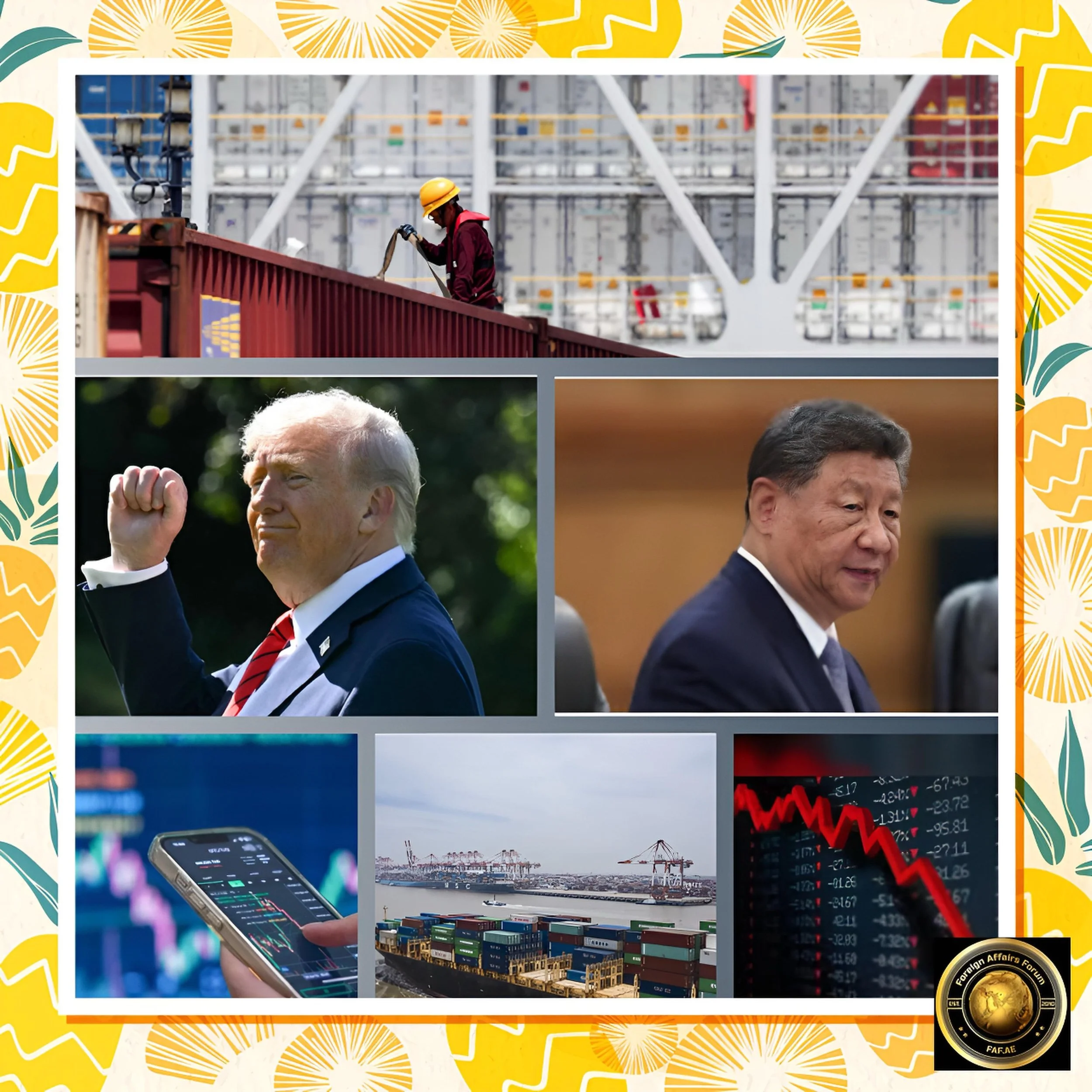
Recent escalations in U.S. tariff policies under President Trump have reignited debate about the effectiveness of protectionist trade measures in revitalizing American manufacturing.
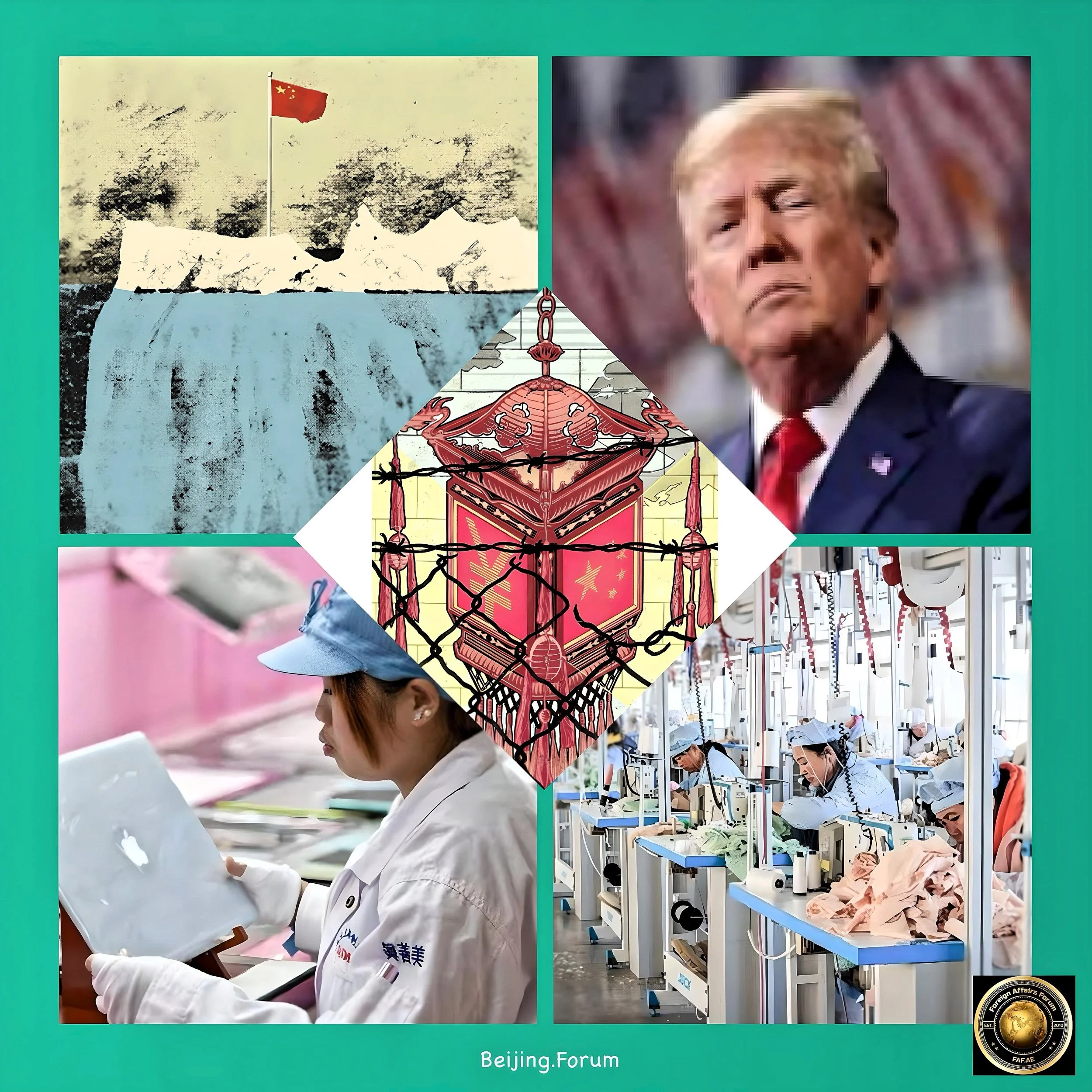
On April 10, 2025, Trump raised tariffs on Chinese imports to 125% while implementing a 90-day suspension of reciprocal tariffs for other nations, effectively initiating a trade war between the world’s two largest economies.
FAF analyzes what many economists describe as “magical thinking” in Trump’s tariff approach – the belief that tariffs alone can revitalize American manufacturing without addressing the complex realities of global supply chains and China’s manufacturing advantages.
The Tariff “Magic Potion”: Trump’s Current Trade Policy
President Trump’s recent tariff announcement significantly escalates his administration’s protectionist trade stance.
By raising tariffs on Chinese imports to 125% while pausing reciprocal tariffs for other nations for 90 days, Trump has created a dual approach targeting China specifically while offering temporary relief to other trading partners.
The European Union quickly responded by mirroring Trump’s 90-day tariff freeze, postponing its initial wave of retaliatory tariffs on American goods.
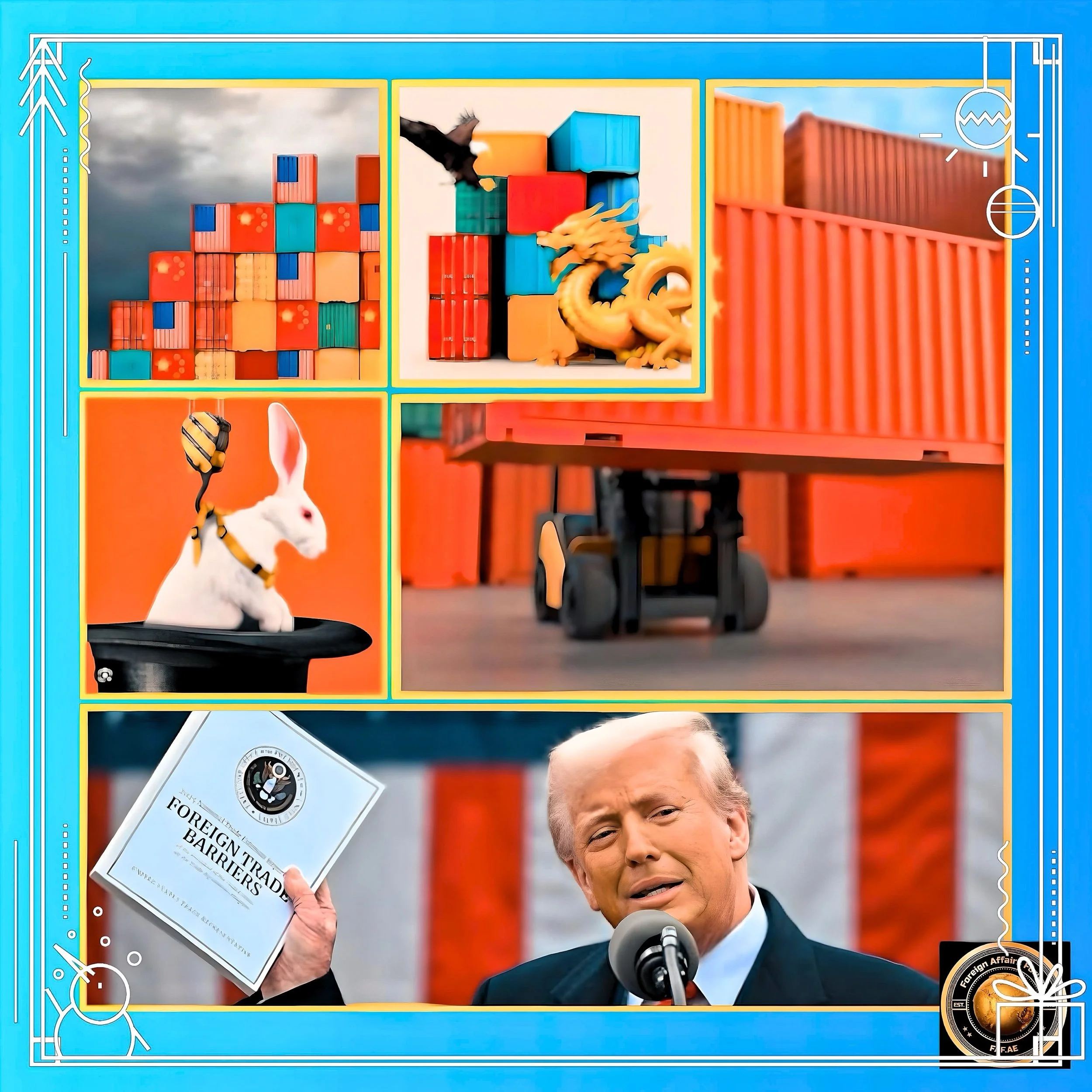
Trump has portrayed tariffs as a cure-all for America’s economic challenges – what some critics have dubbed a “Magic Potion.”
He argues that tariffs will restore American manufacturing and generate “trillions and trillions of dollars” in government revenue, which could be used to lower taxes and pay down the national debt.
According to his team’s projections, the announced tariffs would generate $6 trillion over a decade, with the flat 10% tariff on all imports allegedly creating 2.8 million jobs by reshoring industries.
Commerce Secretary Howard Lutnick expressed unwavering confidence in this approach, telling CNN: “Let Donald Trump run the global economy.
He knows what he’s doing. He’s been talking about it for 35 years. You’ve got to trust Donald Trump in the White House”.
This confidence comes despite widespread skepticism from economists and trade experts about the projected benefits of tariff policies.
Beyond Magical Thinking: The Reality of Global Supply Chains
The fundamental flaw in Trump’s tariff approach is its misunderstanding of modern manufacturing. Every complex product today – from cars to iPhones to mRNA vaccines – is manufactured through intricate global supply chains that have evolved over decades to optimize efficiency, quality, and cost.
Research from Princeton University economists demonstrates that unanticipated tariffs significantly disrupt firm-to-firm supply relationships.
Their study found that tariffs lead to costly renegotiation with initial suppliers or necessitate expensive searches for replacements.
When calibrating their model to match initial import shares and the estimated responses to previous US tariffs imposed on China, they found an overall welfare loss of 0.12 percent of GDP, with substantial contributions coming from changes in input sourcing and search costs.
The interconnected nature of global production means that tariffs don’t simply shift production from one country to another—they disrupt entire ecosystems.
The Economic Times explains that production is broken down “into pieces” globally, with “a key player on a particular component.” This specialization has enabled companies to optimize supply chains over the past half-century, making simple protectionist approaches increasingly problematic.
From semiconductors in Taiwan to medicines in India, the global production of goods has become highly specialized, allowing companies to optimize their supply chains.
Trump’s trade war risks fragmenting this status quo for global logistics, potentially causing commodity prices to skyrocket. Even specialized companies like Taiwan’s TSMC, which produces cutting-edge electronic chips used by firms like Apple and Nvidia, are integrated into global supply networks that cannot be easily replicated domestically.
The “China Fitness Club”: Why Tariffs Alone Won’t Bring Manufacturing Back
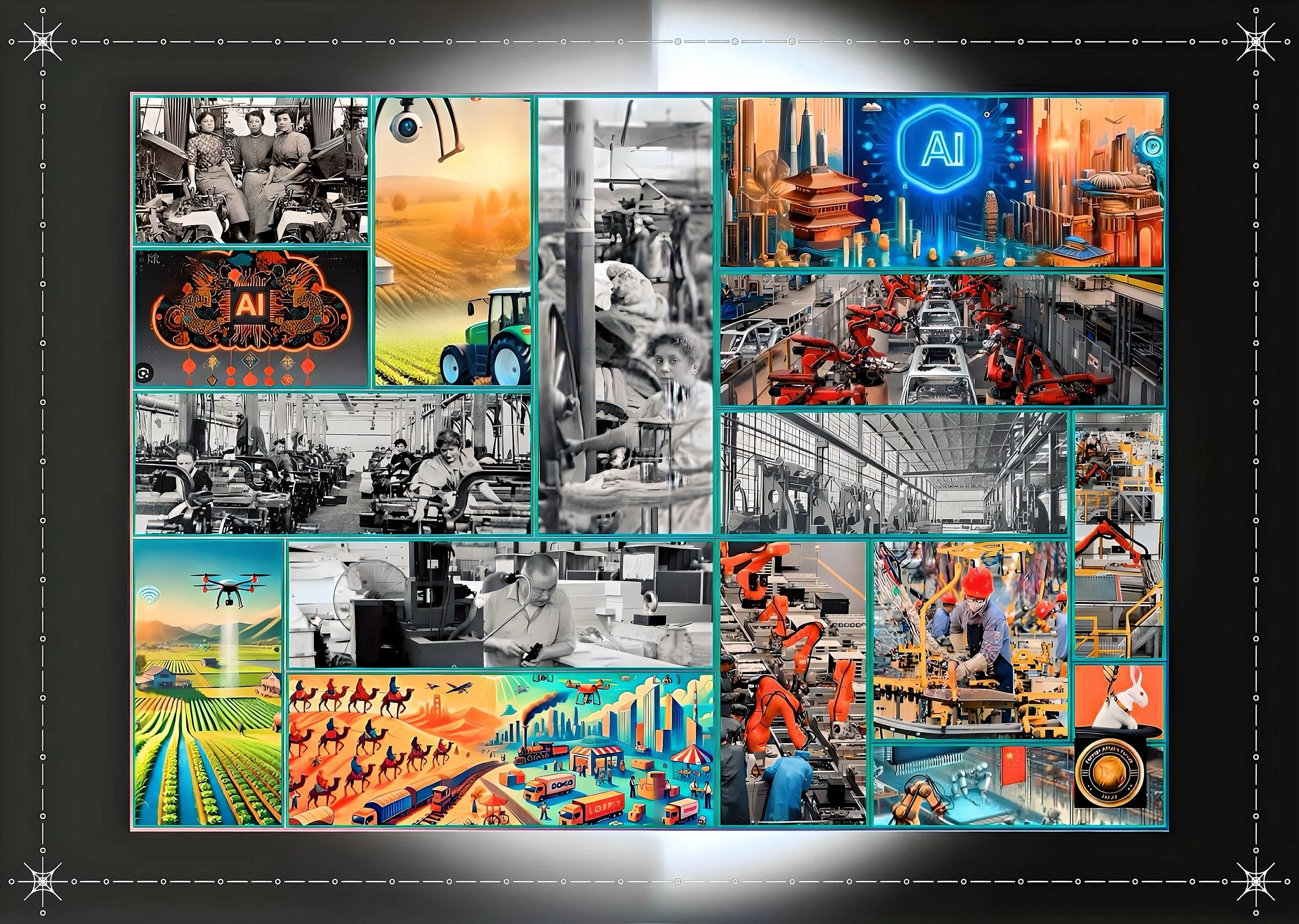
China’s manufacturing dominance extends far beyond just cheap labor or unfair practices. China has emerged as the world’s largest manufacturing hub, accounting for 28% of global manufacturing output in 2023.
Its manufacturing landscape encompasses diverse industries, from electronics and textiles to automobiles, machinery, and chemicals, and it is supported by an extensive network of suppliers, manufacturers, and logistics providers.
A key element of China’s manufacturing success is its emphasis on workforce development, which the opinion piece calls the “China fitness club.”
The country produces approximately 3.5 million STEM graduates annually, roughly equivalent to the total number of graduates from all disciplines in the United States. This emphasis on technical education creates a deep talent pool that can tackle complex manufacturing challenges.
Beyond higher education, China’s vocational schools graduate tens of thousands of skilled workers—electricians, welders, carpenters, mechanics, and plumbers—creating a comprehensive workforce capable of rapidly setting up manufacturing facilities.
China has invested significantly in vocational education and training (VET), creating one of the most skilled workforces in the world. This focus on vocational training is a key differentiator raising the bar regarding workforce development.
This skilled labor force is complemented by world-class infrastructure, including high-speed rail connecting over 550 Chinese cities, facilitating rapid movement of goods and people.
This combination of education, infrastructure, and government support creates a manufacturing ecosystem that makes production “cheaper, faster, better, smarter and increasingly infused with A.I.”
The AI Acceleration: How Technology Compounds China’s Advantages
The integration of artificial intelligence into manufacturing represents the next frontier in global competition, and China is making significant strides in this area. DeepSeek, a previously little-known Chinese artificial intelligence company, has produced a “game-changing” large language model that promises to reshape the AI landscape.
While the supposedly free-market US has often prioritized proprietary models, China has built a thriving AI ecosystem by leveraging open-source technology, fostering collaboration between government-backed research institutions and major tech firms.
This strategy has enabled China to scale its AI innovation rapidly while the US remains limited by restrictive corporate structures. Despite promoting open-source initiatives, companies like Google and Meta rely heavily on closed-source strategies that limit broader access and collaboration.
DeepSeek's ability to achieve cutting-edge performance while reducing computing costs is particularly disruptive. US firms have struggled in this area due to their dependence on training models that demand costly processing hardware.
This advantage in AI efficiency could further enhance China’s manufacturing capabilities.
Unlike the West, where companies promote open-source models for strategic business gains, China sees them as a means of national technological self-sufficiency.
To this end, the National AI Team, composed of 23 leading private enterprises, has developed the National AI Open Innovation Platform, which provides open access to AI datasets, toolkits, libraries, and other computing resources.
This approach perfectly encapsulates “AI with Chinese characteristics” – a fusion of state guidance, private-sector ingenuity, and open-source collaboration.
The Economic Reality: Costs of the Tariff Approach
While Trump portrays tariffs as a financial boon, economic experts are skeptical about these claims. The Wall Street Journal editorialized that “Mr. Trump is making a deliberate decision to transfer wealth from consumers to businesses and workers protected from competition behind high tariff walls.
Over time, this will mean the gradual erosion of US competitiveness. Tariffs that blunt competition invites monopoly profits while reducing the need to innovate. “
The Economist was even more direct, stating: “On economics, Mr Trump’s assertions are flat-out nonsense.
The president says tariffs are needed to close America’s trade deficit, which he sees as a transfer of wealth to foreigners. Yet, as any of the president’s economists could have told him, this long-running reality has not stopped its economy from outpacing the rest of the G7 for over three decades”.
Before Trump’s recent actions, the weighted average tariff rate on US imports was just 2%. Under Trump’s new tariff regime—dubbed the ‘Trump Potion’—that figure is projected to surge to somewhere between 24% and 27%. As noted by CBS News, this represents the highest effective US tariff rate since 1909.
In the 19th century, average U.S. tariff rates on trading partners routinely exceeded 30%, but the government sharply reduced those levies after the Great Depression, cutting them to single digits.
After resuming power in 2025, President Trump raised the effective U.S. tariff to 22% — the highest since 1909.
The economic impact of these tariffs will likely be borne primarily by American consumers. As Karl Rove pointed out in The Wall Street Journal: “The problem for Republicans is that Mr. Trump was elected to stop inflation.
A March 28 CBS News poll found that 64% of Americans already think Mr. Trump isn’t focused enough on ‘lowering prices’, while 55% say he’s focused too much on raising tariffs”.
Beyond Magical Thinking: Alternative Approaches to US-China Trade
A more realistic approach to U.S.-China trade relations might be characterized as: “Made in America, by American Workers, in Partnership With Chinese Capital, Technology and Experts.”
This would reverse the strategy China used to develop its manufacturing base in the 1990s, which was: “Made in China, by Chinese Workers, With American, European, Korean and Japanese Capital, Technology and Partners.”
This collaborative approach would combine targeted tariffs on China with incentives for Chinese companies to enter the US market by licensing their manufacturing innovations to US firms or partnering with them to create advanced manufacturing facilities in joint ventures.
These ventures would need to gradually increase the percentage of locally sourced parts rather than relying indefinitely on imports.
Such an approach acknowledges the reality of global interdependence while seeking to build more resilient domestic manufacturing capabilities. It would require rebuilding trust between the US and China, which is currently at a low point.
Conclusion: Beyond the Magic Potion - Toward Realistic Trade Policy
Trump’s tariff policies reflect a simplified view of global trade and manufacturing that fails to account for the complex realities of modern supply chains and China’s structural advantages.
The “magical thinking” that tariffs alone can revitalize American manufacturing without addressing deeper structural issues is unlikely to achieve its stated goals.
The evidence suggests that tariffs will likely lead to higher consumer prices, disrupted supply chains, and potential retaliation from trading partners without necessarily rebuilding American manufacturing capacity.
The Princeton University study’s finding of a 0.12% GDP welfare loss from previous China tariffs indicates that these policies come with real economic costs.
Rather than viewing US-China trade through a purely competitive lens, policymakers might consider more collaborative approaches that acknowledge the reality of global interdependence while working to strengthen domestic manufacturing capabilities.
This would require addressing issues like workforce development, infrastructure, and technological innovation—the elements that have made China’s “fitness club” so effective.
As global competition increasingly focuses on technological innovation, particularly in AI, the US risks falling behind if it focuses solely on protectionist measures rather than investing in its own capabilities and seeking strategic partnerships.
The emergence of companies like DeepSeek demonstrates that China is making rapid progress in areas that will shape the future of manufacturing.
Interdependence between the U.S. and China is no longer a choice but a condition. The only real choice is whether to forge healthy interdependencies and rise together, or maintain unhealthy interdependencies and fall together.
Finding a path that acknowledges this reality while addressing legitimate concerns about fair trade practices remains one of the central economic and political challenges of our time.