The State of Global Innovation Amid Geopolitical Turbulence: A 2025 Perspective
Introduction
Is innovation at a standstill? Are we feeling it?
Contrary to perceptions of stagnation, global innovation remains dynamic despite geopolitical tensions, trade wars, and shifting policy landscapes.
While challenges exist, particularly in sectors exposed to U.S.-China decoupling and U.S. budget cuts under Trump-era policies, data reveals a complex mosaic of growth, adaptation, and strategic realignment across nations.
Global R&D Expenditure: Diverging Trajectories
Sustained Growth with Regional Variations
Global R&D spending reached $2.75 trillion in 2023, projected 8.3% growth in 2024 and continued expansion through 2025. However, regional disparities are stark:
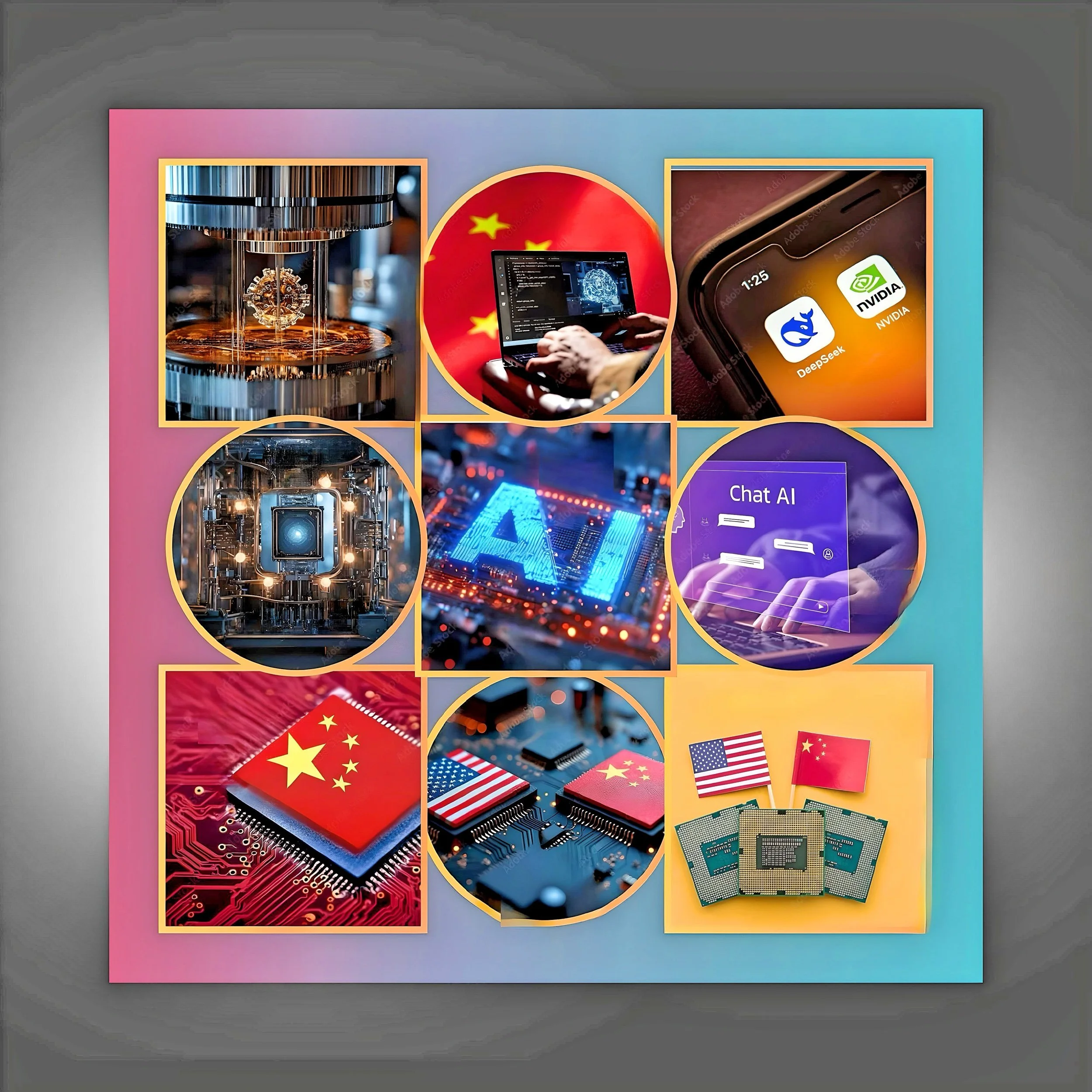
China’s R&D expenditure grew by 8.7% in 2023, narrowing its gap with the U.S. to just 4% regarding purchasing power parity.
Strategic investments in semiconductors ($55 billion in 2025), AI, and quantum computing underscore its ambition for technological self-reliance.
The OECD area saw slower growth (2.4% in 2023), with Germany (0.8%) and France (-0.5%) lagging, while Japan (2.7%) and South Korea (3.7%) outperformed.
The EU increased Horizon Europe funding by €25 million for 2025, prioritizing competitiveness through missions like climate-neutral cities and cancer cure research.
U.S. R&D: Mixed Signals Under Trump Policies
While the Trump administration proposed $4 billion cuts to NIH overhead costs (reducing indirect funding rates from 30% to 15%), overall federal R&D budgets tell a more nuanced story:
The FY2025 proposal includes $201.9 billion for R&D, a 4% nominal increase from 2024.
Defense-related R&D surged 9.2% in 2023, while non-defense spending grew modestly at 1.7%.
Private sector leadership persists, with firms like Google and Amazon driving 70% of U.S. R&D.
This bifurcation-public austerity paired with private sector growth reflects a broader shift toward commercialization over basic research, raising concerns about long-term innovation pipelines.
Geopolitical Fractures Reshaping Innovation Ecosystems
The U.S.-China Tech Decoupling Accelerates
The trade war triggered measurable divergence:
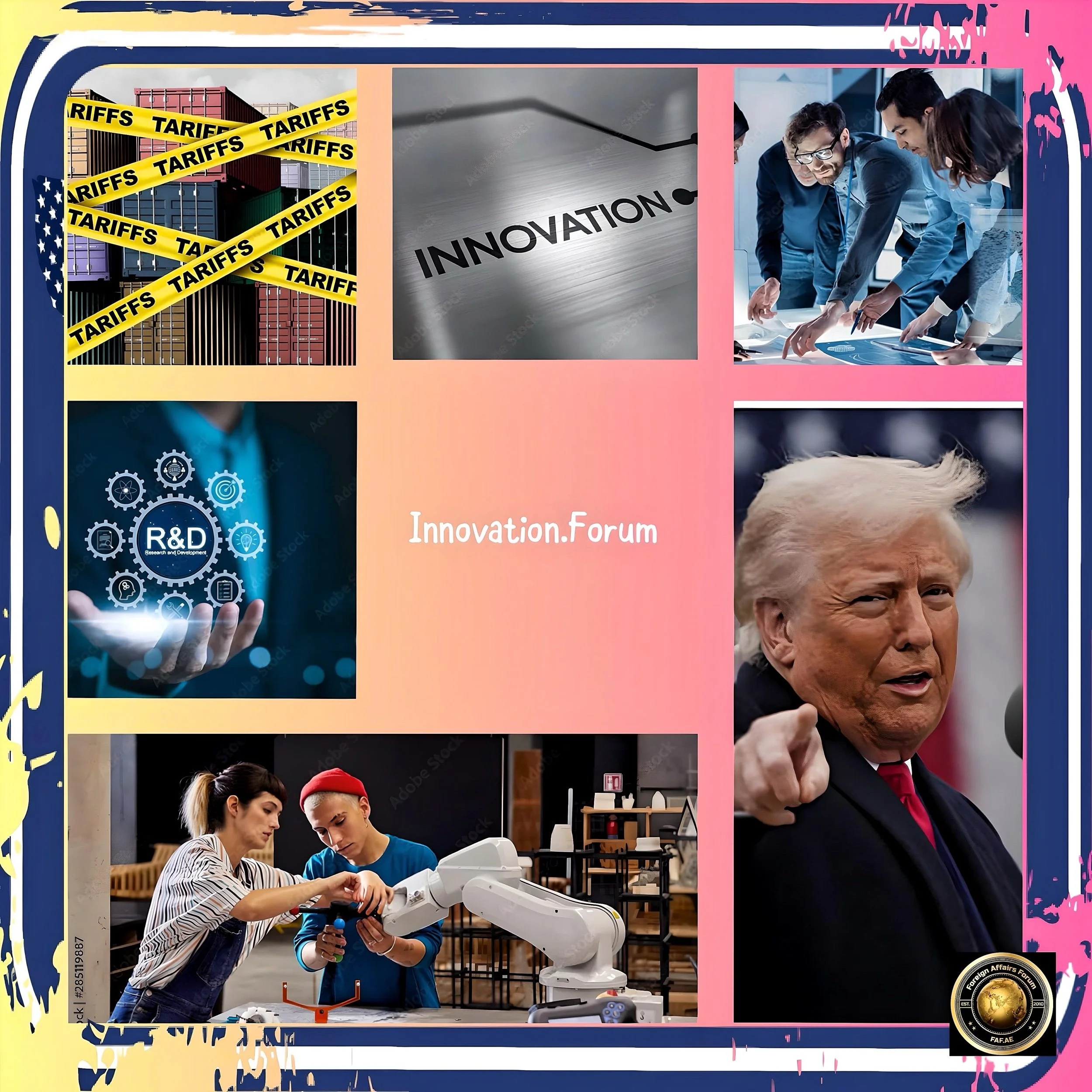
Chinese firms exposed to 10% higher U.S. tariffs reduced patent filings by 3.01% and shifted innovation away from U.S. technological trajectories.
For example, Xiaomi pivoted camera R&D toward Asian/European markets after U.S. market barriers.
Cross-border semiconductor investments plummeted 68% from 2018 to 2023, with China redirecting $142 billion toward domestic foundries.
Textual analysis of patents shows a 2.04% decline in China-U.S. innovation similarity per 10% tariff hike, with demand shocks explaining 48% of divergence.
Regional Blocs Emerge
Japan committed ¥1.05 trillion ($7 billion) to next-gen chips and quantum computing, subsidizing Rapidus’ 2nm fab and TSMC’s Kumamoto expansion.
India doubled R&D spending to $15 billion (2021) but remains hamstrung by low private sector participation (30% vs. 70% in China/U.S.).
The EU’s Chips Act and Quantum Flagship program aim to capture 20% of global semiconductor production by 2030, backed by €43 billion in public-private funds.
Policy Impacts on Innovation Velocity
Tariffs as Innovation Inhibitors
The U.S.-China trade war created systemic drags:
ICT firms saw operating costs rise 12–18%, reducing R&D ROI by up to 50%.
U.S. semiconductor firms lost $8.3 billion in 2023 from China counter-tariffs, delaying 3nm node deployments.
Cross-border AI collaboration papers declined 22% from 2020 to 2024, with China-Russia partnerships filling the void.
Budgetary Pressures Reshape Priorities
Trump-era cuts have uneven impacts
NIH has lost 14% inflation-adjusted funding since 2020, slowing Alzheimer’s and cancer trials.
The National Science Foundation laid off 9% of staff in 2024, delaying quantum computing grants.
Conversely, DARPA’s budget grew 11% in 2025, prioritizing hypersonics and AI warfare applications.
Innovation Indexes Reveal Shifting Power Dynamics
Global Innovation Index 2024 Highlights
Switzerland leads for the 14th year, excelling in knowledge outputs (1st) and creative exports (1st).
China climbed to 11th, driven by education reforms and “Science and Technology Innovation 2030” megaprojects.
India rose to 39th, leveraging digital public infrastructure and space tech commercialization.
Vietnam (+15 spots) and the Philippines (+12) emerged as Southeast Asian innovation hubs.
Sectoral Leaders
AI Hardware
Nvidia dominates 78% of data center AI chip market, with spending projected at $202 billion in 2025.
Quantum Computing
China’s “Jiuzhang 3.0” leads with a 255-photon quantum advantage, while IBM targets 4,158-qubit processors by 2026.
BioPharma
mRNA vaccine R&D grew 29% in 2023, led by BioNTech’s malaria and HIV candidates.
The Path Ahead: Innovation Amid Discord
Escalating Tech Nationalism
Export controls now cover 18% of global trade, up from 5% in 2018, fragmenting R&D ecosystems.
China’s “Dual Circulation” strategy aims for 70% tech self-sufficiency by 2030, backed by $1.4 trillion in state-guided funds.
The U.S. CHIPS Act has attracted $166 billion in private semiconductor investments, but there is a shortage of 42,000 engineers.
Green Tech as Common Ground
Despite tensions, climate innovation thrives:
Global green patent filings grew 14% in 2024, led by the EU (37%) and China (29%).
Hydrogen electrolyzer costs fell to $250/kW, enabling 650+ green steel projects worldwide.
The U.S.-India Critical Minerals Pact aims to bypass China and target 500% growth in rare earth output by 2030.
Conclusion
Innovation Persists, Transforms
The data refutes claims of global innovation stagnation. Rather than a uniform decline, we observe:
Strategic reallocation
Nations prioritize defense, AI, and climate tech over basic research.
Regional consolidation
U.S.-China decoupling births parallel tech stacks while the EU and Japan carve niches.
Private sector primacy
Corporate R&D drives 74% of OECD innovation, compared to 66% in 2010.
While Trump-era policies introduced volatility, U.S. federal R&D grew by just 1.7% in 2023 versus China’s 8.7%, and they haven’t triggered a broader “innovation winter.”
The challenge lies in managing competing priorities: national security demands versus open science traditions and short-term budget constraints against long-term existential risks.
Nations that ignore this balance risk being outpaced in critical domains like quantum computing and synthetic biology, where China and the EU are making strategic bets.
The innovation race continues but on fractured tracks.