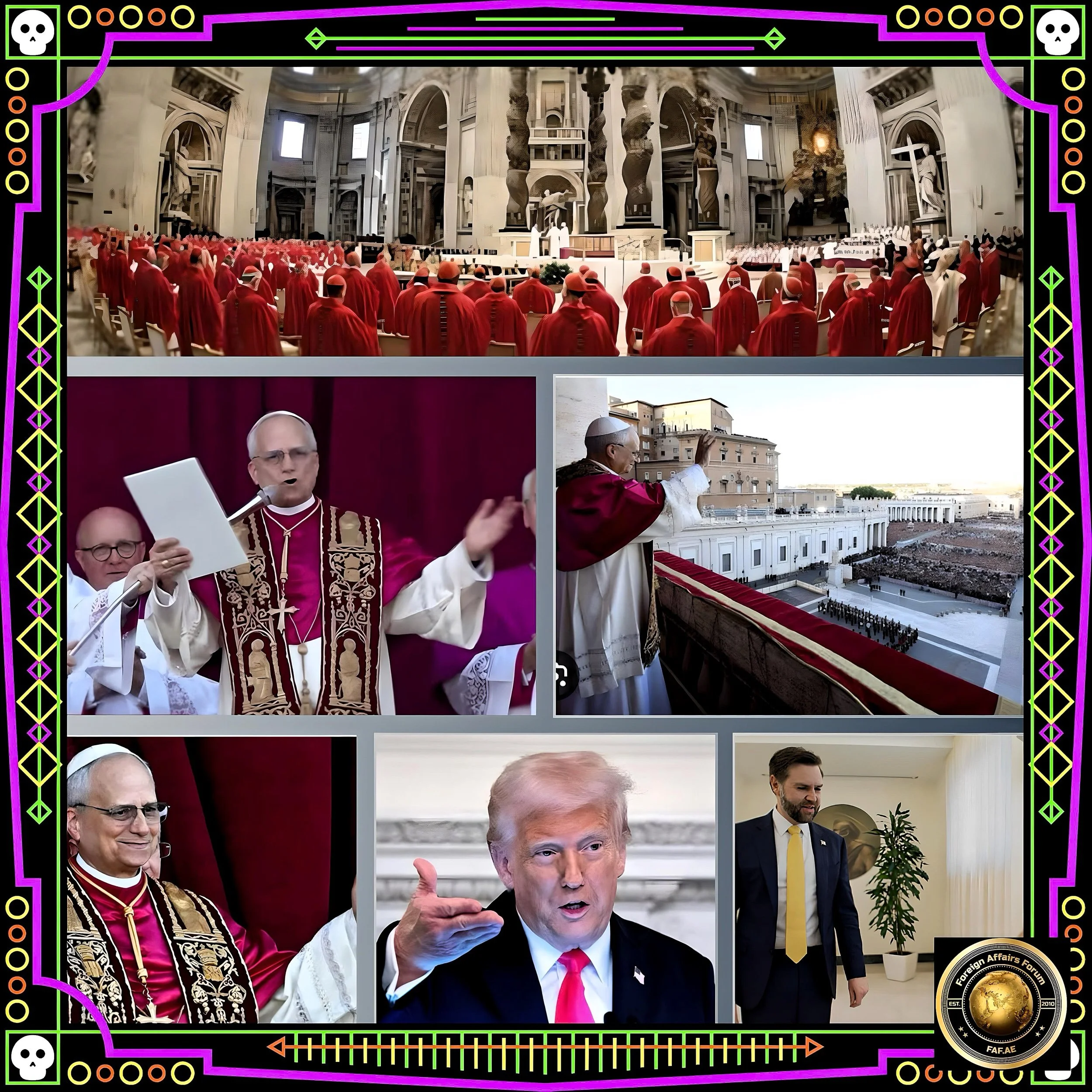
Pope Francis’ Final Farewell: World Leaders Gather for Historic Funeral
Introduction
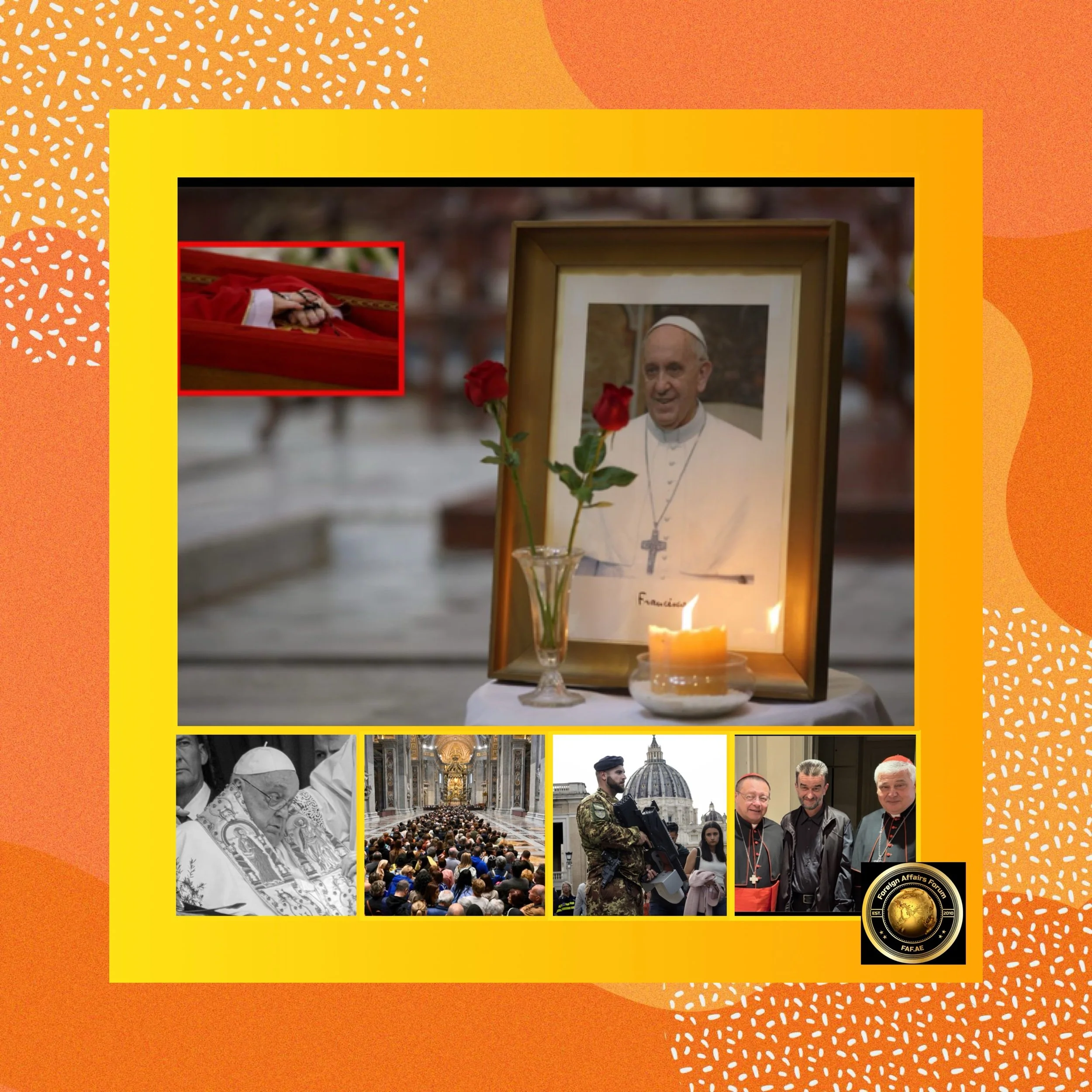
On April 26, 2025, the world bid farewell to Pope Francis in a solemn yet powerful funeral ceremony that reflected his humility and dedication to the marginalized.
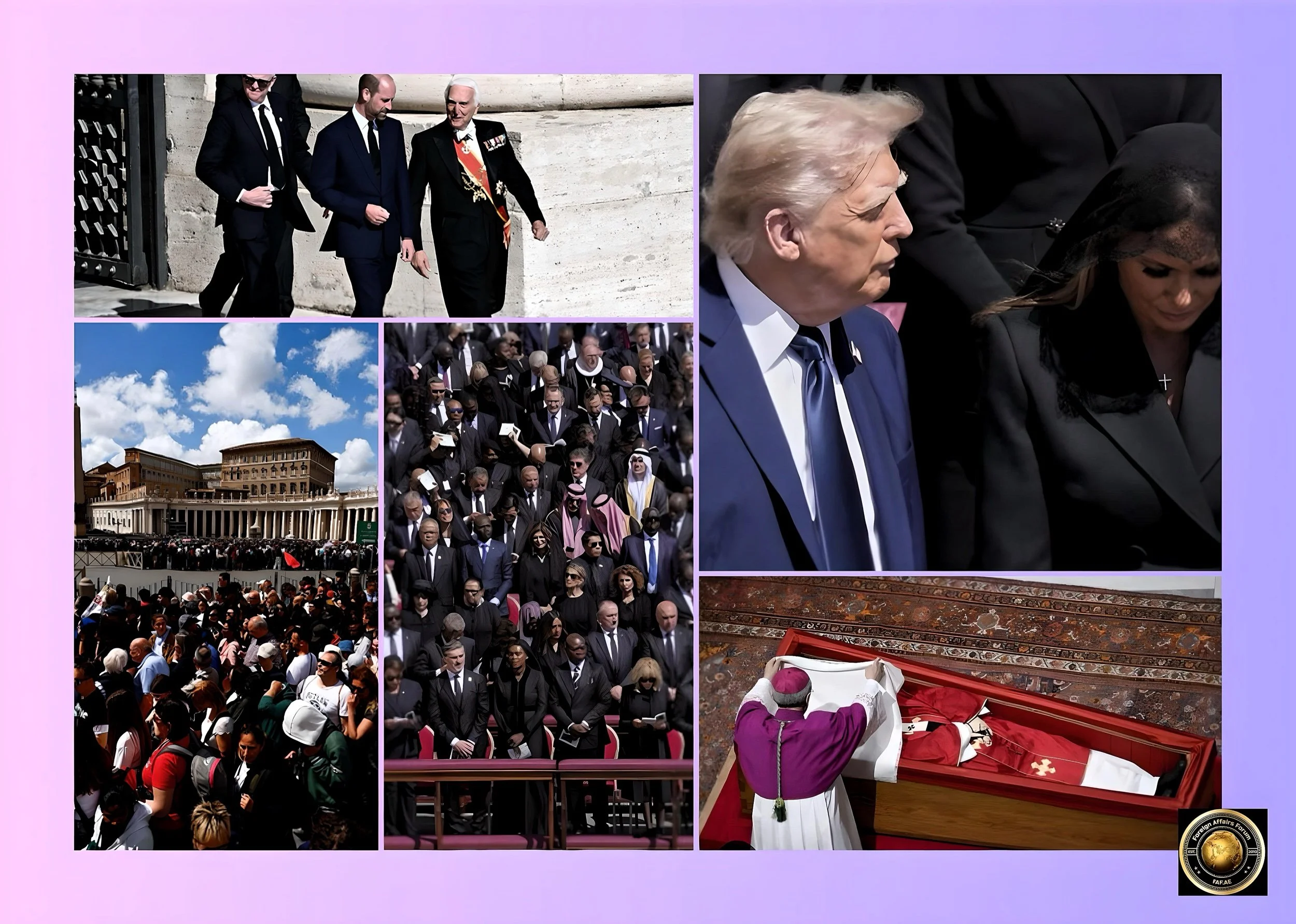
Approximately 250,000 mourners gathered in St. Peter’s Square for the Mass led by Cardinal Giovanni Battista Re.
At the same time, global leaders from across political and ideological divides honored the late pontiff, who died at age 88 on Easter Monday.
The funeral highlighted Pope Francis’s wish for simplicity, from his plain wooden coffin to his unconventional burial in the Basilica of St. Mary Major rather than the Vatican—the first pope in nearly a century to be interred elsewhere.
As his coffin traveled through Rome in a modified popemobile, emotional crowds lined the streets.
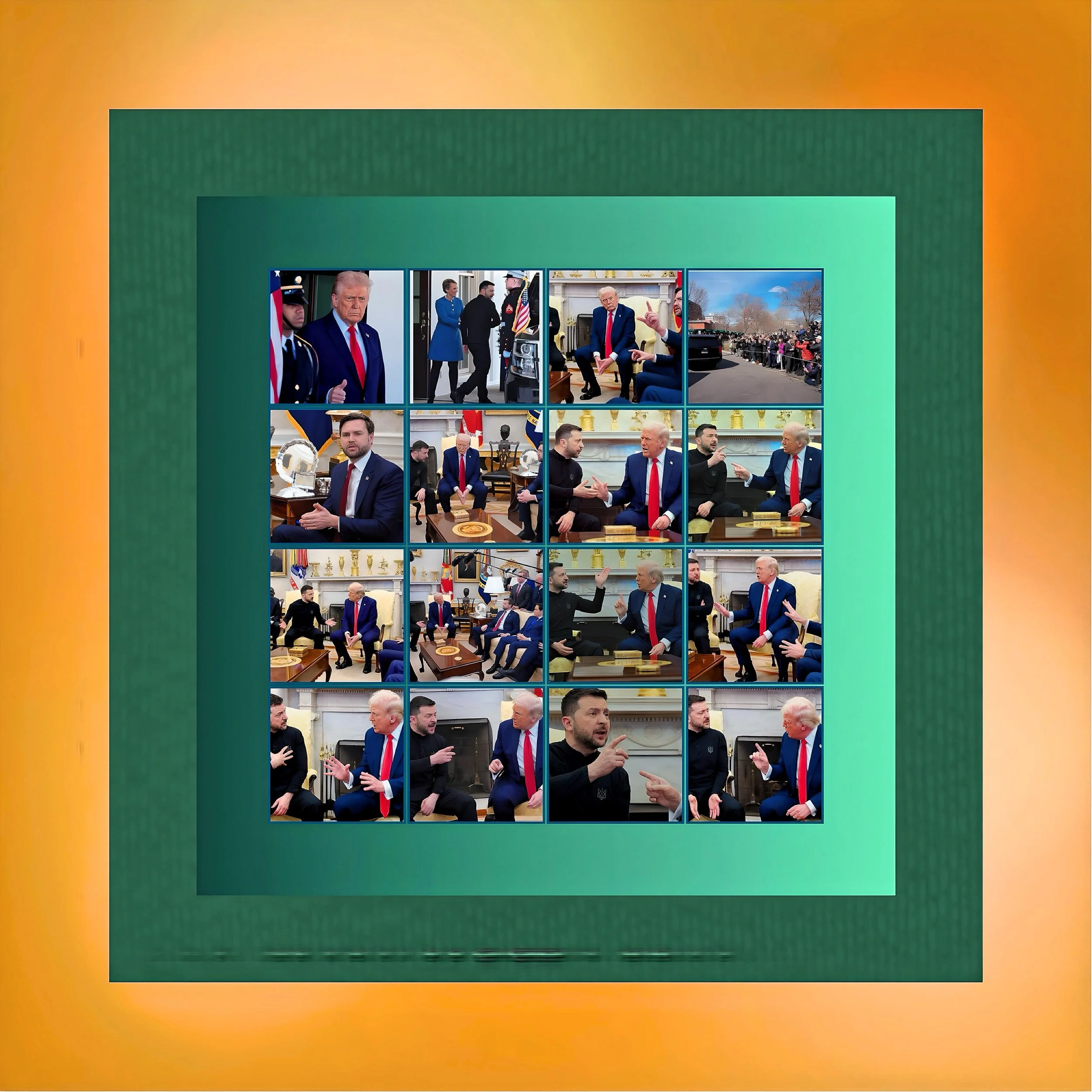
At the same time, diplomacy unfolded behind the scenes with notable meetings between world leaders, including a significant exchange between President Trump and President Zelensky of Ukraine.
The Funeral Ceremony: Simplicity Amidst Grandeur
In keeping with Pope Francis’ character and explicit wishes, the funeral ceremony at St. Peter’s Square demonstrated a deliberate simplicity despite the grand setting.
Cardinal Giovanni Battista Re, aged 91 and dean of the College of Cardinals, presided over the Mass and, in his homily, praised Francis as “a pope who walked among the people, with an open heart for all.”
He emphasized the pontiff’s direct engagement with individuals, particularly those facing hardships, and his unwavering dedication to the marginalized.
The ceremony began with pallbearers carrying the pope’s plain wooden coffin, adorned with a large cross, into the square as church bells rang out and the crowd erupted in applause.
This simplicity was by design had approved plans to simplify the rubrics of the funeral rites, opting for a basic wooden coffin lined with zinc rather than the traditional three nested coffins (cypress, lead, and elm) used for previous popes.
Many mourners had camped overnight to secure a place at the funeral. Maria Fierro from Spain shared, “We have waited all night. Being with him in his final moments is very moving”.
A Franciscan nun added that she had stayed awake the entire night, wanting to bid farewell to a man she described as “a living saint, humble and simple.”
According to Vatican estimates, 250,000 people flocked to the funeral Mass, with an additional 150,000 lining the motorcade route through downtown Rome.
The service lasted approximately two hours, shorter than the three-hour service for Pope John Paul II in 2005.
World Leaders and Dignitaries
A Global Gathering
The Vatican confirmed that at least 130 foreign delegations, including 50 heads of state and 10 reigning monarchs, attended Pope Francis' funeral.
The seating arrangement followed Vatican protocol, with reigning monarchs occupying the front rows, followed by heads of state arranged alphabetically based on their countries’ names in French.
United States Representation
President Donald Trump and First Lady Melania Trump were seated in the front row near Francis’ coffin.
The President confirmed via his social media platform that they would attend, stating they both “look forward to being there.”
Former President Joe Biden, the second Catholic to serve as U.S. president, was also present with his wife, Jill, seated four rows behind Trump.
European Leaders
Prince William represented the British royal family, attending in place of King Charles III, a modern tradition as Charles had represented Queen Elizabeth II at Pope John Paul II’s funeral in 2005.
British Prime Minister Keir Starmer also attended with his wife, Victoria.
French President Emmanuel Macron and his wife Brigitte were seated across the aisle from the Trumps.
Other European leaders included European Commission President Ursula von der Leyen, European Council President Antonio Costa, Italian Prime Minister Giorgia Meloni, German ex-Chancellor Olaf Scholz, and numerous heads of state across Europe.
Notable International Attendees
Ukrainian President Volodymyr Zelensky attended, as confirmed by his communications advisor.
His arrival was met with enthusiastic applause from the crowd watching on large screens throughout the square.
President Javier Milei of Argentina, Pope Francis’ native country, occupied one of the most prominent seats as a gesture of respect to the pontiff’s homeland.
Numerous other dignitaries attended the funeral, including UN Secretary-General Antonio Guterres, President Droupadi Murmu of India, and royalty from Belgium, Sweden, Denmark, and Jordan.
International Leaders Pay Tribute
Words of Respect and Memory
World leaders from various backgrounds offered heartfelt tributes to Pope Francis, reflecting on his impact and legacy.
President Donald Trump remembered the pope as “a good man” who loved the world and a “fantastic kind of a guy.”
Despite their often-strained relationship and fundamental differences on migration and climate change, Trump’s attendance demonstrated respect for the pontiff’s global significance.
Ukrainian President Zelensky paid tribute on his official social media account: “We remember his prayers for peace in Ukraine.
Our state will be represented in Rome at the Saturday farewell ceremony”.
He noted that he had last met with Pope Francis in October 2024 during a European diplomatic tour.
Former U.S. President Joe Biden wrote: “Pope Francis will be remembered as one of the most consequential leaders of our time, and I am better for having known him.”
Biden reflected that the pope “served the vulnerable across the world, and his mission of aiding the poor never faltered.”
Italian Prime Minister Giorgia Meloni, who canceled a diplomatic visit to Uzbekistan and Kazakhstan to attend the funeral, expressed a personal connection to the late pontiff: “I had the privilege of enjoying his friendship, his advice, his teachings, which never ceased not even during times of trial and suffering.”
She said before the Italian Parliament, “I will always be grateful to Pope Francis for the time we spent together, for his teachings and advice.”
French President Emmanuel Macron wrote: “From Buenos Aires to Rome, Pope Francis wanted the Church to bring joy and hope to the poorest.
For it to unite humans among themselves and with nature. May this hope forever outlast him”. French Prime Minister François Bayrou praised the Pope’s “historical” approach, calling him a man who triggered a “shift within the Church.”
Even Argentina’s President Javier Milei, who had been an open critic of the pope’s views, acknowledged: “Despite differences that seem minor today, having been able to know him in his goodness and wisdom was a true honor for me”.
Upon the news of the pontiff’s passing, Argentina declared seven days of national mourning.
The Final Journey
From Vatican to Basilica
Following the funeral Mass, Pope Francis’ coffin began an extraordinary final journey-the first funeral procession for a pope through Rome in a century.
His simple wooden casket traveled aboard a modified popemobile (originally made for his 2016 visit to Mexico) for a 25-mile journey to the Basilica of St. Mary Major.
As bells tolled, the pallbearers brought the coffin past several dozen migrants, prisoners, and homeless people holding white roses outside the basilica.
This powerful symbolic gesture reflected Francis’ lifelong commitment to those on society’s margins.
Mohammed Abdallah, a 35-year-old migrant from Sudan who was among those welcoming Francis to his final resting place, said: “I’m so sorry that we’ve lost him.
Francis helped so many people, refugees like us, and many other people in the world”.
Once inside the basilica, the pallbearers stopped in front of the icon of the Virgin Mary that Francis deeply loved.
Four children deposited white roses at the foot of the altar before cardinals performed the burial rite.
The pope was then interred in his chosen resting place-a simple tomb in a niche near an important chapel within the Basilica of St. Mary Major.
The choice of this basilica was symbolically significant given its ties to Francis’ Jesuit religious order.
St. Ignatius Loyola, who founded the Jesuits, celebrated his first Mass in the basilica on Christmas Day in 1538.
According to his own writings, Francis had personally selected this final resting place, describing it as “a little niche close to a very important chapel and behind where the candelabras were stored”.
Diplomatic Moments and Legacy
The funeral also provided a backdrop for significant diplomatic interactions.
Most notably, U.S. President Donald Trump and Ukrainian President Volodymyr Zelensky met privately before the funeral service.
Zelensky described their conversation as a “very symbolic meeting that has potential to become historic, if we achieve joint results”.
Other diplomatic engagements included a handshake between Trump and Macron during the service, highlighting how the funeral brought together leaders with diverse and sometimes opposing viewpoints-much as Pope Francis himself had worked to bridge divides during his papacy.
German Cardinal Reinhard Marx, who will participate in the upcoming conclave to elect a new pope, observed that the outpouring of support for Francis at his funeral demonstrated “the clear need for the next pope to continue his legacy”.
As Cardinal Giovanni Battista Re noted in his homily, Francis was “a pope who walked among the people” and whose impact will continue to resonate long after his death.
Conclusion
A Pope for the People
Pope Francis’ funeral ceremony embodied the very essence of his papacy-simple yet profound, traditional yet innovative, and above all, focused on the marginalized.
From the plain wooden coffin to his burial outside the Vatican walls, every aspect of the final farewell reflected his desire to be remembered not as a prince of the church but as “a simple pastor”.
As preparations begin for the conclave to elect his successor (expected to convene in early May), Francis’ legacy continues to challenge the Catholic Church and the world.
His funeral brought together people from all walks of life-from world leaders to refugees-united in paying respect to a man who, in the words of Cardinal Re, had “an open heart for all”.
In his final weeks, Pope Francis himself wrote a preface to a book about death that perhaps best captures his perspective on this transition: “Death is not the end of everything, but the beginning of something. It is a new beginning… We are going to live eternity”.
As his coffin made its final journey through the streets of Rome, the spontaneous applause from the crowds served as a fitting tribute to the pope who had indeed lived as “the People’s Pope”.