Donald Trump taking steps to abolish DOE
Introduction
President Donald Trump’s administration is advancing efforts to dismantle the U.S. Department of Education (DOE) through executive action while pushing Congress to formally abolish the agency. Here’s a detailed breakdown of the current situation:
Key Actions by the Trump Administration
Executive Order Drafting
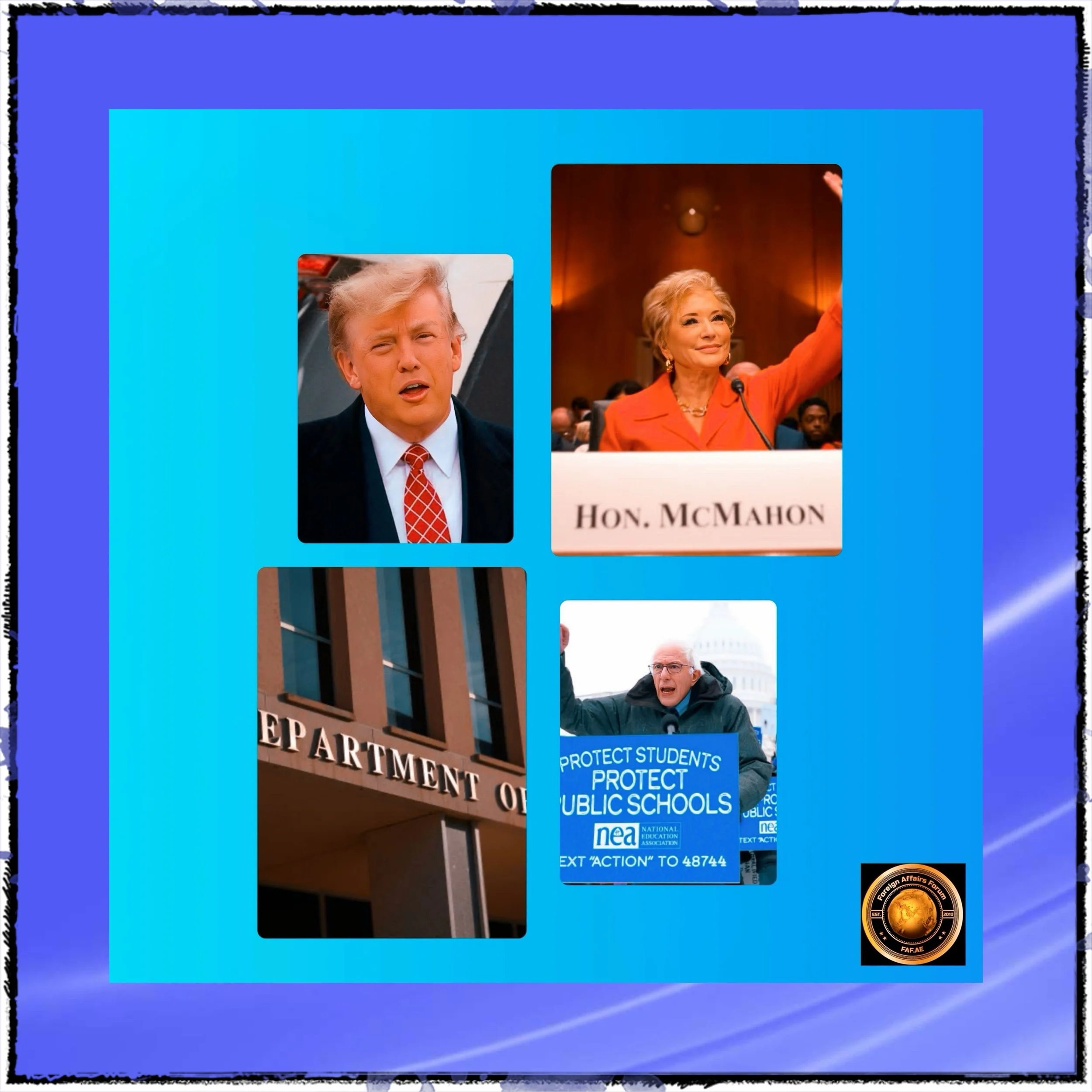
The White House is preparing a two-part executive order directing Education Secretary Linda McMahon to develop a plan for downsizing the DOE and urging Congress to pass legislation for its full elimination.
The order acknowledges legal limitations, as only Congress can abolish federal agencies.
Staff Reductions and Program Cuts
Over 50 DOE employees were placed on paid leave under Trump’s ban on diversity, equity, and inclusion (DEI) initiatives.
Programs like Title I (funding for low-income schools) and the Individuals with Disabilities Education Act (IDEA) face potential transfer to other agencies (e.g., Health and Human Services or Justice).
Alignment with Project 2025
The conservative Heritage Foundation’s Project 2025 blueprint calls for eliminating the DOE, redistributing its functions, and ending federal oversight of education.
Title I funds could become state-controlled block grants, weakening accountability for disadvantaged students.
Legal and Political Barriers
Congressional Approval Required: Trump cannot unilaterally close the DOE; legislation needs 60 Senate votes, which faces bipartisan skepticism.
Critical Programs at Risk
$103 billion DOE budget: 67% funds Federal Student Aid (Pell Grants, loans).
Civil rights enforcement (e.g., anti-discrimination protections) could be gutted if moved to the Justice Department.
Contradictory Agenda: Trump’s push for “patriotic education” and anti-CRT policies ironically expand the DOE’s workload despite downsizing goals.
Potential Impacts
Student Loans: 30% of college students rely on federal loans; privatization could raise interest rates and eliminate income-based repayment.
K-12 Schools
Loss of Title I and IDEA funding might exacerbate inequities in low-income and special education programs.
States could face pressure to adopt school vouchers, diverting public funds to private institutions.
Higher Education
Accreditation processes and federal research grants might dissolve, destabilizing universities.
Opposition and Challenges
Public Backlash
60% of voters oppose dismantling the DOE, per a Wall Street Journal poll.
Legal Challenges
Past attempts to merge or defund the DOE (e.g., Trump’s 2017 proposal) failed due to congressional resistance.
State Reluctance
Many Republican-led states rely on DOE funding, complicating efforts to rally support.
Conclusion
While Trump’s executive actions aim to cripple the DOE’s operations, full abolition remains unlikely without congressional cooperation.
The push reflects a broader conservative vision to decentralize education policy, but risks harming vulnerable students, destabilizing federal aid programs, and triggering legal battles.
Educators, advocates, and lawmakers are mobilizing to counter these efforts, emphasizing the DOE’s role in safeguarding equity and access.
FAF Additional Review
It is indeed accurate that the United States aims to shut down the Department of Education, though this decision is not based on the quality of education.
A thorough examination of the US budget reveals underlying reasons.
The US budget faces a $1.8 trillion deficit, education is 17 % of GDP whereas Social Security and Medicare account for 29% of GDP.
There have been recurring discussions about the potential removal of Medicare and Social Security in the past for very reason.
Hope Trump does not want to follow Argentinian model cutting all social programs to show budget surplus?
The Trump administration must strive to achieve fiscal balance and fulfill its promises to benefit the citizens.
We have observed substantial funding directed toward Israel. While we acknowledge this, the approach to managing these funds requires reassessment.
For the past seven years, the Department of Defense has failed its audits, with $850 billion unaccounted for. This issue warrants immediate attention and resolution.
Additionally, Ukraine reports receiving only $77 billion of the promised $177 billion. Clarification is needed regarding the remaining funds.
It is imperative to compile a comprehensive list to advocate for the future of American children. Meanwhile, China has made significant economic strides. In contrast, many Americans face homelessness while the nation involves itself in various conflicts.
We hope a suitable solution is reached, and that all federal agencies undergo thorough audits.