India’s Strategic Options After the Pahalgam Attack: Evaluating War, Hybrid Warfare, and Diplomatic Measures
Introduction
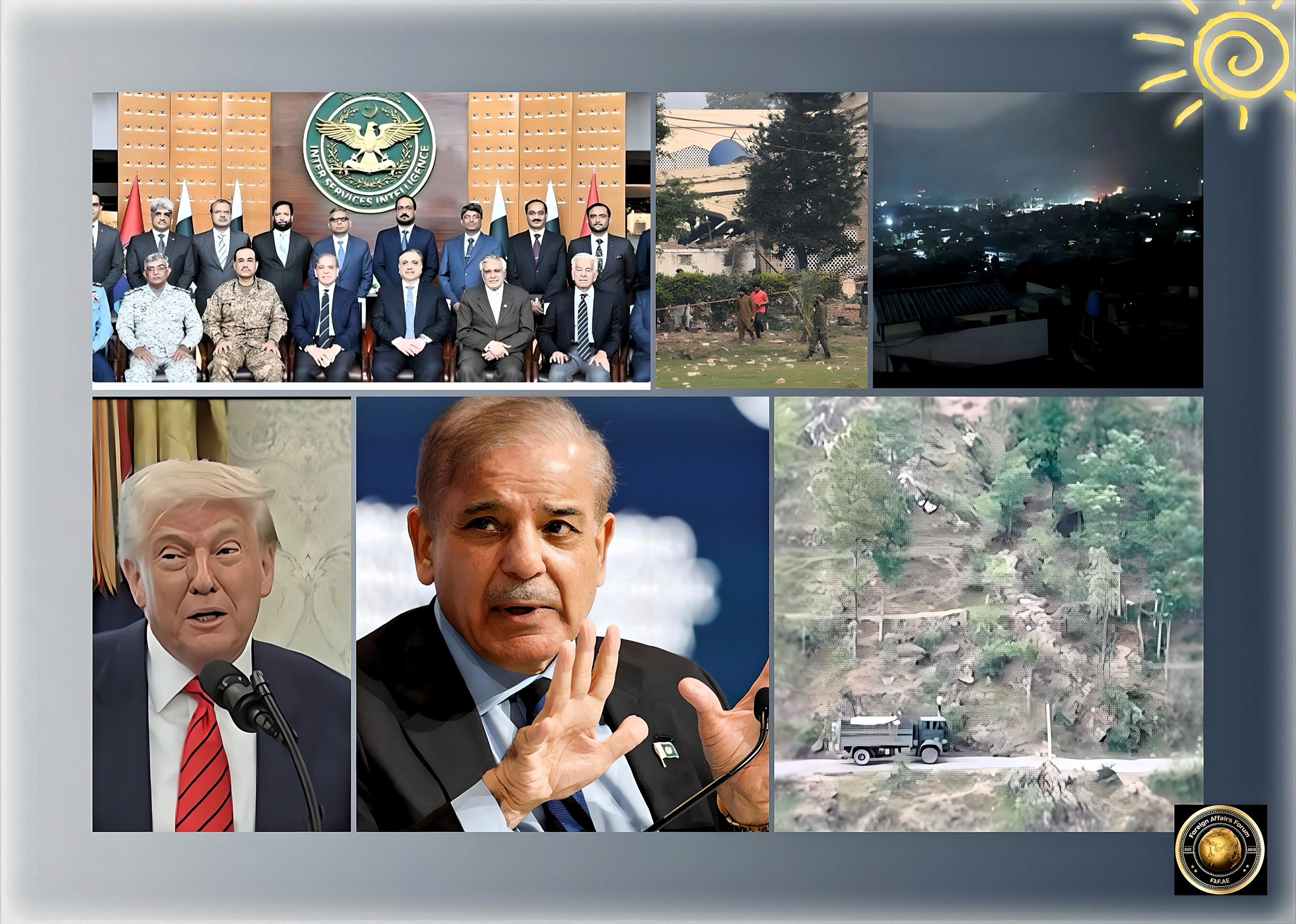
The April 2025 terrorist attack in Pahalgam, Kashmir, which claimed the lives of 26 tourists, including 25 Indian nationals and one Nepali citizen, has created a critical strategic inflection point for India.
As India weighs its response options against Pakistan, whom it has implicated in the attack, several strategic pathways have emerged-ranging from full-scale conventional warfare to hybrid tactics and diplomatic-economic measures.
FAF analysis examines these options through the lens of effectiveness, economic impact, and international perception.
Historical Context and Current Tensions
The Pahalgam attack represents the deadliest militant attack in Indian admininstred Kashmir ( Kashmir was split into two one is india side and other on Pakistan siide called Azad Kashmir) in recent years, attributed to The Resistance Front (TRF).
India has responded swiftly with several punitive measures, including suspending the longstanding Indus Waters Treaty, closing the Attari-Wagah border crossing, and ordering Pakistani military advisors to leave its embassy.
These actions have triggered economic tremors in Pakistan, whose stock market reportedly lost over 2,000 points following the announcement.
The attack occurred against a backdrop of strained India-Pakistan relations punctuated by multiple wars (1947, 1965, 1971, 1999) and border skirmishes, most recently in 2019 following the Pulwama attack.
After previous major terrorist incidents, India has employed varying degrees of military response-from “surgical strikes” across the Line of Control following the 2016 Uri attack to airstrikes deep inside Pakistani territory after the 2019 Pulwama attack.
India’s Initial Response and International Support
India’s immediate response has been measured but significant.
Defense Minister Rajnath Singh indicated that India’s response would extend beyond merely targeting the attackers, stating, “We will pursue not only those who carried out this incident but also those who have orchestrated such acts from behind the scenes on Indian soil.”
The international community has vastly extended support to India, with even the Taliban reportedly condemning the Pahalgam attack-highlighting Pakistan’s growing diplomatic isolation.
Conventional War Option: A Costly Endeavor
Military Feasibility and Nuclear Dimensions
A conventional military conflict with Pakistan presents significant challenges beyond the immediate battlefield.
Both nations possess nuclear capabilities, creating an inherent risk of escalation beyond conventional warfare.
This nuclear overhang has historically constrained the scope of direct military confrontations between the two countries.
Economic Implications of Full-Scale Conflict
Economic analyses suggest a 42-day limited military engagement would cost India approximately ₹49,000 crore ($5.9 billion), which, while substantial, remains manageable within India’s $4 trillion GDP and defense budget of ₹6.81 lakh crore.
For Pakistan, however, the same conflict could cost ₹12,250 crore ($1.5 billion), placing tremendous strain on its foreign reserves of approximately $10 billion- barely enough to cover two months of imports.
Pakistan’s economy is already precarious, with declining exports, rising debt, and dependence on an IMF bailout program.
The World Bank and IMF have recently cut Pakistan’s growth forecast from 3% to 2.6%, indicating pre-existing vulnerability that would be severely exacerbated by military conflict.
Domestic and International Perception
While a strong military response might satisfy domestic political pressure in India, international perception remains a critical consideration. India has cultivated an image as a responsible nuclear power and emerging global leader.
A full-scale war risks undermining this perception and potentially alienating international partners unless the response is proportionate and justified.
Hybrid Warfare Strategy: The Middle Path
Current Hybrid Warfare Landscape
Both India and Pakistan have employed hybrid warfare tactics against each other. Pakistan’s approach reportedly combines conventional and irregular means, proxy wars, covert operations, cyber warfare, and media campaigns. India has allegedly developed similar capabilities.
Leveraging International Intelligence Partnerships
India has established substantial military and intelligence cooperation with several global powers.
The India-Israel relationship includes deep intelligence sharing and military technology cooperation, while the recent U.S.-India Joint Statement from February 2025 highlights a strengthened comprehensive strategic partnership.
Furthermore, Russia has historically maintained close defense ties with India.
These partnerships provide India with potential intelligence and operational support for targeted counter-terrorism operations that fall below the threshold of conventional warfare.
According to reports, Israel has previously assisted India in counter-terrorism strategies, especially following the 2008 Mumbai attacks, though specifics remain classified.
Benefits and Risks of Targeted Operations
Targeted operations, surgical strikes, drone attacks, or covert actions have several advantages:
They can neutralize specific threats while minimizing broader escalation risks
They demonstrate resolve while maintaining proportionality
They typically incur lower economic costs than full-scale conflict
However, as Christopher Clary from the University at Albany notes, covert operations may not satisfy the political need for a visible restoration of deterrence.
Additionally, even limited strikes carry escalation risks, as demonstrated by the aerial skirmishes following India’s 2019 Balakot strikes.
Economic and Diplomatic Measures: The Long Game
Impact of Current Economic Actions
India’s suspension of the Indus Waters Treaty and closure of the Attari-Wagah border represent significant economic pressure points. The border crossing facilitated trade amounting to 38.86 billion Indian rupees (approximately $454 million) during the fiscal year 2023-24.
This suspension directly impacts Pakistan’s industrial supply chains and, importantly, affects Afghanistan’s commerce with India, which transits through Pakistan.
Following similar measures after the 2019 Pulwama attack, Pakistan’s exports to India collapsed from $550 million to just $480,000.
The current measures will likely have a comparable impact, worsening Pakistan’s trade deficit at a time when its economy is already vulnerable.
Effectiveness of Water Politics
The suspension of the Indus Waters Treaty-a 1960 agreement that has survived three wars-represents an escalation of economic pressure.
However, experts note that India lacks the large-scale storage facilities and extensive canal systems required to significantly divert or withhold water from Pakistan’s western rivers.
While the suspension provides India with the flexibility to modify infrastructure without notifying Pakistan, immediate hydrological impacts may be limited.
Diplomatic Isolation Strategy
India’s strategy appears to include efforts to diplomatically isolate Pakistan. The expulsion of Pakistani military advisors from India’s embassy and anticipated further diplomatic expulsions signal this approach. International reaction suggests this strategy may be effective, with widespread condemnation of the attack and support for India.
Economic Implications for India
Short-term Economic Impact
While the economic impact on Pakistan is severe, India also faces economic costs, albeit more manageable ones.
The suspension of trade with Pakistan ($1 billion in exports) represents a minimal disruption to India’s overall export volume of approximately $800 billion.
However, certain industries with significant Pakistan exposure may face short-term disruptions.
India’s GDP growth forecast for 2025-26 was recently revised downward by S&P Global to 6.5% (from 6.7%) due to rising global protectionism and pushback against globalization.
Any significant military action risks further economic headwinds, particularly if it affects investor confidence or diverts resources from development priorities.
Long-term Economic Considerations
A protracted conflict would divert resources from India’s economic development agenda. Even hybrid warfare operations require significant intelligence and security expenditures.
The key economic question becomes whether the cost of action exceeds the ongoing economic burden of terrorism and security threats.
Impact on India’s Global Image
Balancing Strength and Restraint
India’s response to the Pahalgam attack will shape international perceptions of its strategic maturity.
A measured but firm response that demonstrates capability without excessive escalation could enhance India’s standing as a responsible power. Conversely, disproportionate military action risks characterization as regional destabilization.
Multilateral Engagement Opportunities
The crisis presents an opportunity for India to leverage international support through multilateral forums. India’s recent joint statement with the United States emphasized cooperation on counter-terrorism efforts and emerging technologies, providing potential avenues for international legitimacy in its response.
Conclusion
Strategic Calculus and Optimal Response
The strategic calculus for India involves balancing multiple competing objectives: ensuring effective deterrence, minimizing escalation risks, managing economic impacts, maintaining international support, and satisfying domestic political imperatives.
Full-scale conventional war carries prohibitive risks, both in terms of potential nuclear escalation and international perception, despite Pakistan’s evident economic vulnerability to such conflict.
Purely diplomatic and economic measures, while already demonstrating impact, may not provide sufficient deterrence against future terrorist attacks or satisfy domestic demands for a stronger response.
A calibrated hybrid approach-combining targeted counter-terrorism operations with sustained economic and diplomatic pressure-appears to offer the most balanced response option.
By leveraging international intelligence partnerships and military capabilities while maintaining the diplomatic high ground, India can demonstrate resolve without triggering uncontrolled escalation or undermining its global standing.
The suspension of the Indus Waters Treaty and border closure represent significant first steps, but their long-term effectiveness depends on India’s willingness to sustain pressure while avoiding humanitarian crises that could shift international opinion.
The economic asymmetry between the two nations provides India with significant leverage in this approach, allowing for a strategy that maximizes pressure while minimizing direct military confrontation.
As tensions continue to evolve, India’s strategy must remain adaptable while maintaining focus on its ultimate objectives: regional security, terrorist threat reduction, and preservation of its economic growth trajectory and global reputation.