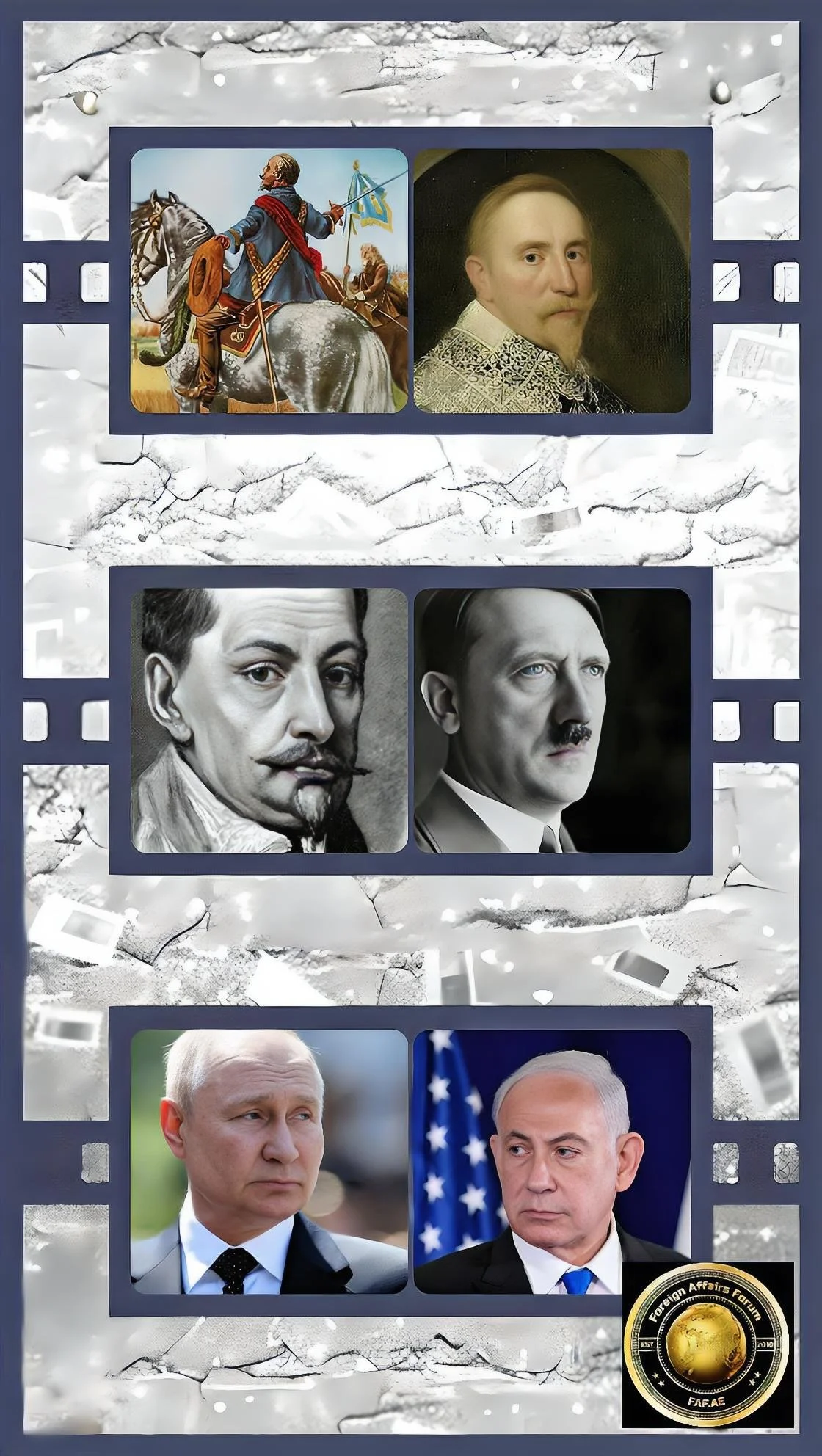
Gustavus Adolphus’s Military Innovations: Legacy at Breitenfeld and Their Modern Application - Hilter, Putin and Netanyahu war strategy.
Introduction
The pivotal Battle of Breitenfeld in 1631 marked a revolutionary moment in military history, where King Gustavus Adolphus of Sweden demonstrated the effectiveness of his innovative military reforms against the previously dominant Imperial forces.
His tactical and organizational innovations determined the outcome of this critical battle and established principles that would influence military doctrine for centuries.
FAF examines how Gustavus’s military genius shaped the Battle of Breitenfeld and evaluates whether modern leaders like Hitler, Putin, and Netanyahu have drawn from his military philosophy, Clausewitz’s theories, or a hybrid approach of both.
Gustavus Adolphus: The Military Innovator
Gustavus Adolphus II of Sweden, often called “The Father of Modern Warfare,” revolutionized European military practice through innovations that collectively transformed how armies fought in the early 17th century.
When he came to the Swedish throne in 1611, Gustavus faced tremendous challenges, including wars with Denmark, Poland, and Russia. He responded with remarkable military creativity that would ultimately shift the balance of power in Europe.
Combined Arms and Mobility
The cornerstone of Gustavus’s military philosophy was mobility on the battlefield and the coordination of different combat arms.
Rather than relying on the slow, inflexible Spanish tercios (large infantry squares) that dominated European battlefields, Gustavus developed a military system in which infantry, cavalry, and artillery worked together to maximize combat effectiveness.
This combined arms approach allowed greater tactical flexibility and responsiveness to battlefield developments.
The Swedish king instituted closely coordinated movements for combined arms operations, creating what many historians consider the first truly integrated military system.
His army at Breitenfeld demonstrated an early form of combined arms and mobile units, marked by superior discipline, organizational flexibility, and initiative. These characteristics would prove decisive on the battlefield, giving the Swedish forces a critical edge against the Imperial army.
Revolutionary Artillery Employment
Perhaps one of Gustavus’s most significant innovations was artillery. Before his reforms, field artillery was cumbersome and primarily used in siege warfare rather than mobile field operations.
Jeffrey Parker notes that Maurice of Orange, for example, brought a mere eight guns to the Battle of Newport in 1600.
Gustavus transformed artillery into a mobile, responsive battlefield weapon. He developed cannons that could be fired rapidly—sometimes quicker than muskets.
Additionally, he distributed more miniature, more mobile cannons throughout his army rather than concentrating them in a single battery. This decentralized approach to artillery allowed for more flexible fire support across the battlefield.
Infantry Tactics and Formation
Gustavus redesigned infantry formations to maximize firepower while maintaining flexibility. In contrast to Imperial forces' deep, square-like tercio formations, the Swedish infantry deployed in multiple lines with sufficient intervals between units.
This linear arrangement optimized for firepower and allowed for more effective maneuvering during battle.
The Swedish king also managed the proportion of shot to pike much better than his contemporaries, which solved a problem that plagued mercenary armies during the Thirty Years’ War.
This attention to equipment standardization and tactical formation gave his forces greater cohesion and combat effectiveness.
Cavalry Reforms
Gustavus restored the role of cavalry after a long period of decline in European warfare.
He abandoned the caracole tactic (where horse riders approached enemies in waves, fired pistols, and retired to reload) in favor of emphasizing the shock value of direct cavalry charges.
His innovative approach was to place musketeers between cavalry units on the flank and combine volley fire with quick cavalry charges.
At Breitenfeld, when facing the feared “black riders” of Pappenheim, he ordered his men to endure the enemy’s caracole stoically, then had his cavalry and musketeers fire together before counter-charging.
This combination of firepower and shock action proved devastating to enemy formations.
Organizational and Logistical Innovations
Beyond tactical innovations, Gustavus revolutionized military organization and logistics.
He organized the first national professional army and established the first effective supply system.
Rather than allowing his troops to live off the land through foraging and looting (the common practice of the time), he set an example for modern military leaders by supplying his men with fixed bases.
This approach improved military efficiency and reduced the burden on civilian populations.
Gustavus expanded an existing conscription system, with every Swedish parish supplying and equipping every 10th male, creating a strong nucleus of native Swedes and Finns within his army.
This conscription approach gave him more control over equipment and weaponry standardization.
The Battle of Breitenfeld: Innovations in Action
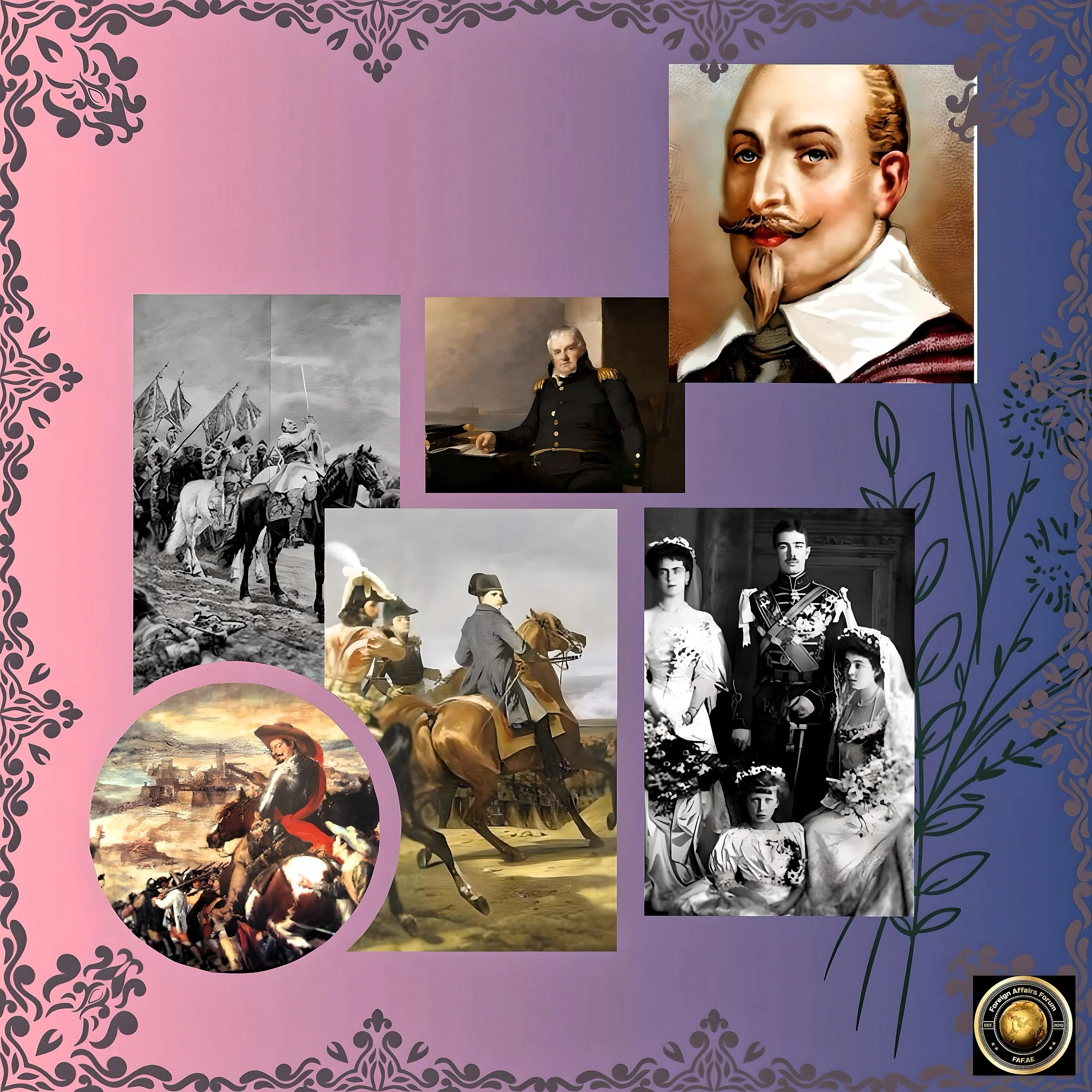
The Battle of Breitenfeld, which took place on September 17, 1631, allowed Gustavus to demonstrate his military innovations against the previously undefeated Imperial army under Count Tilly.
This engagement would be the first major Protestant victory of the Thirty Years’ War and cement Gustavus’s reputation as one of history’s greatest military commanders.
Strategic Context
By 1631, the Thirty Years’ War had seen the Catholic Imperial forces achieve several victories over Protestant German opponents.
The Imperial commander, Count Tilly, was undefeated in battle, and his troops were hardened veterans.
When Gustavus landed in Germany with his Swedish army, many viewed him as the potential savior of the Protestant cause. Still, he first needed to prove himself against Tilly’s formidable forces.
After a series of preliminary operations, including the devastating sack of Magdeburg by Imperial forces in May 1631, Gustavus sought a decisive engagement.
On September 15, his army of 23,000 troops joined with 16,000 soldiers from the Electorate of Saxony to face Tilly’s army of approximately 35,000.
The Battle Unfolds
The battle began at noon with an artillery exchange that immediately demonstrated the effectiveness of Gustavus’s artillery innovations.
The Swedish guns outnumbered the Imperial artillery by fifty-one to twenty-seven and demonstrated a superior rate of fire, delivering three to five volleys for every one Imperial volley.
The Swedish forces were deployed more linearly and shallowly than the Imperial Army’s deeper formations.
This arrangement gave the Swedes a significant advantage during the initial artillery duel, as the Imperial troops in their dense formations suffered heavier casualties. In contrast, the more dispersed Swedish troops stood “as firm as a wall.”
After approximately two hours of artillery fire, Tilly’s right flank charged the inexperienced Saxon troops, who quickly fled the field.
This could have been a decisive moment for the Imperial forces. Still, the Swedish second line, under the command of Gustav Horn, demonstrated exceptional discipline and flexibility by reforming to create a new defensive line.
This risky and difficult mid-battle maneuver showcased Gustavus's forces' superior training and discipline.
On the other flank, Pappenheim’s renowned cavalry attempted to use the caracole tactic against the Swedish forces.
However, Gustavus’s innovative cavalry tactics proved superior. His integration of musketeers with cavalry allowed for devastating combined fire followed by shock cavalry charges that disrupted Pappenheim’s formations.
The Outcome and Significance
The result was a decisive victory for the Swedish-Saxon forces. Tilly’s previously undefeated army was destroyed, and Gustavus emerged as a military genius whose innovative tactics prevailed over the established methods of the era.
The victory at Breitenfeld allowed Gustavus to launch a campaign against southern Germany and confirmed the effectiveness of his military innovations.
It marked a triumph over the older massive infantry formations that had long dominated European warfare triumph over the older massive infantry formations that had long dominated European warfare.
Most importantly, the battle showcased how Gustavus’s “doctrine of shock”—using carefully timed massed musket fire and charges to disrupt and demoralize the enemy—could defeat even the most formidable opponents.
This approach would influence Western military thought for centuries to come.
Modern Military Leaders
Gustavus, Clausewitz, or Hybrid Approaches?
To evaluate whether Hitler, Putin, and Netanyahu have employed military approaches derived from Gustavus Adolphus, Carl von Clausewitz, or a hybrid of both, we must first understand Clausewitz’s military theory and then examine these modern leaders’ strategies.
Clausewitz’s Military Theory
Carl von Clausewitz, writing in the early 19th century, developed influential warfare concepts built upon and departed from earlier military thinkers.
His most famous dictum, “war is a continuation of politics by other means,” emphasized the political nature of warfare and its role as an instrument of state policy.
A central concept in Clausewitzian theory is the “center of gravity” (Schwerpunkt), which he defined as “the hub of all power and movement, on which everything depends.”
For historical leaders like Alexander, Gustavus Adolphus, Charles XII, and Frederick the Great, Clausewitz identified their armies as their centers of gravity. If those armies were destroyed, their capacity to wage war would be eliminated.
Clausewitz also distinguished between absolute and limited war. Absolute war involves a complete allocation of resources for total victory, while political objectives constrain limited war.
Adolf Hitler’s Military Approach
Hitler’s rise to power and subsequent military aggression featured elements that reflected both Gustavian and Clausewitzian concepts, though with distinct Nazi characteristics.
Hitler’s approach was shaped by his beliefs in German racial superiority and the dangers of communism, rejecting liberalism, democracy, and human rights.
Like Gustavus, Hitler emphasized mobility and combined arms tactics, which was particularly visible in the Blitzkrieg strategy, which integrated armor, infantry, and air power for rapid, decisive operations.
However, his approach lacked Gustavus’s concern for supply logistics and troop welfare, as evidenced by the eventual logistical failures during Operation Barbarossa.
From Clausewitz, Hitler seemed to adopt the concept of identifying centers of gravity, focusing on destroying enemy armies through encirclement and annihilation.
However, he deviated significantly from Clausewitz’s emphasis on the rational relationship between political ends and military means.
Hitler’s ideological obsessions increasingly drove military decision-making regardless of rational strategic calculation, particularly in the war against the Soviet Union.
Hitler’s concept of Lebensraum (living space) drove an aggressive, expansionist foreign policy that became the primary cause of World War II in Europe.
While this territorial ambition might superficially resemble Gustavus’s aim to make the Baltic “a Swedish lake,” Hitler’s racial ideology and genocidal intentions represented a fundamental departure from anything in either Gustavus’s or Clausewitz’s thinking.
Vladimir Putin and Russia’s Hybrid Warfare
Modern Russia under Putin has developed what many analysts call a “hybrid war doctrine,” most visibly demonstrated in Ukraine.
General Valery Gerasimov, Chief of the Russian General Staff, articulated this approach in 2013: “In the 21st century, there is a tendency to erase the distinction between the state of war and peace.
Wars are not declared, and once they have started, they do not follow the pattern we are accustomed to. “
This doctrine inverts Clausewitz’s formula: rather than war being the continuation of politics by other means, politics becomes war waged by other means.
This significantly differs from Clausewitz’s more clearly delineated understanding of war and peace.
Russia’s approach to hybrid warfare has reportedly evolved. Initially emphasizing nonconventional measures, it has more recently shifted toward greater emphasis on conventional methods.
The Russo-Ukrainian war has shown that the Russian Hybrid War Doctrine “is not about military technology at all – it is a collection of covert special operations.”
While Putin’s approach lacks Gustavus Adolphus's direct battlefield leadership style, it does reflect a similar emphasis on innovation and adaptation to changing circumstances.
However, the fundamental “doctrine of shock” that characterized Gustavus’s approach has been transformed in the Russian context into something more ambiguous, operating in the gray zone between war and peace.
Benjamin Netanyahu’s Military Strategy
Netanyahu’s approach to military conflict, particularly in Gaza, appears to be driven primarily by political calculation rather than purely military considerations.
According to some analysts, his decision to prolong the Gaza war is tied to political survival, using the conflict as a tool to consolidate right-wing support and delay potential legal proceedings against him.
This instrumentalization of war for political purposes parallels Clausewitz’s view of war as a political instrument.
However, Netanyahu’s approach differs from Clausewitz’s emphasis on identifying and striking decisive centers of gravity.
Instead, his strategy in Gaza has been characterized by prolonged operations without clear military endpoints.
From a Gustavian perspective, Netanyahu’s military approach lacks the tactical innovation or combined arms excellence that characterized Gustavus’s leadership.
While Israeli forces employ advanced technology and coordination between air, land, and intelligence assets, the strategic framework guiding these operations seems more influenced by political imperatives than purely military considerations.
Conclusion
The Enduring Influence of Military Innovators
Gustavus Adolphus’s revolutionary military innovations decisively shaped the outcome of the Battle of Breitenfeld in 1631, demonstrating the effectiveness of combined arms tactics, mobile artillery, disciplined infantry formations, and innovative cavalry employment.
His “doctrine of shock”—using carefully timed volleys and charges to disrupt enemy formations—established a principle that would influence Western military thought for centuries.
The relationship between Gustavus’s military innovations and the approaches of modern leaders like Hitler, Putin, and Netanyahu are complex and often indirect.
While elements of Gustavian thinking (mobility, combined arms, tactical innovation) and Clausewitzian concepts (war as a political instrument, centers of gravity) can be identified in these modern approaches, each represents a distinct adaptation shaped by unique historical, technological, and political circumstances.
Hitler perhaps most directly incorporated certain tactical elements reminiscent of Gustavus in his Blitzkrieg approach, but his ideological extremism and strategic irrationality departed significantly from both Gustavus and Clausewitz.
Putin’s hybrid warfare doctrine transforms Clausewitz’s thinking about the relationship between war and politics, creating ambiguity where Clausewitz sought clarity.
Netanyahu’s approach in Gaza shows less tactical innovation in the Gustavian sense and more political calculation in a manner that both aligns with and distorts Clausewitz’s understanding of the political nature of warfare.
What emerges from this analysis is not a direct lineage from Gustavus or Clausewitz to modern military leaders, but rather the enduring relevance of certain core principles: the importance of mobility and coordination (Gustavus), the political nature of warfare (Clausewitz), and the constant evolution of military doctrine in response to technological and social change.
The greatest military thinkers and leaders from the 17th century to the present day have always adapted historical precedents to address the unique challenges of their own time.