The Fracturing of American Idealism: Key Challenges Under the Trump Administration
Introduction
Does China have a White House? Do they want to be a global political power? Do they fight wars like America?
The concept of American idealism—rooted in the belief that the United States advances democratic values, multilateral cooperation, and moral leadership globally—faced unprecedented strain during Donald Trump’s presidency. Trump’s “America First” doctrine, transactional diplomacy, and rejection of institutional norms directly contradicted long-standing ideals of U.S. exceptionalism.
Below, FAF examines pivotal examples of how Trump’s policies and rhetoric destabilized these foundational principles.
Rejection of Multilateral Agreements and Institutions
Withdrawal from the Paris Climate Accord
Trump’s 2017 decision to exit the Paris Climate Agreement marked a stark departure from U.S. climate leadership. The accord, ratified by 195 nations, symbolized global cooperation to limit temperature rise through voluntary emissions targets.
Trump dismissed it as “unfair” to U.S. economic interests, arguing it imposed “draconian financial burdens.” This withdrawal undermined international climate efforts and ceded leadership to China and the EU, eroding America’s role as a steward of global environmental responsibility. In 2025, Trump reiterated this stance by signing an executive order to re-exit the pact on his second inauguration day, further isolating the U.S. from a critical multilateral framework.
Abandonment of the Iran Nuclear Deal
In 2018, Trump unilaterally withdrew from the Joint Comprehensive Plan of Action (JCPOA), a landmark 2015 agreement limiting Iran’s nuclear program in exchange for sanctions relief.
Despite international consensus and verification of Iran’s compliance, Trump deemed the deal “defective at its core,” reinstating sanctions and escalating tensions in the Middle East.
This move fractured trust with European allies and demonstrated a preference for unilateral coercion over diplomatic engagement.
Undermining the World Health Organization (WHO)
During the COVID-19 pandemic, Trump accused the WHO of “China-centric” bias and halted U.S. funding, jeopardizing global health collaboration. This decision, part of a broader pattern of disengaging from international bodies, weakened America’s capacity to lead during a crisis and amplified skepticism toward multilateral health governance.
Erosion of Democratic Norms and Institutional Trust
Attacks on the Press and Free Speech
Trump routinely denounced critical media as “fake news,” a rhetoric mirrored in policies aimed at stifling dissent. In 2024, he escalated calls to criminalize political opposition, labeling Vice President Kamala Harris a “criminal” and alleging that edited headlines in her campaign ads were “totally illegal.”
Such rhetoric, coupled with threats to revoke broadcast licenses for unfavorable coverage, corroded First Amendment principles and normalized authoritarian tactics to silence critics.
Assaults on Electoral Integrity
Trump’s repeated claims of a “rigged” 2020 election and his incitement of the January 6 Capitol riot severely damaged faith in democratic processes. His refusal to concede and efforts to pressure state officials to overturn results—including the Department of Justice’s abrupt halt of election-related investigations—exposed vulnerabilities in institutional safeguards.
These actions were compounded by pardons for Capitol rioters, signaling impunity for political violence.
Weaponization of the Justice System
The Trump administration replaced nonpartisan officials at the FBI and Department of Justice with loyalists, notably halting investigations into Trump allies.
This politicization of law enforcement undermined the rule of law, a cornerstone of American idealism, and aligned with what scholars termed “elective authoritarianism.”
Alignment with Authoritarian Regimes
Praise for Autocrats and Strongmen
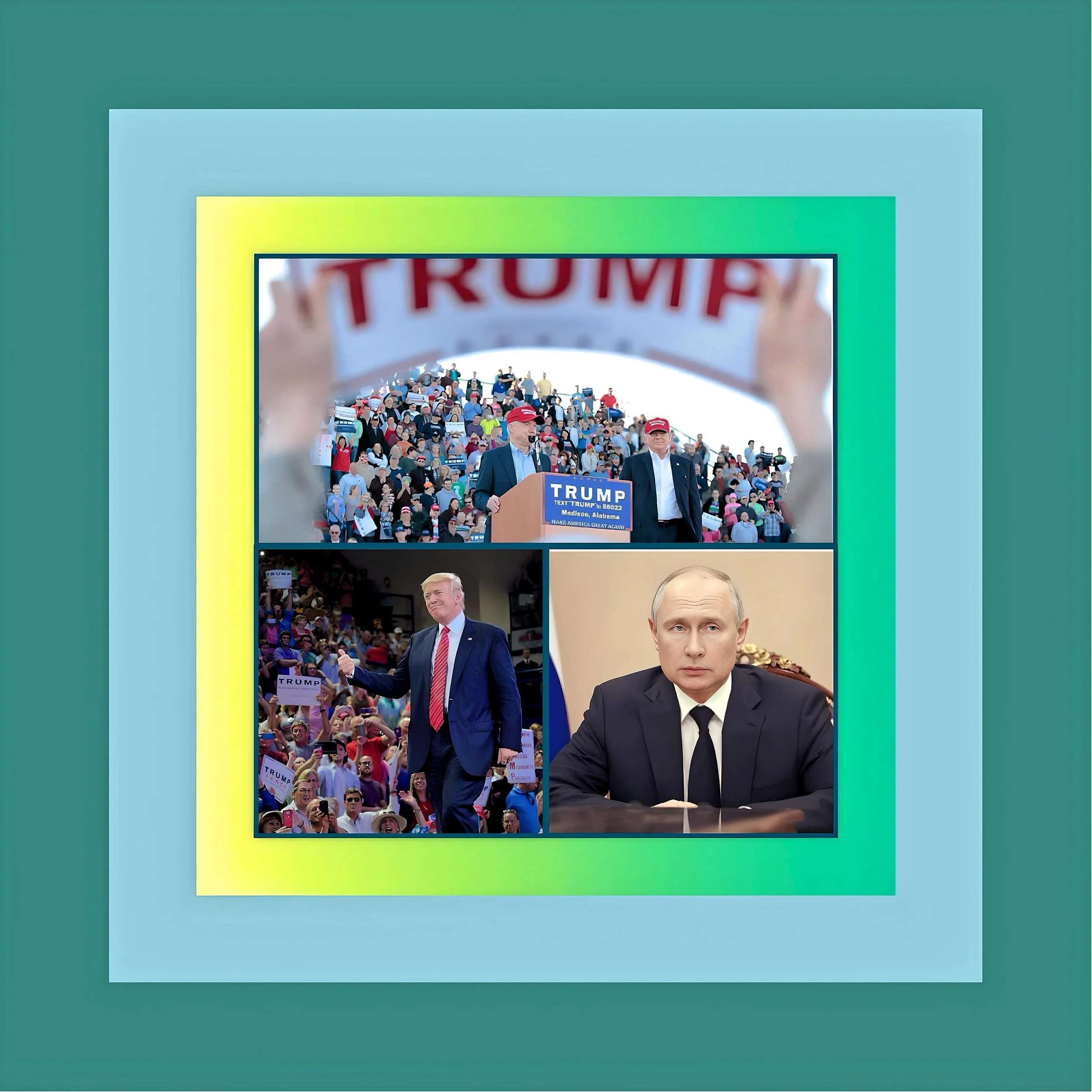
Trump frequently lauded authoritarian leaders, including Russia’s Vladimir Putin, North Korea’s Kim Jong-Un, and Hungary’s Viktor Orbán, whose illiberal policies he endorsed as “strong”. His dismissal of Russian election interference in 2016 and 2020, alongside efforts to withhold military aid to Ukraine, revealed a transactional approach that prioritized personal diplomacy over accountability for democratic breaches.
Support for Saudi Arabia’s Yemen War
Despite bipartisan opposition, Trump backed Saudi Arabia’s military campaign in Yemen, approving arms sales and vetoing congressional resolutions to end U.S. involvement. This support, maintained even after Saudi agents murdered journalist Jamal Khashoggi, underscored a willingness to prioritize strategic alliances over human rights concerns.
Trade Protectionism and Economic Nationalism
Tariff Wars and Withdrawal from the Trans-Pacific Partnership (TPP)
Trump’s 2017 exit from the TPP, a 12-nation trade pact designed to counterbalance China’s influence in Asia, signaled a retreat from economic multilateralism. Instead, he imposed tariffs on allies like the EU and Canada under the guise of “fair trade,” sparking retaliatory measures that disrupted global supply chains.
These actions contradicted post-WWII U.S. leadership in building cooperative trade frameworks and weakened America’s economic soft power.
Renegotiation of NAFTA as USMCA
The replacement of NAFTA with the U.S.-Mexico-Canada Agreement (USMCA) emphasized protectionist measures, including stricter labor and automotive content rules. While touted as a win for U.S. workers, critics argued it prioritized corporate interests and failed to address climate commitments, reflecting a narrower vision of national interest over shared regional prosperity.
Retreat from Humanitarian and Refugee Protections
Muslim Travel Ban and Family Separations
Trump’s 2017 executive order barring entry from several Muslim-majority countries—justified as a counterterrorism measure—violated ideals of religious tolerance and non-discrimination. Similarly, his “zero tolerance” immigration policy, which separated over 5,500 children from their families at the border, drew global condemnation for its cruelty.
These policies recast American identity around exclusionary nationalism, abandoning its historical role as a refuge for the persecuted.
Withdrawal from the UN Human Rights Council
In 2018, the U.S. exited the UN Human Rights Council, citing anti-Israel bias. However, this decision also spared Trump from scrutiny over domestic rights violations, including family separations and police brutality. The withdrawal isolated the U.S. from human rights discourse, ceding moral authority to adversaries like China and Russia.
Conclusion
The Legacy of a Transactional Doctrine
The Trump administration’s policies collectively dismantled pillars of American idealism: multilateralism, institutional integrity, and moral leadership. By framing international cooperation as a liability and embracing authoritarianism as pragmatism, Trump exposed the fragility of U.S. exceptionalism. Scholars like Noam Chomsky and Anatol Lieven argue that this shift was not merely rhetorical but reflected a deliberate rejection of the “liberal international order.”
The long-term consequences include diminished U.S. soft power, fractured alliances, and a global vacuum filled by rivals like China.
Domestically, Trump’s normalization of disinformation, attacks on dissent, and erosion of democratic norms have left institutions vulnerable to authoritarian encroachment.
Rebuilding American idealism would require recommitment to multilateral frameworks, accountability for democratic backsliding, and a foreign policy that aligns strategic interests with universal rights—a daunting task in an increasingly skeptical world.
Additional FAF review
Does the US want to be a world leader? What about China? Let’s review this.
The US has led every war, and the outcome does not matter. While the US has been fighting wars for years, China has been busy innovating.
Why did Saddam, Gaddafi, ISIS, etc, never matter to China? They never even spend a penny on sending foreign aid? They never say ‘China first’ or ‘We will make China great again.’
The US has continued to lag due to focus. It is predicted that by 2050, China’s GDP will surpass that of the US.
US is again stepping onto the brink of WW III by moving towards a more transactional leading time to Isolaton policy. Even now, China only issues statements on Palestine. They don’t fight or initiate any wars, whether economic or not.
Who started the Tariff war? China or the US?