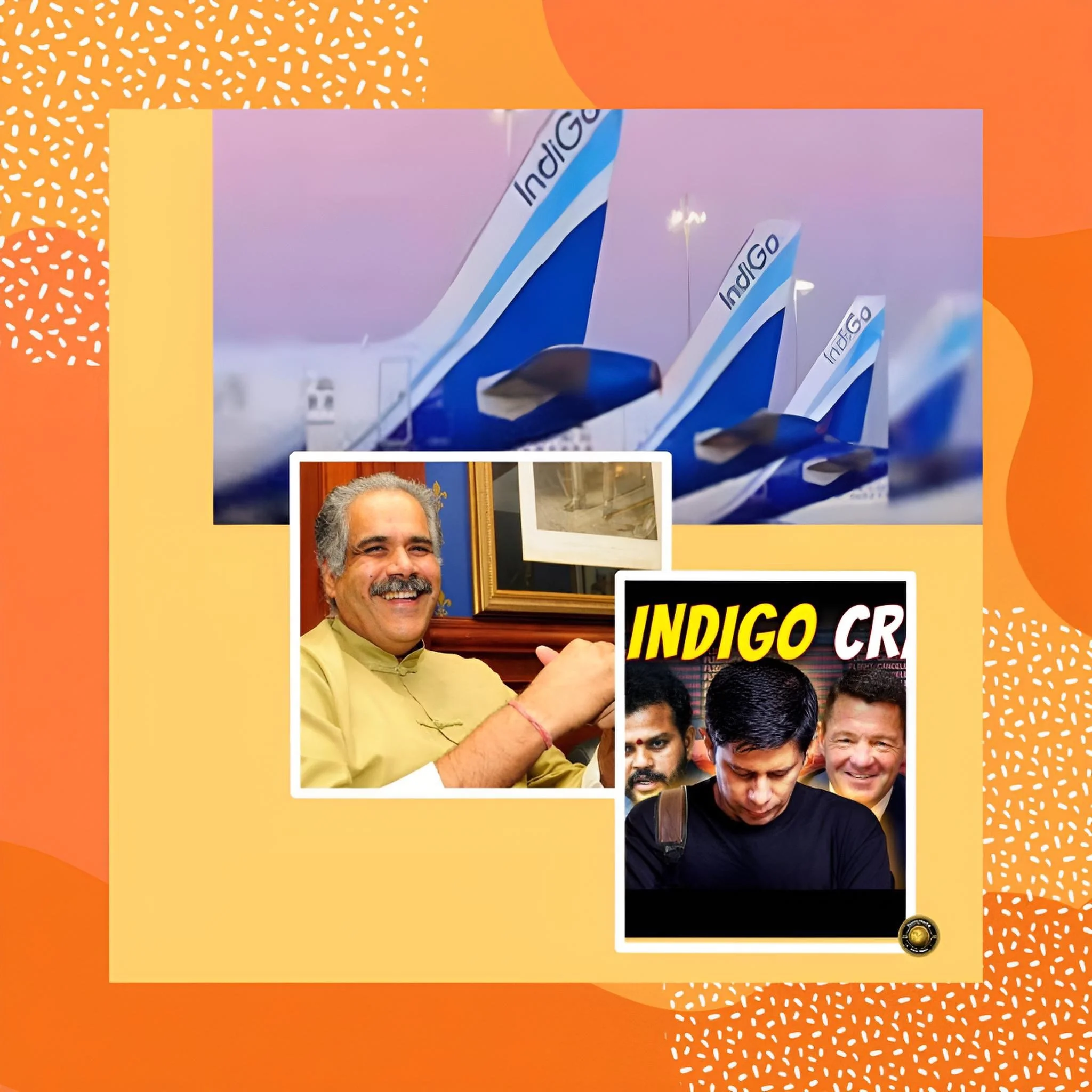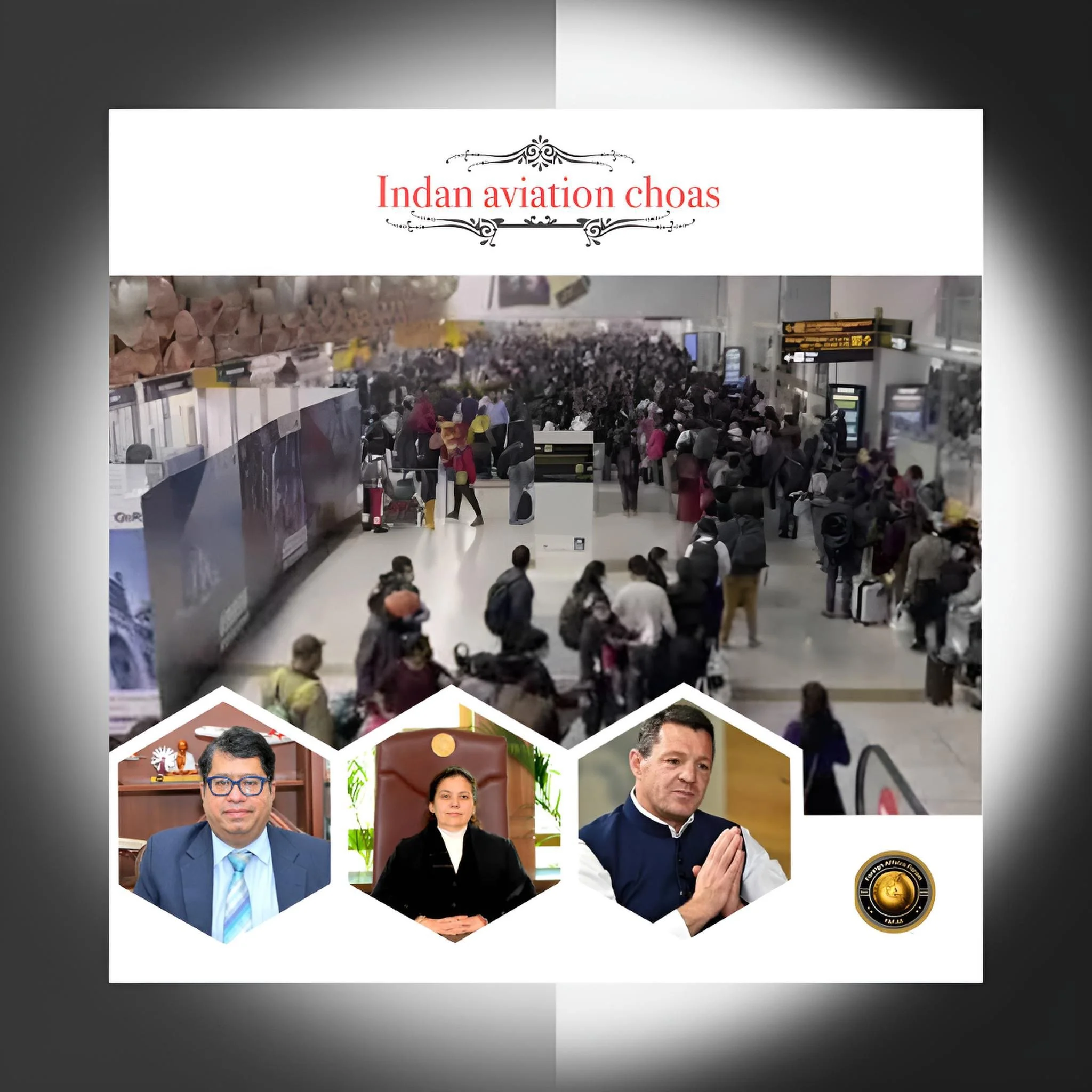
Shared Accountability: Moving Past Blaming IndiGo in the Indian Aviation Regulatory and Legal Crisis
Executive Summary
The IndiGo crisis reveals systemic lapses across the High Court, government, DGCA, and airline, not isolated operator fault.
Courts prioritized safety assurances from DGCA and airlines, closing the 2012 petition on April 7, 2025, after phased FDTL commitments, assuming executive enforcement without ongoing oversight.
DGCA’s “honor system” relied on unverified promises during the 18-month buffer, approving unsustainable schedules despite pilot shortages.
IndiGo’s lean staffing exacerbated issues, but regulators enabled over-expansion by a dominant carrier (60% market share).
Introduction
The ongoing IndiGo crisis in late 2025 is best understood as a systemic failure of regulatory gap management rather than an isolated airline failure.
IndiGo’s immediate trigger was its inability to roster sufficient pilots under the new Flight Duty Time Limitation (FDTL) rules that became fully effective on November 1, 2025, but the deeper cause lies in the DGCA’s long‑standing “notify, then trust” approach to enforcement.
The “restrictions” in question are
(a) the revised FDTL norms, which extend weekly rest from 36 to 48 hours and cut weekly night landings from six to two
(b) temporary regulatory/charging curbs such as the ban on rescheduling fees for affected passengers.
DGCA’s 24‑hour show‑cause to IndiGo CEO Pieter Elbers is procedurally consistent with ICAO-style “Accountable Manager” doctrine, but it highlights the regulator’s failure to stress‑test the airline’s preparedness during the 18‑month window between CAR 2024 notification and full enforcement.
DGCA’s Regulatory Missteps
“Honor System” Implementation
DGCA notified CAR 2024 (revised FDTL) in early 2024 and, after airline lobbying, agreed to a phased rollout: 15 provisions from July 1, 2025, and the remaining 7 from November 1, 2025, as recorded by the Delhi High Court on April 7, 2025.
During this transition, DGCA accepted operator‑specific FDTL schemes and assurances of readiness without conducting robust “stress tests” comparing IndiGo’s pilot strength and hiring pipeline against its schedule and the tighter night‑duty caps.
The widely cited 15–20 percent extra crew need is an analytical inference, not a formally acknowledged DGCA benchmark; it is safer to frame it as a reasonable estimate rather than a regulatory fact.
Ignoring Escalating Warning Signals
IndiGo reported 1,232 cancellations in November 2025, of which a majority were attributed to crew/FDTL or staff‑related constraints; DGCA publicly acknowledged probing the airline’s November performance.
Yet, instead of imposing schedule corrections or immediate remedial conditions ahead of the December peak, the regulator treated this as a performance issue under investigation, allowing the existing winter schedule to continue into December.
When cancellations crossed 1,000 in a single day on December 5—a record for an Indian carrier—DGCA’s first major coercive step was the December 6 show‑cause notice, not pre‑emptive capacity control.
Bureaucratic Latency and Safety Rollback
Only after the December 5 meltdown did DGCA both:
(a) issue the show‑cause to IndiGo’s CEO and Accountable Manager
(b) ease or suspend parts of the new FDTL regime specifically to stabilize IndiGo’s operations, including rolling back the weekly rest provision until February 2026.
This reactive relaxation of fatigue protections under operational pressure is precisely what pilot bodies have condemned as a “dangerous precedent,” arguing that safety norms were diluted to correct for poor enforcement and operator planning.
High Court Timeline and Enforcement Gap (2012-2025)
The FDTL litigation dates to 2012, when pilot unions began seeking modernized fatigue rules; the Court’s key milestone is the April 7, 2025 order by Justice Tara Vitasta Ganju.
In that order, the Court.
Recorded the government/DGCA commitment that 15 CAR 2024 FDTL clauses would be implemented by July 1, 2025, and the remaining 7 by November 1, 2025.
Directed airlines, including IndiGo, to submit their operator‑specific FDTL schemes within three weeks, and treated these assurances as sufficient to close the petitions.
There is no public indication that
The Court instituted a formal continuing‑mandamus‑style monitoring mechanism (e.g., regular compliance affidavits, structured reviews) after April 7, 2025, or
Any party urgently moved the Court between July 1 and November 1 alleging non‑compliance or seeking enforcement orders before the crisis broke.
In that sense, the High Court fulfilled its role in creating a modern rule framework but relied heavily on executive representations for follow‑through, without embedding a rigorous compliance‑monitoring architecture.
That is a design choice, not a factual error.
IndiGo’s Own Failures
IndiGo cannot be absolved, even if it should not be the only party blamed. The airline:
Operated with lean crew buffers and continued aggressive capacity planning despite known upcoming FDTL tightening and known night‑heavy, hub‑and‑spoke patterns.
Admitted, in public statements and disclosures, that it underestimated the impact of new night definitions and rest requirements on its roster and that a significant share of November cancellations (over 700 of 1,232) were due to crew/FDTL‑linked constraints.
Did not proactively cut or reshape its winter schedule in line with realistic pilot availability under the new rules, thereby converting a regulatory change into a preventable operational shock.
Thus, the more precise formulation is
IndiGo’s commercial and planning choices were the proximate operational cause; DGCA’s oversight model allowed those choices to pass unchecked; the High Court’s deference to executive assurances left no ongoing judicial pressure to ensure full, safe implementation.
Why This Persists in India but Less So in US/UK
The broad comparative points you make are directionally correct; some details need tightening:
Regulatory model
DGCA is predominantly rule‑prescriptive and document‑driven, with limited visible use (so far) of operator‑wide, data‑driven fatigue modelling and FRMS auditing at the level routinely seen at FAA/CAA.
FAA/DOT
FAA embeds fatigue in SMS/FRMS and Part 117, while DOT separately enforces consumer protection.
In the Southwest 2022 holiday meltdown, DOT imposed a $140 million civil penalty (cash plus vouchers) for consumer protection violations tied to 16,900 cancellations and around 2 million passengers.
UK CAA
UK261 compensation and slot‑allocation rules (as updated in SI 2025 No. 158) create strong ex‑ante incentives not to publish undeliverable schedules; that description is directionally accurate.
Where precision is needed
Specific fines like “Ryanair £1.2M in 2024 under UK261” are better referenced generically as “multi‑million pound penalties” unless tied to a clearly documented case; recent high‑profile consumer fines in Europe include large amounts but vary by jurisdiction and legal basis.
CAA tools such as slot alleviation and night‑quota dispensations exist and are correctly described at a high level, but the claim that “technical failures up 40% in 2025 per CMAC report” is not supported in the current sources and should be omitted unless you have a traceable citation.
Courts: What They Can Do Differently (Calibrated to Indian Context)
Given India’s constitutional separation of powers, courts cannot run DGCA on a day‑to‑day basis, but they can design stronger enforcement architectures in safety‑critical domains:
Structured continuing mandamus
Instead of closing the FDTL case outright in April 2025, the Court could have kept it alive with periodic compliance reports from DGCA and major airlines, including quantified data on pilot strength, schedule approvals, and FDTL‑linked disruptions.
Independent technical monitors
Appointing an amicus or expert monitoring committee (including fatigue experts and former regulators) to review DGCA’s implementation and report back to the bench would reduce information asymmetry and over‑reliance on government assurances.
Time‑bound consequences
Orders could explicitly link non‑compliance to personal affidavits by senior officials and the possibility of contempt, creating clear stakes for timely execution in safety‑sensitive areas such as fatigue, maintenance, or recurrent training.
Transparency mandates
Courts can require DGCA to publish public dashboards on key safety‑related metrics (e.g., FDTL exemptions, fatigue‑related incidents, major cancellations by cause) to generate external scrutiny and political accountability.
These judicial tools would not replace technical regulation but would push regulators away from “announce and rely on trust” and toward verifiable, data‑driven compliance—closer to the FAA/CAA ethos without overstepping constitutional bounds.
Conclusion
The IndiGo crisis cannot be attributed solely to the airline; rather, it reflects a collective failure among multiple stakeholders.
IndiGo’s rapid expansion without sufficient operational buffers, combined with the DGCA’s reliance on an honor-based oversight system and a belated rollback of safety measures, created a fragile environment.
This was compounded by executive prioritization of operational continuity over pilot fatigue safeguards and the High Court’s decision to close a prolonged safety case based on government assurances rather than rigorous verification.
Together, these factors converged to produce a predictable crisis.
At a fundamental level, the problem is structural. India’s regulatory framework suffers from weak preventative mechanisms, limited enforcement of passenger rights, and a culture that predominantly reacts to failures rather than proactively mitigating risks.
This stands in stark contrast to regulatory environments in the US and UK, where data-driven oversight frameworks and stringent financial and legal liabilities markedly reduce the likelihood and duration of systemic failures.
India’s judicial-executive dynamic further complicates the enforcement of safety standards.
The High Court’s powers are largely confined to issuing writs and contempt orders, delegating the practical enforcement responsibility to bodies like the DGCA.
However, unlike the FAA or CAA, the DGCA lacks sophisticated oversight tools such as Safety Management Systems (SMS), Fatigue Risk Management Systems (FRMS), and predictive analytics that enable early detection and intervention.
In comparison, the US FAA requires airlines to conduct pre-approval roster simulations and actively monitors fatigue risks through the Aviation Safety Information Analysis and Sharing (ASIAS) system, underpinning their enforcement with substantial financial penalties, such as the $140 million fine levied against Southwest Airlines in 2022.
Meanwhile, the UK’s CAA links operational permissions, such as airport slots and flight duty limitations, to the robust passenger compensation framework UK261, which imposes direct financial consequences on airlines for scheduling failures.
Rather than granting ad-hoc relaxations, the CAA employs structured waivers to balance operational flexibility with safety and passenger protections.
By contrast, India’s DGCA tends to emphasize business facilitation and formal rule issuance while responding to crises retrospectively, often under industry pressure.
This reactive approach undermines the development of a resilient and accountable aviation safety ecosystem.