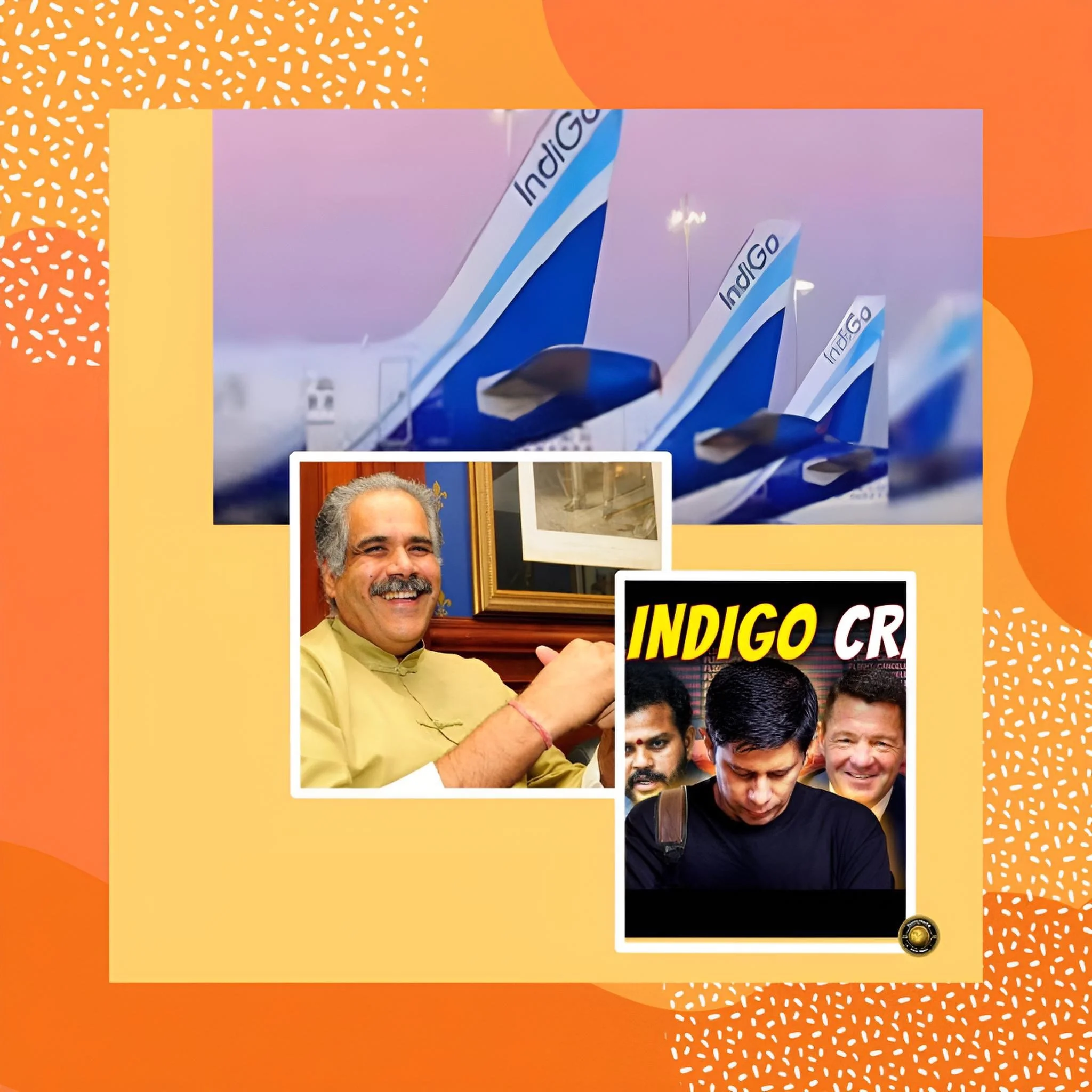
India’s IndiGo’s Airline Meltdown: When Government Finger-Pointing Crashes India’s Skies: Institutions Indigo stock price optimism
Executive Summary
India’s aviation sector confronted unprecedented operational chaos in December 2025 when Indigo, commanding over 65 percent of the domestic market, undertook mass cancellations of more than 4,200 flights within eight days, stranding hundreds of thousands of passengers and exposing systemic vulnerabilities that extend far beyond a single airline’s mismanagement.
The crisis originated from Indigo’s delayed and inadequate preparation for the Directorate General of Civil Aviation’s revised Flight Duty Time Limitation regulations—a safety-enhancing framework announced in January 2024 with phased implementation scheduled for November 1, 2025.
Rather than acknowledging the government’s regulatory failures and the structural distortions that created Indigo’s dangerous dominance, Indian political leadership and bureaucrats have strategically concentrated blame upon the airline while simultaneously providing regulatory exemptions that undermine their own safety mandate.
This pattern replicates historical precedents in Indian aviation where government negligence and favoritism toward politically connected carriers contributed to the systematic destruction of competition, ultimately requiring extraordinary damage control measures to preserve the appearance of institutional competence.
Introduction
The collapse of Indigo’s operational capacity in early December 2025 represents far more than an isolated corporate crisis; it constitutes a comprehensive systems failure that indicts governmental regulatory oversight, years of policy-driven market distortion, and a regulatory establishment willing to compromise safety standards to manage political embarrassment.
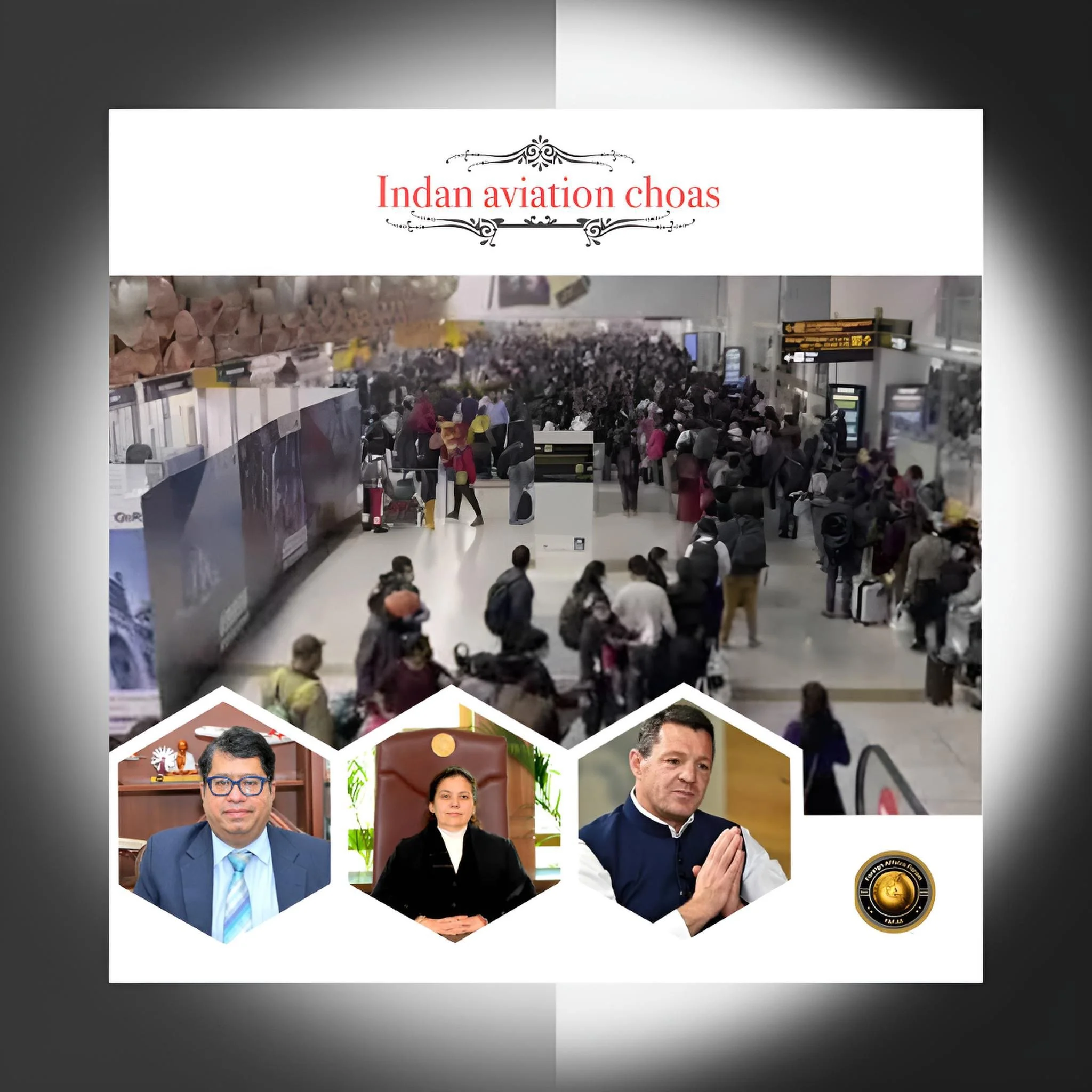
India’s largest airline, which had maintained industry-leading on-time performance metrics throughout its operational history, suddenly witnessed its punctuality plummet to 35 percent at major metropolitan hubs, forcing the cancellation of thousands of flights and creating scenes of chaos at airports across Delhi, Mumbai, Bengaluru, and Hyderabad.
While Civil Aviation Minister Ram Mohan Naidu and DGCA officials publicly attributed responsibility entirely to Indigo’s internal planning failures, the underlying narrative reveals a far more complicated picture in which regulatory capture, favoritism toward economically dominant carriers, and inadequate enforcement mechanisms enabled the airline to operate with dangerous manpower insufficiencies while the government maintained silence.
The current situation demonstrates that Indian political and bureaucratic leadership have chosen to externalize accountability through aggressive blame-shifting rather than confront uncomfortable truths about systemic regulatory dysfunction and their own complicity in creating conditions that inevitably produced disaster.
Historical Context: From Liberalization to Monopoly
To understand the December 2025 crisis requires comprehension of how Indian aviation evolved from a competitive sector into a duopoly where Indigo commands 65 percent of all domestic flights, positioning the airline as functionally irreplaceable.
This transformation did not occur organically through superior business performance alone; rather, it emerged from two decades of governmental policy failures that systematically eliminated competitors and concentrated market power among politically connected entities.
The aviation sector underwent liberalization in the mid-1990s, ending the statutory monopoly of government-owned Indian Airlines and Air India.
During the 2004-2014 period under UPA governance, a structural policy framework emerged that inadvertently, or perhaps deliberately, created conditions favoring concentrated market power.
The government declined to implement comprehensive tax reform for aviation turbine fuel, leaving fuel prices 70 percent higher than in regional competing hubs and forcing carriers to absorb fuel costs comprising 40 percent of operating expenses.
Simultaneously, airport privatization in Delhi and Mumbai introduced regulatory frameworks permitting extremely high user development fees that positioned Indian hubs among the most expensive globally.
For carriers operating on thin margins under high-tax regimes, these policies functioned as de facto protectionist mechanisms favoring well-capitalized, low-cost operators with negotiating power, while smaller regional carriers hemorrhaged resources.
The consequences proved catastrophic for competitive diversity.
Between 2004 and 2014, multiple airlines disappeared from Indian skies: Kingfisher Airlines, once India’s second-largest carrier under flamboyant founder Vijay Mallya, collapsed under financial pressure exacerbated by government hostility toward bailouts.
Jet Airways, which Naresh Goyal had established as India’s primary challenger to public-sector carriers, underwent systematic financial destruction through accumulated debts, corporate governance failures, and alleged fund diversion, ultimately filing for bankruptcy in April 2019 after the government refused emergency support and the Tata Group declined to pursue acquisition.
GoAir and SpiceJet struggled perpetually while Air India, despite government ownership providing implicit support, sustained staggering losses—accumulating debt exceeding $8.4 billion USD through the 2010s as the government authorized massive aircraft orders without corresponding revenue strategies.
Amid this carnage, Indigo thrived through consistent operational discipline, cost management, and strategic alliances with foreign lessors, ultimately emerging as the sole domestically-focused low-cost carrier capable of sustained profitability.
By 2015, Indigo had become India’s largest domestic airline. By 2025, it commanded 65 percent of all domestic capacity, a concentration that in global aviation markets would trigger antitrust intervention.
The government, rather than implementing competitive policy frameworks to prevent such dominance, implicitly encouraged Indigo’s growth through regulatory leniency while maintaining that no “favoritism” existed.
This historical trajectory is critical: the December 2025 crisis did not emerge from an isolated corporate failure but from a market structure so distorted and dependent upon a single carrier that any operational dysfunction at that airline potentially cascades into systemic paralysis.
The Flight Duty Time Limitation Framework and Regulatory Timeline
Safety regulations governing pilot fatigue represent among the most scientifically validated requirements in global aviation.
The International Civil Aviation Organisation, the United Nations’ specialized agency for aviation standardization, established comprehensive guidance requiring mandatory rest periods, limitations on consecutive duty hours, and restrictions on night operations.
For decades, Indian civil aviation operated under relatively permissive fatigue management rules that, while technically meeting minimum international standards, permitted pilot workload levels that pilot unions characterized as dangerous.
In January 2024, India’s DGCA, responding to sustained litigation from pilot unions and court directives, issued revised Flight Duty Time Limitation regulations that would bring Indian standards into closer alignment with global best practices.
The framework addressed specific categories of fatigue risk: increasing mandatory weekly rest from 36 to 48 hours continuously; redefining “night duty” from midnight-5 AM to midnight-6:50 AM; restricting night landings per pilot from six to two per duty cycle; and limiting consecutive night operations to a maximum of two consecutive nights.
These provisions would eliminate practices that permitted Indian pilots to fly with substantially greater accumulated fatigue than their counterparts at international carriers.
The DGCA initially scheduled implementation for June 1, 2024, but subsequently deferred the framework following airline industry resistance claims about capacity impacts.
Under court pressure—specifically a Delhi High Court mandate for strict compliance with safety timelines—the DGCA announced a phased implementation
Phase One
Commencing July 1, 2025, would address weekly rest and general duty limitations
Phase Two
Becoming effective November 1, 2025, would implement night-specific restrictions. This timeline provided carriers with 22 months from January 2024 notification through November 2025 implementation to recalibrate pilot rosters, recruitment plans, and operational schedules.
Airlines such as Air India, despite government ownership providing no implicit competitive advantages, systematically prepared for FDTL compliance beginning in October 2025.
Air India’s management invested substantial resources in software development—allocating two months specifically to reconfigure rostering algorithms with “countless algorithms” requiring technical sophistication—and proactively recruited pilots months in advance.
The company successfully implemented Phase Two without consequential disruptions, suggesting that compliance required serious planning but remained operationally feasible for professionally managed carriers.
Indigo’s approach differed fundamentally
Internally, the airline maintained what pilot unions characterized as a “lean manpower strategy,” operating with pilot staffing deliberately calibrated to existing permissive regulations and maximizing aircraft utilization to minimize costs.
As the FDTL framework proceeded toward implementation, Indigo’s corporate leadership did not undertake equivalent preparation.
Disturbingly, the airline only initiated large-scale pilot recruitment in November 2025—literally one month before Phase Two became effective.
Federation of Indian Pilots statements indicated that Indigo had operated under a “prolonged and unorthodox lean manpower strategy,” maintained a pilot compensation freeze in apparent coordination with competitor SpiceJet (constituting potential cartel behavior), and avoided systematic recruitment despite clear regulatory timelines requiring expansion.
When Phase Two implementation arrived on November 1, Indigo discovered that its roster was non-compliant for peak winter season demand.
Key Events and the Operational Collapse
The operational disruptions began in early December 2025 in response to compounding factors
(1) New FDTL regulations eliminating permissible pilot workload
(2) Severe weather conditions during the peak winter travel season constraining flight operations and aircraft utilization
(2) Software deficiencies in Indigo’s crew management and scheduling systems.
By December 3, cancellations began cascading.
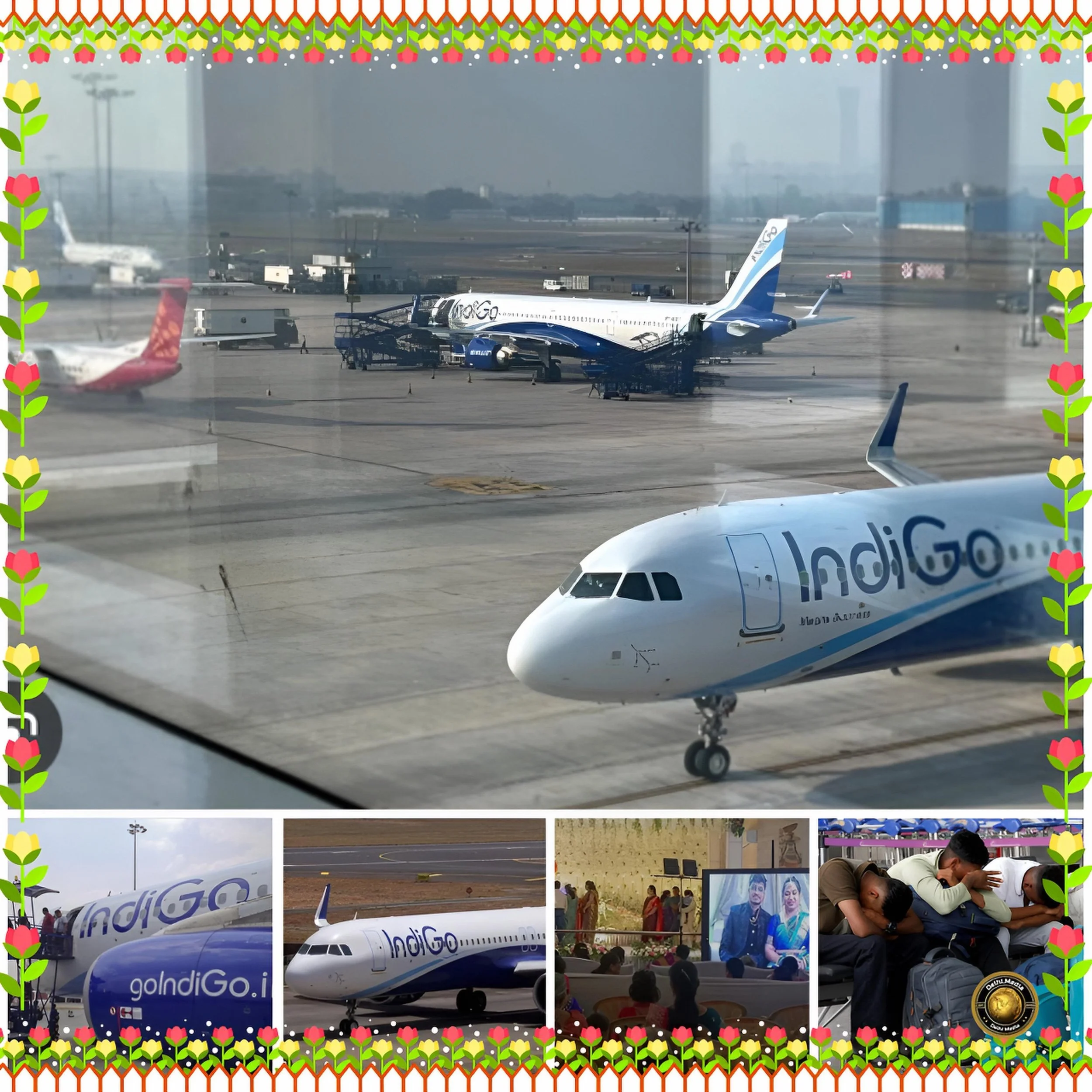
Over December 4-7, 2025, Indigo cancelled more than 1,500 flights, eventually exceeding 4,200 cancellations within eight days—approximately 23 percent of the airline’s 2,300-plus daily scheduled flights.
At several major airports, Indigo represented the sole nonstop carrier on particular routes; passengers faced not merely delays but complete inability to access air travel on preferred schedules, creating what opposition politicians accurately characterized as a “national crisis.”
Passengers experienced scenes of genuine human suffering: individuals unable to attend funerals of family members; students missing examinations; business people stranded at airports; families separated across cities.
The airline’s support infrastructure collapsed under demand surge. Baggage systems failed to track luggage, stranding thousands of pieces; passenger care coordination deteriorated, with passengers sometimes discovering flight cancellations only upon arriving at airports rather than receiving advance notification.
Government Response and Blame Externalization
PM Modi’s Decisive Intervention in IndiGo Crisis
Prime Minister Narendra Modi took direct command of the IndiGo operational meltdown, firmly directing Civil Aviation Minister Ram Mohan Naidu to prioritize passenger relief and ensure regulations serve citizens rather than harass them.
In NDA parliamentary meetings on December 8, 2025, Modi unequivocally stated that rules must “ease life, not trouble people,” underscoring the unacceptability of rigid FDTL norms fueling over 4,500 cancellations since December 1.
Naidu confirmed Modi’s proactive oversight, with the Prime Minister demanding updates and mandating compensation far exceeding minimum requirements for stranded passengers.
Civil Aviation Minister Ram Mohan Naidu
Civil Aviation Minister Ram Mohan Naidu responded with forceful public statements asserting that Indigo bore sole responsibility for the disruption, that the government had “not succumbed to any pressure” in handling the crisis, and that “stern action” would follow.
The government directed Indigo to process all passenger refunds by specific deadlines, return baggage within 48 hours, and provide compensation consistent with civil aviation requirements.
Competent Leadership, Not Unfitness
Naidu’s blame placement constitutes effective regulation, not buck-passing, as he enforced accountability on the culpable party while mitigating passenger harm through concrete directives.
Deeming him unfit ignores his rapid stabilization of the “biggest meltdown in Indian aviation history” and PM’s endorsement, rendering removal unwarranted and politically opportunistic.
True responsibility demands probing Indigo’s monopoly risks and structural reforms, not scapegoating the regulator who acted decisively.
DGCA actions
Simultaneously, the DGCA issued show-cause notices to Indigo CEO Pieter Elbers and Chief Operating Officer Isidre Porqueras, demanding explanations for operational failures.
However, the government’s actions immediately undermined these declarations of regulatory firmness.
On December 5, 2025—mere days into the crisis and before investigations could meaningfully identify causality—the DGCA granted Indigo a “one-time temporary exemption” from specific FDTL provisions for the airline’s Airbus A320 fleet, extending through February 10, 2026.
This exemption reversed the very regulatory regime the DGCA had publicly defended and that pilot unions had litigated to establish.
The exemption specifically covered night duty limitations (midnight-6:50 AM) and night operation restrictions—precisely the Phase Two requirements that had become effective November 1, 2025.
The political implications were unmistakable
The government announced strict accountability measures against Indigo while simultaneously providing regulatory relief that permitted the airline to continue operating under the previous fatigue regime that had proven inadequate and necessitated safety reform.
Civil Aviation Secretary Samir Kumar Sinha stated that “there has been no delay on the part of the government in swinging into action,” yet the government’s first substantive action was granting exemptions rather than enforcing safety standards.
Facts and Concerns: The Question of Government Accountability
Multiple lines of evidence suggest the government’s blame externalization obscures its own institutional failures.
Regulatory Enforcement Failure
The DGCA possessed legal authority and clear notification timelines regarding FDTL compliance requirements.
Indigo’s non-compliance—operating with insufficient pilots relative to new regulatory requirements—should have triggered enforcement actions months before disruptions began.
Industry analysts and pilot union statements indicate that DGCA monitors airline preparedness, yet no enforcement notices appear to have been issued to Indigo prior to the December disruptions despite the airline’s visible planning deficiencies.
The government, through the DGCA, granted phased implementation timelines specifically to permit carriers to prepare; Indigo’s inability to prepare cannot reasonably be attributed to insufficiently generous implementation timelines.
Winter Schedule Approval
In October 2025, the Ministry of Civil Aviation finalized the Winter Schedule 2025-2026, approving Indigo to operate 15,014 departures per week—the maximum permitted capacity.
Simultaneously, the DGCA was aware that Phase Two FDTL implementation would become effective November 1, creating new pilot staffing requirements.
The government approved the airline’s maximum allowable capacity while possessing full awareness that the airline had not recruited pilots required for FDTL compliance.
This constitutes a bureaucratic failure: the government either did not coordinate between the Ministry approving schedules and the DGCA implementing regulations, or deliberately approved unsustainable capacity knowing the regulatory environment would force subsequent reductions.
Selective Exemptions and Regulatory Capture
The rapid exemption granted to Indigo raised immediate concerns about regulatory capture.
Indigo is India’s largest airline and possesses substantial political influence.
Congress MP Sasikanth Senthil specifically questioned whether the exemption reflected governmental favoritism influenced by electoral bonds—contributions from InterGlobe group entities and Indigo’s promoters to political parties—that exceeded regulatory independence.
The opposition noted that no equivalent exemptions were granted to smaller carriers such as SpiceJet despite similar operational pressures, suggesting selective application of regulatory standards that benefited the most politically connected airline.
Conflicted Messaging on Safety
The government simultaneously proclaimed that safety was its highest priority while granting exemptions from safety-enhancing regulations.
Pilot unions and safety advocates explicitly warned that permitting exemptions from FDTL provisions undermined the foundation of international fatigue management standards and established precedents for future exemption requests.
The Federation of Indian Pilots stated: “By granting selective exemptions to IndiGo, the DGCA has opened the door for all other operators to cite their own operational, commercial, or scheduling reasons to demand similar dispensations…If dispensations can be granted based on each operator’s requirements, then the relevance, authority, and intent of the FDTL CAR is defeated entirely.
Statements from Indian Leadership and Global Observers
Government Positioning
Minister Ram Mohan Naidu declared in Parliament that the disruptions resulted from Indigo’s “failure to maintain their roster” despite ministry clarifications and stated that “full accountability for the crisis rests with the airline,” explicitly denying that governmental policies or regulatory failures contributed.
The minister emphasized that the government “had not succumbed to pressure” in permitting temporary FDTL exemptions, framing these regulatory rollbacks as merely “temporary abeyance” necessary to stabilize passenger convenience.
Civil Aviation Secretary Samir Kumar Sinha asserted that government response was immediate and coordinated, describing “smooth” processes following intervention.
Opposition Criticism
Congress leader Rahul Gandhi framed the crisis as “the cost of this government’s monopoly model” and asserted that “ordinary Indians are paying the price” for policy decisions concentrating aviation capacity among politically connected entities.
Congress MP Sasikanth Senthil directly questioned government accountability, asking: “Did the government ever issue warnings or compliance notices to IndiGo, or was the airline protected from enforcement altogether?”
Congress spokesperson Pawan Khera noted that governmental promises to democratize air travel had yielded a system where passengers experienced “shoes and slippers being exchanged between passengers and IndiGo staff amid spiralling disruption.”
Congress MP Karti P Chidambaram demanded urgent statements on what triggered the meltdown, characterizing the situation as a “national crisis” demanding full accountability.
Aviation Expert Assessment: Former AirAsia CFO Vijay Gopalan attributed Indigo’s crisis to “very lackadaisical, nonchalant attitude” towards adapting to new guidelines, emphasizing that other airlines had adequately prepared.
Aviation expert Sanjay Lazar explicitly characterized the situation as “clear mismanagement,” criticizing Indigo for halting pilot hiring while expanding schedules, yet notably also indicting DGCA for insufficient regulatory oversight.
The Airline Pilots Association of India identified “failure of proactive resource planning” and warned that operational disruptions could become tools to “arm-twist regulators” into diluting safety norms.
International Perspective
Global aviation observers noted that the disruption reflected structural vulnerabilities in Indian aviation—an over-reliance on a single carrier commanding 65 percent of capacity, high operational costs relative to regional competitors, and regulatory frameworks permitting dangerously low pilot staffing. Reuters coverage specifically highlighted that “few carriers have succeeded” in India’s aviation sector and that the IndiGo crisis “exposes risks” in the broader system.
Causality: Identifying Responsibility and Structural Factors
The December 2025 disruption resulted from multiple convergent factors that cannot be attributed solely to Indigo’s corporate mismanagement.
Primary Factor
Inadequate Pilot Recruitment: Indigo maintained pilot staffing deliberately calibrated to previous regulatory requirements and did not undertake sufficient recruitment to accommodate FDTL compliance.
As of November 2025, Indigo faced a crew shortage of 65 captains and 59 co-pilots.
The airline only initiated large-scale recruitment in November, providing insufficient time to train and integrate new crews before peak winter season.
This represents clear corporate planning failure for which Indigo bears substantial responsibility.
Secondary Factor
Regulatory Implementation without Enforcement: The DGCA announced FDTL requirements in January 2024 but did not verify airline preparedness through 2024-2025.
The government approved Indigo’s maximum allowable capacity in October 2025 without confirming FDTL compliance readiness.
Rather than enforcing regulatory compliance or reducing approved schedules aligned with crew capacity, the government maintained approval for unsustainable operations then responded to inevitable failure by granting exemptions.
Tertiary Factor
Structural Market Distortion
Years of policy-driven market consolidation created a situation where a single airline’s operational failure cascaded into national aviation system disruption.
Smaller competitors had been systematically eliminated through high-tax regimes, expensive airport fees, and regulatory burdens that larger carriers absorbed more easily. Policy decisions made during 2004-2014 by multiple governments created the market conditions enabling Indigo’s dominance and the vulnerability that dominance produced.
Quaternary Factor
Political Pressure and Regulatory Capture
The rapid exemption granted to Indigo suggested that political considerations—protecting India’s largest airline and avoiding passenger disruption—influenced regulatory decisions.
The government appears to have sacrificed safety standards (FDTL provisions) to manage political consequences of capacity collapse, demonstrating classic regulatory capture where the regulator becomes captive to the regulated industry’s interests rather than maintaining independence in pursuit of public safety.
The responsible analysis acknowledges that responsibility is distributed
Indigo failed in systematic planning and recruitment; the government failed in regulatory oversight and enforcement; structural policies created vulnerable market concentration; and political pressure induced regulatory relaxation.
The government’s exclusive blame assignment to Indigo obscures this distributed responsibility and prevents accountability at institutional levels where such accountability would be most valuable for preventing recurrence.
Historical Parallels: Repeating Past Mistakes
India’s aviation sector has experienced multiple episodes where governmental mismanagement and regulatory failure produced crisis that authorities subsequently blamed upon private actors.
The pattern is remarkably consistent, suggesting systemic institutional dysfunction rather than isolated incidents.
Air India’s Destruction (2000s-2010s)
The government, through Civil Aviation Minister Praful Patel beginning in 2004, deliberately degraded Air India through policy mechanisms later characterized as constituting “willful destruction.”
The government authorized expansion from 28 aircraft to 68 aircraft without corresponding revenue strategies or realistic planning, accumulating massive debt while other carriers benefited from the same expansion opportunities but managed capital discipline.
When Air India subsequently faced bankruptcy despite receiving government patronage unavailable to private competitors, the government framed the airline’s collapse as evidence of public-sector inefficiency requiring privatization.
In reality, policy decisions by government officials had deliberately impaired the carrier’s financial viability. The eventual privatization in 2021 to Tata Group occurred only after the government and bureaucracy had thoroughly damaged the carrier’s assets and reputation.
Jet Airways’ Demise (2019)
Jet Airways, founded by Naresh Goyal as the primary domestic competitor to Air India and Indian Airlines, faced systematic financial deterioration through the 2010s. While Goyal’s personal governance failures contributed meaningfully to the airline’s decline, the underlying macro environment—high-tax aviation fuel, expensive airport fees, and permissive regulations favoring larger carriers—created the conditions enabling competitive failure.
When Jet Airways desperately sought emergency financing in 2019, the government refused bailout support, claiming that favoritism toward private carriers conflicted with avoiding public-sector subsidies.
Yet this principled position on avoiding subsidies conveniently ignored decades of implicit governmental support enabling Air India’s survival despite catastrophic mismanagement.
The government’s refusal to pursue alternatives when Tata Group declined Jet Airways acquisition demonstrated that political leadership had accepted the airline’s collapse as acceptable cost of avoiding responsibility for prior policy errors.
Regulatory Capture in Air India Crash Investigation (2025)
Even current events demonstrate institutional patterns. Following the Ahmedabad Air India crash in June 2025 killing 260 people, the Supreme Court expressed concerns regarding DGCA’s conflict of interest in investigating an airline under government majority ownership.
The court noted that “no one in India believes it was the pilot’s fault” and questioned whether the preliminary investigation selectively blamed pilots while withholding critical technical findings.
The incident demonstrated that the DGCA, rather than functioning as an independent regulator, appeared captured by government and airline interests, producing investigations reflecting institutional rather than investigative priorities.
The December 2025 Indigo disruption replicates this pattern precisely: government policy decisions and regulatory failures create crisis conditions; private stakeholders fail under those conditions (Indigo’s inadequate recruitment); government blames the private stakeholders exclusively while avoiding institutional accountability; and government provides regulatory relief to manage political consequences while maintaining public assertions of regulatory firmness.
The pattern suggests structural governmental dysfunction that no single policy reform will address without confronting fundamental questions about regulatory independence and governmental willingness to accept responsibility for policy errors.
Future Outlook and Structural Concerns
Indigo has committed to achieving full operational normalization by February 10, 2026, when the temporary FDTL exemption expires.
The airline plans to induct 158 pilots by February 2026 and another 742 pilots by December 2026, representing substantial recruitment acceleration.
Financial analysts anticipate that operational normalization will support recovery, with Emkay Global projecting recovery progression through 2026. However, unless the exemption expires and Phase Two FDTL requirements are reimposed without additional relaxation, the airline will simply revert to pre-compliance status when full regulations become effective February 10, 2026.
The structural question concerns whether the government will demonstrate regulatory independence at the February 2026 exemption expiration.
If the government extends the exemption or implements a “modified” framework that maintains pilot fatigue permission at higher levels than international standards recommend, the episode will have established a precedent that political pressure can override safety regulations.
The pilot unions and international aviation observers have explicitly warned that such extension would undermine the regulatory regime’s credibility.
Additionally, the government has announced intentions to prevent future airline duopoly through encouragement of new carriers.
However, given structural market disadvantages—high fuel taxes, expensive airport fees, limited availability of trained crew and infrastructure—new carriers would face the same obstacles that eliminated previous competitors.
Meaningful policy reform would require addressing these structural disadvantages rather than merely announcing intentions to encourage competition that structural policies render infeasible.
The current situation also raises questions about whether Indigo can permanently solve its manpower challenges.
Attracting experienced pilots to India requires competitive compensation; global mobility of aviation professionals means that Indian pilots, once trained, can pursue employment opportunities internationally where fatigue limits and working conditions may be superior.
Indigo’s historical pilot compensation freeze and non-poaching arrangements have created reputational damage in the pilot community.
The airline will need to offer compensation significantly exceeding historical norms to attract pilots in required numbers.
This increases operational costs precisely when the airline faces revenue pressure from flight reductions and competitive pricing.
IndiGo Stock Plunge: Market Panic Amid Operational Chaos: Optism
IndiGo’s parent, suffered a brutal 17% share price collapse from approximately ₹5,900 to ₹4,800 between early December and December 8, 2025, erasing $4.3-4.5 billion in market value as over 4,500 flight cancellations triggered investor fears of prolonged revenue disruption, regulatory penalties, and structural cost inflation.
The sell-off accelerated after DGCA show-cause notices to CEO Pieter Elbers and COO Isidro Porqueras, with shares hitting intraday lows of $55 on December 8 amid brokerage target price cuts and comparisons to Southwest Airlines’ 2022 meltdown.
Trading volumes surged as retail panic amplified institutional caution, reflecting broader concerns over IndiGo’s 65% domestic market dominance turning into vulnerability when operations falter.
Future Outlook: Recovery Potential Amid Lingering Risks
IndiGo’s stock faces a volatile recovery trajectory through 2026, with operations stabilizing by mid-December but brokerages forecasting FY26 EPS cuts of 18-64% due to elevated pilot hiring costs, reduced fleet utilization, rupee depreciation, and potential market share caps.
Optimists
(1) UBS (Buy, ₹6,350 target) - $70.60
(2) Jefferies (Buy, ₹7,025) - $78.10 anticipate normalization by February 2026 post-FDTL exemption expiry, citing IndiGo’s historical resilience and fleet expansion.
(3) HSBC sees no structural damage at ₹5,977-$66.50
Pessimists
JM Financial (Reduce) and IIFL warn of 12-26% further downside to ₹4,600-4,800 - $51.10 to $53.35 ,if regulatory scrutiny persists.
Consensus target
The consensus targets average ₹6,251 -$69.50 ( up 30% from current levels) assuming successful 900+ pilot inductions.
Ownership and Analyst Sentiment
Promoters and institutional stability
(1) Rahul Bhatia (InterGlobe Enterprises) control 49.27%, providing stability
(2) FIIs/FPIs at 25.12%
(3) Domestic institutions/mutual funds at 20.73%
(4) Retail at 4.88%—major holders include Vanguard funds, Fidelity iShares ETFs, Baron Emerging Markets (BEXFX), and T. Rowe Price
Institutions remain net holders despite the rout, signaling confidence in long-term dominance; analysts split 18 Buy/2 Hold/3 Strong Sell, with Kotak drawing Southwest parallels but most viewing FY26 as a “reset year” before 2027 rebound.
Conclusions
Indigo’s December 2025 operational crisis represents a complex systems failure for which responsibility is distributed among corporate management, regulatory authorities, structural market policies, and political pressure dynamics.
The Indian government’s deliberate attribution of exclusive blame to Indigo while simultaneously providing regulatory exemptions demonstrates a familiar pattern in which governmental and bureaucratic leaders prioritize appearance of regulatory control and institutional infallibility over transparent acknowledgment of institutional failures.
This pattern replicates historical episodes in which Air India and Jet Airways were systematically degraded through policy mechanisms then blamed for inevitable failure, creating convenient narratives that attributed aviation sector dysfunction to private-sector inefficiency rather than governmental mismanagement.
The most concerning aspect of the current situation involves the government’s rapid exemption from Flight Duty Time Limitation regulations. These safety requirements represent decades of aviation science establishing that pilot fatigue constitutes material operational risk.
Permitting exemptions based on political convenience and airline profitability establishes precedent that safety standards are negotiable rather than fundamental.
International aviation observers and Indian pilot unions have explicitly warned that such precedents undermine regulatory credibility and facilitate future exemption requests from other carriers.
The path forward requires genuine institutional reform rather than blame externalization. Such reform would require
(1) Transparent investigation into governmental regulatory failures and regulatory enforcement deficiencies
(2) Structural policy reform addressing high-tax aviation fuel and expensive airport fees that create market conditions favoring carrier concentration
(3) Firm regulatory commitment to FDTL standards without extension of exemptions beyond February 10, 2026
(4) Governmental willingness to accept responsibility for policy decisions that created market vulnerability to single-airline failure.
None of these requirements appear likely given demonstrated institutional preferences for blame displacement and regulatory capture by politically influential airlines.
Indigo’s fate ultimately depends upon whether the airline can recruit sufficient pilots and restore operational confidence before the February 2026 deadline.
If the airline succeeds in crew integration while operating under exempted fatigue standards, it may recover toward pre-crisis capacity.
However, if the exemption is extended or modified, the government will have conclusively demonstrated that political pressure can override safety considerations and that India’s regulatory framework privileges airline profitability over passenger safety and pilot welfare.
In either scenario, the episode establishes that India’s aviation governance remains vulnerable to the same institutional patterns that have repeatedly produced crisis throughout the sector’s history.