Putin’s Exclusive Interview with India Today Hosts: Complete Q&A with Geopolitical Analysis - Part III
Introduction
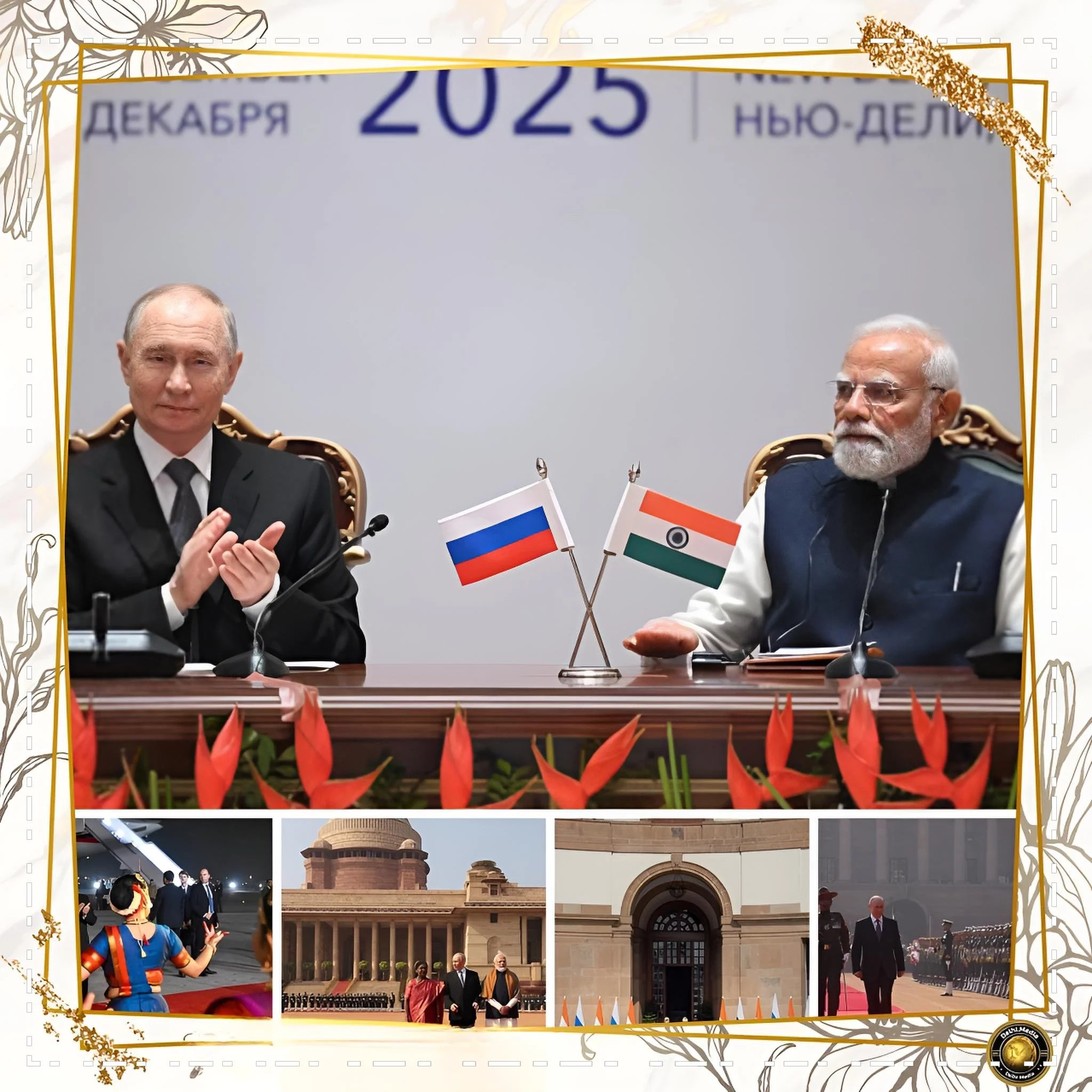
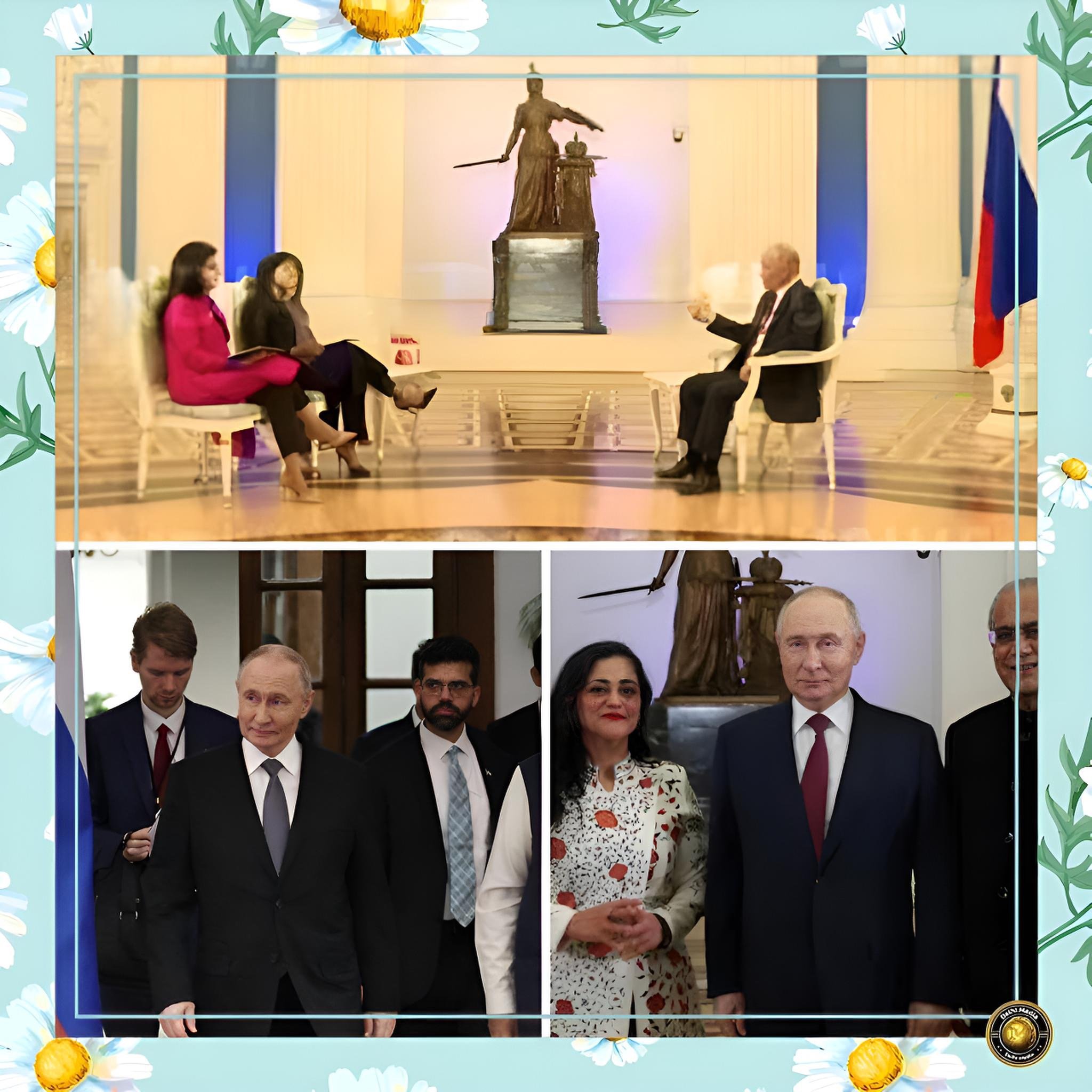
On December 4, 2025, Russian President Vladimir Putin granted his first-ever interview to Indian television in nearly two decades, speaking with anchors Anjana Om Kashyap and Geeta Mohan at the Kremlin’s historic Ekaterina Hall.
This 100-minute conversation covered bilateral relations, Ukraine, NATO, global realignment of the order, and strategic cooperation—each laden with carefully calibrated messaging.
Key Strategic Questions, Answers & Strategic Analysis
(1) India-Russia Friendship Assessment
Anjana Om Kashyap
How do you assess the strength of India-Russia friendship today, and what would you say about PM Modi, whom you call your dost?
Putin’s Response
Putin framed the partnership within global power realignment, emphasizing that Russia-India cooperation transcends bilateral utility and serves both nations’ stability interests.
He praised Modi for setting “challenging tasks” through “Make in India” and highlighted practical cooperation across numerous areas.
Geopolitical Analysis
Putin strategically positions India-Russia ties within the context of emerging multipolarity rather than Cold War-style bloc competition.
This framing legitimizes the partnership as part of an inevitable global transformation rather than an anti-Western alignment.
The emphasis on Modi as a decisive leader who implements practical policies appeals to Indian nationalism and positions Russia as recognizing India’s civilizational importance.
(2) The SCO Summit Car Ride
Anjana Om Kashyap
The viral photo of you and Modi riding together in a car at the SCO summit—was it planned? What did you discuss?
Putin’s Response
Putin claimed it was spontaneous, describing it as “a gesture of human solidarity, camaraderie, and friendship” where they discussed current topics “like old friends.” He denied any “hidden scheme.”
Geopolitical Analysis
Putin’s detailed explanation of what appears minor contradicts his claim of insignificance—the extensive clarification itself reveals concern about Western interpretation.
By normalizing the intimacy as spontaneous rather than choreographed, Putin attempts to shift the narrative from a strategic alignment photo to a genuine personal rapport.
This matters because Western media portrayed the India-Russia-China image as evidence of an anti-US coalition.
(3) Expected Announcements During India Visit
Geeta Mohan
What concrete announcements can we expect, particularly given that the world is watching?
Putin’s Response
Putin emphasized “high technology” partnerships in space exploration, nuclear power (Kudankulam expansion), shipbuilding, aviation, and crucially, artificial intelligence.
He stated specific agreements would be revealed during the visit itself.
Geopolitical Analysis
The pivot to AI and advanced technology is strategically significant. It shifts the narrative from Russia-as-energy-supplier (vulnerable to sanctions) to Russia-as-technology-partner (future-oriented).
The emphasis on joint projects aligns with Modi’s “Make in India” initiative while positioning Russia as a partner in India’s technological modernization, rather than merely a supplier of oil and arms.
(4) Handling Western Pressure on Energy Trade
Geeta Mohan
How can India and Russia handle Western pressure and sanctions on oil cooperation?
Putin’s Response
Putin argued that pre-Ukraine energy partnerships prove the relationship isn’t transactional exploitation.
He highlighted the $20 billion investment in a Russian oil refinery in India.
He noted that this infrastructure enabled India to become a major supplier of refined products to Europe, benefiting India substantially beyond the oil discount narrative.
Geopolitical Analysis
Putin’s temporal distancing is crucial: by establishing that Russia-India energy ties predate 2022, he delegitimizes Western claims that India is “funding Russian aggression.”
More sophisticated: his $20 billion refinery example demonstrates that Russia has made massive infrastructure commitments that create mutual dependency—India cannot easily switch suppliers without losing production capacity.
This locks India into continued cooperation while appearing to empower India economically.
(5) Defense Cooperation & US Arm-Twisting
Anjana Om Kashyap
With US sanctions and pressure on Indian defense purchases from Russia, will Russia pull back or push harder?
Putin’s Response
“It appears that both India and the world recognise that India cannot continue to be treated the way it was treated 77 years ago. India is a major global player, not a British colony, and everyone must accept this reality… Prime Minister Modi is not someone who succumbs to pressure easily.”
Putin stated that over 90% of Russia-India transactions are already conducted in national currencies, and the two countries can implement alternative financial systems through the Bank of Russia and Indian partners.
Geopolitical Analysis
This is Putin’s most confrontational with Western pressure, yet delivered entirely through praise of Modi rather than criticism of America.
The “British colony” reference is historically loaded—it frames Western sanctions as neo-colonial hegemony over India’s sovereignty.
Critically, Putin establishes that Russia and India have already extensively de-dollarized, demonstrating that they possess financial infrastructure to circumvent sanctions independently.
This addresses India’s key constraint: the ability to circumvent sanctions without Western financial retaliation.
(6) Specific Defense Systems Questions
Anjana Om Kashyap
When can we expect the five S-400 systems? What about S-500? And the Su-57 fighter jet status?
Putin’s Response
Rather than providing specific timelines, Putin reframed the discussion around technology sharing rather than selling.
He emphasized that India manufactures T-90 tanks, produces BrahMos missiles, and implements Modi’s “Make in India” initiative in the defense sector—positioning India not as a customer but as a manufacturing partner.
Geopolitical Analysis
Putin’s avoidance of specific timelines (likely due to supply constraints on Ukraine) is masked by a trust-building narrative: Russia shares technology with India at a level rare in military cooperation.
By highlighting technology transfer and joint production, Putin transforms defense cooperation from dependency (buying Russian weapons) to interdependency (India co-produces Russian systems).
This appeals to Modi’s “Make in India” vision while locking India into the partnership through production capacity.
(7) Trump’s Reaction to India-Russia Cooperation
Geeta Mohan
How do you think President Trump will react to all this “Make in India, Make With Russia” cooperation?
Putin’s Response
Neither I nor Prime Minister Modi, despite certain external pressure we face, have ever approached our collaboration to work against someone.
President Trump has his own agenda, his own goals, whereas we focus on ours – not against anyone, but rather aimed at safeguarding our respective interests.”
Geopolitical Analysis
Putin’s statement that cooperation is “not against anyone” is defensive—it reveals awareness that the Western narrative portrays the India-Russia partnership as anti-US alignment.
Notably, Putin groups Trump with other leaders who should “appreciate” Russia-India cooperation, suggesting Trump might be persuadable. This is a strategic ambiguity that simultaneously
Denies anti-American intent (for Trump)
Asserts Russian-Indian right to independent cooperation (for Modi)
Subtly suggests Trump, if rational, would accept this (attempting to drive a wedge between Trump and State Department Russia hawks)
(8) Trump’s “Oil Funds Russian Aggression” Charge
Anjana Om Kashyap
Trump said if India buys Russian oil, it’s funding the Russian-Ukrainian war. How do you characterize Trump?
Putin’s Response
“I never give character assessments about my colleagues… As for India’s purchases of energy resources from Russia, the United States itself still buys nuclear fuel from us for its own nuclear power plants… If the US has the right to buy our fuel, why shouldn’t India have the same privilege?”
Geopolitical Analysis
Putin’s uranium argument is powerful because it exposes US hypocrisy: America maintains trade with Russia for nuclear fuel while sanctioning India for the same commodity.
By saying “this question deserves thorough examination, and we stand ready to discuss it, including with President Trump,”
Putin appeals directly to Trump’s pragmatism over State Department opposition. This is classic statecraft: exploit divisions in the adversary camp to separate the decision-maker (Trump) from institutional bureaucracy.
(9) Trump-Putin Alaska Summit
Anjana Om Kashyap
“What happened in Alaska? You met President Trump and it was all about the peace deal, right? What happened? Did you actually have sense of or see a sincere intent?
Putin’s Response
Yes, there was indeed a sense—no, more than just a sense, I have absolutely no doubt that President Trump had genuine intentions (we won’t discuss here what caused them or why they appeared, but they’re definitely present).
Both the United States and President Trump likely have their own understanding of why this needs to be resolved quickly.
Moreover, by the way, on humanitarian grounds too. I truly believe that is one of the motives behind President Trump’s actions because he constantly speaks about his wish to minimise losses, and I’m confident that his sincerity is genuine. He undoubtedly considers these humanitarian concerns when formulating his decisions.
However, other factors also come into play: political considerations and economic interests. Therefore, I believe that the US is actively seeking a solution to this problem.”[kremlin]
Later, reinforcing: “I am absolutely certain, with no doubt at all, he sincerely aims for a peaceful resolution… There are numerous areas where restoring economic relations between the US and Russia would benefit both sides.”
Geopolitical Implications
Putin’s unqualified endorsement of Trump’s “genuine intentions” and “sincerity” constitutes strategic rehabilitation of Trump for global audiences, positioning him as the pragmatic outlier against US establishment hawks.
This exploits Trump’s dealmaker persona to fracture Western unity: Putin appeals directly to Trump’s humanitarian rhetoric (minimize losses) while acknowledging his self-interest (political/economic gains from Russia normalization), creating potential Trump-Putin alignment on Ukraine over State Department intransigence.
For Russia-India Axis
Delivered to Indian hosts pre-Putin-Modi summit, it signals to Modi that Russia views Trump as negotiable—reducing risks of US-India tensions if India deepens Moscow ties (S-400, oil, AI).
Putin hints at US business lobbying (“companies sent letters”) for sanctions relief, suggesting corporate America pressures Trump toward compromise, bypassing Congress/NATO.
(10) Russia - Ukarine - what is victory for Russia?
Anjana Om Kashyap
“But now we are going to go into a very serious matter – and that is the Russia-Ukraine war.
So what, in your view, would constitute a victory for Russia in the Russia-Ukraine war? What are the red lines?
Because you have, and I quote you, you have said very clearly that Russia will lay down arms only if Kiev’s troops withdraw from the territories claimed by Russia, which parts would that be?”
Putin’s Response
“You know, it’s not about victory, like you have said. The point is that Russia is determined – and will certainly do so – to protect its interests. Protect its people living there, protect our traditional values, Russian language, and so on.
Protection, by the way, of religion that has been cultivated on these lands for centuries. Yet you know that the Russian Orthodox Church in Ukraine is almost banned: they seize churches, drive people out of temples, etc. – it is a problem.
And I’m not even mentioning the ban on the Russian language, etc. It is all part of a big set of issues.
Let me remind you: we were not the ones to start this war. The West egged Ukraine on and supported the events, orchestrating a coup d’état. That was the point that triggered the events in Crimea, followed by developments in southeastern Ukraine, in Donbass.
They don’t even mention it – we’ve tried to resolve these issues peacefully for eight years, signed the Minsk agreements, hoping that they could be resolved through peaceful means.
But Western leaders openly admitted later that they never intended to honour those agreements, signing them merely to allow Ukraine to arm itself and continue fighting against us.
After eight years of relentless violence against our citizens of Donbass – something the West hasn’t uttered a word about – we were forced to recognise these republics first, and secondly, provide support. **Our special military operation isn’t the start of a war, but rather an attempt to end one that the West ignited using Ukrainian nationalists. That’s what is really happening now. That’s the crux of the problem.
We will finish it when we achieve the goals set at the beginning of the special military operation – when we free these territories. That’s all.”
Geopolitical Implications
Putin’s reframing from “victory” to “protection” constitutes strategic narrative inversion, transforming military operation into defensive humanitarian mission (language, religion, Donbass civilians)—directly countering Western “imperial aggression” framing for neutral audiences like India.
The temporal causality shift (2014 coup as origin, not 2022 invasion) and Minsk betrayal evidence (verified by Merkel/Macron admissions) delegitimize NATO moral authority while justifying Russian intervention as reactive.
Territorial Ambiguity as Leverage
“Free these territories” deliberately omits specifics, enabling flexibility: full Luhansk/Donetsk oblasts (Soviet borders), current frontlines, or negotiated buffers.
Red lines framed as Kiev withdrawal from “claimed territories” (Donbass republics + Crimea implied), rejecting maximalism while blocking Zelensky’s “all land back” precondition.
For Russia-India Relations
Delivered pre-Putin-Modi summit, it reassures India of limited scope—no USSR revival or endless war—securing continued energy/defense ties (S-400, BrahMos) without entanglement.
Positions Ukraine as Western proxy war, aligning with Modi’s non-alignment (abstaining UN votes).
(11) Russia end game in Ukraine
Anjana Om Kashyap
“What is the end gain for Vladimir Putin?
Putin’s Response
“I have said that already. Listen, we didn’t recognise these self-proclaimed republics for eight years.
Eight years. They declared independence, while we were trying to establish relations between the rest of Ukraine and those republics.
But when we realised this was impossible, that they were simply being destroyed, we had no choice but to recognise them – and not just their existence on part of the territory, but within administrative boundaries established during Soviet times, then later under independent Ukraine after its independence, still within those administrative borders.
And right away we told Ukraine, the Ukrainian troops: ‘People don’t want to live with you anymore. They voted in a referendum for independence. Withdraw your troops from there, and there won’t be any military actions.’ No, they chose to fight instead.
Now they have pretty much fought themselves into a corner, all this boils down to one thing: either we take back these territories by force, or eventually Ukrainian troops withdraw and stop killing people there.”
Geopolitical Implications
Putin’s response crystallizes territorial red lines as full Luhansk/Donetsk oblasts (Soviet-era administrative borders), not current frontlines—escalating from prior ambiguity while rejecting maximalism (no Kiev, no western Ukraine).
The binary ultimatum (“force or withdrawal”) frames Russia as offering negotiated exit (Kiev retreat post-referendum) rejected by Ukraine, inverting aggression narrative: Russia as reluctant intervener after “eight years” patience.
(12) Russia war - ‘Kiev is Mother of all the Russian cities’
Anjana Om Kashyap
“Before we move to the other one, just one last question. On March 8, 2014, during the annexation of Crimea, you were addressing the Federation Council and you said, ‘Kiev is the mother of all Russian cities.’ What did you mean?
Putin’s Response
Vladimir Putin: “Here I haven’t made up anything – historically this is how it was said. Originally, the Russian state was formed from several centres.
The first capital, according to history, was in Novgorod in the northwest. Later the federal status moved to the city of Veliky Novgorod, and then it moved to Kiev.
This was Ancient Rus. And since then, Kiev has been known as the ‘mother of all Russian cities.’
Later, historical events unfolded in such a way that the ancient Russian state split into two parts.
One part began developing with Moscow as its centre, while another part fell under other countries.
For instance, the part with Kiev, along with some other lands, these parts first formed a state with Lithuania, subsequently merged with Poland, forming the Polish-Lithuanian Commonwealth.
Thus, this part of the ancient Russian state ended up in Poland, and by the seventeenth century, it sought to return back to Russia.”
Geopolitical Implications
Putin’s response deploys civilizational irredentism—accurate medieval history (Kiev Rus’ 9th-13th century, “mother of Russian cities” from chronicles)—to legitimize Russian claims without modern conquest rhetoric.
By tracing Kiev’s “return” trajectory (Lithuania-Poland to 17th-century Moscow reunion), he constructs teleological narrative: Ukraine as historical Russian periphery, not distinct nation-state, justifying Crimea/Donbass as reunification, not annexation
(13) Trump 28 point peace plan
Geeta Mohan
“You are saying that the 28 points peace proposal is not on the table?”
Putin's response
“They’re discussing – that’s what they’re discussing right now. They simply broke down those 28 points, then 27, into four packages and proposed discussing these four packages. But essentially, it’s still just the same old 27 points.”
Geopolitical Implications
Putin’s revelation constitutes breakthrough disclosure: confirms active Trump-Russia Ukraine talks centered on Russia’s framework (neutrality, demilitarization, Donbass/Crimea recognition), repackaged for US consumption—not rejected.
The “28→27→4 packages” detail signals genuine negotiation progression, undermining Zelensky’s “total victory” narrative and Western “Putin maximalist” accusations—positioning Trump as substantive broker
(14) Message to eastern Ukrainians shocked by operation despite Russian ties?
Geeta Mohan
“The fact that you know, you were mentioning the history and it brings me to what I did when the conflict was underway. I had travelled to Donetsk, I had travelled to Lugansk, Zaporozhye, Kherson, and most of the people there are Russian-speaking, they speak Russian language.
They were very disappointed that Kiev had banned that language in eastern Ukraine. But they were also a little shocked at how Putin is doing this to us, we are his people.
A lot of women I spoke to were in shock. So, what do you have to say to people in eastern Ukraine who actually have families in Russia, who, on a daily basis, move from Russia to Ukraine. What do you have to say to them?”
Putin’s Response
“The answer is quite straightforward. These individuals presumably resided in those parts of Ukraine – specifically, in the areas of the Lugansk or Donetsk region – that remained under the control of the Kiev authorities at the time.
Meanwhile, that part of the Lugansk or Donetsk region outside their control was being subjected to intense military action by the Kiev authorities.
We were consequently forced to extend support to those areas that had declared independence. That is the first point.
Secondly, we provided people with an opportunity to express their will in an open referendum.
Those who believed it was in their interest to join Russia voted accordingly. Those who did not were free to leave unhindered for other parts of the Ukrainian state. We have never placed any obstacles in the way of that choice.”
Geopolitical Implications
Putin’s response deploys sequential exoneration—Kiev aggression → Russian protection → democratic choice—directly addressing emotional dissonance (Russian-speakers shocked by “Russian” military action).
This humanizes the narrative for fence-sitters (Indian viewers, Global South), framing Russia as reluctant savior post-8-year shelling, not aggressor—countering Western “occupation” optics with agency (referendums
(15) How to deal with Trump’s tariff?
Geeta Mohan
“You are being very kind, you say you are not characterising Trump, but he certainly does that with regard to you. Having said this, he has weaponised tariffs. And he has weaponised it against India. How do you think the two countries should be handling Donald Trump and the US administration?”
Putin’s Response
Vladimir Putin: “You know, he pursues his own policy, and he has advisors – his decisions aren’t made out of thin air.
He has advisors who believe that implementing such tariff policies, involving the imposition of additional duties on trade partners, ultimately benefits the US economy. He is acting in good faith, I presume. Our experts believe there are risks involved, but it is the choice of each country and its leadership to decide which economic policy to adopt.
We have never engaged in such practices, do not do so now, and have no intention of doing so in the future. Our economy is open. We hope that, in the end, all violations of World Trade Organisation regulations will be rectified.”
Geopolitical Implications
Putin’s response executes masterful diplomatic jujitsu: charitable toward Trump personally (“acting in good faith”) while condemning tariff weaponization as economically flawed and WTO-illegal, positioning Russia as rules-based alternative to US unilateralism.
This creates common cause for Global South (India, Vietnam, Indonesia facing Trump tariffs), elevating BRICS/SCO as tariff-free counterweights to US protectionism amid G7 economic contraction (Germany’s 3rd-year recession).
(16) The Five-Hour Meeting with Kushner and Witkoff
Geeta Mohan
What happened during your five-hour meeting with Trump’s envoys Jared Kushner and Steve Witkoff?
Putin’s Response
Putin joked he “grew weary” after five hours. He characterized it as “meaningful, highly specific, and substantive,” involving discussion of new American proposals based on a prior Alaska meeting with Trump.
On disagreements, Putin stated: “Yes, such issues were raised, we discussed them. But this is a complex task… Sometimes we said, ‘yes, we can discuss this, but with that one we cannot agree.”
Geopolitical Analysis
Putin’s joke about growing weary humanizes him while suggesting endurance/patience
His claim that Americans brought “truly new” proposals establishes Russia as responding to US initiatives, not driving the agenda
His refusal to specify disagreements demonstrates strategic discipline: maintaining flexibility while appearing firm
The statement that revealing details might “disrupt the very mode of operation that President Trump is trying to establish” is an appeal to Trump’s dealmaker brand
(17) Peace Negotiations on Ukraine (Core Strategic Question)
Anjana Om Kashyap
Is Trump a genuine peacemaker on Ukraine?
Putin’s Response
“I am certain, with no doubt at all, he sincerely aims for a peaceful resolution… He genuinely wants to end hostilities and prevent further loss of life. Still, there could be political interests in ending the confrontation between Russia and Ukraine, as well as economic motives.
By the way, there are numerous areas where restoring economic relations between the US and Russia would benefit both sides.”
Putin referenced that large US companies had sent letters requesting not to be forgotten, expressing willingness to resume cooperation once the political signal permits.
Geopolitical Analysis
Putin's repeated emphasis on Trump's "sincerity" and "genuine intentions" attempts to rehabilitate Trump in Western eyes while claiming that Trump is the "reasonable" American voice.
By acknowledging Trump's political and economic interests in Ukraine peace, Putin frames Trump's efforts as rational self-interest, not weakness
Crucially, Putin's mention of American companies waiting to resume cooperation reveals:
Russia has developed autarky, but corporate
America wants market access
Trump may be responsive to business lobbying for sanctions removal
This creates a potential coalition between Trump, Russian interests, and American business against State Department Russia hawks
(18) USSR disintegration
Geeta Mohan
“And you said the disintegration of USSR.
How did that affect you? Whom do you hold responsible? What was the phase in which decisively USSR was disintegrating, breaking up? … [The system] self-sufficient, autonomous and effective.
Are you looking at reintegration then of the Soviet Union?”
Putin’s response
“Reintegration of what? Of the Soviet Union?
No, of course not, that’s simply not on the table. We do not have such a goal and it won’t make any sense.”
The USSR collapsed because “the system turned out not to be viable” due to overconfidence and ignored mistakes. Reintegration would “critically change the national and religious composition” of modern Russia, harming its ethnic balance.
Putin dismissed Western narratives as tools to “scare their population” and justify aggression.
Geopolitical Implications
Putin’s categorical denial serves as strategic narrative disarmament for non-Western audiences like India.
By rejecting USSR restoration—framing it as illogical and demographically suicidal—he neutralizes the core Western accusation of imperial revanchism, repositioning Russia as a pragmatic federation focused on stability, not empire-building.
This reassures India (and BRICS/SCO partners) that deepened ties won’t entangle them in Soviet nostalgia or anti-Western bloc formation.
For Russia-India Relations
The response reinforces Modi’s strategic autonomy by decoupling bilateral cooperation (energy, S-400, AI, nuclear) from Cold War ghosts.
Putin contrasts viable Russia-India “druzhba” (friendship) with failed Soviet systems, elevating current ties as modern, mutual-benefit partnerships amid multipolarity (India’s PPP #3 economy vs. G7 decline).
Broader Signaling
To the West/Trump
Subtly mocks NATO expansion fears while opening shuttle diplomacy doors (Kushner/Witkoff talks), suggesting Russia prioritizes Ukraine “protection” (Donbass borders) over expansion.
Domestic Russian Control
Rejects maximalist irredentism, managing nationalist expectations toward negotiated settlements.
Global South Appeal
Validates post-colonial statehood (like India’s 77-year “miracle”), positioning Russia as anti-hegemonic partner against “neo-colonial” sanctions, without threatening neighbors’ sovereignty.
This verbal architecture fractures Western isolation efforts pre-Putin-Modi summit, cementing Russia as mature great power broker in emerging order.
(19) Rejecting G8 Return
Anjana Om Kashyap
Do you want Russia back in the G8?
Putin’s Response
“No.”
When pressed, Putin argued: “What’s so big about them? In terms of purchasing power parity, India’s economy is the third largest in the world.
And where are the countries like the United Kingdom in terms of purchasing power parity? What is their ranking now, tenth or thereabouts?”
He noted that G7 nations face economic troubles (a German recession for three years, France near a recession) while emerging markets grow.[Reuters]
Geopolitical Analysis
Putin’s categorical “No” demonstrates refusal of reintegration into Western multilateral frameworks
His PPP-based criticism of the G7 is explicitly crafted for the Indian audience, suggesting that India should be part of the decision-making structures rather than remain outside them.
His economic critique is accurate but selective: it omits Russian vulnerabilities while using cyclical Western downturns as evidence of systemic decline.
(20) Culture, Religion, and Civilizational Partnership
Putin (Unprompted)
“Indian culture is like a fairytale.
Russians have enjoyed Indian movies and songs since the USSR era.
The connection is heart to heart. Russia will do everything possible to ensure that the interest in Indian culture, built over decades, remains strong.”
Geopolitical Analysis
References to Soviet-era Indian cinema (Raj Kapoor, Nargis) evoke nostalgia for Soviet-Indian cultural exchange.
The “heart-to-heart” language emphasizes emotional/cultural affinity over strategic calculation.
Designed to appeal to Modi’s Hindu nationalism by positioning Russia as a civilizational ally.
(21) Russia's relationship with India is one of ‘close friendship ‘with India
Anjana Om Kashyap
You just talked about the Indian-Russian ties. It all dates back to more than seven decades: this dostee, this druzhba inssian, this friendship.
My question is: how do you assess the strength of this friendship today?
What would you say about Prime Minister Narendra Modi, and to Prime Minister Narendra Modi, whom you call your dost?
Putin’s Response
Calling India’s post‑independence development “almost a miracle” and stressing that India’s economic rise to 7% growth and major‑power status had been made possible by Modi’s leadership.
Describing Modi as “a person of integrity,” “very reliable,” and someone with whom he has “trustworthy and friendly relations,” explicitly saying that “India got lucky” because Modi “lives and breathes India.”
Geopolitical response
Putin’s effusive praise—positioning Modi as integral to India’s “miraculous” rise, a reliable partner who “lives and breathes India,” and resistant to Western pressure—serves multiple strategic purposes.
First, it validates Modi’s strongman image domestically while elevating India as a co-equal great power, countering Western narratives of India as a mere “emerging market.”
Second, by invoking “dost” (friend) and personal trust, Putin personalizes the Russia-India axis, making it resilient to geopolitical shifts like US sanctions or Trump tariffs.
This locks in bilateral cooperation on energy, defense (S-400, BrahMos), and tech amid de-dollarization (90% of trade in national currency).
Critically, the endorsement signals to the US that Putin views Modi as a pragmatic counterweight to Western pressure, potentially creating a Modi-Trump-Putin triangle where India balances relations without complete alignment.
For Russia, it secures India’s non-Western pivot (BRICS, SCO) against isolation; for India, it bolsters strategic autonomy but risks alienating Washington if perceived as too pro-Moscow.
The timing—pre-Putin-Modi summit—amplifies this as calibrated soft power to justify deepened ties amid global realignments.
Conclusion
Strategic Objectives Achieved
Putin masterfully achieved his core objectives in the 100-minute interview with Anjana Om Kashyap and Geeta Mohan.
He normalized India-Russia cooperation as an inevitable multipolar realignment rather than an anti-Western alignment, framing Western sanctions as neo-colonial pressure on India’s sovereignty.
By praising Modi’s “integrity,” reliability, and resistance to pressure—explicitly stating “India got lucky” with a leader who “lives and breathes India”—Putin personalized the partnership, elevating Modi domestically while positioning Russia as India’s civilizational ally against G7 decline.
Key Geopolitical Wins for Russia
De-Dollarization Validation
Confirmed 90% of defense trade in national currencies with alternative payment systems operational, proving sanctions circumvention without Western financial systems.[Kremlin]
Technology Pivot
Shifted narrative from oil/arms supplier to AI, space, nuclear (Kudankulam, small modular reactors), and Su-57 co-production partner, aligning with Modi’s “Make in India” to create mutual dependency.
Trump Wedge Strategy
Portrayed Trump as “sincere peacemaker” with genuine humanitarian motives on Ukraine (citing 5-hour Kushner/Witkoff talks), appealing to Trump’s pragmatism and US business interests against State Department hawks.
Ukraine Narrative Lock
Framed conflict as Western-instigated (2014 coup, Minsk betrayal), with victory as “protecting” Soviet-era Donbass borders—not conquest—while maintaining ambiguity for negotiations.
Implications for India
India gains validated strategic autonomy: energy security (refinery investments yielding European exports), defense tech transfer (S-400, BrahMos production), and Global South leadership (BRICS/SCO elevation over G7).
Putin rejected G8 return outright, citing India’s PPP #3 economy vs. the UK’s #10, signaling commitment to alternative institutions where India leads.
Risks include US tariff retaliation and technology lock-in, but Modi’s non-alignment is fortified—Russia positions itself as indispensable without demanding exclusivity.
Broader Global Realignment Signal
The interview broadcasts Russia’s maturation from isolated aggressor to patient negotiator, engaging Trump directly while courting India’s 1.5B population and 7% growth as a counterweight to the EU's recession (Germany’s 3rd year).
Putin advances a civilizational multipolarity—Russia-India cultural “heart-to-heart” (Soviet cinema nostalgia) plus China balancing—heralding G7’s “Shagreen leather” shrinkage.
For Modi, it cements India as a great power broker; for Putin, it fractures Western unity before the India summit. This verbal architecture ensures Russia-India ties weather the uncertainties of Trump 2.0, reshaping the Asia-Pacific power geometry.