International Response to Putin’s India Visit: A Comprehensive Analysis of Global Reactions -Part II
Introduction
United States: Strategic Ambiguity and Pressure Tactics
Official Position
The Trump administration maintained public restraint regarding Putin’s India visit, avoiding direct condemnation whilst simultaneously escalating economic pressure on India through tariffs.
State Department communications focused implicitly on tariff enforcement rather than explicit censure of the summit, reflecting calculated restraint given ongoing U.S.-India trade negotiations and the Trump administration’s own engagement with Russia on Ukraine peace terms.
Thematic Messaging
President Trump’s administration positioned its 50% tariffs on Indian goods—with 25% specifically targeting Russian oil purchases—as the primary instrument of coercion, framing the punitive duties as a consequence of India’s energy choices rather than a diplomatic repudiation.
This approach avoided alienating Modi whilst signaling to India that deepening Russia ties carries economic costs.
Notably, the White House did not issue a formal statement condemning the summit itself, tacitly acknowledging India’s strategic autonomy whilst maintaining pressure through economic instruments.
Institutional Commentary
American think tanks offered following nuanced assessments
Atlantic Council
Michael Kugelman noted the visit “offers an opportunity for Delhi to reassert the strength of its special relationship with Moscow despite recent developments and make headway in new arms deals,” effectively conceding India’s capacity to simultaneously manage U.S. and Russian relationships.
The New York Times
NY times characterized Modi as walking “a diplomatic tightrope between managing India’s relationship with Russia, its biggest arms supplier, while satisfying demands of the United States, its biggest trading partner.”
Underlying Tension
The U.S. strategy reflected frustration: India’s invitation to Putin despite an International Criminal Court arrest warrant effectively signaled Modi’s willingness to defy Western pressure, forcing Washington to resort to tariff leverage rather than diplomatic isolation—a recognition that India’s geopolitical centrality precludes exclusion from Western-led frameworks.
European Union: Diplomatic Escalation and Rare Confrontation
Direct Challenge: The UK-France-Germany Op-Ed
The most dramatic international intervention occurred via a coordinated joint op-ed in the Times of India published December 1-2, 2025—three days before Putin’s arrival—authored by British High Commissioner Lindy Cameron, French Ambassador Thierry Mathou, and German Ambassador Philipp Ackermann.
Content and Accusations
The envoys published what amounted to an unprecedented public attack on Putin during an active state visit preparation, accusing Russia of exhibiting “total disregard for human life,” waging a “war of aggression with absolute ruthlessness,” and engaging in “systematic choice” to attack civilians indiscriminately.
They explicitly contradicted Modi’s position on Ukraine, asserting: “Russia is one leader who could end the war any time he wishes, but instead stalls and delays serious peace talks.”
The op-ed further alleged Russian “malign global activity” through cyberattacks and disinformation campaigns extending “well beyond Ukraine,” framing Russia as a systemic threat to global stability—a maximalist framing designed to isolate Modi politically if he continued deepening ties.
Strategic Intent
As Indian analysts noted, the timing was calculated to pressure Modi before summit outcomes solidified.
Kanwal Sibal, India’s former Foreign Secretary, denounced the article as “a vicious attack that breaches diplomatic norms and is a diplomatic insult to India.”
The MEA responded with rare institutional anger, describing the op-ed as “very unusual” and “not an acceptable diplomatic practice,” arguing that European envoys possessed official channels to voice concerns but deliberately chose public grandstanding instead—an implicit accusation of coercive diplomacy violating Vienna Convention protocols.
European Institutional Response
The German Foreign Ministry defended the article as reflecting Berlin’s genuine viewpoint rather than interference, claiming it was “a presentation of Germany’s stance” rather than a pressure campaign on India.
This defense rang hollow to Indian officials, who interpreted the coordinated timing and public forum as a calculated attempt to delegitimize India-Russia ties on the eve of the summit.
EU Diplomatic Framing
Prior to the summit, EU Ambassador to India Hervé Delphin stated: “As much as European countries will never do anything that really harms the security interests of India, we would expect that India does the same towards Europe, European countries.”
This formulation—framing European security interests as potentially threatened by India-Russia deepening—reflected broader Western anxiety that India’s autonomous foreign policy was aligning with a multipolar coalition hostile to Western institutional primacy.
Counterattack by Russia’s Envoy
The Times of India simultaneously published a counter-op-ed by Russian Ambassador to India Denis Alipov, who methodically dismantled the European charges, effectively turning the European initiative into a public debate that validated Russia’s grievances and India’s right to maintain strategic partnerships independently of Western approval.
China: Cautious Monitoring and Concealed Anxiety
Official Silence with Studied Indifference
China’s Foreign Ministry issued no formal statement on Putin’s India visit, maintaining strategic silence whilst Chinese state media provided limited coverage, paradoxically preferring to emphasize French President Emmanuel Macron’s concurrent visit to Beijing.
This deliberate omission—despite Putin’s explicit reassurance that India and China are Russia’s “closest friends”—signaled Beijing’s mixed emotions about the summit.
Putin’s Diplomatic Messaging
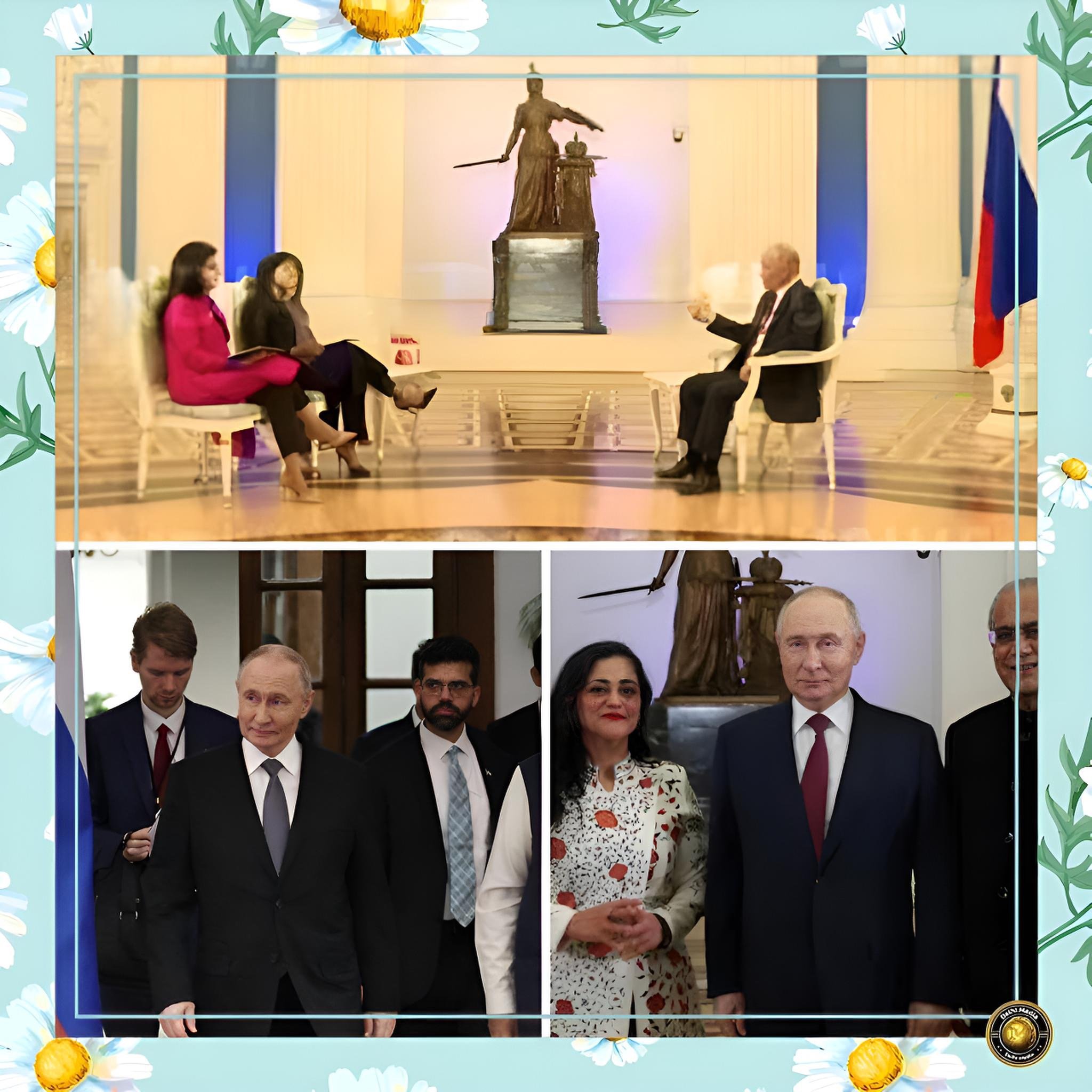
In an interview with India Today, Putin stated unambiguously: “India and China are our closest friends, we treasure that relationship deeply.
We do not believe we have the right to interfere in your bilateral relations. Russia does not feel entitled to intervene because these are your bilateral affairs.”
This formulation—treating India and China identically as “closest friends” whilst pledging non-interference in their disputes—was strategically calibrated to reassure Beijing whilst simultaneously signaling to India that Russia would not subordinate New Delhi to Beijing’s interests, as the China-Russia relationship sometimes implies.
Chinese Online Discourse: Hidden Apprehension
Chinese social media and specialist publications revealed deep anxiety beneath official silence. On Weibo (Chinese Twitter), the hashtag “Putin to visit India” and “India continues purchasing defence equipment from both Russia and the United States” attracted thousands of concerned comments.
A representative Weibo post captured Chinese anxieties: “India already has 200 Russian aircraft and multiple S-400s. Now Putin brings Su-57s and S-500s. Given China-India and India-Pakistan dynamics, what game is he playing?”
Transactional Analysis
Chinese analysts interpreted the summit as fundamentally transactional rather than ideological, identifying three core threat vectors
(1) Energy deals that strengthen India’s leverage over Russia
(2) Weapons sales (S-400s, Su-57s) that enhance India’s military capacity against China
(3) Nucear cooperation that advances India’s technological independence.
This framing revealed Beijing’s core concern: Russia’s willingness to sustain India as a strategic counterweight to China, defying the apparent Moscow-Beijing axis.
Geopolitical Implication
Chinese analysts noted—with apparent frustration—that Modi’s explicit embrace of Putin at Palam Airport, whilst Modi had engaged Beijing separately at the August 2025 SCO summit in Tianjin, signaled India’s capacity to maintain equidistant relationships with both Russia and China without subordination to either.
This contradicted the Western and Chinese narrative that India faced binary choice between Russia and the West.
Strategic Hedge Assessment
A Beijing-based South Asian Studies newsletter captured the implicit Chinese concession: “The US may be angry about Putin visiting India. But is Modi afraid? If he were, there would be no meeting. Time we stop labelling India as simply ‘pro-American’ or ‘pro-Russian’. Modi is working for India’s interests.”
This admission—that Modi was successfully maneuvering independent of external pressure—indicated China’s recognition that Russia’s support for India’s UNSC seat and Arctic Observer status constrains China’s capacity to discipline India geopolitically through alliance pressure.
Japan and South Korea: Measured Concern
Absence of Formal Comment
Japan and South Korea issued no official statements on Putin’s India visit, reflecting their secondary interest in India-Russia dynamics relative to their primary concerns regarding China and U.S. alliance cohesion.
However, Japanese media coverage in NHK WORLD noted Putin’s status as “the first visit to India since the Russian invasion of Ukraine,” implicitly framing the summit as India’s defiance of Western pressure.
Implicit Positioning
Japanese strategic analysts privately noted that Russia’s support for India’s regional role constrained China’s hegemonic ambitions in Asia-Pacific, creating a tacit alignment between Japanese interests (containing China) and Russia-India deepening—though Japan’s alliance with the U.S. precluded public acknowledgment of this convergence.
Russia’s Position: Vindication and Strategic Messaging
Putin’s Defiant Rhetoric
Putin, addressing U.S. tariff pressure directly, challenged the Trump administration’s moral and legal authority to sanction India: “If the U.S. has the right to buy our nuclear fuel, why shouldn’t India have the same privilege?
This question deserves thorough examination, and we stand ready to discuss it, including with President Trump.”
This formulation—framing Russian energy sales to India as equivalent to U.S. nuclear exports—invoked bilateral reciprocity and exposed the hypocrisy of U.S. sanctions selectivity.
Geopolitical Vindication Narrative
Putin’s visit carried enormous domestic and international signaling value: Russian state media portrayed the summit as proof that “Russia is not isolated,” directly contradicting Western sanctions narratives.
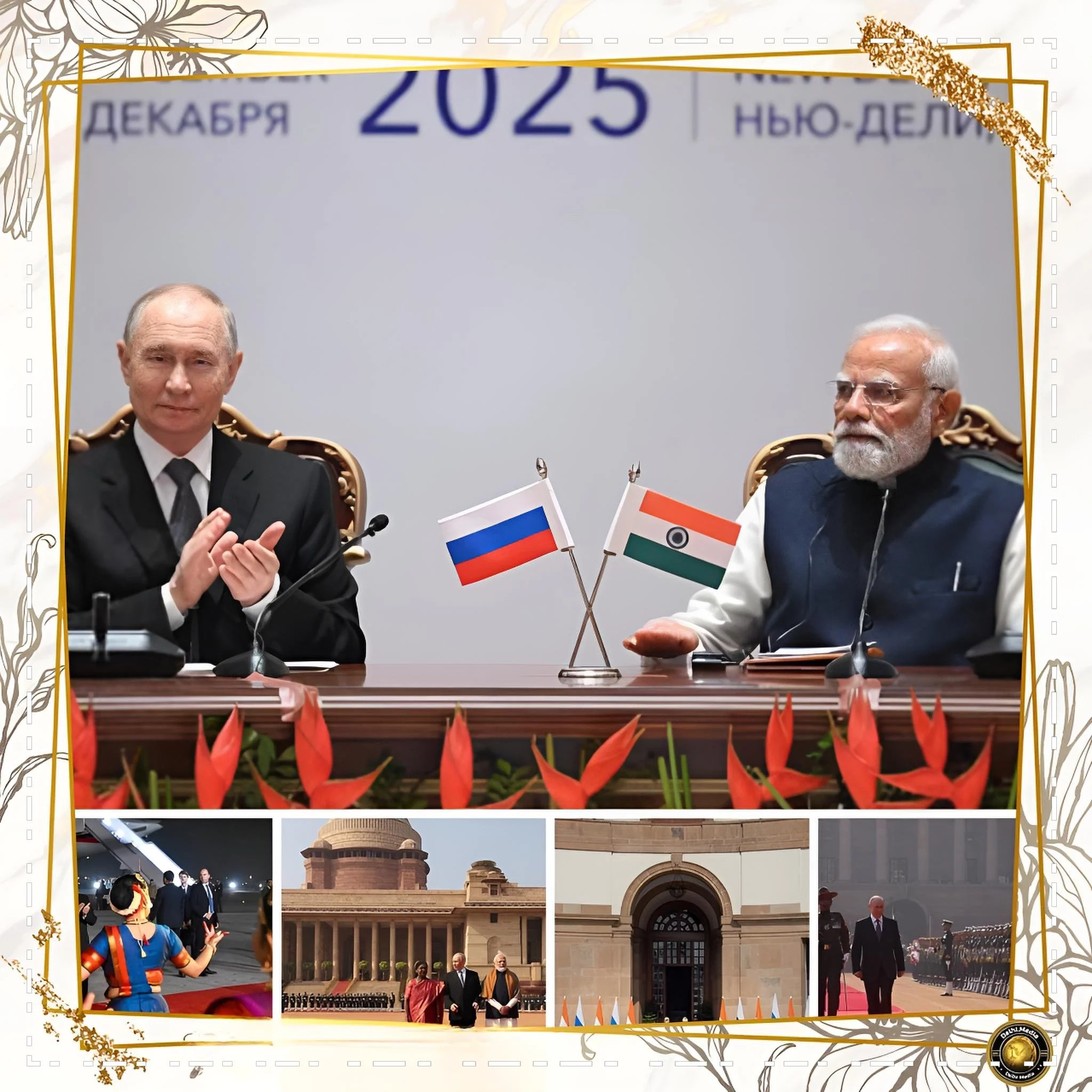
By arriving in New Delhi despite the ICC arrest warrant and receiving a 21-gun ceremonial salute, Putin demonstrated that Western isolation attempts had failed and that Russia retained strategic partnerships with major Global South powers.
Defense Minister Accompanying Delegation
Putin’s decision to bring Defense Minister Andrei Belousov, alongside sanctioned oil executives from Rosneft and Gazprom Neft, and the state arms exporter Rosoboronexport, constituted explicit defiance of Western secondary sanctions regimes—a message to Russian allies and domestic audiences that Moscow would not be deterred from economic and strategic partnerships by U.S. sanctions pressure.
India’s Official Responses: Diplomatic Assertiveness
MEA Rebuke of European Intervention
India’s Ministry of External Affairs, typically circumspect in diplomatic language, issued unusually sharp criticism of the UK-France-Germany op-ed: described as “very unusual,” “not an acceptable diplomatic practice,” and representing “interference in India’s internal affairs.”
This reaction signaled that India viewed the coordinated European intervention not as principled stance-taking but as attempted coercion designed to undermine India’s autonomous foreign policy.
Modi’s Strategic Statements
Modi characterized India-Russia ties as “a guiding North star” founded on “mutual respect and profound trust that have consistently endured the test of time,” effectively elevating the partnership above transactional considerations and positioning it as foundational to India’s geopolitical identity.
On Ukraine, Modi reiterated India’s consistent formulation: “A solution cannot be found on the battlefield,” implicitly rejecting Western pressure for India to endorse military victory narratives against Russia.
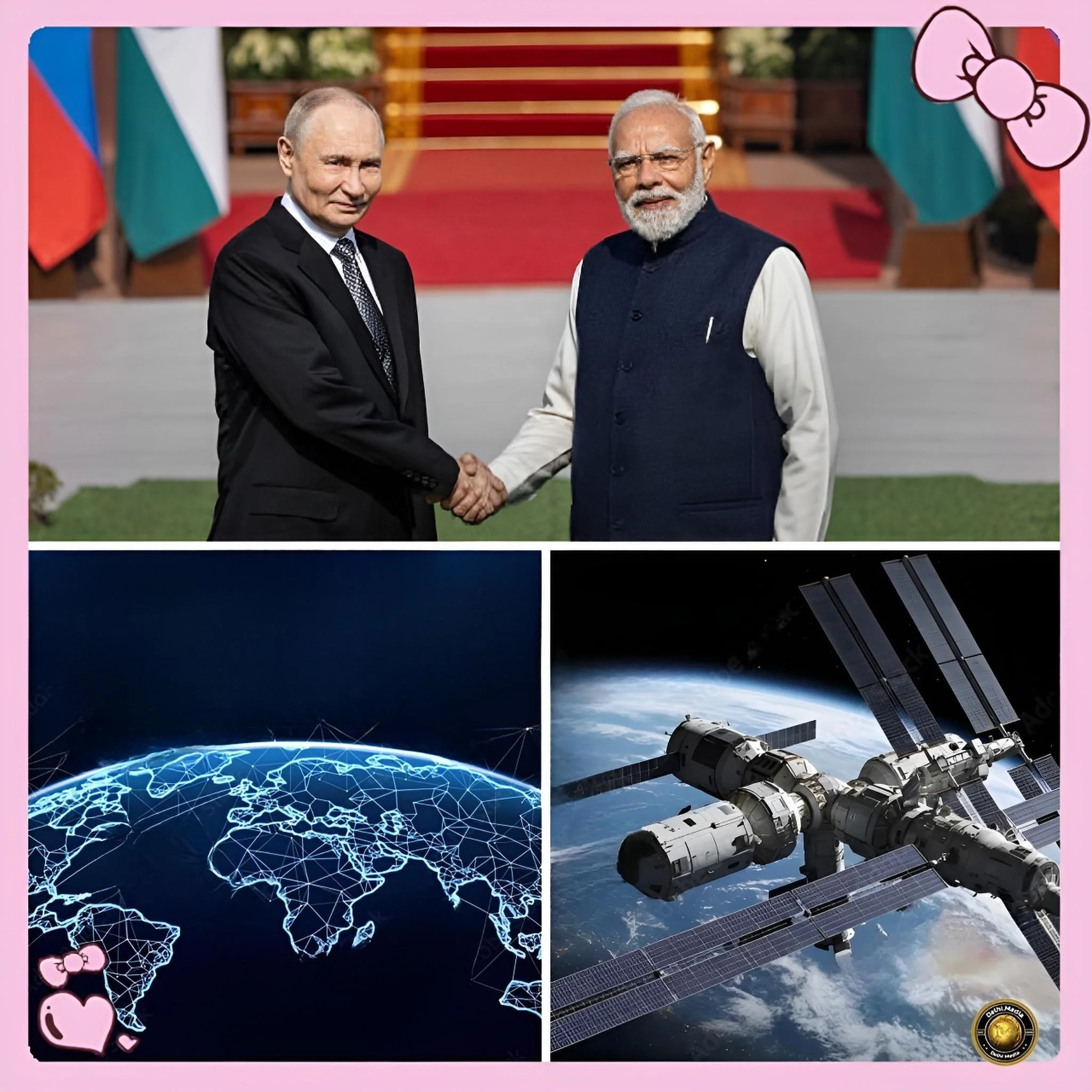
Modi’s personal airport embrace and runway reception of Putin—unusual protocol breach signaling extraordinary deference—communicated to global audiences that India’s commitment to Russia transcended Western pressure.
Global Media Narrative: India’s “Diplomatic Split Screen”
Western media outlets frame India’s position as inherently contradictory, describing Modi as “walking a diplomatic tightrope.”
CNN characterized India as sustaining “a diplomatic split screen”: on one side, Russian fighter jets, cheap oil, and Cold War-forged partnership; on the other, American technological collaboration and investment.
The BBC emphasized that Putin’s visit represented “a test of India’s geopolitical autonomy,” with Modi demonstrating domestically and internationally that he remains “Putin’s ally” despite Trump pressure.
However, this Western media framing implicitly concedes a crucial point: India is successfully pursuing strategic autonomy rather than alignment with either bloc—a capacity that destabilizes Western assumptions about binary geopolitical choice and validates India’s independent great power emergence.
Conclusion
A Multipolar World Reasserting Itself
Putin’s India visit demonstrated that Western efforts to isolate Russia and constrain India’s autonomous foreign policy have substantially failed. The international reaction revealed the following
American Acquiescence
The U.S. maintained pressure through tariffs but avoided diplomatic confrontation, tacitly accepting India’s right to maintain Russia ties.
European Overreach
The UK-France-Germany intervention backfired, strengthening Indian nationalist sentiment and vindicating India’s criticism of Western condescension toward Global South autonomy.
Chinese Anxiety
Beijing’s silence masked deep concern that Russia’s continued support for India constrains China’s hegemonic ambitions in Asia-Pacific.
Russian Vindication
Putin’s ceremonial reception and Modi’s embrace constituted public refutation of Western isolation narratives, signaling Russia’s retained strategic partnerships and capacity to sustain economic cooperation despite sanctions.
Indian Assertion
Modi’s defiance of Western pressure—through elaborate Putin reception, explicit partnership reaffirmation, and sharp criticism of European intervention—established that India will not subordinate its autonomous foreign policy to either Western demands or great-power pressure, marking India’s emergence as a truly multipolar actor.
The summit’s global reception thus vindicated India’s strategic autonomy thesis: that great-power status requires maintaining multiple partnerships and rejecting binary alliance pressure—a position increasingly endorsed by Global South actors observing India’s successful navigation of competing great-power interests.