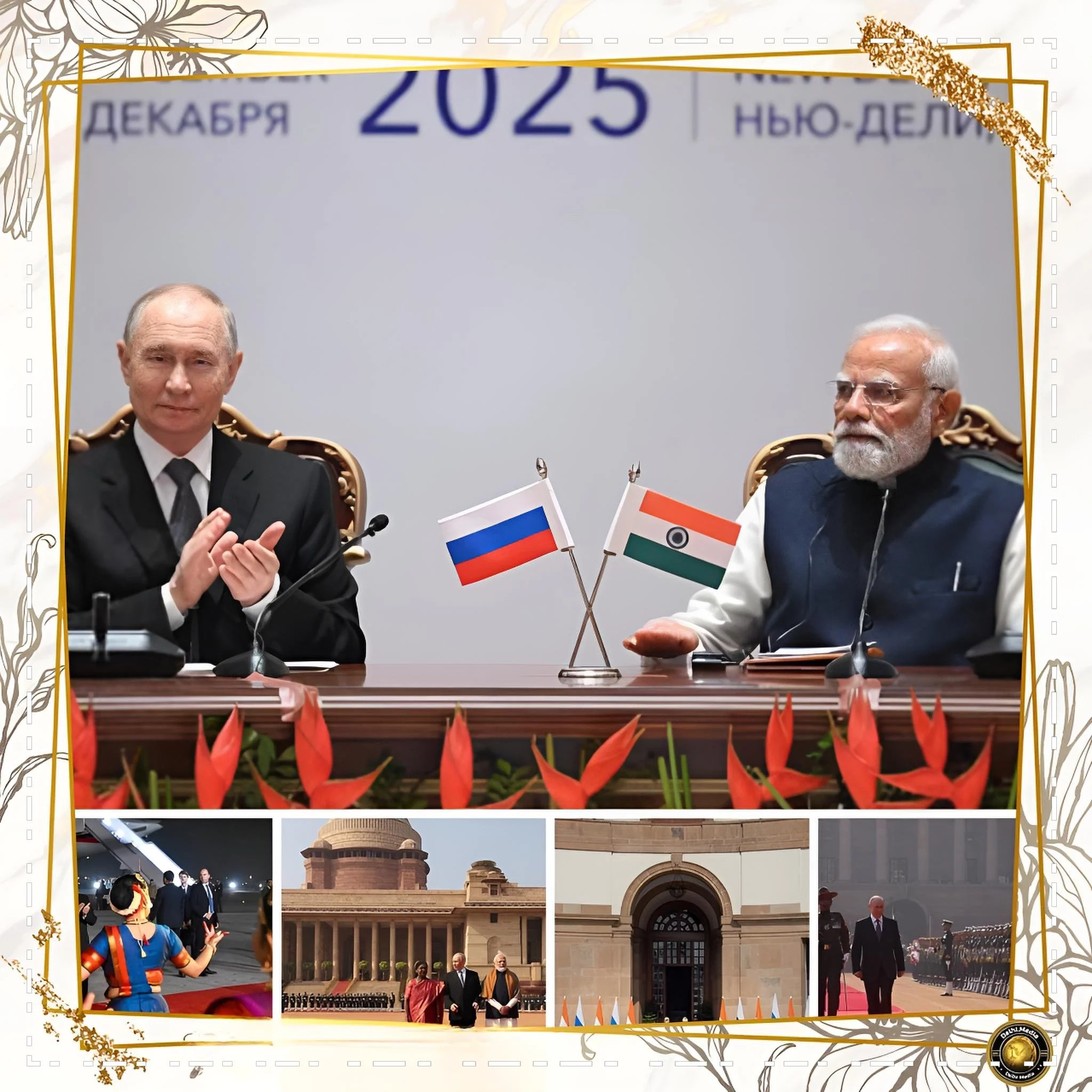
Putin’s 27-Hour State Visit to India: Strategic Implications and Key Outcomes -Part I
Introduction
Overview and Timing
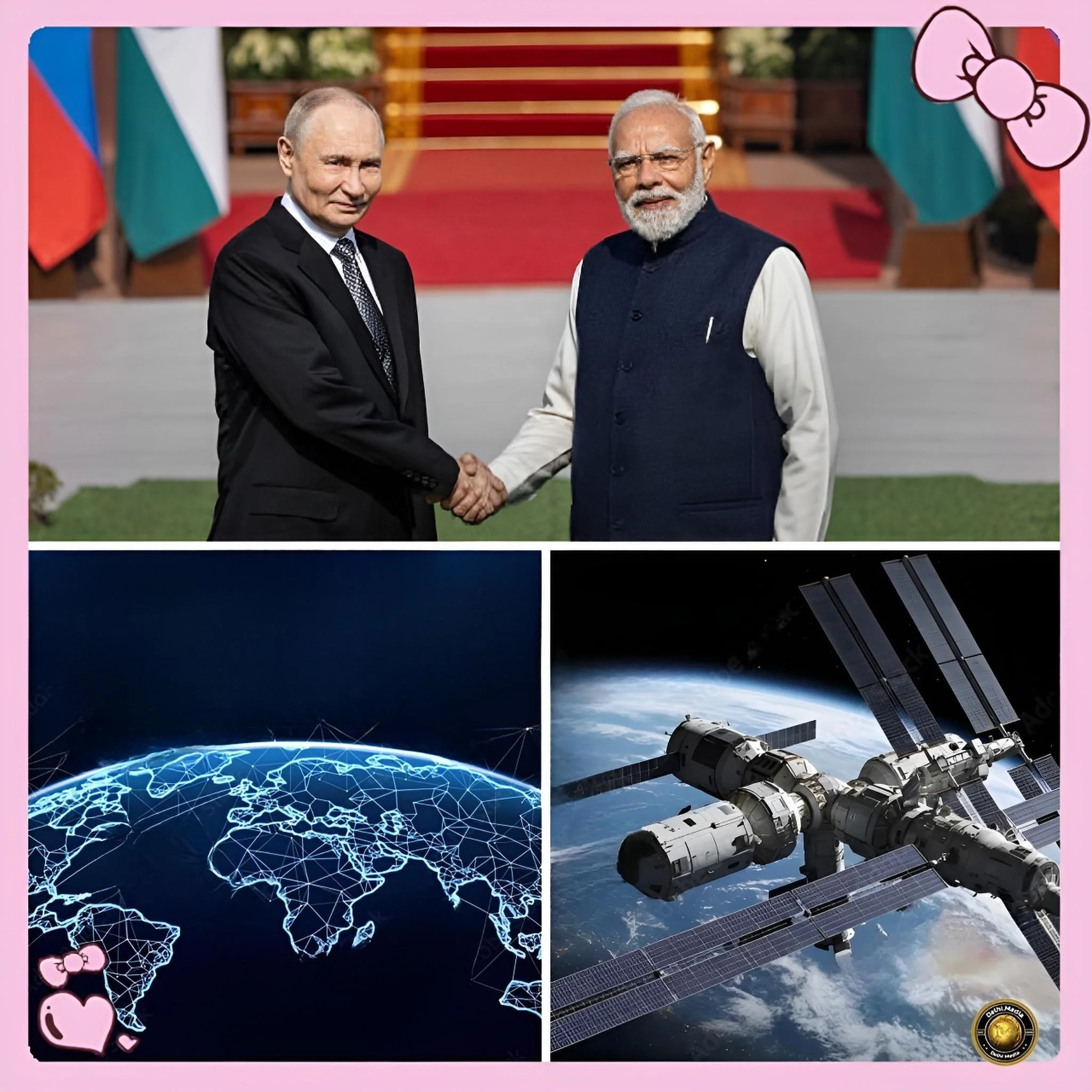
Russian President Vladimir Putin conducted a two-day state visit to India on December 4-5, 2025, marking his first trip to New Delhi since the Ukraine invasion in February 2022.
The visit, formally the 23rd India-Russia Annual Summit, coincided with the 25th anniversary of the India-Russia Strategic Partnership Declaration (established in October 2000) and carried heightened geopolitical significance amid intense U.S. pressure to undermine Russia-India ties.
Strategic Context
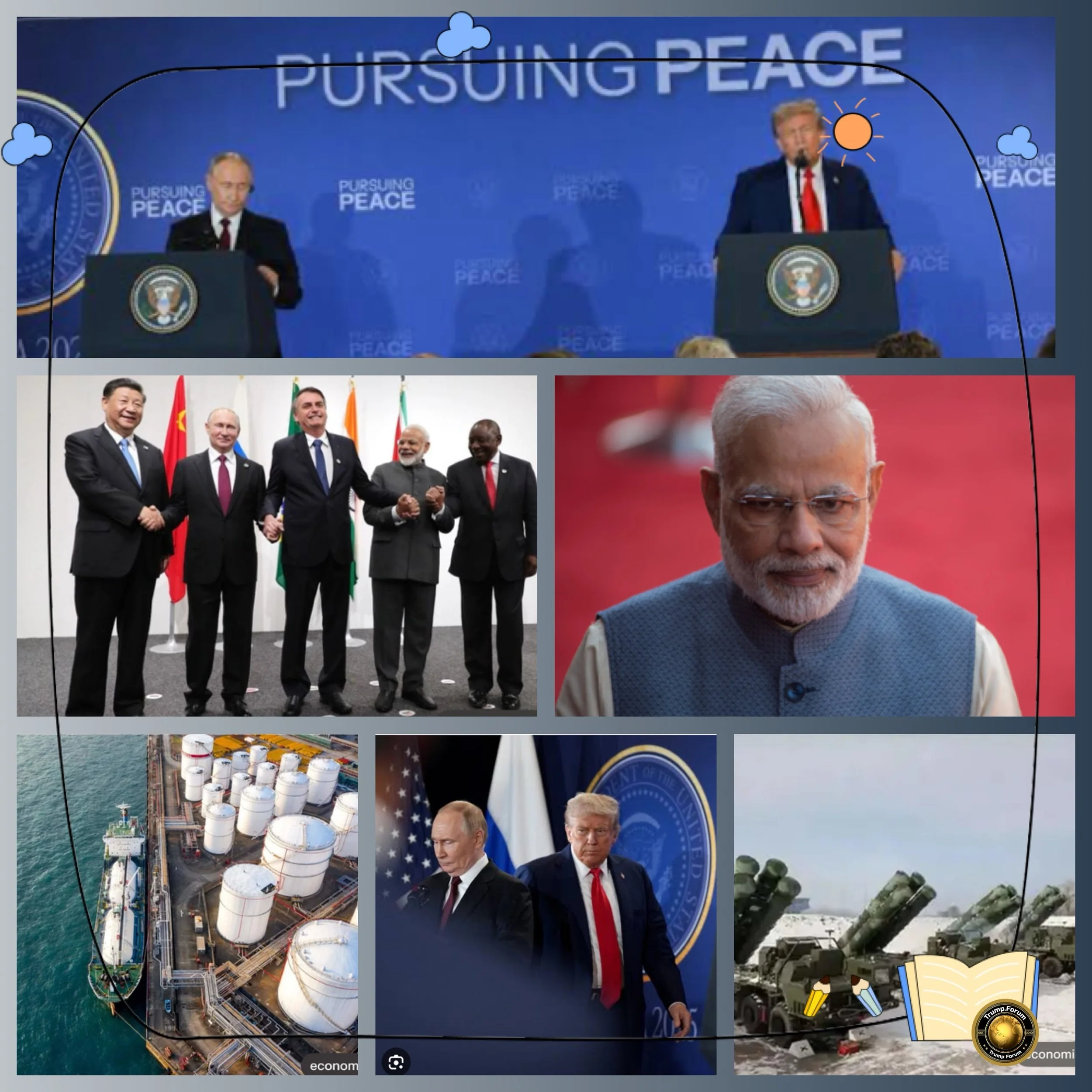
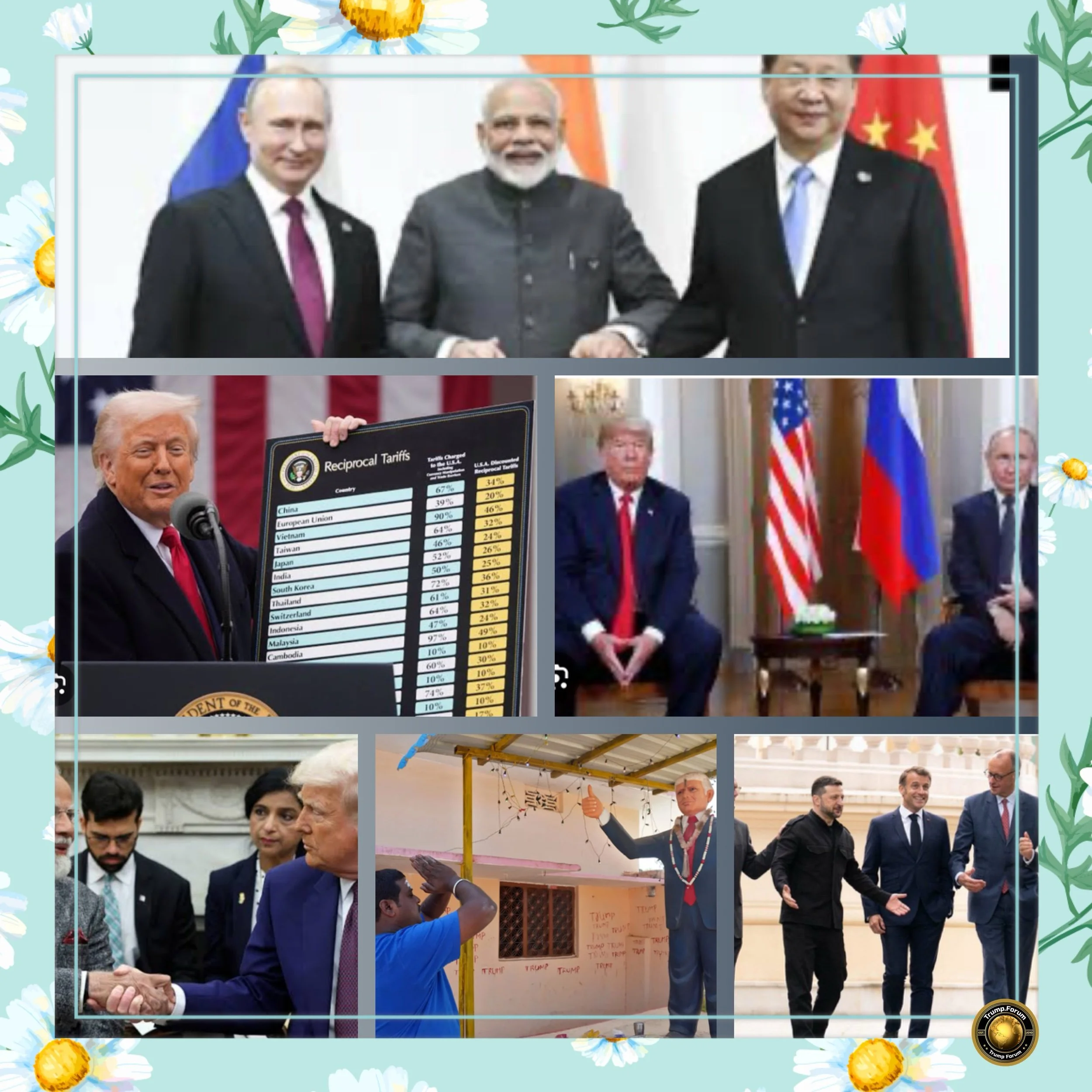
The summit occurred under extraordinary geopolitical pressure, with the Trump administration imposing 50% tariffs on Indian goods (half specifically targeting Russian oil purchases) and implementing secondary sanctions on Russian oil firms (Lukoil and Rosneft) to choke off energy supplies.
Despite this, India maintained strategic autonomy, welcoming Putin with a ceremonial reception that included a 21-gun salute at Rashtrapati Bhavan, and Prime Minister Modi personally greeting him at the airport with a warm embrace—a symbolic gesture of defiance against Western pressure.
Key Outcomes: The Strategic Agreements
Economic and Trade Expansion
Bilateral Trade Roadmap to 2030
The centerpiece outcome was the adoption of the Programme for the Development of Strategic Areas of India-Russia Economic Cooperation till 2030, with an explicit target to raise bilateral trade from $68.7 billion (FY 2024-25) to $100 billion by 2030—a 45% increase.
This represents a strategic shift from energy-dominated trade toward diversified sectors, addressing India’s chronic trade deficit with Russia.
Free Trade Agreement with Eurasian Economic Union (EAEU)
Both nations are committed to accelerating negotiations on a Free Trade Agreement covering the EAEU (Russia, Armenia, Belarus, Kazakhstan, Kyrgyzstan), with a collective GDP of $8.5 trillion.
This is strategically pivotal for India, offering alternative export markets amid U.S.-India trade tensions and diversifying beyond Western markets.
Fertilizer Strategic Alliance
Indian companies (including major fertilizer producers) signed joint venture agreements with Russia’s Uralchem to establish a urea production facility in Russia, securing India’s long-term fertilizer supply.
India currently imports 3-4 million metric tonnes annually but faces supply volatility; this deal ensures stable supplies for India’s 1.4-billion-person agricultural base.
Labor Mobility Framework
Both sides finalized a workforce mobility agreement allowing skilled and semi-skilled Indian workers legal pathways for employment in Russia, addressing Russia’s labor crisis exacerbated by Ukraine mobilization and Western sanctions-induced emigration.
This is estimated to create 50,000-100,000 job opportunities for Indian professionals in the IT, healthcare, and engineering sectors.
Currency and Payment Systems
Russia and India agreed to expand the use of rupee-rouble payment mechanisms and explore the interoperability of national payment systems and central bank digital currencies (CBDCs), reducing dependence on U.S. dollar-denominated transactions.
Defense and Military-Technical Cooperation
Strategic Reorientation Framework
The 22nd session of the India-Russia Intergovernmental Commission on Military & Military-Technical Cooperation (IRIGC-M&MTC) adopted a new paradigm
(1) Joint research and development
(2) Co-development and co-production of advanced defense technology
(3) Reflecting India’s “self-reliance” (Atmanirbhar Bharat) doctrine.
Make-in-India Defense Manufacturing
Both leaders agreed to establish joint ventures to manufacture spare parts, components, and assemblies in India for the maintenance of Russian-origin military equipment and subsequent export to friendly third countries.
This enables India to reduce its dependence on direct Russian supplies while building domestic defense industrial capacity—critical given the delays in S-400 and Su-57 deliveries since 2022.
Defense Orders Framework (reported but not formally detailed in joint statement)
Media reports suggest India will pursue orders for Russia’s 5th-generation Su-57 fighter aircraft and advanced air defense systems, though these are contingent rather than finalized.
The 2025 brief conflict with Pakistan demonstrated the S-400 air defense system’s effectiveness against Pakistani drone/missile attacks, reinvigorating confidence in Russian systems.
Energy and Nuclear Cooperation
Uninterrupted Fuel Supply Pledge
Putin explicitly committed to seamless, uninterrupted fuel shipments to India despite U.S. sanctions, directly confronting Trump administration pressure.
Russia remains India’s largest energy supplier; reversing this would destabilize India’s economy (oil costs ~$100 billion annually, 60-70% of trade deficit).
Kudankulam Nuclear Power Plant Expansion
Both sides reaffirmed commitment to completing Kudankulam NPP units 3-6 and advanced discussions on a potential second nuclear site in India for Russian VVER reactor design, aligning with India’s 100 GW nuclear capacity target by 2047.
Advanced Nuclear Technology
Russia and India agreed to accelerate discussions on small modular reactors (SMRs) and floating nuclear power plants, leveraging Russian expertise in Arctic nuclear technology—a forward-looking partnership on decarbonization.
Connectivity and Transport Infrastructure
International North-South Transport Corridor (INSTC)
Both leaders committed to expanding logistics infrastructure for INSTC, reducing shipping distances from Europe to India by 40% versus Suez route.
This is economically significant as sanctions have redirected Russian exports southward to India, Iran, and China.
Chennai-Vladivostok Maritime Corridor
Agreement to deepen cooperation on this Eastern maritime link for trade diversification and naval cooperation.
Arctic and Far East Engagement
India expressed readiness for active participation as an Observer in the Arctic Council, signaling India’s entry into great-power Arctic competition—a strategic move opposed by Western powers but critical for India’s long-term energy security.
Cooperation in the Russian Far East (2024-2029 program) covers agriculture, energy, mining, and maritime transport.
Science, Technology, and Space
Space Cooperation Expansion
Russian State Space Corporation (Roscosmos) and ISRO strengthened collaboration on
(1) Human spaceflight
(2) Satellite navigation
(3) Planetary exploration
(3) Rocket engine development.
India’s ambitious Gaganyaan human spaceflight program and Mars missions benefit from Russian expertise.
Critical Minerals and Advanced Technologies
Both sides expressed strategic interest in joint exploration, processing, and recycling of critical minerals (lithium, cobalt, rare earths) essential for emerging technologies—reflecting shared concerns about Western control of supply chains.
Geopolitical and Multilateral Coordination
Multipolar World Order Alignment
Putin praised India’s independent foreign policy under Modi, while both leaders emphasized their shared vision for a multipolar world order based on “equal and indivisible security,” implicitly opposing U.S.-led unipolarity.
UN Reform and UNSC Expansion
Russia reiterated “steadfast support” for India’s permanent membership in a reformed, expanded UN Security Council—a high-priority Indian objective blocked by Western permanent members.
BRICS and SCO Coordination
Russia pledged full support for India’s 2026 BRICS Chairship, including ongoing coordination on economic, security, and people-to-people pillars.
Both nations emphasized SCO’s role in building a “representative, democratic, fair multipolar world order.”
Counter-Terrorism Solidarity
Both leaders condemned the April 22, 2025 Pahalgam terror attack in Kashmir (Pakistan-based Jaish-e-Mohammed) and Russia’s March 2024 Crocus City Hall bombing, framing terrorism as a shared strategic threat and pledging joint intelligence and military cooperation.
Legacy: What Putin Left Behind for India
Socially and Culturally
People-to-People Connectivity: The labor mobility agreement enables an estimated 50,000-100,000 Indian professionals to work in Russia annually, reversing decades of one-way Russian brain drain and deepening social ties.
Indian tourists will gain access to e-visas, simplifying travel and cultural exchange.
Educational and Academic Ties
Both sides renewed commitment to academic mobility, joint research programs, and educational partnerships, fortifying the estimated 10,000+ Indian students currently in Russian universities.
Shared Values
Putin’s explicit praise of India’s “independent, sovereign policy” and Modi’s characterization of India-Russia ties as “a guiding North star” reaffirmed the partnership as based on mutual respect rather than hegemonic pressure—a powerful social and cultural narrative for Indians skeptical of Western dominance.
Economically
Trade Rebalancing Mechanism
The $100 billion trade target by 2030 explicitly prioritizes increasing Indian exports (fertilizers, IT services, pharmaceuticals, textiles, processed food) rather than perpetuating energy-import dependence.
Current trade heavily favors Russia (~$68 billion imports, ~$8 billion exports), creating economic resentment; diversification is critical for political sustainability.
Energy Security Anchor
Despite U.S. sanctions, Russia’s commitment to uninterrupted oil supplies mitigates India’s economic vulnerability.
India’s refineries (Reliance, Nayara, Indian Oil) face ~$2-3 billion annual profit squeeze from reduced Russian crude; Putin’s pledge offers relief.
Strategic Asset Accumulation
Joint ventures in fertilizers, nuclear technology, and defense manufacturing create technology transfer mechanisms embedding Indian firms in Russian supply chains—reversing India’s historical subordination as merely an oil/arms buyer.
Currency Autonomy
Rupee-rouble payment systems and CBDC interoperability reduce dollar exposure by an estimated 15-20% of India-Russia transactions, supporting India’s de-dollarization agenda amid U.S. currency volatility.
Politically and Geopolitically
Strategic Autonomy Vindication
Putin’s visit, despite Trump administration pressure and Western warnings, publicly validated India’s right to pursue independent foreign policy—a politically powerful message domestically for Modi, who faces criticism from opposition and civil society for perceived Western alignment.
Counterweight to China
Russia’s explicit support for India’s UNSC permanent membership and Arctic Council observer status strengthens India’s position in Asia-Pacific competition with China, offering diplomatic cover and strategic alternative partnerships.
Multipolar Architecture
The summit’s emphasis on BRICS, SCO, Shanghai Cooperation Organization, and G20 coordination signals India’s pivot toward non-Western institutional frameworks, reducing Western institutional dependence.[pib]
Defense Industrialization Trajectory
Joint manufacturing agreements positioning India as a regional defense hub—not just a customer—threatens Western monopoly on Indian defense procurement and supports India’s ambitions to export military equipment to Global South allies.
UN and Multilateral Leverage
Russia’s support for Indian reform agendas (UN expansion, BRICS coordination, Arctic observer status) provides diplomatic votes and legitimacy for India’s agenda-setting in forums where Western veto power has historically blocked Indian interests.
Assessment: Long-Term Strategic Significance
Immediate Impacts (2025-2026)
Trade Recovery
Modi’s targeting of $100 billion trade and fertilizer/labor mobility deals should offset 5-10% of expected revenue loss from reduced Russian oil purchases under U.S. sanctions pressure, stabilizing India’s external account.
Defense Planning
The co-development framework and Make-in-India production agreements provide runway for India to absorb delayed S-400 deliveries and pursue Su-57 orders without abandoning Russian partnership—critical for India’s two-front deterrence posture (China, Pakistan).
Arctic Positioning
Observer status in Arctic Council signals India’s emergence as a quasi-Pacific power with stakes in polar geopolitics—a strategic 30-year bet on climate change impacts and resource competition.
Medium-Term Challenges (2026-2030)
EAEU Integration Risks
Tariff harmonization and regulatory alignment with EAEU members (Belarus, Kazakhstan) may expose Indian industries to competition; success depends on negotiating exemptions for sensitive sectors (pharmaceuticals, IT).
U.S. Sanctions Escalation
Trump administration secondary sanctions on Indian companies conducting transactions with Russia could neutralize payment system agreements; India’s exposure remains asymmetric.
Managed Decline thesis
Some analysts argue Russia-India relations face structural decline due to Russia’s growing China dependency, defense production constraints post-Ukraine war, and India’s diversification toward Europe, U.S., and Japan—Putin’s visit represents “managed decline” rather than renewal.
Geopolitical Ramifications
Western Perception
The summit signals India’s unwillingness to choose between Russia and the West, validating India’s strategic autonomy narrative but intensifying Western discomfort—likely triggering more aggressive U.S. trade pressure or diplomatic isolation attempts.
China Factor
Russia’s implicit support for India in Arctic, BRICS, and UN forums implicitly hedges against China’s regional dominance, though Russia-China ties remain privileged; India gains hedging capacity but not guaranteed Russian support in India-China conflicts.
Regional Security
Defense co-development and joint manufacturing position India as a potential hub for equipping Southeast Asian, Central Asian, and Indian Ocean allies—geopolitically significant for containing Chinese military influence.
Conclusion
Putin’s December 2025 visit represents a strategic reset rather than vindication of Russia-India ties.
While not resolving fundamental structural challenges (Russia’s China tilt, India’s Western economic integration), the summit reaffirmed the partnership’s resilience through diversification into technology transfer, labor mobility, and coordinated multilateralism.
The $100 billion trade target, EAEU FTA, and defense co-production framework offer India tangible tools to absorb U.S. sanctions while maintaining energy security and strategic autonomy—a carefully calibrated balancing act reflecting Modi’s “Strategic Autonomy 2.0” doctrine.
Socially and culturally, the visit strengthened people-to-people ties through labor mobility and educational exchanges, countering Western narratives of India’s isolation from Russia post-Ukraine war.
Politically, it vindicated India’s defiance of U.S. pressure and reinforced India’s emergence as a leading voice in multipolar institutions (BRICS, SCO, G20).
However, the visit’s long-term success hinges on Russia’s capacity to sustain technology transfer and defense cooperation amid its Ukraine-induced economic contraction—a test that will crystallize over the next 2-3 years through implementation of joint ventures and procurement agreements.