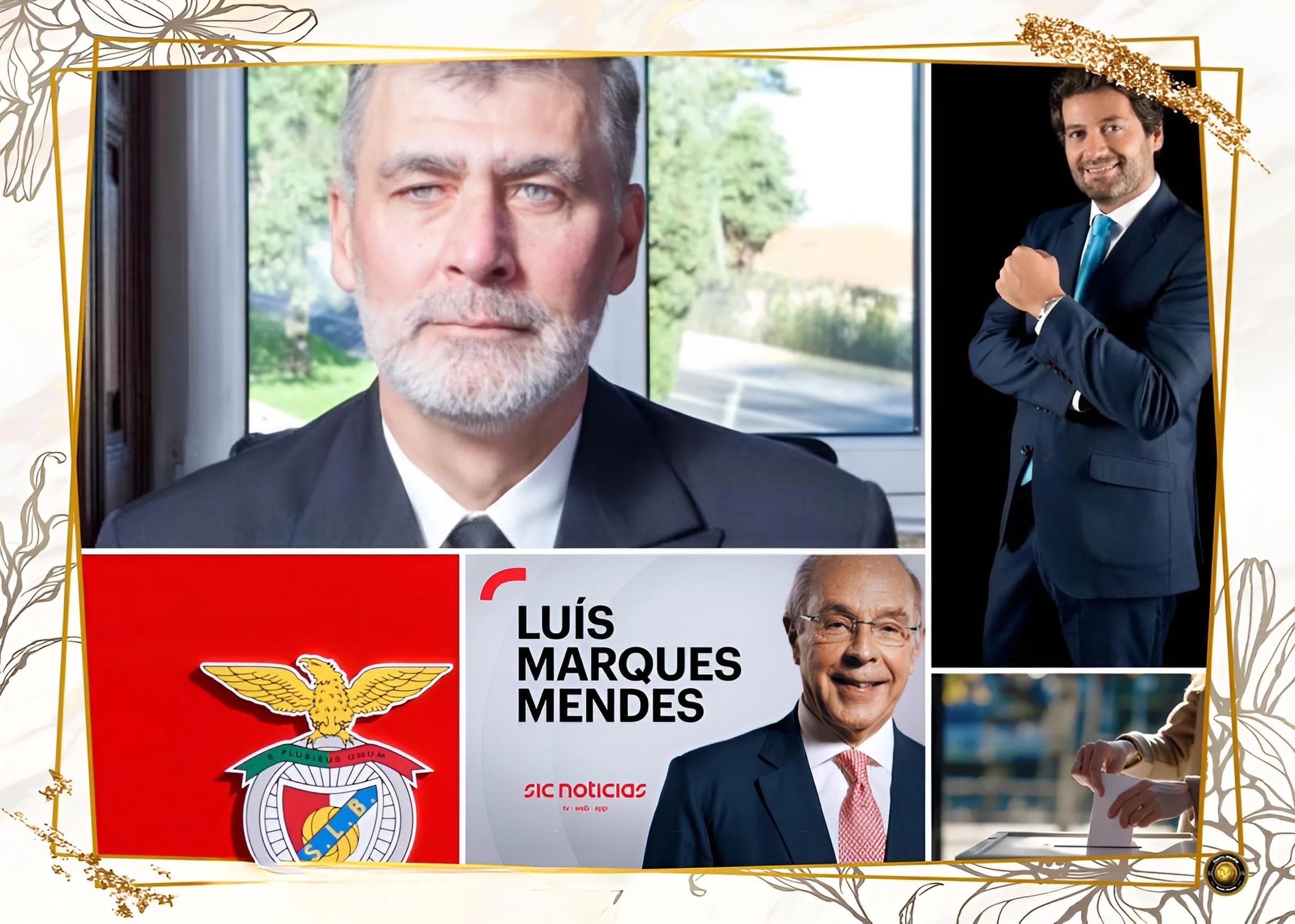
Portuguese Presidential Election 2026: Comprehensive Analytical Report : Admiral Henrique Gouveia e Melo V/S Luís Marques Mendes
Introduction
The Portuguese presidential election, scheduled for January 18, 2026, represents a significant turning point in Portuguese politics.
Following the May 2025 legislative elections that fundamentally disrupted Portugal’s traditional two-party system, the presidential race now features a highly competitive field where the far-right Chega party has emerged as a central political force.
Election Context and Historical Significance
Portugal will hold its presidential election on January 18, 2026, with a potential runoff on February 8, 2026, if no candidate secures an absolute majority on the first ballot.
The election comes after a period of considerable political turbulence.
The May 2025 legislative elections ended five decades of stable two-party politics dominated by the centre-right Social Democratic Party (PSD) and the Socialist Party (PS).
The Chega party’s breakthrough—capturing 22.8 percent of the vote and 60 parliamentary seats—fundamentally altered Portugal’s political landscape, making it the second-largest party in Parliament and the main opposition force.
The Major Candidates
Admiral Henrique Gouveia e Melo
Admiral Gouveia e Melo emerged as a leading contender and remains competitive in the presidential race.
The 65-year-old former Navy Chief of Staff gained national prominence in 2021 when he led Portugal’s COVID-19 vaccination initiative.
Running as an independent, he has explicitly positioned himself as a candidate who transcends partisan divisions, claiming to bridge socialism and social democracy.
His decision to enter the race was reportedly motivated by concern over Donald Trump’s election victory, which he views as bringing instability to Europe.
Gouveia e Melo maintains a strategically significant advantage: recent polling indicates he is the only candidate capable of defeating all other candidates in potential second-round matchups, which positions him as the consensus establishment alternative.
Sociologically, his support is strongest among men, voters over 55 years old, and in Portugal’s Centre, South, and island regions. He represents the reformist, technocratic option in Portuguese politics.
Luís Marques Mendes
The former Social Democratic Party (PSD) leader represents the centre-right establishment.
In the most recent polling conducted by Pitagórica in mid-November, Marques Mendes emerged in a technical tie with Gouveia e Melo for the lead, each securing approximately 22-23 percent of voting intentions.
He performs significantly better among women and voters aged 45 to 54, with particular strength in the North and Lisbon.
Marques Mendes holds approximately half of the PSD’s electoral base, reflecting his institutional standing within the dominant governing coalition.
As the official center-right candidate, he represents policy continuity with the current Democratic Alliance government.
André Ventura
The 42-year-old Chega party leader represents the far-right populist option. Ventura, a former sports commentator and law professor, has transformed himself into one of European far-right politics’ most strategically astute operators.
Recent polling shows him competing intensely with the establishment candidates, with some polls placing him at approximately 18-22 percent, though precise figures vary significantly between polling organizations.
Ventura’s political positioning reflects explicit emulation of Donald Trump’s tactics and rhetoric. He attended Trump’s January 2025 inauguration, signaling alignment with the Trump administration.
His campaign platform centers on anti-establishment messaging, promises to combat corruption, restrictions on immigration, and a “Portuguese first” agenda—substantively mirroring Trump’s “Make America Great Again” positioning.
Crucially, Ventura has maintained that if Chega’s broader political family (the Patriots for Europe group in the European Parliament) moves closer to Russia, he will withdraw from the alliance, positioning himself as anti-Russian.
He explicitly condemned Putin’s Ukraine invasion in 2022 and states Chega receives no Russian funding.
Politically, Ventura demonstrates exceptional party loyalty: 87 percent of Chega supporters intend to vote for him.
His electorate skews male, younger, with intermediate education levels, and lower incomes.
António José Seguro
The former Socialist Party secretary-general represents the leftist option, typically polling in the 10-16 percent range.
He has explicitly positioned himself as independent despite his PS background, though he maintains strong support within the Socialist electorate (71 percent).
Seguro appears less likely to reach the second round given his trailing position compared to other major candidates.
Marcelo Rebelo de Sousa
The current president, Marcelo Rebelo de Sousa, is constitutionally barred from running for a third consecutive term, ensuring a genuine competition for the presidency rather than a coronation.
Other Candidates
Additional candidates include
(1) Catarina Martins (Left Bloc)
(2) António Filipe (Communist Party)
(3) João Cotrim Figueiredo (Iniciativa Liberal)
(4) Jorge Pinto (Livre)
These candidates collectively command lower polling shares and face significant barriers to reaching the second round.
Polling Data and Electoral Probability Analysis
Polling in Portugal has become notably turbulent, with significant divergences between different polling organizations taking surveys within the same narrow timeframe.
This variance complicates precise probability estimates but reveals several consistent patterns
Most Recent Polling Trends (Late November 2025):
Pitagórica poll (November 5-14)
Marques Mendes 22.6%, Gouveia e Melo 21.1% (technical tie)
Pitagórica poll (October 6-10)
Gouveia e Melo 26.9%, Marques Mendes 20.3%, Seguro 18.4%
ICS/ISCTE poll (late November)
Gouveia e Melo 18%, Ventura 18%, Marques Mendes 16%, Seguro 10%
Aximage poll (October 23-27)
Gouveia e Melo 24%, Marques Mendes 19%, Seguro 16%
Approximately 22 percent of voters remain undecided with two months remaining until the election, creating considerable uncertainty for final outcome predictions.
Runoff Scenarios
The presidential system requires an absolute majority to win outright. Analysts widely expect a runoff between two candidates, given the field’s fragmentation.
Critically, Gouveia e Melo is the only candidate demonstrated to defeat all potential opponents in second-round scenarios. In head-to-head matchups.
(1) Gouveia e Melo defeats Ventura (favored outcome)
(2) Gouveia e Melo defeats Marques Mendes
(3) Marques Mendes defeats Ventura in direct competition, approximately 40% to 37%
Probability Assessment and Likely Outcomes
Most Likely Scenario (50-60% probability)
Runoff Between Gouveia e Melo and a Right-Wing Candidate
The most probable outcome is that Gouveia e Melo advances to a second-round runoff, given his consistent ability to win head-to-head matchups.
His principal competitor for the runoff is likely either Marques Mendes or Ventura.
In a runoff against Ventura, Gouveia e Melo would benefit from anti-far-right consolidation similar to the recent French electoral pattern, likely securing victory.
Against Marques Mendes, the result would remain competitive but favor Gouveia e Melo.
Second Most Likely Scenario (25-35% probability): Marques Mendes Reaches Runoff
Should Marques Mendes consolidate his PSD base more effectively and Gouveia e Melo’s independent positioning falters, Marques Mendes could reach the second round.
His institutional strength within the governing coalition provides organizational advantages, though his lower universality compared to Gouveia e Melo represents a structural disadvantage.
Less Likely but Significant Scenario (10-15% probability): Ventura Reaches Runoff
Ventura’s stated campaign objective is precisely to force a second-round runoff, which he views as a victory regardless of the ultimate outcome. His strategists calculate that a runoff gives him visibility for the next legislative election (likely 2027).
However, polling consistently demonstrates Ventura would lose any runoff matchup, as centrist and leftist voters would consolidate against the far-right candidate.
This represents a European pattern: the far-right can fragment first-round voting but faces coalition consolidation in runoffs.
Unlikely but Possible Scenario (very low probability): Surprise Gouveia e Melo First-Round Victory
If Gouveia e Melo consolidates broader support among centrist and reformist voters, he could theoretically secure an absolute majority without a runoff.
Current polling makes this scenario unlikely but not impossible, particularly if second-round polling dynamics shift perception among voters.
Election Winner Prediction
Primary Prediction
Admiral Henrique Gouveia e Melo (55-65% probability of winning the presidency)
The most probable electoral outcome is Gouveia e Melo’s ultimate victory, likely achieved through a second-round runoff.
Multiple analytical factors support this assessment
(1) His demonstrated ability to defeat all potential opponent
(2) His appeal across demographic and ideological divides
(3) His independent positioning free from the corruption allegations affecting traditional parties
(4) His technocratic credibility from pandemic management
(5 ) The demonstrated European pattern of anti-far-right consolidation in runoff scenarios.
Secondary Prediction
Luís Marques Mendes (20-30% probability)
The centre-right institutional candidate represents a secondary pathway to victory, though his narrower appeal among demographic groups outside the traditional PSD base constrains his probability compared to Gouveia e Melo.
Tertiary Prediction
André Ventura (5-10% probability of actual victory)
While Ventura will likely force a runoff, his consistent polling deficit in head-to-head matchups makes outright victory highly improbable under normal circumstances.
Unexpected developments—economic crisis, security incident, corruption revelation affecting Gouveia e Melo—could shift dynamics, but current trajectories point decisively against a Ventura presidency.
Foreign Support for Far-Right Candidates: Russia and the United States
United States Support and Alignment
Trump Administration Alignment with Ventura
There is substantial evidence of alignment between the Trump administration and André Ventura’s Chega party, though the relationship appears ideological and political rather than formally institutionalized
Inauguration Attendance
André Ventura attended Donald Trump’s January 2025 inauguration, distinguishing him from France’s Emmanuel Macron (notably not invited) but placing him alongside other far-right leaders like Italy’s Giorgia Meloni and Spain’s Santiago Abascal.
Political Positioning
Ventura explicitly emulates Trump’s rhetorical and tactical approaches, borrowing catchphrases like “fight, fight, fight” and adopting Trump’s “Make [Country] Great Again” template with his “Portuguese first” agenda.
He campaigns on Trump-aligned policies including tariff increases on imports and immigration restrictions.
Broader Trump Administration Strategy
The Trump administration has signaled explicit engagement with European far-right parties as part of its geopolitical strategy.
Vice President JD Vance’s February 2025 Munich speech, delivered just before German elections with the far-right AfD polling strongly, was interpreted as signaling administration support for right-wing parties opposing what it characterizes as “globalism.”
US intelligence sources indicate the Trump administration views European far-right parties as potential allies against what it perceives as an overly integrated EU.
No Evidence of Direct Financial Support
Notably, available evidence indicates no direct US government or Trump-linked financial support flowing to Chega.
Rather, the alignment appears ideological and based on shared political objectives.
Russian Support and Interference
Limited Evidence of Direct Russian Support
Contrary to patterns observed with some other European far-right parties, available evidence does not demonstrate that Russia is providing direct financial or operational support to Chega or André Ventura
Chega’s Explicit Anti-Russia Position
André Ventura has repeatedly and consistently stated opposition to Russian aggression.
In 2022, he unequivocally condemned Putin’s Ukraine invasion as a “barbaric aggression” against a sovereign country.
He publicly stated
“Chega has always complied with the law and does not receive any overseas funding, we do not have any institutional relationships with any Russian parties, or with the Vladimir Putin regime.”
Patriotic Alignment
Chega is part of the Patriots for Europe group in the European Parliament. Ventura explicitly stated that if this group moved closer to Russia, Chega would withdraw from the alliance, characterizing such rapprochement as a “red line.”
This positioning contrasts sharply with some European far-right parties like Austria’s FPÖ or France’s Rassemblement National, which have historically maintained closer ties with Moscow.
Russian Disinformation and Portugal
While Russian disinformation networks have been active in Portugal—particularly around the 2025 legislative elections—available evidence indicates these operations targeted a broad Portuguese audience rather than specifically supporting Chega.
A Russian-funded disinformation network known as Pravia was active in 19 EU countries including Portugal in March 2025, spreading false information from Brazilian and Russian sources.
However, this represents generalized interference rather than targeted support for any specific Portuguese political party.
Funding Transparency
Ventura has repeatedly claimed that Chega’s financing is fully transparent and submitted to Portuguese electoral authorities (Entidade das Contas e Financiamentos Políticos).
While Portuguese investigative journalism has raised questions about the source of some donations and identified donors from corporate and wealthy individual backers, no direct Russian funding has been documented.
Different Ideological Alignment
Unlike some European far-right parties that have cultivated explicit ideological alignment with Russian authoritarianism, Ventura positions Chega within a Western conservative framework aligned with Trump and Brazilian Bolsonarism, not Russian Orthodox traditionalism.
Comparison to Other European Far-Right Parties
The absence of documented Russian support for Chega contrasts starkly with other European far-right movements.
Parties like Italy’s Matteo Salvini’s Lega sought to negotiate Russian diesel supply deals, parties in the “Europe of Sovereign Nations”
European Parliament group voted against Ukraine support resolutions, and individuals like German MEP Petr Bystron have been investigated for receiving Russian funding.
Chega’s consistent anti-Russia positioning places it in a different category.
Conclusion
Portugal’s January 2026 presidential election will likely result in a runoff between Admiral Henrique Gouveia e Melo and another major candidate, with Gouveia e Melo emerging as the most probable ultimate winner.
The election represents the continuation of Portugal’s rightward political shift following the May 2025 disruption of the traditional two-party system.
Regarding foreign interference, the evidence indicates that the Trump administration has aligned ideologically with Chega and André Ventura as part of a broader strategy to cultivate relationships with European far-right parties, manifested through Ventura’s inauguration attendance and mutual rhetorical alignment.
However, this represents political alignment rather than direct financial support or operational interference.