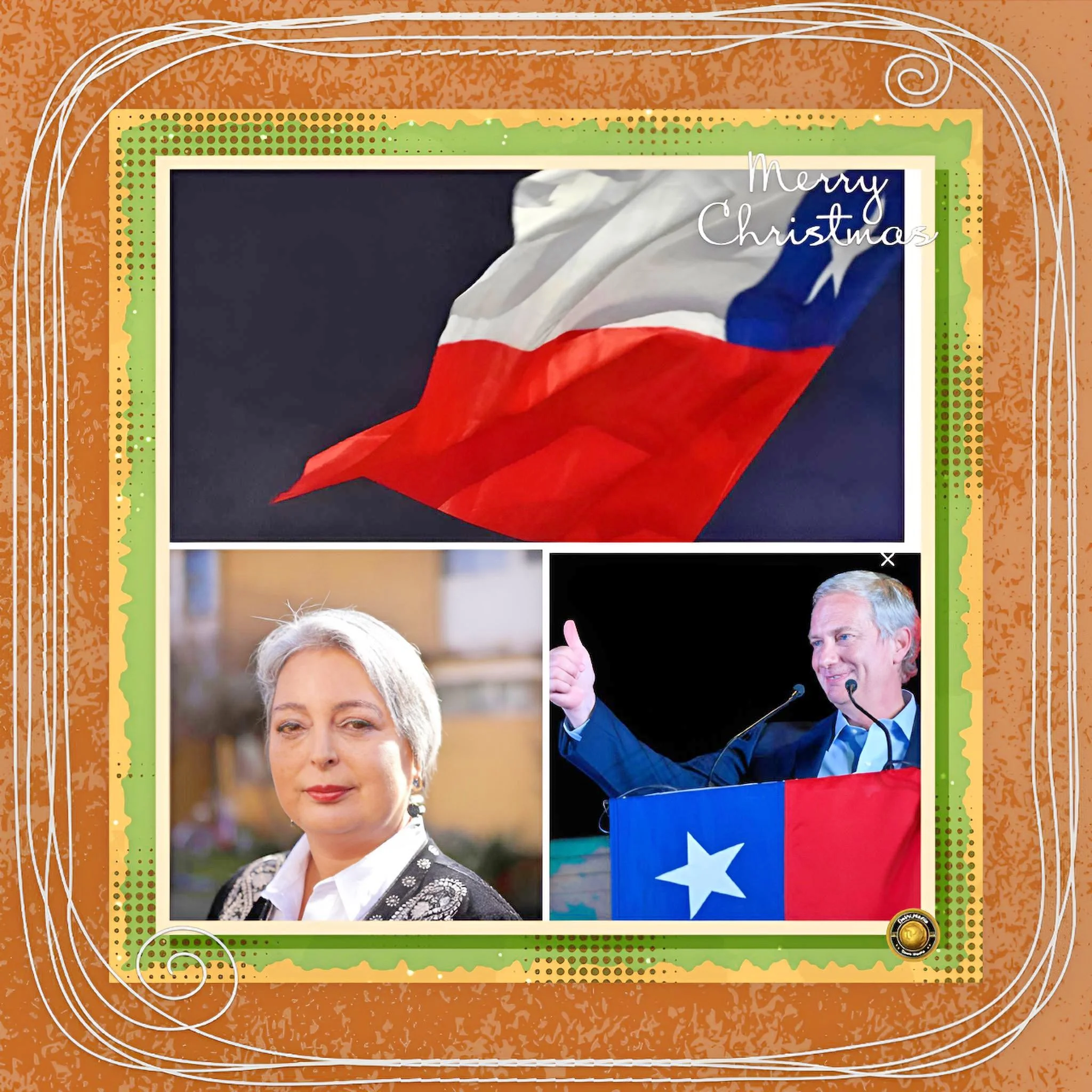
Chile’s Polarized 2025 Presidential Election: Key Candidates and Reform Proposals
Introduction
Chile is holding a highly polarized presidential election on November 16, 2025, with a runoff set for December 14 if no candidate achieves an outright majority.
The election represents a dramatic ideological pendulum swing, shifting from the leftist presidency of Gabriel Boric toward the far-right and right-wing opposition, driven primarily by voter anxiety over rising crime and immigration—issues that have dominated the campaign despite Chile remaining one of Latin America’s safest countries.
The Political Landscape and Polarization
Four years after Boric’s election symbolized a new era for the Latin American left, Chile now faces a deeply divided electorate.
The shift reflects declining approval of Boric’s progressive agenda and growing public demand for security-focused policies, prompting even left-wing candidates to pivot toward law-and-order messaging.
This is the first general election held under compulsory voting (reintroduced in 2022), with approximately 14-15.7 million Chileans eligible to vote—a change expected to significantly increase turnout.
The composition of the legislature has also shifted.
The 2021 elections produced a highly fragmented Congress with no clear majority, restricting Boric’s ability to implement his progressive reform agenda, though he did secure notable victories, particularly a comprehensive pension reform that overcame a decade-long deadlock by replacing the privatized system established during Augusto Pinochet’s military dictatorship.
The Leading Candidates
Jeannette Jara (Communist Party)
“I come from the real Chile. I am not one of those people who were born into the elite.” - Jeannette Jara
Leads the first-round polls with approximately 25-30% support.
A 51-year-old former labor minister under Boric, Jara served as her government’s most successful administrator, overseeing key achievements including pension reform, reducing the work week from 45 to 40 hours, and increasing the minimum wage.
Despite being the only left-wing candidate, her ties to the unpopular Boric administration have weighed on her campaign, prompting her to distance herself from the left and even hint at suspending her Communist Party membership if elected.
José Antonio Kast (Republican Party)
Polls second with 15-21% support, challenging Jara from the far-right.
The 59-year-old, who lost the 2021 runoff to Boric, is running for the third time and has moderated some of his most divisive positions to focus on crime and illegal immigration.
He is often compared to former U.S. President Donald Trump due to his policies mirroring Trump’s agenda.
Evelyn Matthei (Independent Democratic Union/UDI)
Represents the traditional center-right, polling at 11-14%.
The former labor minister under President Sebastián Piñera is the only economist among the frontrunners and is positioned as the most moderate right-wing candidate.
She has demonstrated capacity for bipartisan negotiation and polled the highest share of voters willing to consider voting for her (60%) in October.
Johannes Kaiser (National Libertarian Party)
Captures 10-14% of support, particularly among younger right-leaning voters.
The 49-year-old former YouTube commentator and legislator represents the ultra-libertarian wing of the opposition.
He has questioned vaccination programs, opposed abortion rights, and proposed withdrawing Chile from climate agreements and the Inter-American Court of Human Rights.
Franco Parisi (Independent)
A radio economist and businessman known as “the economist of the people,” is also running and polls in single digits.
He has adopted a social-liberal position advocating for economic liberalization with social protections.
Reform Proposals by Top Candidates
Jeannette Jara’s Platform emphasizes social protection and working-class interests. Her key proposals include:
Minimum income program
Gradual introduction of a minimum monthly income of $780 through wage increases, cash transfers to workers, and business subsidies, estimated to cost $300 million
Security measures
Building five new prisons by 2033, modernizing police, and deploying armed forces to secure borders with advanced biometric screening
Social programs
Strengthening state capacity, defensive measures against organized crime, and emphasis on redistributive justice
Diplomatic positioning
Signaling cooperation with U.S. President Trump and Argentine President Javier Milei while maintaining appropriate relationships
José Antonio Kast’s Platform centers on declaring a security, economic, and social “emergency.”
His proposals include
Border security
Closing borders to undocumented migrants, criminalizing irregular migration, and building border ditches and walls
Prison expansion
Expanding and modernizing prison infrastructure, including maximum-security facilities
Economic growth
Targeting 4% annual GDP growth (against IMF’s 2% forecast), reducing corporate tax rates, and cutting $6 billion in public spending over 18 months
Immigration crackdown
Deporting approximately 300,000 people who entered irregularly.
Fiscal adjustment
Total fiscal adjustment of approximately $6 billion in 18 months through eliminating inefficient programs and merging public services
Evelyn Matthei’s Platform focuses on order, state efficiency, and economic growth.
Her key initiatives include.
Security investment
$2.5 billion investment in police personnel, equipment, technology, prevention, and reintegration programs
Prison construction
Building five new prisons (three high-security), expelling 3,000 convicted foreign nationals, and establishing a military border police
Economic targets
Reaching 4% GDP growth by end of term, lowering corporate tax from 27% to 23%, creating 1 million formal jobs
Public spending cuts
Cutting $8 billion in “misallocated spending”
Environmental policy
Committing to carbon neutrality by 2050 and halving emissions by 2035, with focus on clean technology and carbon offset markets
Indigenous relations
Strengthening Indigenous rights while emphasizing that Indigenous peoples are part of a “single, indivisible Chilean nation” without separate governance structures
Infrastructure and digitization
Fast-tracking permits through total digitization and establishing tax invariability contracts for large projects
Johannes Kaiser’s Libertarian Program emphasizes radical state reduction
State restructuring
Reducing ministries from 25 to 9 and cutting public spending by 4.5-5% of GDP
Privatization
Partial or complete privatization of state-owned mining company Codelco, ENAP (energy), and total privatization of TVN (television)
Immigration enforcement
Deporting undocumented migrants including their children, imposing penalties for unauthorized border crossings, and confining violators in camps
Pension reform
Introducing payments for mothers with increasing benefits per additional child
Education
School management by teacher cooperatives and flexible curriculum
Wage policy
Differentiated minimum wage by age and productivity
International withdrawal
Leaving climate agreements, the Escazú Agreement, and the Inter-American Court of Human Rights
Cultural policy
Eliminating “ideological obstacles” including climate change, Indigenous rights, and “globalist dogmas”
Energy liberalization
Private contracts and tariff reductions through regulatory reforms
Conclusion
Key Themes Uniting the Campaign
Despite ideological differences, security dominates campaign messaging across candidates.
Drug traffickers, according to candidates, should be “in jail or in the cemetery” (Matthei) or face “bullet or jail” (Parisi).
Immigration and border control have also become central, reflecting public anxiety despite Chile’s historically low crime rates relative to the region.
The right-wing vote fragmentation works to Jara’s advantage, as conservative candidates failed to hold a unified primary, splitting the opposition.
The runoff, likely occurring on December 14, will almost certainly pit Jara against one of the right-wing candidates, with the composition of Congress—renewals of all 155 Deputies seats and half of 38 Senate seats—critical to any winner’s governing capacity.
The new president will take office on March 11, 2026, facing immediate pressures to address security, economic growth, and social inequality in a fractured legislature.