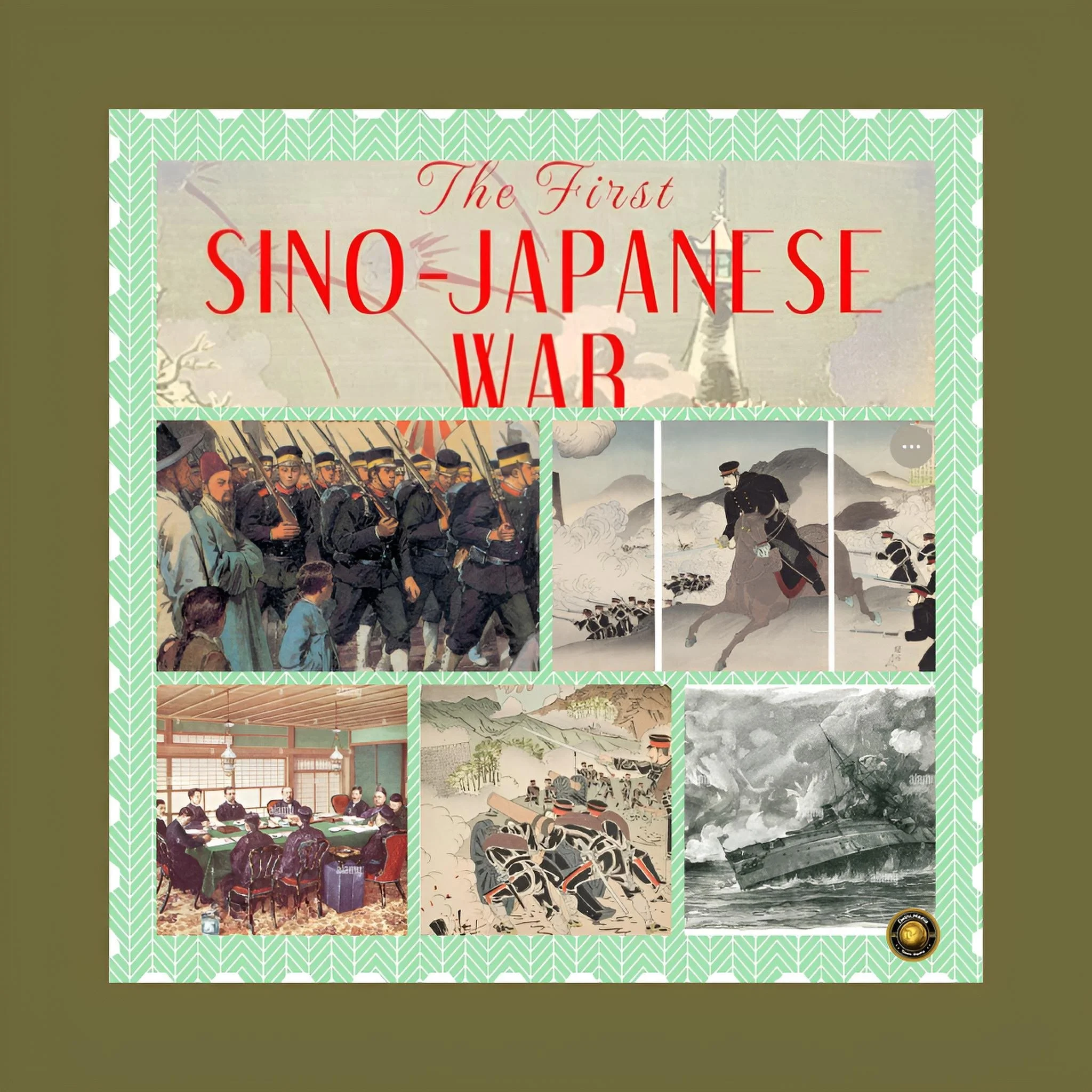
The First Sino-Japanese War (1894–1895): Origins, Key Events, and Global Consequences
Introduction
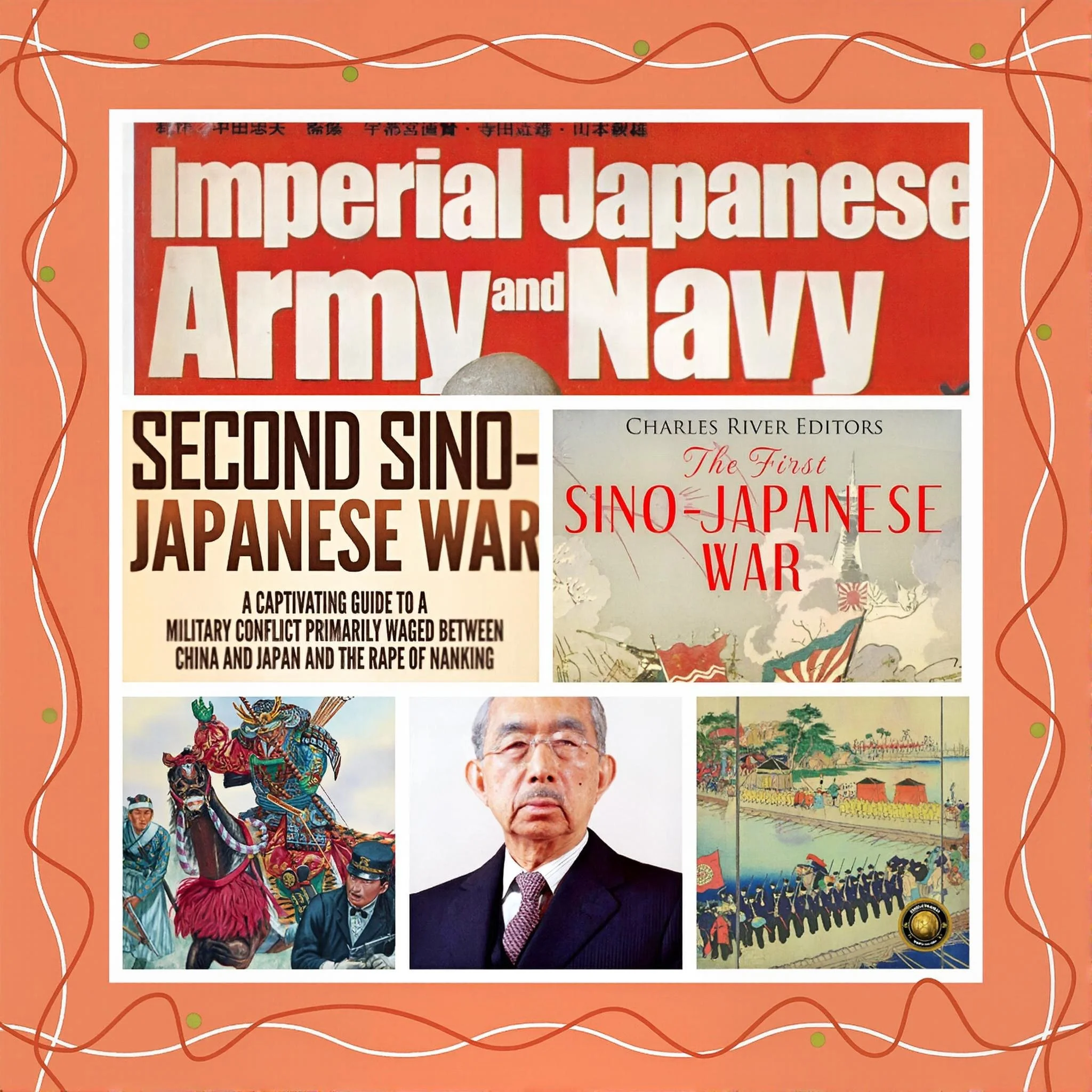
The First Sino-Japanese War, fought between August 1894 and April 1895, marked a pivotal transformation in East Asian power dynamics.
Japan’s decisive victory over the Qing dynasty not only shattered the traditional Sino-centric regional order that had prevailed for centuries but also announced Japan’s emergence as a significant world power capable of challenging established imperial states.
The conflict fundamentally reshaped Asia's geopolitical landscape and set the stage for decades of subsequent tension and warfare.
Origins of the Conflict
The Korean Question
The war’s immediate cause was the rivalry between China and Japan for supremacy over Korea.
Korea had long been China’s most crucial tributary state, but its strategic location opposite the Japanese islands, combined with its natural resources of coal and iron, attracted Japanese interest.
By the late nineteenth century, both nations viewed control over the Korean Peninsula as essential to their regional ambitions—for China, the preservation of its traditional sphere of influence, and for Japan, a vital stepping stone toward continental expansion.
Japan’s interest in Korea intensified following the Meiji Restoration of 1868, which launched a rapid program of modernization and militarization.
Japan sought to establish itself as a regional power and prove its strength by expanding its influence beyond its borders.
In 1875, Japan forced Korea to open itself to foreign trade and to declare its independence in foreign relations, directly challenging the traditional tributary system.
The Convention of Tientsin (1885)
Relations between China and Japan over Korea had been tense for years.
In 1884, Korean reformers allied with Japan attempted the Gapsin Coup to overthrow the pro-Chinese faction in the Korean government.
Chinese troops suppressed the coup within three days, killing forty Japanese in the process and burning down the Japanese legation.
This confrontation led to the Convention of Tientsin (also known as the Li-Itō Convention), signed in 1885, in which both nations agreed to withdraw their troops from Korea and to notify each other before any future military deployment.
Japan’s Modernization Versus China’s Stagnation
The war’s deeper cause lay in the divergent paths of modernization taken by Japan and China.
Japan’s Meiji government had successfully transformed the nation by adopting Western technology, education, and military practices.
The government built railways, telegraph systems, shipyards, and modern industries while training a professional military force equipped with the latest weaponry.
In contrast, China’s Self-Strengthening Movement (1861–1895) attempted to modernize while preserving traditional Confucian institutions.
The movement’s slogan—“Chinese learning for substance, Western learning for function”—encapsulated this limited approach.
The reforms suffered from bureaucratic inefficiency, corruption, provincial fragmentation, and a conservative leadership that sought to strengthen the old order militarily rather than transform it fundamentally.
As one PLA analysis later concluded, “Japan’s victory proved that its westernization drive, the Meiji Restoration, was the right path… One made reforms from its mind, while another only made changes on the surface”.
The Tonghak Rebellion Triggers War
The immediate spark came with the Donghak (Tonghak) Peasant Rebellion in Korea in early 1894.
The rebellion, led by a religious movement seeking to expel foreign influence and reform the corrupt Korean government, quickly overwhelmed Korean forces.
On June 3, 1894, the Korean government formally requested Chinese military assistance. China dispatched approximately 2,700 troops in response.
Angered that China had not notified Japan before intervening as required by the Convention of Tientsin, Japan countered by sending its own forces—reportedly 6,000 troops—to Korea.
Although the rebellion was suppressed by June 11 through the Treaty of Jeonju, which removed the original justification for foreign intervention, neither Japan nor China withdrew its forces.
Tensions escalated rapidly, and on August 1, 1894, both nations formally declared war.
Key Events and Battles
Battle of Pungdo (July 25, 1894)
Fighting actually began before the formal declaration of war.
On July 25, 1894, Japanese cruisers encountered Chinese vessels near Asan Bay off Korea’s west coast.
In this first naval engagement, Japanese forces sank a Chinese troopship (the Kowshing) carrying reinforcements and captured another gunboat.
This incident effectively launched hostilities.
Battle of Seonghwan (July 28–29, 1894)
The first significant land battle occurred just outside Asan. Japanese and Chinese forces clashed, with the battle lasting until the next morning.
The Chinese gradually lost ground to the Japanese's superior numbers and finally broke, fleeing toward Pyongyang.
Chinese casualties amounted to approximately 500 killed and wounded, compared to 82 Japanese casualties.
Battle of Pyongyang (September 15, 1894)
This was the first significant land engagement. The Imperial Japanese Army, numbering between 10,000 and 20,000 men, converged on Pyongyang from multiple directions against approximately 14,000 Chinese defenders.
The Chinese forces were disadvantaged by a lack of unity, operating as four separate armies rather than a cohesive force.
The Japanese assaulted the city and defeated the Chinese by attacking from the rear.
Taking advantage of heavy rainfall overnight, surviving Chinese troops escaped and headed northeast toward the Yalu River.
Chinese casualties were devastating: approximately 2,000 killed and 4,000 wounded, with Japanese losses totaling only 102 killed, 433 wounded, and 33 missing.
This overwhelming victory forced Qing troops to retreat entirely from Korea into Manchuria.
Battle of the Yalu River (September 17, 1894)
The Battle of the Yalu River was the most significant and decisive naval engagement of the war.
Two days after Pyongyang, the Japanese Combined Fleet encountered China’s Beiyang Fleet near the mouth of the Yalu River.
The battle lasted approximately five hours, from late morning to dusk.
The engagement proved catastrophic for China. The Japanese navy destroyed or heavily damaged eight of the ten Chinese warships, while losing only one vessel itself.
About 1,000 Chinese sailors were killed.
The principal factors in Japan’s victory were its superiority in speed and firepower—its modern fleet had better-trained crews, faster ships, and more effective gunnery.
The victory shattered Chinese naval morale and assured Japanese command of the Yellow Sea.
The Beiyang Fleet’s surviving ships retreated to Port Arthur (Lüshunkou) and subsequently to Weihaiwei, taking no further offensive action for the remainder of the war. China’s eastern coast was left effectively undefended.
Battle of Lüshunkou (Port Arthur) and the Massacre (November 21, 1894)
Following their naval dominance, Japanese ground forces advanced into Manchuria.
Port Arthur, headquarters of China’s Beiyang Fleet and a heavily fortified strategic position controlling sea passage from Korea to northeast China, was the primary objective.
After three days of fierce fighting, Japanese forces captured Port Arthur on November 21, 1894. What followed was one of the war’s darkest episodes—the Port Arthur Massacre.
Japanese troops, reportedly enraged after discovering mutilated bodies of Japanese prisoners of war, killed thousands of Chinese civilians over three days.
Estimates of the death toll range from 2,600 to 60,000, with most modern historians suggesting approximately 20,000 casualties.
Canadian journalist James Creelman of the New York World reported that Japanese soldiers “massacred practically the entire population in cold blood”.
A Japanese soldier’s diary recorded: “Anyone we saw in the town, we killed. The streets were filled with corpses… We killed people in their homes; by and large, there wasn’t a single house without from three to six dead”.
The massacre foreshadowed Japanese atrocities against Chinese civilians in later decades, including the notorious Nanjing Massacre of 1937.
Battle of Weihaiwei (January–February 1895)
The final significant engagement was the siege of Weihaiwei on the Shandong Peninsula, where the remnants of the Beiyang Fleet had taken refuge.
Japanese forces executed a coordinated land-sea operation: while the navy blockaded the harbor, ground troops marched overland to attack from landward positions.
The siege lasted 23 days, with major fighting between January 20 and February 12, 1895.
The Japanese captured the harbor’s forts and eventually destroyed or captured the remaining Chinese warships.
Admiral Ding Ruchang, commander of the Beiyang Fleet, committed suicide rather than surrender.
Weihaiwei fell on February 12, 1895, effectively ending China’s capacity to resist.
Final Operations
After Weihaiwei’s fall, Japanese troops pressed further into southern Manchuria and northern China. The Battle of Yingkou on March 5, 1895, marked the last significant fighting in Manchuria.
Meanwhile, Japanese forces also conducted the Pescadores Campaign in late March, landing on these islands between Taiwan and mainland China to secure them before peace negotiations concluded.
By March 1895, Japan had fortified positions commanding the sea approaches to Beijing, placing the Chinese capital under direct threat.
The Qing government, facing complete military collapse, sued for peace.
The Treaty of Shimonoseki
Peace negotiations began in Hiroshima in January 1895, though initial talks broke down over credential disputes.
Substantive negotiations resumed in Shimonoseki in late March, led by Japan’s Prime Minister Itō Hirobumi and Foreign Minister Mutsu Munemitsu, and faced by China’s elderly statesman Li Hongzhang.
During the negotiations, an assassination attempt on Li Hongzhang by a Japanese extremist on March 24 complicated matters.
Japan, seeking to maintain international goodwill, agreed to an unconditional armistice on March 30 and softened some demands.
The Treaty of Shimonoseki was signed on April 17, 1895.
Principal Terms
The treaty imposed harsh conditions on China:
Recognition of Korean Independence
China was required to recognize Korea as “a completely independent sovereign state,” formally ending the centuries-old tributary relationship and Chinese suzerainty over the peninsula.
Territorial Cessions
China ceded Taiwan (Formosa), the Pescadores Islands, and the Liaodong Peninsula (including Port Arthur) to Japan.
War Indemnity
China agreed to pay 200 million Kuping taels (approximately US$150 million in 1895 values) over seven years, with interest charged on unpaid balances.
Commercial Concessions
Four additional Chinese cities—Shashi, Chongqing, Suzhou, and Hangzhou—were opened to Japanese trade.
Japan also gained most-favored-nation trading status and the right to operate manufacturing enterprises in treaty ports.
Military Occupation
Japanese forces would temporarily occupy Weihaiwei until the first two indemnity installments were paid.
The Triple Intervention
European power politics immediately complicated Japan’s triumph.
Less than a week after the treaty was signed, on April 23, 1895, Russia, France, and Germany issued a joint diplomatic intervention demanding that Japan return the Liaodong Peninsula to China.
Russia, which had its own designs on warm-water ports in the Pacific and was building the Trans-Siberian Railway, viewed Japanese acquisition of the Liaodong Peninsula as threatening its interests.
France felt obligated to support its ally Russia, while Germany sought to curry favor with Russia and distract it from European affairs.
The three powers used diplomatic threats, implying potential military action.
Japan, exhausted from the war and unable to confront three major European powers simultaneously, reluctantly agreed on May 5, 1895, to withdraw from Liaodong in exchange for an additional indemnity of 30 million taels from China.
The Japanese public was outraged by this Triple Intervention, particularly when Russia subsequently obtained a 25-year lease on the very same Liaodong Peninsula in 1898.
This humiliation became a driving factor behind the Russo-Japanese War of 1904–1905, in which Japan defeated Russia and reclaimed control of the peninsula.
Geopolitical Consequences
For Japan
The war marked Japan’s emergence as a significant world power—the first Asian nation to be recognized as a sovereign equal by European powers.
Japan demonstrated that its modernization program had succeeded spectacularly, validating the Meiji Restoration’s approach of comprehensive institutional reform.
Japan gained its first overseas colony in Taiwan, establishing itself as an imperial power.
The war also gave Japan predominance over Korea, which would lead to formal annexation in 1910.
The massive war indemnity from China—eventually totaling 230 million taels with the Liaodong retrocession payment—financed further industrial and military expansion.
Perhaps most significantly, victory fundamentally transformed Japanese attitudes toward China, shifting from cultural reverence to contempt.
This psychological dimension, combined with the resentment generated by the Triple Intervention, shaped Japanese foreign policy for decades and contributed to the rise of militarism.
For China
The defeat was catastrophic for the Qing dynasty. The war demonstrated conclusively that the Self-Strengthening Movement had failed to modernize China adequately.
The prestige of the Qing dynasty and the classical Confucian tradition suffered devastating blows.
The humiliation catalyzed a series of political upheavals. The Hundred Days’ Reform of 1898 attempted more radical modernization but was crushed by conservative forces.
The Boxer Rebellion of 1899–1900 represented a violent anti-foreign reaction.
Ultimately, the trajectory set by the war’s outcome contributed to the 1911 Revolution, which ended over 2,000 years of dynastic rule in China.
The massive indemnity payments strained China’s finances severely, requiring loans from foreign powers that deepened Chinese dependency.
The treaty’s commercial provisions further opened China to foreign economic penetration.
The Scramble for Concessions
Japan’s victory triggered what became known as the “Scramble for Concessions” in China.
European powers, having witnessed China’s weakness, rushed to carve out their own spheres of influence:
(1) Germany seized Jiaozhou Bay and established a sphere of influence in Shandong Province (1897)
(2) Russia obtained a lease on the Liaodong Peninsula, including Port Arthur (1898)
(3) Britain expanded its position in the Yangtze region and secured Weihaiwei
(4) France consolidated its influence in southern China, bordering French Indochina
This intensified foreign intervention nearly led to China’s partition among the imperialist powers, averted only partially by the American Open Door Policy of 1899–1900.
Regional Order Transformation
The war dissolved the traditional tributary system that had structured East Asian international relations for centuries.
The Sinocentric world order, based on Confucian hierarchies and Chinese cultural supremacy, gave way to a new order centered on Japan.
This represented, as scholars have noted, “a reversal in the traditional balance of power” and “broke a centuries-old international harmony within the Confucian world”.
Conclusion
Long-Term Legacy
The First Sino-Japanese War set the stage for subsequent conflicts that would shape the twentieth century.
The Russo-Japanese War (1904–1905) emerged directly from competition over Manchuria and Korea following the Triple Intervention.
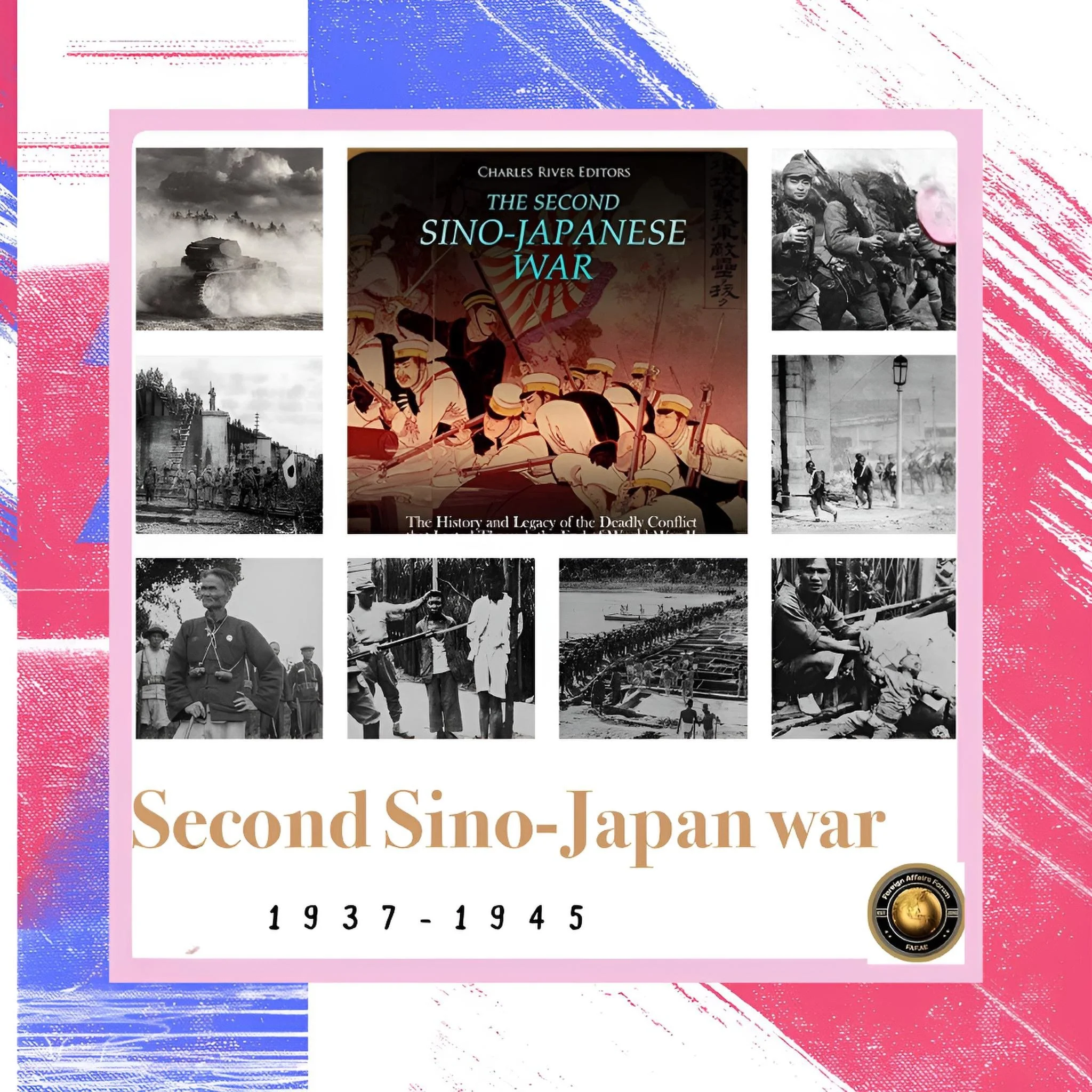
Japan’s imperial trajectory, launched by its 1895 victory, eventually led to the Second Sino-Japanese War (1937–1945) and the Pacific War.
The war also generated territorial and political issues that reverberate to the present day.
Taiwan’s status, disputes in the East China Sea, and enduring tensions in Sino-Japanese relations all trace their modern origins to the transformations wrought by this conflict.
The memory of the Port Arthur Massacre and other wartime atrocities continues to influence Chinese perceptions of Japan and complicates bilateral relations in East Asia.