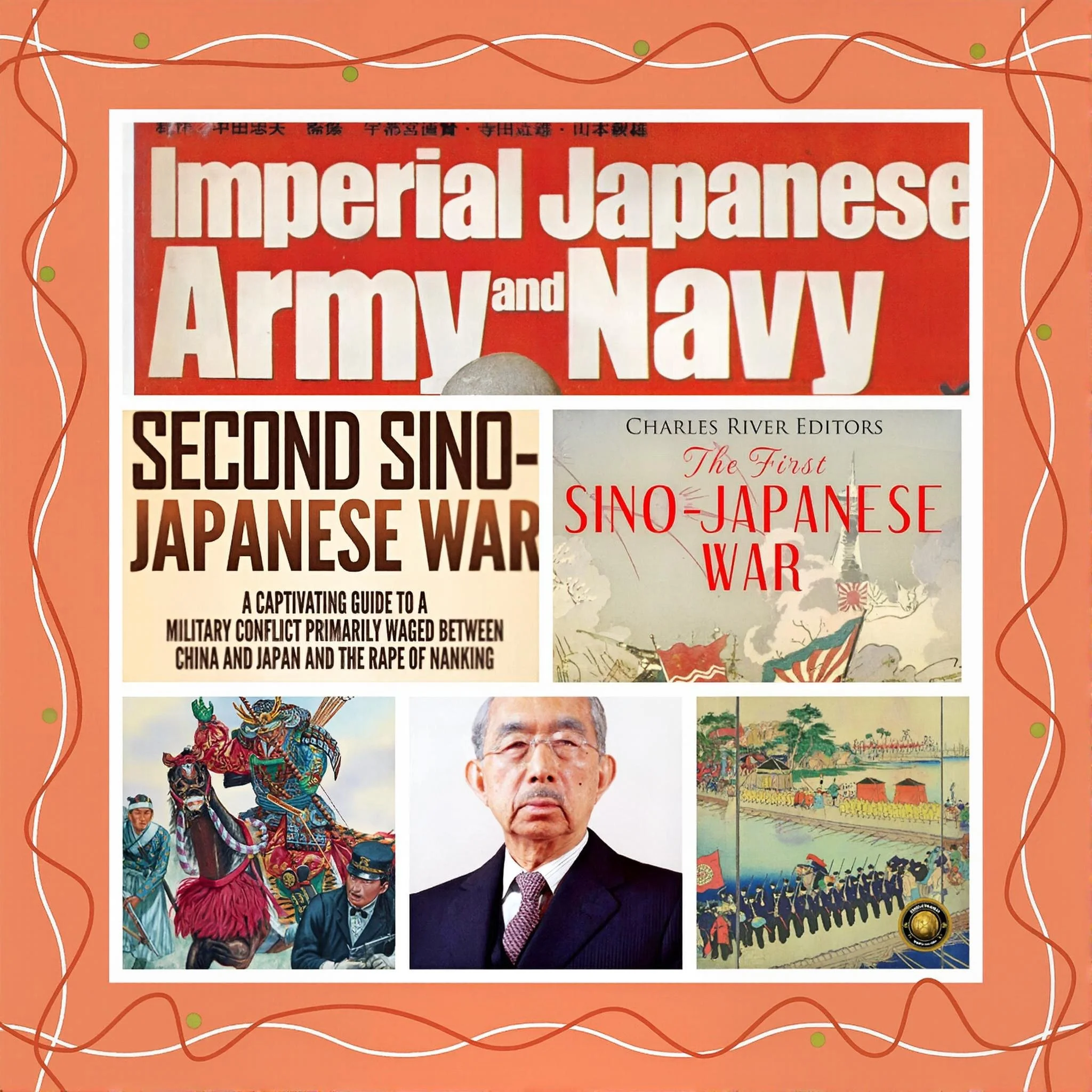
Japan’s Imperial Trajectory: From Meiji Restoration to WWII and Contemporary Parallels
Executive Summary
Japan’s imperial trajectory began with the 1868 Meiji Restoration, which centralized power under Emperor Meiji, ended feudal shogunate rule, and launched rapid modernization to rival Western powers.
This era fueled imperial expansion through victories in the following conflicts.
(1) Sino-Japanese War (1894-95)
(2) Russo-Japanese War (1904-05), establishing Japan as Asia’s first modern empire, controlling Korea, Taiwan, and parts of China.
Expansion and Militarism
(1) The Taishō era (1912-1926) saw continued growth amid opportunities created by World War I, including the Twenty-One Demands on China
(2) Shōwa rule under Emperor Hirohito (1926-1989) escalated aggression
(3) 1931-1937 Manchurian invasion and full-scale war in China. (Kwantung Army staged the Mukden Incident as a pretext to seize Manchuria in northeastern China)
(4) The Second Sino-Japanese War paved the way for the Pacific War in 1941.
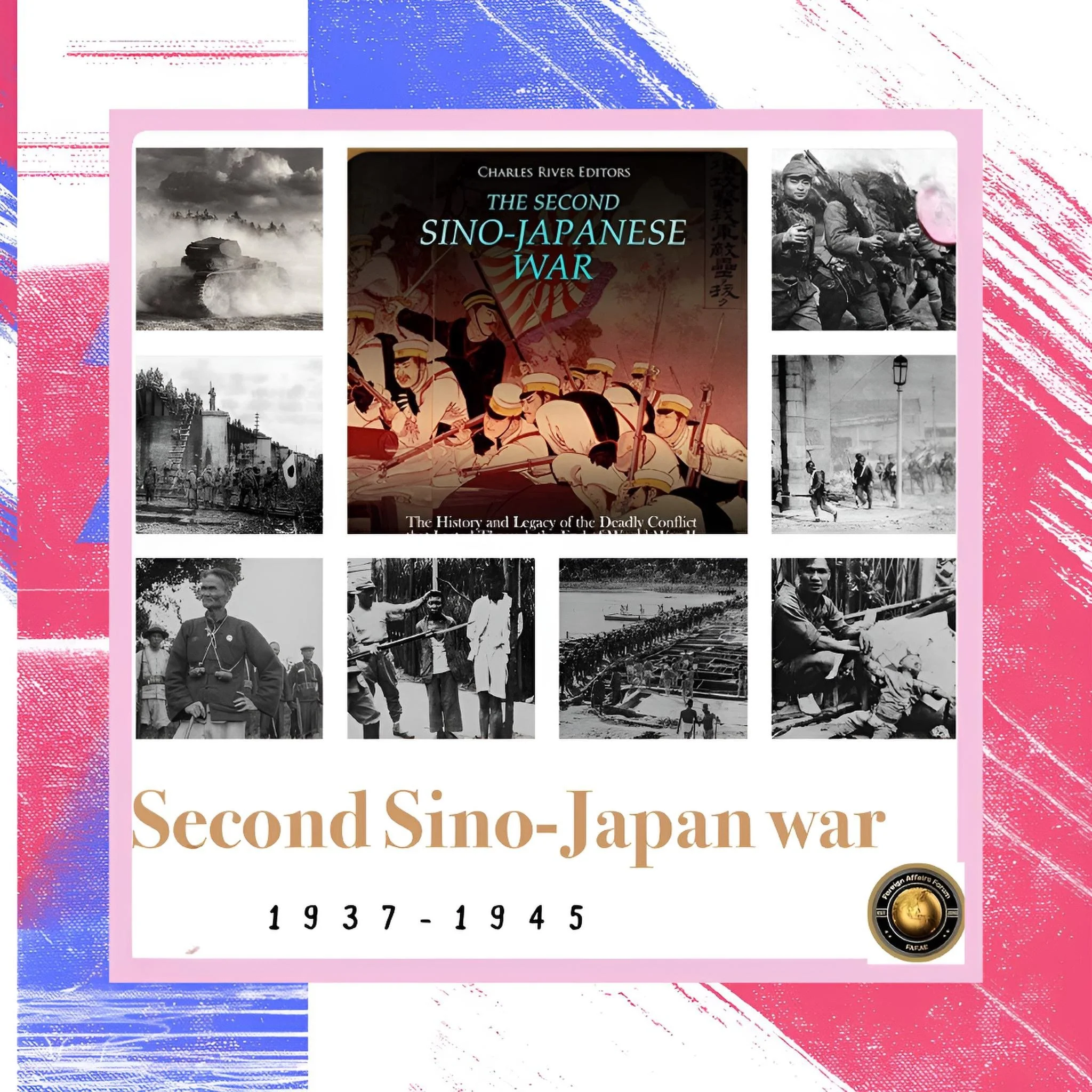
In 1937, the conflict escalated into full-scale war with the outbreak of the Second Sino-Japanese War after the Marco Polo Bridge Incident.
This war was characterized by intense battles, brutal occupation policies, atrocities such as the Nanjing Massacre, and the Japanese surrender instigated by Hirohito.
(5) Japanese surrender under the leadership of Emperor Hirohito (Jewel voice Broadcast)
The war became one of the significant events of World War II in the Asia-Pacific region, further intensifying Japan’s militaristic and imperial ambitions until its defeat in 1945.
Emperor Hirohito (likely the intended reference to “horohito”) was the 124th Emperor of Japan, reigning from 1926 to 1989, who announced Japan’s surrender on August 15, 1945, via radio broadcast known as the Jewel Voice Broadcast.
Hirohito, viewed as divine, approved key decisions amid rising ultranationalism, though his direct role remains debated; he intervened decisively in 1945 to accept surrender, ending the empire.
Post-WWII Transformation
Post-1945 Allied occupation redefined the emperor as a symbolic figurehead under the 1947 constitution, stripping him of political and divine authority while retaining his cultural unity.
Hirohito renounced divinity in 1946, shifting the institution toward pacifism by surrendering after the invasion of Pearl Harbor, the entry of the soviets' surrender in World War II.
Contemporary Parallels
Today’s Emperor Naruhito performs ceremonial duties, echoing Meiji’s unifying symbolism but without power, amid debates over wartime accountability and succession in the absence of male heirs.
Parallels to Meiji-WWII include nationalism’s resurgence in regional tensions, though constrained by the constitution, contrasting imperial zenith with modern restraint.
Introdiction
Japan’s history from 1868 to 1945 reveals a striking progression
(1) Internal unification through violence
(2) Rapid imperial expansion
(3) Militarization of state and society
(4) Totalitarian governance → alignment with fascist powers
5) Total war.
FAF analysis
Whether contemporary Japan shows signs of returning to this pattern requires careful historical analysis of both the trajectory and present conditions.
Early Conflicts and Imperial Foundation (1868–1895)
The Boshin War (1868–1869): Restoration Through Civil War
The Boshin War was not a conflict against external enemies but a civil war within Japan, fought between the traditional Tokugawa shogunate (which had ruled for 260 years) and a coalition seeking to restore imperial rule under Emperor Meiji.
The Context: In 1853, American Commodore Perry’s “Black Ships” forced Japan to abandon its 200+ years of isolationism, destabilizing the shogunate’s authority.
Some samurai, concerned that Japan’s weakness invited foreign domination, began agitating for imperial restoration and rapid modernization to compete with Western powers.
The War: Fought from January 1868 to June
In 1869, the Boshin War mobilized approximately 120,000 men.
The imperial forces, though smaller, were better organized and modernized, defeating the shogunate in a series of battles culminating in the fall of Edo (Tokyo).
The war cost approximately 8,200 lives.
Critical Insight
The Boshin War was won by powerful regional domains (Satsuma, Chōshū, Tosa) that would dominate the subsequent “Meiji oligarchy,” creating a pattern of centralized power mobilized for rapid state transformation, justified by national emergency.
Yasukuni Shrine was built in 1869 to honor the victims, making it the initial sacred site for Japan’s subsequent militarism—mythifying internal conflict as glorious national sacrifice, later extended to imperial wars.
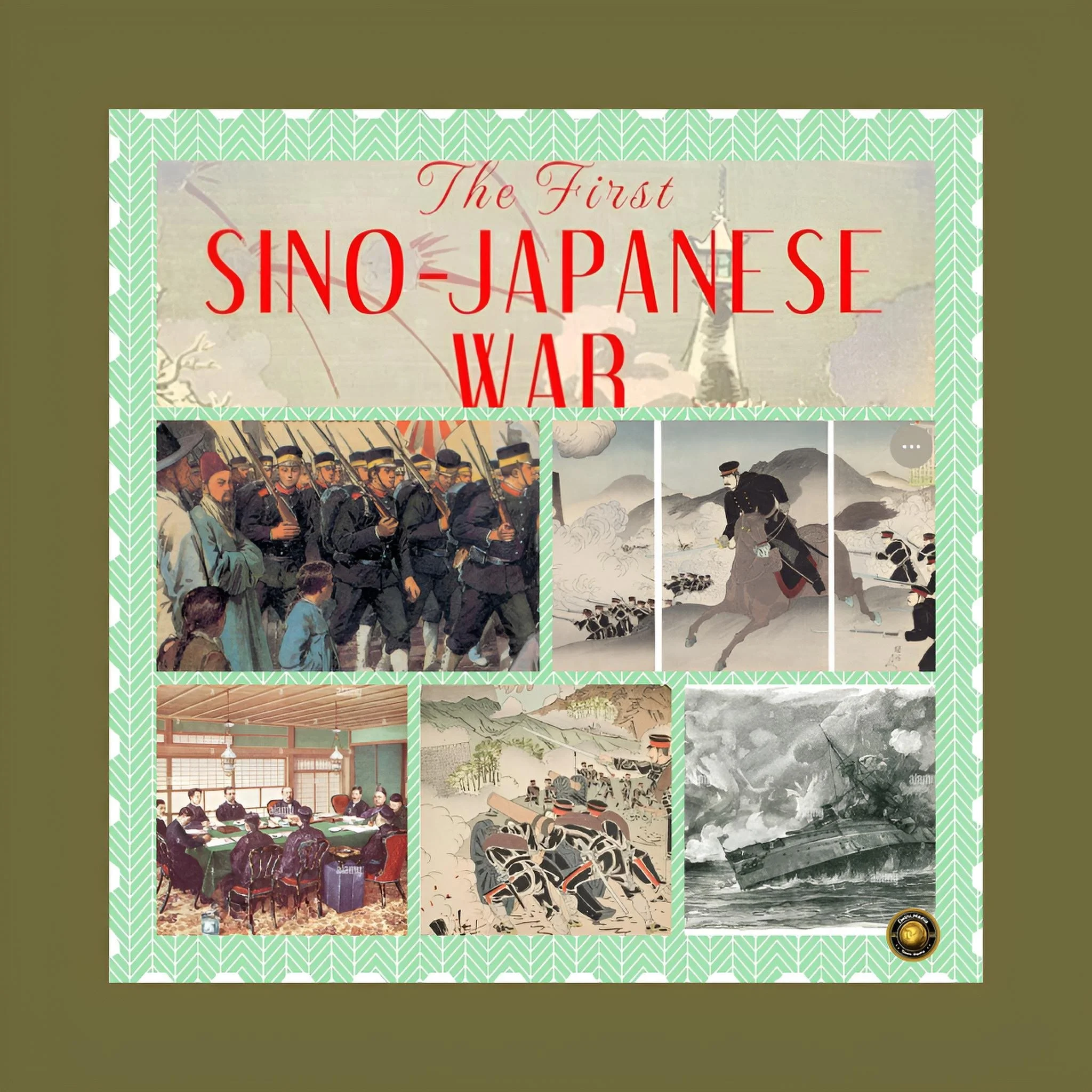
The First Sino-Japanese War (1894–1895): The Emergence of Imperial Japan
The First Sino-Japanese War marked Japan’s transition from a regional power seeking security to an imperial power seeking continental dominance.
What was the trigger?
In 1894, the Tonghak Rebellion erupted in Korea, prompting Korea (a Chinese tributary state) to request Chinese military assistance.
Japan, perceiving Korea as essential to its security, dispatched 8,000 troops, seized the Korean emperor, installed a pro-Japanese government, and, when China rejected this, declared war.
Japan’s Victory
Japan’s modernized military decisively defeated China’s Qing Dynasty despite numerical disadvantage.
The Treaty of Shimonoseki (April 1895) granted Japan
(1) Taiwan (ceded by China)
(2) Recognition of Korea’s independence (in practice, Japanese protectorate status)
(3) A massive war indemnity
(4) A “predominant position” in Korea
Critical Insight
The Sino-Japanese War demonstrated that Japan could militarily defeat a much larger neighbor and redraw the regional map, intoxicating Japanese elites with the belief that military force was the path to national greatness and regional hegemony.
Korea’s fall was not accidental but the first deliberate step in Japan’s empire-building.
Consolidating Imperial Power (1900–1910)
The Russo-Japanese War (1904–1905): Japan Defeats a European Great Power
The Russo-Japanese War announced Japan as a global military power.
The Context
Japan’s 1894 victory was followed by the “Triple Intervention” (1895), in which Russia, Germany, and France pressured Japan to return Port Arthur to China—a humiliation that festered in Japanese consciousness. Russia then advanced into Manchuria and Korea, threatening Japan’s gains.
Japan’s Strategy
Japan launched a surprise naval attack on Russian forces at Port Arthur—prefiguring its 1941 Pearl Harbor strategy.
The war featured the Siege of Port Arthur (killing 60,000 Japanese soldiers) and the Battle of Tsushima (May 1905), where Japan’s navy destroyed the Russian Baltic Fleet.
The Treaty of Portsmouth (1905)
Mediated by U.S. President Theodore Roosevelt, the treaty granted Japan the following.
(1) Control of southern Manchuria (South Manchuria Railway)
(2) The southern half of Sakhalin Island
(3) Recognition of Japan’s primacy in Korea
(4) Russian withdrawal from Manchuria
What was the world-historical Significance
For the first time, a non-European power had defeated a major European nation, inspiring anti-colonial movements across Asia and Africa.
However, in Japan, it had a more dangerous effect: it convinced militarists that Japan could defeat any power through determination and superior organization.
Critical Insight
Japan’s satisfaction was incomplete; militarists felt cheated by the peace settlement, expecting larger gains.
This grievance—that foreign powers denied Japan’s rightful due—became a driving force in subsequent militarism.
The pattern was clear: military victory = national destiny; any limitation = foreign betrayal.
The Annexation of Korea (1910): The Forced Incorporation
Following Japan’s victories, Korea was no longer independent but a helpless Japanese appendage.
The Process: Japan pursued a series of forced treaties:
1894
The pro-Japanese government was installed during the Sino-Japanese War
1905
The Korea Protectorate Treaty made Korea a formal protectorate
1907
The second treaty stripped Korea of even nominal autonomy
1910
Japan–Korea Annexation Treaty formalized outright annexation.
The Annexation (August 22, 1910)
The treaty stipulated: “His Majesty the Emperor of Korea makes the complete and permanent cession to His Majesty the Emperor of Japan of all rights of sovereignty over the whole of Korea.”
Many Koreans viewed it as illegitimate—referring to it as “neugyak” (forced treaty) rather than “joyak” (treaty)
35 Years of Colonial Rule (1910–1945)
Japan administered Korea through a Governor-General, suppressing nationalism, forcing cultural assimilation, and pursuing economic exploitation.
Critical Insight
The annexation established a pattern: Japan pursued territorial control through successive forced treaties, each more restrictive, until formal annexation.
The international community acquiesced (Britain via the Anglo-Japanese Alliance), teaching Japan that regional expansion could proceed without meaningful resistance from Western powers.
World War I and Interwar Expansion (1914–1931)
Japan in World War I: Territorial Opportunism
Japan’s participation in WWI was minimal militarily but maximally opportunistic territorially.
The Strategy
Foreign Minister Kato Takaaki calculated that Japan could seize Germany’s colonial interests in Shandong and the Pacific while using the conflict to extend its Manchurian leases, which were set to expire around 1923.
The Execution
Japan invaded German-held Shandong Province and German-held Marshall, Caroline, and Palau Islands, acquiring a vast Pacific island network crucial to later WWII naval strategy.
Critical Insight
Global crises created opportunities for regional expansion without significant interference from major powers. Japan had expanded its sphere without fighting a major battle.
The Interwar Period: Economic Crisis and Military Ascendancy (1920s–1930s)
The 1920s witnessed Japan’s brief “Taishō democracy,” but the Great Depression (1929) shattered this equilibrium and unleashed military radicalism.
The Economic Crisis
The Depression devastated Japan’s export economy.
(1) Rural areas suffered acutely
(2) The 1934 Tōhoku famine killed thousands
(3) Public faith in democratic institutions evaporated.
The Military Response
The military offered an alternative vision: state-controlled economic mobilization focused on imperial expansion and military strength.
Ultranationalist ideologues promoted “hakko ichiu” (eight corners under one roof)—the idea of Japan uniting Asia under imperial rule.
The military positioned itself as the guardian of national destiny.
What were the key events?
1930–1933
Military officers conducted coup attempts and assassinated civilian politicians
1933
Japan withdrew from the League of Nations after it condemned Japan’s invasion of Manchuria
1936
Japan signed the Anti-Comintern Pact with Nazi Germany, formalizing ideological alignment
1937–1939
The Second Sino-Japanese War began with a complete invasion of China, introducing total war mobilization
Japan’s Total Militarization and Fascism (1930s–1940s)
By the late 1930s, Japan had transformed into a fascist state characterized by the following.
Ideological Mobilization
The “cult of the Emperor” became the center of ultranationalist ideology; “Hakko ichiu” and “Greater East Asia Co-Prosperity Sphere” rhetoric justified imperial expansion.
Economic Reorganization
The National Mobilization Law of 1938 placed the entire economy under state control.
The Central Planning Board directed all private enterprises to shift to military production.
Political Repression
All political parties were dissolved into the Imperial Rule Assistance Association (1940); the Popular Front Incident (1937–1938) violently suppressed left-wing activists.
Military Supremacy
The military became effectively autonomous from civilian control, with generals acting independently (e.g., the 1931 Manchurian Incident was launched without central government approval).
Japan’s Alliance with Nazi Germany and Fascist Italy
The Anti-Comintern Pact (November 1936)
The Anti-Comintern Pact (November 25, 1936) signaled ideological and geopolitical alignment between Japan and Nazi Germany.
Why did Japan align with Germany?
Shared enemies
Both viewed the Soviet Union as the primary threat
Ideological affinity
Both were militaristic, ultranationalist regimes emphasizing state supremacy and imperial expansion
Technology transfer
Japan sought German military technology
Diplomatic isolation
Japan’s invasion of Manchuria had isolated it from Western powers
Strategic calculation
Japan hoped Germany would pressure Western powers to accept Japanese expansion
The Tripartite Pact (September 27, 1940)
The formal alliance was cemented with the Tripartite Pact (Berlin Pact), signed on September 27, 1940.
What were the terms?
The pact stipulated
(1) Germany and Italy recognized “Japan’s right to establish a new order in Greater East Asia.”
(2) Japan recognized “the leadership of Germany and Italy in the establishment of a new order in Europe.”
(3) Each signatory pledged mutual military assistance if attacked by a third party (implicitly targeting the United States)
(4) Spheres of influence were delineated: Europe for Germany/Italy, Asia for Japan
What were Japan’s motivations?
U.S. deterrence
Hope that the alliance with Germany would discourage U.S. intervention if Japan attacked Western colonies in Southeast Asia
Resource security
The U.S. had imposed embargoes; Japan needed oil, rubber, and tin from Southeast Asia
Mutual non-interference
Japan hoped Germany would pressure Western powers to accept Japanese expansion
Soviet pressure
Both wanted to maintain pressure on the Soviet Union without direct military coordination
Why Japan Joined the Axis—The Structural Drivers
Resource Dependence and Economic Desperation
Japan was a resource-poor island nation with virtually no oil, limited tin, minimal rubber, and few strategic minerals.
By the late 1930s, Japan’s expansion in China was unsustainable without Southeast Asian resources (Dutch East Indies, Malaya, etc.)
The U.S. Embargo Strategy
The U.S. imposed strategic embargoes.
July 1940: Oil embargo
September 1940: Scrap metal embargo
These created a catastrophic situation: oil reserves were expected to be exhausted within 18–24 months.
Japan calculated it had a narrow window to seize resources militarily before reserves depleted.
Militarism as Ideology and Path Dependency
By 1940, Japan’s military had become the dominant institution.
The aggressive actions the military had undertaken.
(1) Assassinated civilian politicians opposing expansion
(2) Purged the Foreign Ministry of diplomats advocating negotiation
(3) Subordinated the civilian government to military dictates
(4) Convinced the public that imperial expansion was necessary for national survival
This ideology was self-reinforcing: every setback (U.S. embargoes, failure to conquer all of China, Soviet military successes) was interpreted not as a sign to negotiate but as proof Japan needed to fight harder.
Ideological Commitment to Empire
Japanese militarists genuinely believed they were destined to unify Asia under Japanese leadership.
This ideological commitment made compromise with Western powers psychologically impossible.
Contemporary Japan—Is History Repeating?
The Case for Caution (But Not Equivalence)
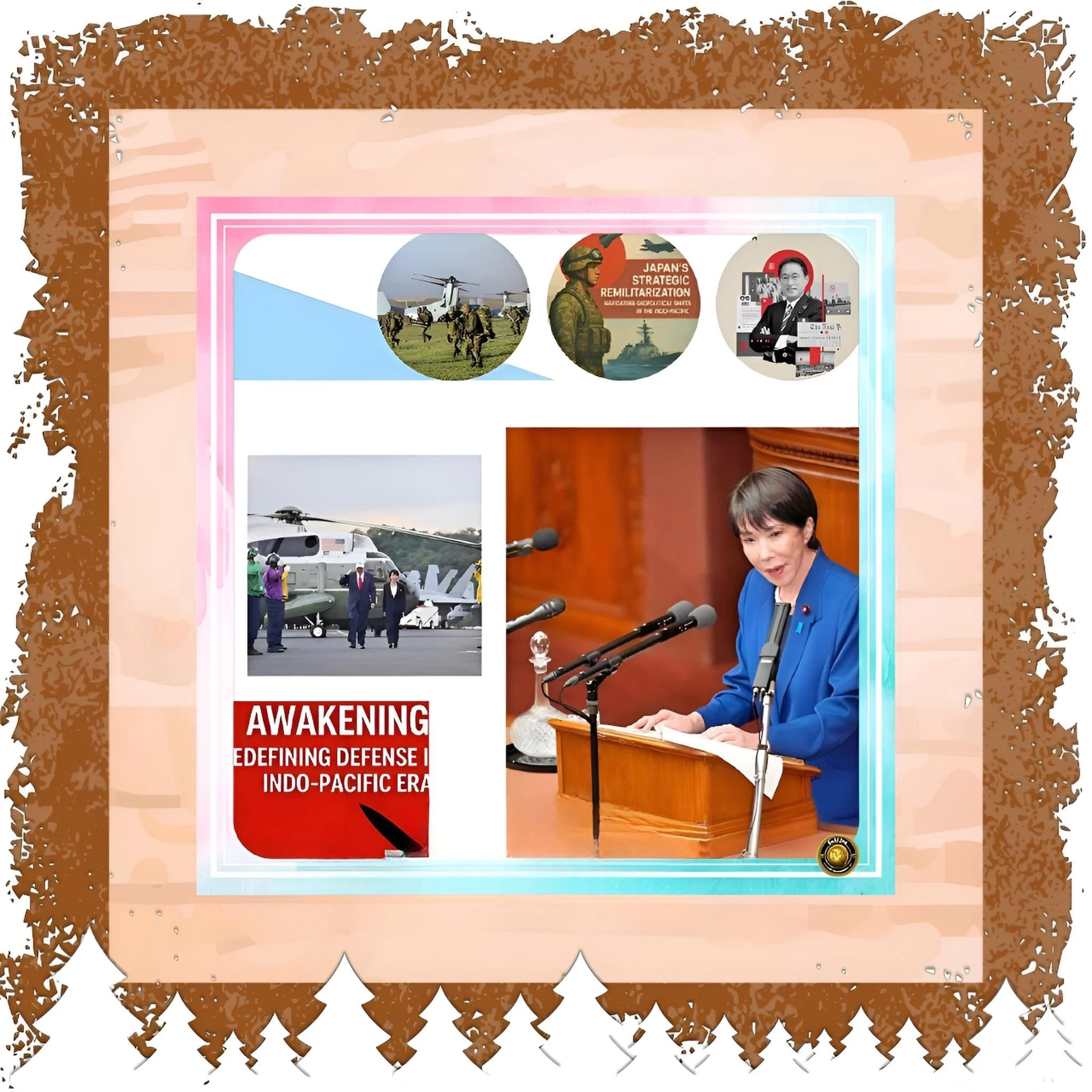
Contemporary Japan under PM Sanae Takaichi exhibits several warning signs reminiscent of prewar patterns.
Military Expansion Amid Economic Stagnation
Japan’s defense budget is surging (reaching 2% of GDP early, two years ahead of schedule). Historical precedent: Military expansion during economic crisis preceded WWII.
Nationalist Ideology and Historical Revisionism
Takaichi associates with nationalist circles skeptical of postwar pacifism.
Cabinet ministers visit Yasukuni Shrine. Government discussions include revising Article 9 and the “Three Non-Nuclear Principles.”
Geopolitical Isolation and Regional Tension
China and South Korea are increasingly alienated from one another.
Japan has explicitly named Taiwan as a trigger for military intervention.
Military Autonomy and Strategic Decision-Making
Japan is developing counterstrike capabilities independent of explicit Diet authorization.
Strategic planning appears to precede civilian policy deliberation.
Existential Threat Narratives
North Korean missiles, Chinese modernization, and Russian expansion are portrayed as existential challenges requiring total mobilization.
Critical Differences (Why Direct Comparison Fails)
However, a direct comparison with 1930s-1940s fascism is analytically misleading for several reasons.
Institutional Constraints
Postwar Japan has constitutional constraints, embedded itself in Western structures, and maintains functional democratic institutions.
There are no military coup attempts like prewar Japan.
Different Economic Structure
Contemporary Japan is globally integrated; isolation would be economically catastrophic. Military production accounts for a smaller share of GDP; the civilian economy remains robust.
Different Geopolitical Context
The U.S. is Japan’s ally, not a distant power; U.S. military presence constrains Japanese adventurism.
China is much more assertive than 1930s China; aggression would face an overwhelming response.
Leadership Differences
(1) Takaichi operates within democratic constraints.
(2) She is not attempting total state consolidation.
(3) Her militarism is defensive (against Chinese/Russian threats) rather than expansionist.
Per FAF, the above needs further review.
The Actual Risk: Drift Rather Than Deliberate Fascism
What is a more plausible contemporary danger?
Incremental Constitutional Erosion
Japan’s pacifist constitution is being hollowed out through reinterpretation rather than formal amendment.
Militarization of Civilian Society
Defense spending increases and nationalist education could normalize militarism.
Alliance Entanglement
Japan’s military integration with the U.S., Australia, and India could draw Japan into conflicts beyond its interests.
Dilemma Spiral with China
As Japan arms, China perceives a threat and arms; this spiral of arms racing, absent diplomacy, creates conflict even without conscious militarist intent.
Economic Desperation
Severe economic deterioration could revive militarism as an alternative vision of national regeneration.
The Critical Difference—Absence of Economic Desperation
The most significant difference between contemporary Japan and 1930s Japan is the economic context.
1930s Japan
(1) Economically isolated due to the Depression
(2) Facing resource exhaustion (oil, strategic materials)
(3) Perceiving economic security as achievable only through territorial expansion
(4) Increasingly desperate as embargoes tightened
Contemporary Japan
(1) Globally integrated; trade is essential to survival
(2) Abundant access to raw materials through global markets
(3) Technological sophistication provides alternatives to military resource acquisition
(4) Far less economic desperation driving militarism
Why is this crucial?
Territorial expansion no longer makes economic sense; it would destroy the trade relationships Japan depends on.
Even Takaichi understands that military conflict with China would be economically catastrophic.
Conclusion
Pattern Recognition Without Determinism
Japan’s 1868–1945 trajectory demonstrates that economic crisis, military ascendancy, and ideological mobilization combine to produce fascism.
Contemporary Japan exhibits some warning signs but lacks the whole constellation of conditions that produced 1930s-1940s fascism.
The realistic assessment: Contemporary Japan is not becoming fascist in the complete sense.
However, Japan is experiencing
De-pacification
Gradual abandonment of the postwar pacifist consensus
Incremental militarization
Defense spending increases and strategic capability development
Ideological drift
Shifting from pacifism toward nationalist militarism
Constitutional hollowing
Reinterpretation of Article 9 without formal amendment
The risk is not 1940s-style total war but rather medium-term regional destabilization through arms racing with China, constitutional constraints gradually disappearing, and militarism becoming culturally normalized.
History does not repeat, but it does rhyme.
Japan’s contemporary trajectory bears watching—not with alarmism, but with sober recognition that military expansion, once begun, can develop its own momentum.
The choices made today will determine whether Japan’s 21st century is toward greater stability or regional conflict.