From Budapest to Berlin: Why History’s Lessons Go Unheeded in Ukraine Peace Talks
Executive Summary
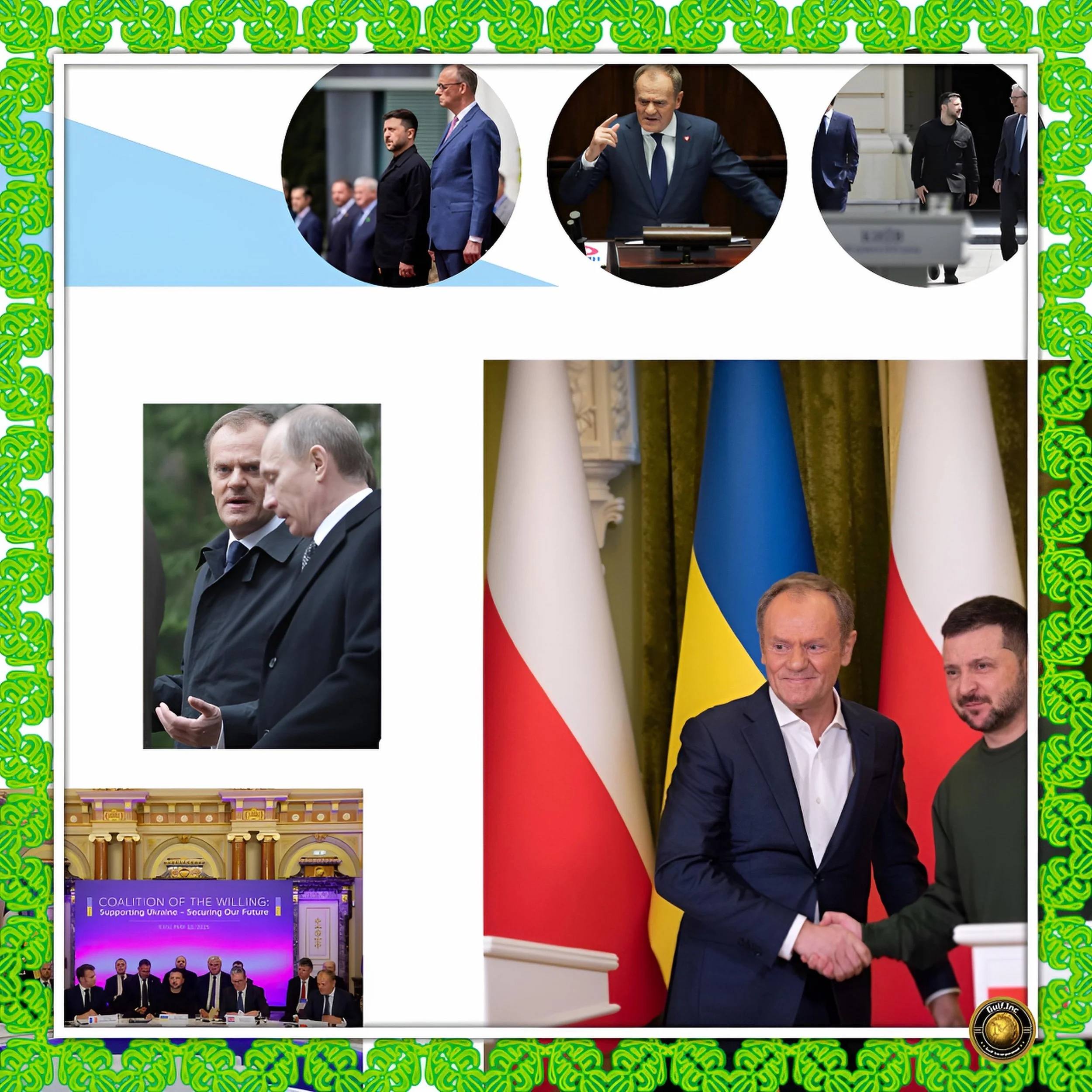
European leaders convening in Berlin on December 30 to coordinate a unified position on Ukraine peace negotiations reveal a fundamental strategic delusion about Russia’s negotiating intentions and the enforceability of security guarantees.
Polish Prime Minister Donald Tusk optimistically declared that peace could materialize “within weeks,” Russian President Vladimir Putin has simultaneously doubled down on maximalist territorial demands, insisting that Ukraine unconditionally withdraw from the Donbas region—territory it has fiercely defended and Russia has failed to capture militarily despite four years of intensive warfare.
The diplomatic landscape obscures a brutal reality: Putin views the battlefield as tilting decisively in his favor and believes time remains on Russia’s side, rendering conventional negotiation mechanisms ineffectual against a revisionist power with proven contempt for ceasefire agreements and an explicit strategy of using negotiations as tactical cover for continued military consolidation.
Introduction: The Negotiating Impasse
The December 30 Berlin Format talks represent the latest iteration in what has become an increasingly asymmetrical dance between Western diplomats seeking a negotiated settlement and a Kremlin leadership that perceives no compelling reason to accept territorial compromise.
German Chancellor Friedrich Merz, hosting the gathering of European and Canadian leaders, emphasized the need for “transparency and honesty from everyone—including Russia,” a phrase that inadvertently captures the core problem: Russia operates according to a different strategic logic altogether, one rooted in imperial restoration rather than mutual compromise.
The very timing of these talks—occurring immediately after Russia’s alleged attack on President Putin’s residence in Novgorod and Moscow’s threat to “harden” its negotiating stance—exposes a critical asymmetry in negotiating leverage.
Ukraine faced two simultaneous pressures: the threat of diplomatic isolation if it rejected talks, and the threat of military escalation if it engaged. This is not negotiation; it is coercion dressed in diplomatic language.
The fundamental question animating recent geopolitical discourse asks whether European leaders suffer from genuine delusion about Putin’s willingness to relinquish annexed territory, or whether they operate from a position of calculated weakness that forces them to accept unfavorable premises.
The evidence suggests the former explanation is more concerning, for delusion implies leadership can be corrected through evidence, while weakness would merely require acknowledging constraints honestly.
Historical Context: The Persistent Pattern of Russian Deception
Russia’s approach to ceasefires and peace agreements contains a strategic pattern so consistent that it approaches the level of doctrine. Following the 2014 annexation of Crimea and the proxy invasion of the Donbas, Moscow agreed to the Minsk Protocol (Minsk-1) with a ceasefire scheduled for September 5, 2014.
The ink was barely dry before Russian forces violated the agreement—Ukrainian military records document at least ten violations within the first day. The ceasefire lasted approximately 24 hours.
This pattern repeated systematically. Minsk-2, signed in February 2015, collapsed within minutes when Russian forces attacked a Ukrainian checkpoint near Zolote in Luhansk Oblast.
The agreement, hailed as a diplomatic breakthrough, became a historical artifact almost immediately upon signature. What emerged over the subsequent six years of desultory conflict in eastern Ukraine was not peace but a managed conflict regime, with Russia maintaining approximately 90,000 documented ceasefire violations annually from 2016 to 2022, according to Organization for Security and Co-operation in Europe (OSCE) monitors.
The pattern became ritualistic. On July 21, 2019, a “harvest truce” commenced; violations occurred immediately. On July 27, 2020, a “full and comprehensive ceasefire” was declared; Russian forces attacked the 36th Separate Marine Brigade within thirty minutes. Multiple Christmas and New Year truces were negotiated; none lasted beyond hours.
This history is not obscure; it is well-documented by international observers and readily available to decision-makers in Berlin, Brussels, and Washington. That European leaders proceed despite this evidence suggests either profound institutional dysfunction or a deliberate choice to subordinate strategic clarity to diplomatic theater.
Current Status: The Architecture of Competing Demands
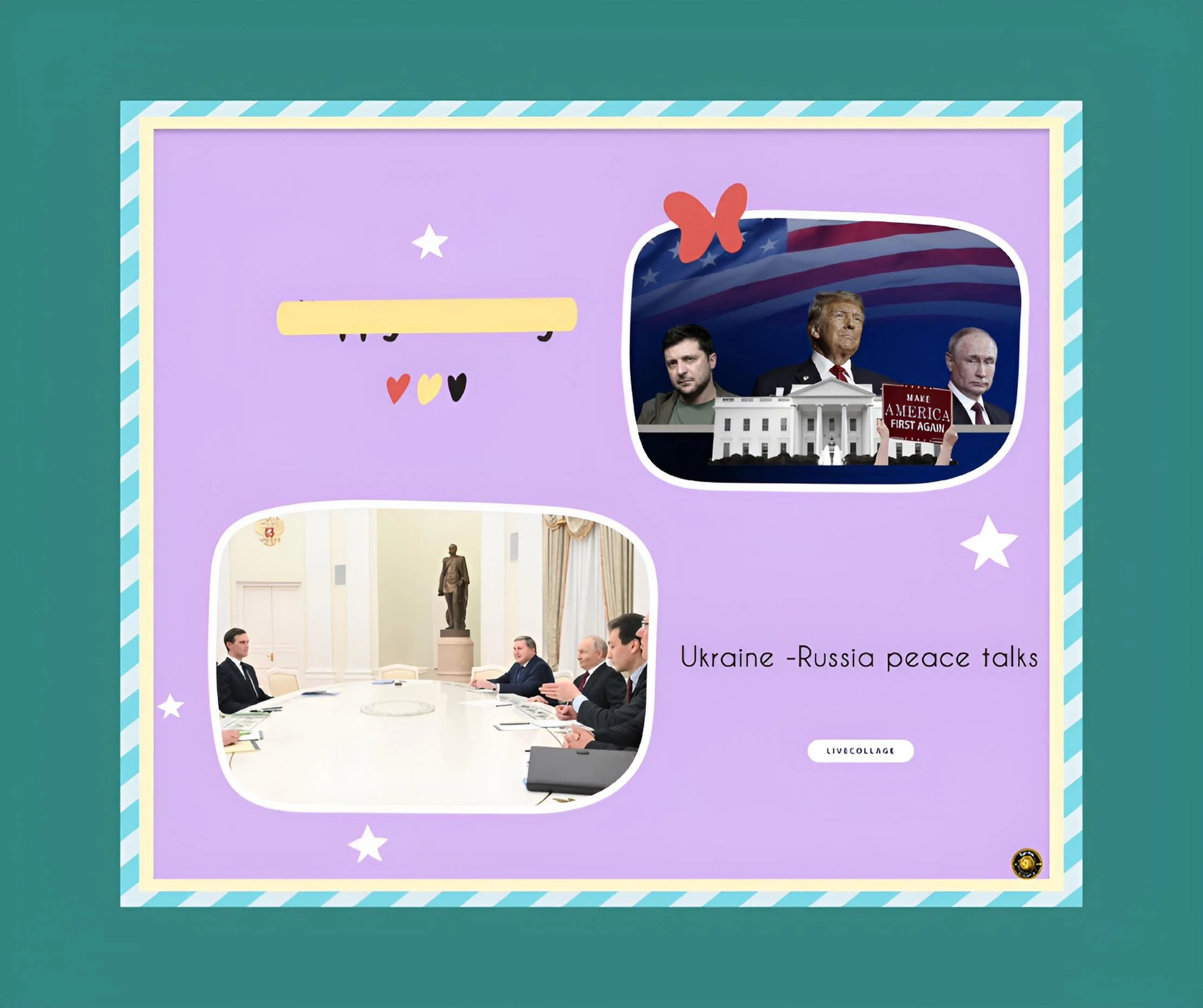
The current negotiation framework centers on a 20-point Ukrainian counterproposal to the original 28-point plan drafted by U.S. Special Envoy Steve Witkoff and Kremlin representative Kirill Dmitriev in November 2025. This progression from 28 points to 20 reflects Ukrainian concessions and revisions aimed at satisfying Western pressure for compromise. Yet Russia has already signaled that even the revised proposal remains inadequate.
The territorial dispute stands as the primary unresolved issue. Ukraine currently controls approximately 25 percent of Donetsk Oblast, fiercely defended terrain that has cost both sides enormous casualties. Russia occupies roughly 75 percent of Donetsk and nearly 99 percent of Luhansk.
Putin’s maximalist demand remains unchanged: complete Ukrainian withdrawal from the entire Donbas region, including territory Russia has proven incapable of capturing militarily. Kremlin spokesperson Dmitry Peskov reiterated on December 29 that Russia demands Ukrainian withdrawal “within its administrative borders,” clarifying that this means “full control of the region” for Moscow.
The Zaporizhzhia Nuclear Power Plant—Europe’s largest nuclear facility, currently under Russian occupation—represents the second major sticking point. Neither side has relinquished claims, and Russia shows no indication of accepting international administration or Ukrainian authority. Zelenskyy proposes a demilitarized zone and international oversight; Putin proposes Russian control.
The U.S. security guarantee framework offers 15 years of protection, which Zelenskyy has rejected as insufficient, requesting 30 to 50 years instead. Trump has indicated willingness to “consider” extending the period, but the non-binding nature of such statements, combined with Trump’s demonstrated track record of breaking agreements and withholding Congressional-appropriated aid, renders the guarantee’s enforceability highly questionable.
Cause and Effect: Why Negotiations Fail Against Maximalist Opponents
The fundamental cause of negotiating failure is not the absence of diplomatic skill or good faith on the Western side, but rather the operation of asymmetric incentive structures. Putin genuinely believes he is winning. This assessment is not delusional fantasy but rather a coherent reading of battlefield dynamics that have shifted progressively in Russia’s favor since late 2023.
Russian forces command overwhelming numerical superiority in the Donbas, with an estimated 100,000 to 150,000 troops concentrated in the Pokrovsk-Myrnohrad sector—roughly equivalent to the entire initial invasion force of February 2022. While the Institute for the Study of War assesses that capturing the remainder of Donetsk would require an additional two to three years at current pace and would be hideously expensive in casualties, Russian military bloggers and independent analysts assess that the pace of advance, while slow, remains directional and accumulating.
More significantly, Putin receives distorted battlefield reporting from subordinates reluctant to deliver pessimistic assessments, creating what ISW analysts term a “theory of victory” confirmation loop that reinforces his conviction that unconditional Russian demands will eventually be met through military means.
Under these circumstances, accepting territorial compromise represents not prudent negotiation but irrational surrender from Putin’s perspective. Why accept less through diplomacy than he can extract through military pressure?
The logic is internally consistent even if strategically destructive for Russia’s long-term interests. This is rational choice theory applied to authoritarian power structures where losing wars means losing power, and thus where even devastating wars appear preferable to losing leverage in negotiations.
The second cause of negotiating failure involves the enforceability crisis for security guarantees.
The Budapest Memorandum of 1994, wherein Russia, the United States, and the United Kingdom pledged to respect Ukrainian territorial integrity in exchange for nuclear weapon relinquishment, has become the historical shadow looming over all contemporary guarantee proposals. When Russia violated that agreement in 2014 and 2022, the signatories issued statements and imposed sanctions but undertook no military response.
Zelenskyy explicitly referenced this precedent in his insistence on Congressional approval of any U.S. guarantee—he seeks to bind future American administrations, understanding that Trump’s promises carry no institutional weight. Yet even Congressional approval offers limited protection against a president willing to ignore legislative directives, which Trump has demonstrated repeatedly throughout his first term.
Meanwhile, European security guarantees are substantially weaker still, with no clear military backing and no demonstrated willingness to respond forcefully to hybrid Russian operations against NATO members themselves. NATO’s Article 5 remains untested in a major peer conflict scenario, and Russia has probed Baltic Article 5 commitments through cyberattacks and aerial incursions without triggering meaningful military response.
The third cause involves European strategic marginalization. Despite Berlin Format meetings and coordinated statements, European leverage in negotiations is minimal.
The Trump administration and Russian Kremlin are the primary negotiating dyad; Europe participates in consultation but not substantive negotiation. German Chancellor Merz commands respect, but Germany’s military capacity remains constrained, and European political divisions over defense spending are profound. France, Spain, Italy, and Portugal rejected a €40 billion direct aid package for Ukraine; only €5 billion in ammunition support was ultimately approved after contentious negotiation.
Germany’s promised €11.5 billion in 2026 defense spending remains largely devoted to German defense industrial production rather than Ukraine support. This financial weakness translates directly into diplomatic irrelevance. Putin can reasonably calculate that European actors lack the capacity and political will to enforce guarantees or provide sustained military support.
The Kremlin’s Actual Negotiating Position: Maximalism Masquerading as Flexibility
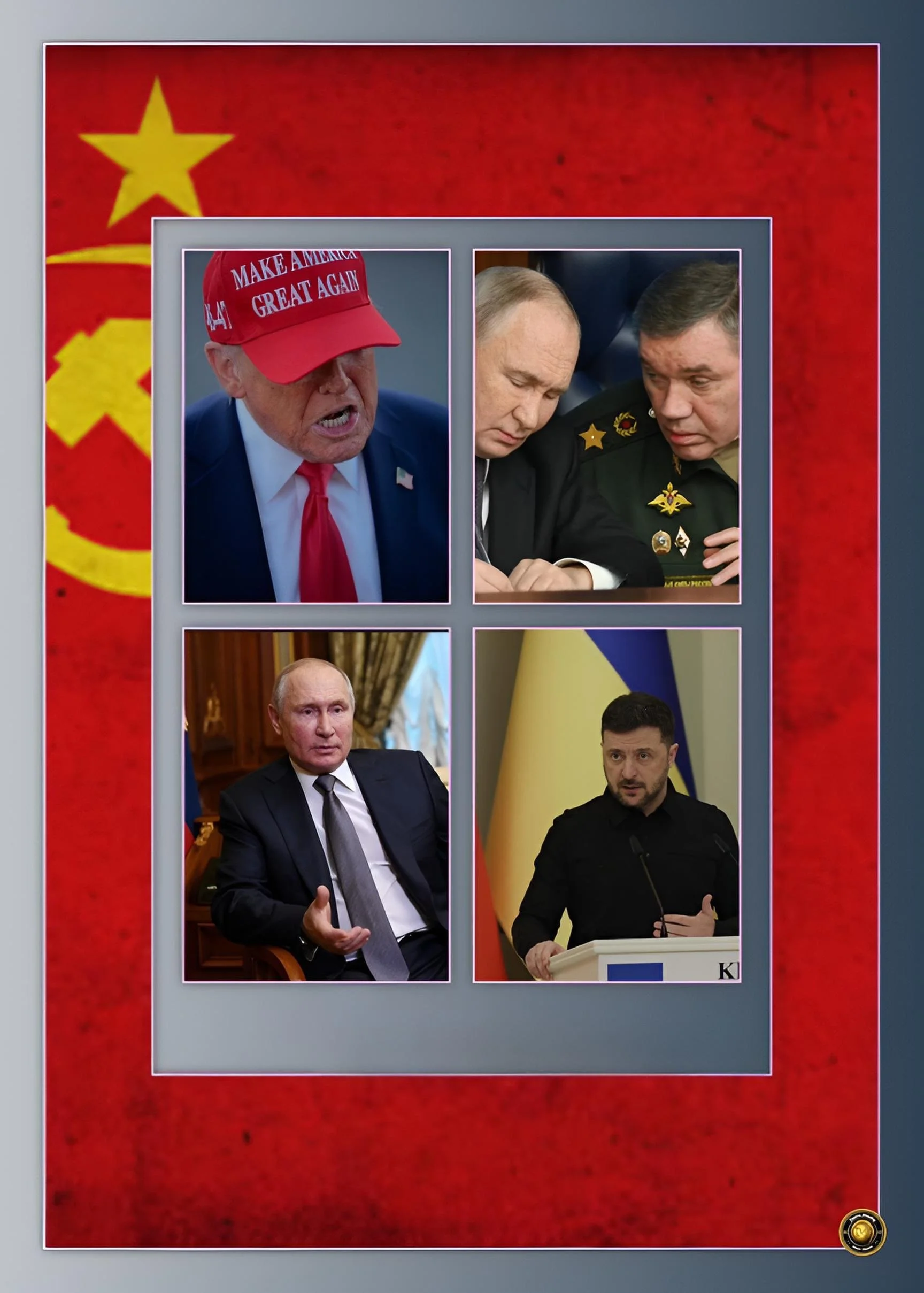
Putin’s December 17 address to Russian defense ministry officials provided unambiguous clarity about his negotiating parameters. He declared that Russia’s maximalist goals would be achieved “unconditionally” and framed the war as recovering “historical lands.”
This language about “Novorossiya”—an ill-defined concept encompassing potentially 50 percent of Ukrainian territory including Odesa, Kharkiv, and the entire Black Sea coast—reveals that Kremlin ambitions extend far beyond the Donbas. Current negotiations focus on territory Russia claims but does not control, yet Putin’s historical rhetoric suggests he envisions future seizure of additional territories currently under firm Ukrainian control.
The substantive positions Russia has articulated through official channels include: unconditional Ukrainian withdrawal from all claimed territories; explicit legal recognition of Russian sovereignty over Crimea and the four annexed oblasts; prohibition of NATO troop presence in Ukraine; restrictions on Ukrainian military capabilities; formal guarantees of non-NATO membership; reinstatement of Russian language use in Ukrainian education and media; and amnesty for Russian officials against international prosecution. Of these demands, Ukraine has conceded on non-NATO membership (abandoning prior NATO aspirations), offered increased military force limits, and proposed demilitarization in contested zones. Russia has conceded nothing substantive in return.
This is the operational definition of maximalism in negotiations: the side with superior military position presents an initial offer, concedes marginally on secondary issues while the weaker side concedes fundamentally on core issues, then declares the revised proposal still inadequate and pushes for further concessions.
Russian officials have explicitly indicated this strategy, with one diplomat stating bluntly that Russia will continue escalating demands because Ukraine continues accepting them.
The Security Guarantee Illusion
The proposed “Article 5-like” security guarantee framework represents perhaps the most significant example of Western delusion about institutional mechanisms. Article 5 operates effectively within NATO because it anchors deterrence in an institutionalized alliance with decades of demonstrated commitment, integrated command structures, pre-positioned forces, and clear operational procedures. Transplanting Article 5 language into a bilateral or coalition framework between the U.S. and Ukraine, or among a “Coalition of the Willing,” fundamentally misunderstands what makes Article 5 credible.
An Article 5-like guarantee requires: (1) clear definition of what constitutes triggering conditions; (2) specified response mechanisms; (3) institutional capacity to execute those mechanisms; (4) demonstrated willingness to enforce the guarantee even against nuclear-armed opponents; and (5) assurance of continuity beyond individual administrations. Current proposals fail on nearly all counts.
The Trump guarantee offers congressional approval but provides presidential discretion in execution. Experts note bluntly that “nothing is stopping Trump from breaking his promises, or indeed ignoring legislation passed by Congress if he chooses.”
Trump has already demonstrated this willingness in domestic policy through repeated assertions of executive privilege over Congressional authority. Moreover, Trump’s history with Ukraine specifically—freezing aid multiple times during his current term, then unfreezing it, then threatening to freeze it again, then ultimately resuming it, all while simultaneously claiming credit for peace efforts—demonstrates an erratic pattern incompatible with deterrent credibility.
Even more problematically, Russian analysts assess that if Putin accepts a security guarantee arrangement, it signals his conviction that the guarantee is sufficiently weak that Russia can safely violate it with impunity. Conversely, if Putin rejects the guarantee as insufficiently credible, negotiations collapse and Ukraine faces military pressure without any protective framework whatsoever.
The guarantee’s credibility is simultaneously insufficient to deter Russian aggression and sufficient to make accepting it appear irrational to Kremlin decision-makers. This circularity cannot be resolved through more refined language or expanded coalition membership.
The Battlefield Reality Underpinning Political Positions
Military dynamics fundamentally shape negotiating leverage. Russia’s current offensive, while consuming enormous casualties and achieving slow progress, maintains directional advancement in Donetsk. Fighting has entered the urban environment around Pokrovsk, where progress will necessarily decelerate, but the momentum remains Russian.
Ukrainian casualties mount steadily as mobilization difficulties compound personnel shortages. Russian recruitment challenges are severe—estimates suggest 120,000 to 150,000 Russian casualties since the war began—but Putin’s willingness to accept horrific losses exceeds what democratic societies will tolerate for their own forces.
The military-industrial dimension further favors extended Russian operations. Russia has restructured its entire economy around defense production, accepting reduced civilian consumption to maximize military output. Ukrainian production capabilities remain limited despite Western industrial support. Over a multi-year conflict horizon, Russian industrial capacity will likely outpace Ukrainian sustainment capacity, even with Western aid.
ISW’s assessment that Russia would require two to three additional years to capture remaining Donetsk territory suggests that the timeline for complete Russian conquest extends beyond many European leaders’ patience threshold for sustained support. Yet this same timeline—stretching into 2027 or 2028—gives Putin confidence that he can afford to reject current compromise proposals and instead pursue continued military consolidation. He is, in effect, timing negotiations to phases of Ukrainian desperation rather than accepting settlements in phases of relative Ukrainian strength.
The European Role: Aspiration Exceeding Capacity
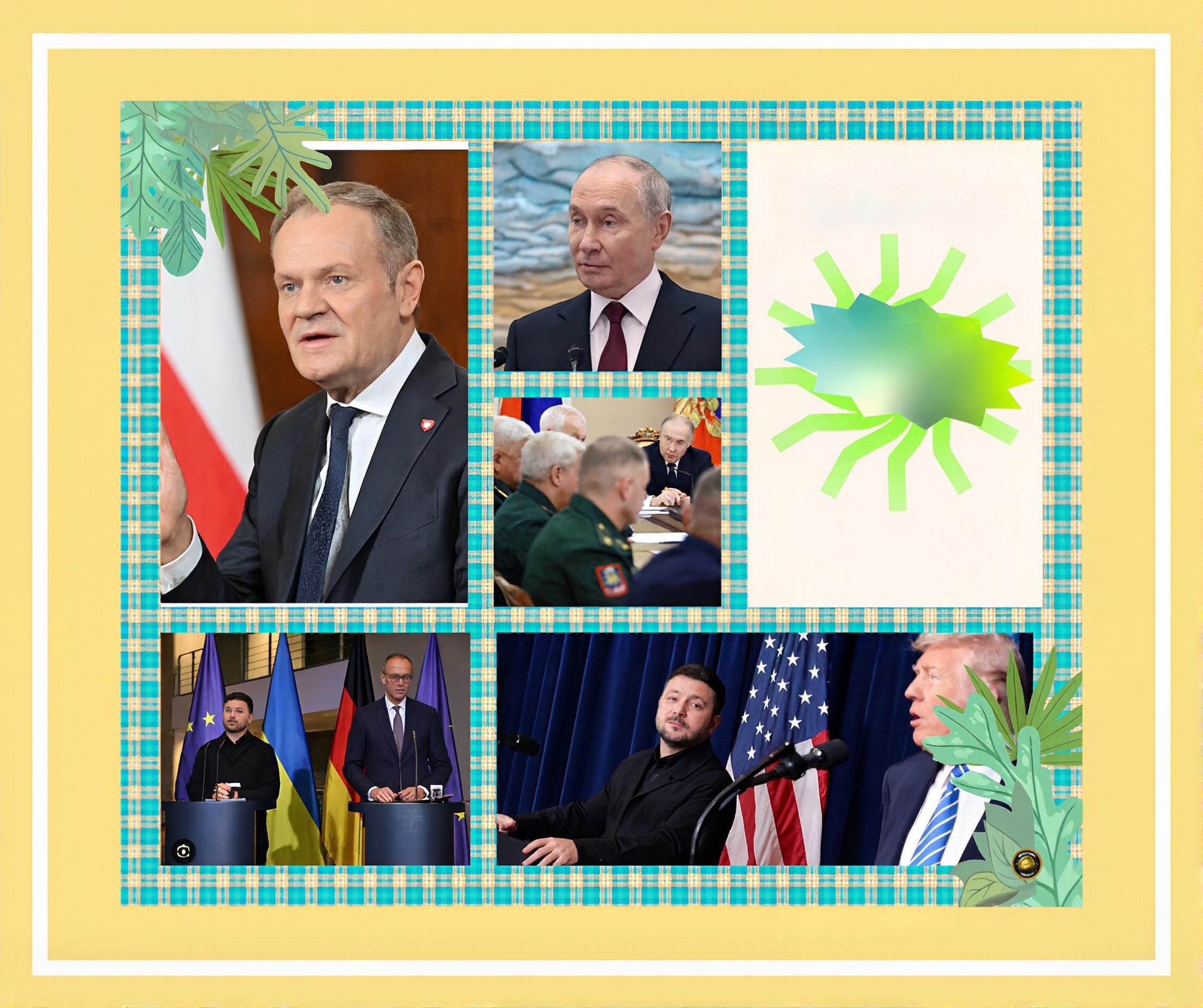
German Chancellor Merz’s attempt to establish Berlin as the coordination center for European Ukraine policy represents a significant diplomatic initiative. Yet it simultaneously reveals the fundamental European weakness. Merz convened the December 30 talks; Tusk offered optimistic rhetoric about weeks-long timelines; Stubb from Finland offered supportive statements. But none of these leaders command sufficient military-industrial capacity, financial resources, or political unity to enforce actual consequences on Russian non-compliance with diplomatic agreements.
European defense spending commitments have repeatedly failed to materialize at promised levels. The €800 billion “ReArm Europe” initiative remains largely rhetorical. Direct financial aid to Ukraine faces repeated rejections from major EU members. France, Italy, Spain, and Portugal have blocked proposals that would advance Ukrainian security; meanwhile, Germany, while generous, directs much support toward German defense industrial capacity rather than Ukrainian immediate needs.
More critically, European leverage over Russia is minimal. Sanctions imposed after 2022 have degraded but not crippled Russian military-industrial capacity.
Russian energy exports to Europe continue, maintaining revenue flows. Trade circumvention networks remain robust. The European position, in essence, is to hope that American strength compensates for European weakness while simultaneously attempting to exercise veto power over American negotiating strategy. This is not a sustainable position.
The Telegraph columnist’s assessment that “European leaders act like they play a part in great power politics, but in reality the continent has long surrendered the ability to fill that role” captures the operational reality that negotiations are occurring between Trump (representing American interests, which are not identically aligned with Ukrainian interests) and Putin (representing explicitly maximalist Russian interests). Europe is consulted; Europe is not negotiating.
Future Steps: The Trajectory of Negotiations
The diplomatic calendar ahead includes meetings of Ukrainian and Coalition of the Willing security advisers on January 3, followed by a leaders’ summit in France on January 6. These gatherings will likely produce refined language on security guarantee mechanisms and European contributions to any settlement. Yet the fundamental negotiating gap remains unbridged.
Three scenarios appear plausible.
First, negotiations collapse entirely if Trump becomes convinced that agreement is impossible and redirects toward supporting continued Ukrainian resistance. Trump’s rhetoric in recent weeks suggests he remains emotionally invested in claiming credit for peace, rendering this outcome less likely.
Second, a framework agreement emerges that involves significant Ukrainian territorial concessions, a weak security guarantee from the U.S. with European supplement, and Russia achieving perhaps 60-70 percent of its maximalist demands.
Third, a frozen conflict agreement materializes, with ceasefire lines becoming de facto borders without formal territorial recognition, and security guarantees anchoring a NATO-adjacent (but non-NATO) protection framework for Ukraine.
None of these outcomes provides Ukraine genuine security. All three involve substantial territorial loss.
All three assume security guarantees will prove credible in circumstances where their credibility is fundamentally suspect. The only substantial difference involves the degree to which Zelenskyy retains negotiating partners (scenario two) versus the degree to which he retains the capacity for future military resistance (scenario three).
Conclusion
The Architecture of Illusion
The Berlin Format talks exemplify a broader pattern in Western diplomacy: the substitution of procedural activity for strategic clarity. By convening meetings, issuing joint statements, and coordinating language, European leaders create an appearance of purposeful engagement while actually surrendering substantive influence to a U.S. administration and a Russian government that operate from fundamentally different premises about what constitutes acceptable outcomes.
Putin’s consistent pattern of ceasefire violations, his explicit maximalist demands, his control of battlefield momentum, and his demonstrated willingness to sustain indefinite warfare all point toward a conclusion that negotiations will either fail entirely or produce an outcome heavily favoring Russian objectives.
The assertion that peace could materialize within weeks reflects not strategic optimism but rather the political necessity for leaders to project forward motion rather than admit the limits of their leverage.
Europe’s actual capacity to influence this outcome is minimal. Financial constraints prevent providing sufficient aid to sustain Ukrainian resistance indefinitely. Military capacity lacks the sophistication to counter Russian numerical advantages. Political unity fractures routinely over defense spending and aid appropriations.
In this constrained environment, European leaders have adopted a rhetorical framework—the Berlin Format—that allows them to claim agency and influence while actually functioning as observers of a negotiation conducted between Washington and Moscow.
The delusion is not that Putin would relinquish territory; he will not, absent military defeat and regime change. The delusion is that security guarantees can substitute for military capacity, that frozen conflicts represent genuine peace, that negotiating with a revisionist power that has repeatedly violated agreements will somehow produce an agreement different in kind from all previous agreements it has made and violated.
The most dangerous delusion is that time is available for extended negotiation, when in fact every week of delay during winter conditions and Russian offensive momentum accumulates toward outcomes increasingly favorable to Moscow.
The Berlin talks will continue. Statements will be issued. Framework documents will be refined. European leaders will declare progress. And beneath the diplomatic theater, Putin will maintain battlefield pressure while calculating that the West will eventually accede to substantially more of his demands than Zelenskyy’s February 2022 red lines would have permitted.
History will not remember 2025 as the year peace was achieved. It will more likely be remembered as the year when a declining West, having exhausted its capacity for sustained commitment, negotiated the terms of its retreat.