Yemen at the Precipice: The Inexorable de facto Partition of a Failed State
Executive Summary
Yemen Splits: The Saudi-UAE Alliance Fractures Over Separatist Takeover
Yemen faces an irreversible trajectory toward political partition. The December 2025 offensive by the United Arab Emirates-backed Southern Transitional Council (STC) has fundamentally restructured Yemen’s civil war from a three-actor struggle into an essentially two-entity division along pre-1990 borders.
The STC now controls all eight former South Yemen governorates, including the strategically critical oil-rich Hadramout and Al-Mahara provinces, effectively securing approximately 52 percent of Yemen’s territory while the Houthis consolidate control over the more populous north. This division is not a temporary military development but represents the crystallization of forces that have fragmented the state since unification itself failed to create genuine national cohesion.
Saudi Arabia’s divergence from the UAE over Yemen strategy, combined with each stakeholder's incompatible political objectives, has rendered unified governance functionally impossible.
The humanitarian consequences are devastating: 19.5 million people require assistance, 17.1 million face acute food insecurity, and malnutrition rates reach catastrophic levels. Any partition scenario will occur against a backdrop of state institutional collapse, currency devaluation, and economic contraction that threatens civilization-scale humanitarian deterioration.
Introduction
Countdown to Yemen’s Final Breakup: Why Partition is Now Inevitable
Yemen’s trajectory over the past decade represents not merely a civil conflict but rather the systematic unraveling of a nation-state that never achieved genuine cohesion. The formal unification of North and South Yemen in 1990 was always more diplomatic fiction than political reality, masking fundamental divisions in governance culture, sectarian identity, and regional orientation that have now become institutionalized through armed conflict.
The December 2025 territorial consolidation by the STC marks the definitive end of any credible claim that Yemen will be reconstituted as a unified state under the internationally recognized government. Instead, what emerges is an archipelago of competing authorities—a Houthi-dominated northwest with effective control over the country’s capital and majority population, an STC-administered south and east with access to critical energy resources and maritime infrastructure, and a nominally recognized but practically irrelevant Presidential Leadership Council attempting to manage remnant territories from exile in Riyadh.
Understanding Yemen’s future requires abandoning the convenient fiction of state restoration and instead grappling with the structural forces driving partition, the humanitarian abyss toward which all current trajectories point, and the regional implications of accepting that Yemen has become a permanent failed state archipelago.
Historical Foundations and the Genesis of Partition
Yemen’s modern history is one of fragmentation interrupted by episodic attempts at unification, none of which succeeded in creating durable national institutions.
The country was formally divided between North Yemen and South Yemen for thirty years following the collapse of British colonial authority and the subsequent civil wars that defined the 1960s and 1970s. When unification finally occurred in 1990, it was orchestrated by elites seeking to leverage the end of the Cold War and petrodollar wealth to create a more powerful Arabian state. Instead, unification triggered immediate grievances that exploded into civil war in 1994 when the southern elite, fearing marginalization and the loss of southern revolutionary achievements, attempted secession. The Saudi-backed northern forces defeated this rebellion, but the underlying tensions never dissolved; they merely hibernated beneath a facade of centralized authority that was always more myth than reality.
The emergence of the Houthis as a distinct political force represented not an interruption of fragmentation but rather its acceleration. The Zaidi Shia movement, based in Saada province in the far northwest, had fought the Yemeni state in the 1990s but gained explosive political relevance after 2011 when the Arab Spring created openings for anti-corruption protest movements.
The Houthis, capitalizing on fuel subsidy cuts and economic grievances, coupled with their seizure of Sanaa in September 2014 with support from military units still loyal to former President Ali Abdullah Saleh, represented a sectarian and regional takeover that shattered any remaining pretense of national unity.
The subsequent Saudi intervention in March 2015, far from restoring the fiction of unified governance, instead created three-actor dynamics that have progressively pulled the state further apart.
Current Territorial and Political Reality
As of December 2025, Yemen’s political geography reflects irreversible partition. The Houthis maintain firm control over the most densely populated portions of the north, including the capital Sanaa, the major port city of Hudaydah on the Red Sea coast, and the provinces of Ibb, Dhamar, and Saada. While their territory comprises approximately 33 percent of Yemen’s total landmass, it contains the majority of the country’s population and the critical state institutions that provide even minimal governance services. The Houthis have consolidated control through appointing ideological supervisors throughout state bureaucracies, effectively creating a parallel administrative apparatus that subordinates formal government structures to Houthi political objectives while maintaining the veneer of traditional state institutions.
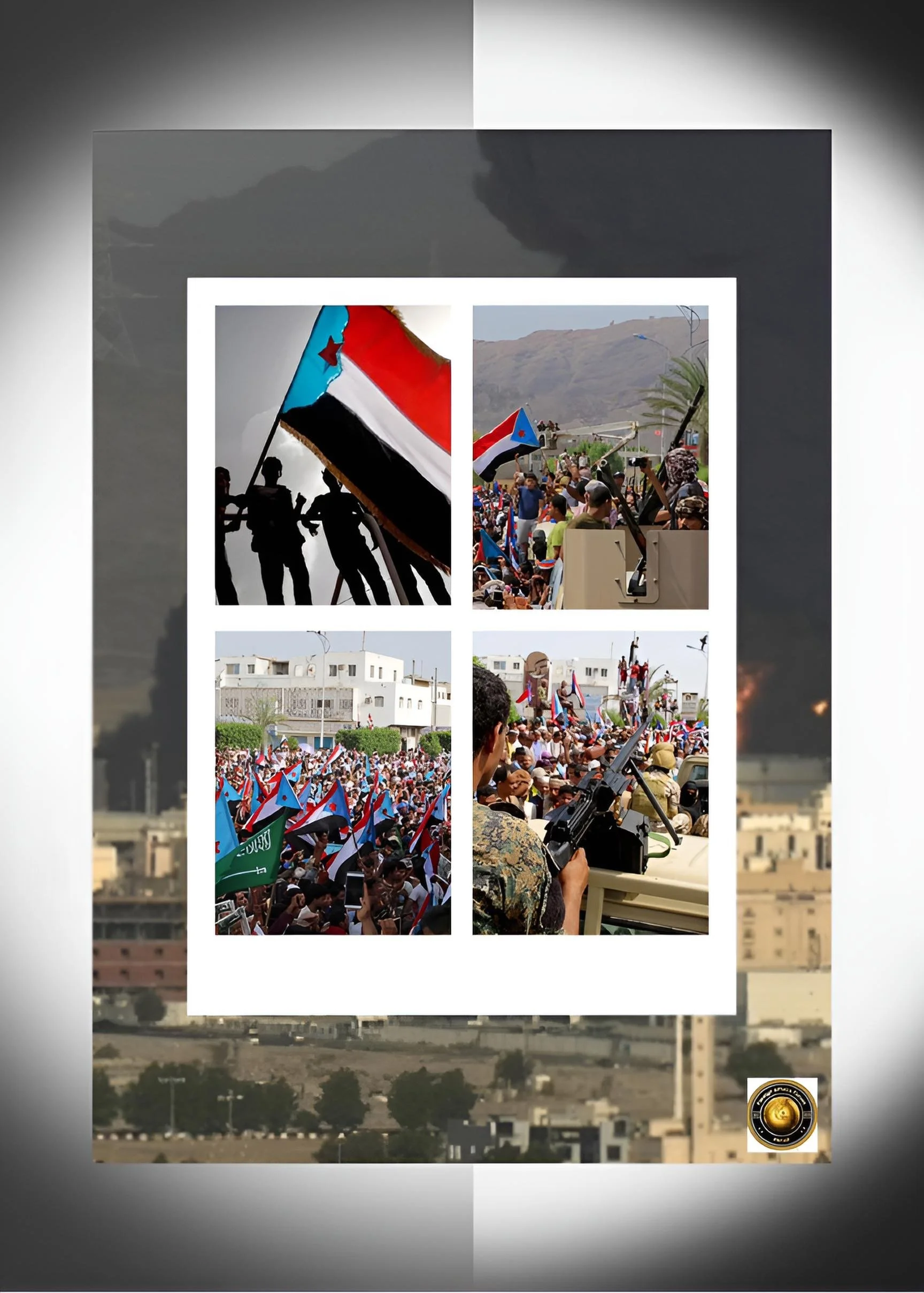
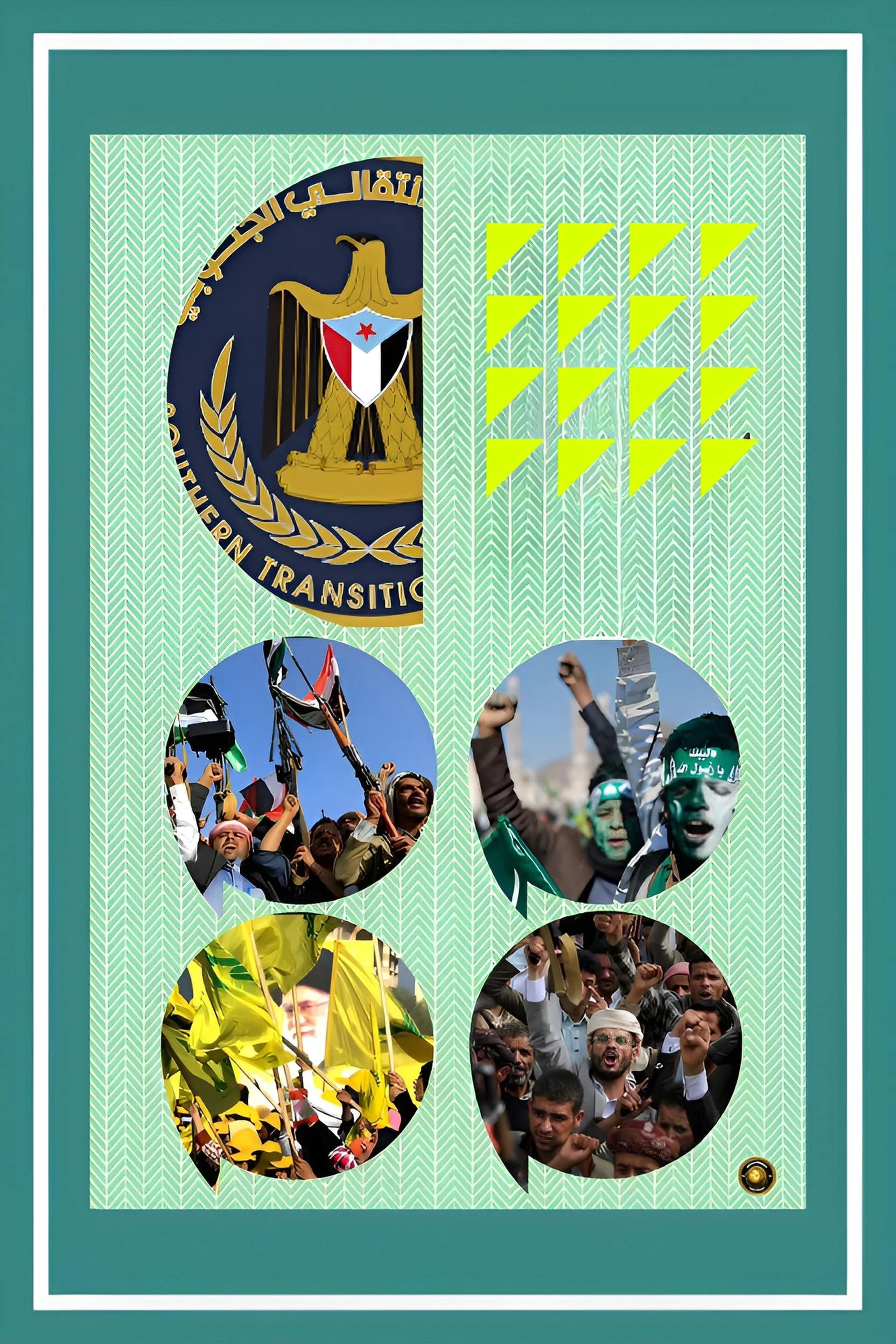
The STC’s December 2025 offensive marks the first time since Yemen’s 1990 unification that a southern entity has seized control of the entirety of former South Yemen's territory. The STC now dominates the eight governorates that comprised the pre-unification southern state, controlling approximately 52 percent of Yemen’s territory and including the economically critical Hadramout province with its substantial petroleum resources and the Petromasila oil company. The STC’s consolidation has been rapid and operationally decisive because local forces opposed to their advance melted away without sustained resistance, and because the Presidential Leadership Council, the nominal government authority, had become effectively irrelevant even before its December flight to Riyadh.
The internationally recognized government now controls only fragmented remnants: portions of Marib province in the northeast, parts of Taiz in the southwest, and whatever administrative presence it can maintain from exile, amounting to only about 10 percent of Yemeni territory.
This territorial division is not merely a military fact but increasingly a political and psychological reality. The STC has explicitly anchored its consolidation in the historical memory of pre-1990 South Yemen's independence, with its leadership declaring that the southern population’s aspirations toward self-determination represent the authentic expression of southern will. Local populations in south governorates, exhausted by a decade of warfare and unimpressed by the government’s inability to provide basic services, have demonstrated no organized resistance to STC consolidation and, in some cases, active support for separatist rhetoric framing southern independence as an alternative to continued subjugation by a Houthi-dominated north.
Cause and Effect: The Structural Logic of Partition
The partition of Yemen that is crystallizing is not an accidental consequence but rather the inevitable outcome of incompatible political objectives, sectarian and regional divisions that cannot be bridged through institutional architecture, and divergent external patronage that prevents external stakeholders from imposing unified governance.
The most fundamental driver is that the Houthis and the internationally recognized government (whether embodied by the presidential council or other factions) seek mutually exclusive maximalist outcomes. The Houthis seek to establish a Zaidi Shia Islamic state with hegemonic authority over the entire territory, rejecting power-sharing arrangements and viewing southern autonomy as contrary to their revolutionary objectives. The government and its various factions, by contrast, seek restoration of a centralized state in which they retain meaningful authority rather than ceding control to a Houthi theocracy. These objectives cannot be negotiated into compatibility.
Second, the emergence of the STC as a distinct military force with demonstrated capacity to control territory and command significant populations creates dynamics that make traditional conflict resolution impossible. The STC is neither the internationally recognized government nor the Houthis; it is a separatist movement seeking to resurrect pre-1990 South Yemen through military consolidation and political appeals to southern historical consciousness.
The STC’s capacity to seize territory rapidly demonstrates that it possesses genuine organizational capability and local support, distinguishing it from mere proxy forces. Any negotiated settlement would require the STC’s subordination to the Presidential Leadership Council, which the STC fundamentally rejects, or the abandonment of the fiction that the internationally recognized government retains legitimacy over the territories the STC controls.
Third, economic incentives driving partition have become overwhelming. Control of Hadramout’s oil fields offers the potential for genuine revenue independence: under normal conditions, southern Yemen could generate approximately $2-3 billion annually in oil export revenues sufficient to fund basic administration. By contrast, the PLC government, despite receiving Saudi financial transfers, cannot sustain essential services or currency stabilization without permanent external subsidies. The presence of economically viable resources in the south creates a stark asymmetry in which southern actors perceive greater benefit from autonomous control than from resource-sharing arrangements with a north that the Houthis increasingly dominate.
Fourth, social cohesion along sectarian and regional lines has been irreparably damaged. The Houthis have systematically divided and marginalized the tribal structures that historically connected northern populations to state governance, creating deep resentment among tribal elites whose traditional authority has been subordinated to Houthi ideological appointees. The southern population has experienced profound disillusionment with unification as a project that delivered not prosperity but warfare and humanitarian catastrophe. Sectarian identity has become increasingly salient, with Zaidi-Sunni divisions that were historically less pronounced now mobilized as political markers of identity and group interest.
Fifth, and perhaps most decisively, the external patrons who could theoretically impose unified governance have fundamentally diverged in their preferred outcomes. Saudi Arabia, having exhausted itself through a decade of military intervention that failed to achieve stated objectives, has shifted toward diplomatic engagement with the Houthis and expressed a preference for a unified Yemeni state that would institutionalize some accommodation with Houthi power.
The United Arab Emirates, by contrast, pursues a vision of southern Yemen as a client state aligned with Emirati interests, viewing the Houthis as incorrigible Iranian allies that must be contained through supporting southern separatism. These patron objectives are incompatible. No significant external power has sufficient interest or capacity to defeat all competitors while imposing unified governance; instead, each supports its preferred regional actor, and others do the same, creating a multipolar situation in which partition may be the only outcome that does not require a decisive victory by one external power over others.
The Humanitarian Catastrophe and Economic Collapse
Humanitarian Apocalypse Looms as Yemen Formally Partitions
The socio-economic context in which Yemen’s partition occurs is catastrophic and deteriorating. Yemen now hosts the world’s worst humanitarian crisis, with 19.5 million people in need of humanitarian assistance—more than half the national population. Food insecurity has reached extreme proportions: 17.1 million people face acute food insecurity, with an additional 5 million at risk of famine by early 2026.
Child malnutrition rates represent perhaps the most haunting indicator of civilizational collapse: approximately 500,000 children face severe acute malnutrition, another 1.8 million suffer moderate acute malnutrition, and nearly 49 percent of all children under five suffer chronic malnutrition that will produce lifelong cognitive and physical impairment. Pregnant and breastfeeding women, numbering 1.3 million, face acute malnutrition that threatens the health of the next generation. One in three families now face moderate to severe hunger, with over 100 districts experiencing critical nutrition emergencies—an unprecedented escalation in malnutrition crises.
Yemen’s economic collapse has created the material foundation for this humanitarian catastrophe. Real GDP per capita has contracted by approximately 58 percent since 2015, with the World Bank projecting a further 1.5 percent contraction in 2025 and nominal per capita GDP declining by 19 percent.
The Yemeni rial has experienced catastrophic devaluation: the currency reached an all-time low of 2,905 rial per U.S. dollar in July 2025, and even after stabilization measures, trades at 1,676 per dollar—representing a 90 percent depreciation from pre-war levels. Inflation in government-controlled areas has exceeded 35 percent year-on-year as of mid-2025, with the price of a basic food basket rising 26 percent from the prior year. The blockade on oil exports—maintained by the Houthis since October 2022—has deprived the government of approximately $3 billion in annual hard currency that would be available under normal conditions.
Revenue collapse has become systemic: the internationally recognized government’s revenues fell 30 percent in the first half of 2025 compared to the prior year, forcing spending cuts that have disrupted essential services and created cascading failures in healthcare, water, sanitation, and electrical systems. The government faces permanent liquidity crises and depends entirely on external financing, with Saudi Arabia providing only limited relief through irregular transfers that are insufficient to cover even basic operations.
The humanitarian response has become catastrophically underfunded: as of September 2025, only 19 percent of the $2.5 billion required under the UN Humanitarian Response Plan had been funded, marking the lowest funding level in over a decade. Humanitarian organizations have been forced to close approximately 2,800 lifesaving treatment services, representing nearly half of all lifesaving nutrition programming.
The Houthi-controlled north operates under different but equally severe constraints. Houthi consolidation of port revenues from Hudaydah and state institutions provides modest financing, but the economy operates primarily on subsistence agriculture and informal trade. Sanctions, U.S. and Saudi airstrikes on key economic infrastructure, and international isolation have prevented meaningful economic activity or development.
The Houthis have demonstrated some capacity to extract resources through taxation and control key commercial nodes. Still, their access to hard currency remains severely constrained and dependent on presumed Iranian support, the extent of which remains opaque.
Diverging Interests and Regional Consequences
The Saudi-Emirati split over Yemen reflects a broader regional realignment that will shape Middle Eastern geopolitics regardless of Yemen’s internal outcome.
Saudi Arabia, having invested approximately $150 billion in Yemen intervention with minimal return and facing domestic pressures to stabilize the economy and execute Vision 2030 development plans, has essentially retreated from maximalist objectives.
Riyadh now prioritizes border security and deterrence against Houthi cross-border attacks, viewing continued military intervention as economically unsustainable and diplomatically costly.
This shift was most clearly signaled when Saudi Arabia not only declined to defend the Presidential Leadership Council’s territorial positions in Hadramout but also withdrew its military forces from Aden as the STC advanced.
The UAE, by contrast, pursues a vision of sustained military engagement in Yemen as part of a broader strategy of establishing proxies and forward military bases across the Middle East and Horn of Africa.
The STC represents an ideal Emirati proxy: militarily capable, ideologically secular and pragmatic, aligned with UAE interests against Iran, and amenable to UAE influence over maritime security and resource access.
The UAE’s refusal to pressure the STC into withdrawing from Hadramout signals that Abu Dhabi perceives greater strategic value in cementing southern separatism than in maintaining the fiction of Saudi Arabia’s preferred unified state.
The End of Unified Yemen: What Partition Means for Red Sea Stability and Global Commerce
These diverging patron objectives will have ripple effects across the region. The Saudi-UAE split itself becomes a concerning precedent for coalition cohesion, as the two states simultaneously pursue contradictory objectives in Sudan and now Yemen while maintaining nominal alignment through OPEC and GCC institutional structures.
This divergence signals to other regional stakeholders, including Iran, that Western-aligned Gulf states cannot present a unified front on Middle Eastern conflicts.
For the Red Sea region specifically, continued Houthi control over the northern coast and Hudaydah port means that attacks on shipping will persist as a cost of commerce, creating chronic instability that raises international shipping costs and disrupts trade routes connecting Asia to Europe.
The STC’s control over southern ports offers alternative infrastructure but cannot entirely displace the Houthis’ control over Red Sea transit.
Future Trajectories and the Probability of Outcomes
Three primary scenarios characterize Yemen’s plausible futures, arranged by likelihood based on current structural incentives.
The most probable scenario, with approximately 50-60 percent probability, involves a managed partition in which the international community gradually accepts the reality of Houthi control over the north and STC administration of the south while maintaining nominal recognition of the internationally recognized government. This outcome would involve Saudi Arabia retreating further from southern involvement, the UAE consolidating its position behind the STC, and the UN potentially brokering arrangements that allow the STC a path toward de facto independence without formal secession declarations that would trigger international non-recognition. The advantage of this scenario is that it reduces incentives for renewed large-scale warfare, creates stable if grim territorial boundaries, and potentially opens space for humanitarian assistance and local stabilization efforts within each region.
The second scenario, with 25-35 percent probability, involves renewed civil war. This could occur if the STC, emboldened by recent successes, declares independence and launches operations toward Sanaa, triggering Houthi mobilization and attacks aimed at rolling back STC gains.
Alternatively, renewed conflict could emerge if local autonomy movements in Hadramout and Al-Mahara resist STC dominance and seek Saudi or government support for their self-rule aspirations. In this scenario, the fragile stalemate would shatter into a multifront conflict in which Saudi-backed forces contest STC positions while Houthis attempt territorial expansion into the security vacuum. This outcome carries the highest risk of regional spillover and escalation, particularly if either Saudi Arabia or the UAE misperceives the other’s intentions and launches preemptive military actions.
The third scenario, with 40-50 percent probability and potentially coexisting with the first, involves a persistent stalemate coupled with a deepening humanitarian collapse. In this outcome, political divisions harden into long-term divisions without formal partition, the humanitarian crisis deepens into a civilizational catastrophe, and all actors focus on managing their respective territories rather than pursuing decisive military victory.
This scenario is most likely if external support for all factions remains limited, international humanitarian attention continues to decline, and no political settlement emerges to break the impasse. It represents the most likely medium-term outcome despite the suffering it entails, precisely because none of the major actors has sufficient capacity to achieve maximalist objectives, while others prevent decisive victories.
Conclusion
The Day Yemen Stopped Being One Country: Inside the Irreversible Collapse
Yemen’s future is now essentially determined, even if the formal political arrangements remain contested. The structural forces driving partition are sufficiently powerful that restoration of a unified state under any conceivable arrangement has moved from unlikely to functionally impossible.
The critical question remaining is whether partition will occur through managed political negotiation that constrains humanitarian damage, or through continued warfare that deepens suffering and destabilizes the region. Current trends suggest the former is increasingly improbable, and the international community’s continued rhetorical commitment to Yemeni unity increasingly resembles diplomatic theater divorced from political reality.
The humanitarian cost of partition will be catastrophic unless accompanied by an unprecedented international commitment to reconstruction and assistance. A partitioned Yemen without peace or sustained development financing will descend into a permanent humanitarian emergency in which basic services collapse entirely, malnutrition reaches famine proportions, and mass displacement becomes normalized.
The 4.5 million internally displaced people and 19.5 million requiring humanitarian assistance represent not a stable crisis but a dynamic deterioration that will worsen absent dramatic interventions.
Yemen’s Irreversible Path
For policymakers, recognition of partition’s inevitability should catalyze a fundamental reorientation away from state restoration and toward pragmatic management of partition’s consequences: mobilizing international financing toward humanitarian needs, negotiating arrangements allowing oil exports to resume, and accepting that Yemen will become a permanent humanitarian emergency requiring sustained intervention rather than a state whose restoration is achievable through diplomatic negotiation.