From Graveyard to Ground Zero: Afghanistan Becomes the New Fault Line of the Eurasian Great Game - Part I
Executive summary
Afghanistan’s Unexpected Role as Central Asia’s Bypass Valve: How a Taliban-Run Corridor Could Reshape Trade Worth Billions
Afghanistan under Taliban rule has transitioned from an insurgency landscape dominated by NATO to a strategic hinge between Central Asia, South Asia, Iran, and China, where Russia’s formal recognition of the Taliban and China’s resource-driven investments are accelerating a new pattern of regional competition and de facto normalization.
While no Western state has recognized the Islamic Emirate, Russia’s July 2025 recognition and Beijing’s expanding infrastructure and mining footprint have effectively broken the diplomatic quarantine, encouraging Central Asian states to treat Afghanistan as both a security risk and a critical economic corridor.
At the same time, sanctions, asset freezes, and aid suspensions have helped collapse the formal economy, leaving more than half the population in need of assistance and forcing humanitarian agencies to navigate Taliban interference in aid distribution while donors debate how to calibrate pressure without inflicting collective punishment.
Geopolitically, Afghanistan is re-emerging as a “pivot state” in a multipolar Eurasia, where Moscow, Beijing, Tehran, Islamabad, and Washington employ asymmetric instruments—recognition, investment, covert intelligence presence, counterterrorism cooperation, and sanctions—to shape outcomes without recreating the large‑scale military occupations of the past.
The Taliban leadership, for its part, is exploiting rivalries among these stakeholders while consolidating an insular, theocratic internal order that has erased women from most public life and kept formal recognition by the United Nations and Western states out of reach, sustaining a paradox of external pragmatism and internal rigidity that will define the next decade.
Introduction
From Dead Project to Live Infrastructure: How American Withdrawal Accidentally Unleashed Regional Corridor Ambition
Beyond the “graveyard” cliché
Afghanistan today sits once again at the center of global geopolitics, not as a passive “graveyard of empires” but as an active arena where regional powers, sanctions regimes, armed movements, and humanitarian pressures intersect in volatile and increasingly consequential ways for Eurasian security and great‑power competition.
The Afghan people carry the weight of this renewed “Great Game” amid one of the world’s most severe humanitarian crises and an unrecognized yet entrenched Taliban emirate that external actors are slowly, selectively, and pragmatically engaging.
This combination of geopolitical centrality, de facto regime durability, and deep societal distress now defines Afghanistan’s global significance.
The notion of Afghanistan as the “graveyard of empires” captures only one dimension of a far more complex reality in which Afghan society has repeatedly absorbed external interventions, adapted and then reconfigured the political landscape in ways that none of the intervening powers anticipated.
The collapse of the Soviet‑backed regime, the sudden disintegration of the post‑2001 republic, and the swift Taliban takeover in August 2021 all illustrate how external projects faltered against local political networks, social identities, and religious authority. Still, they do not mean that Afghans are merely reactive.
Today, the Afghan spirit of resilience manifests in different forms: a population surviving under sanctions and stringent social restrictions, a ruling movement pivoting deftly among rival patrons, and regional neighbors simultaneously fearing Afghan‑based militancy and needing Afghan territory for trade, transit, and energy routes.
This new phase unfolds under the shadow of unfinished wars and unhealed traumas, but the strategic environment is markedly different from the Cold War and the U.S. “war on terror”.
Rather than a binary contest between superpowers, Afghanistan now sits at the junction of overlapping spheres of influence, where middle powers in Central Asia and the Gulf also see opportunities to reposition themselves through engagement with Kabul.
History and current status of Taliban rule
Herat Emerges as Eurasia’s Next Logistics Crossroads—If Afghan Security Holds and Bureaucracy Doesn’t Kill It
Following the withdrawal of U.S. and NATO forces in August 2021, the Taliban rapidly seized Kabul and re‑established the Islamic Emirate, ending a twenty‑year international state‑building project that had failed to create a self‑sustaining, legitimate republican order.
The movement, rooted in predominantly Pashtun rural communities and long supported by cross‑border networks in Pakistan, converted insurgent shadow structures into a centralized, theocratic regime that claims religious legitimacy and rejects power‑sharing with former elites. Since returning to power, Taliban leaders have repeatedly asserted that Afghan soil will not be used against other countries, seeking to reassure neighbors even as concerns persist about ties to groups such as al‑Qaeda and the threat from Islamic State Khorasan Province.
Internationally, the emirate occupies an anomalous legal position. No Western government or major international organization has formally recognized the Taliban. In 2023, a UN envoy described recognition as “nearly impossible” as long as severe restrictions on women and girls remain in place. Yet de facto relations have deepened: embassies from some regional states operate in Kabul, diplomatic delegations travel regularly, and practical arrangements for trade, border management, and security coordination have proliferated.
This pattern has crystallized into what might be termed “recognition without endorsement”, a liminal status that allows regional powers to pursue interests while avoiding the political cost of openly legitimizing the regime.
Key geopolitical developments in 2024–2025
The Race Against Time: How Multi-Billion Dollar Transport Corridors Depend on Taliban Stability Nobody Can Guarantee
Three intertwined developments now define Afghanistan’s geopolitical repositioning:
Russia’s shift from cautious engagement to overt recognition, China’s steady expansion of economic projects, and Central Asia’s recalibration of its own Afghan strategy in light of these moves.
In early 2025, Moscow’s prosecutor general petitioned the Supreme Court to remove the Taliban from Russia’s list of terrorist organizations, signaling intent to treat Kabul as a partner in regional security and economic integration.
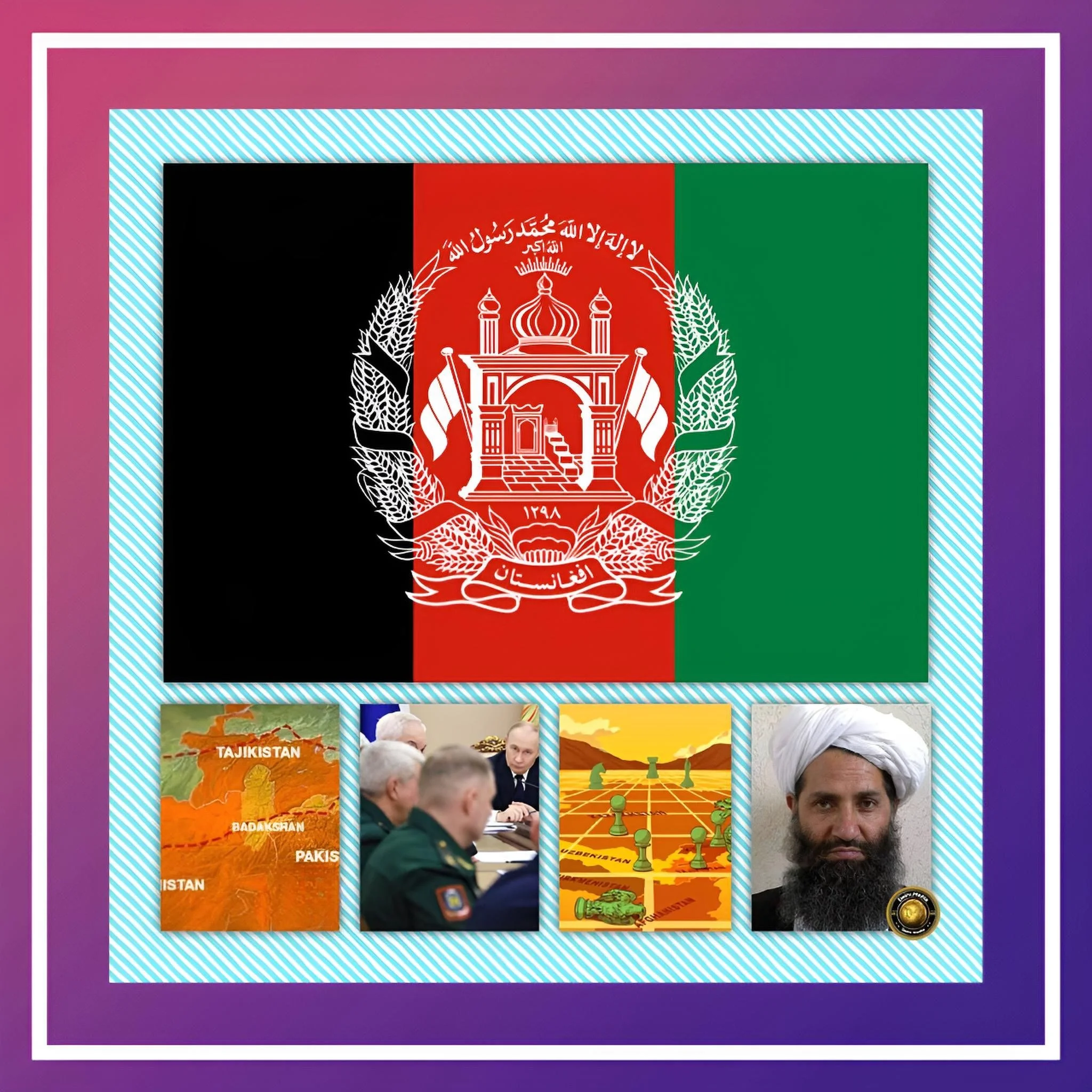
In July 2025, Russia went further and formally recognized the Taliban government, becoming the first state to do so, and began to develop plans to expand trade in oil, gas, wheat, and infrastructure, while positioning itself as a counterterrorism and narcotics‑control partner against ISKP threats to Central Asia.
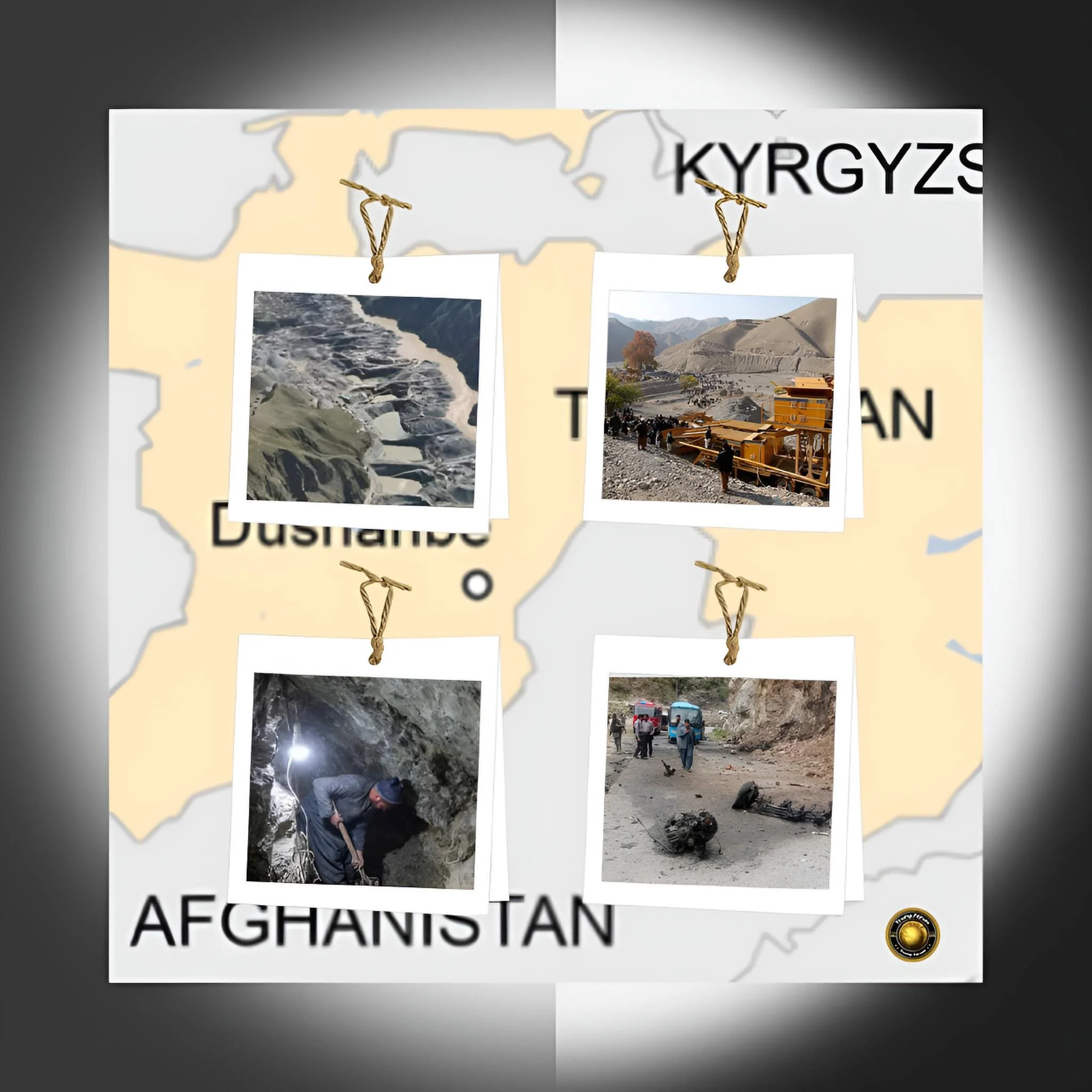
China, by contrast, has pursued a strategy of quiet economic penetration without formal recognition, focusing on mining and infrastructure projects such as the Mes Aynak copper deposit, one of the world’s largest, under the umbrella of Belt and Road‑linked connectivity. Beijing frames engagement as a way to stabilize Afghanistan through development while securing access to strategic minerals, including copper and rare-earth elements that could become central to twenty-first-century supply chains. This resource‑centric approach aligns with but also rivals Russia’s ambitions, setting up a latent rivalry for economic primacy in Afghanistan’s extractive and transit sectors.
Central Asian states, especially Kazakhstan and Uzbekistan, have moved from a posture of defensive containment to a dual‑track strategy that combines security hedging with ambitious trade goals. They now expect to reach roughly three billion dollars in trade with Taliban‑ruled Afghanistan in 2025. They are pushing to revive the historic “Great India Road” and other southbound corridors through Afghan territory to reduce dependence on routes via Russia, even as they worry that overt support for any future U.S. military presence at sites such as Bagram could undermine their relations with Moscow and Beijing. This balancing act illustrates how Afghanistan’s geography is again turning it into a corridor state whose value lies as much in what passes through it—goods, energy, data, and potentially troops—as in what happens inside it.
Latest facts and principal concerns
Beneath this diplomatic maneuvering lies a society in acute distress. Afghanistan faces one of the most severe humanitarian crises in the world, with the UN Office for the Coordination of Humanitarian Affairs estimating that around 22.9 million people—more than half the population—will need humanitarian assistance in 2025, and some 12.6 million are experiencing crisis or emergency levels of food insecurity in the March–April period alone.
Funding shortfalls have worsened after key donors, including the United States, suspended aid in April 2025, forcing agencies such as the World Food Programme to turn away “hundreds of thousands” from nutrition centers and warning that food aid could nearly cease by October without renewed commitments.
Sanctions and financial restrictions remain central to the crisis. After 2021, the Afghan economy contracted sharply as foreign aid was cut, central bank reserves were frozen, and sanctions on the Taliban created chilling effects on banking, investment, and trade.
Humanitarian exemptions exist on paper, but their implementation is uneven, and a 2022 analysis emphasized how uncertainty over whether UN and U.S. sanctions apply to the central bank or ministries controlled by sanctioned individuals has deterred legitimate transactions that could stabilize basic economic functions. Meanwhile, a 2025 report by the U.S. Special Inspector General for Afghanistan Reconstruction documented systematic Taliban interference in aid allocation, with the authorities using “every means at their disposal, including force” to redirect assistance toward their priorities, undermining donor confidence just as needs surge.
Security concerns persist in a more fragmented form than during the NATO era. ISKP remains active, launching attacks that threaten not only the Taliban’s claim to have restored order but also the security of neighboring states, especially in Central Asia. Regional governments worry that any renewed Western covert or overt military footprint in Afghanistan, reportedly including increased CIA activity, could provoke Taliban retaliation, disrupt emerging economic projects, and be exploited by jihadist groups as proof of an enduring foreign “occupation”. At the same time, threats emanating from Afghan soil provide a powerful justification for Russia and China to deepen security partnerships with Kabul, reinforcing the trend toward a Russia‑China‑Iran‑Pakistan axis managing Afghanistan’s external security profile.
Cause‑and‑effect dynamics in the new “Great Game.”
The interplay between internal governance choices and external policy responses generates a series of feedback loops that define Afghanistan’s current trajectory.
Taliban policies toward women and girls, which include bans on secondary and higher education and severe restrictions on employment and public participation, have become the single biggest obstacle to formal recognition by Western states and UN bodies. This non‑recognition, in turn, sustains sanctions and asset freezes that weaken the economy, deepening humanitarian suffering and eroding the very social fabric the Taliban claim to defend. As poverty spreads, the regime becomes more dependent on illicit economies—such as narcotics, smuggling and informal taxation—and on external patrons willing to transact outside the Western‑dominated financial system, thereby tightening its alignment with Russia, China and Iran.
Donor behavior also drives outcomes in unintended ways. The U.S. decision in April 2025 to suspend aid has sharply reduced available humanitarian resources, pushing agencies to scale back life‑saving programs and likely increasing mortality, malnutrition, and displacement. These cuts are intended to pressure the Taliban to change repressive policies. Yet, in practice, they may strengthen hardliners who argue that engagement with Western donors only brings humiliation and dependency, while ordinary Afghans bear the brunt of deprivation. As aid diminishes, the Taliban gain more leverage over what remains, using coercion to channel assistance to their constituencies. At the same time, regional actors step in with targeted economic deals that bypass Western conditionality, thereby entrenching a parallel order of patronage anchored in Moscow and Beijing rather than Washington and Brussels.
Geopolitically, Russia’s recognition creates a cascade effect in regional diplomacy. By formally acknowledging the Islamic Emirate and positioning itself as a key supplier of energy and grain to Afghanistan, Moscow not only gains influence in Kabul but also challenges China’s assumption that it would dominate the economic sphere in post‑NATO Afghanistan. This rivalry may benefit the Taliban in the short term, as they can play partners off against each other to secure better terms and symbolic concessions. Still, it risks turning Afghanistan into a theatre of proxy competition, where infrastructure, mining, and security projects are designed less for Afghan development than for external leverage across Eurasia. The re‑emergence of the “Great Game” framing in analytical discourse underscores that Afghanistan’s location—bordering Iran, Pakistan, China, and the former Soviet space—ensures that any shift in its alignment reverberates rapidly across multiple strategic arcs.
Future steps and plausible trajectories
Over the next five to ten years, Afghanistan is likely to follow one of several broad trajectories shaped by choices in Kabul, regional capitals, and Western policy circles.
One plausible scenario is the gradual consolidation of Afghanistan as a Russia‑ and China‑anchored pivot within a broader Eurasian connectivity architecture, potentially linked to the Eurasian Economic Union, the Shanghai Cooperation Organisation, and Belt and Road corridors, even without universal recognition. Under this outcome, trade, transit, and mining revenues would slowly expand, giving the Taliban some fiscal breathing room and allowing neighboring states to strengthen border security and reduce the spillover of militancy, but leaving human rights concerns largely unaddressed and deep humanitarian vulnerabilities unresolved.
A second scenario centers on partial sanctions relief and calibrated Western engagement conditioned on specific, verifiable steps by the Taliban, such as reopening girls’ secondary schools or easing restrictions on women’s work in key sectors. In this path, restoring the Afghan central bank’s access to some reserves and clarifying the scope of sanctions could help revive basic economic functions and enable more commercial activity. At the same time, robust monitoring seeks to prevent funds from being diverted to sanctioned individuals. Success would depend on whether Taliban leaders judge such concessions as compatible with their ideological project; internal divisions within the movement between pragmatists and hardliners could become more pronounced, and a modest pluralization of governance at the local level might emerge under pressure from communities seeking services and livelihoods.
A darker trajectory is also possible. Continued humanitarian underfunding, rigid Taliban social policies, and intensifying ISKP attacks could trigger renewed displacement, rising regional insecurity, and mounting public discontent that the regime manages through harsher repression. In such a context, any covert re‑entry of Western intelligence services or localized military operations—mainly if conducted with the tacit support of regional actors—could catalyze a new cycle of insurgency and counterinsurgency, shattering the fragile stability that currently underpins trade and investment plans. The result would be neither a simple “collapse” of the emirate nor a return to the 2001–2021 configuration, but a fragmented conflict space in which parts of the country become contested by jihadist groups, tribal militias, and disaffected Taliban commanders, with significant implications for regional security.
For Afghans themselves, the critical variable is whether any of these paths delivers space for social agency—particularly for women, youth, and minorities—or whether the country remains locked in a binary between external instrumentalization and internal authoritarianism.
The resilience often celebrated in Afghan history will be tested not only by war and occupation but also by the slow violence of deprivation, exclusion, and political stagnation, conditions that can be as corrosive to dignity as overt conflict.
Conclusion
Afghanistan as a twenty‑first‑century pivot state
Afghanistan’s contemporary geopolitics reveal a country that has moved beyond the caricature of a terrain that merely “destroys” empires, toward a more complex status as a pivot state whose internal order and external alignments shape the strategic landscape from the Persian Gulf to Xinjiang and from the Caspian to the Indian Ocean.
The Taliban emirate is likely to endure in the medium term, anchored by territorial control, regional pragmatic engagement, and the absence of any external actor willing to incur the costs of regime change. Yet, its legitimacy will remain contested at home and abroad as long as it excludes half the population from public life and presides over mass impoverishment.
The choices of global and regional powers—whether to weaponize sanctions or recalibrate them, to prioritize connectivity over conditionality, to instrumentalize Afghan territory or invest in its people—will determine whether Afghanistan becomes a bridge of trade and cooperation or remains a buffer of instability and human suffering.
Ultimately, Afghanistan’s people embody the courage, faith, and resilience invoked in the opening statement, but resilience without pathways to participation and prosperity risks being reduced to mere endurance. Reimagining Afghanistan not just as the graveyard of empires but as a laboratory for more humane forms of post‑intervention engagement is both a geopolitical necessity and a moral imperative for a world that has intervened, withdrawn and now hovers uneasily at the country’s edges.