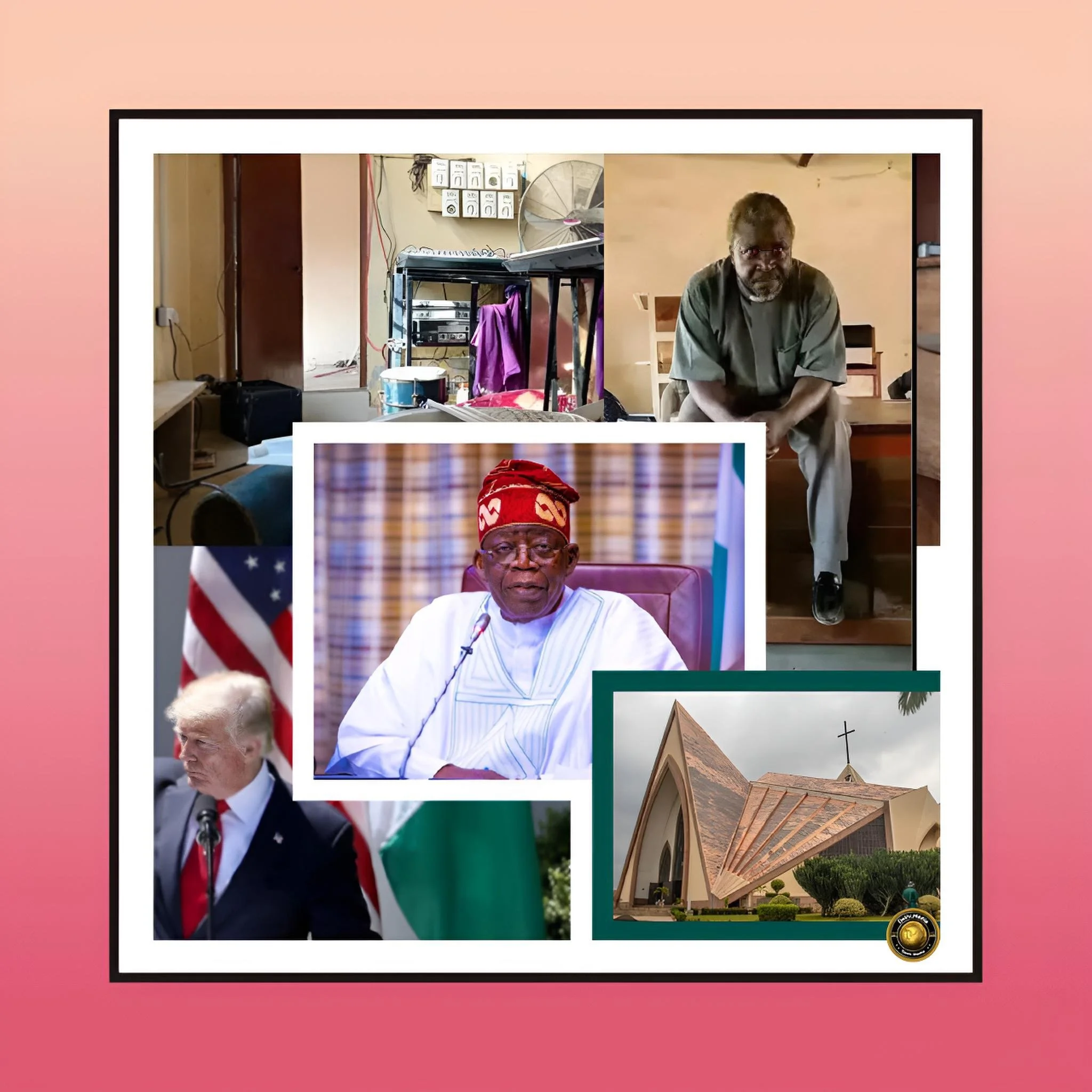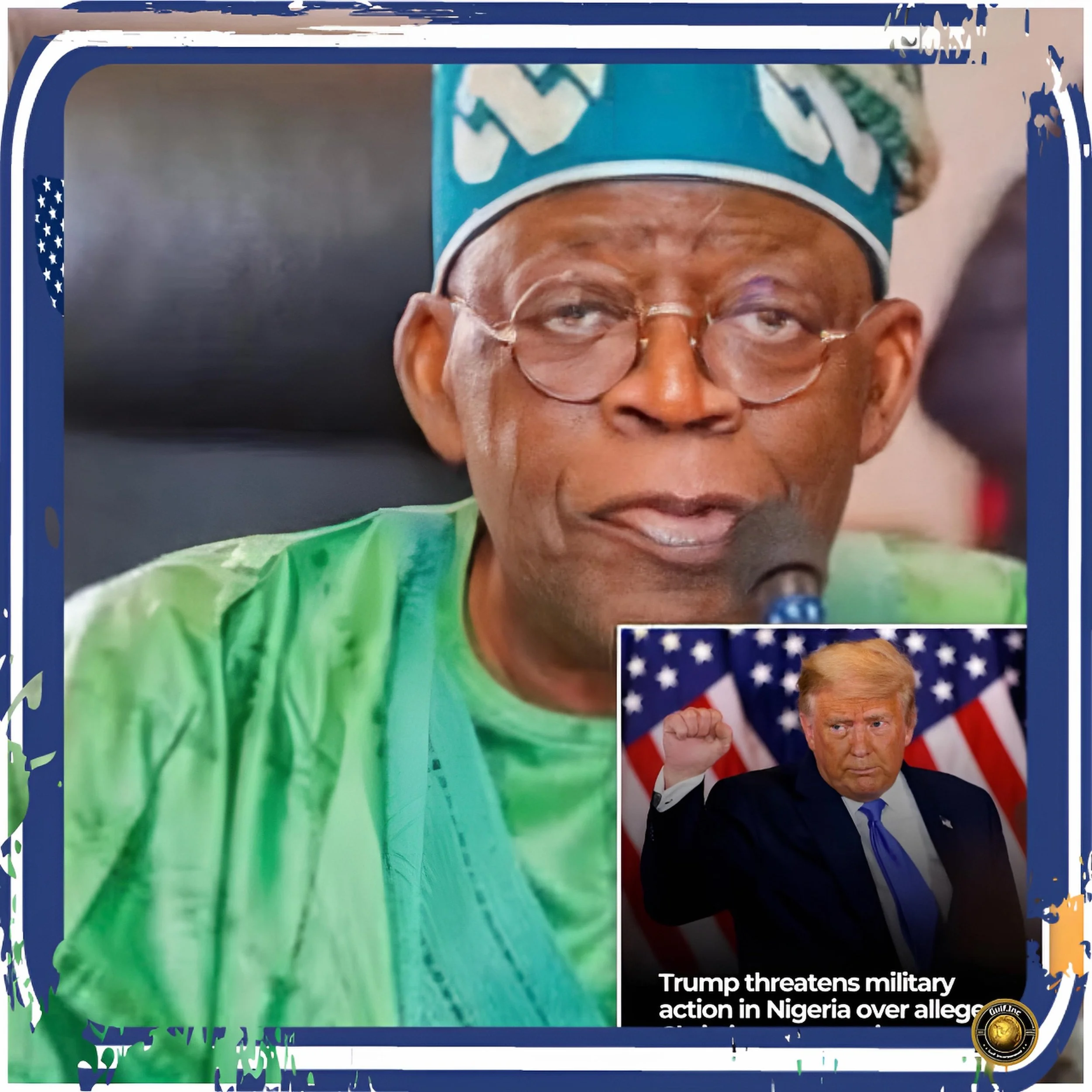
Trump’s Accusation Against Nigeria: A Complex Crisis - Could It Indicate a Christian Genocide? President Bola Tinubu Responds!
Introduction
President Donald Trump’s recent threats toward Nigeria center on claims that the Nigerian government is not safeguarding Christians from what he describes as systematic mass killings and possible genocide by Islamist militant groups, mainly Boko Haram and ISWAP.
On October 31, 2025, Trump designated Nigeria as a “Country of Particular Concern” for serious religious freedom violations, and the next day, he threatened military action—possibly “guns-a-blazing”—along with a total cutoff of U.S. aid if Nigeria does not halt the alleged persecution.
The Statistical Claims and Their Contestation
Trump’s allegations rely on widely circulated statistics claiming over 7,000 Christians were killed in Nigeria in the first eight months of 2025, averaging about 32-35 deaths daily, with some sources claiming 50,000 to 100,000 Christian deaths since 2009.
These numbers mainly come from advocacy groups like Intersociety (International Society for Civil Liberties and the Rule of Law) and have been promoted by evangelical Christian advocacy groups and Republican lawmakers, including Congressman Riley Moore of West Virginia.
However, these figures are heavily scrutinized.
A BBC fact-check showed serious methodological issues.
Among the 70 media reports cited by Intersociety, about half did not specify victims’ religious identities, and verified death counts from these reports totaled closer to 3,000 rather than 7,000.
Furthermore, ACLED (Armed Conflict Location and Event Data Project) found that out of nearly 1,923 civilian attacks in Nigeria in 2025, only 50 were directly linked to Christian identity.
The Complex Reality: Beyond Religious Lines
Security experts and Nigerian analysts stress that Nigeria’s violence is far more complex than a simple story of religious persecution.
The country faces multiple overlapping security crises:
Jihadist Insurgency in the Northeast
Boko Haram and ISWAP have been attacking since 2009, targeting both Muslims and Christians.
Most Boko Haram victims are actually Muslims, including clerics, village leaders, and civilians in the mainly Muslim northeast.
While they do specifically target Christians and have destroyed many churches, they also attack mosques and kill Muslims they see as apostates.
Farmer-Herder Conflicts in the Middle Belt
One of Nigeria’s deadliest issues involves clashes between mostly Muslim Fulani herders and mainly Christian farming communities over land and water.
According to Crisis Group, this violence is much deadlier—about six times—than Boko Haram’s insurgency, with over 19,300 deaths since 2010.
These conflicts are primarily about resources—land, water, grazing rights—rather than religion, though they acquire dangerous religious and ethnic dimensions because of population divides.
Banditry in the Northwest
In Nigeria’s northwest, Muslim communities are attacked by bandits and armed groups, with both perpetrators and victims being Muslim, challenging the idea of a one-sided religious conflict.
Potential Motivations Behind Trump’s Focus
Several factors may explain Trump’s strong emphasis on Nigeria
Evangelical Christian Support
Trump has strong backing from evangelicals, who have long pushed for tougher U.S. action against violence targeting Christians globally.
He pledged during his campaign to fight anti-Christian bias, and protecting Christians has been a key part of his foreign policy.
Paula White-Cain, his spiritual advisor, publicly praised his stance on Nigeria.
The issue gained attention after being featured on Fox News and “Real Time with Bill Maher,” both influential platforms for his conservative base.
Previous Engagements
Trump previously designated Nigeria as a “Country of Particular Concern" in 2020, a decision later reversed by Biden.
He has consistently addressed Nigeria’s religious issues, including during a 2018 White House meeting with President Muhammadu Buhari.
Trade and Immigration Tensions
Relations have also soured over trade—Trump imposed a 14% tariff on Nigerian exports in April 2025, while Nigeria’s tariff on U.S. goods is 27%. This led to a significant drop in Nigerian exports to the U.S.
Additionally, in 2020, Trump banned Nigerians from applying for immigrant visas due to security concerns, affecting many African immigrants. In July 2025, the validity of visas for Nigerian tourists and business visitors was reduced from 5-year multiple-entry visas to 3-month single-entry visas.
President Bola Tinubu reaction
Nigerian President Bola Tinubu has strongly rejected claims by President Donald Trump regarding the alleged persecution and killing of Christians in Nigeria, stating that such assertions do not reflect the reality on the ground.
Tinubu emphasized that Nigeria’s constitution guarantees religious freedom, and his government is committed to safeguarding all religious groups, including the Christian community.
He characterized Nigeria as a united nation and vowed to continue efforts to combat terrorism and insecurity, while also appealing for international cooperation without compromising Nigeria’s sovereignty.
Trump threat response
In response to Trump’s threats of possible military intervention, Tinubu and his administration have stated that Nigeria welcomes assistance in tackling extremist violence, but only if such support respects the country’s territorial integrity and does not amount to foreign invasion.
Tinubu has also stressed that the government will deal promptly with any emerging threats and take all necessary steps to ensure peace and security for all Nigerians.
Overall, Tinubu’s comments have conveyed a firm rejection of Trump’s claims, a defense of Nigeria’s constitutional protections, and a call for global solidarity in addressing security challenges without infringing on national sovereignty
President Bola Tinubu specifically responded to Trump’s threats by firmly rejecting the idea of US military intervention in Nigeria, emphasizing that Nigeria will not allow any violation of its sovereignty.
Tinubu stated that Nigeria is capable of managing its own security challenges and that the government will continue to take decisive action against terrorism and violence, regardless of international pressure or threats.
He also invited international cooperation, but only within the framework of mutual respect and equal partnership, not through coercion or invasion.
In public statements, Tinubu reiterated that Nigeria’s diversity and unity are protected by its constitution, and he called for dialogue and support rather than threats or military action.
His administration has consistently framed the situation as one where Nigeria is open to global assistance but resolute in defending its national integrity and autonomy.
Geopolitical Factors
Some believe Trump’s rhetoric also stems from displeasure with Nigeria’s growing international alignment, such as joining BRICS and strengthening ties with China, Russia, and India.
Geopolitical and Security Implications
The threat of military intervention raises serious concerns:
Sovereignty and Law
A U.S. military move without Nigeria’s consent would violate sovereignty and international law. President Tinubu rejects the accusations and affirms Nigeria’s commitment to religious freedom, emphasizing that security issues affect all faiths.
Regional Destabilization
Experts warn that intervention could cause mass displacement, worsen conflicts, and create a power vacuum exploited by groups like ISWAP.
Nigeria’s role in West African security via ECOWAS is vital, and destabilization could undermine regional stability amid recent coups and the rise of anti-Western alliances.
Counterproductive Effects
Critics argue that depicting Nigeria’s conflicts as pure “Christian genocide" is misleading and harmful.
It could fuel religious tensions, distract from root issues such as governance failures and resource scarcity, and weaken the government's legitimacy.
U.S.-Nigeria Partnership Risks
Nigeria is a key partner for the U.S. in Africa, with trade exceeding $13 billion in 2024 and substantial aid before Trump’s aid freeze in 2025. Counterterrorism cooperation has been strong, and collaborative approaches would likely be more effective than unilateral military action.
Scholarly Insights
Research confirms that Nigeria’s conflicts are rooted in complex ethnic, economic, political, and religious factors, not simply religious persecution.
Studies show that Muslim-majority areas tend to express less concern over farmer-herder conflicts, indicating that shared religion can promote trust.
Over time, the religious aspect of conflicts has shifted, with Muslim-majority regions becoming more involved in banditry and violence.
Fundamentally, governance failures, economic inequality, unemployment, poverty, and resource competition drive these conflicts. These structural issues enable violence and the recruitment of impoverished populations.
Conclusion
While Trump’s claims focus on Christian persecution and potential genocide, the evidence points to a much more complicated picture.
Christians, Muslims, and others all face violence in Nigeria from various groups and circumstances. The conflicts involve jihadist insurgency, resource disputes, banditry, ethnic tensions, and governance issues.
Trump’s emphasis seems influenced by his evangelical base, previous policies, and broader geopolitical tensions.
However, threatening military intervention could undermine U.S.-Nigeria relations, violate sovereignty, destabilize Nigeria, and worsen the underlying causes of violence.