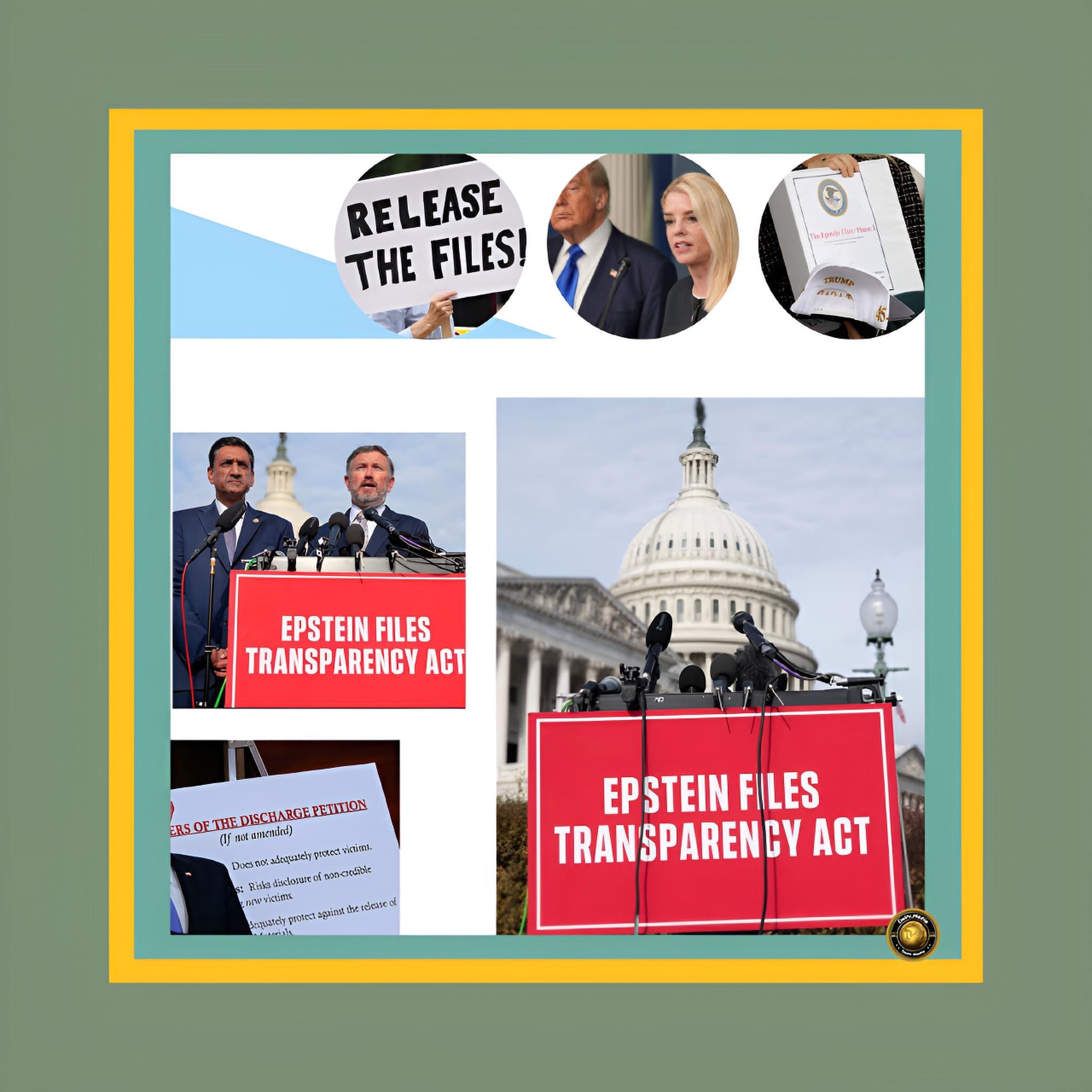
The Epstein Transparency Travesty: How the Justice Department Weaponized Disclosure to Shield the Powerful
Executive Summary
The Untouchables: How Institutional Gatekeeping Shields Epstein’s Co-Conspirators from Accountability
The Jeffrey Epstein case represents one of American jurisprudence’s most profound institutional failures—a sweeping sex trafficking conspiracy involving a New York financier, his associate Ghislaine Maxwell, and potentially dozens of enablers spanning decades, governments, and the globe’s financial elite.
Despite Epstein’s 2019 jail cell death and Maxwell’s 2021 conviction, the Department of Justice’s handling of case-related documents reveals systematic obfuscation rather than genuine accountability.
In December 2025, over one million newly discovered Epstein-related documents surfaced, yet the DOJ announced weeks-long delays in release despite a congressional mandate and bipartisan pressure.
This delay—coupled with selective redactions, missing investigative findings, and evolving timelines—demonstrates how governmental opacity transforms victims’ suffering into political theater.
The case exposes competing interests: survivor demands for accountability, elite protection mechanisms, congressional oversight, and executive prerogatives shaping American transparency law’s practical implementation.
Introduction
Transparency Law Meets Reality: Trump’s DOJ Violates Federal Statute While Claiming Compliance
The Epstein case has functioned as a Rorschach test for American institutional legitimacy, revealing profound fissures in criminal justice, financial regulation, survivor protection, and governmental transparency. What began as a 2019 federal indictment against a prominent financier evolved into a systemic interrogation of complicity across banking, law enforcement, academia, and political networks. However, rather than culminating in comprehensive accountability, the trajectory since Epstein’s death has devolved into a complex bureaucratic struggle wherein the Justice Department claims victim protection justifies information withholding, Congress demands full transparency, victims demand justice, and political actors instrumentalize selective disclosure for partisan advantage.
The December 2024 enactment of the Epstein Files Transparency Act—legislation Trump signed yet his DOJ has contravened—crystallizes this contradiction: a law mandating full disclosure by December 19, 2025, now violated by the same administration that championed it, citing technical impediments that appear, to critics, suspiciously convenient.
Historical context and evolution
The Epstein saga spans decades, with documented sexual abuse patterns traceable to the 1990s, though prosecution efforts concentrated in the 2000s.
The most consequential early moment arrived in 2008 when federal prosecutors in southern Florida, led by Alexander Acosta (later Trump’s Labor Secretary), negotiated a plea agreement with Epstein’s counsel that yielded stunning leniency.
Rather than federal trial, Epstein pleaded guilty to two state prostitution charges, served thirteen months, and received immunity from federal prosecution for numerous conspirators—a deal that Palm Beach authorities and survivors later characterized as fundamentally unjust.
This 2008 agreement, negotiated partly through sealed agreements, established a template for institutional indulgence that haunted subsequent prosecutions.
When Epstein resurfaced federally in July 2019, arrested at Teterboro Airport following investigative work by journalist Julie K. Brown, the indictment detailed a Manhattan-based sex trafficking operation spanning decades, with victims numbering in the hundreds.
Federal prosecutors filed charges related to sex trafficking of minors, conspiracy, and transportation for prostitution—serious felonies carrying potential decades imprisonment.
Simultaneously, SDNY investigators intensified efforts identifying potential co-conspirators, compiling seven-page memos detailing chargeability recommendations and conducting witness interviews with individuals close to Epstein.
The investigative momentum, however, abruptly concluded when Epstein was found dead in his cell on August 10, 2019, under circumstances later deemed a suicide by the medical examiner, though various conspiracy theories persist regarding his death.
Ghislaine Maxwell, Epstein’s British-born associate and accomplice, remained a fugitive until arrest in 2020. Her subsequent trial, completed in late 2021, resulted in conviction on five of six counts, including sex trafficking of minors, earning a twenty-year sentence.
Maxwell’s conviction represented rare accountability within Epstein’s orbit, though her sentencing prompted revelations that she had facilitated abuse, recruited victims, and lied to federal investigators during a 1995 investigation by prosecutors who recommended charges later shelved.
The Maxwell prosecution temporarily satisfied public demands for accountability, yet simultaneously obscured larger questions: Which other individuals participated knowingly? How did financial institutions and government agencies enable the trafficking? Why did investigations cease despite evidence of broader complicity?
These questions festered unresolved through 2020-2024. The Trump administration’s first term largely ignored Epstein, whereas the Biden administration designated him a post-presidency concern with limited urgency.
Congressional oversight committees, particularly the House Oversight Committee under various leadership, intermittently demanded documents and accountability, yet federal agencies responded with delays and redactions.
The foundational tension emerged: the Department of Justice possessed extensive investigative files, surveillance materials, intercepted communications, and witness testimony that could illuminate Epstein’s networks, yet claimed confidentiality, victim protection, and ongoing investigation as justification for withholding.
Key developments and time-line
February 27, 2025 marked the initial Trump administration transparency gesture when White House staff distributed binders labeled “The Epstein Files: Phase 1” to conservative influencers, a theatrical gesture containing largely previously public information.
This signaled the administration’s intent to control narrative through selective disclosure while framing itself as uniquely transparent—a rhetorical posture that would be repeatedly tested by subsequent congressional pressure.
September 2, 2025 witnessed the House Oversight Committee’s release of 33,000+ pages from DOJ files, including flight records from Epstein’s private plane, court documents, and mysteriously, a video from Epstein’s cell block containing a minute-long gap in footage from the night of his death, fueling renewed scrutiny regarding surveillance and the circumstances surrounding his demise.
November 12, 2025 saw further releases of 20,000 records from Epstein’s estate, including emails and communications that frequently referenced President Trump (though absent accusatory content) and corresponded with Larry Summers and Bill Gates, neither accused of wrongdoing yet newly implicated in Epstein’s social network.
Throughout October 2025, a federal government shutdown paralyzed DOJ responsiveness to congressional subpoenas. According to House Oversight Committee Democrats, the DOJ provided zero substantive Epstein-related information for nearly two months, effectively halting investigative progress and prompting accusations of deliberate slow-walking.
November 2025 witnessed crucial legislative action when Congress passed the Epstein Files Transparency Act with bipartisan support and Trump’s signature, mandating comprehensive DOJ document release by December 19, 2025, with narrow exceptions solely for victim-identifying information and ongoing investigations.
December 4, 2025 brought House Oversight Committee releases of 73 photographs and four videos from Epstein’s Little St. James island in the U.S. Virgin Islands, documenting the location where alleged exploitation occurred, thereby expanding public understanding of criminal geography.
December 19, 2025—the legislatively mandated deadline—the DOJ released “several hundred thousand” documents, yet Deputy Attorney General Todd Blanche simultaneously announced that full compliance would require additional weeks, contradicting the statute’s language and sparking immediate bipartisan condemnation from both Democratic and Republican lawmakers.
The release included over 550 fully redacted pages, prompting accusations that the DOJ was withholding rather than protecting victims.
Blanche claimed that lawyers had scoured documents identifying over 1,200 survivors and relatives requiring redaction protection.
December 22, 2025 brought an additional release of 10,000+ files totaling 10 gigabytes, encompassing internal government emails, investigative materials, and blueprints of Epstein’s Manhattan townhouse, yet with selective redactions and strategically removed passages.
December 24-25, 2025 revealed the existence of over one million additional documents that the FBI and U.S. Attorney for Southern District of New York had recently “located” and transferred to DOJ, explaining the delays but simultaneously raising questions about whether such massive document caches should have been discovered years earlier.
The DOJ announced that processing these million documents would require “several more weeks,” effectively rendering the December 19 deadline a formality.
Simultaneously, the DOJ issued statements dismissing certain claims within released documents as “false and sensational,” particularly regarding Trump-related allegations, a defensive posture suggesting politicization of disclosure rather than neutral transparency.
Factual assessment and latest concern
The December 2025 developments crystallize core contradictions within the DOJ’s handling.
The sudden emergence of over one million documents raises profound questions: Where were these files during earlier stages of investigation?
Why did the FBI’s New York Field Office possess materials separate from SDNY prosecutors’ files?
How did such massive documentary gaps persist despite the Epstein investigation’s public prominence and congressional scrutiny since 2019?
Deputy Attorney General Todd Blanche’s explanations offer partial illumination. He acknowledged that Attorney General Pam Bondi had instructed FBI Director Kash Patel in February 2025 to provide “the full complete Epstein file,” only to discover on February 26 that the New York Field Office possessed thousands of pages purportedly unknown to leadership.
This revelation suggests either incompetence or deliberate compartmentalization within federal law enforcement—neither explanation exonerates the DOJ’s December timeline violations.
The redaction controversy merits specific attention. The law permitted redactions solely to protect victim identity and ongoing investigations. Yet the DOJ applied redactions far exceeding these categories.
Over 550 pages received complete blackouts, preventing substantive review by Congress or public scrutiny. Furthermore, the DOJ’s December 24 statement dismissing certain Trump-related claims as “false and sensational” while officially releasing the documents containing such claims invokes editorial judgment that the statute explicitly forbade. When the DOJ simultaneously releases documents and publicly characterizes portions as false, it arrogates to itself interpretive authority that transparency law rejects.
The “ongoing investigation” justification warrants scrutiny. The DOJ claims certain materials cannot be released because investigations into Epstein co-conspirators persist.
Yet Maxwell has been convicted and imprisoned for twenty years. Which conspirators remain subjects of active investigation?
The DOJ has provided no specificity. Senator Ron Wyden and others have noted that JPMorgan Chase reported Epstein’s suspicious transactions to FinCEN as early as 2002, suggesting years of federal awareness of suspicious patterns. If investigations remain ongoing after fifteen+ years of federal knowledge, the DOJ’s investigative prioritization itself becomes questionable.
Additionally, the claim that victim protection necessitates withholding entire documents appears contradicted by survivors’ own testimony. Multiple survivors and their representatives have explicitly demanded full transparency, arguing that secrecy enables the powerful to escape accountability and perpetuates trauma.
The paternalistic argument that redacting documents protects victims who have publicly identified themselves contradicts survivors’ own agency and demands.
Congressional response has split along unusual lines. While Democrats have uniformly condemned delays as coverups, certain Republicans—particularly those who co-sponsored the Transparency Act—have similarly criticized the DOJ.
Representative Thomas Massie and Representative Ro Khanna have threatened contempt of Congress proceedings. Massie explicitly stated the DOJ is violating the law through “improper redactions and by missing the deadline.” Khanna claimed that threats of contempt charges paradoxically induced the DOJ to “uncover” the million documents, suggesting that previously hidden materials became discoverable only after legislative pressure intensified.
The Trump administration’s relationship with transparency documents proves particularly complex. Trump championed the Epstein Files Transparency Act and signed it, yet his DOJ has contravened its mandates.
Public statements claim transparency commitment, yet actions reveal systematic delay.
Some critics attribute this contradiction to Trump’s personal entanglement—Epstein and Trump shared social circles, Epstein allegedly possessed photographs and recordings useful for blackmail, and Trump-critical claims appear within released documents. However, Trump has dismissed such concerns, and the DOJ has publicly characterized relevant allegations as “unfounded and false.”
Cause and affect analysis
The DOJ’s documented delays reflect multiple causal chains operating simultaneously, each independently sufficient to produce obstruction and collectively reinforcing opacity.
First, bureaucratic inertia and genuine complexity. Federal agencies managing multi-million-page document collections legitimately require time for redaction review, metadata correction, and format conversion.
The DOJ’s claim that lawyers are “working around the clock” with “hundreds of attorneys scrutinizing each document” may reflect authentic effort constrained by technical reality. This cause, while real, does not exonerate deadline violations; Congress allocated time for statute passage precisely to enable necessary preparation.
Second, victim protection frameworks. Federal agencies adopted victim-centric redaction protocols after litigation revealed survivors’ names and addresses within previously released documents.
These protocols, while theoretically legitimate, became mechanisms for withholding disproportionate material. Once a document contains any survivor reference, entire pages risk redaction rather than surgical removal of identifying details. This categorical approach transforms victim protection into information suppression. Ironically, survivors themselves demanded transparency, undermining the protectionist justification.
Third, ongoing investigation claims. The DOJ maintains that certain conspirators remain subjects of active investigation, necessitating continued confidentiality. Yet which conspirators? The DOJ refuses specificity, claiming operational security.
This enables indefinite withholding without accountability—an investigation that never concludes because its targets remain deliberately unspecified. The cause appears self-perpetuating: claim ongoing investigation, withhold documents on that basis, perpetually delay resolution.
Fourth, political self-protection. The Trump administration’s incentive to control Epstein narrative release aligns with its personal interest in limiting damaging allegations. While the administration publicly champions transparency, its actions facilitate delay and selective disclosure.
The million-document discovery conveniently emerged after transparency deadline violations became undeniable, providing retroactive justification for continued phased release rather than comprehensive disclosure. The cause here is partisan self-interest dressed in bureaucratic language.
Fifth, elite protection mechanisms. The broader American institutional context normalizes opacity regarding powerful figures’ wrongdoing. Financial institutions like JPMorgan Chase, despite reporting suspicious transactions, faced minimal accountability.
Academic institutions like Harvard, despite employing individuals in Epstein’s network, faced reputational rather than legal consequences. This systemic pattern of elite insulation manifests within the DOJ: comprehensive transparency threatening prominent individuals’ legacies becomes institutionally resisted, creating bureaucratic friction against full disclosure.
Finally, structural legal ambiguity. The Epstein Files Transparency Act, while seemingly comprehensive, contained narrow exceptions for “ongoing investigations” without defining those investigations’ boundaries.
This creates interpretive space for bureaucratic discretion, transformed through DOJ judgment into withholding justification. The law’s precision inversely correlates with enforcement mechanisms; absent contempt proceedings’ threat, the DOJ faces limited penalties for non-compliance.
These causes collectively reinforce one another in negative feedback loops. Bureaucratic complexity justifies delay, which enables political control, which protects elites, which normalizes opacity, which extends the investigation indefinitely, which justifies further bureaucratic complexity.
Future steps and strategic implications
Demanding Justice: Epstein Survivors Challenge DOJ Redactions, Demand Unfiltered Access to Evidence
First, continued phased release through early 2026, with the DOJ claiming January 2026 completion per Deputy Attorney General Blanche’s recent statement, yet likely extending beyond that timeline.
Each release batch will receive congressional analysis, potentially revealing new conspirators, financial networks, or institutional complicity, perpetuating media cycles and political pressure.
Second, congressional contempt proceedings appear increasingly likely. Representatives Khanna and Massie have explicitly threatened contempt charges; the bipartisan House Oversight Committee appears prepared to vote contempt referrals.
Such proceedings, while unlikely to result in criminal prosecution (the House relies on U.S. Attorney cooperation), would nonetheless damage the Trump administration’s transparency narrative and demonstrate congressional assertiveness against executive obstruction.
Third, civil litigation will likely expand. Survivors’ advocacy organizations have engaged legal counsel examining potential FOIA litigation, statutory violations, and constitutional claims regarding transparency.
Some survivors have filed amicus briefs in related litigation, asserting their right to information and advocating against redactions. These legal strategies, operating parallel to congressional pressure, create compound pressure on the DOJ.
Fourth, international dimensions will emerge. Several Epstein victims reside abroad; some alleged co-conspirators possess foreign assets or connections. As American documents release expands, foreign governments may conduct parallel investigations, potentially revealing information through non-U.S. channels and embarrassing American authorities.
Intelligence agencies from allied nations may selectively leak materials, circumventing American secrecy claims.
Fifth, the investigation into specific co-conspirators will likely expand rather than conclude. Current House Oversight Committee efforts have identified financial institutions, academic entities, and individuals for investigation.
As documents release continues, new conspirators will surface, perpetuating the investigative timeline indefinitely unless leadership explicitly closes specific investigations and announces conclusions.
Finally, the precedent established will reshape future transparency controversies. If the Trump administration successfully delays comprehensive disclosure through phased release, future administrations will replicate the model.
Conversely, if congressional pressure succeeds in forcing accelerated release, the precedent constrains future withholding attempts. The December 2025 moment thus represents a critical juncture defining transparency law’s practical enforceability.
Trump’s Epstein Calculus: Power, Predation, and Plausible Deniability
Donald Trump’s simultaneous championing and obstructing of Epstein Files transparency reveals a masterclass in maintaining political advantage while evading accountability—a strategy predicated on controlling narrative velocity rather than achieving genuine disclosure.
By signing the Epstein Files Transparency Act while instructing his DOJ to implement phased release through bureaucratic delay, Trump accomplishes multiple objectives: satisfying populist demands for transparency through legislative signature, maintaining evangelical support through performative action, yet preventing rapid disclosure that would implicate powerful individuals within his social and financial networks.
Trump’s documented connection to Epstein spans decades. They frequented the same Manhattan social clubs, Mar-a-Lago and Trump Tower overlapped with Epstein’s social ecosystem, and their relationship appeared cordial through the 1990s before distancing in the early 2000s following rumors of Epstein’s predatory conduct.
Crucially, released documents reference Trump multiple times, though characterizations vary from innocuous social interaction to more problematic contextual appearance. The DOJ’s December 24 statement dismissing such allegations as “false and sensational” while simultaneously releasing the documents containing them exemplifies Trump’s operative strategy: public disavowal coupled with controlled information release.
The million-document “discovery” announced December 24—conveniently after deadline violations became undeniable—provided retroactive justification for continued delays, transforming obstruction into ostensible bureaucratic reality.
By extending release through early 2026, Trump ensures phased disclosure prevents comprehensive network mapping, maintains plausible distance from any revelations, and allows political positioning as simultaneously transparent and protective.
Critics note the timing mirrors Trump’s pattern: champions transparency legislation when politically advantageous, then implements opacity through executive apparatus when revelation becomes inconvenient.
Fundamentally, Trump’s strategy substitutes legislative theater for institutional accountability, leveraging bureaucratic complexity to delay comprehensive disclosure while maintaining rhetorical commitment to transparency.
This approach protects not only Trump’s personal interests but elite networks broadly—a protective stance rewarding institutional loyalty while punishing accountability.
Conclusion
From FBI Delay to DOJ Obstruction: How Bureaucracy Became the Epstein Co-Conspirator
The Epstein case, nearly six years after his death, remains institutionally unresolved not due to factual complexity but deliberate opacity.
The December 2025 discovery of over one million documents—materials that should have been located years earlier—appears less fortuitous discovery than strategic revelation timed to justify continued delays while maintaining plausible deniability regarding earlier obstruction.
The DOJ’s framing of release as phased compliance rather than deadline violation redefines statutory language to serve bureaucratic interests.
This trajectory reveals American governance’s structural inability to achieve comprehensive accountability for elite wrongdoing. Victims demand justice; investigations persist without resolution; institutions protect their members; and bureaucracies delay rather than decide.
The Epstein Files Transparency Act, well-intentioned legislation mandating full disclosure, meets the reality of executive discretion, politicized redaction, and institutional self-interest. The result: transparency transformed into theatrical disclosure, victims’ demands subordinated to elite protection, and justice perpetually deferred.
Fundamentally, the case exposes a question transcending Epstein’s guilt or specific conspirators’ identities: Can American institutions genuinely commit to transparency that threatens powerful interests?
The DOJ’s December 2025 response suggests a negative answer. Until the DOJ releases all documents without redactions, investigations conclude with named findings, and responsibility cascades to specific individuals, the case will remain what it has become—not prosecution but perpetual revelation, not justice but managed narrative, not accountability but institutional self-protection.