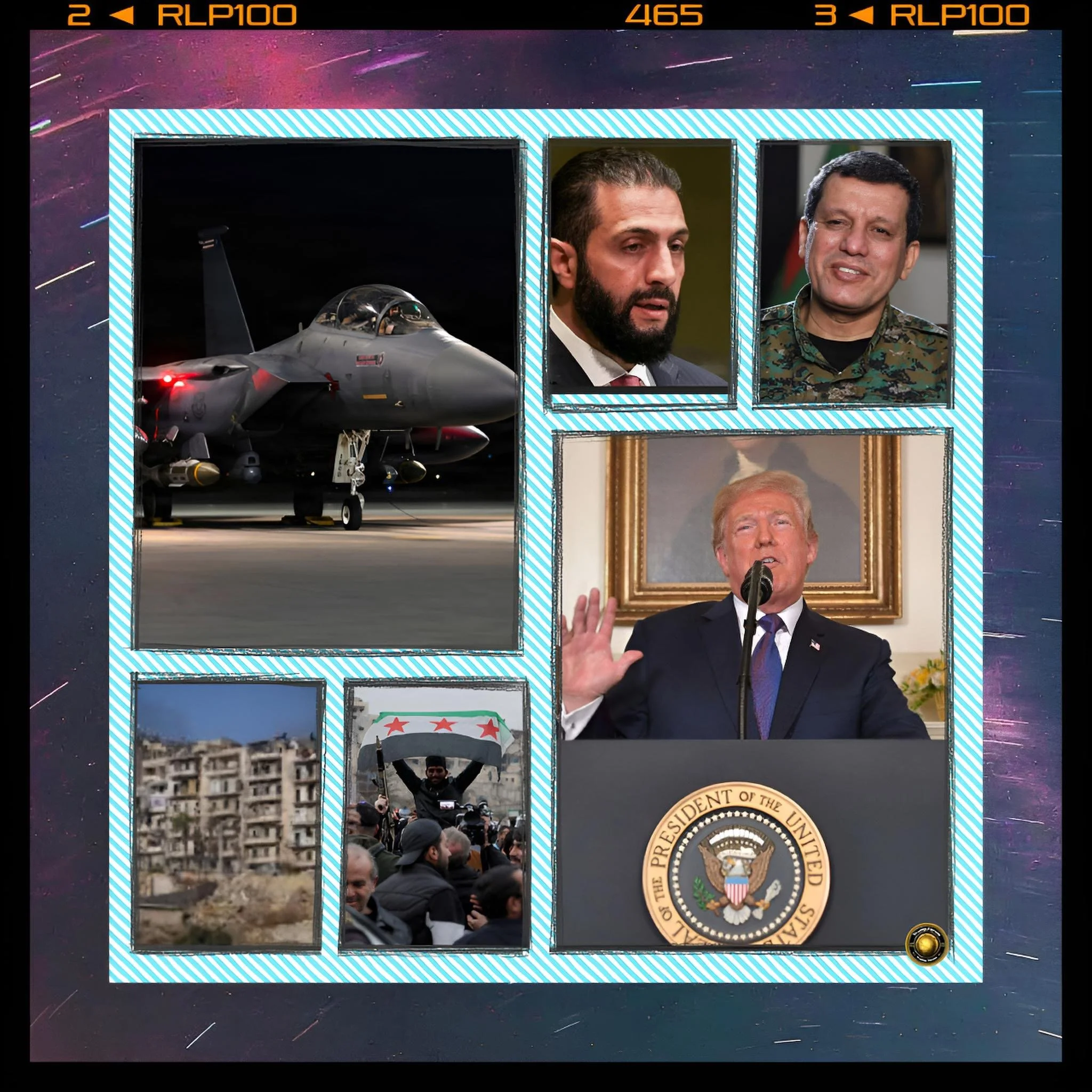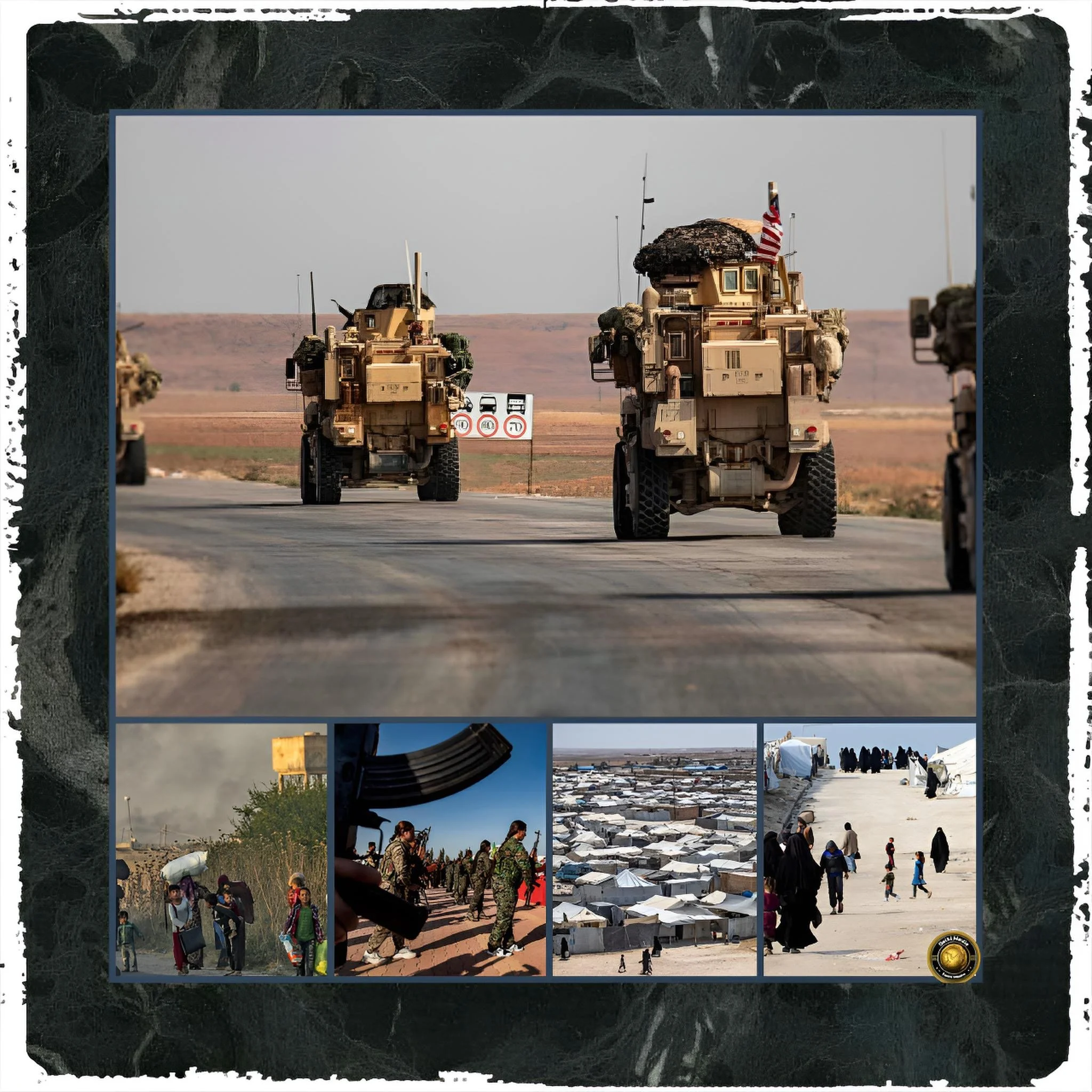
Abandoning the Kurds, Betting on Assad’s Successor: Why Trump’s Syria Retrenchment Threatens New ISIS Dawn - Part I
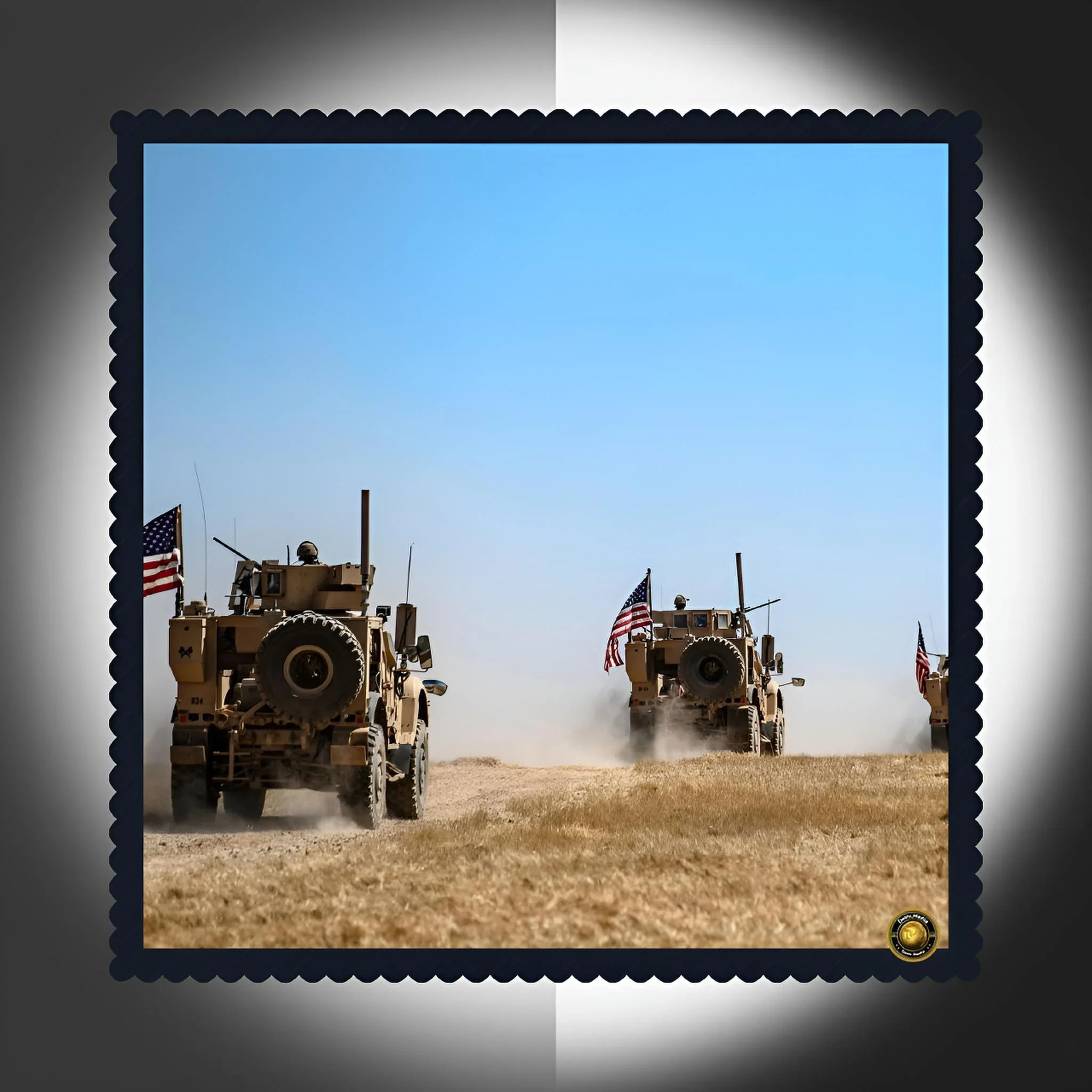
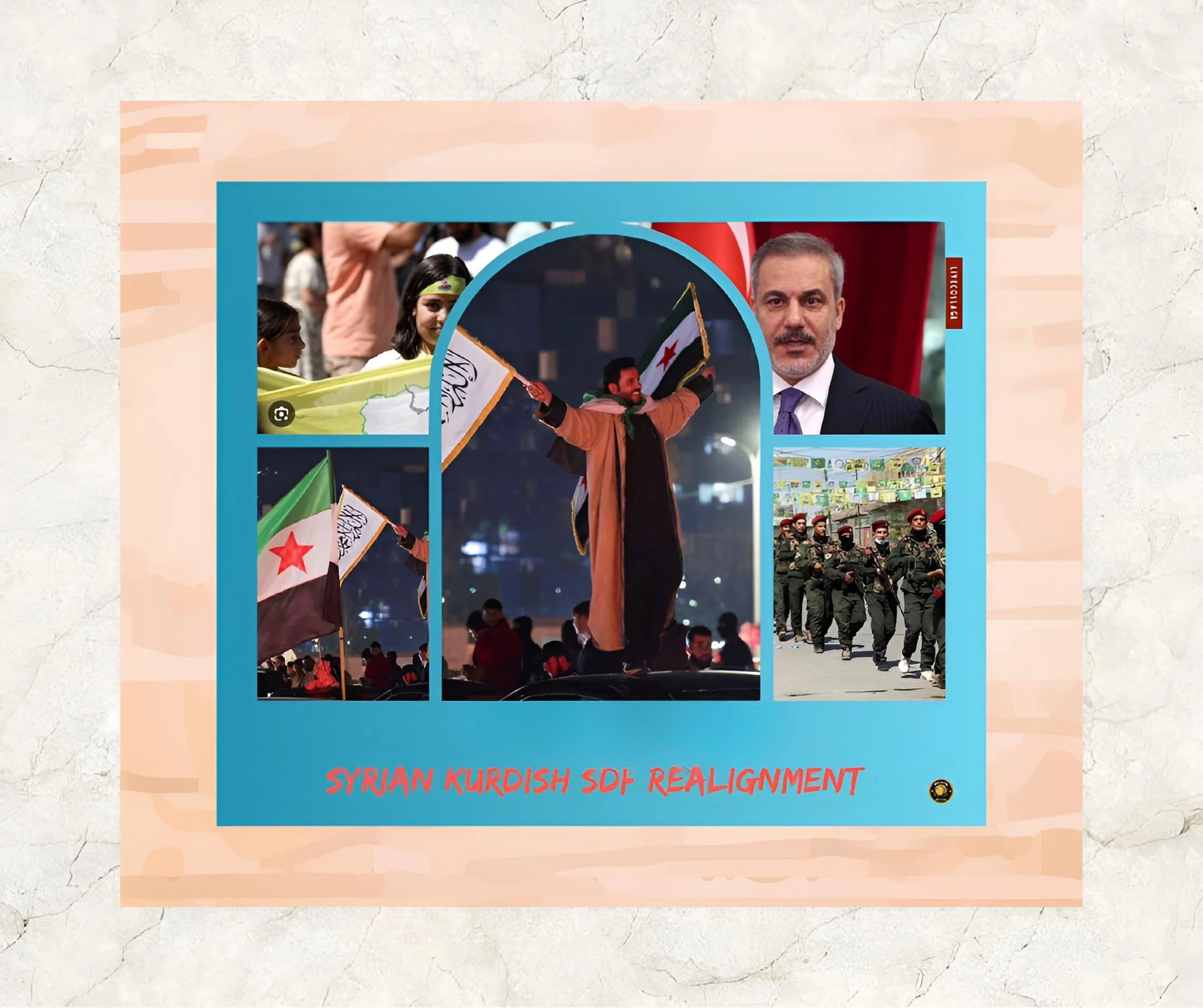
U.S. troops abandoning Syrian Kurds -SDF
Executive Summary
From Strategic Partnership to Strategic Abandonment: Trump’s Dismantling of America’s ISIS Containment in Syria
President Donald Trump’s precipitous reversal of America’s thirteen-year commitment to supporting the Syrian Democratic Forces (SDF) represents one of the most consequential shifts in Middle Eastern counterterrorism policy since the 2011 withdrawal from Iraq.
Having inherited a force posture of approximately 2,000 American troops in Syria at the end of the Biden administration in December 2024, Trump has systematically dismantled the institutional architecture of the U.S.-SDF partnership that proved instrumental in defeating ISIS’s territorial caliphate.
The administration’s decision to redirect American backing away from the battle-hardened Kurdish forces toward the fledgling, institutionally fragile government of Ahmed al-Sharaa creates a cascading security vulnerability: responsibility for 9,000 to 10,000 hardened ISIS fighters held in detention camps, alongside 27,000 family members and potential recruits at facilities like al-Hol and al-Roj, is transferring from disciplined military forces to nascent state security apparatus demonstrably unprepared to execute internal vetting or prevent insider threats.
The December 13, 2025 ambush near Palmyra—in which an ISIS-affiliated member of al-Sharaa’s own security forces killed two American soldiers and a civilian interpreter—crystallized the inherent risks of this policy reorientation.
Trump’s path toward a complete withdrawal by late 2025 or early 2026 mirrors the institutional logic that produced the post-2011 Iraq withdrawal: the removal of stabilizing American military capacity creates operational space for ISIS reconstitution in ungoverned spaces, threatens to collapse detention camp security through prison breaks, and abandons proven Kurdish partners to possible Turkish military action.
The strategic calculus underlying this shift—that al-Sharaa represents a more desirable partner by virtue of his willingness to pursue Israeli normalization and his control over Syrian sovereign territory—reflects a transactional approach to regional security that systematically undervalues the counter-ISIS mission and overestimates the institutional capacity of Syrian state structures to execute the specialized, intelligence-intensive work of counterterrorism.
Introduction
A Ticking Time Bomb: As US Troops Leave Syria, Detention Camps Housing ISIS’s ‘Army in Reserve’ Face Security Meltdown
The American commitment to supporting the Syrian Democratic Forces emerged organically from the structural necessities of counterterrorism operations against the Islamic State beginning in 2014.
When President Barack Obama authorized Operation Inherent Resolve to combat ISIS’s territorial expansion across Iraq and Syria, the absence of reliable Arab state partners forced the American-led coalition to rely upon the Kurdish People’s Protection Units (YPG) and their broader coalition, the Syrian Democratic Forces, as the ground force component of the anti-ISIS effort.
For over a decade, through the administrations of Obama, Trump’s first term, and Biden, this partnership withstood substantial political pressure—particularly from Turkey, which designated the YPG a terrorist organization—and evolved into one of American history’s most successful military collaborations, culminating in ISIS’s territorial defeat by 2019 and subsequent stabilization through continuous American military presence and security assistance.
When President Joe Biden’s administration concluded in December 2024, the United States maintained approximately 2,000 military personnel in Syria, substantially above the historically acknowledged figure of 900 permanent personnel, with the surplus representing temporary rotational forces deployed to address security challenges posed by the post-Assad environment.
The collapse of Bashar al-Assad’s regime in early December 2024 created a strategic opening that Biden administration officials believed warranted sustained American commitment: the new transitional government under Ahmed al-Sharaa, a figure with documented ties to al-Qaeda’s Syrian affiliate, represented a potential partner for cooperative counterterrorism operations and regional stabilization.
This calculus reflected, in essence, the pragmatic recognition that American interests in preventing ISIS resurgence could be advanced through conditional engagement with Syria’s new leadership.
Donald Trump’s approach to this inherited position has undergone a dramatic transformation.
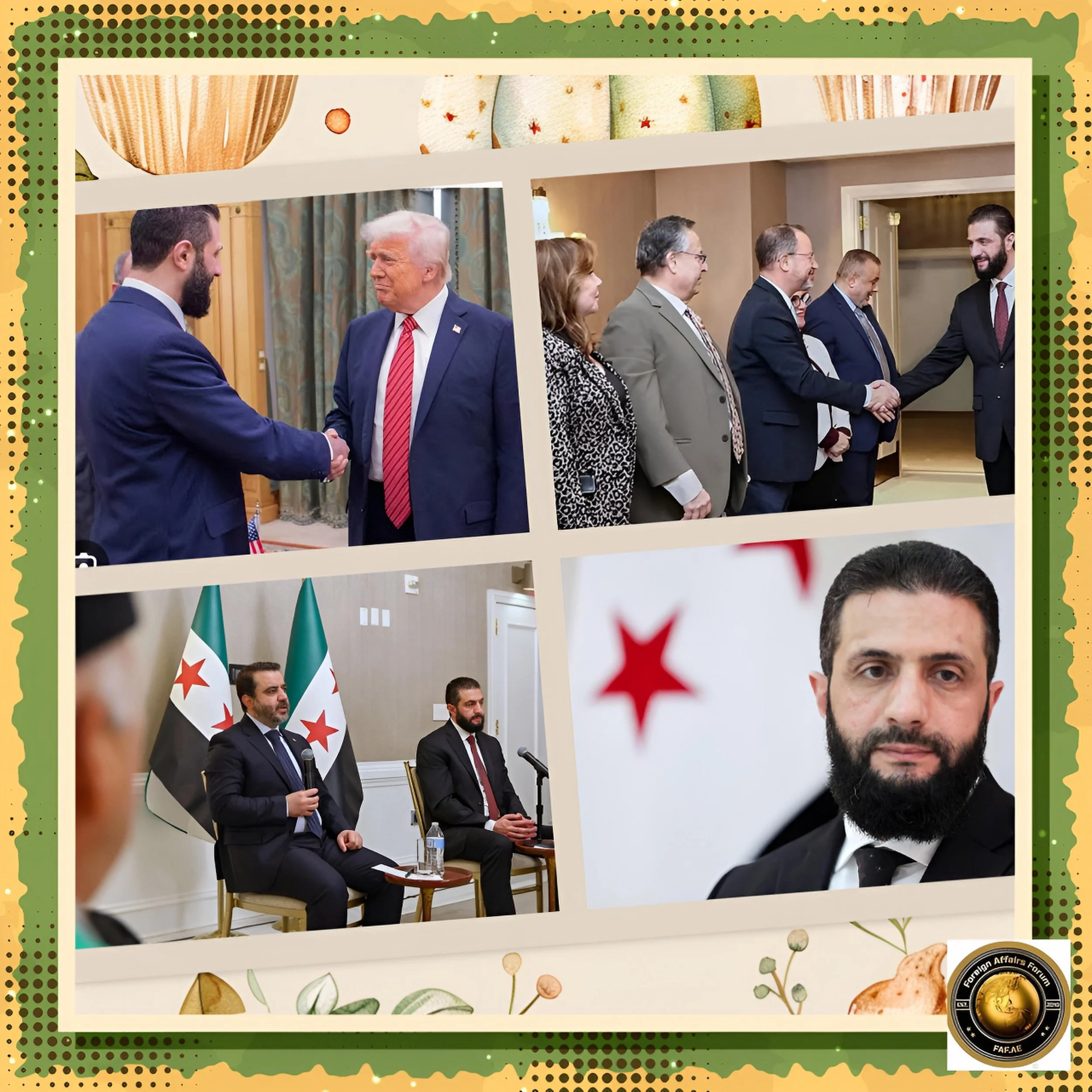
As recently as December 2024, Trump posted on the social media platform X his conviction that “Syria is a mess, but is not our friend, & THE UNITED STATES SHOULD HAVE NOTHING TO DO WITH IT.” Yet by May 2025, following a meeting with al-Sharaa in Riyadh, Trump announced the lifting of virtually all American sanctions on Syria in exchange for vague commitments regarding Israeli normalization, expulsion of foreign militant organizations, and cooperation against ISIS.
Simultaneously, the Trump administration initiated systematic reductions in American military presence: withdrawals of 500 troops in April 2025, the closure of three forward operating bases by August 2025, and explicit planning for consolidation of all remaining American forces into a single facility with the objective of achieving complete withdrawal by late 2025 or early 2026.
This strategic reorientation has fundamentally altered the calculus of American security commitments in Syria, shifting from sustained partnership with the proven SDF military capability toward accelerated reliance upon al-Sharaa’s transitional government and the forced integration of Kurdish military forces into a centralized Syrian state structure.
The implications of this shift extend far beyond routine adjustments in military posture or diplomatic configuration.
The SDF, operating under American training and logistical support, has served as custodian for the vast detention infrastructure housing the surviving leadership and operational cadres of the Islamic State.
Al-Hol camp alone contains approximately 27,000 individuals with direct familial connections to ISIS, including nearly 9,000 battle-hardened fighters incarcerated across seventeen detention facilities in northeastern Syria.
The transition of security responsibility from the SDF to Syrian state forces, coupled with the withdrawal of American military oversight and funding, creates structural vulnerabilities through which ISIS could execute its explicitly articulated strategic objective: orchestration of coordinated prison breaks to liberate thousands of militant fighters and reconstitute operational capability.
The December 13, 2025 ambush near Palmyra—in which an ISIS-affiliated individual operating within al-Sharaa’s security apparatus fatally attacked American personnel—constitutes empirical evidence of precisely this vulnerability, demonstrating that the Syrian state apparatus remains incapable of identifying and neutralizing internal ISIS sympathizers before they commit acts of violence.
Key Developments: The Institutional Collapse of American-SDF Partnership and the Pivot Toward al-Sharaa
The Obama and Biden administrations’ commitment to the SDF emerged from operational necessity and evolved into something approaching an alliance of shared interest.
Beginning in 2014, when American military strategists concluded that local Arab states possessed neither the military capacity nor the political stability necessary to serve as dependable ground force partners in the counterterrorism campaign, the Kurdistan People’s Protection Units (YPG)—the principal Kurdish militia fighting ISIS—became the de facto proxy for American counterterrorism operations.
Despite persistent Turkish pressure and congressional skepticism regarding the ambiguous relationship between the YPG and the Kurdistan Workers Party (PKK), which wages an active conflict against the Turkish state, successive American administrations deepened their commitment to the Kurdish forces.
By 2017, when Trump assumed office, the SDF had already received approximately 8,500 personnel trained by American-led coalition forces and had become the primary vehicle for American military objectives in Syria.
Trump’s first presidential term initially demonstrated inconsistency in this partnership.
Upon assuming office, Trump received a direct recommendation from Obama regarding continued SDF support, subsequently instructed Secretary of Defense James Mattis that “the Kurds are great fighters,” and the administration proceeded to substantially expand the provision of heavy weapons and equipment to the SDF.
Yet Trump’s October 2019 decision to withdraw American troops from northeastern Syria, explicitly clearing space for Turkish military action against Kurdish forces, revealed the contingent nature of his commitment.
A brief reversal of this decision, prompted by substantial congressional pressure from both Republican and Democratic legislators, resulted in the retention of approximately 900 troops in Syria, though the episode demonstrated that American commitment to the SDF remained subject to Trump’s personal strategic preferences rather than institutional continuity.
The Biden administration, by contrast, elevated American commitment to the SDF to unprecedented levels, particularly following the Assad regime’s collapse in December 2024.
The recognition that the transitional government would require sustained American support to prevent ISIS exploitation of the security vacuum generated by regime change prompted the Pentagon to increase American personnel to approximately 2,000 troops—a figure substantially exceeding what had been publicly disclosed—distributed across multiple forward operating bases.
The SDF simultaneously took on expanded responsibility for security operations at the burgeoning detention camp infrastructure, particularly al-Hol, which by 2024 had become the single largest aggregation of ISIS-affiliated individuals in the world.
American military advisors trained SDF personnel specifically in detention camp security protocols, intelligence gathering from incarcerated prisoners, and prevention of internal radicalization mechanisms.
This represented a profound expansion of the SDF’s role from purely kinetic counterterrorism operations toward custodianship of what American officials described as the “ISIS army in detention.”
Trump’s second term has systematically dismantled this architectural arrangement.
The administration’s May 2025 decision to lift virtually all American sanctions on Syria, announced following Trump’s meeting with al-Sharaa in Riyadh, signaled a fundamental strategic reorientation: rather than deepening American institutional investment in the SDF, Washington would accelerate the integration of Kurdish forces into a centralized Syrian state structure controlled by al-Sharaa.
This pivot reflected Trump administration convictions that al-Sharaa represented a more preferable partner by virtue of his willingness to consider Israeli normalization—an objective Trump has explicitly elevated to primary importance in his Middle Eastern strategy—and his control over Syrian sovereign state apparatus.
Simultaneously, the Pentagon announced the withdrawal of 500 troops in April 2025, the closure of three forward operating bases (Mission Support Site Green Village, H-2, and Mission Support Site Euphrates, the Conoco gas facility) by August 2025, and planning for the consolidation of all remaining American presence into a single facility with an anticipated withdrawal timeline of late 2025 or early 2026.
The March 10, 2025 agreement between the SDF and al-Sharaa’s government regarding the institutional integration of Kurdish military and civilian structures into the Syrian state created the formal mechanism through which this reorientation would proceed.
Under this framework, SDF units would be reorganized as components of a unified Syrian military apparatus nominally subordinate to Damascus authority. The al-Hol and al-Roj detention camps, which the SDF had managed with American training and financial support, would transition to direct control by Syrian state security apparatus.
The Trump administration has, through multiple diplomatic interactions, applied sustained pressure to accelerate this integration process. Most notably, when al-Sharaa visited Washington in November 2025, Trump explicitly reaffirmed American commitment to the integration agenda, signaling to Syrian officials that the path to sustained American financial support and sanction relief lay through the consolidation of Kurdish forces under central government authority.
This institutional reorientation has produced immediate operational consequences. On December 2, 2025, following the deterioration of security circumstances in Syria and facing the evident lack of American institutional commitment to sustained partnership, the SDF announced a cessation of “all coordination and joint counterterrorism operations” with the American-led coalition.
The operational pause halted joint patrol operations, coordination mechanisms, and information-sharing protocols that had, for more than a decade, constituted the skeletal structure of counterterrorism operations in Syria. American Central Command forces retained responsibility only for “patrols at the al-Hol Internally Displaced Persons Camp and detention facilities,” essentially reverting the partnership to a holding pattern designed to prevent immediate catastrophic security failures rather than conducting proactive counterterrorism operations.
The Palmyra Incident: Empirical Demonstration of Partnership Fragility and Institutional Vulnerability
The operational ambush conducted near Palmyra on December 13, 2025, illuminates with crystalline clarity the structural vulnerabilities attending the Trump administration’s strategic reorientation.
At approximately the midpoint of a joint American-Syrian patrol operation conducted ostensibly in support of counterterrorism cooperation, a lone Syrian security officer belonging to al-Sharaa’s institutional apparatus opened fire upon American personnel, fatally wounding Sergeant William Nathaniel Howard, 29, of Marshalltown, Iowa, and Sergeant Edgar Brian Torres-Tovar, 25, of Des Moines, Iowa, along with Ayad Mansoor Sakat, a civilian interpreter of Iraqi descent.
Three additional American military personnel sustained non-fatal injuries. Syrian security forces at the scene immediately engaged and neutralized the attacker.
The attacker’s operational profile contains elements of profound institutional significance. Syrian Ministry of Interior officials subsequently disclosed that the individual had been identified as holding “extremist ideas” as recently as December 10, 2025—precisely three days prior to the attack.
Moreover, a formal decision regarding the attacker’s employment status had been scheduled for December 14, 2025, representing a bureaucratic timeline that encompassed identification of extremist inclinations but deferred the institutional action necessary to remove the individual from operational access to American personnel.
This temporal gap between threat identification and threat response reflects critical institutional deficiencies within the Syrian state apparatus—specifically, the absence of expedited security protocols, the lack of integration between intelligence assessment and operational security procedures, and the procedural cumberousness that characterizes nascent state institutions reconstructing themselves from institutional wreckage.
The Palmyra attack constitutes the first American combat fatality in Syria since the Assad regime’s collapse in December 2024.
It materializes, in concrete and lethal form, the theoretical vulnerability that critics of the Trump administration’s policy reorientation have articulated since the initiation of troop withdrawals: that the delegation of counterterrorism responsibility to institutionally immature state structures creates asymmetrical risk profiles wherein American forces absorb casualties whilst Syrian institutional capacity proves inadequate to identify and neutralize threats originating from within their own security apparatus.
The temporal coincidence of the attack with al-Sharaa’s ongoing White House visit, where Trump was reaffirming American commitment to the integration agenda, created a strategic irony: the very policy orientation that Trump was reinforcing through diplomatic engagement was simultaneously generating the security conditions that produced American casualties.
President Trump’s response—channeled through social media and military communications—demonstrated the extent to which the attack catalyzed a recalibration of American messaging around Syria policy without, however, producing substantive policy alterations.
Trump pledged “very serious retaliation” and invoked the incident as evidence of ISIS’s persistent operational capacity.
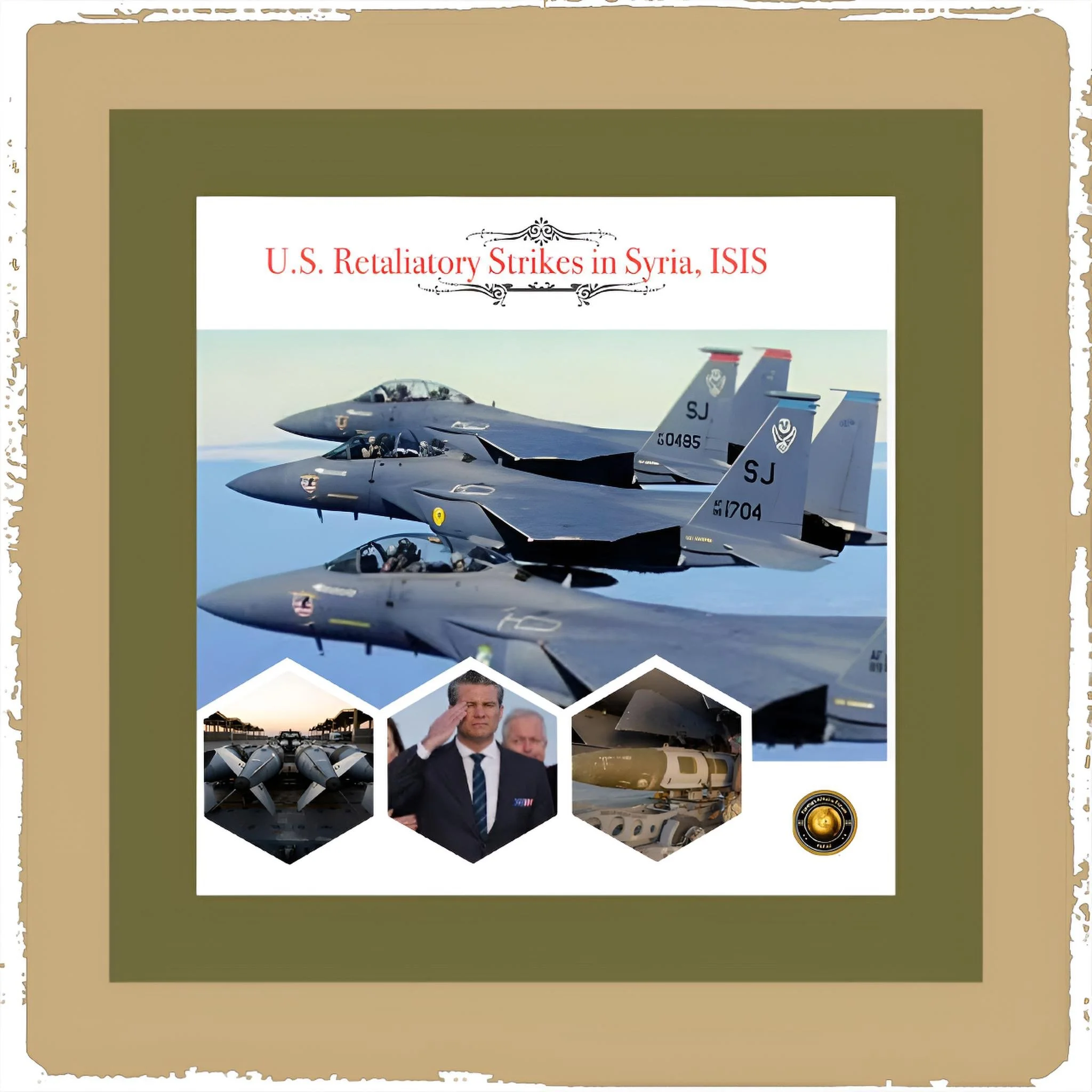
The operational response came on December 19, 2025, when the Pentagon launched Operation Hawkeye Strike: a campaign employing F-15 Eagle fighters, A-10 Thunderbolt ground attack aircraft, AH-64 Apache helicopters, Jordanian F-16s, and HIMARS guided rocket artillery systems in strikes targeting more than seventy identified ISIS positions across the provinces of Deir ez-Zor, Raqqa, and the mountainous Jabal al-Amour region, expending over one hundred precision-guided munitions.
The nomenclatural selection for the operation—“Hawkeye Strike,” evoking Iowa, the home state of two deceased Americans—politicized the military response by foregrounding the identities of the fallen rather than the strategic objective.
Yet Operation Hawkeye Strike, whatever its tactical significance in degrading ISIS material capacity, does not address the institutional vulnerabilities that produced the Palmyra attack.
The bombing campaign can destroy ISIS infrastructure, eliminate trained fighters, and degrade logistical capability. It cannot, however, remediate the fundamental institutional deficiency: the absence within al-Sharaa’s security apparatus of the vetting procedures, internal security mechanisms, and counterintelligence protocols necessary to identify ISIS sympathizers operating within state structures.
The Palmyra attack exposed, in essence, the central vulnerability attending Trump’s policy reorientation: that the transition of security responsibility from the institutionally proven SDF to the institutionally deficient Syrian state structures creates operational space for ISIS to exploit through infiltration of state security apparatus.
Structural Analysis: The Detention Camp Architecture and the Cascading Security Vulnerability
The institutional implications of Trump’s policy reorientation become fully comprehensible only when examined within the context of the detention and displacement camp infrastructure that constitutes the physical embodiment of the battle against ISIS’s operational capability.
The al-Hol camp, established originally in 2016 to accommodate Iraqi refugees fleeing ISIS-controlled areas, underwent dramatic expansion between December 2018 and March 2019 following the fall of Baghouz (the last territorial position held by ISIS).
The camp’s population surged from 10,000 to 73,000 individuals during this period, including approximately 11,000 foreign ISIS-affiliated women and children confined to a restricted annex segregated from the broader displaced population.
As of December 2025, al-Hol accommodated approximately 27,000 individuals, the majority of whom possessed some form of direct familial or operational connection to the Islamic State.
The al-Roj camp, located in the nearby region of northeastern Syria and similarly managed by the SDF under American training, contained additional thousands of detained ISIS operatives and their dependents.
Across seventeen detention facilities distributed throughout the SDF-controlled territories, American intelligence assessments calculated that between 9,000 and 10,000 hardened ISIS fighters—individuals who had undergone military training, participated in combat operations, and held command or specialist positions within the organization—remained incarcerated.
Beyond the militant fighters, the camps housed women and children identified as ISIS-affiliated, many of whom had been born within the organization’s territorial holdings and possessed no alternative citizenship or residency status.
The demographic composition of these camps contains elements of particular strategic significance. Nearly sixty percent of the camp population consisted of individuals under eighteen years of age.
Many of these children had spent their formative years within the ideological environment of the Islamic State’s “Caliphate,” exposed to indoctrination narratives, religious instruction calibrated to produce militant commitment, and socialization patterns that normalized political violence.
ISIS has developed what analysts term the “Cubs of the Caliphate” program, designed specifically to groom adolescents for future militant recruitment and operational participation.
The concentration of thousands of such individuals within detention camps presents both an operational capability concern—these individuals represent a potential human reservoir for future ISIS mobilization—and a humanitarian concern, as many lack formal education, possess limited economic opportunity, and harbor psychological trauma from their experiences.
The management of these facilities has historically rested upon the SDF, operating under American training and financial support.
Beginning in 2019, American military personnel deployed to northeastern Syria specifically to train SDF guards in detention facility security protocols.
This training encompassed physical security procedures, vetting mechanisms to identify radicalized detainees attempting to maintain internal organizational networks, intelligence gathering from detained ISIS operatives, and protocols designed to prevent coordinated escape attempts or internal violence.
The American military commitment included not merely training but sustained logistical support—provision of equipment, financial resources to compensate guard personnel, and operational oversight through regular assessment and monitoring.
Trump’s systematic reduction in American military presence has directly threatened this detention infrastructure.
The administration’s January 2025 decision to freeze foreign assistance programs, implemented through sweeping executive orders, directly impacted the American funding mechanisms supporting SDF detention facility operations.
The SDF announced in early February 2025 that it faced the prospect of temporarily halting activities at al-Hol due to the suspension of American financial support. Though subsequent negotiations partially restored funding, the episode demonstrated the vulnerability of detention camp security to American budgetary decisions.
Moreover, the Trump administration’s strategic pivot toward accelerating SDF integration into the Syrian state apparatus created organizational ambiguity regarding responsibility for detention facility management.
The Syrian government, lacking the institutional capacity to assume direct operational responsibility, has begun transitioning control of camp administration to its security apparatus.
The temporal overlap between this administrative transition and the deterioration of American institutional commitment creates a critical vulnerability window wherein responsibility for detention facilities becomes ambiguous whilst American oversight capacity diminishes.
Historical precedent provides sobering context for this vulnerability. In January 2022, the Islamic State executed what strategists term the “Breaking the Walls” campaign, launching a coordinated assault on the al-Sina’a prison in al-Hasakah under joint ISIS-detainee coordination.
The attack, utilizing improvised explosives and armed infiltrators, resulted in hundreds of imprisoned ISIS fighters escaping.
The incident demonstrated both ISIS’s persistent organizational capacity to mount large-scale operations and the vulnerability of detention facilities to coordinated assault.
Since the Assad regime’s collapse in December 2024, Kurdish forces report that ISIS has attempted two prison attacks, both unsuccessful owing to SDF defensive capability.
However, these incidents occurred whilst American military forces maintained operational presence and provided intelligence support for detention facility security.
As American presence diminishes and responsibility transfers to institutionally weaker Syrian structures, the probability of successful escape operations would logically increase.
The radicalization dynamics within camps present a secondary vulnerability dimension. International observers document that ISIS maintains organizational networks within detention facilities, with appointed administrators exercising control over sections of camps and conducting recruitment, indoctrination, and planning operations.
The overcrowded conditions at al-Hol, the inadequate sanitation and water access, and the prolonged detention without judicial procedures generate grievances and desperation that ISIS exploits for recruitment.
The Trump administration’s funding freeze created conditions wherein guard personnel became irregular in their operations, surveillance mechanisms degraded, and radicalization prevention programs ceased operation.
Camp security experts warned that the combination of inadequate guard capacity, reduced American oversight, and deteriorating material conditions creates an environment optimized for ISIS recruitment and internal organizational consolidation.
Cause-and-Effect Analysis: Institutional Degradation, Transactional Diplomacy, and Strategic Vulnerability
The causal chain linking Trump’s policy reorientation to the security vulnerabilities exposed by the Palmyra attack reveals the structural logic of the administration’s approach and illuminates its strategic risks.
The causal sequence begins with Trump’s conviction, articulated repeatedly in campaign rhetoric and social media messaging, that American military presence in Syria constitutes an unnecessary strategic commitment without corresponding security benefit to the United States homeland.
This conviction, rooted in Trump’s broader strategic preference for the contraction of American military commitments abroad, generated the impetus for the systematic reduction in force posture.
However, the reduction in force posture alone would not produce the security vulnerabilities evident in contemporary Syria without the supplementary strategic reorientation toward al-Sharaa’s government.
The Trump administration’s tactical calculation held that the withdrawal of American military presence could be executed without catastrophic security consequences if the responsibility for counterterrorism operations transferred to competent local partners.
The identification of al-Sharaa’s government as such a partner rested upon three analytical judgments:
First judgement
Al-Sharaa, having personally negotiated the Assad regime’s collapse, possessed sufficient authority to consolidate governmental control and security force loyalty.
Second judgement
The integration of the SDF into a unified Syrian military structure would preserve the institutional military capability that the Kurds had demonstrably developed through American training.
Third judgement
The provision of sanctions relief and diplomatic legitimacy would incentivize al-Sharaa to prioritize counterterrorism cooperation and prevent ISIS exploitation of the post-Assad security transition.
These analytical judgments have proven demonstrably incorrect.
The evidence from the Palmyra attack indicates that al-Sharaa’s security apparatus lacks the institutional maturity to identify and neutralize ideological threats within its own ranks.
The fact that an individual flagged for extremist sympathies remained in operational access to American personnel pending a bureaucratic review scheduled for the day after the attack reflects institutional dysfunction at the most fundamental level: the inability to convert threat assessment into immediate protective action.
This institutional deficiency originates not in individual incompetence but in the structural immaturity of the Syrian state apparatus, reconstructing itself from the institutional wreckage of the Assad regime’s collapse.
The Assad security services, infamous for their practices of torture and systematic surveillance, nonetheless possessed institutional mechanisms through which threats could be identified and neutralized. These mechanisms have been dismantled, and their replacements remain embryonic.
The causal chain extends through the effects of American withdrawal on the SDF’s institutional position.
The SDF’s announcement on December 2, 2025 of the cessation of joint operations with the American-led coalition followed logically from the evident American strategic reorientation away from the Kurdish partnership.
The SDF faced a rational choice between continuing to invest institutional resources in a partnership that the American administration was systematically dismantling or redirecting those resources toward adaptation to the emerging Syrian state consolidation framework.
The SDF’s operational pause represents, in essence, a capitulation to the institutional reality that American commitment to the partnership had become contingent and was manifestly terminating.
This operational pause, in turn, reduces the overall counterterrorism capability available to prevent ISIS exploitation of the security vacuum.
The Palmyra attack must be understood within this causal context.
The attack did not occur because ISIS possessed the capability to conduct organized military operations—the organization has never lost such capacity despite suffering territorial defeat.
Rather, the attack occurred because the institutional transition in American policy created organizational ambiguity and operational vulnerability within al-Sharaa’s nascent security apparatus.
The attacker represented what strategists term a “green-on-blue” vulnerability—an individual operating within partner security forces but sympathetic to ISIS ideological objectives.
The Palmyra attack constitutes proof of concept that al-Sharaa’s institutional apparatus lacks the security vetting mechanisms necessary to prevent such penetration.
The broader institutional implications extend beyond the immediate security realm toward questions of political legitimacy and Syrian state consolidation.
The Trump administration’s policy reorientation toward al-Sharaa implicitly wagered that the new Syrian government possessed sufficient institutional coherence and popular support to consolidate authority over the entire Syrian territory.
However, the Palmyra attack suggests that even in areas nominally under government control, central authority remains tenuous and personnel loyalty remains questionable.
This institutional fragmentation creates space for ISIS to exploit through infiltration, as demonstrated, whilst simultaneously raising questions regarding whether the integration of the SDF into this fragmented state apparatus will enhance or degrade overall counterterrorism capability.
Critical Factors and Institutional Vulnerabilities
Several factors merit careful analytical attention given their implications for the trajectory of American-Syrian counterterrorism cooperation and the sustainability of detention camp security.
The first factor
The first factor concerns the vetting and integration of former Assad regime security personnel into al-Sharaa’s apparatus.
The collapse of the Assad regime generated profoundly ambiguous circumstances regarding the disposition of regime security officials.
Some regime security figures have been incorporated into al-Sharaa’s structures; others have fled the country; still others have been detained or executed.
However, the integration process has demonstrably lacked the rigor necessary to identify ideological extremists.
The Palmyra attacker appears to have occupied an ambiguous position—holding membership in security forces but possessing documented extremist sympathies—suggesting that vetting mechanisms failed to exclude individuals with ideological commitments fundamentally at odds with the counterterrorism mission.
The second factor
The second critical factor encompasses the intelligence-sharing mechanisms between American and Syrian counterparts.
The Syrian Interior Ministry’s claim that it had warned American forces of “possible infiltration or attacks by the Islamic State” yet that these warnings were allegedly disregarded raises fundamental questions regarding threat assessment procedures.
If such warnings were indeed conveyed and subsequently disregarded, this suggests that American threat assessment protocols failed to appropriately weight threat information sourced from nascent Syrian security institutions.
Conversely, if no such warning was transmitted, the Syrian characterization constitutes post-hoc rationalization.
Either interpretation generates troubling implications for the intelligence partnership and for the premise that greater intelligence sharing with the new Syrian government will enhance American security.
The third factor
The third critical factor encompasses the detention and management of known ISIS members and affiliates.
The estimated 9,000 to 10,000 battle-hardened fighters incarcerated across Syria represent what one CENTCOM official characterized as the “ISIS army in detention.”
The security of these facilities, the vetting procedures preventing radicalization within detention, and the prevention of coordinated prison breaks constitute critical vulnerabilities within the counterterrorism architecture.
The Trump administration’s funding freeze and subsequent withdrawal from detention facility oversight creates conditions wherein these vulnerabilities intensify.
The transition of detention camp responsibility from the SDF to Syrian state apparatus occurs precisely as American oversight capacity diminishes, creating an institutional gap wherein security degradation becomes probable.
The fourth factor
The fourth critical factor concerns the Turkish military threat to the SDF.
Following the Assad regime’s collapse, Turkish forces have conducted periodic military operations against Kurdish positions in northeastern Syria, nominally targeting the PKK but effectively pressuring the SDF.
This Turkish military pressure has diverted SDF operational resources from counterterrorism missions toward defensive operations.
The American withdrawal has reduced American capability to restrain Turkish military action, potentially enabling an escalation of Turkish pressure that further degrades SDF counterterrorism capacity.
The convergence of American withdrawal with Turkish military pressure creates a scenario wherein the SDF becomes progressively more vulnerable and progressively less capable of executing its counterterrorism responsibilities.
Future Strategic Trajectory: Scenarios and Implications
The trajectory of American military involvement in Syria appears likely to follow a path toward complete withdrawal by late 2025 or early 2026, with critical decisions regarding SDF integration into the Syrian military apparatus and the disposition of detention facility security remaining unresolved.
The Trump administration’s explicit statements regarding force consolidation and the planning documentation leaked to defense analysts indicate that the current objective involves the reduction of all American presence to a single consolidated facility, with full withdrawal scheduled within the subsequent twelve months.
This trajectory generates multiple possible scenarios, each with substantively different implications for regional security and the counterterrorism mission.
The first scenario
The first scenario, characterized as the “successful integration” model, presumes that the SDF successfully integrates into the Syrian military apparatus whilst retaining operational coherence and counterterrorism focus.
Under this scenario, the Syrian government would assume responsibility for detention facility security, maintain the vetting and radicalization prevention mechanisms developed under American training, and sustain pressure on ISIS operational cells.
The probability of this scenario materializing appears low, given the demonstrated institutional deficiencies within the Syrian state apparatus and the evident pressure from Turkish forces on Kurdish military elements.
The second scenario
The second scenario, characterized as the “fragmented state collapse” model, presumes that the Syrian government fails to consolidate authority over the entire national territory, that the SDF resists full integration into military structures it perceives as controlled by Arab nationalist forces, and that Turkish military pressure increases proportionally to American withdrawal.
Under this scenario, the state would fragment into competing power centers, intelligence-sharing mechanisms would deteriorate, and the integrated counterterrorism apparatus would cease functioning.
ISIS would exploit this fragmentation to conduct operations in ungoverned spaces, particularly the vast Badia desert region constituting over fifty percent of Syrian territory where central government authority remains attenuated.
Detention facility security would depend upon whatever institutional commitment the fragmented Syrian government could sustain, with elevated probability of successful escape operations or mass radicalization within camps.
Third Scenario
The third scenario, characterized as the “ISIS resurgence” model, presumes that the combination of reduced American presence, SDF integration into a fragmenting state apparatus, and detention facility security degradation creates conditions through which ISIS achieves its strategic objective of prison breaks liberating thousands of trained fighters.
The January 2022 al-Sina’a prison break demonstrated that such operations remain within ISIS organizational capability.
The liberation of thousands of incarcerated fighters, combined with the estimated 2,500 active ISIS operatives already operating in ungoverned spaces, would provide the organization with sufficient human capital to reconstitute regional operational capacity.
The historical parallel to Iraq following the 2011 American withdrawal, when weakened Iraqi security forces proved unable to contain ISIS operatives who subsequently expanded to control large territorial areas, suggests that the conditions for substantial ISIS resurgence are materializing.
The most probable scenario, based upon available evidence, appears to represent a hybrid combining elements of fragmented state dysfunction with gradual ISIS operational expansion.
The Syrian government would retain nominal authority in major urban centers and would prevent complete state collapse. However, control over remote areas and detention facility security would remain contested.
The SDF would maintain some operational capacity but would face Turkish pressure constraining full participation in counterterrorism operations.
ISIS would expand from its current posture of low-intensity insurgency toward larger-scale operations exploiting the reduced American military presence and the deteriorating detention facility security.
American military involvement would decrease from approximately 900 troops to perhaps 200-300 personnel focused narrowly on embassy security and the remaining detention facility operations, providing minimal leverage over Syrian government behavior or intelligence cooperation.
Analysis
Obama-Biden Partnership Versus Trump Transactionalism
The contrast between the Obama-Biden approach to the SDF partnership and Trump’s transactional reorientation toward al-Sharaa illuminates fundamental differences in strategic conception.
The Obama administration, beginning in 2014, constructed the SDF partnership from the recognition that reliable ground forces were essential for prosecuting the counterterrorism mission against ISIS, that the YPG/SDF possessed the necessary military capability despite their Kurdish ethnic composition and the Turkish opposition this generated, and that sustained American commitment to this partnership constituted the price of operational success.
This conception treated the SDF partnership as a strategic commitment predicated upon shared interest in ISIS defeat, requiring sustained investment despite political complications.
The Biden administration inherited and deepened this commitment. The recognition that the Assad regime’s collapse created a new security vacuum prompted Biden to increase American troop presence to approximately 2,000 personnel, substantially above previously acknowledged levels.
Biden officials articulated the conviction that sustained American presence was essential both to prevent ISIS exploitation of the transition period and to constrain Iranian influence that might fill any security vacuum.
The Biden approach treated the SDF partnership as fundamentally aligned with American strategic interests and worthy of sustained institutional investment.
Trump’s approach differs fundamentally in its transactionalism.
Trump views Syria not as a critical node in the counterterrorism architecture but as a subordinate geopolitical space whose value derives from its potential role in broader Middle Eastern strategic realignment.
Trump’s May 2025 pivot toward sanctions relief and al-Sharaa engagement occurred not because of any reassessment of the ISIS threat or the SDF’s counterterrorism capability but because Trump perceived strategic value in positioning al-Sharaa as a potential partner in Israeli normalization.
The lifting of sanctions, conceived as an incentive for Israeli-Syrian rapprochement, necessarily required a reorientation away from the SDF partnership, which complicates Arab state engagement with Syria and potentially generates Turkish opposition if American backing for the SDF continues visibly.
This transactional approach undervalues the accumulated institutional knowledge within the SDF partnership, the demonstrated counterterrorism capability that the SDF has developed through over a decade of American training, and the strategic risks attending the transition of security responsibility to institutionally immature Syrian structures.
The Palmyra attack represents the first concrete manifestation of these underestimated risks. Yet the Trump administration’s response has not produced substantive policy adjustment, suggesting that the administration’s transactional logic privileges al-Sharaa engagement and sanctions relief over counterterrorism effectiveness.
Conclusion
The Unraveling: How America’s Retreat from Syria Is Created the Perfect Conditions for an ISIS Resurgence
Operation Hawkeye Strike represents the military manifestation of a strategic vulnerability created by the Trump administration’s systematic dismantling of the American-SDF partnership and the acceleration of SDF integration into fragile Syrian state structures.
The operation, massive in scale and significant in its kinetic effects, addresses symptoms rather than causes.
The bombing campaign can degrade ISIS material capacity and eliminate trained operatives.
It cannot remediate the institutional vulnerabilities within al-Sharaa’s security apparatus that the Palmyra attack exposed, nor can it compensate for the American withdrawal that is progressively reducing American capability to provide intelligence support, coordinate counterterrorism operations, and maintain oversight of detention facility security.
The path forward presents difficult choices without attractive options. The Trump administration could reverse course, recommitting to the SDF partnership and the detention facility oversight that such commitment would require.
However, this reversal would contradict the administration’s explicit strategic preference for disengagement from Syria and would complicate the al-Sharaa engagement that Trump administration officials appear to prioritize.
Alternatively, the administration could proceed with its current trajectory, accepting the risks that detention facility security degradation, ISIS operational expansion, and possible prison breaks represent.
This course would require acceptance of the possibility that the post-Assad transition would not produce the stable state partner that the administration’s analytical model presumes.
The most probable trajectory involves a continuation of the current pattern: continued American withdrawal combined with rhetoric emphasizing counterterrorism commitment, whilst institutional capacity for executing counterterrorism operations systematically diminishes.
This path may avoid immediate catastrophic outcomes such as major prison breaks or large-scale ISIS territorial seizures. However, it simultaneously sacrifices the strategic position that a decade of American military investment in the SDF partnership constructed.
The SDF partnership represented the rare instance in American recent history of an aligned alliance with a proven, capable, and committed ground force partner.
The Trump administration’s dissolution of this partnership in pursuit of transactional diplomatic objectives with al-Sharaa represents a strategic choice with consequences that may materialize across years rather than months. The Palmyra attack foreshadows the character of those consequences.