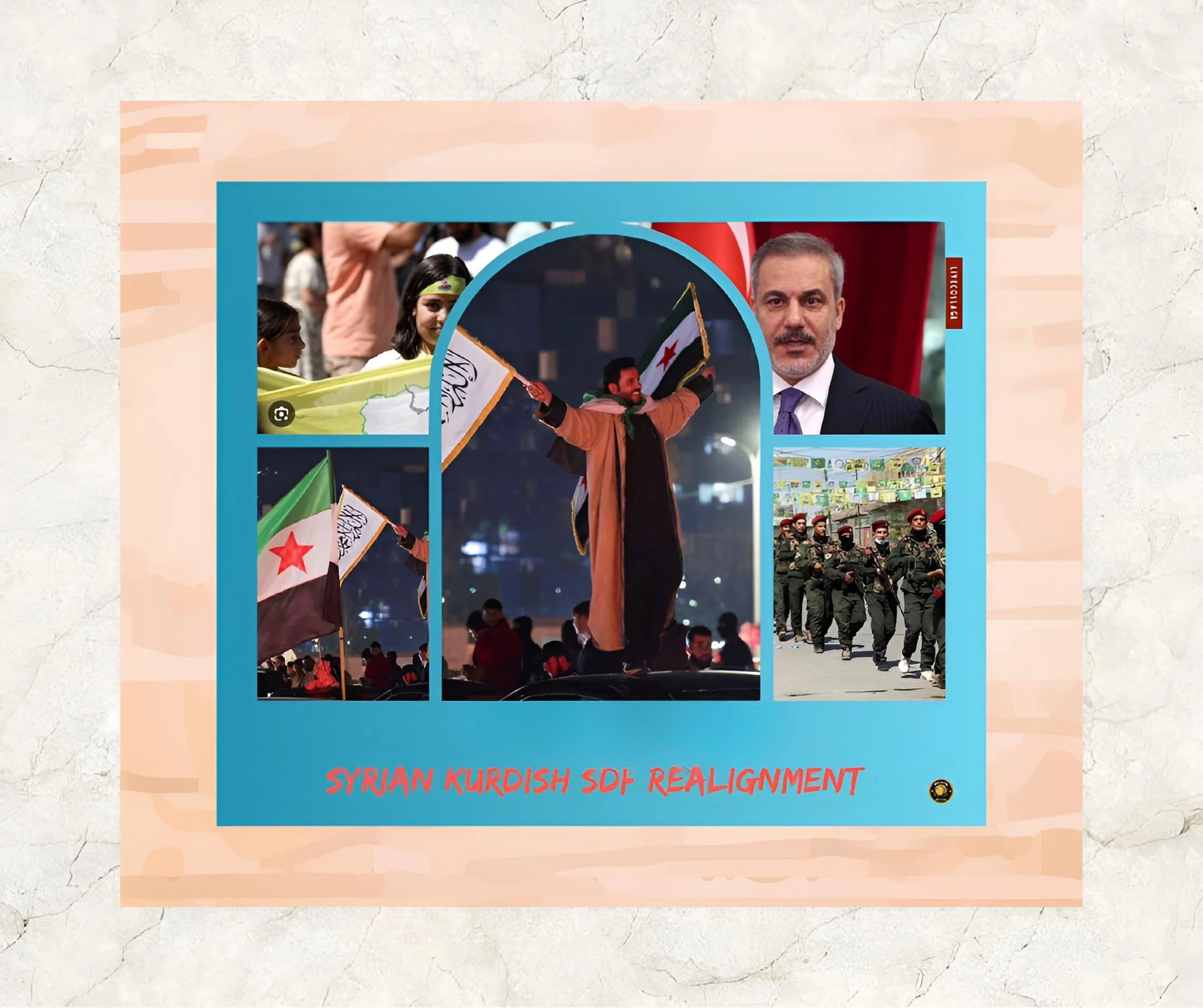
Forsaken Allies, Desperate Deals: How U.S. Withdrawal Left Syria’s Kurds Negotiating with Former Enemies -Part II
Executive Summary
The Collapse of Trust: Kurdish Forces Face Integration Deadline as Turkish Threats Loom in Late 2025
The Syrian Kurds’ strategic pivot from American patrons to Russian-brokered allies with the Damascus regime represents one of the most consequential realignments in contemporary Middle Eastern geopolitics, precipitated by Washington’s abrupt 2019 military withdrawal and crystallised by post-Assad transitions in late 2024.
The Syrian Democratic Forces (SDF), whose estimated 60,000 fighters proved instrumental in vanquishing the Islamic State with United States air support, now navigate an existential paradox: integration into a Syrian state apparatus demanding the dissolution of their autonomous enclaves risks political erasure, whilst resistance invites Turkish military intervention and renewed territorial fragmentation.
As of December 2025, negotiations between the transitional Damascus government and Kurdish-led entities remain in critical flux, with a March agreement’s implementation stalled at merely 40 percent implementation, core disputes over decentralisation and oil revenues unresolved, and a year-end deadline for full SDF military integration likely to be extended rather than met.
The stakes transcend Syrian borders
(1) Kurdish territorial control encompasses approximately 90 percent of Syria’s petroleum reserves, worth approximately $4.5 billion during the first nine months of 2025 alone
(2) Resurgent ISIS activity has escalated 300 percent through 2025, with the SDF imprisoning 9,500 jihadist detainees whose escape could destabilize the region.
(3) Turkish military threats—operationalized through $800 million in annual funding to Syrian proxy forces and repeated airstrikes—create perpetual escalation dynamics that could displace hundreds of thousands of civilians.
This analysis examines
(1) The cascading geopolitical consequences of American retrenchment
(2) Russian mediation’s ambiguous motivations
(3) Turkish securitization pressures
(4) The fragile architecture of the March 2025 accord, concluding that absent substantive decentralization guarantees and revenue-sharing mechanisms exceeding current proposals of five to seven percent (compared to Iraq’s precedent-setting seventeen percent allocation to its Kurdish Regional Government), Syria faces a 60 percent likelihood of renewed armed confrontation by the opening quarter of 2026.
Introduction
Betrayal Revisited? Kurds Forced to Choose Between Integration and Turkish Invasion as December Deadline Approaches
The Syrian Kurdish narrative embodies a pattern of strategic abandonment repeated across post-Cold War interventions: initial alliance formation rooted in mutual interest, escalating commitment to asymmetric partnerships, catastrophic withdrawal leaving erstwhile allies exposed to regional adversaries, and pragmatic realignment toward former antagonists as survival calculus supersedes ideological alignment.
Following the October 2019 Trump administration’s decision to withdraw American forces from northeastern Syria—implemented following a single telephone conversation between the United States President and Turkish President Recep Tayyip Erdoğan—the SDF confronted an unprecedented vulnerability.
Turkish Operation Peace Spring, launched within seventy-two hours, displaced over 300,000 civilians and demonstrated Ankara’s willingness to weaponise its geographic proximity against Kurdish forces that Turkey designates as terrorist proxies of the Kurdistan Workers’ Party (PKK), a militant organisation that has sustained a forty-year insurgency within Turkish territory claiming approximately 40,000 lives.
The SDF’s subsequent pivot toward Assad’s regime—itself ostensibly weakened yet stabilised by Russian military intervention since 2015—represented not ideological conversion but rather realpolitik adaptation to a regional power vacuum.
The December 2024 collapse of the Assad regime through a lightning HTS-led offensive that unseated Bashar al-Assad after 54 years of dynastic rule paradoxically created fresh possibilities for Kurdish-state accommodation, as the new transitional government under Ahmed al-Sharaa sought international legitimacy through inclusivity frameworks rather than the elder Assad’s systematic marginalisation policies.
Yet this apparent opening masks persistent structural antagonisms: Damascus’s impulse toward centralised authority directly contradicts Kurdish historical aspirations, crystallised through the Ottoman Empire’s 1920 Treaty of Sèvres promise of autonomy (subsequently abrogated by the 1923 Treaty of Lausanne), reinforced through the post-World War I partition of Kurdistan across four nation-states without Kurdish consent, and repeatedly vindicated through seventy years of Arab nationalist exclusion policies that in 1962 stripped 120,000 Syrian Kurds of citizenship through administrative fiat.
The emergent question thus frames the analytical agenda: can American mediation leverage, Russian diplomatic positioning, and Turkish military coercion architecture engineer a stable integration formula that preserves Kurdish territorial administration whilst satisfying Ankara’s counter-terrorism imperatives and Damascus’s state coherence requirements?
Historical Foundations: Partition, Marginalisation, and Unfinished Autonomy Claims
The contemporary Kurdish predicament originated in the Ottoman Empire’s dissolution following November 1918’s armistice terminating World War I, when victorious Allied powers utilised League of Nations mandate mechanisms to partition the Middle East according to European strategic convenience rather than indigenous ethnic geography.
The Treaty of Sèvres, ratified on August 10, 1920, represented a historical anomaly
Article 62 explicitly recognised Kurdish self-determination rights across territories encompassing parts of present-day Turkey, Iraq, and Syria, stipulating that Kurdish communities would establish an autonomous administration with provisions for potential independence if plebiscites demonstrated majority preference.
This framework, however, collapsed within three years as Mustafa Kemal Atatürk’s Turkish War of Independence reasserted Anatolian control, culminating in the Treaty of Lausanne (July 24, 1923) that entirely expunged Kurdish autonomy provisions and reaffirmed Turkish sovereignty over ethnically heterogeneous territories, establishing a precedent of erasure that would define subsequent Kurdish marginalisation across the region.
The Arab Belt and the Burden of Borders: A Century of Kurdish Dispossession in Syria
For Syrian Kurds, whose ancestral settlements in the Jazira region straddled the newly demarcated Syria-Turkey frontier established through the 1916 Sykes-Picot Agreement, this diplomatic reversal entrenched a dual vulnerability: geographic proximity to Turkish borders rendered them perpetually susceptible to securitisation arguments from Ankara, whilst their status as minorities within an avowedly Arab nation-state created incentives for Damascus to impose assimilationist policies.
During the French Mandate period (1920-1946), Syrian Kurds—numbering between 150,000 and 200,000 individuals by 1930—maintained complex relationships with colonial authorities who intermittently exploited Kurdish-Arab divisions to perpetuate divide-and-rule administrative strategies.
Yet upon Syrian independence in April 1946, successive governments prioritised Arab nationalist consolidation, particularly following the Ba’ath Party’s March 1963 coup, which institutionalized pan-Arab socialism and explicitly rejected ethnic federalism as a colonial residue incompatible with the vanguard role of the “Arab nation.”
Stateless in Their Homeland: How Syria’s Kurds Were Engineered Into Erasure
The regime’s 1962 census in Hasaka province, ostensibly a demographic enumeration, functioned as a technological apparatus of exclusion: approximately 120,000 Kurds—roughly 20 percent of the regional population—lost citizenship documentation, relegated to the category of “ajanib” (foreigners) or “maktoumeen” (unregistered), barred from landownership, electoral participation, and state employment, a administrative decision that persisted for over four decades, affecting 300,000 individuals by the outbreak of civil conflict in 2011.
Contemporaneously, the 1973 Arab Belt Project physically relocated 250,000 Arab settlers into 330 Kurdish villages, confiscating approximately 1.2 million dunams of Kurdish agricultural land and transforming demographic compositions to dilute Kurdish political leverage.
These policies—implementing what scholars characterise as creeping ethnic engineering beneath the veneer of bureaucratic nationalism—created cumulative grievances that crystallised politically through the formation of the Kurdish Democratic Party of Syria in 1957, which advocated federalism rather than separatism, demanding bilingual education and proportional parliamentary representation whilst explicitly accepting Syrian sovereignty.
The regime’s response proved instructive: the KDPS charter was declared unconstitutional in 1958, triggering arrests of fifteen leaders and exile of the party’s founder Hamid Darwish, establishing a pattern wherein even moderate autonomy claims were pathologised as existential threats to state cohesion.
The 2019 Withdrawal and Operation Peace Spring: Strategic Abandonment and Regional Realignment
The antecedents of the October 2019 American withdrawal crystallised during the anti-ISIS campaign initiated in August 2014, when the Islamic State’s lightning conquest of northern Iraq and Syria prompted Washington to construct a counter-terrorism coalition including Kurdish forces.
The SDF, formally constituted on October 10, 2015, crystallised as a multiethnic, Kurdish-dominant military coalition comprising approximately 60,000 fighters, complemented by Arab, Assyrian, and Turkmen components, operating under the nominal aegis of the Democratic Union Party (PYD) and its military wing, the People’s Protection Units (YPG).
The YPG-PKK nexus—wherein the Syrian Kurdish militia maintained organisational and ideological continuity with the Kurdistan Workers’ Party, which Ankara designated as a terrorist organisation following its 1984 founding—created persistent friction with Turkey, yet American counter-terrorism imperatives initially superseded alliance management considerations, as the SDF proved devastatingly effective against ISIS, liberating Raqqa in October 2017 and systematically dismantling the jihadist proto-state’s territorial holdings through 2018-2019.
By October 2019, the SDF controlled approximately 25 percent of Syrian territory and an estimated 90 percent of petroleum reserves—a strategic asset base that made their military utility undeniable yet politically fraught, as Turkish securitisation narratives construed autonomous Kurdish enclaves as unacceptable proxies for PKK ambitions.
President Donald Trump’s October 6, 2019 telephone conversation with Turkish President Erdoğan initiated a cascade of geopolitical consequences that fundamentally altered regional equilibriums.
Following this single discussion, Trump announced the withdrawal of American forces from northeastern Syria, endorsing Turkish military action and removing the only constraint upon Ankara’s regional ambitions.
Operation Peace Spring, launched October 9, 2019, deployed Turkish Armed Forces and Turkish-aligned Syrian National Army proxies against SDF positions across a 30-kilometre-deep swath of Syrian territory bordering Turkey, with stated objectives encompassing both counter-terrorism operations against the YPG and the establishment of a “safe zone” ostensibly designed to relocate portions of Turkey’s approximately 3.6 million Syrian refugees but functionally constituting territorial acquisition that transformed demographic compositions in formerly Kurdish-majority regions.
The military operation’s scope proved devastating: within seventy-two hours, Turkish forces claimed control of eleven villages; the SDF reported 174 casualties whilst Turkish forces suffered one soldier killed; and approximately 70,000 civilians fled border towns, with comprehensive casualty figures suggesting over 300,000 displaced persons and Amnesty International documenting evidence of war crimes and summary killings by Turkish-backed forces.
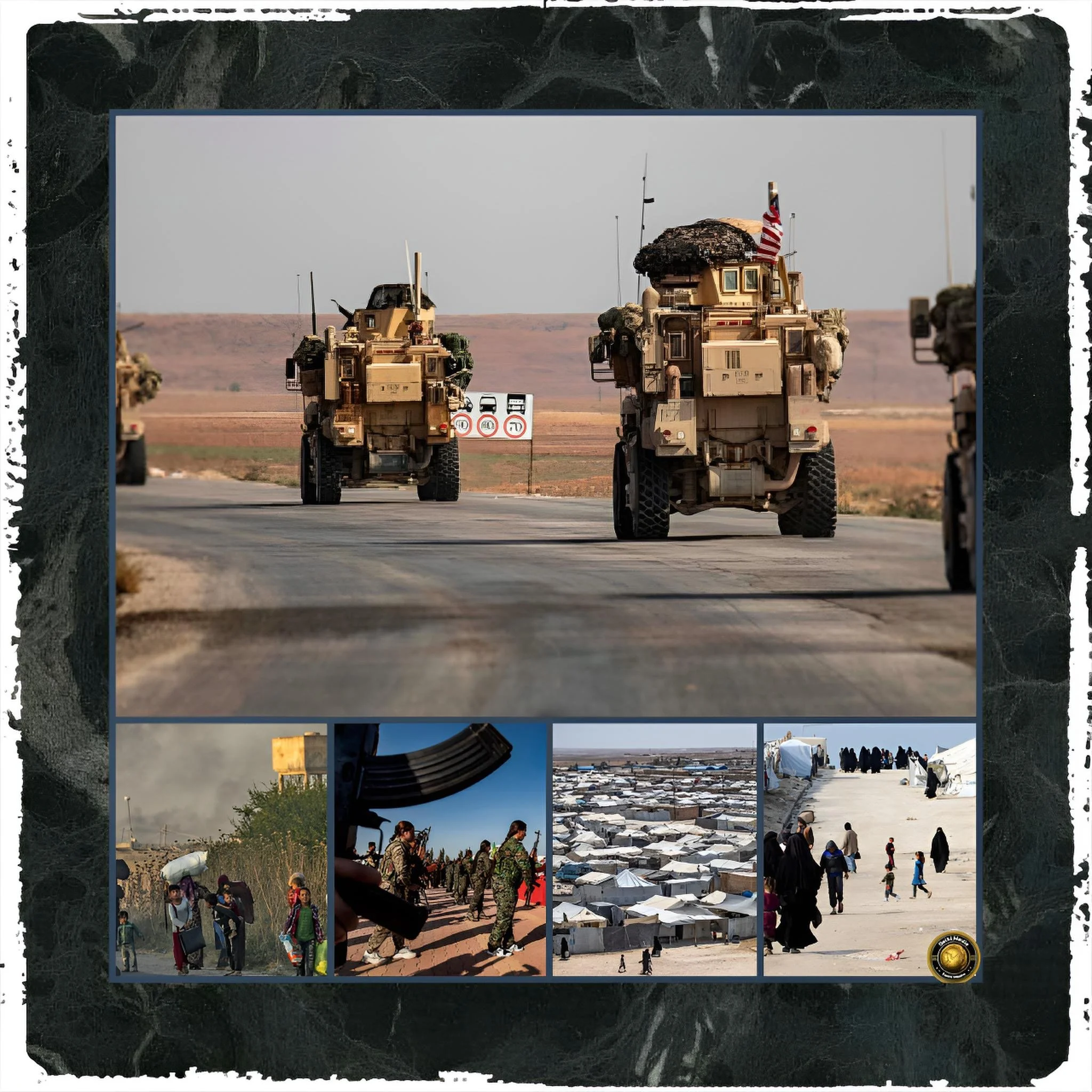
The operation’s cessation followed a Pence administration ceasefire negotiation that Ankara explicitly characterised as capitulation to Turkish security demands, temporally bounded by October 22, after which Turkish military operations resumed with American forces withdrawing under conditions described by diplomatic observers as “humiliating,” with Kurdish civilians reportedly pelting departing American military convoys with rotting food to express betrayal.
This abandonment forced the SDF into strategic realignment. Within weeks of the American withdrawal, Syrian Arab Army forces—nominally representing the Assad regime yet militarily bolstered by Russian air support and Iranian militia deployments—moved into territories previously vacated by departing American forces, creating a de facto division of labor wherein Russia provided diplomatic mediation whilst Damascus offered nominal protection against Turkish incursion.
The calculus proved rational if tragic: autonomous Kurdish enclaves remained threatened by Turkish invasion but could negotiate defensive partnerships with Assad’s forces; American abandonment was categorical and appeared irreversible; and Russian diplomatic positioning offered a pathway toward regional stabilisation, albeit under conditions subordinating Kurdish autonomy aspirations to Damascus’s centralisation imperatives.
This pattern—repeated across American withdrawals from Iraq, Libya, and Afghanistan—demonstrated that tactical military alliances between Washington and non-state actors or ethnonational minorities could not survive shifts in presidential priorities or wider strategic recalibrations, establishing an enduring lesson within Kurdish political consciousness regarding the unreliability of American security guarantees.
Turkey’s High-Stakes Gambit: Reshaping Syria’s Chaos for Neo-Ottoman Glory
Turkey’s engagement in Syrian political affairs has intensified since the Assad regime’s collapse in December 2024, positioning Ankara as the preeminent external actor in shaping the post-revolutionary order.
Through military incursions from Afrin, Ras al-Ayn, and northern Aleppo—as evidenced by deployments in early December 2025—Turkey bolsters its Syrian National Army proxies within the nascent Syrian Armed Forces, while exerting diplomatic leverage over interim President Ahmed al-Sharaa’s Sunni-led government.
Concurrently, Ankara hosts direct talks with Syrian Kurdish leaders and mediates a fragile March 2025 Damascus-SDF accord, demanding the latter’s integration into state structures by year’s end, amid warnings from Foreign Minister Hakan Fidan that patience is eroding.
This multifaceted involvement reflects Erdoğan’s neo-Ottoman ambitions, intertwining security imperatives with economic opportunism in a landscape denuded of Iranian and Russian dominance.
At its core, Turkey seeks a demilitarized border devoid of Kurdish autonomy, the repatriation of over three million Syrian refugees to alleviate domestic pressures, and the entrenchment of a pliant Islamist governance aligned with AKP ideological precepts.
By insisting on the dissolution of PKK-linked YPG elements within the SDF—frustrated by stalled negotiations and U.S. troop drawdowns—Ankara aims to forestall any autonomous Rojava entity, potentially backing Damascus in offensive operations should compliance falter.
Beyond security, Turkey pursues resource access in northern Syria’s energy-rich enclaves and regional hegemony, capitalizing on the U.S. Caesar Act repeal to foster normalized ties, though Israeli entanglements and SDF intransigence portend volatility.
The Post-Assad Transition and the March 2025 Integration Agreement
The regime change of December 8, 2024, when Hayat Tahrir al-Sham (HTS)-led opposition forces captured Damascus following a lightning ten-day offensive that compelled Bashar al-Assad into Russian exile, paradoxically presented fresh opportunities for Kurdish-state accommodation.
The new transitional government, consolidated under Ahmed al-Sharaa—who initially served as de facto leader before formal appointment as interim president on January 29, 2025—adopted a rhetorical posture favouring national reconciliation and minority inclusion, contrasting sharply with the elder Assad’s decades-long suppression of Kurdish cultural and political expression.
This transition occurred within a context of American policy recalibration: in May 2025, President Trump announced the lifting of United States sanctions imposed during the Assad regime, a decision operationalized through Treasury Department General License 25 (GL 25) in June 2025 and subsequently formalized through a comprehensive executive order on June 30, 2025, effectively eliminating sanctions architecture that had isolated the Syrian economy for over two decades.
March 10th, 2025
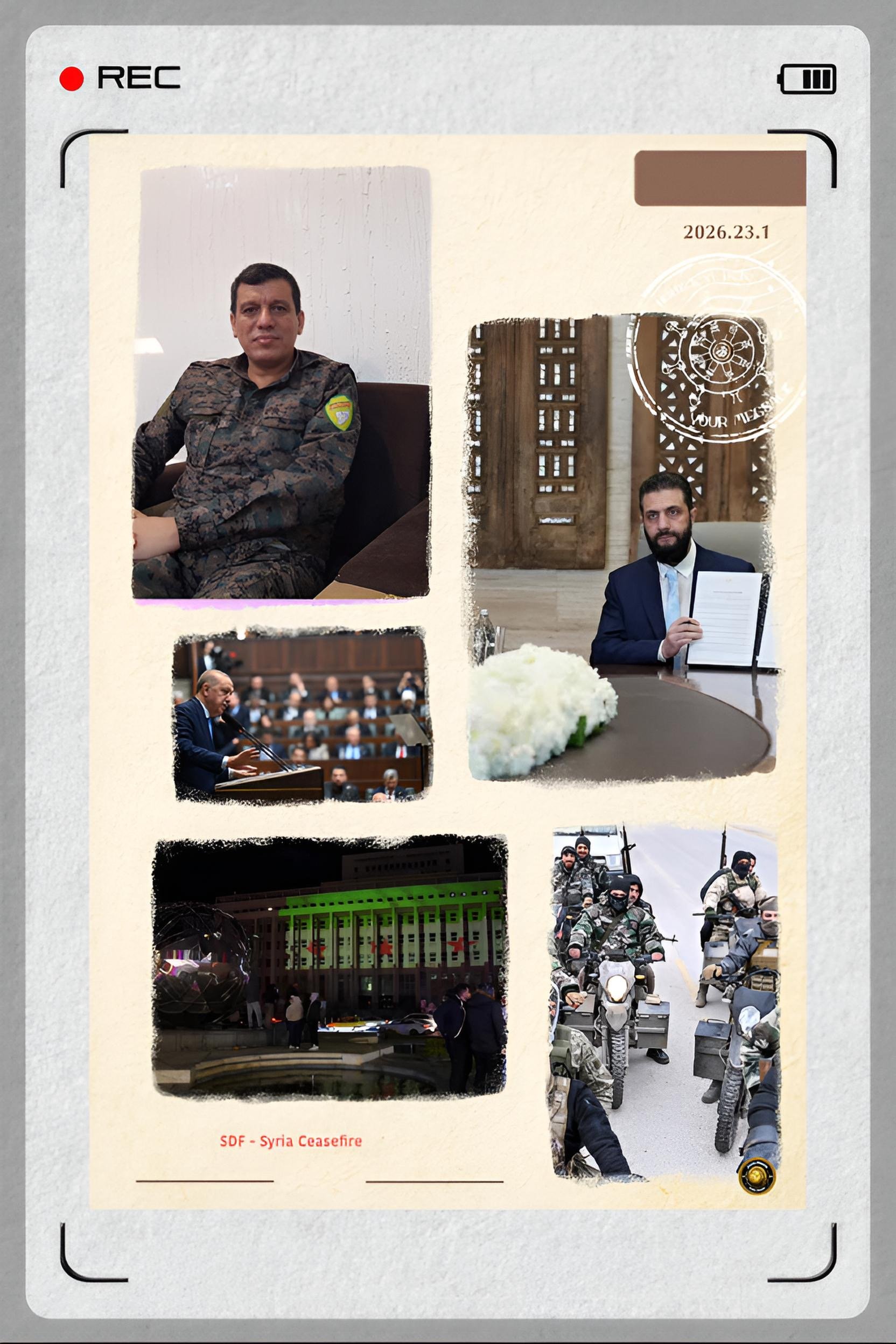
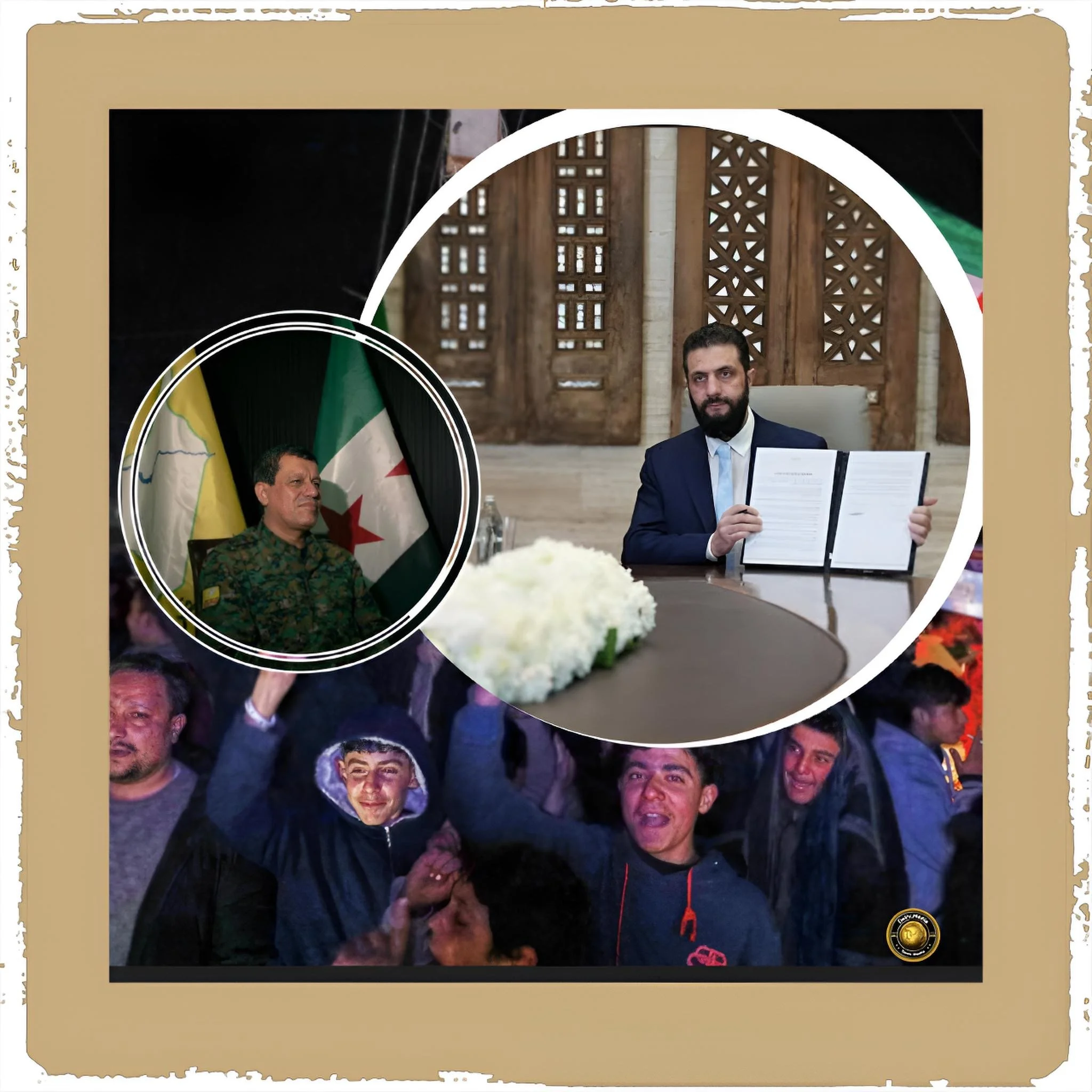
The March 10, 2025 agreement between al-Sharaa’s transitional government and SDF Commander Mazloum Abdi, negotiated under American mediation involving special envoy Tom Barrack and CENTCOM leadership, represented an attempt to institutionalise Kurdish integration within a post-Assad Syrian state apparatus.
The accord’s eight-point framework stipulated the following
(1) Ensuring rights of all Syrians to representation and participation in political processes and state institutions based on competence, regardless of religion or ethnicity.
(2) Recognizing Kurds as an integral part of the Syrian state with guaranteed citizenship and constitutional rights.
(3) Implementing a ceasefire across all Syrian territories.
(4) Integrating NE Syria’s civil and military institutions into the Syrian state, including border crossings, airports, and oil/gas fields.
(5) Guaranteeing return of displaced Syrians to their areas with state protection.
(6) Supporting state efforts against terrorism and security threats.
(7) Rejecting division, hate speech, or incitement among Syrian communities.
(8) Forming executive committees for agreement implementation by year-end.[stj-sy]
This 2025 accord reflects post-conflict efforts to resolve longstanding Kurdish grievances, such as those from the 1962 census and 1973 Arab Belt policies discussed in prior context.
American officials characterized the accord as a historic breakthrough, with Barrack asserting that the United States possessed “complete confidence” in the Syrian government’s military capacity whilst emphasizing the SDF’s historical role as a “valuable partner” whose integration would be facilitated “in a respectful way.”
Yet rapid deterioration of implementation fidelity revealed the accord’s structural fragility.
April 2025
By April 2025, only 40 percent of agreement provisions had achieved operational status, according to Atlantic Council assessments, with critical divergences emerging regarding oil revenue distribution, minority protection mechanisms, and the fundamental question of whether the SDF would dissolve entirely or retain organisational coherence as subordinate units within Syrian military structures.
The economic disputes proved particularly corrosive
the SDF-controlled territories generated approximately $4.5 billion in petroleum revenues during the January-September 2025 period (at production levels of 80,000 barrels per day), yet transferred only 10 percent ($450 million) to Damascus, withholding an additional 20 percent pending clarification of the revenue-sharing formula that the March agreement had left conspicuously vague.
June 2025- Petroleum revenue?
This withholding had immediate material consequences: by June 2025, the Deir Ali power plant—critical infrastructure servicing central Syria—idled due to insufficient fuel allocations, causing electricity costs to surge from $0.125 to $1.10 per unit, exacerbating economic crisis within a country where 90 percent of the population subsisted below poverty thresholds.
Failure to investigate attack on Alawites?
The Syrian government’s failure to investigate attacks upon Alawite minorities—sectarian violence that claimed approximately 1,000 Alawite lives during 2025, with estimates of the March coastal massacres reaching 800 to 1,500 civilians—created profound Kurdish distrust regarding Damascus’s capacity or willingness to fulfill minority protection commitments, particularly given the vulnerability of smaller ethnic communities in territories nominally under government control.
October 2025 Escalation: Aleppo Clashes and Fragile Ceasefire
The fragility of the March accord became starkly manifest on October 6, 2025, when military clashes erupted in Aleppo’s Sheikh Maqsoud and Ashrafiyeh districts—historically Kurdish neighbourhoods interspersed with Alawite and Arab populations—signalling the accord’s incipient collapse.
The immediate trigger involved competing claims regarding clandestine tunnelling and weapons caches: government forces asserted they discovered underground weapon smuggling networks; the SDF contended they were defending against armed provocateurs affiliated with Hay’at Tahrir al-Sham-linked militant groups seeking to dislodge Kurdish administrative presence.
The engagement resulted in one government soldier and one civilian fatality, with between four and six additional wounded, a modest casualty count that nonetheless signified the accord’s unprecedented violation.
More consequentially, the clashes precipitated a humanitarian siege: approximately 10,000 residents of Sheikh Maqsoud remained under de facto blockade beginning in August 2025, cut off from food, medicine, and humanitarian assistance, their suffering instrumentalised as leverage within negotiations.
The October 7th 2025 ceasefire
The October 7 ceasefire, brokered through intensive American mediation involving Barrack’s direct intervention and CENTCOM’s commanding general, represented a tactical stabilisation rather than a strategic resolution.
The agreement reinstated humanitarian corridors permitting access to 5,000 individuals within Sheikh Maqsoud, reestablished de facto military disengagement across Aleppo, Raqqa, and Deir ez-Zor governorates, and incorporated provisions for joint patrols that symbolically demonstrated renewed cooperation.
October 9th -11th, 2025 clashes
However, the ceasefire’s durability proved immediately questionable: within forty-eight hours, on October 9, clashes erupted near Tishrin Dam along the Euphrates, resulting in two SDF fighters killed and nine wounded, with subsequent violations accumulating—twelve distinct incidents by October 11, including Syrian National Army drone incursions over Manbij—suggesting that the ceasefire framework lacked adequate enforcement mechanisms or sufficiently aligned incentive structures to prevent escalatory cycles.
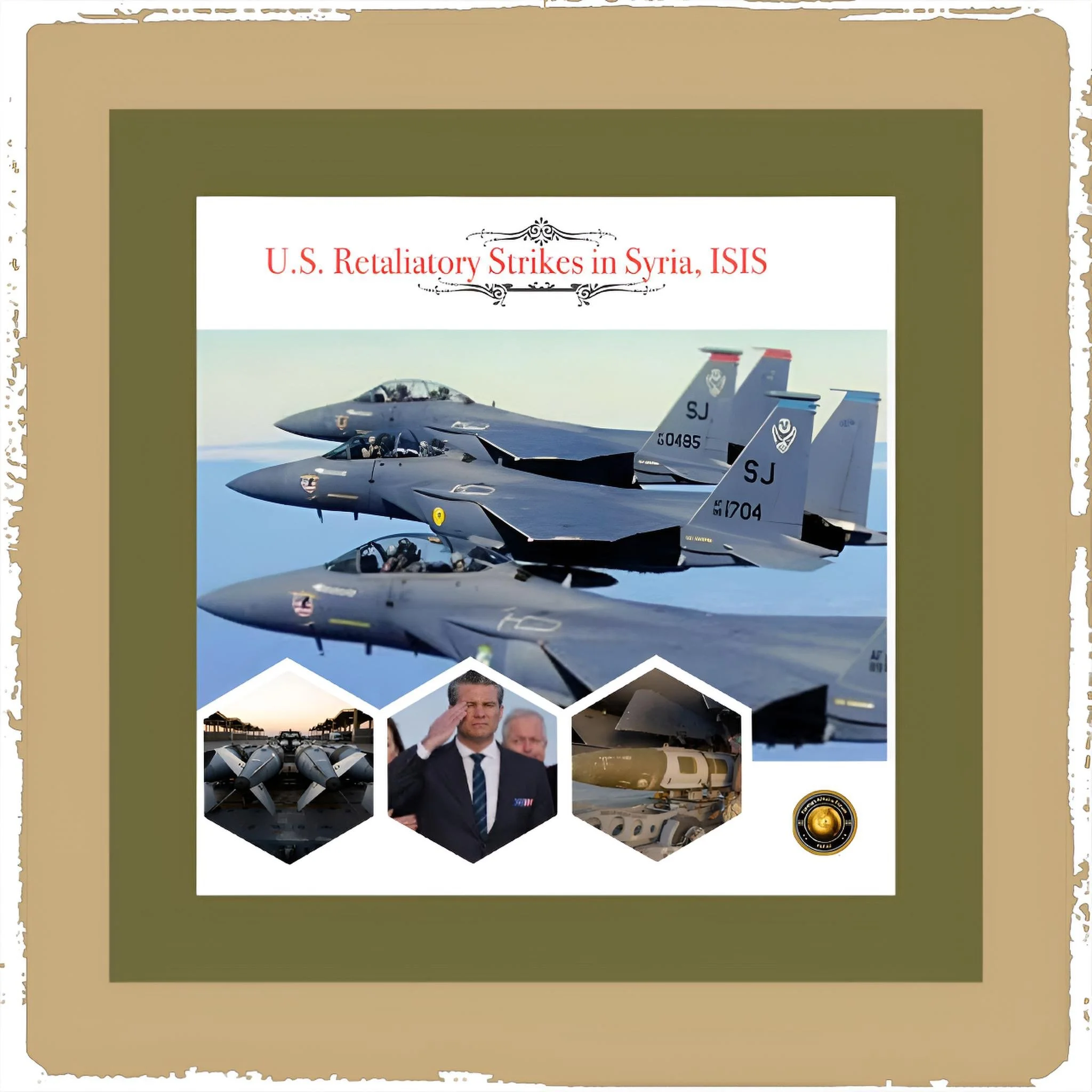
American military presence—900 personnel distributed across northeastern Syria as of October 2025, complemented by four MQ-9 Reaper unmanned aerial vehicles conducting surveillance operations over contested zones—functioned as a restraint upon Turkish military escalation and prevented the escalation spiral from metastasising into full-scale conventional warfare.
Yet this American stabilisation capacity appeared ephemeral: reports indicated that the Trump administration had commenced planning for potential force withdrawals in September 2025, creating uncertainty regarding Washington’s staying power and incentivising all Syrian parties to either consolidate military advantages or accelerate diplomatic resolutions before American guarantees evaporated entirely.
December 2025 Negotiations and the Year-End Deadline Crisis
As December 2025 approached, intense diplomatic efforts sought to salvage the March agreement’s implementation timeline before the December 31 deadline stipulated for complete SDF military integration and asset transfer.
The Syrian transitional government, reportedly under American pressure amplified by Barrack’s direct engagement, submitted a “final” thirteen-point proposal around December 17 that represented the closest approximation yet achieved to reconciling opposing positions.
Dec 17th 2025- 13- Point proposal
The proposal reframed the fundamental integration modality: rather than complete SDF dissolution into the Syrian Arab Army with individual fighters distributed nationwide, Damascus offered to reorganise the SDF into three geographically-anchored military divisions that would maintain northeastern deployments whilst subordinating their command structures to Ministry of Defence authority, a concession that the SDF had initially floated in October 2025 but represented a significant departure from the Damascus position demanding total institutional absorption.
Kurdish negotiators characterised the proposal as “the closest” the parties had achieved to mutually acceptable terms, with SDF sources telling Reuters on December 18 that they were approaching accord status, though cautious optimism tempered expectations regarding comprehensive implementation by year-end.
Sihanouk Dibo, an official representing the Kurdish-led Autonomous Administration of North and East Syria (AANES), stated that the agreement’s validity derived from its substantive content rather than temporal frameworks, implicitly suggesting that the December 31 deadline would not constitute a binding terminus but rather a checkpoint from which negotiations would continue, potentially extending to mid-2026.
Abdel Karim Omar, the AANES representative in Damascus, expressed concern that the government proposal contained “logistical and administrative details that could cause disagreement and lead to delays,” suggesting that whilst framework-level accord appeared achievable, implementation mechanics remained contentious.
Critically, Turkish position underwent a dramatic reversal during this period, initially representing the primary impediment to compromise.
Turkey rejects SDF three-division integration model
Turkish Foreign Minister Hakan Fidan had, through December 6, adamantly rejected the three-division integration model, demanding instead that the SDF dissolve entirely with fighters absorbed individually into Syrian units distributed nationwide, a maximalist demand echoing Ankara’s securitisation logic that geographically cohesive Kurdish military formations constituted nascent separatist infrastructure.
Yet following Barrack’s December 16 meeting with Fidan, Turkish official pronouncements shifted markedly: Fidan declared that Turkey would not resort to military action against the SDF and expressed optimism regarding integration negotiations, a position reversal that analysts attributed to American diplomatic pressure leveraging sanctions relief benefits, military cooperation prospects, and broader NATO cohesion considerations.
This Turkish recalibration appeared decisive, as previous Turkish military threat postures had functioned as a ceiling upon Kurdish concessions, with SDF negotiators invoking Turkish redlines to justify retention of autonomous control mechanisms.
December 31st, 2025 Deadline
Multiple authoritative sources indicated that the December 31 deadline would be extended rather than enforced, with one Western official explicitly characterising any announcement as an effort to “save face,” maintain stability during Syria’s fragile transition, and provide both parties sufficient temporal space to resolve contentious political questions, including decentralisation frameworks, constitutional safeguards for Kurdish language and education, and permanent revenue-sharing mechanisms.
The December 18 statement from Reuters reported that Syrian, Kurdish, and American officials were “scrambling” to demonstrate progress before year-end, suggesting urgency tempered by acknowledgment that comprehensive implementation would require additional months of negotiation and institution-building.
One SDF official characterised the ongoing process as representing incremental advancement toward accord, whilst another stated that the most reliable guarantees resided in agreement content rather than deadlines, a formulation that appeared to accept extended implementation timelines as inevitable given the complexity of integrating two formerly adversarial military structures with divergent operational doctrines, personnel management systems, and constitutional commitments.
Facts, Vulnerabilities, and Concerns: The Strategic Logic of Kurdish Precarity
The contemporary Kurdish position reflects the confluence of several reinforcing vulnerabilities that constrain negotiating leverage and incentivise risky concessions.
Territorially, the SDF controls approximately 25 percent of Syrian land mass but crucially commands access to roughly 90 percent of Syria’s petroleum reserves, concentrated in the Deir ez-Zor and Hasaka governorates.
This resource asymmetry—whilst appearing to provide leverage—actually constitutes a liability within asymmetric negotiating contexts: oil fields constitute immobile, geographically circumscribed assets that cannot be militarily defended against combined Syrian-Turkish pressure, rendering Kurdish petroleum resources functionally extractable by whoever consolidates sufficient military force in the region.
Petroleum production at current levels of approximately 80,000 barrels per day generates revenues exceeding $4.5 billion annually (in 2025 pricing), yet this wealth remains inaccessible to Kurdish populations unless the transitional government, operating from a position of capital scarcity and reconstruction desperation, permits revenue-sharing arrangements significantly exceeding the proposed five to seven percent allocations currently under discussion.
The incipient collapse of border security and weapons caches following the Assad regime’s December 2024 demise has created vacuums that the Islamic State has methodically exploited. Intelligence assessments place active ISIS fighter strength at approximately 2,500 personnel across Syria and Iraq, a seemingly modest figure rendered consequential by the concentration of these forces in Syrian territory where SDF military pressure has previously constrained their operational scope.
ISIS Attack patterns document escalation in 2023-2025
(1) in 2023 ISIS conducted approximately 200 attacks resulting in 285 military and 231 civilian deaths
(2) in 2024, these attacks expanded to roughly 700 attacks claiming over 750 lives (military and civilian combined)
(3) Preliminary 2025 data records a total of 1,100 attacks nationwide. In northeastern Syria alone, 117 attacks occurred through August—surpassing the prior year’s full tally of 73 attacks—and claims of 1,100 for the entire year signal an exponential resurgence.
The SDF currently administers detention facilities housing approximately 9,500 ISIS prisoners—a population representing the most lethal jihadist concentration globally—whose escape would render counter-terrorism containment effectively impossible.
This ISIS prisoner guardianship function confers asymmetric strategic value upon the SDF
American intelligence and military personnel remain indispensable to preventing catastrophic prison breaks (eight foiled ISIS plots have been documented since December 2024, reducing attack frequency by approximately 25 percent in the third quarter of 2025), yet this utility diminishes if American forces withdraw or if SDF organisational cohesion fractures through forced military integration.
The minority protection dimension constitutes perhaps the most intractable long-term vulnerability, emblematic of deeper sectarian fractures that the March accord failed to institutionalise adequately.
The Alawites atrocities
During March 6-12, 2025, security forces affiliated with the new government perpetrated what human rights organisations characterise as massacres in Syria’s coastal regions, killing an estimated 800 to 1,500 civilians, predominantly Alawites belonging to the Shi’ite offshoot community that formed Bashar al-Assad’s power base and faced predictable retaliation following regime collapse.
These sectarian killings—killing an estimated 1,000 Alawites during the entirety of 2025—were inadequately investigated or prosecuted, creating precisely the accountability vacuum that incentivises Kurdish scepticism regarding Damascus’s capacity to guarantee minority protections, particularly for geographically dispersed non-Arab communities lacking robust military self-defence capabilities.
The Druze community
The Druze community, concentrated in Suwayda province, experienced similar displacement dynamics, with approximately 5,000 Druze fleeing communities where government forces permitted—and in some instances, participated in—sectarian reprisals.
These sectarian dynamics create a cascade of credibility erosion
The Syrian government’s failure to credibly protect minorities undermines its capacity to guarantee Kurdish security; Kurdish skepticism regarding government protection pledges makes military integration appear suicidal rather than prudent; and the absence of demonstrable minority protections incentivizes all non-Arab, non-Sunni communities toward military self-sufficiency, perpetuating fragmentation that centralization rhetorically opposes.
Cause-and-Effect Analysis: The Cascade of Strategic Abandonment
The SDF’s contemporary predicament reflects not isolated diplomatic failures but rather a cascading series of decisions and external pressures creating geometrically expanding constraints upon autonomous action.
The causal chain originates with the October 2019 American withdrawal, which functioned as both a precipitating shock and a revelation regarding the durability of American security guarantees.
Prior to Trump’s telephone conversation with Erdoğan, the SDF maintained effective military dominance in northeastern Syria, controlled substantial petroleum resources, administered a quasi-autonomous governance apparatus encompassing millions of inhabitants, and possessed demonstrated capacity to prosecute counter-terrorism operations against a sophisticated jihadist adversary.
Within seventy-two hours of that conversation, Turkish military forces commenced offensive operations, American air power that had provided crucial close-air support became unavailable, and the SDF faced a strategic binary: either capitulate to Turkish demands for territory and military subordination or seek alliance with Assad’s regime—a government that the SDF had previously contested and that embodied the Arab nationalist ideology against which Kurdish aspirations had historically defined themselves.
This cascade established a recursive dynamic wherein each SDF concession incentivised fresh demands from hostile parties.
Turkish Operation Peace Spring’s operational success—displacing over 300,000 civilians and establishing de facto Turkish administrative control over portions of northern Syria—demonstrated Turkish capacity and willingness to utilise military force against Kurdish positions, a capability that persisted even following the 2019 ceasefire.
Subsequently, Turkish military aid to Syrian National Army proxies ($800 million annually), Turkish drone operations (150 Bayraktar TB2 unmanned aerial vehicles deployed by August 2025, executing twelve confirmed airstrikes on SDF positions between March and September), and Turkish political demands for complete SDF military dissolution functioned as continuous pressure mechanisms that Damascus could instrumentalise within negotiating contexts.
Each Turkish threat elevated the credibility of Damascus’s assertion that Kurdish military retention would trigger Turkish military escalation, progressively constricting the negotiating space available to Kurdish representatives.
The Assad regime’s December 2024 collapse paradoxically both opened and narrowed Kurdish strategic options.
The transition to a theoretically more representative government offered possibilities for negotiated autonomy arrangements that the hereditary autocracy had categorically rejected.
However, the new government’s Hay’at Tahrir al-Sham-dominated composition retained Sunni-Islamist ideological commitments that emphasise national unity and Arab character, creating constituencies hostile to Kurdish administrative autonomy.
Simultaneously, the transitional government’s desperation for international legitimacy—particularly American sanctions relief that would unlock reconstruction financing—created bargaining power that Washington could leverage to pressure the SDF toward integration compromises.
The sequence of American actions—May 2025 sanctions lifting announcement, June 2025 General License 25, June 30 comprehensive sanctions termination—appeared increasingly conditioned upon Kurdish-government accord, with implicit threats that American military support could be weaponised against recalcitrant Kurdish negotiators should they reject Damascus proposals deemed “reasonable” within Washington’s calculus.
The specific mechanism whereby American leverage operated involved the ISIS detention prisoner crisis.
As security conditions within northeastern Syria deteriorated following Assad’s collapse and Turkish military pressure intensified, the SDF’s capacity to maintain sealed detention facilities housing 9,500 jihadist fighters became increasingly precarious.
American military presence provided intelligence capabilities, logistical support, and tactical assistance essential to preventing prison breaks that could liberate thousands of battle-hardened ISIS personnel into Syrian territory.
This dependency created a utilitarian argument for SDF military integration
If the Syrian Democratic Forces (SDF) dissolved as independent military units and integrated into Syrian Arab Army structures, U.S. military advisors could transition to training and oversight roles within the reorganized Syrian security forces. This approach would sustain American control over key detention facilities while meeting Damascus’s demands for full integration.
However, this formulation assumed that Syrian military professionalism and institutional capacity matched American standards—an assumption contradicted by post-Assad command dysfunction, sectarian tensions within the Syrian military itself, and Ankara’s demonstrated willingness to pressure Syrian civilian leadership toward policies contrary to minority protection.
Future Trajectories and Conditional Stabilization Pathways
Syrian government three division integration model - December 2025
The December 2025 negotiations have established a conditional stabilization pathway wherein the three-division integration model appears increasingly probable, contingent upon supplementary agreements addressing the political dimensions that the March accord explicitly deferred.
The Syrian government’s December proposal, incorporating the three-division integration framework that the SDF had advocated since October 2025, represents a meaningful concession from Damascus’s absolute position favouring complete military dissolution.
(1) Turkish position modulation, occurring subsequent to Barrack’s December 16 meeting with Foreign Minister Fidan, suggests that American diplomatic leverage—operationalised through sanctions relief conditionality, security cooperation prospects, and NATO alliance management—has shifted Turkish calculation from maximalism toward acceptance of arrangements preserving some degree of Kurdish military coherence within subordinate status within Syrian military structures.
However, the path forward requires resolution of four additional dimensions beyond military integration mechanics.
The revenue-sharing architecture must be clarified beyond the current vague proposals of five to seven percent petroleum revenue allocations to northeastern governance structures.
Iraqi precedent, wherein the Kurdistan Regional Government receives 17 percent of national budget allocations and oil revenue sharing, demonstrates that more generous allocations are feasible within federalised frameworks and that petroleum revenues provide the fiscal foundation for autonomous governance provision of education, healthcare, and infrastructure services.
Were Syria to adopt revenue-sharing percentages approximating Iraqi models—even at reduced levels of 12-14 percent—the political sustainability of integration would improve substantially, as Kurdish governance structures would retain sufficient fiscal autonomy to deliver services differentially responsive to Kurdish constituencies.
(2) The constitutional frameworks establishing irreversible protections for Kurdish language, education curricula, and ethnic representation within national governance structures remain inadequately institutionalized.
The March accord referenced that Kurdish would be permitted in educational contexts and referenced “Kurdish representation,” yet failed to specify whether these commitments would be enshrined constitutionally or retained as executive-level policies revocable through future governmental changes.
Decentralization of governance authority—whereby local councils in predominantly Kurdish regions would retain substantive authority over primary education, social services, and cultural programming—would provide granular protections against majoritarian imposition of Arab-nationalist curricula that had historically been employed to suppress Kurdish linguistic and cultural expression.
(3) The transitional government must establish credible accountability mechanisms for sectarian violence and minority protection enforcement.
The failure to investigate or prosecute the March 2025 Alawite massacres—estimated at 800 to 1,500 civilian deaths—has created a foundation of distrust that extends beyond Kurdish concerns to encompass all vulnerable minorities seeking guarantees that governmental authority protects rather than enables sectarian predation.
International transitional justice mechanisms, potentially incorporated within United Nations-brokered frameworks, could provide oversight and enforcement capacity that purely domestic mechanisms lack.
Without such accountability architecture, Kurdish agreement to military integration appears to constitute disarmament before victimisers, a calculation that rational security-maximising actors would reject.
Fourth, and distinctly consequential, Turkish securitization impulses regarding Kurdish military formations must be addressed through trilateral arrangements incorporating Turkish, American, and Syrian stakeholders with commitments that prevent Kurdish military reorganization from precipitating Turkish military responses.
American military presence (900 personnel as of October 2025, distributed across northeastern Syria) provides the most credible restraint upon Turkish escalation, yet sustainability of American commitment remains uncertain given Trump administration ambivalence regarding Middle Eastern engagement and emerging pressures for strategic reorientation toward Eurasian competition with Russia and China.
NATO alliance frameworks
Specifically Turkish accession to substantive guarantees against Kurdish military escalation in exchange for American security commitments regarding Turkish border security—could institutionalize restraint mechanisms with longevity transcending individual American administrations.
The most probable near-term outcome involves extension of the March 31 deadline into mid-2026, permitting continued negotiation on political-constitutional dimensions whilst accelerating implementation of military integration aspects that possess less political contention.
The SDF would likely concede acceptance of three-division organisational structures subordinate to Syrian Ministry of Defence authority, with the understanding that divisional formations would remain geographically anchored in northeastern territories rather than distributed across the nation, thus preserving modest military coherence and preventing complete dissolution.
Damascus would commit (ostensibly with American guarantee backing) to petroleum revenue-sharing allocations substantially exceeding current proposals, permitting autonomous governance of social services and education, and establishing constitutional protections for Kurdish language and representation.
Turkey would accept these arrangements conditional upon demonstrable enforcement of Kurdish military demilitarisation and prevention of organisational reconstitution in alternative forms.
Were these pathways to materialise, Syria could achieve a conditional stabilisation wherein fragmentation is arrested, American forces remain present in maintenance roles rather than combat roles, ISIS prisoner detention facilities remain operationally secure under American-supervised Syrian command, and Kurdish communities retain sufficient administrative autonomy to sustain cultural and linguistic identity within a Syrian state apparatus.
However, absent such comprehensive arrangements—should negotiations collapse and the December deadline pass without agreed extension—Syria faces a 60 percent probability of renewed civil conflict by the opening quarter of 2026, according to RAND Corporation scenario modelling, potentially dislocating an additional 100,000 civilians, triggering Turkish military incursion into northern Syria, and creating operational vacuums that ISIS could systematically exploit through 2026-2027.
Regional Geopolitical Implications and the Russian-American Rivalry
The SDF’s strategic pivot from American patron to Russian-brokered mediator’s subordinate reflects broader patterns of great-power competition wherein client relationships prove transactional rather than foundational.
Russian Foreign Minister Sergei Lavrov’s statements regarding Kurdish rights preservation in a unified Syria—asserted repeatedly in July 2025 and subsequent engagements—functionally serve Russian interests in maintaining diplomatic relevance within post-Assad Syria rather than reflecting genuine commitment to Kurdish autonomy.
Russian mediation efforts between Damascus and Kurdish entities, ostensibly emphasising minority protections, have historically prioritised Turkish-Syrian rapprochement over Kurdish security guarantees, with evidence suggesting that Russian diplomatic interlocutors have occasionally amplified Turkish securitisation narratives rather than moderating Turkish military pressures.
Lavrov’s advocacy for Kurdish integration within a Syrian state framework aligned with Damascus centralist impulses rather than supporting the decentralised federal models that Kurdish negotiators have proposed.
American position similarly reflects strategic opportunism subordinated to broader Middle Eastern objectives.
The Trump administration’s sanctions relief strategy, operationalised through 2025, aimed at constructing an American-oriented framework for Syrian stabilisation that would marginalise Russian and Iranian influence whilst maintaining American military presence in northeastern Syria as a counter-terrorism deployment and a pressure point against Iranian regional expansion.
Barrack’s intensive mediation efforts, whilst appearing to champion Kurdish-government accord, functionally operated to constrain Kurdish negotiating demands to formulations acceptable to Damascus, using American military presence as implicit coercion mechanism discouraging SDF escalatory responses to government pressure.
Should American strategic priorities subsequently shift—whether through administration changes, reorientation toward European or Indo-Pacific theaters, or reconciliation with Russian interests in Syrian stability—American military commitment to the region could evaporate as precipitously as the 2019 withdrawal, leaving the SDF once again exposed to Turkish and Syrian military pressures without external guarantees.
This geopolitical dynamic creates a terminal constraint upon Kurdish autonomy: the region’s great powers treat Kurdish self-determination as instrumental to their own strategic calculations rather than as an end unto itself deserving protection independent of great-power interest.
Turkish NATO membership, Arab state weight within the American alliance system, and Russian influence over Syrian stability all constitute considerations that outweigh Kurdish security within Washington’s and Moscow’s respective calculi. This structural reality suggests that substantive Kurdish autonomy protection requires either
(1) Sufficient military capacity to resist external coercion independently, a threshold that current SDF capabilities cannot sustain against combined Syrian-Turkish pressure
(2) International legal and institutional frameworks establishing non-negotiable protections that transcend great-power preferences, mechanisms that remain inadequately developed in contemporary international law.
Conclusion
The Geopolitical Realignment and Unresolved Future.
The Syrian Kurds’ pivot from U.S. alliance to Russian-mediated Damascus accommodation underscores a pivotal realignment amid American retrenchment since 2019, with the SDF—controlling 90% of Syria’s oil reserves generating $4.5 billion in early 2025 revenues—facing dissolution demands under the stalled March 2025 accord, now at 40% implementation.
As December 2025 negotiations intensify around a Syrian three-division integration proposal, Turkish threats of proxy-backed offensives loom if YPG elements persist, exacerbating ISIS resurgence (1,100 attacks in 2025) and sectarian risks from unprosecuted Alawite massacres.
Absent robust decentralization and revenue shares beyond 5-7%, renewed conflict probability exceeds 60% by Q1 2026, cascading U.S., Russian, and Turkish interests.
Core Vulnerabilities
SDF territorial assets, including 80,000 barrels/day oil output, confer leverage yet invite coercion, with Damascus receiving only 10% transfers amid disputes fueling energy crises like Deir Ali plant shutdowns.
Turkish $800 million proxy funding and airstrikes enforce PKK delinking, while U.S. 900-troop presence deters breaks from 9,500 ISIS detainees, though drawdown plans erode guarantees.
The October 2025 Aleppo clashes and fragile ceasefires highlight enforcement gaps, with December’s Turkish stance softening post-U.S. diplomacy yet rejecting unit integration.
Integration Pathways
The March 10 accord’s eight points—encompassing citizenship, ceasefires, and asset handovers—advanced via October deals but falter on command structures, with Damascus’s December 17 thirteen-point plan offering regional divisions under Ministry control.
SDF leaders like Mazloum Abdi signal progress, eyeing mid-2026 extensions for constitutional safeguards, while Ankara’s reversal post-Fidan-Barrack talks prioritizes dialogue over invasion. Stabilization hinges on U.S.-monitored revenue pacts and minority protections, potentially averting Turkish-Syrian joint operations.
🛑Warning:
SOS: Al-Hol’s Ticking Time Bomb – 45,000 ISIS Kin and 9,500 Jihadists Poised to Unleash Global Cataclysm
Since 2012, Syria’s maelstrom has spawned unfathomable perils, birthing a nexus of 9,500 incarcerated ISIS militants under SDF custodianship—a Kurdish-led bastion teetering amid post-Assad flux—and 45,000 caliphal progeny, including 15,000 foreign nationals, festering in sprawling camps as harbingers of transgenerational terror.
The Al-Hol Abyss
Al-Hol camp, ISIS’s paramount repository for familial remnants, incarcerates circa 42,500 souls—encompassing 18,000 extraterritorial nationals—as of late 2025, ensconced in Hasakah Governorate, northeastern Syria, proximate to Iraq’s frontier and 90 kilometers southeast of Hasakah city proper.
This SDF-administered enclave, radicalization’s crucible since ISIS’s 2019 débâcle, incubates “Cubs of the Caliphate” amid 400+ murders and perennial escapes, imperiling a world oblivious to the vortex.
Imperative Prognosis
Bereft of repatriation rigor and Western resolve, this volatile repository—amid 1,100 ISIS depredations in 2025—portends Armageddon: prison ruptures liberating battle-hardened cadres and indoctrinated progeny, cascading chaos eclipsing 2014’s caliphate, as transient potentates like Xi, Trump, Modi, Starmer, Putin, and Macron yield to unguarded epochs. Heed this clarion: Syria’s fetters fray; apocalypse looms.