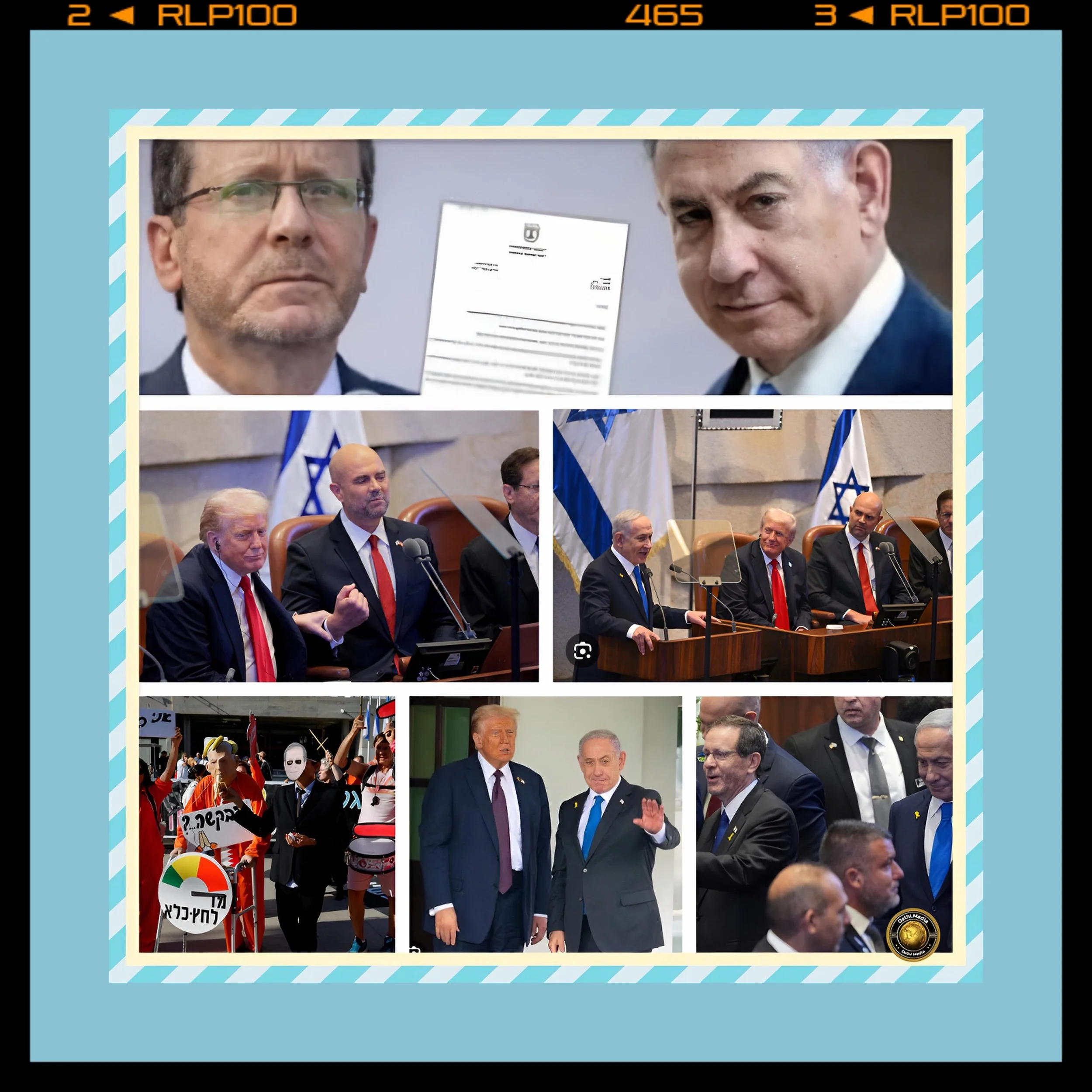
Washington’s Growing Influence Over Israel’s Courts: The Netanyahu Pardon Story
Executive Summary
Netanyahu’s Pardon Request Tests the Limits of Israeli Democracy
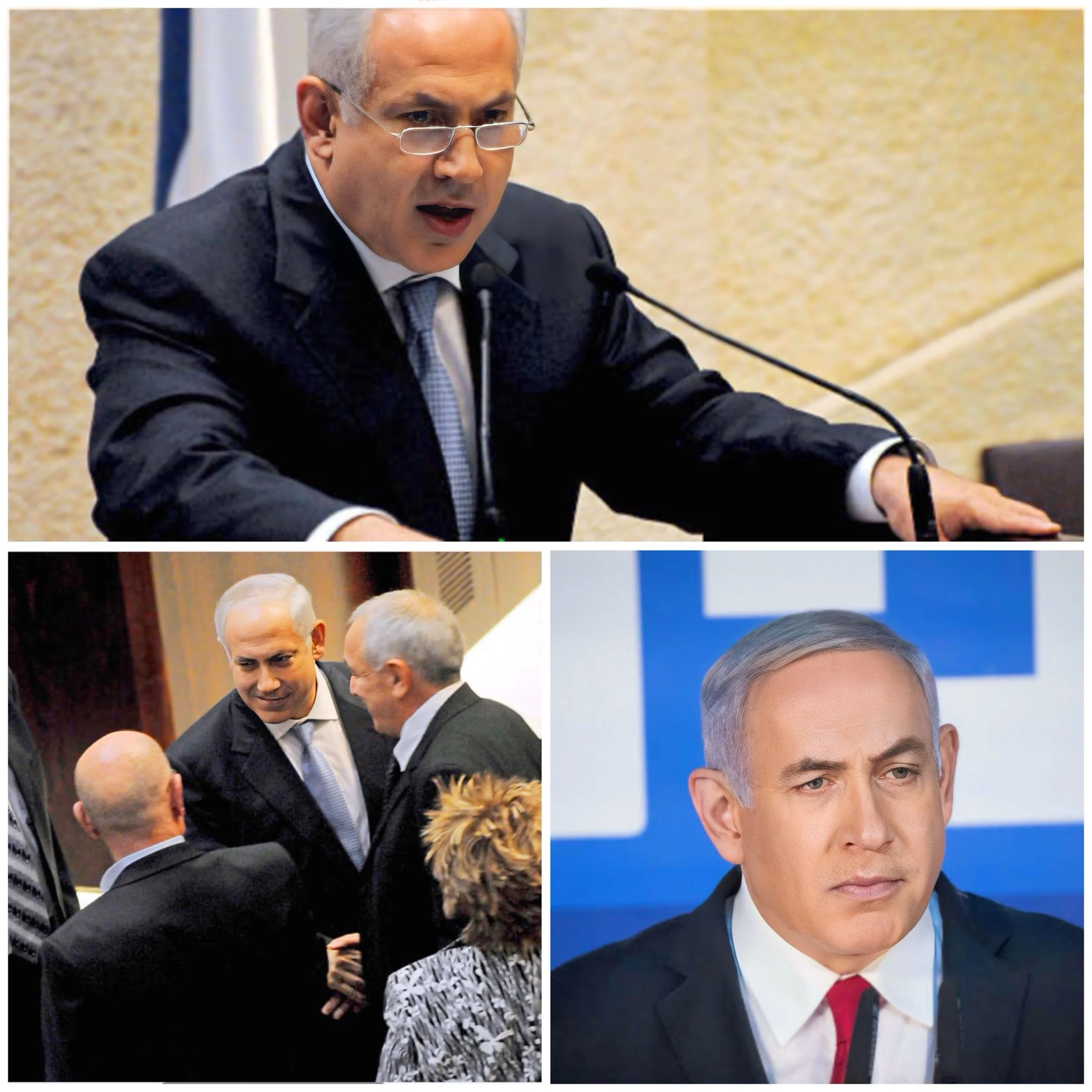
Israeli Prime Minister Benjamin Netanyahu has formally requested a presidential pardon from President Isaac Herzog in an extraordinary move that signals both political desperation and strategic calculation.
Facing potentially a decade or more of continued legal proceedings across three corruption cases—encompassing charges of bribery, fraud, and breach of trust—Netanyahu submitted a 111-page pardon application on November 30, 2025, without admitting guilt while simultaneously claiming the trial obstructs his governance.
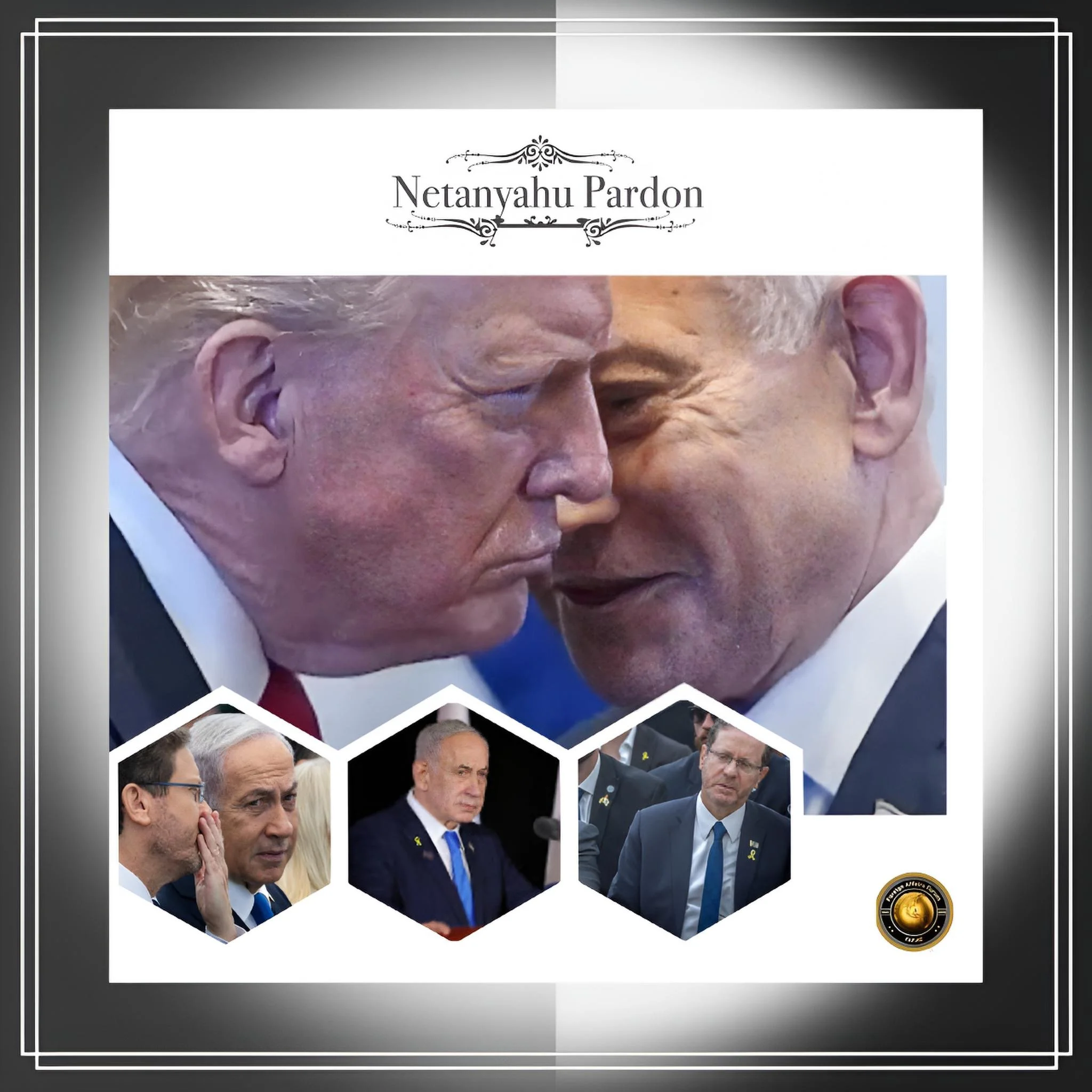
The request has been explicitly bolstered by repeated interventions from U.S. President Donald Trump, who has issued both a formal letter and public statements urging Herzog to grant clemency.
The situation presents a constitutional inflection point for Israel’s judicial independence, international precedent for executive pardon powers, and a stark illustration of how geopolitical relationships can influence domestic legal processes.
As of December 2025, Herzog’s office continues deliberating the request, with no defined timeline for resolution and significant implications for democratic governance hanging in the balance.
Introduction
Democracy on Trial: Netanyahu’s Clemency Bid Pits Rule of Law Against Political Power
The pardon request represents a watershed moment in Israeli political history, constituting the first time a sitting prime minister has sought such clemency while actively defending himself against criminal charges. Netanyahu’s move emerged after years of legal battles that have consumed substantial portions of his political energy and public attention.
Since his formal indictment on November 21, 2019—a historic first in Israel for a serving prime minister—Netanyahu has faced an exhausting trial process that commenced in May 2020 and has already consumed nearly five years without resolution.
The prosecution’s case has now rested, with defense testimony beginning in December 2024, suggesting the trial will extend for many additional years before any verdict emerges.
In this context, Netanyahu’s November 30 application to Herzog, coupled with Trump’s vigorous advocacy, has transformed a domestic legal matter into an international political controversy that touches upon fundamental questions of judicial independence, the rule of law, and the permissibility of political influence on judicial processes.
The Three Corruption Cases: A Detailed Examination
What You Need to Know About Netanyahu’s Shocking Pardon Request
Netanyahu confronts three distinct cases, collectively known as Cases 1000, 2000, and 4000, which were consolidated into a single trial before the Jerusalem District Court.
Understanding these cases provides essential context for evaluating both the gravity of the charges and Netanyahu’s desperation in seeking clemency.
Case 1000
Case 1000 involves allegations of fraud and breach of trust centered on Netanyahu and his family members, who allegedly requested and accepted expensive gifts from Israeli businessman Arnon Milchan and Australian billionaire James Packer between 2007 and 2016.
These gifts reportedly included approximately $300,000 in champagne, cigars, and other luxury items provided in exchange for unspecified favors.
The charges allege that Netanyahu abused his position and knowingly accepted benefits to which he was not entitled.
Case 2000
Case 2000 encompasses allegations of fraud and breach of trust stemming from Netanyahu’s alleged attempt to negotiate a bribery arrangement with the publisher of Yediot Ahronot, Arnon Mozes.
According to prosecutorial claims, Netanyahu allegedly offered to limit the circulation of Israel Hayom, a competing newspaper that frequently criticized Netanyahu, in exchange for favorable editorial coverage from Yediot Ahronot.
This arrangement allegedly represented a bargain in which each party would advance the other’s interests during the run-up to the 2015 elections. The case alleges that Netanyahu’s actions while serving as prime minister constituted a material breach of public trust.
Case 4000
Case 4000 is considered the most serious matter before the courts, encompassing allegations of bribery, fraud, and breach of trust.
The bribery charge alone carries a maximum sentence of 10 years' imprisonment and requires a higher burden of proof than other charges.
Netanyahu allegedly granted regulatory favors to Shaul and Iris Elovitch, who owned the Israeli telecommunications company Bezeq, to facilitate the controversial 2015 merger between Bezeq and the satellite company Yes.
Prosecutorial documents suggest that Netanyahu’s actions resulted in benefits to the Elovitch family estimated at approximately 1.8 billion New Israeli Shekels (approximately 500 million dollars) during the 2012-2017 period.
In exchange for these regulatory concessions, the Elovitch-owned Walla news site allegedly provided favorable coverage and amplified Netanyahu’s preferred political messaging to the public.
If convicted on all charges, Netanyahu faces potential maximum sentences aggregating approximately 13 years in prison.
However, the prosecution’s case is circumstantial, relying on documentation, communications records, and witness testimony rather than direct evidence of explicit quid pro quo arrangements.
Netanyahu has consistently maintained his innocence throughout the investigative and judicial processes, asserting that he has been subjected to politically motivated persecution orchestrated by hostile elements within the law enforcement establishment.
Netanyahu’s Strategic Rationale: The Pardon Application Arguments
Democracy on Trial: Netanyahu’s Clemency Bid Pits Rule of Law Against Political Power
Netanyahu’s legal team submitted a meticulously crafted 111-page document to President Herzog outlining the rationale for the pardon request.
The submission strategically avoids any admission of guilt, instead maintaining that Netanyahu’s personal interest lies in vindicating himself through complete acquittal at trial, while simultaneously arguing that the public interest dictates a different course.
This sophisticated rhetorical positioning attempts to simultaneously claim innocence while acknowledging that the trial itself constitutes a national distraction requiring resolution.
The application emphasizes that nearly a decade has elapsed since initial investigations commenced against Netanyahu, with the trial itself having consumed almost six years, and projected to extend for many additional years before final resolution.
Netanyahu’s legal counsel argues that this protracted process has become “a center of intense debate,” consuming governmental capacity and political attention during periods when the nation faces urgent security challenges and diplomatic opportunities.
Biblical Showdown: Netanyahu’s Last Stand Against Justice System Unfolds in Jerusalem
The submission characterizes the trial’s continuation as damaging to national unity and healing, asserting that clemency would enable the prime minister to devote his undivided energies to governance, security matters, regional peacekeeping efforts, and what the application terms “golden opportunities” for Israel.
Notably, Netanyahu’s legal team advances a novel constitutional argument, asserting that the president has authority to grant a pardon in cases where “completely extraordinary circumstances” exist and “a supreme public interest arises,” necessitating clemency to advance the national interest.
This argument rests partly upon the precedent established in the 1980s Bus 300 affair, when President Haim Herzog (the current president’s father) granted a pardon to Shin Bet operatives who admitted guilt and whose superior had resigned.
However, Netanyahu’s application distinguishes itself from that precedent by refusing to acknowledge any wrongdoing whatsoever, thereby departing from the established practice requiring either conviction or confession as prerequisites for pardon consideration.
Trump’s Intervention: Precedent and Implications
The International Chess Match: How U.S. Pressure Is Reshaping Israeli Justice
The internationalization of Netanyahu’s pardon request through Trump’s explicit advocacy represents an extraordinary departure from customary diplomatic norms.
Beginning in October 2025, Trump first raised the pardon possibility during an address to the Israeli Knesset, publicly urging President Herzog to “just give him a pardon” and characterizing Netanyahu as a “greatest wartime leader.”
Subsequently, Trump dispatched a formal letter to Herzog condemning the charges against Netanyahu as “political lawfare” and “unjustified prosecution,” urging clemency as an act of statecraft that would enable both leaders to concentrate on advancing vital Israeli and American interests during a historical opportunity.
Most significantly, on December 2, 2025, Netanyahu engaged in an extensive telephone conversation with Trump, during which the Israeli premier explicitly requested additional American assistance in advancing his pardon objectives.
According to U.S. officials, Trump expressed cautious optimism about the pardon’s likelihood but also acknowledged that “the president has done all he can do,” suggesting that further American intervention might undermine Herzog’s willingness to grant clemency.
During the same conversation, Trump urged Netanyahu to moderate Israeli military operations in Gaza and Syria, demonstrating that the pardon discussion occurred within a broader context of American efforts to shape Israeli regional strategy.
How Trump’s Intervention Could Change Everything for Netanyahu’s Legal Battle
Trump’s intervention raises troubling questions regarding the appropriate boundaries of international pressure on judicial processes.
While the Trump administration has previously granted various pardons to allies and controversial figures—including former Honduran President Juan Orlando Hernández, who faced a 45-year prison sentence for drug trafficking—the Netanyahu case differs fundamentally insofar as it involves American intervention in another nation’s judicial proceedings affecting a foreign leader.
Trump’s advocacy reflects his apparent belief that the Israeli presidential pardon authority operates analogously to American executive clemency powers, which Trump has wielded with substantial discretion.
However, Israeli law constrains presidential pardon authority, requiring consultation with legal advisors and consideration of public-interest factors before granting clemency.
Legal Precedent and Constitutional Constraints
Elite Justice? How Netanyahu’s Pardon Bid Threatens Democratic Accountability
Israeli constitutional law does technically permit presidential pardons before conviction, though such grants remain rare and controversial.
The foundational precedent stems from the 1986 Supreme Court decision Barzilai v. Government of Israel, which held that the Israeli president possesses constitutional authority to grant pardons both before and after conviction in cases that meet stringent criteria.
The court established that pre-conviction pardons may only be granted when “completely extraordinary circumstances” exist and when a “supreme public interest” clearly demonstrates that clemency serves national welfare more effectively than continuing prosecution.
The Bus 300 precedent, in which President Haim Herzog pardoned Shin Bet operatives before trial, involved agents who had already admitted guilt and whose superior had resigned from office—establishing a template for acknowledging wrongdoing and institutional accountability before pardon consideration.
Netanyahu’s application represents a radical departure from established precedent, as he simultaneously maintains absolute innocence, refuses to acknowledge any wrongdoing, and demonstrates no willingness to resign from political office.
The prosecution has not reached a guilty verdict, witness testimony remains incomplete, and the case remains in its earliest stages of defense presentation.
Under Israeli Attorney General guidelines, the state president generally declines to consider pardon requests from individuals who have not been convicted, reflecting the judicial convention that clemency is a mechanism for tempering punishment following a judicial determination of guilt.
Netanyahu’s request, therefore, challenges fundamental assumptions about the relationship between guilt determination and clemency eligibility.
Opposition Arguments and Democratic Concerns
The Pardon Nobody Should Accept: Why Netanyahu’s Request Undermines Rule of Law
Opposition political forces have mounted vigorous objections to Netanyahu’s pardon request, with some articulating concerns that extend beyond partisan interests to encompass broader questions regarding judicial independence and democratic governance.
Opposition leader Yair Lapid has insisted that any pardon must be conditioned upon Netanyahu’s confession of guilt, expression of genuine remorse, and immediate retirement from political life—conditions that Netanyahu has explicitly rejected.
Benny Gantz, another prominent opposition figure, has characterized the pardon request as “fake” and urged Netanyahu to “extinguish the fire you created within Israeli society,” suggesting that clemency without acknowledgment of wrongdoing would represent an abandonment of democratic principles.
Why Is Netanyahu Asking for a Pardon If He Claims Innocence?
Legal experts and civil society organizations have raised substantial concerns regarding the precedent a Netanyahu pardon would establish. Such clemency, without conviction, confession, or resignation, might effectively communicate to Israel’s political elite that sufficiently powerful leaders can evade criminal accountability through political maneuvering and international pressure.
The international commentary has noted that Herzog, who some characterize as a relatively weak president initially elected with unexpected support from Netanyahu himself, might prove susceptible to pressure to compromise on the pardon question.
The Atlantic analysis suggests that Herzog’s language, stating he will consider Netanyahu’s request “with the good of the state and society” in mind, leaves open sufficient rhetorical space for Herzog to rationalize granting conditional or unconditional clemency.
The Herzog Deliberation Process: Timeline and Conditions
The Fight Over Netanyahu: How a Pardon Request Became Israel’s Biggest Constitutional Battle
President Herzog’s office has characterized Netanyahu’s pardon request as “extraordinary,” carrying “significant implications” for Israel’s democratic institutions and judicial processes. Upon receiving the November 30 application,
Herzog initiated the formal pardon deliberation process, transferring the request to the Ministry of Justice’s Pardons Department, which has begun collecting relevant legal opinions, constitutional analysis, and expert recommendations.
The president’s legal advisor will subsequently draft a formal recommendation based on this departmental analysis, providing the foundation for Herzog’s ultimate decision.
Critically, the Israeli legal framework imposes no specified timeline for presidential pardon resolution.
Legal Precedent Meets Political Power: What Netanyahu’s Pardon Request Reveals About Modern Democracy
Herzog has indicated he will evaluate the request “with utter seriousness” and with focus upon “the well-being of the Israeli people” as his first, second, and third priority, explicitly emphasizing that Israel’s judicial process itself must be respected. Initial reporting suggested that the full deliberation process might extend approximately two months from the date of request, potentially placing a presidential decision in the January or February 2026 timeframe, though subsequent developments have not confirmed any firm deadline.
Media reports indicate that Herzog may be considering a conditional compromise position rather than either unconditional rejection or unqualified acceptance of Netanyahu’s pardon request.
One discussed possibility involves Herzog offering to grant pardon on condition that Netanyahu temporarily resign from political office for a specified period, potentially extending through the October 2026 elections.
Such a compromise would nominally satisfy Netanyahu’s desire for legal clemency while simultaneously addressing opposition demands that Netanyahu face political consequences for his legal troubles.
However, Netanyahu has provided no indication that he would accept such conditional clemency, having built his entire political position around claims of innocence and injustice while refusing to acknowledge any necessity for political resignation.
International Dimensions and Strategic Considerations
Washington’s Growing Influence Over Israel’s Courts: The Netanyahu Pardon Story
Netanyahu’s pardon request and Trump’s supporting intervention occur within a complex geopolitical context encompassing the ongoing Gaza war, the Syrian humanitarian catastrophe, persistent Iranian threats, and broader Middle Eastern strategic rebalancing.
Netanyahu has repeatedly cited security emergencies and critical governmental responsibilities as justifications for requesting trial delays and, now, for seeking clemency.
The prime minister contends that his legal preoccupations distract from urgent matters of national security, regional diplomacy, and geopolitical opportunity that require his complete attention.
Trump’s advocacy for Netanyahu’s pardon reflects broader American strategic interests in maintaining Netanyahu as Israel’s leader during a period when Trump views Netanyahu as essential to advancing American interests in the Middle East.
A Prime Minister’s Last Resort: Netanyahu’s Desperate Bid for Legal Refuge
The December 2, 2025 conversation between Trump and Netanyahu demonstrated that the American president is simultaneously pursuing multiple objectives through Netanyahu, including moderating Israeli military operations in Gaza and Syria, while explicitly urging Netanyahu to adopt more accommodating postures toward emerging Syrian governance structures.
Trump’s simultaneous pressure on multiple fronts—pardon advocacy, military restraint recommendations, and regional strategic positioning—illustrates how the pardon request has become integrated within broader geopolitical negotiations rather than remaining a purely domestic Israeli judicial matter.
The International Criminal Court’s issuance of an arrest warrant against Netanyahu for alleged war crimes in Gaza remains largely symbolic, as Israel and the United States both reject ICC jurisdiction and Israel lacks any mechanism to enforce international warrants.
However, this warrant’s existence adds another dimension to Netanyahu’s strategic interest in domestic pardon resolution, as clemency would at least remove one category of legal jeopardy, even while the ICC warrant remains technically active.
Future Trajectories and Probable Outcomes
Is This the End of Democratic Accountability? Netanyahu’s Pardon Raises Alarming Questions
The immediate future likely involves months of deliberation within Israel’s justice ministry and within Herzog’s office regarding the pardon request. Multiple scenarios appear plausible, each carrying distinct implications for Israeli democratic institutions and international perceptions.
Scenario One
Unconditional Rejection. Herzog could determine that Netanyahu’s failure to admit guilt, combined with the absence of trial conclusion, places the request outside constitutional parameters regardless of claimed public interest benefits.
Such rejection would vindicate democratic principles and judicial independence, though it might generate coalition backlash and political pressure from Netanyahu’s supporters. Rejection would also implicitly rebuke Trump’s intervention and assert Israeli judicial autonomy against international pressure.
Scenario Two
Conditional Acceptance. Herzog could offer Netanyahu conditional clemency contingent upon political resignation through the 2026 elections or for a specified number of years.
This compromise approach would ostensibly satisfy both Netanyahu’s desire for legal relief and opposition demands for political consequences. However, Netanyahu’s consistent refusal to acknowledge wrongdoing or accept resignation conditions makes this scenario’s political feasibility uncertain.
Scenario Three
Unconditional Acceptance. Herzog could determine that public interest considerations, national security arguments, and international diplomatic imperatives justify granting Netanyahu unconditional pardon despite his refusal to admit guilt or resign.
Such a decision would likely generate substantial international criticism, potentially damage perceptions of Israeli judicial independence, and establish controversial precedent regarding elite accountability.
Scenario Four
Indefinite Deferral. Herzog could delay decision-making indefinitely, allowing political circumstances to evolve while maintaining nominal consideration of the request.
Such deferral would avoid forcing a definitive choice while allowing time for political dynamics to shift, potential election results to change, or international circumstances to create new pressures and opportunities.
The trial’s continuation or suspension remains partially independent from Herzog’s pardon decision, insofar as the judicial process itself continues regardless of presidential deliberation.
However, a granted pardon would terminate all prosecution, while rejection or deferral would permit the trial to proceed toward eventual verdict.
Conclusion
From Triumph to Trial: The Fall of Netanyahu and His Pardon Plea
Netanyahu’s pardon request represents a genuine constitutional crisis for Israeli democracy, encompassing questions regarding judicial independence, the appropriate scope of presidential pardon authority, the permissibility of international pressure on judicial processes, and the principle that no individual, regardless of political power, stands above the law.
The request’s formulation without guilt admission, coupled with Trump’s explicit advocacy and Netanyahu’s demonstrated willingness to internationalize a domestic matter, suggests a degree of confidence on Netanyahu’s part that political power and international alignment can overcome both legal jeopardy and democratic institutions.
President Herzog’s deliberation occurs within a crucible of conflicting pressures: international diplomatic considerations, domestic political calculations, constitutional interpretations, and fundamental democratic principles.
The ultimate decision will likely reverberate beyond Israel, influencing international perceptions regarding whether democratic states can maintain judicial independence when powerful leaders mobilize international support and invoke security justifications to escape legal accountability.
The coming months will reveal whether Herzog prioritizes democratic principle or political accommodation—a choice carrying implications extending far beyond Netanyahu’s personal legal fate to encompass the future institutional character of Israeli democracy itself.