Government Falls: Bulgaria Plunges into Crisis Weeks Before Euro Goal
Executive Summary
Groundhog Day: Bulgaria Heads Toward Election Number Eight
On December 12, 2025, the Bulgarian National Assembly officially voted to accept the resignation of Prime Minister Rosen Zhelyazkov’s minority government.
This decision, driven by weeks of intensifying street protests against proposed tax hikes and persistent corruption allegations, collapses the administration just weeks before Bulgaria’s planned adoption of the Euro on January 1, 2026.
The resignation initiates a constitutional procedure likely to result in the appointment of a caretaker cabinet and the scheduling of the country’s eighth parliamentary election in under five years.
The immediate fallout threatens to destabilize Bulgaria’s fiscal trajectory and dampen investor confidence at a moment of historic economic integration with the European Union.
Introduction
Déjà Vu in Sofia: Another Government Bites the Dust
The fragile stability that characterized Bulgarian politics in early 2025 has abruptly fractured. Following less than a year in power, the coalition led by Prime Minister Rosen Zhelyazkov capitulated to mounting public pressure, signaling the end of the “regular” government formed after the October 2024 elections.
The National Assembly’s unanimous vote to accept the cabinet’s resignation underscores the depth of the crisis, which transcends mere partisan squabbling to reflect a profound disconnect between the political elite and the citizenry.
This collapse is particularly precarious as it occurs in the shadow of Bulgaria’s long-awaited entry into the Eurozone, a milestone intended to cement the nation’s economic alignment with Western Europe but now jeopardized by domestic volatility.
Key Developments
Anatomy of a Collapse: Why Bulgaria’s Coalition Failed
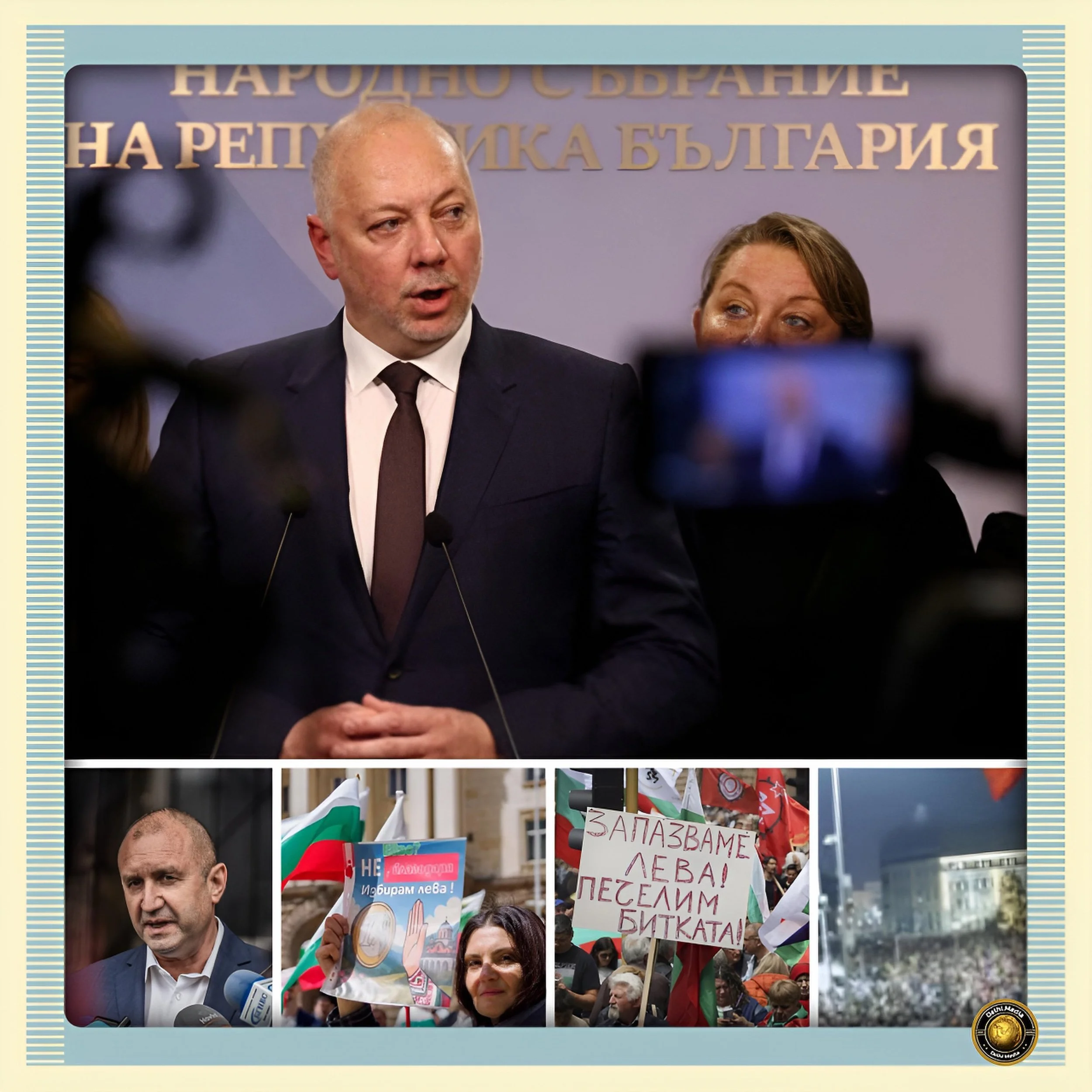
The path to this government collapse was paved by a rapid escalation of civil unrest throughout late November and early December 2025.
The catalyst was the Zhelyazkov administration’s draft 2026 budget, which proposed controversial increases in social security contributions and dividend taxes to meet fiscal targets.
These measures, perceived by the public as an unfair burden amidst unchecked high-level corruption, triggered mass demonstrations in Sofia and other major cities.
On December 11, acknowledging the untenable nature of his position, Prime Minister Zhelyazkov announced his intention to resign, preempting a scheduled no-confidence vote filed by the opposition. In a televised address, he cited the need to “hear the voice of the people” and avoid further polarization.
The following day, lawmakers convened and voted 227 to 0 to formalize the resignation, effectively terminating the cabinet’s mandate. Concurrently, parliament scrambled to process a modified version of the 2026 budget to ensure basic state functions continue despite the political vacuum.
Facts and Concerns
A Failed Experiment: What Zhelyazkov’s Exit Means for the EU
The resignation leaves Bulgaria in a precarious state of limbo.
The most pressing fact is the timeline: the government has fallen less than three weeks before January 1, 2026, the target date for Euro adoption.
While technical preparations may be largely complete, the absence of a fully empowered political leadership raises concerns about the final diplomatic and legislative steps required for a smooth transition.
Furthermore, this event marks the failure of yet another attempt at a stable coalition, with the Zhelyazkov cabinet—supported by GERB-SDS, BSP, and ITN—unable to survive its first major fiscal challenge.
The primary concern among analysts is the potential for prolonged legislative paralysis. Without a working majority, critical reforms tied to EU funding and Eurozone integration may stall.
Additionally, the recurring failure to form lasting governments—this would be the eighth snap election since 2021—suggests a systemic crisis in Bulgarian democracy, characterized by high voter apathy and a fragmented parliament where no single entity can command a mandate.
Cause and Effect Analysis
On the Brink: Bulgaria Fractures at Historic Crossroads
The immediate cause of the government’s dissolution was the backlash against fiscal austerity measures. The administration attempted to balance the books to meet Eurozone inflation and deficit criteria by raising taxes, a move that alienated the middle class and business sectors.
However, the root cause runs deeper: a pervasive lack of public trust in state institutions.
The protests were not merely about taxes but were fueled by accumulated grievances regarding state capture and corruption, issues that President Rumen Radev highlighted when he publicly urged the government to resign, aligning himself with the demonstrators.
The effect of this resignation is a renewed period of unpredictability. Economically, the political risk premium on Bulgarian debt may rise, and international partners may view the country as an unreliable counterpart.
Politically, the resignation strengthens the hand of President Radev, who will once again act as the primary power broker during the interim period.
It also deepens the rift between the established parties (GERB, PP-DB) and the rising populist or nationalist movements that thrive on anti-establishment sentiment.
Future Steps
Chaos in Sofia: Euro Dreams Hang by a Thread
According to the Bulgarian constitution, President Radev must now hand mandates to form a government to the largest parliamentary groups.
The first mandate will go to GERB, the winner of the last election. However, party leader Boyko Borissov has already signaled a reluctance to attempt forming another cabinet in the current hostile climate, suggesting GERB will likely return the mandate.
Should the first, second, and third mandates fail—a scenario widely regarded as inevitable—the President will appoint a caretaker government to manage the country.
The primary task of this interim administration will be to organize snap elections, likely to be held in early 2026. In the interim, the outgoing parliament will focus its remaining energy on passing the revised budget to prevent a fiscal shutdown on January 1.
The fate of the Eurozone entry remains the critical variable; while the technical process is advanced, the political optics of entering the currency union under a caretaker government are far from ideal.
Conclusion
Bulgaria’s Leadership Void: Navigating the Crisis of 2025
The dissolution of the Zhelyazkov government serves as a stark reminder of Bulgaria’s chronic political fragility.
While the immediate trigger was a dispute over taxation and the budget, the collapse is symptomatic of a broader failure to build consensus in a deeply divided society.
As the country drifts toward yet another election, the cost of this instability is measured not just in delayed reforms, but in the potential squandering of a historic opportunity to fully integrate into the European economic core.
The coming weeks will determine whether Bulgaria can navigate this leadership vacuum without sacrificing its strategic Euro-Atlantic ambitions.