The Long Peace: A Scholarly Assessment of History’s Most Consequential Achievement
Introduction
The assertion that the past eight decades constitute “the longest period without war between great powers since the Roman Empire” represents one of the most extensively documented and debated propositions in contemporary international relations scholarship.
This extraordinary epoch, frequently termed the “Long Peace” in academic literature, demands rigorous scholarly examination to comprehend its origins, mechanisms, fragility, and prospects.
The Historical Anomaly: Quantifying the Achievement
The empirical foundations substantiating this claim are formidable. Since the conclusion of hostilities in 1945, no direct military conflict has erupted between states capable of projecting decisive force across the international system.
This stands in stark contrast to the preceding millennia of human civilization, in which great-power warfare was a recurrent, almost cyclical phenomenon.
Scholars at the Correlates of War project have documented that between 1816 and 2000, significant power dyads experienced approximately 2,660 consecutive years of peace, during which 881 forty-two-year periods occurred—suggesting that extended peace between major powers, while not unprecedented, accounts for approximately 30% of historical experience.
Nevertheless, the post-1945 period exhibits distinctive characteristics that transcend mere statistical improbability. The magnitude of transformation occasioned by this sustained peace is staggering.
The global population has expanded from approximately 2.3 billion in 1945 to over 8.1 billion in 2024—effectively tripling within a single human lifetime.
Concurrently, life expectancy has undergone an unprecedented transformation, rising from approximately 46-48 years globally in 1950 to 73.2 years in 2023—nearly doubling in 73 years.
Perhaps most remarkably, global GDP, when measured in constant dollars, has proliferated approximately fifteenfold since 1945, generating prosperity on a scale previously inconceivable.
These metrics illuminate a fundamental truth: the Long Peace has not merely prevented catastrophe but has actively facilitated human flourishing on a scale unprecedented in history.
Had the international system reverted to its customary pattern of great power warfare—particularly warfare conducted with thermonuclear arsenals—the demographic, economic, and developmental trajectories of the late twentieth and early twenty-first centuries would have been radically circumscribed, if not entirely obliterated.
Theoretical Frameworks: Explaining the Inexplicable
Scholarly attempts to account for the Long Peace have generated a rich tapestry of theoretical frameworks, each emphasizing distinct causal mechanisms while acknowledging the phenomenon’s multicausal complexity.
Hegemonic Stability
Theory posits that international orders achieve maximum stability when a preponderant power possesses both the capacity and willingness to establish and enforce systemic rules.
The United States, emerging from World War II with approximately 40% of global GDP and unrivaled military capabilities, constructed an intricate architecture of institutions, alliances, and economic arrangements to forestall great-power conflict.
This framework included the Bretton Woods institutions—the International Monetary Fund and the World Bank—established in July 1944 to stabilize the international monetary system and facilitate postwar reconstruction.
The United Nations, founded in San Francisco in 1945, provided mechanisms for conflict resolution and collective security, despite its structural limitations stemming from the Security Council's veto powers.
Robert Gilpin’s seminal theory of hegemonic war cycles offers a sobering counterpoint, arguing that international systems characterized by hegemonic dominance contain inherent destabilizing dynamics.
As subordinate powers experience differential growth rates and accumulate capabilities, disequilibrium between underlying power distributions and prevailing institutional arrangements generates structural pressures toward systemic transformation, frequently culminating in hegemonic warfare.
Gilpin’s framework suggests that hegemonic orders are inherently temporary, their stability eroding as the hegemon’s relative capabilities decline and rising powers challenge established hierarchies.
Liberal Institutionalism, by contrast, emphasizes the capacity of international institutions to transcend power-based explanations by creating stable expectations, reducing transaction costs, facilitating information flows, and establishing mechanisms for cooperative gains.
Scholars such as G. John Ikenberry have demonstrated how the post-1945 liberal international order embedded American power within multilateral institutions that constrained unilateral action while simultaneously legitimizing U.S. leadership.
This “constitutional” approach to hegemony created binding commitments that reassured potential adversaries and established predictable patterns of interaction.
Ikenberry’s scholarship emphasizes that the liberal international order’s durability derives not solely from American material preponderance but from its capacity to offer participatory mechanisms, rule-based governance, and broadly distributed benefits.
The integration of former adversaries—particularly Germany and Japan—into cooperative frameworks exemplifies this strategy’s efficacy, transforming erstwhile enemies into stalwart allies through institutional enmeshment.
Constructivist Perspectives direct analytical attention toward normative structures and ideational factors that shape state behavior.
Nina Tannenwald’s pioneering work on the “nuclear taboo” demonstrates how powerful moral prohibitions against nuclear weapons use have evolved since 1945, creating robust informal norms that constrain strategic choices independent of material considerations.
Tannenwald’s archival research reveals that American presidents during the Korean War, Vietnam War, and Gulf War confronted sustained military recommendations to employ tactical nuclear weapons yet declined, influenced by emerging international opprobrium toward nuclear use and concerns about moral legitimacy.
The nuclear taboo represents a quintessential example of how socially constructed norms can acquire causal power, shaping interests rather than merely reflecting them.
This normative constraint has proven remarkably resilient across diverse strategic contexts, suggesting that ideational factors constitute indispensable components of any comprehensive explanation for nuclear non-use since 1945.
Democratic Peace Theory, rooted in Immanuel Kant’s philosophical treatise “Perpetual Peace” (1795), contends that liberal democracies exhibit systematic reluctance to wage war against fellow democracies.
Empirical evidence supporting this proposition is substantial: among established democracies, direct military conflict has been vanishingly rare, if not absent, depending upon definitional parameters.
Explanatory mechanisms emphasize shared normative commitments to peaceful conflict resolution, institutional constraints imposing audience costs for aggression, and economic interdependence generating opportunity costs for warfare.
Critics, notably Patrick McDonald, challenge the causal primacy attributed to regime type, arguing instead that great power hierarchies and postwar settlements—rather than democracy per se—determine patterns of peace and conflict.
McDonald contends that the “apparent peace among democracies” reflects power asymmetries and hierarchical arrangements established by victorious coalitions following major conflicts, with democratic institutions serving as epiphenomenal rather than causal variables.
Security Dilemma and Spiral Model Dynamics illuminate how structural features of international anarchy can generate unintended escalatory pressures even among security-seeking states.
The security dilemma describes the tragic situation in which defensive measures undertaken by one state to enhance its security are perceived as threatening by others, triggering reciprocal buildups that leave all parties less secure than the status quo arrangements that preceded them.
This dynamic can produce destabilizing arms races and deteriorating relationships culminating in preventive warfare, even absent expansionist intentions.
The Cold War’s evolution offers instructive empirical material.
The superpower rivalry exhibited pronounced security-dilemma characteristics, with both American and Soviet defensive preparations, interpreted through adversarial lenses, as offensive buildups requiring countervailing responses.
The Cuban Missile Crisis of October 1962 epitomized how rapidly security dilemma dynamics can escalate toward catastrophic outcomes.
President Kennedy estimated the probability of nuclear war during that thirteen-day confrontation as “between one in three and even”—odds that retrospective analysis has done nothing to lengthen.
Subsequent revelations disclosed that Soviet forces in Cuba possessed tactical nuclear weapons with pre-delegated authorization for battlefield use—a fact unknown to American decision-makers during the crisis.
Had Kennedy accepted the unanimous recommendation of the Joint Chiefs of Staff to invade Cuba with conventional forces, American troops would have confronted tactical nuclear strikes, almost certainly triggering a general nuclear exchange.
This counterfactual illuminates the razor-thin margins separating survival from annihilation and underscores the contingent, fragile nature of the Long Peace.
The Nuclear Dimension: Eighty Years of Non-Use
The absence of nuclear weapons employment in warfare since August 1945 constitutes perhaps the Long Peace’s most consequential dimension.
Despite numerous documented “close calls”—including false alarms, command system failures, and deliberate contemplation by political leaders—nuclear weapons have remained unused for nearly eight decades.
This remarkable record cannot be attributed solely to deterrence, though mutual assured destruction undoubtedly imposed formidable constraints on nuclear-armed adversaries.
Tannenwald’s research
The research demonstrates that the nuclear taboo operated as an autonomous causal force, creating reputational costs and moral inhibitions that dissuaded nuclear employment even in circumstances where tactical military advantage might have accrued.
The taboo’s evolution from tentative norm in the 1940s to robust international prohibition by the 1990s exemplifies how ideational structures can crystallize through sustained practice and discursive reinforcement.
The Nuclear Non-Proliferation Treaty (NPT)
The NPT treaty, which entered into force in March 1970, established a formal legal architecture distinguishing nuclear-weapon states (the United States, the Soviet Union/Russia, the United Kingdom, France, and China) from non-nuclear-weapon states.
The NPT’s central bargain obligated non-nuclear states to forswear weapons acquisition while requiring nuclear powers to pursue “good faith” disarmament efforts.
Despite imperfections and notable non-adherents (India, Pakistan, Israel, and North Korea), the NPT has demonstrably constrained proliferation.
President Kennedy’s pessimistic 1963 prediction that twenty or more states might possess nuclear arsenals by 1975 has been dramatically falsified—only nine states currently maintain atomic capabilities.
Nuclear arsenals have contracted substantially from Cold War apexes.
Arms control agreements
The American and Soviet/Russian stockpiles
The stockpiles, which exceeded 30,000 and 40,000 warheads, respectively, at their peaks, have declined to active inventories of fewer than 4,500 weapons each.
While these reductions primarily reflect arms control agreements (Strategic Arms Reduction Treaties, Intermediate-Range Nuclear Forces Treaty) and unilateral decisions following the Cold War’s termination, the broader normative context established by the NPT regime facilitated these developments.
Challenges to nuclear non-proliferation
Nevertheless, contemporary challenges to nuclear non-proliferation are mounting.
Russia’s flagrant violations of the Budapest Memorandum—which provided security assurances to Ukraine in exchange for its denuclearization—have profoundly undermined confidence in security guarantees offered by nuclear-weapon states.
This violation generates perverse incentives for states contemplating nuclear acquisition as the ultimate guarantee of territorial integrity and regime survival.
Contemporary Threats: The Fragility Exposed
The Long Peace’s continuation cannot be presumed.
Multiple developments converging in the 2020s generate unprecedented challenges to the post-1945 international order, raising acute questions about systemic resilience and adaptability.
Russia’s War Against Ukraine
The war represents the most overt challenge to territorial integrity norms since 1945.
Vladimir Putin’s full-scale invasion in February 2022
(1) The invasion violated fundamental principles of the UN Charter and the entire postwar settlement predicated on prohibitions against territorial aggrandizement through military force.
(2) Putin has repeatedly brandished nuclear threats throughout the conflict, lowering Russia’s atomic doctrine thresholds and conducting exercises simulating tactical nuclear weapons employment.
(3) CIA Director William Burns, in 2022, assessed that “there was a real risk of the possible use of tactical nuclear weapons” as Ukrainian counteroffensives threatened to overrun retreating Russian forces.
The CIA estimated odds at approximately 50-50 for Russian nuclear employment under specific battlefield conditions.
Burns was dispatched to Moscow to convey American concerns directly to his Russian counterpart, Sergey Naryshkin, emphasizing “catastrophic consequences” that would follow nuclear use.
(4) The Imaginative collaboration between the United States and China—with Chinese President Xi Jinping reportedly intervening personally to dissuade Putin—temporarily defused immediate escalation risks.
These events demonstrate the nuclear taboo’s contingent nature and the persistent danger that desperate leaders confronting battlefield reversals might resort to nuclear escalation as a means of staving off strategic defeat.
(5) Putin’s explicit revision of Russian nuclear doctrine in September 2024, expanding circumstances warranting nuclear response and extending nuclear umbrella coverage to Belarus, signals deliberate erosion of normative constraints.
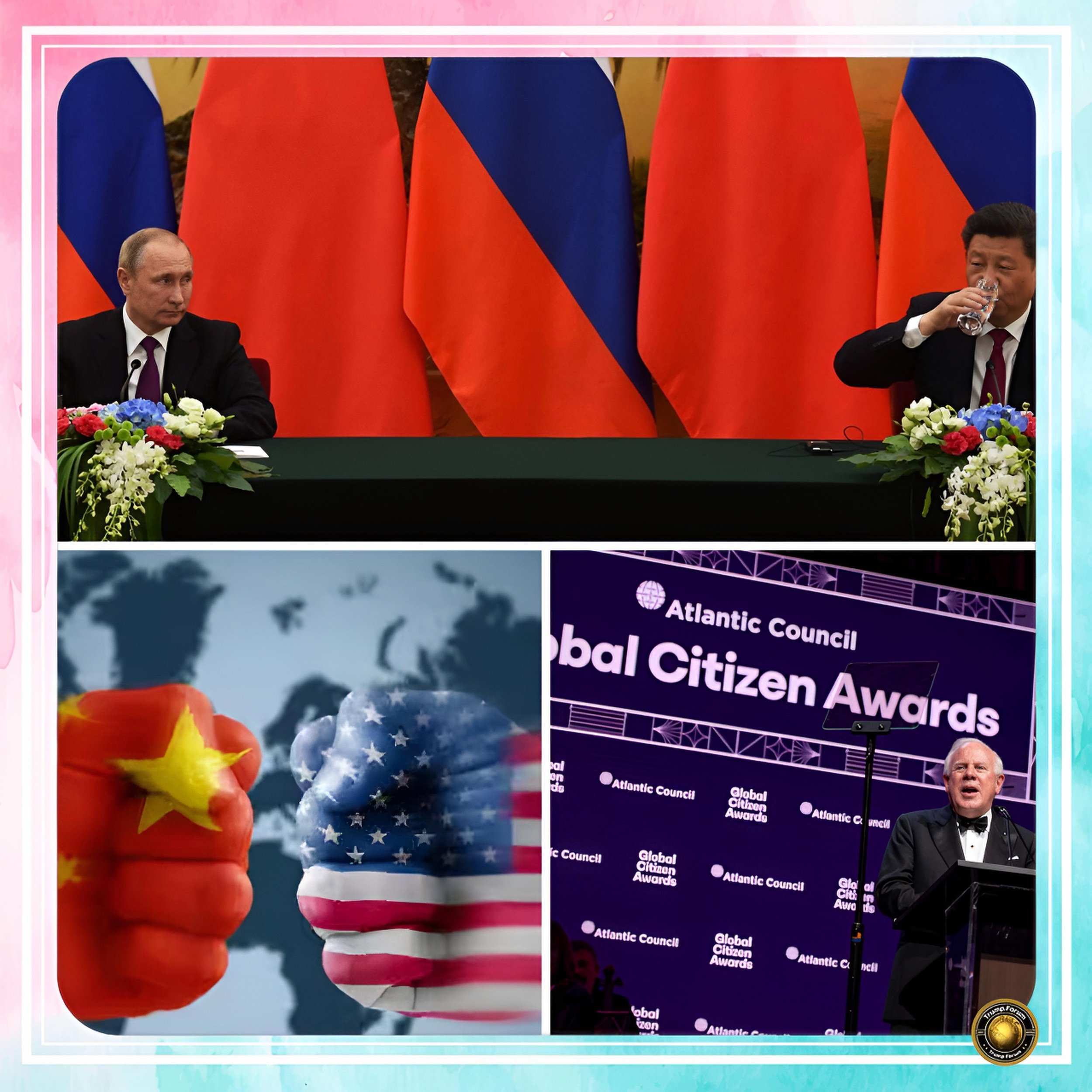
Intensifying U.S.-China Strategic Competition constitutes the paramount structural challenge to international stability.
Graham Allison’s “Thucydides Trap”
The framework
(1) inspired by the ancient historian’s analysis of the Peloponnesian War, posits that transitions involving rising powers challenging established hegemons generate acute war risks.
(2) Allison’s Belfer Center study identified sixteen historical cases of such transitions, twelve of which culminated in war.
(3) The Thucydides Trap concept has attracted criticism for analytical limitations and Western-centric assumptions, but it usefully focuses attention on structural stresses generated by power transitions.
Chinese comprehensive national power has expanded dramatically over recent decades, with China’s economy now rivaling America’s in purchasing power parity terms.
This economic ascent has enabled corresponding military modernization, particularly naval capabilities, challenging American dominance in the Western Pacific.
Scholars Gabriel Collins and Andrew Erickson
They identify the 2020s as a “decade of maximum danger” stemming from the confluence of a
(1)peaking paramount leader, (Xi Jinping), a peaking Chinese Communist Party pursuing aggressive revisionist objectives
(2) a peaking People’s Republic confronting deteriorating demographic profiles and structural economic headwinds.
This temporal compression creates incentives for risk-acceptant behavior while Chinese leaders perceive favorable windows to achieve strategic objectives—particularly regarding Taiwan—before relative power trajectories shift adversely.
Taiwan represents the most acute flashpoint for potential U.S.-China military conflict.
Xi Jinping has explicitly declined to renounce force for achieving “reunification,” and People’s Liberation Army modernization programs have been accelerated with 2027—the centennial of the PLA’s founding—as a key milestone.
Should deterrence fail and armed conflict erupt over Taiwan, escalation to nuclear employment cannot be excluded given both powers’ nuclear arsenals and absence of robust crisis management mechanisms analogous to Cold War-era superpower arrangements.
Erosion of International Institutions and Norms poses systemic risks transcending bilateral rivalries.
The United Nations Security Council’s paralysis, exemplified by Russian vetoes blocking resolutions concerning Ukraine and Chinese obstruction of resolutions on other conflicts, reveals fundamental governance deficiencies in the primary organ charged with maintaining international peace and security.
UN peacekeeping operations, while demonstrably effective in appropriate circumstances, have faced mounting challenges, with no significant new deployments since 2014 despite record levels of violent conflict globally.
The International Monetary Fund and the World Bank, pillars of the Bretton Woods architecture, confront legitimacy crises stemming from governance structures that reflect 1945 power distributions rather than contemporary realities.
Demands for fundamental reforms—including
(1) revised voting formulas incorporating population metrics
(2)! expanded representation for Global South states
(3)! enhanced transparency—have encountered resistance from established powers, reluctant to dilute their institutional influence.
(4) Intelligence assessments characterize the contemporary international environment as an “increasingly fragile world order” wherein China, Russia, and Iran challenge established norms and American primacy.
This “rules-based international order” formulation itself has become contested, with authoritarian powers promoting alternative governance models emphasizing sovereignty and non-interference over liberal values.
(5) The proliferation of Advanced Military Technologies introduces novel escalation pathways and crisis instabilities.
(6) Artificial intelligence, autonomous weapons systems, cyber capabilities, and hypersonic missiles compress decision timelines, potentially undermining crisis stability by creating “use-it-or-lose-it” dynamics for vulnerable assets.
The integration of these technologies with nuclear command and control systems raises the specter of inadvertent escalation triggered by technical malfunctions or cyber intrusions misinterpreted as deliberate attacks.
Sustaining the Long Peace: Scholarly Prescriptions
International relations scholarship offers diverse prescriptions for preserving the Long Peace, though consensus remains elusive given theoretical pluralism and divergent normative commitments.
Strengthening Institutional Frameworks commands widespread support among liberal institutionalist scholars.
This agenda encompasses reforming existing institutions to enhance legitimacy and effectiveness, while potentially creating new mechanisms for great-power coordination.
Proposals include
(1) Security Council expansion to incorporate emerging powers (India, Brazil, Japan, Germany)
(2) Revised IMF/World Bank governance reflecting contemporary economic distributions
(3) Revitalized arms control regimes addressing emerging technologies.
(4) Reinforcing Normative Constraints receives particular emphasis from constructivist scholars who argue that robust international norms can shape state behavior independent of material power distributions.
(5)Sustaining the nuclear taboo requires continuous discursive reinforcement, vigorous diplomatic responses to nuclear threats, and expansion of the prohibition norm to encompass novel delivery systems and strategic contexts.
(6) The Treaty on the Prohibition of Nuclear Weapons, which entered into force in 2021, exemplifies efforts to strengthen normative prohibitions, though its effectiveness remains constrained by nuclear-armed states’ non-participation.
Managing Power Transitions constitutes the paramount challenge for avoiding Thucydidean outcomes.
Scholarly recommendations emphasize
(1) mutual accommodation
(2) reciprocal reassurance
(3) institutional mechanisms enabling rising powers to acquire status commensurate with capabilities without requiring violent revision of existing orders.
This necessitates incumbent powers demonstrating flexibility and a willingness to share governance responsibilities, while rising powers exhibit restraint and a commitment to systemic stability rather than revolutionary transformation.
(4) Enhancing Crisis Management Capabilities draws lessons from Cold War experiences to mitigate escalation risks in contemporary rivalries.
Further recommendations include
(1)! Establishing direct communication channels
(2) Negotiating confidence-building measures
(3) Conducting track-two dialogues involving strategic communities
(4) Developing shared understandings of escalation thresholds can reduce misperception risks and create off-ramps during acute crises.
Addressing Underlying Sources of Fragility requires confronting structural drivers of instability beyond great power competition.
Climate change, pandemic risks, economic inequality, forced migration, and democratic backsliding all contribute to environmental conditions conducive to violent conflict.
Comprehensive strategies must integrate traditional security approaches with sustained attention to these multifaceted challenges.
Conclusion
The Imperative of Historical Consciousness
The Long Peace represents an extraordinary, historically anomalous achievement whose continuation cannot be assumed.
The past eight decades have witnessed human flourishing on unprecedented scales precisely because great power warfare has been forestalled and nuclear arsenals have remained unutilized.
This record reflects a complex amalgam of factors:
(1) American hegemonic leadership is establishing an institutional framework
(2) Nuclear weapons’ revolutionary impact on strategic calculus
(3) Emergent normative prohibitions constraining state behavior
(4) Democratic governance’s pacific tendencies
(5) Considerable fortuitous circumstances wherein crises were successfully navigated rather than culminating in catastrophe.
Contemporary threats—particularly intensifying U.S.-China competition, Russia’s revisionist aggression, institutional erosion, and technological transformation—generate legitimate concerns about systemic fragility.
The margins separating continued peace from devastating conflict may prove thinner than optimistic assessments acknowledge.
President Kennedy’s sobering estimation of one-in-three to even odds for nuclear war during the Cuban Missile Crisis should serve as a perpetual reminder of how precarious great power peace truly is.
Sustaining the Long Peace for subsequent generations demands
(1) Sophisticated understanding of its historical origins
(2) Theoretical foundations
(3) Institutional architecture
(4) Normative underpinnings.
(5) Political leaders and citizens alike should recognize the magnitude of this achievement
(6) Comprehend its fragility, and commit to the demanding diplomatic, institutional, and strategic efforts prerequisite for its preservation.
The alternative—reversion to historical patterns of great-power warfare conducted with twenty-first-century arsenals—portends consequences of civilizational magnitude.
Scholarly analysis, however rigorous, cannot alone guarantee the Long Peace’s continuation. Still, historical consciousness of what has been achieved, how it was accomplished, and what remains at stake constitutes an indispensable foundation for the choices ahead.