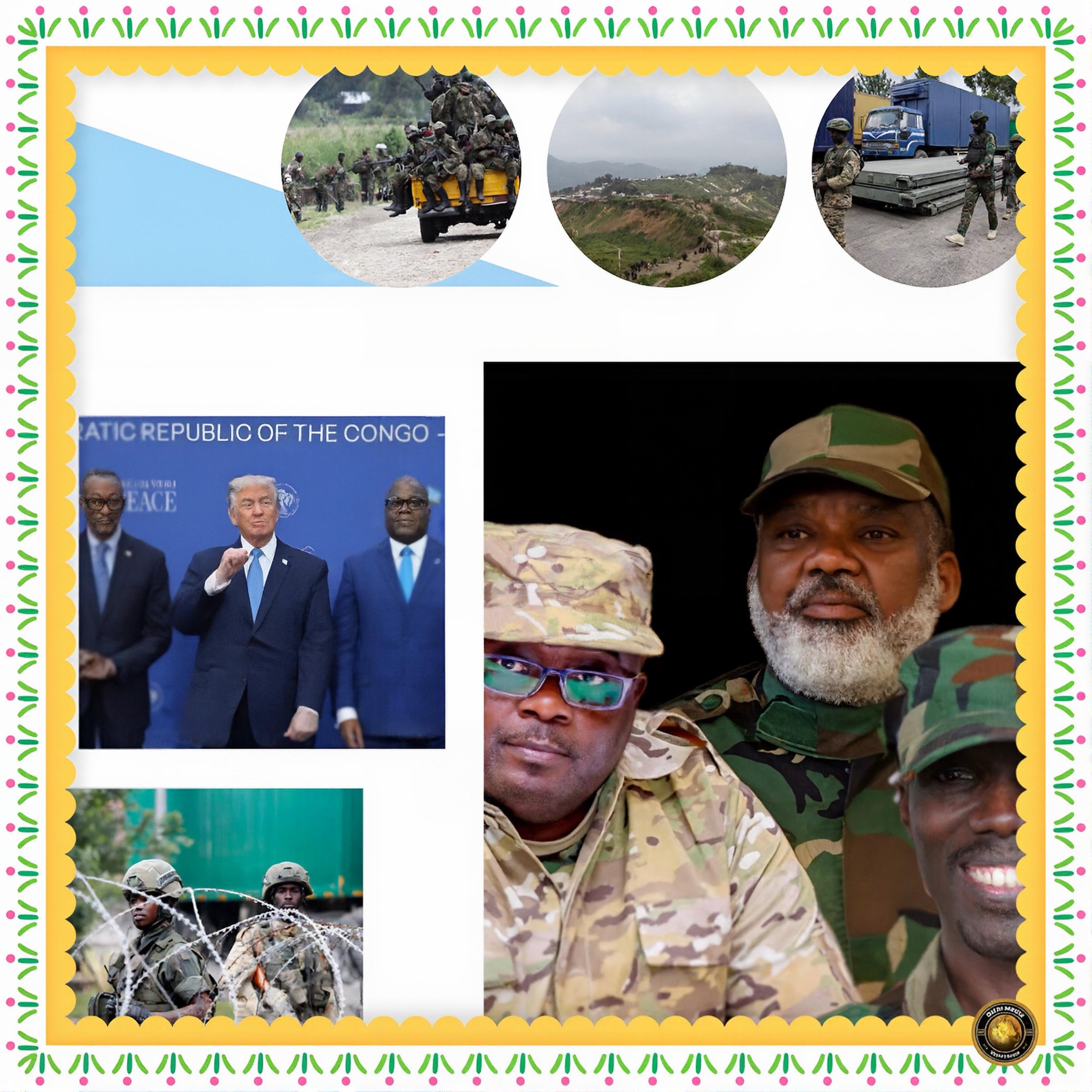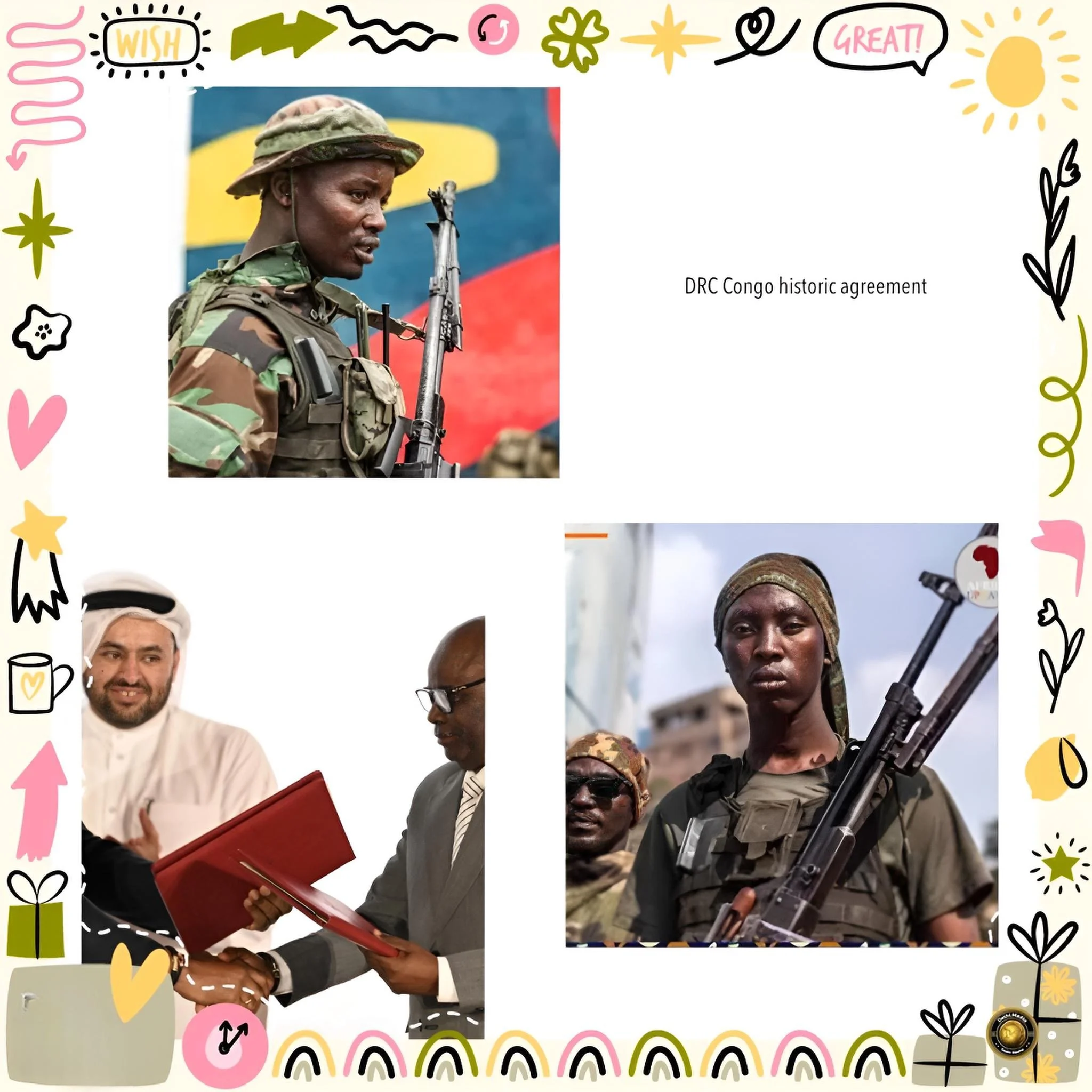
The Doha Framework Agreement on the DRC-M23 Conflict: Geopolitical Imperatives, Structural Fragmentation, and Implementation Pathologies
Introduction
The Limits of Declarative Peace Architecture
On November 15, 2025, representatives from the Democratic Republic of Congo (DRC) and the March 23 Movement (M23) signed the Doha Framework Agreement, a multilayered peace architecture intended to constitute a foundational scaffold for comprehensive conflict resolution.
However, scholars and conflict analysts differentiate sharply between agreement promulgation and sustainable implementation, particularly in contexts characterized by resource abundance, weak institutional capacity, and multipolar geopolitical contestation.
The framework represents a diplomatic inflection point rather than a categorical resolution, establishing procedural mechanisms for addressing eight discrete negotiating pillars rather than constituting a definitive peace settlement.
This critical distinction between declarative frameworks and institutional operationalization constitutes the fundamental analytical lens through which the agreement’s prospects must be assessed.
The Structural Architecture of the Peace Framework
The Eight-Pillar Architecture
The November 15 accord explicitly constructs an episodic negotiation process comprising eight distinct protocols, two of which have already achieved formal codification through prior bilateral agreements: mechanisms for prisoner repatriation (September 2025) and ceasefire verification infrastructure (October 2025).
The six remaining pillars under active negotiation include
(1) Territorial state authority restoration and administrative consolidation
(2) Institutional reforms and participatory governance arrangements
(3) Questions of national identity, citizenship, and political representation
(4) Internally displaced populations (IDPs) and refugee return and resettlement protocols
(5) Economic reconstitution and social service enhancement
Transitional justice mechanisms incorporating truth commissions and accountability infrastructure
The framework’s architecture operationalizes what conflict scholars term a “serialized” negotiation process, wherein subsidiary agreements theoretically enable progress on foundational issues before advancing to more contested determinations.
However, this sequencing approach carries significant epistemic risks: agreement on peripheral protocols may create false optimism regarding tractability on the structurally contentious issues—particularly the restoration of state authority and M23’s subordination to DRC sovereignty.
Geopolitical Scaffolding and Parallel Peace Tracks
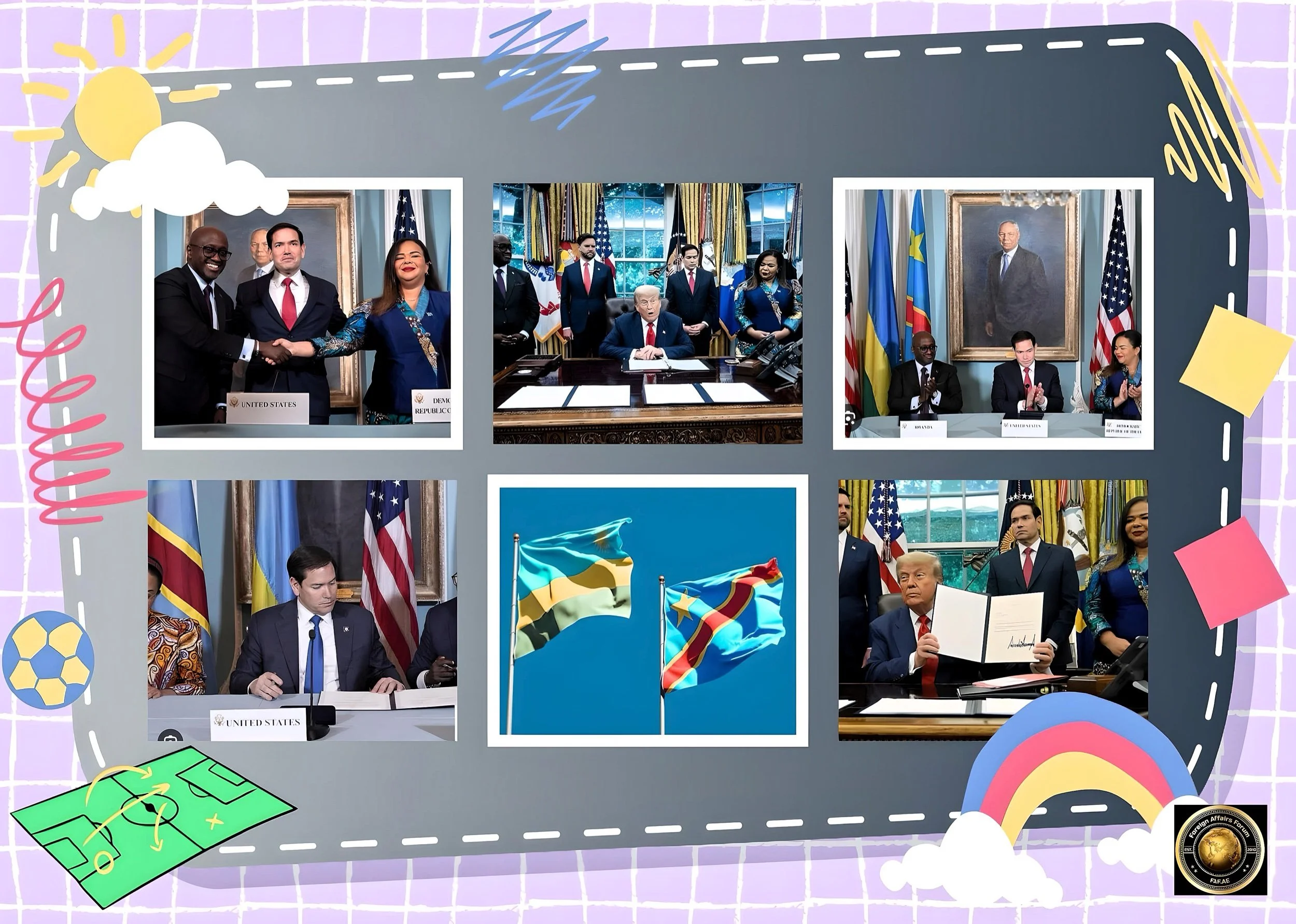
The November framework must be contextualized within a tripartite peace architecture encompassing three chronologically sequenced agreements.
The Washington Accord (June 2025)
A bilateral DRC-Rwanda agreement addressing Rwandan military force disengagement and cross-border economic integration
The Doha Declaration of Principles (July 2025)
A foundational dialogue framework between the DRC government and M23
The Doha Framework Agreement (November 2025): The operative multilateral accord
The Trump administration’s active mediation role, executed through Special Envoy Massad Boulos, explicitly articulates what scholars identify as a “minerals-for-security” framework—coupling conflict resolution with unlocking access to critical mineral resources essential to the strategic competition between the United States and China.
This explicit linkage between geopolitical access to strategic materials and peace process design constitutes a form of what international relations theorists term conditional mediation—wherein third-party mediation actors derive material interest from specific conflict outcomes rather than maintaining normative commitment to conflict resolution per se.
The Critical Minerals Nexus: Resource Abundance as Conflict Driver and Mediation Incentive
Reserves and Geopolitical Significance
The DRC constitutes what scholars describe as an extraordinary concentrations of strategic minerals: 70 percent of global cobalt reserves, 60 percent of identified lithium reserves, alongside substantial deposits of copper, nickel, uranium, and industrial diamonds valued at approximately $24 trillion in aggregate.
Cobalt and lithium constitute the technological linchpin for electric vehicle battery systems and renewable energy infrastructure—minerals whose demand trajectory the International Energy Agency projects will increase more than fourfold by 2040 amid the energy transition.
Yet these resource endowments manifest what development economists identify as the resource curse phenomenon—the empirically robust inverse correlation between natural resource abundance and institutional development, state capacity, and equitable economic growth.
The DRC exemplifies this paradox: possessing extraordinary mineral wealth yet registering lowest-quartile human development metrics, with widespread corruption, institutional weakness, and persistent poverty.
This pathological outcome reflects what political economy scholars attribute to the rentier state hypothesis—wherein abundant resource revenues enable political leaders to avoid taxation-based state building while simultaneously funding patronage networks that supersede institutional development.
Chinese Supply Chain Dominance and Western Diversification Imperatives
China’s control of critical mineral processing infrastructure has become strategically acute for Western technological development.
Chinese enterprises dominate cobalt refining and manufacturing processes; the DRC produces approximately 68 percent of global cobalt yet China processes and refines the overwhelming majority, creating what military strategists characterize as a chokepoint dependency in Western advanced manufacturing.
The Trump administration’s minerals-focused mediation strategy explicitly targets circumventing Chinese supply chain gatekeeping by facilitating Western extraction partnerships and establishing alternative processing pathways.
Mineral Trafficking Infrastructure: From Rebel Control to Licit Networks
M23 territorial control of North Kivu and South Kivu provinces encompasses some of the DRC’s richest mineral concentrations, particularly coltan (columbite-tantalite), a rare earth material essential for telecommunications and computing infrastructure.
UN investigators have documented systematic mineral trafficking operations whereby ores extracted from M23-controlled zones are transported across the Rwanda border under nocturnal cover, then commingled with Rwandan production to obscure their conflict-zone origins before international export.
This obfuscation mechanism demonstrates what scholars term supply chain laundering—the deliberate operational obscuring of provenance to circumvent ethical sourcing verification mechanisms and circumvent conflict minerals regulations.
Rwanda’s Proxy Architecture: De Facto Control and Plausible Deniability
The Operational Scale of Rwandan Military Engagement
UN group of experts estimates indicate that Rwanda maintains between 3,000 and 4,000 Defence Forces (RDF) troops operating within DRC territory, with UN investigators asserting that Rwanda exercises what they term de facto operational control over M23 military planning and execution.
The documentary evidence reveals extensive armament transfers: advanced artillery systems, unmanned aerial vehicles, guided mortar systems, night-vision optical equipment, and anti-tank weaponry that UN analysts assess as “decisive” in M23’s January 2025 offensive.
An internal Rwandan military document obtained by international media revealed explicit protocols whereby RDF personnel are instructed to remove identifying insignia and avoid cellular telecommunications before crossing into Congolese territory—what security analysts characterize as operational tradecraft designed to facilitate plausible deniability regarding official military involvement.
This procedural obscuring reflects what international law scholars term disguised state agency—the deliberate masking of direct state military action through proxy force utilization.
The FDLR Justification: Pretext and Perverse Incentive Structure
Rwanda’s stated rationale for maintaining military presence centers upon the Democratic Forces for the Liberation of Rwanda (FDLR), a rebel organization founded in 2000 by former members implicated in the 1994 Rwandan genocide.
Rwandan leadership characterizes the FDLR as an existential security threat requiring permanent preventive military counter-measures.
However, UN analysts and security researchers have documented what they characterize as a pretext sustainability mechanism: the FDLR’s operational fighting force has contracted to several hundred combatants, representing negligible military threat relative to Rwanda’s regular defense establishment.
More analytically significant, many FDLR personnel are located within M23-controlled territory, creating what analysts term a circular justification trap: Rwanda maintains military presence ostensibly to neutralize the FDLR, yet M23’s territorial control effectively prevents conventional DRC military operations against those same FDLR elements, thereby sustaining Rwanda’s claims of perpetual FDLR threat requiring ongoing intervention.
The November framework’s explicit requirement that the DRC “neutralize” the FDLR before Rwanda withdraws forces creates what conflict theorists identify as an ill-defined commitment target—a condition sufficiently ambiguous and subjective to permit indefinite extension of intervention, as Rwanda can systematically redefine FDLR threat assessments to justify continued military presence.
M23’s Institutional Evolution: From Militia to Parallel Governance Architecture
Territorial Consolidation and State-Like Institutional Construction
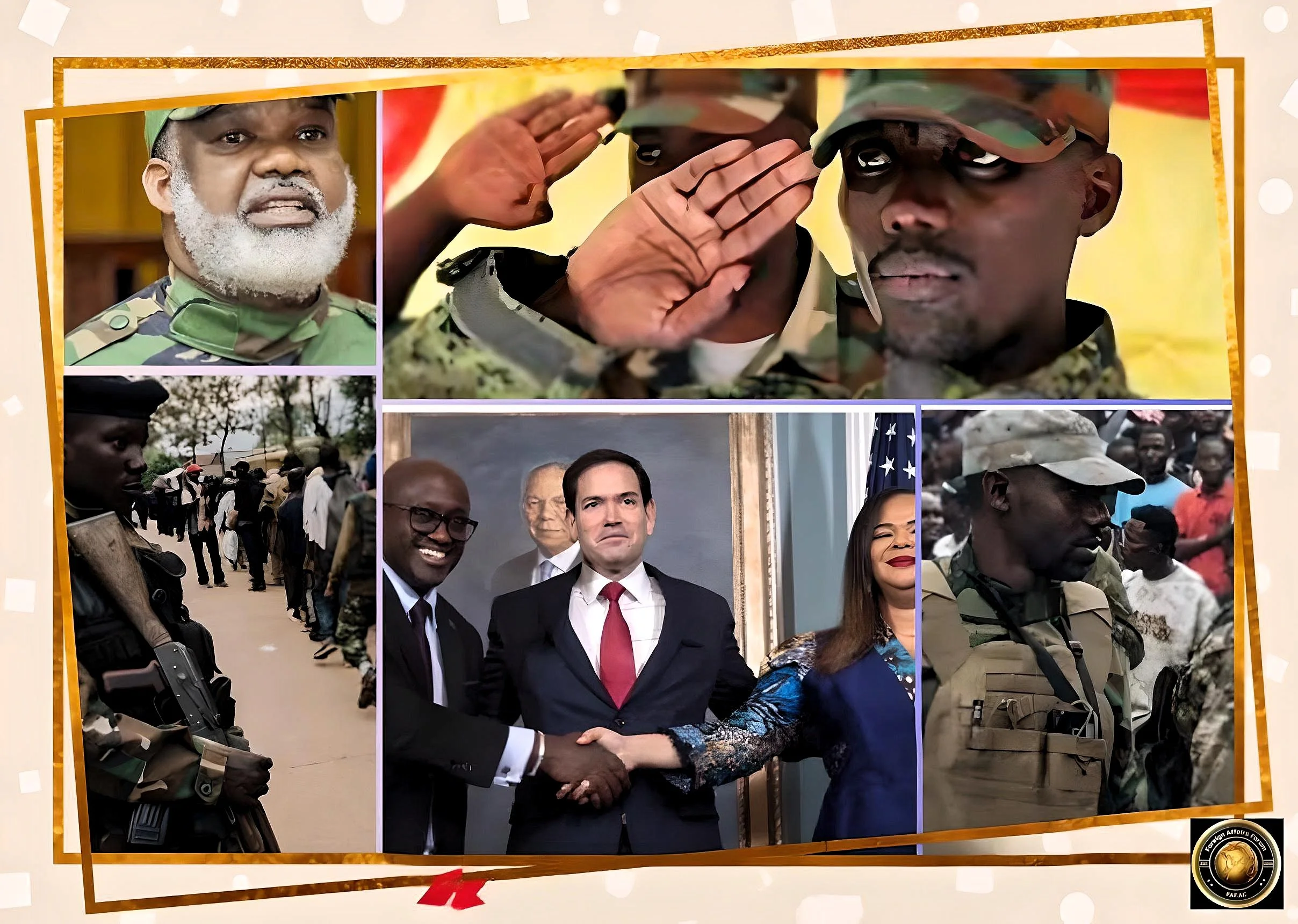
M23’s January 2025 offensive produced a rapid military transformation: the organization captured Goma (January 27, 2025) and Bukavu (February 2025), the principal urban centers in eastern DRC, and expanded territorial control over mineral-rich provinces in North Kivu and South Kivu.
This territorial conquest represented not merely military victory but, more significantly, the creation of governance space for institutional development.
Under current M23 leadership (Corneille Nangaa, former head of the DRC electoral commission, assumed command in 2025).
(1) the organization has evolved beyond conventional militaristic command structures toward what scholars term proto-state institutions
(2) the establishment of bureaucratic apparatus
(3) taxation mechanisms
(4) administrative hierarchies
(5) governance pretensions that directly challenge DRC state sovereignty.
M23 has established what analysts describe as parallel administrative institutions, including revenue extraction systems and governmental functions that institutionally embed the organization’s territorial presence.
This institutional consolidation creates what conflict scholars identify as a governance integration dilemma: successful peace agreements traditionally require the subordination or military integration of rebel organizations into state structures, yet M23’s development of parallel governance institutions fundamentally complicates this process.
The organization has transitioned from a primarily military entity toward an entity possessing both military and proto-governmental legitimacy within its territorial domain, rendering simple military integration mechanisms inadequate.
Economic Incentive Structures Perpetuating Territorial Control
The profitability of mineral extraction and trafficking creates what economists characterize as perverse financial incentives for conflict perpetuation.
M23’s territorial control enables direct extraction revenues and taxation mechanisms over mineral-producing zones, generating income streams that dwarf the salaries M23 combatants would likely receive following integration into FARDC (Armed Forces of the Democratic Republic of Congo).
This revenue disparity creates what rational choice theorists term defection incentive incompatibility: M23 cadres possess greater material incentive to maintain territorial autonomy than to accept subordination to DRC military command.
The Implementation Pathology: Institutional Weakness and Commitment Credibility Problems
Principal-Agent Complexity and Nested Delegation
The peace framework’s implementation confronts what conflict theorists identify as nested principal-agent problems—layered contractual relationships wherein each party maintains institutional limitations in enforcing compliance.
The DRC government (principal) must negotiate with M23 (primary agent), yet Rwanda (secondary principal) maintains substantial agency over M23 behavior through military support provision and operational coordination.
This creates what scholars term dual delegation complexity: the DRC cannot directly sanction M23 non-compliance given Rwanda’s capacity to sustain M23 militarily regardless of DRC sanctions, while Rwanda possesses capacity to override bilateral DRC-M23 agreements if Rwandan strategic interests diverge from negotiated protocols.
Traditional principal-agent theory assumes bilateral contractual relationships; however, the DRC-Rwanda-M23 configuration constitutes what international relations scholars term complex conflict delegation, wherein intermediary agents (Rwanda) exercise substantial discretionary agency over proxy agent (M23) behavior, creating multiple accountability ruptures and enforcement bottlenecks.
Commitment Credibility and Information Asymmetries
Peace agreement durability fundamentally depends upon what conflict theorists term credible commitment—the capacity of parties to convincingly signal that they will honor agreements despite incentive to defect. Credible commitment mechanisms require either
(1) third-party enforcement capacity with demonstrated willingness to sanction violations.
(2) institutional structures that make defection prohibitively costly.
(3) verifiable mechanisms that generate transparency regarding compliance.
The Doha framework’s monitoring mechanisms remain underdeveloped relative to the agreement’s ambitions.
While ceasefire verification mechanisms were established in October 2025, broader institutional compliance verification remains ill-specified.
This creates information asymmetries whereby parties lack reliable mechanisms for detecting violations, which game theorists demonstrate systematically reduces agreement durability as actors maintain uncertainty regarding counterparty compliance status.
Institutional Capacity Deficits and Extractive State Pathologies
The DRC possesses what development scholars characterize as fundamentally constrained state capacity, particularly in eastern provinces.
Research on DRC local governance reveals that while state administrative presence exists in rural localities, this presence is characterized by: pervasive corruption, absence of democratic accountability, chronic underfunding (with many local administrators receiving no salary), and institutional captured by patronage networks rather than administrative procedure.
This institutional deficit creates what scholars term a capacity-without-legitimacy dilemma: state administrative presence alone cannot generate governance legitimacy or effective territorial control absent resource provision and institutional professionalization.
The DRC’s capacity to implement the complex protocols required by the framework—refugee repatriation, DDR (disarmament, demobilization, reintegration), transitional justice mechanisms—fundamentally depends upon institutional resources the state demonstrably lacks.
The Antecedent Failure Trajectory: Structural Recurrence
The 2009 Agreement Collapse and Institutional Learning Deficits
The DRC-M23 (CNDP) peace process exhibits what scholars term a recurrent failure trajectory: the 2009 agreement attempted to integrate former CNDP (M23’s organizational predecessor) forces into the national military, yet implementation fractured due to local opposition to CNDP leadership integration and the organization’s documented human rights violations.
The attempted integration created what conflict researchers characterize as factional military fragmentation: newly integrated CNDP units retained separate command loyalties and operational procedures, undermining institutional cohesion and ultimately precipitating the 2012 M23 mutiny that reformed the organization.
Critically, the scholarly consensus emphasizes that agreement-signing constitutes merely the initiating condition for sustained conflict, while implementation represents the actual test of durability.
As political analyst Christian Moleka noted: “The principal hurdle lies in execution. Will this differ from past agreements in terms of sustained implementation?”
This observation reflects what conflict theorists term the implementation gap: the frequently documented divergence between peacetime agreements and on-the-ground institutional practice.
Ceasefire Violations and Strategic Ambiguity
The conflict exhibits repeated ceasefire violations that scholarly analysis attributes to what strategists term strategic ambiguity regarding wartime versus peacetime strategies.
M23 launched a major offensive on October 20, 2025, explicitly violating a ceasefire that had theoretically been in place since August 2025, demonstrating that temporal proximity to agreements provides insufficient commitment assurance.
The October offensive, coupled with ongoing allegations of ceasefire violations by both parties, suggests parties maintain residual confidence deficit regarding counterparty compliance intentions.
Structural Conflict Drivers: Root Cause Persistence Beyond Procedural Architecture
Territorial Sovereignty and Authority Restoration
The fundamental asymmetry animating the conflict remains unresolved: the DRC government insists upon unconditional M23 withdrawal and restoration of complete state authority in eastern provinces, while M23 demands gradual state authority restoration contingent upon national unity government formation with power-sharing arrangements.
This binary incompatibility—demanding simultaneous state authority restoration while refusing to relinquish territorial control—constitutes what conflict theorists term an incentive incompatibility problem: the conditions each party seeks to guarantee their security interests remain mutually exclusive.
The framework agreement explicitly acknowledges restoration of state authority as a key pillar, yet the protocol lacks specifics regarding sequencing, power-distribution mechanics, or remedies for non-compliance.
This vagueness creates what scholars characterize as an ill-defined commitment target—sufficient definitional ambiguity to enable systematic reinterpretation as circumstances change.
Identity, Citizenship, and Communal Belonging: Unresolved Ethnic Tensions
The conflict’s foundational identity dimensions—questions of Tutsi national belonging in the DRC, competing claims to citizenship, and broader ethnic community definitions—remain largely unaddressed by the framework.
These questions reflect what scholars term existential identity contestation: disagreements regarding fundamental questions of who constitutes the political community and on what basis community membership is conferred.
The framework’s establishment of an “identity and citizenship” protocol acknowledges these tensions yet provides no substantive guidance regarding their resolution.
Historical precedent suggests such questions prove extraordinarily resistant to negotiated settlement absent broader context transformation.
Land Disputes and Resource Competition
Underlying economic disparities and competing claims to land and resources in eastern provinces remain untouched by framework provisions.
The region has historically experienced conflicts between settled agriculturalist communities and migrant pastoral populations, conflicts that assume heightened salience in contexts of resource scarcity and economic desperation.
These distributive competition dynamics constitute what economists term contestable property rights: disagreements regarding ownership legitimacy and resource allocation authority.
Humanitarian Catastrophe and Displacement Infrastructure
The conflict has generated humanitarian dimensions of extraordinary scale:
(1) 7.3 million IDPs across the DRC (with 5.7 million concentrated in eastern provinces)
(2) 2.1 million newly displaced since January 2025 (including 1 million children)
(3) 1 million refugees in neighboring states, 27 million individuals facing acute food insecurity
(4) 4.45 million children under age five confronting elevated acute malnutrition.
UN mortality estimates from recent months exceed 7,000 deaths, with far higher cumulative mortality from secondary violence effects (malnutrition, disease, healthcare system collapse).
This humanitarian catastrophe necessitates what scholars term comprehensive humanitarian architecture: integrated programs addressing IDP return, refugee repatriation, food security restoration, and healthcare system rehabilitation.
However, such comprehensive programs typically demand resource commitments and institutional capacity that exceed post-conflict contexts’ realistic capacities.
The DRC’s humanitarian obligations under the framework are genuine, yet the state’s probable inability to deliver such services creates what conflict scholars identify as an implementation credibility deficit—recognized obligations that parties lack capacity to fulfill, thereby undermining agreement legitimacy.
Resource Curse Dynamics and Conflict Trap Theory
The Paradox of Plenty and Rentier State Formation
Scholarly analysis of resource-rich conflict zones emphasizes what economists term the resource curse—the empirically robust finding that natural resource abundance correlates with weaker institutions, more authoritarian governance, and greater conflict propensity.
The theoretical mechanism centers upon what political economists call rent-seeking behavior: rather than conducting productive economic activity, political actors compete for control of resource extraction revenues, creating what scholars term a war economy wherein conflict perpetuation proves more profitable than peace.
The DRC precisely exemplifies this pathology: mineral wealth has historically financed military and militia activities rather than state institution building or equitable economic development.
M23’s territorial control enables direct revenue extraction from mineral zones, providing resources that systematically exceed what the DRC government could plausibly offer through legitimate state salaries or integration arrangements.
This creates what conflict theorists term a conflict sustainability mechanism: continuous structural incentive for actors to maintain armed opposition rather than accept state subordination.
Path Dependence and Institutional Lock-In
The DRC’s institutional trajectory demonstrates what historical institutionalists term path dependence: institutional configurations established through prior conflict patterns systematize themselves through self-reinforcing mechanisms, making institutional transformation extraordinarily difficult absent exogenous shock.
The extraction economy structured around warlord taxation and militia control has institutionalized patterns of rent extraction that integrate actors into illicit networks and corruption systems, creating what scholars characterize as institutional vested interests in conflict perpetuation.
Expert Assessment: Structural Skepticism Regarding Framework Viability
Enforcement Mechanism Deficiencies
Scholarly analysis identifies absent or inadequate enforcement mechanisms as the framework’s critical weakness.
The July Declaration of Principles explicitly lacked penalties for violations, and the November framework provides limited clarification regarding monitoring mechanisms, sanction regimes, or dispute resolution procedures.
Conflict theorists emphasize that agreements lacking credible enforcement capacity systematically exhibit higher failure rates, particularly in contexts where commitment problems are structurally acute.
The Multi-Actor Problem and Spoiler Dynamics
Conflict scholars have documented that peace agreements in multi-actor conflicts—contexts where numerous armed groups participate—face substantially heightened failure risks relative to bilateral conflicts.
The eastern DRC comprises dozens of armed organizations beyond M23 and the FDLR, creating what analysts term the spoiler dilemma: actors excluded from peace arrangements possess incentive to undermine agreements to restore bargaining salience.
The framework’s focus on DRC-M23-Rwanda bilateral dynamics largely excludes dozens of other armed organizations, creating what conflict scholars identify as an exclusionary peace agreement problem: agreements that exclude significant stakeholders systematically generate renewed conflict as excluded parties contest their marginalization.
Institutional Capacity and DDR Implementation Challenges
Disarmament, demobilization, and reintegration (DDR) programs represent the framework’s central institutional challenge.
Scholarly research on DDR programs in the DRC and comparable contexts documents systematically poor implementation success:
(1) high rates of participants returning to armed groups
(2) inadequate livelihood support
(3) failure to create sustainable civilian reintegration pathways.
The fundamental problem reflects what analysts term livelihood discontinuity: security force participation provides more reliable and generous compensation than civilian alternatives, creating defection incentives for formerly integrated combatants.
Comprehensive DDR success requires civilian livelihood generation at scale the DRC cannot plausibly accomplish absent massive external resource transfer.
The Geopolitical Trilemma: US Strategic Interests, Rwandan Autonomy, and DRC Sovereignty
Mineral Diversification and Western Strategic Competition
The Trump administration’s explicit framing of the peace process as essential to mineral access reflects what security analysts term the technology minerals imperative:
Western technological leadership in electric vehicles, renewable energy, and computing infrastructure depends upon access to critical minerals currently dominated by Chinese supply chains.
The US mediation framework explicitly attempts to restructure global cobalt and lithium supply networks to reduce Chinese gatekeeping capacity.
However, this strategic imperative creates what international relations scholars term a preference divergence problem: the US mediation interest in conflict resolution derives substantially from extractive economics rather than normative peace commitments, potentially inducing premature agreement-signing that proves institutionally unsustainable.
Rwanda’s Regional Hegemonic Aspirations
Rwanda’s military engagement in the DRC reflects broader regional power aspirations that scholars characterize as revisionist state behavior—attempts by regional powers to restructure territorial and authority arrangements favorable to their interests.
Rwanda’s support for M23 and control of mineral trafficking networks demonstrate strategies designed to exercise regional dominance while maintaining plausible deniability regarding direct military agency.
The framework’s requirement that Rwanda withdraw forces creates what game theorists term a commitment credibility problem:
Rwanda possesses demonstrated incentive to maintain military presence as basis for regional hegemony, yet the agreement requires explicit force withdrawal absent continuing FDLR threat.
This creates systematic incentive for Rwanda to sustain FDLR threat definitions to justify continuing presence.
DRC Sovereignty and Contested Territoriality
The fundamental peace process tension reflects competing conceptions of DRC statehood: whether the DRC constitutes an indivisible territorial-administrative entity with monopolistic state authority, or whether eastern provinces represent contested zones where legitimate authority is negotiable.
The framework attempts compromise through power-sharing arrangements, yet compromise on fundamental sovereignty proves unstable absent deeper identity consensus.
The Uncertain Variables: Implementation Contingencies and Crisis Points
Protocol Negotiation Completion and Timeframe Feasibility
The framework specifies two-week negotiation deadlines for the six remaining protocols—a timeframe scholarly analysis suggests is systematically compressed relative to historical peace agreement implementation periods.
The question whether parties can achieve substantive agreement on state authority restoration, governance reform, and transitional justice mechanisms within such abbreviated timelines remains open.
M23 Integration Versus Subordination: The Central Dilemma
The critical question regarding M23’s future remains unresolved: whether the organization will accept genuine integration into FARDC command structures as individual soldiers distributed across army units (as the framework specifies), or whether M23 will demand preservation of unit cohesion and command structure—an arrangement that would create persistent factional fragmentation within the security apparatus.
Regional stakeholders Realignment and Geopolitical Contingencies
The agreement’s sustainability depends substantially upon continued alignment among external actors (US, Qatar, AU) and regional powers (Rwanda, Uganda).
Should geopolitical configurations shift—for instance, if US strategic priorities diverge, or if Rwanda perceives strategic advantage in continued instability—the external guarantor structure could collapse.
Conclusion
Framework Limitations and Structural Conflict Persistence
The November 15 Doha Framework Agreement represents diplomatic progress in establishing procedural mechanisms for addressing the DRC-M23 conflict, yet it confronts substantial structural constraints that scholarly analysis suggests are likely to prove binding.
The agreement represents what conflict scholars term a declarative peace architecture—a formal commitment to negotiation procedures rather than a mechanism ensuring substantive conflict resolution.
The fundamental structural tensions remain unresolved
(1) Rwanda’s strategic incentives to maintain military presence in the DRC despite formal withdrawal commitments; M23’s transformation into proto-governmental institution with territorial legitimacy that complicates military integration
(2) DRC’s institutional weakness limiting capacity for DDR implementation, transitional justice provision, and refugee repatriation
(3) The underlying resource curse dynamics creating war economy profitability; and the excluded armed groups creating spoiler dynamics.
The framework’s success depends upon successful navigation of what international relations scholars term complex implementation challenges: