The 2025 G20 Johannesburg Summit: Hegemonic Retrenchment, Institutional Fracture, and the Reconfiguration of Multilateral Governance
Introduction
The Unprecedented Absence and Its Catalysts
The 2025 G20 Leaders’ Summit in Johannesburg represents a consequential inflection point in contemporary multilateral governance architecture.
For the first time since the G20’s institutional elevation to the leader level in 2008, a consensus-based Leaders’ Declaration proved unattainable; instead, the summit concluded with a merely declaratory Chair’s Statement devoid of collective endorsement.
This diplomatic rupture coincides with the complete withdrawal of the United States—the preeminent global economic hegemon—and its subsidiary exclusion of all official representation, including Vice President JD Vance.
The Trump administration’s boycott, justified through allegations of racial persecution and expropriation without compensation, has provoked considerable analytical scrutiny regarding both the empirical foundations of these claims and their instrumental deployment within a broader strategy of coercive unilateralism.
Deconstructing the “White Genocide” Apparatus: Empirical Refutation and Ideological Genealogy
Trump’s invocation of “white genocide” constitutes a paradigmatic illustration of how geopolitical instrumentalism appropriates conspiracy epistemologies for diplomatic purposes.
The factual record is in stark contrast to the Trump administration’s rhetorical constructions.
According to official South African police statistics encompassing the April 2024–December 2024 period, of 19,696 total murders in South Africa, merely 36 victims possessed a demonstrable nexus to agricultural communities, representing 0.2 percent of aggregate homicides.
Only seven of these 36 deaths involved farmers themselves; the remaining 29 victims constituted predominantly Black farm laborers.
The conceptual category of “farm murder” itself remains racially undifferentiated in official data collection protocols, rendering Trump’s categorical assertions of racialized targeting empirically unfounded.[cnn]
Juridically, genocide—as operationalized within the United Nations Convention on the Prevention and Punishment of the Crime of Genocide—mandates “acts, such as murder and serious bodily or mental harm, committed with intent to destroy, in whole or in part, a national, ethnical, racial or religious group, as such.”
No credible documentation establishes that the South African state has formulated or implemented policies satisfying this definitional threshold. Criminological research indicates that farm attacks emanate predominantly from instrumentalized robbery rather than racial motivation.
The “white genocide” construct possesses genealogical resonance with broader white nationalist ideological formations.
As documented by the Wikipedia archive on this conspiracy theory, the narrative constitutes a cornerstone within far-right discursive matrices, particularly among alt-right movements that weaponize South African and Zimbabwean experiences as proxies for advancing “Great Replacement” theories within North American and European contexts.
The co-optation of Afrikaner identity by ideological entrepreneurs has generated explicit repudiation from 40 prominent white South African intellectuals, political analysts, economists, lawyers, and religious figures, who characterized Trump’s framing as “dangerous” and constitutive of the “hijacking of Afrikaner identity…for exclusionary ideological agendas.”
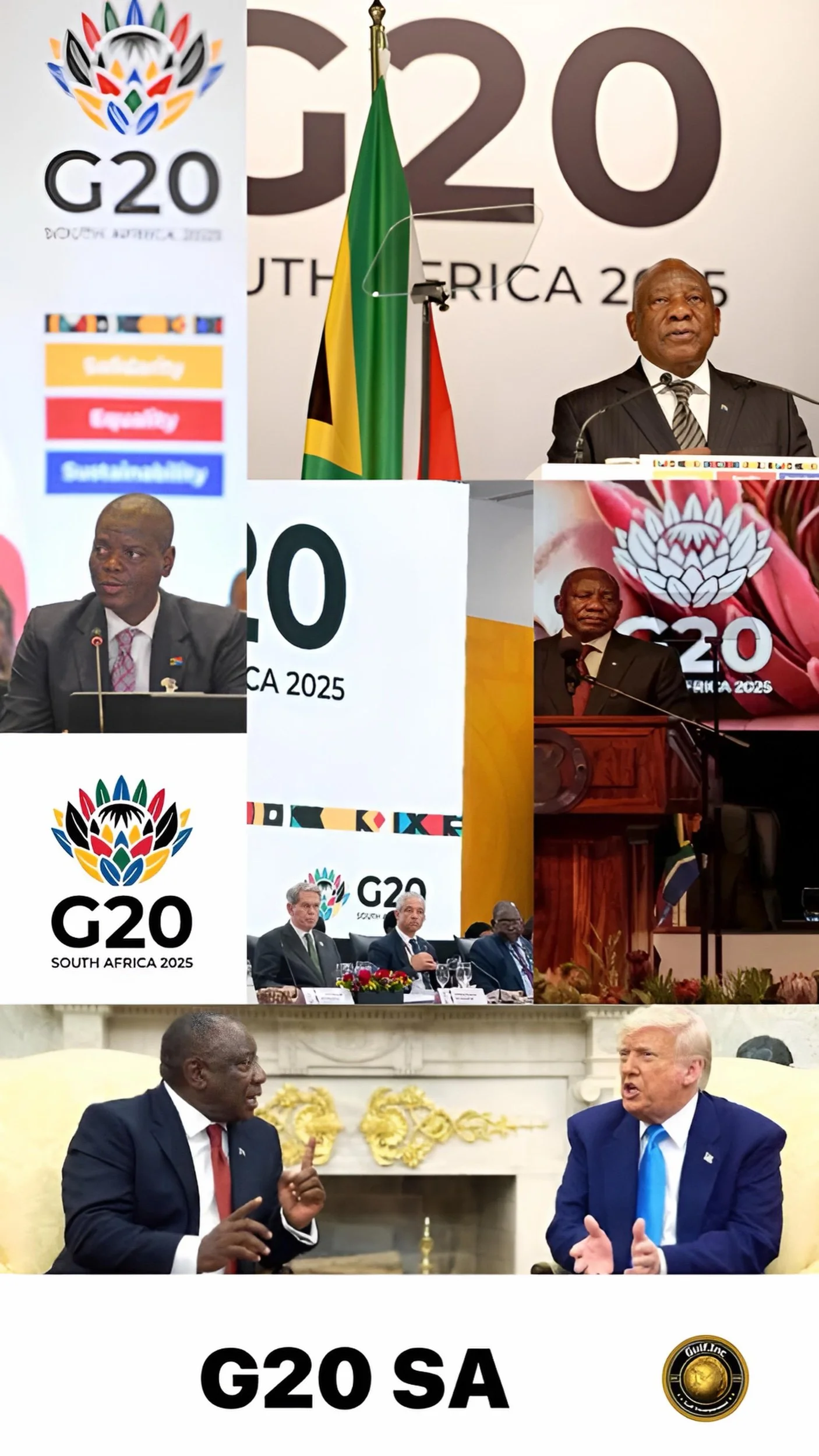
Particularly damaging to the administration’s credibility is the fabrication of evidentiary materials presented during Trump’s May 2025 White House meeting with President Cyril Ramaphosa.
Rigorous fact-checking revealed that video evidence purporting to demonstrate genocide burial sites actually depicted protest markers memorializing two individual farm deaths.
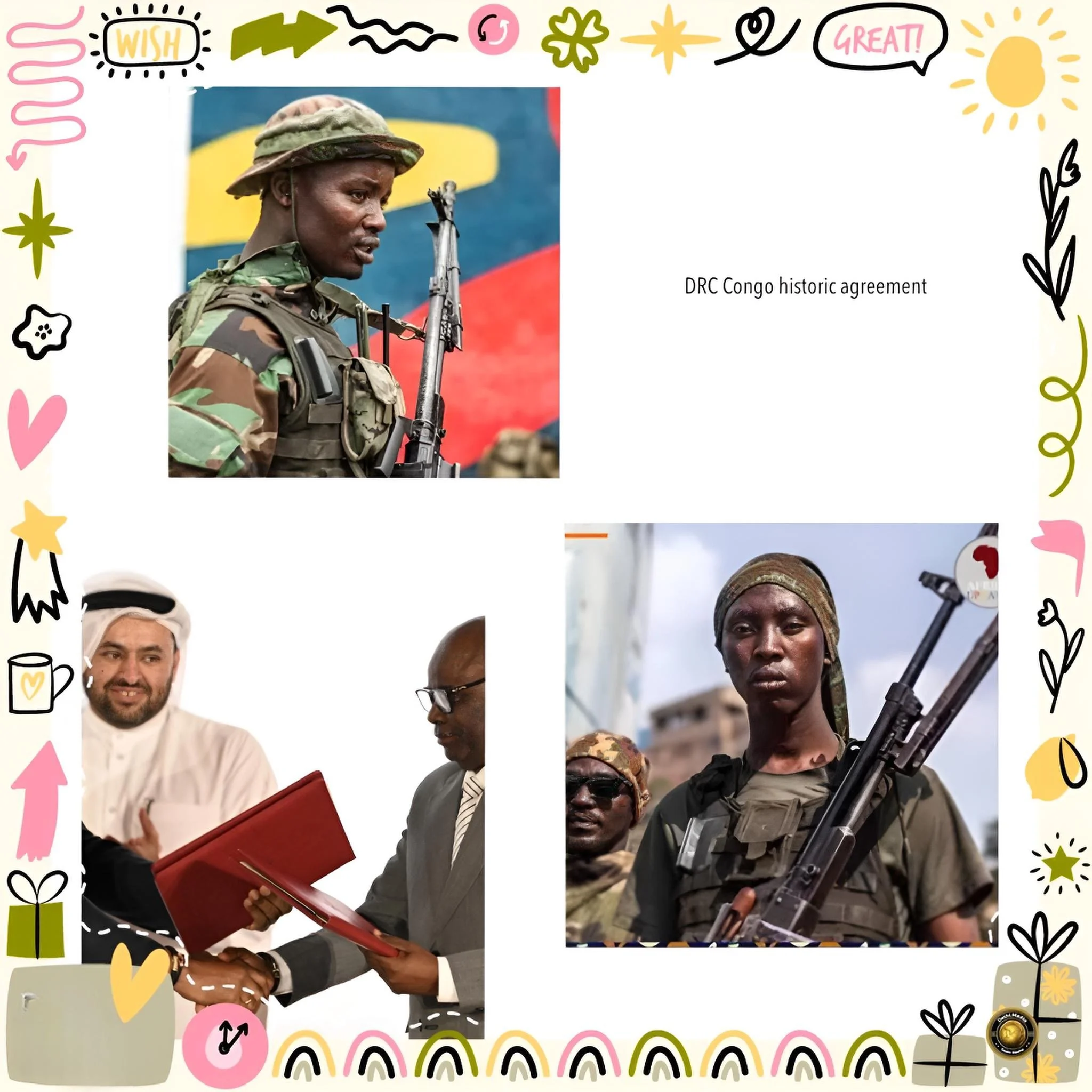
Additionally, photographic documentation presented as South African burial sites derived from conflict zones in the Democratic Republic of Congo, approximately 1,000 kilometers distant.
Trump’s own refugee expediting policy—which accelerated processing for Afrikaners whilst suspending all other refugee admissions—paradoxically undermines his genocide claims, as Ramaphosa cogently observed: such policies render categorically implausible the existence of persecutory conditions for economic actors among “the most economically privileged” strata.
South Africa’s Expropriation Framework: Legislative Substance versus Rhetorical Distortion
Trump’s secondary justification—South Africa’s enactment of land expropriation without compensation—requires similarly rigorous factual examination.
The Expropriation Act of 2025, signed by President Ramaphosa in January, permits state acquisition of property without financial recompense exclusively under circumscribed conditions designated as satisfying “just and equitable” and “public interest” criteria.
As of the November 2025 summit date, no substantive expropriations have been executed pursuant to this enabling legislation.
The legislative parameters establish restrictive procedural requirements: expropriation applies exclusively to “unused” or “speculative” landholdings in which proprietors pursue “primarily…market value appreciation” rather than productive utilization.
Critically, all dispossessions mandate “comprehensive procedural fairness standards,” with proprietors retaining recourse to judicial challenge.
Historical expropriation deployments demonstrate extraordinary restraint: over three decades, South African governmental authorities exercised their existing expropriation prerogatives in fewer than 20 instances.
Land redistribution endeavors have attained merely ten percent of commercial agricultural territory since apartheid’s termination in 1994—an extraordinarily attenuated pace.
Quantitative modeling of prospective impact scenarios indicates that expropriation provisions would transfer approximately 2.4 million hectares—predominantly allocated to grazing with minimal reallocation toward field crops or horticultural production—representing a modest fraction of South Africa’s 122 million-hectare territorial expanse.
Economic Coercion and Hegemonic Unilateralism: The Tariff Architecture
Beyond diplomatic rupture, Trump’s policies constitute a pattern of systematic economic coercion targeting South Africa.
In August 2025, the administration imposed reciprocal tariffs of 30 percent on South African exports—the most punitive rate applied across sub-Saharan Africa, substantially exceeding the rates imposed on Nigeria, Ghana, Lesotho, and Zimbabwe (15 percent), as well as Kenya and Ethiopia (10 percent).
This differentiated tariff regime signals explicitly targeted pressure distinct from generalized protectionist architecture.
The ramifications extend beyond mere trade metrics.
AGOA (the African Growth Opportunity Act), which had afforded duty-free market access for over 6,000 South African products across automotive, agricultural, and textile sectors, now faces effective obsolescence.
The projected employment consequences encompass approximately 100,000 jobs across the agricultural and automotive industries.
South African government records indicate that the administration provided no substantive response to negotiating frameworks, including South African proposals for $3.3 billion investments in U.S. manufacturing sectors and commitments to acquire liquefied natural gas, before the tariff announcement.
The punitive tariff rate against South Africa—coupled with aid termination and the expulsion of the ambassador—exemplifies hegemonic punishment for institutional noncompliance.
The Department of State’s explicit warning that the U.S. would “block any outcome framed as consensus G20 position” due to South Africa’s agenda “running counter to US policy views” represents an extraordinary assertion of unilateral constraint upon an absent actor.
This constitutes functional equivalence to what scholars conceptualize as “veto hegemony”—whereby a preponderant power exercises extraterritorial constraint despite non-participation.
Institutional Dissolution: The Consensus Mechanism Under Hegemonic Stress
The G20’s precipitous institutional degeneration illuminates deeper pathologies within consensus-dependent multilateral architecture.
The forum lacks statutory mechanisms for binding enforcement, permanent institutional infrastructure, or voting procedures—it functions exclusively through consensus-based deliberation among heterogeneous state actors with fundamentally divergent material interests.
The distinction between a Leaders’ Declaration and a Chair’s Statement carries profound implications for multilateral efficacy.
A Leaders’ Declaration represents collective political commitment—a synthesized consensus endorsed by participating principals. A Chair’s Statement, by contrast, constitutes merely a host-country summary devoid of collective validation.
The inaugural G20 summit, since 2008, has concluded without a Leaders’ Declaration, signaling institutional paralysis when hegemonic coordination mechanisms fracture.[news.sustainability-directory]
Analysts have conceptualized this dysfunction as the “consensus dilemma”: while consensus decision-making theoretically maximizes legitimacy and executability, its practical implementation within a 20-member forum with profound ideological cleavages renders substantive agreement increasingly unlikely.
The Trump administration’s ex ante announcement that it would accept no deliverable beyond a Chair’s Statement effectively weaponized consensus procedures, transforming an ostensible deliberative mechanism into an instrument of obstruction.
This institutional catastrophe assumes particular salience given that South Africa inherited the G20 presidency with an explicitly development-oriented agenda centered upon “Solidarity, Equality, Sustainability”—a triadic framework fundamentally discordant with the incoming U.S. presidency’s announced priorities of “economic growth, deregulation, and energy.”
The structural incompatibility between consecutive presidencies renders the entire consensus mechanism susceptible to what might be termed “agenda capture”—whereby ascending hegemonic leadership preemptively constrains its predecessor’s institutional outputs.
The Reconfiguration of Hegemonic Authority: Post-Hegemonic Governance Trajectories
The broader significance of this episode transcends diplomatic irritation. As one analyst articulates, the Trump administration’s withdrawal “encapsulates a deeper unraveling of American hegemony,” such that “the U.S. no longer commands the consensus it once took for granted.”
The deliberate absence signals something more corrosive than scheduling conflict—it represents conscious repudiation of multilateral legitimacy frameworks that historically anchored American global authority.
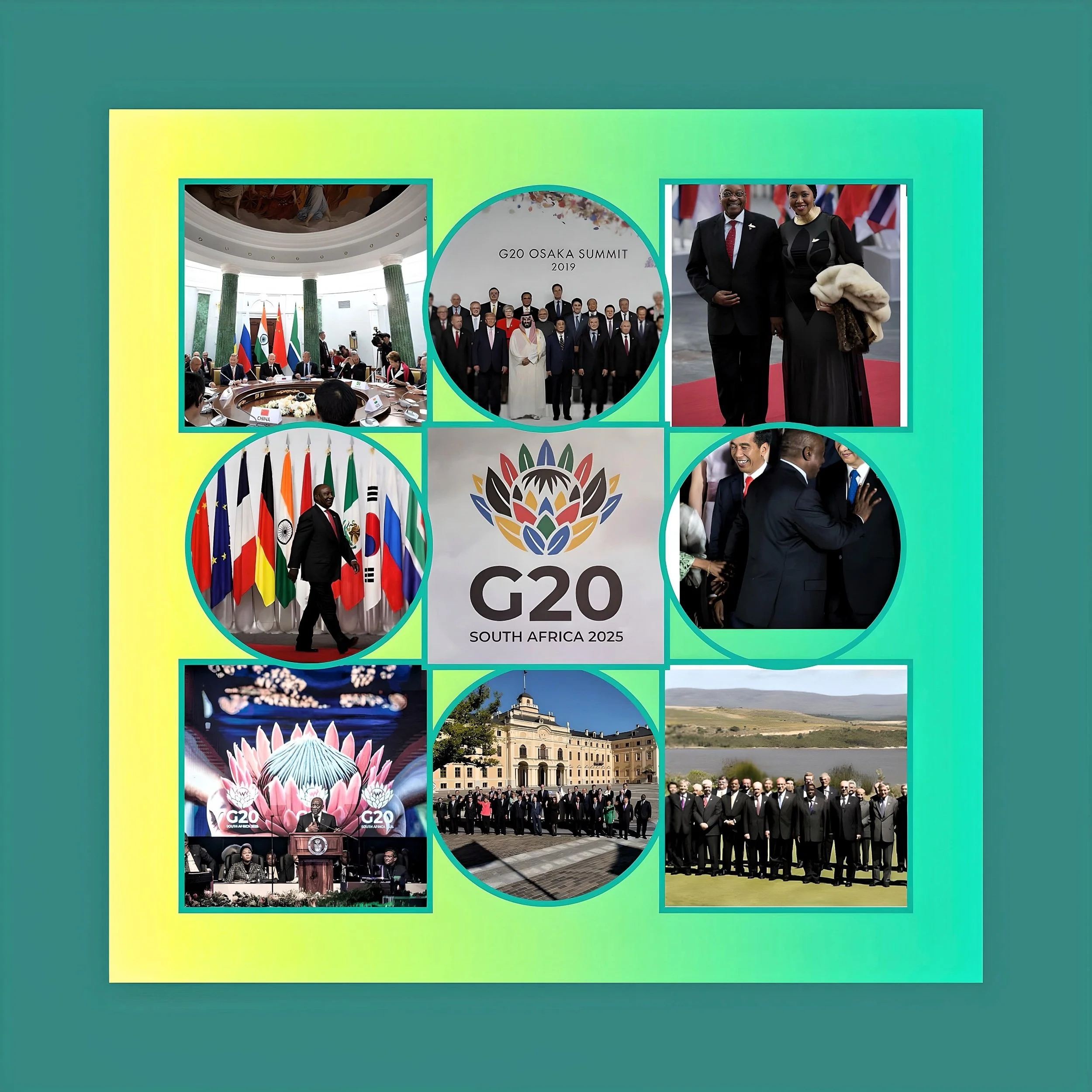
Concurrently, the simultaneous non-participation of China (represented by Premier Li Qiang rather than Xi Jinping), Russia (prohibited by ICC arrest warrant), Mexico, and Argentina constitutes an aggregated exodus of significant power representation.
This assemblage of absences transforms the summit into a fundamentally diminished forum for geopolitical coordination.
The implication manifests in the ascendance of what scholars characterize as “post-hegemonic governance”: an international order in which legitimacy is “negotiated rather than imposed,” and in which emerging powers deliberately erect alternative institutions—whether BRICS+, the New Development Bank, or regional cooperative frameworks—to intentionally circumvent Western-dominated structures.
South Africa’s articulation during the summit—that the institutional function “cannot be held hostage” by non-participation, lest precedent render future G20 summits perpetually hostage to great-power capriciousness—reflects sophisticated institutional reasoning regarding the sustainability conditions for multilateral forums.
Institutional Implications: Can Coordination Persist Without Consensus?
South Africa’s confirmation of participation by 42 countries across G20 membership, guest invitations, and Regional Economic Community representation suggests that the forum retains operational capacity despite the absence of major powers. Yet this quantitative robustness masks qualitative limitations.
Without binding enforcement mechanisms or institutional permanence, G20 declarations represent merely coordinating signals lacking a compulsory implementation apparatus.
As earlier analysis notes, the 2020 Common Framework for debt treatment “exists in name only,” with merely four countries pursuing available debt relief mechanisms despite substantial eligible populations.
The critical institutional question concerns whether the G20 can persist as a meaningful coordination forum when the consensus prerequisite encounters hegemonic resistance.
The alternative trajectory—fragmentation into issue-specific coalitions of the willing—may paradoxically enhance operational efficacy while eroding the universalistic pretensions upon which multilateral legitimacy rests.
Conclusion
The Conjuncture of Hegemonic Retrenchment and Institutional Reorganization
The 2025 G20 summit encapsulates a transitional moment in global governance architecture.
Trump’s boycott, justified by empirically baseless allegations, functions as a tactical instrument within a broader strategy of hegemonic unilateralism, exemplified by reciprocal tariffs, aid termination, and preemptive institutional obstruction.
The consensus mechanism, the historical foundation of G20 legitimacy, has become weaponized through instrumental abstention.
The failure to achieve collective declaratory outcomes signals that contemporary multilateral forums face existential pressures when hegemonic leadership withdraws consensual participation.
The future trajectory remains contested: whether alternative power centers can construct functional coordination without American participation, or whether multilateralism degenerates into decorative symbolism whilst authoritative decisions gravitate toward bilateral imposition and spheres-of-influence arrangement.
The Johannesburg summit’s inaugural reliance upon a Chair’s Statement rather than a collective declaration may represent merely the opening act in this institutional reconfiguration.