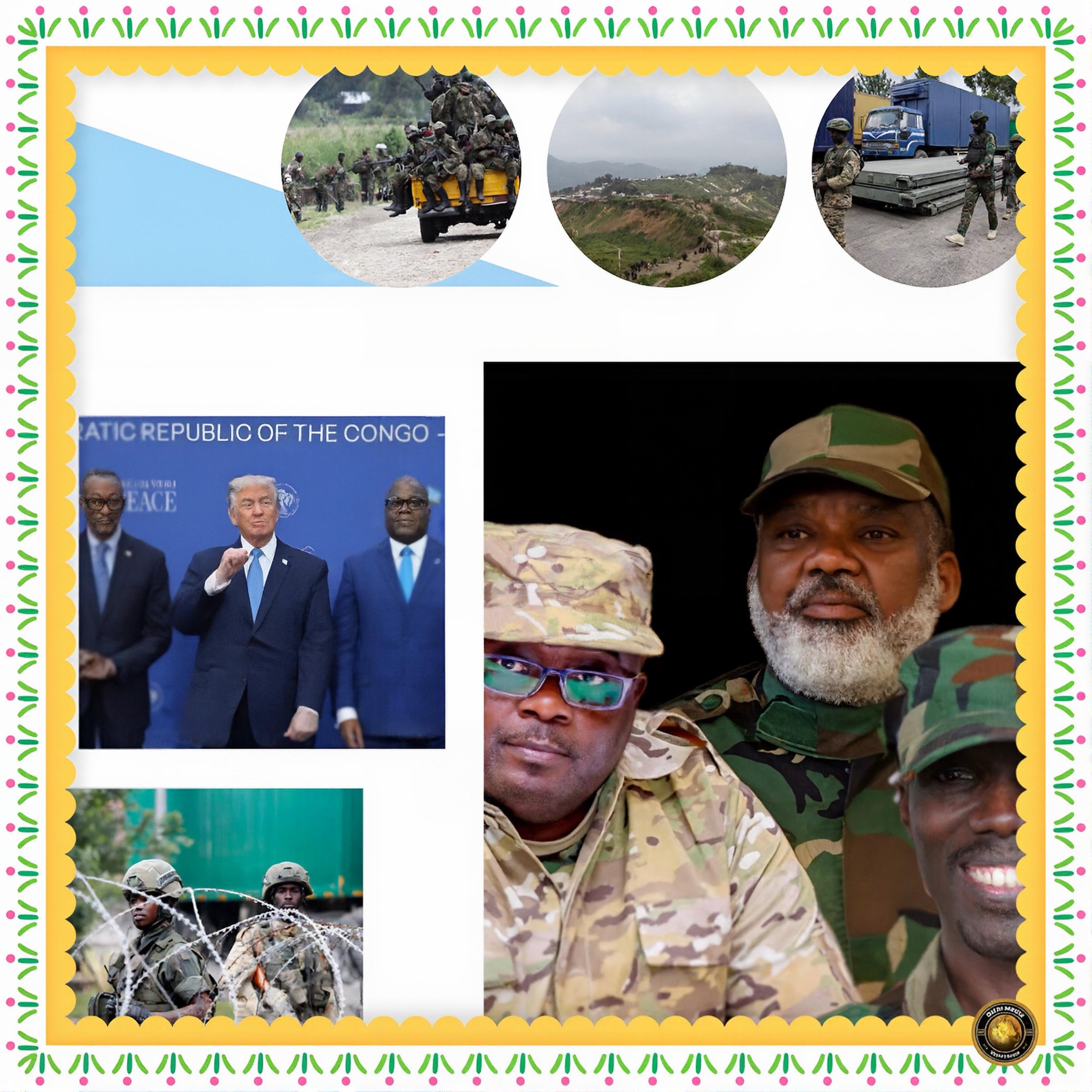
From Ceasefire to Crisis: M23 Offensive and the Great Lakes Fallout
Executive Summary
Peace in Ruins: M23 Storms Uvira After Washington Deal
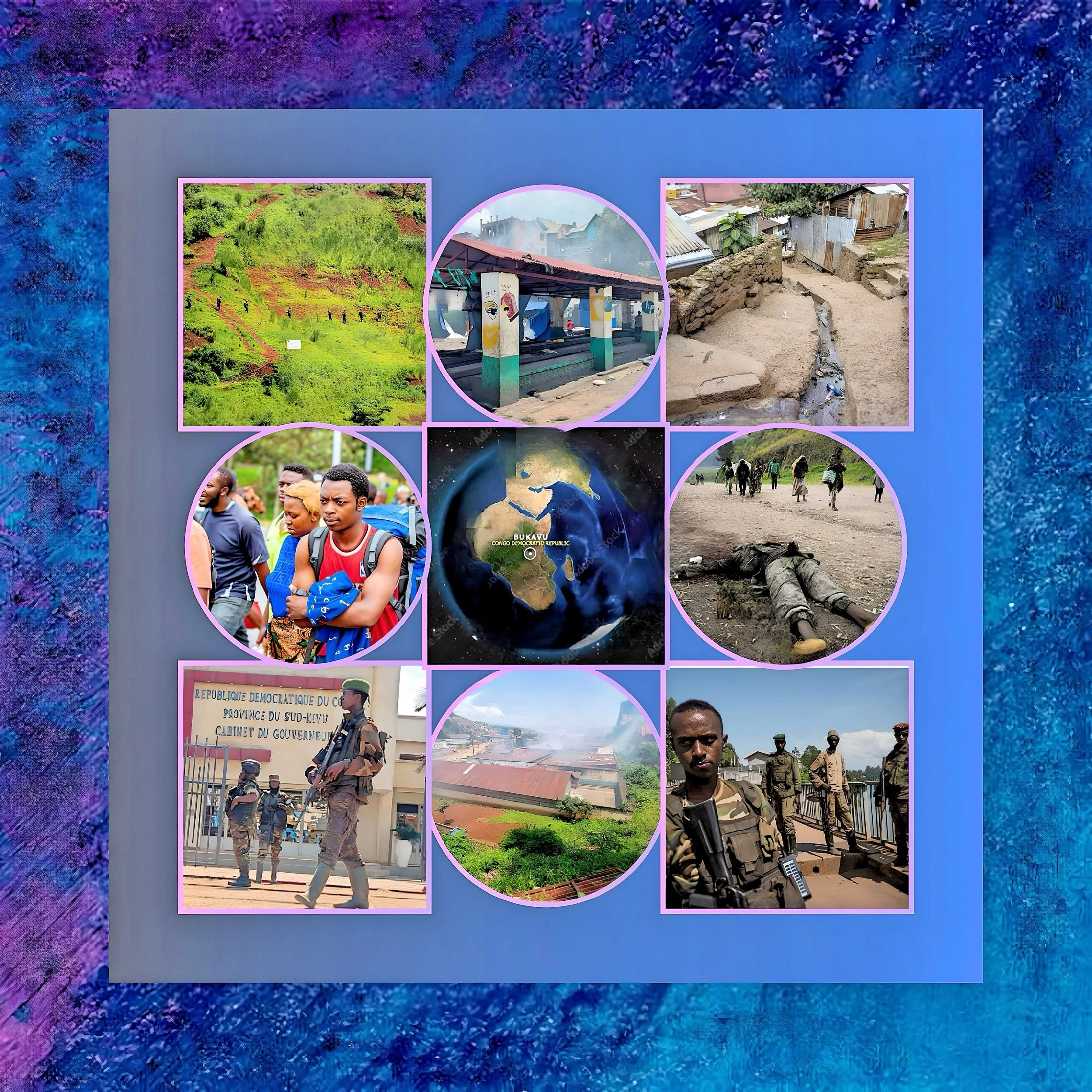
The Rwanda-backed M23 rebel movement has launched a significant military offensive in South Kivu province of the Democratic Republic of the Congo beginning December 1, 2025, culminating in the capture of the strategic city of Uvira on December 9-10, 2025.
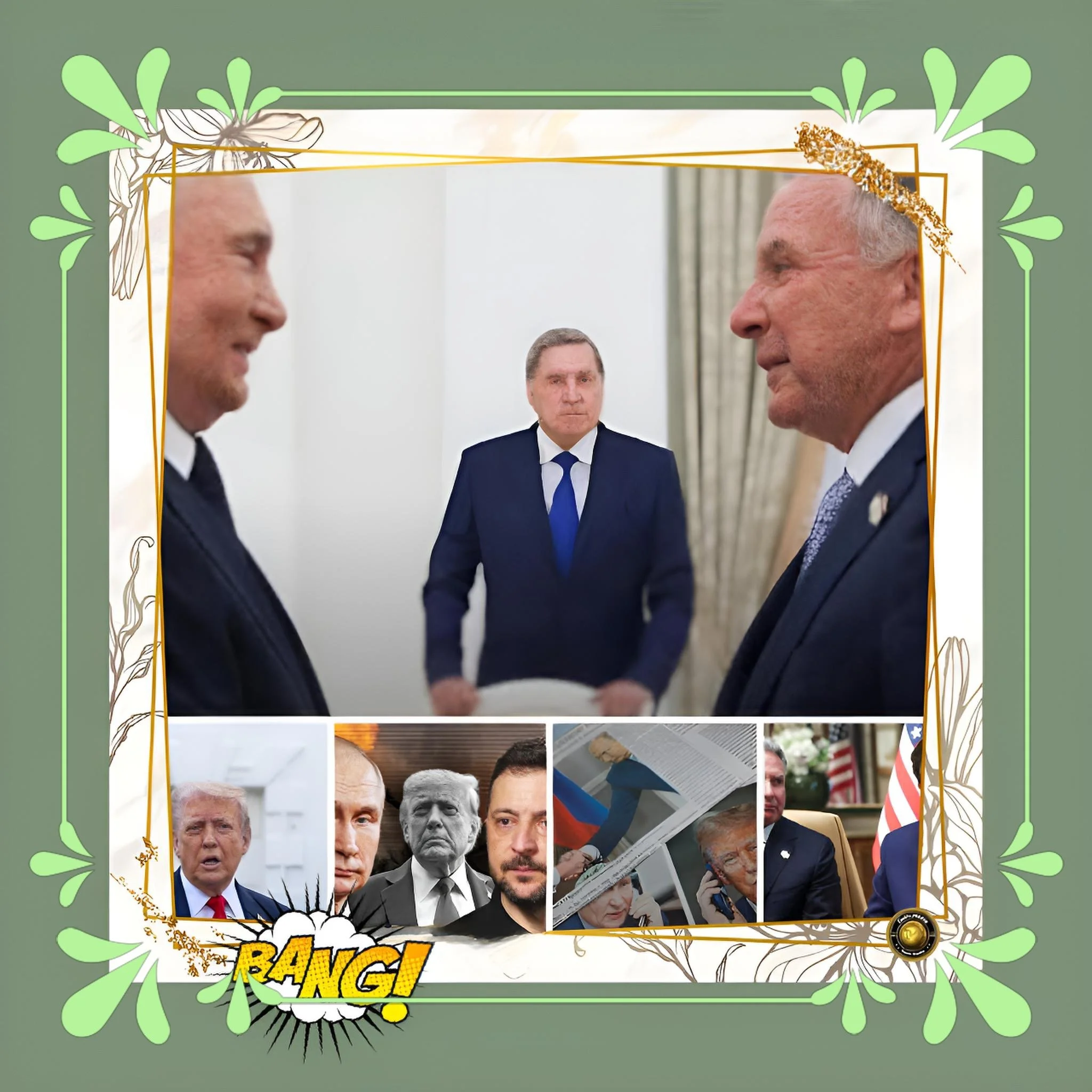
This offensive represents a severe violation of the Washington Accords, a comprehensive peace agreement formally signed on December 4, 2025, by DRC President Félix Tshisekedi and Rwandan President Paul Kagame under the auspices of U.S. President Donald Trump.
The accelerated military campaign has displaced more than 200,000 people within South Kivu province alone since December 2, with an additional 30,000 having fled across the border into Burundi within a single week.
The humanitarian toll has been substantial, with civilian casualties exceeding 70 deaths. The offensive has triggered competing narratives regarding ceasefire violations, with Rwanda asserting that DRC and Burundian forces initiated hostilities through systematic bombing of villages near Rwanda’s border, while the DRC government maintains that Rwanda and M23 have brazenly violated their newly signed commitments within days of the Washington ceremony.
The situation has prompted urgent diplomatic interventions from the International Contact Group for the Great Lakes and expressions of profound concern from the United States, European nations, and other international stakeholders, raising fundamental questions about the viability of Trump administration-brokered peace initiatives in one of Africa’s most intractable conflicts.
Introduction
Minerals, Militias, and Broken Deals: Congo’s War Returns
The conflict in eastern Democratic Republic of the Congo represents one of the world’s most protracted and devastating humanitarian crises, with its roots extending back three decades to the aftermath of the 1994 Rwandan genocide.
The contemporary chapter of this struggle centers on the M23 rebel movement, an armed group whose origins lie in a 2012 insurgency that was ostensibly defeated through regional military intervention and a peace agreement in 2013. However, M23 reorganized and resurged spectacularly in early 2025, capturing the provincial capitals of Goma in North Kivu and Bukavu in South Kivu through a lightning offensive supported by Rwandan military assets.
Despite the humanitarian catastrophe unfolding across eastern DRC, with millions displaced and resource-rich territories increasingly controlled by armed groups, recent diplomatic initiatives have sought to establish a durable peace framework.
Congo’s War Deepens While the World Debates Sanctions
The Trump administration’s engagement represents a notable departure from previous international mediation efforts, combining traditional peace brokerage with explicit American interests in securing access to critical minerals including cobalt, lithium, copper, tantalum, and gold—resources essential for technological advancement and green energy transitions.
The dramatic deterioration in the security situation following the formal signing of the Washington Accords merely six days after their December 4 ceremony reveals the profound fragility of these arrangements and the persistent ability of M23 and its Rwandan backers to circumvent international commitments through military action.
Key Developments and Chronology
From Peace Ceremony to Humanitarian Crisis in a Week
The escalating cycle of peace agreements followed by military violations spans multiple negotiation frameworks and demonstrates the intractability of the underlying conflict.
In March 2025, Rwanda provided decisive military support to M23, committing approximately 3,000 to 4,000 troops and deploying advanced military technology that proved decisive in M23’s capture of Goma and Bukavu.
These territorial gains fundamentally altered the negotiating position of M23, transforming it from a marginalized rebel group into a significant geopolitical actor controlling critical population centers and economic zones.
Foreign Policy-style: Peace in Name Only: The Washington Accords Collapse Before Ink Dries
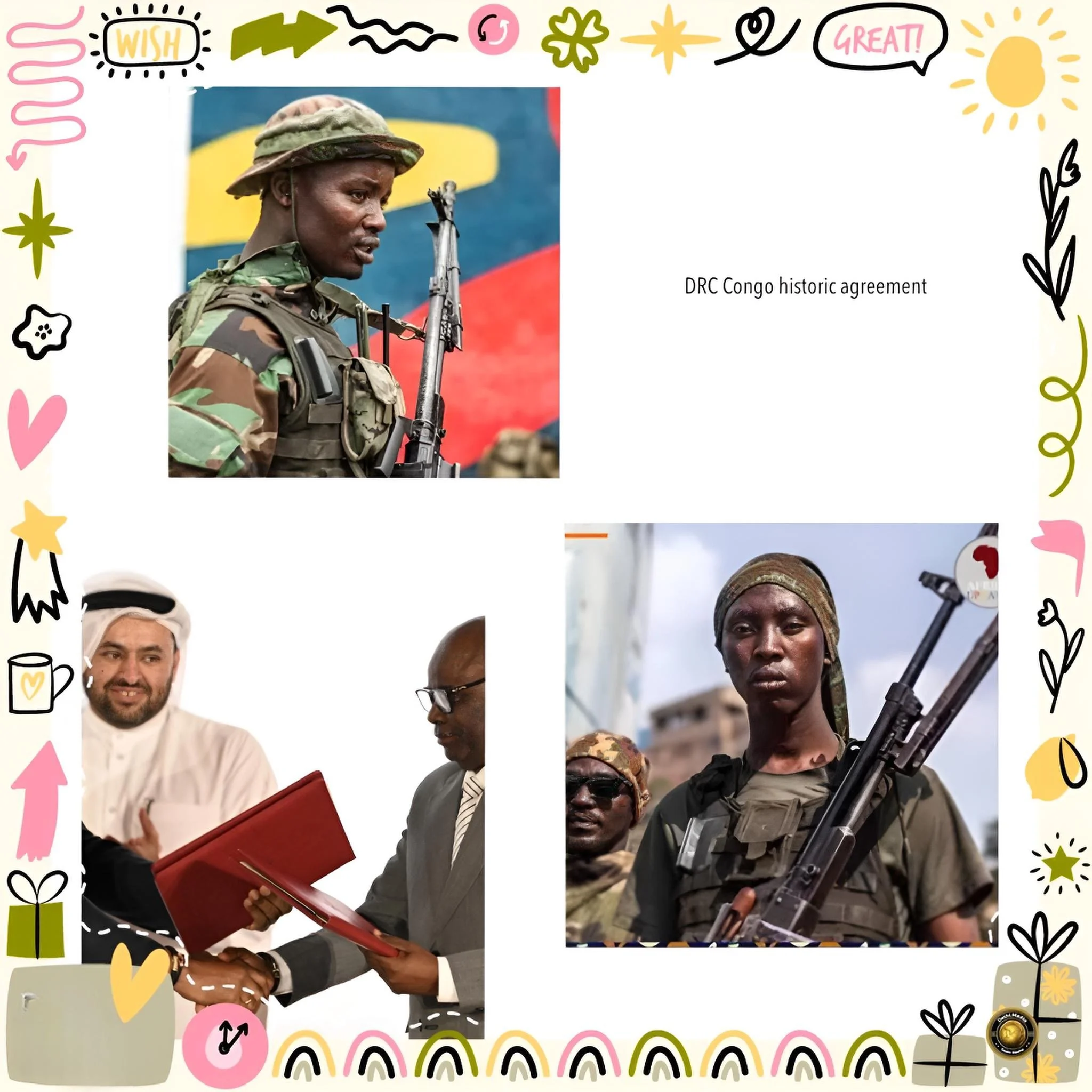
Following months of Qatari-mediated negotiations, the DRC government and M23 representatives signed a Declaration of Principles on July 19, 2025, in Doha, Qatar, which committed both parties to a permanent ceasefire, established a Joint Oversight Committee comprising representatives from the DRC, M23, and the twelve-nation Conference on Great Lakes (comprising African Union, Qatar, and United States observers), and outlined confidence-building measures including the release of prisoners and detainees.
However, fighting persisted throughout this period, with the DRC military accusing M23 of “multiple attacks” and “intentional and manifest violations” of ceasefire commitments, particularly around the strategic town of Mulamba in August.
Trump-Brokered Congo Peace Unravels in a Week
The Trump administration’s parallel negotiations with Rwanda and the DRC bore fruit on June 27, 2025, when officials signed an initial peace agreement in Washington, D.C., with State Department support. Secretary of State Marco Rubio’s public commitment to the peace process emphasized the historic nature of an agreement aimed at ending three decades of warfare.
This agreement was subsequently formalized through the Washington Accords for Peace and Prosperity, signed ceremonially on December 4, 2025, at the United States Institute of Peace with Trump presiding and additional African leaders including the presidents of Angola, Burundi, Kenya, Togo, and Uganda, as well as the Chairperson of the African Union Commission, in attendance.
The Washington Accords encompassed provisions for a permanent ceasefire, disarmament of non-state forces, repatriation and reintegration of refugees and displaced populations, and mechanisms for justice and accountability for perpetrators of atrocities.
However, notably, the accord between Rwanda and the DRC did not directly include the M23 rebel group, which continued negotiating under the separate Qatari-facilitated framework for a comprehensive resolution.
Global Diplomacy Falters as M23 Redraws Congo’s Map
The collapse of this diplomatic achievement occurred with remarkable speed.
December 1st 2025
On December 1, 2025, precisely three days before the Washington ceremony and mere days before the formal accord, M23 launched a comprehensive offensive targeting FARDC (Armed Forces of the Democratic Republic of Congo), Wazalendo militia, and Burundian FDNB troops along the critical National Road 5 corridor and near the Ruzizi River border.
December 5-7 th 2025
The offensive advanced rapidly southward from the Walungu and Uvira territories toward Uvira town, capturing the strategic village of Luvungi between December 5-7, establishing control over the key forward military base and positioning forces for the assault on Uvira itself. The town of Sange, situated between Luvungi and Uvira, fell to M23 on December 8, leaving the group positioned merely 25 kilometers from the provincial objective.
December 9-10th 2025
By the evening of December 9, M23 fighters reportedly entered Uvira’s northern districts, encountering widespread panic as heavy weapons detonations triggered civilian evacuations and business closures. Governor Jean-Jacques Purusi Sadiki initially denied rebel occupation, characterizing reports as “totally unfounded,” yet by December 10 at approximately 11:30 a.m., Uvira ultimately fell without substantial urban combat resistance.
M23 subsequently claimed control of the Kalundu port on Uvira’s southern periphery and established administrative presence in the city center and governor’s building complex.
Competing Narratives and Accountability Questions
Diplomacy Undone: Rwanda and DRC Back to War
The fundamental question of ceasefire responsibility has generated starkly divergent narratives from the principal actors. The DRC government, represented by President Tshisekedi, has asserted unambiguously that Rwanda violated the Washington Accords immediately following the December 4 ceremonial signing.
Tshisekedi stated in a parliamentary session that “despite good faith in the recently agreed agreement, it is clear that Rwanda is already violating its commitments,” specifically alleging that Rwandan army forces executed attacks utilizing heavy artillery the very day after signing.
The DRC military spokesperson Sylvain Ekenge characterized the attacks as “almost daily” and constituting an “intentional and manifest violation” of both the Washington peace accord and the Declaration of Principles agreed in Doha. Military officials further alleged that DRC and Burundian forces faced systematic bombardment utilizing fighter jets and attack drones targeting civilian villages near the Rwandan border.
Conversely, Rwanda’s Foreign Ministry issued a comprehensive counter-statement absolving the country of responsibility for ceasefire violations.
Rwanda asserted that the DRC and Burundian armies, “together with its coalition including militias and foreign mercenaries,” bore responsibility for violations through “systematic bombing of civilian villages close to the Rwandan border, using fighter jets and attack drones.”
Rwanda-Backed Rebels Overrun Uvira, Ending Hopes for Lasting Ceasefire
Rwanda characterized M23’s counter-offensive as a necessitated defensive response to ongoing Congolese aggression, emphasizing that “the DRC has openly stated that it would not observe any ceasefire, and was fighting to recapture territories lost to AFC/M23, even as the peace process unfolded.”
Rwanda’s Foreign Minister Olivier Nduhungirehe dismissed allegations of Rwandan military involvement as “ridiculous” and accused the DRC of deflecting responsibility for its own violations.
Rwanda further contended that these deliberate violations of negotiated agreements constituted “serious obstacles to peace, resulting in the continued suffering of the population in Eastern DRC, as well as a security threat to Rwanda’s western border.”
The statement emphasized that “a return to full implementation of the Washington Accords is an urgent priority, as is the conclusion of the remaining annexes of the Doha Agreement between DRC and AFC/M23.”
The International Contact Group for the Great Lakes, comprising representatives from Belgium, Denmark, the European Union, France, Germany, the Netherlands, Sweden, Switzerland, and the United Kingdom, along with the United States, issued a joint statement on December 9 expressing “profound concern” over the escalation while calling for all parties to “honour their obligations to protect civilians, adhere to all aspects of UNSC resolution 2773, including full respect of territorial integrity, to uphold their commitments under the Washington Accords of 4 December 2025 and immediately deescalate the situation.”
The formulation deliberately avoided explicit attribution of blame while calling for adherence to international law and humanitarian standards. DRC’s top diplomat subsequently asserted that sanctions would be necessary to salvage the Trump-brokered peace initiative, suggesting that accountability mechanisms were essential for credibility.
The absence of enforcement provisions within the peace agreements emerged as a critical vulnerability.
The original July Declaration of Principles explicitly lacked any mechanism to penalize non-compliance, with Qatar having noted that successful implementation “lies primarily with both parties.”
The Washington Accords similarly contained no specified enforcement apparatus, relying instead upon the political commitment of signatories.
Facts, Strategic Concerns, and Regional Implications
Broken Promises, Burning Villages: Congo’s Unending Suffering
Uvira occupies strategic and symbolic significance within the eastern DRC conflict. As a major port city on the northern tip of Lake Tanganyika and positioned directly across from Burundi’s largest city of Bujumbura, Uvira serves as both a critical military location and a commercial hub.
The city represented the provisional capital of South Kivu province following the earlier fall of Bukavu, making its capture a profound symbolic victory for M23 and a devastating blow to Congolese government authority.
The loss of Uvira extends M23’s territorial control and potentially opens additional operational corridors.
Military analysts note that M23’s rapid advances since December 1 have fundamentally shifted the military balance, with government forces demonstrating limited capacity to mount effective defensive operations despite possessing numerical advantages.
Civilians Flee Once More as Uvira Falls
The collapse of FARDC and Wazalendo defenses, with soldiers and local military commanders reportedly fleeing toward Burundian territory, suggests either tactical incompetence, inadequate equipment and coordination, or potential deliberate decisions to avoid urban combat casualties.
The humanitarian dimensions of this renewed offensive have been catastrophic.
According to the United Nations Office for Coordination of Humanitarian Affairs (OCHA), more than 200,000 people have been displaced within South Kivu province since December 2 alone.
UN sources and Burundian administrative officials have documented that more than 30,000 Congolese refugees crossed into Burundi within a single week of the offensive commencement.
The International Federation of Red Cross and Red Crescent Societies reported that among those who returned to ostensibly secure areas during earlier periods of relative calm, over 60 percent currently inhabit compromised shelters, more than one-third face difficulties accessing land, and villages have been systematically plundered.
Civilian casualty figures exceed 70 deaths from bombing and grenade blasts, with hospitals overwhelmed and communication infrastructure severely disrupted.
The cutting off of humanitarian access routes and the disruption of food aid distribution represent additional catastrophic consequences.
The broader eastern DRC displacement crisis encompasses more than 7 million internally displaced persons, rendering the region one of the world’s most significant humanitarian emergencies.
The role of Rwanda in sustaining M23 remains a central point of contention within the international diplomatic framework.
United Nations expert panels have consistently documented the presence of between 3,000 and 4,000 Rwandan Defence Force troops operating within DRC territory, providing tactical training, logistical support, and advanced military technology to M23 forces.
UN Urges Ceasefire as Rwanda-Backed Rebels Advance in East Congo
A UN Group of Experts report identified that Rwanda maintains effective command and control over M23 operations, despite official Rwandan denials of direct involvement.
Geolocated imagery has documented Rwandan soldiers stationed in border towns near Goma, and military analysis indicates that M23’s sophisticated operational capabilities—including coordination of multiple maneuver elements, effective use of heavy weaponry, and rapid decision-making cycles—would be extraordinarily difficult to achieve without Rwandan military guidance.
Rwanda justifies its military presence through assertions that the Democratic Forces for the Liberation of Rwanda (FDLR), a militia group composed primarily of ethnic Hutus implicated in the 1994 genocide, maintains sanctuaries within eastern DRC and poses an existential security threat to Rwanda.
The FDLR’s estimated 2,000-3,000 fighters and the Congolese government’s alleged tolerance of their presence form the cornerstone of Rwanda’s security rationale.
The Trump administration’s mineral-centric approach to peace diplomacy has generated both analytical interest and substantive criticism.
Trump explicitly stated during the December 4 ceremony that “we’ll be sending some of our largest and most prominent companies to these nations.
We will extract some of the rare earth materials, acquire assets, and ensure that everyone benefits financially.”
From Accord to Assault: Congo’s Conflict Erupts Again
The administration has negotiated bilateral agreements with both the DRC and Rwanda to secure access to critical minerals essential for American technological and defense manufacturing.
The eastern DRC contains approximately 30 percent of global cobalt reserves, significant lithium deposits, substantial tantalum resources, and extensive gold and copper mineralization.
The strategic importance of these minerals for electric vehicle batteries, renewable energy infrastructure, and advanced military systems has made mineral security a central Trump administration foreign policy priority.
Critics contend that the mineral dimension creates perverse incentives, potentially incentivizing continued instability that allows extractive companies to operate under lower regulatory and environmental standards and reduced governmental revenue capture.
The emphasis on commercial access may have inadvertently empowered M23 and Rwanda, which already control significant mineral-producing territories and benefit from informal cross-border mineral trading networks.
Future Steps and Diplomatic Pathways
Global Diplomacy Scrambles to Save Congo Peace”
The immediate diplomatic response has centered upon renewed calls for ceasefire implementation and recourse to existing United Nations Security Council frameworks.
The International Contact Group statement reiterated the importance of honoring UN Security Council Resolution 2773, passed unanimously on February 21, 2025, which explicitly condemned M23 offensives and called for Rwandan military withdrawal from DRC territory without preconditions.
UN Faces Test as Washington Accords Falter
This resolution, adopted under Chapter VII of the UN Charter, carries enforcement authority should the Security Council determine that breaches warrant action.
The ICG emphasized that “there is no military solution to the conflict” and called for immediate deescalation, protection of civilians, and adherence to international humanitarian law.
However, the Security Council’s capacity for enforcement remains constrained by the absence of international consensus regarding appropriate intervention mechanisms and the complexity of distinguishing between competing narratives of ceasefire violation attribution.
The Joint Oversight Committee established pursuant to the October 2025 ceasefire monitoring agreement represents a potential institutional mechanism for investigating alleged violations.
This committee, comprising representatives from the DRC, M23, and ICG members, is mandated to investigate ceasefire breach allegations and convene within one week of violation reports.
However, the committee’s investigative capacity faces inherent constraints given that it must operate within active conflict zones and relies upon cooperation from parties simultaneously engaged in military operations.
Previous joint verification mechanisms in this conflict, notably the Joint Verification Mechanism established in 2023, dissolved within months amid mutual accusations of bias and incompetence.
Sanctions or Stalemate? The World Debates Rwanda’s Role
The DRC’s explicit call for sanctions against Rwanda signals a recognition that diplomatic suasion and non-binding declarations have failed to generate behavioral change.
A comprehensive sanctions regime would require Security Council approval and would likely encounter resistance from Russia and China, which have historically maintained more nuanced positions on African conflicts.
Targeted sanctions against Rwandan military officials and M23 leadership, asset freezes, and arms embargoes have been proposed as potential mechanisms to increase costs for continued violations.
However, sanctions regimes typically prove effective only when coupled with alternative pathways for achieving core political objectives and demonstrating that compliance offers greater rewards than continued violence.
The prospects for genuine implementation of the Washington Accords and the Doha Declaration of Principles remain severely compromised.
Rwanda’s Proxy Pressure and the Limits of Global Leverage
The immediate military dynamics suggest that absent significant external pressure or altered material conditions, M23 possesses both the organizational capacity and Rwandan support to continue territorial expansion.
The Congolese military’s demonstrated inability to defend strategic cities despite possession of superior numbers raises fundamental questions about command structure, logistics, morale, and political will.
Some analysts have suggested that certain FARDC units may be receiving contradictory orders or operating under constraints imposed by Congolese political considerations that limit aggressive counteroffensive operations.
The flight of Burundian forces from Uvira, ordered by General Prime Niyongabo to defend Burundi’s border, suggests that regional actors are recalibrating their strategic assessments based on perceptions that DRC is incapable of holding territory against M23.
Longer-term diplomatic pathways must address the fundamental territorial and security issues that previous agreements have circumvented.
Ambiguity leading to failed peace accords
The Washington Accords failed the following:
(1) Did not resolve the question of M23’s territorial control
(2) No clear mandate for M23 to withdraw from Goma, Bukavu, and the newly captured Uvira
(3) Lack of clarity whether above territories would be legitimized through incorporation into a future settlement.
Doha Deal Collapses: Humanitarian Crisis Deepens in Its Wake
The Doha negotiations pursued a similar ambiguity, with observers noting that the comprehensive timeline for addressing territorial issues suggested continued prospects for agreement collapse.
Race Against Time: The Need of the Hour Grows Louder
Finally, any sustainable peace framework must
(1) Address both the humanitarian dimensions through refugee return and reconstruction
(2) The security dimensions through force disarmament
(3 Integration or neutralization mechanisms
(4) The political dimensions through power-sharing or institutional arrangements that address the grievances of affected populations.
Conclusion
War Returns to the Great Lakes: U.S.-Brokered Peace Crumbles
The M23 offensive in early December 2025 and the capture of Uvira represent a catastrophic failure of recent peace diplomacy and underscore the persistent limitations of military-deterrent approaches to regional conflicts.
The Trump administration’s diamond-studded but institutionally fragile peace framework, focused primarily upon mineral access and headline-generating ceremonies rather than sustainable structural resolution, has collapsed within days of its formal launching.
The absence of enforcement mechanisms within either the Washington Accords or the Doha Declaration of Principles rendered both agreements vulnerable to unilateral violation, and Rwanda and M23 have demonstrated that they possess the military capability to advance territorial objectives faster than diplomatic frameworks can adapt.
Security Council Gridlock Leaves Congo Exposed
The humanitarian catastrophe unfolding in South Kivu—with 200,000 newly displaced persons, 30,000 refugees fleeing to Burundi, and civilian casualties exceeding 70—represents merely the latest chapter in a conflict that has claimed millions of lives over three decades and displaced more than 7 million people.
The competing narratives regarding ceasefire violation responsibility, while containing elements of mutual recrimination that complicate unambiguous attribution, fail to obscure the fundamental reality that ceasefire commitments have been violated and that M23 continues to expand territorial control.
Rwanda’s insistence that DRC initiated violations does not negate the factual reality that M23 and Rwandan forces have advanced militarily and captured strategically significant territory subsequent to formal peace agreements.
The International Contact Group’s diplomatic language masking profound concern reflects the international community’s analytical confusion and strategic paralysis in confronting forces that demonstrate little commitment to peace processes.
UN Faces Test as Washington Accords Falter
Future stability in the eastern DRC will require mechanisms far more substantial than those embedded within current agreements. Genuine enforcement capacity, whether through Security Council sanctions or credible military deterrent threats, must demonstrate that violation costs exceed the benefits of territorial expansion.
Simultaneously, any sustainable resolution must address the underlying political, security, and economic grievances that have animated conflict for three decades.
The window for diplomatic solution may be narrowing as M23’s military momentum accelerates and Congolese government capacity deteriorates, potentially creating conditions where a negotiated settlement becomes impossible absent fundamental strategic realignment by regional or international actors.
The Trump administration’s mineral-focused diplomacy has proven insufficient to contain one of Africa’s most destabilizing conflicts, and absent significant reorientation of international engagement toward comprehensive structural resolution rather than commercial transactions, the catastrophic humanitarian deterioration is likely to continue unabated.