Scholarly Analysis of W.G. Beasley’s “The Rise of Modern Japan”
Foreward
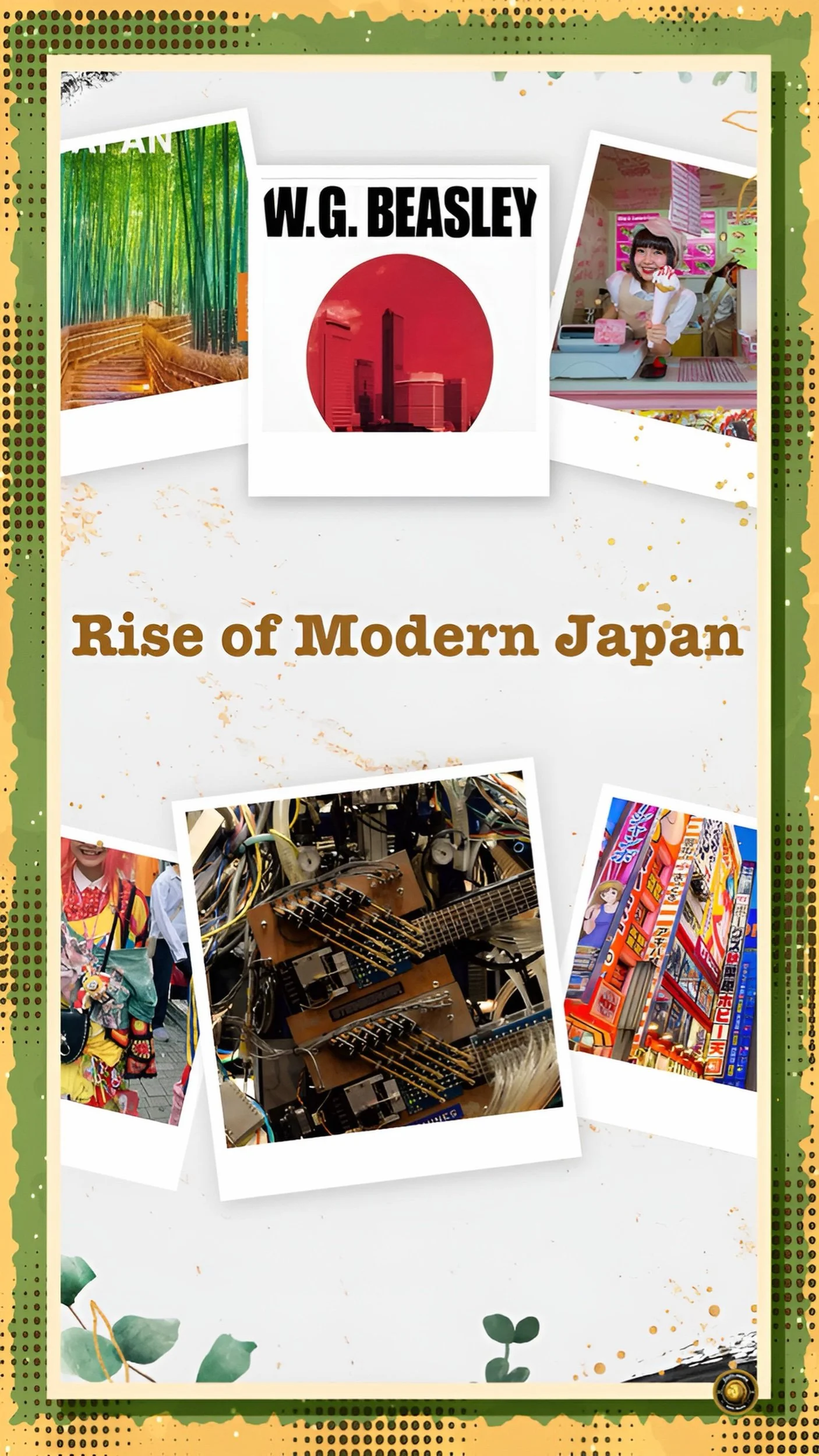
The Rise of Modern Japan: Political, Economic and Social Change Since 1850 by W.G. Beasley stands as a foundational work in English-language scholarship on Japan’s transformation from a feudal society to a modern nation-state.
Originally published in 1963 as The Modern History of Japan, it was revised and reissued as The Rise of Modern Japan with its most comprehensive iteration appearing as the third edition in 2000.
Beasley (1919–2006), Professor Emeritus of the History of the Far East at the School of Oriental and African Studies (SOAS), University of London, brought decades of meticulous research to create what remains among the most widely read surveys of modern Japanese history.
Author’s Historiographical Approach
Beasley’s approach represents a scholarly synthesis that balances narrative with analytical rigor, integrating political, economic, and social dimensions of historical change rather than privileging any single interpretive lens.
His work deliberately incorporates both Japanese and Western sources, reflecting his extensive archival research conducted during multiple visits to Japan throughout the 1950s and 1960s.
This methodological commitment distinguished Beasley’s work during an era when much Western scholarship on Japan was influenced by post-Asia-Pacific War perspectives.
His analysis of the Meiji Restoration (1868) eventually crystallized into a comprehensive monograph that won the prestigious J.K. Fairbank Prize of the American Historical Association in 1972, cementing his status as a leading authority on Japan’s modernization.
Core Structural Framework
The book is organized into thematic sections that chronologically trace Japan’s trajectory while emphasizing conceptual continuities:
The Tokugawa Legacy and Feudal Decay — Beasley begins by establishing that modernization did not emerge ex nihilo following Western contact.
Instead, he demonstrates how internal contradictions within the Tokugawa system (1603–1868) had already catalyzed significant social and economic change centuries before Perry’s expedition.
He meticulously documents the decay of feudalism, the changing role of the samurai, and the emergence of merchant guilds and market mechanisms despite official ideology that maintained a rigid caste system.
This periodization is crucial
Beasley argues that commercial capitalism and proto-industrial development were already embedded in Tokugawa society, rendering Japan far more receptive to modernization than isolated feudal societies elsewhere.
Western Challenge and Japanese Response — Beasley contextualizes Japan’s encounter with Western imperialism not as an unprecedented shock but as a catalyst that accelerated existing reform impulses.
The key insight here is that Japanese elites perceived modernization through the framework of fukoku kyōhei (wealthy nation, strong army)—a defensive nationalist ideology aimed at preserving Japanese sovereignty by adopting Western institutional forms.
This reframes modernization away from simple “Western imitation” toward strategic appropriation. Beasley emphasizes that Japanese reformers studied abroad and deliberately selected which Western institutions to adopt, creating a distinctive Japanese modernity rather than wholesale Westernization.
The Meiji Restoration as Nationalist Revolution — Beasley’s analysis of the 1860-1868 period is particularly influential. He rejects economic determinism or class struggle interpretations, instead characterizing the Restoration as fundamentally driven by growing national consciousness and defensive nationalism spurred by foreign intrusion.
He explores the specific roles of the Satsuma and Tosa domains in detail, arguing that the Restoration’s success depended on narrow coalition-building among lower-ranking samurai and domain leaders who felt threatened by Western encroachment.
Critically, Beasley notes that the rapidity and scope of post-1868 reforms become comprehensible only when one accounts for the social transformations that had already occurred within Tokugawa society.
Key Thematic Arguments
Modernization and Institutional Reform (1868–1912) — Beasley provides detailed analysis of how the Meiji oligarchy systematized reforms across public administration, education, communications, and constitutional governance.
He emphasizes that these were not merely cosmetic adoptions but represented genuine institutional transformation.
The Meiji Constitution (1889), land tax reforms, the establishment of compulsory education, and the professionalization of the bureaucracy all reflected a sophisticated understanding of how institutional strength correlated with international power.
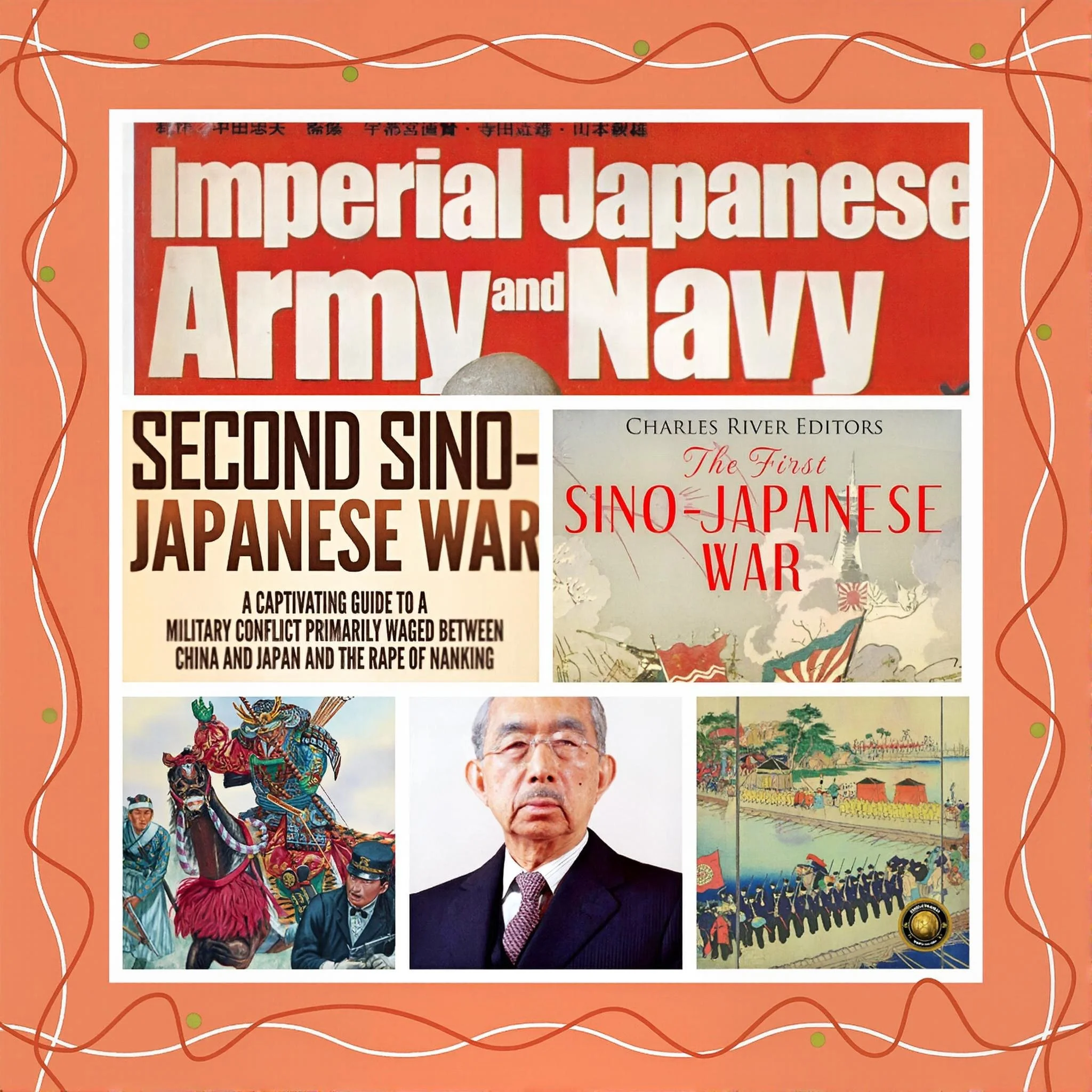
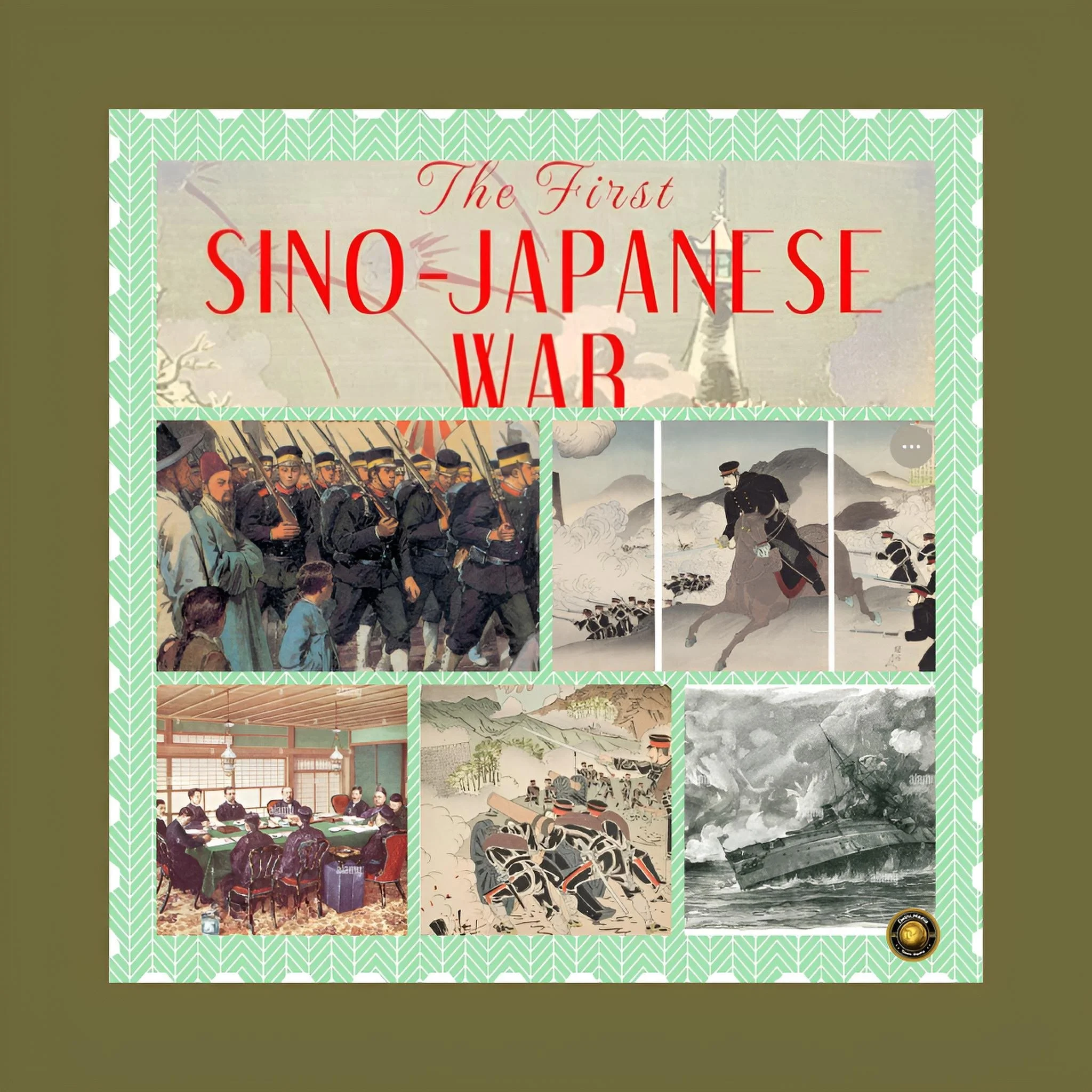
Beasley credits these reforms with enabling Japan’s astonishing economic progress—by century’s end, Japan had become a unified economic powerhouse capable of defeating both China (1894) and Russia (1905).
The Militarization of Modernity (1912–1930s) — A crucial element of Beasley’s argument concerns the fundamental continuity between Japan’s modernization project and its imperial expansion.
Rather than treating militarism and imperialism as aberrations from an otherwise benign modernization trajectory, Beasley demonstrates how the state institutions created during the Meiji period were inherently designed to project power.
The military’s institutionalization, the development of zaibatsu (industrial conglomerates), and the cultivation of nationalist ideology through education all created structural imperatives toward expansion.
Beasley shows how Japan’s victories over China and Russia encouraged territorial ambitions in Korea, Manchuria, and eventually China itself.
The Problem of Political-Military Disequilibrium — Beasley identifies a critical tension within Japanese modernity: while the state successfully created modern institutions, it failed to develop stable democratic governance to constrain military autonomy.
Unlike Meiji oligarchs who maintained civilian supremacy, by the 1920s-1930s, the military increasingly operated independently from civilian political control.
This institutional failure meant that modernization’s economic dynamism was channeled toward imperial expansion and ultimately catastrophic war rather than peaceful economic development.
Beasley’s Treatment of Japanese Empire
In his broader work on Japanese imperialism (1894–1945), Beasley articulates a distinctive thesis: he does not attempt to explain the impulse toward imperialism as unique to Japan, but rather examines how the character of Japanese society and international circumstances determined the specific timing, direction, and institutional forms that expansion took.
Crucially, he demonstrates that Japanese imperialism differed fundamentally from Western imperialism in structure, ideology, and mechanisms, even as both represented exploitative projects.
Japanese imperialism was characterized by a “Greater East Asia Co-Prosperity Sphere” ideology that claimed to liberate Asian peoples from Western colonialism—a rhetorical framework absent in European imperialism.
Historiographical Contribution and Legacy
Beasley’s work represents a major contribution to Japanese studies because it accomplishes several analytic tasks simultaneously:
It rehabilitates internal Japanese agency in the modernization process, countering deterministic narratives that portrayed Japan as passively absorbing Western influence.
By documenting indigenous social and economic developments, Beasley demonstrates that modernization was neither entirely foreign-imposed nor uniquely predetermined.
It integrates political, economic, and social history into a coherent narrative that shows how institutional change, economic transformation, and ideological shifts mutually reinforced one another. This integrated approach contrasts with narrowly political or economic accounts.
It contextualizes imperialism within modernization rather than treating it as a departure from Japan’s “true” development path.
This insight remains controversial but analytically influential: it suggests that the militarism and expansionism of the 1930s-1940s were not irrational aberrations but emerged from the very institutions that enabled Japan’s earlier successes.
It maintains analytical distance from teleology. Rather than reading backward from World War II’s catastrophe to find the “seeds” of militarism in early Meiji, Beasley respects historical contingency—showing how different choices by political actors at various moments might have produced different outcomes.
Reception and Scholarly Debates
The book has been influential in academic curricula worldwide, serving as a standard introductory text for students of modern Japanese history.
Its strength lies in its accessible but sophisticated synthesis of complex historical processes.
Critics note, however, that while Beasley excels at narrative synthesis and periodization, his works sometimes operate at an intermediate level between detailed monographic research and interpretive framework-building.
His analysis of the Meiji Restoration, which he developed extensively in his 1972 monograph, remains the standard account in English scholarship despite some subsequent refinements by Japanese historians examining specific domains and stakeholders.
Conclusion
Scholarly Significance
Beasley’s revised Rise of Modern Japan remains essential reading precisely because it provides a scholarly framework for understanding how a peripheral feudal society became an imperial power, suffered catastrophic defeat, and then achieved extraordinary economic resurrection—all within roughly a century.
His emphasis on institutional development, the role of deliberate policy choices by elites, and the integration of economic and political analysis offers insights directly relevant to contemporary questions about state capacity, technological adoption, and the relationship between modernization and militarism.
For researchers engaging with questions about Japan’s postwar transformation, the geopolitics of East Asia, or comparative modernization theory, Beasley’s work provides both empirical grounding and conceptual frameworks that remain analytically productive decades after initial publication.