Serbia’s Ongoing Protests: Seven Months After Novi Sad Railway Station Tragedy Sparks Nationwide Anti-Corruption Movement
Introduction
Seven months after the tragic collapse of a railway station canopy in Novi Sad killed 16 people, Serbia continues to experience unprecedented nationwide protests that have evolved into one of the most significant challenges to President Aleksandar Vučić’s rule in over a decade.
FAF, Moscow.Forum analyzes the student-led movement, which began as a response to the November 1, 2024 disaster and has transformed into a broader anti-corruption campaign demanding accountability, the rule of law, and early elections.
The international community has increasingly expressed concern about the situation, with the European Union, United Nations, Council of Europe, and various national governments calling for peaceful dialogue, protection of democratic rights, and adherence to European values.
The Novi Sad Railway Station Collapse and Initial Response
The tragedy that catalyzed Serbia’s current political crisis occurred on November 1, 2024, at 11:52 CET, when a 48-meter-long concrete canopy at Novi Sad’s central railway station collapsed onto people walking and sitting underneath.
The disaster killed 16 people, including children as young as six years old, and severely injured others.
Among the victims were citizens from various Serbian cities and one North Macedonian national, with ages ranging from young children to elderly adults.
The railway station had been recently renovated from 2021 to mid-2024 with support from China’s Belt and Road Initiative, making the collapse particularly controversial.
Initial claims by Serbian Railways Infrastructure that the canopy had not been reconstructed during renovation work were later contradicted, fueling public anger over perceived government deception.
The incident prompted immediate investigations by the Novi Sad Higher Public Prosecutor’s Office, which led to questioning more than 40 people and the formal indictment of 13 individuals, including former Construction Minister Goran Vesić.
The Serbian government’s response included declaring a nationwide day of mourning on November 2, while the Autonomous Province of Vojvodina and the City of Novi Sad declared three days of mourning.
However, these symbolic gestures failed to quell growing public anger over what many perceived as systemic corruption and negligence in significant infrastructure projects involving Chinese state companies.
Evolution of the Protest Movement
What began as mourning for the Novi Sad victims quickly evolved into a sustained nationwide protest movement unprecedented in recent Serbian history.
University students emerged as the primary organizers, initiating campus blockades and daily demonstrations across more than 400 cities and towns throughout Serbia.
The movement has maintained remarkable persistence, with protests continuing for over seven months and showing no signs of diminishing.
The scale and coordination of the protests have been extraordinary.
The largest demonstration occurred on December 22, 2024, at Slavija Square in Belgrade. An estimated 100,000 to 102,000 people attended, marking it the biggest protest in Belgrade’s recorded history.
Subsequent major rallies have consistently drawn tens of thousands of participants, including a March 15, 2025, demonstration that again saw approximately 100,000 people gather in Belgrade.
The protest movement has expanded beyond students to include diverse segments of Serbian society.
Farmers have joined with tractor blockades on major highways, while teachers, trade union members, and ordinary citizens have participated in coordinated demonstrations.
The movement employs various forms of peaceful resistance, including daily 15-minute periods of silence to honor the victims, bridge blockades in Belgrade and other cities, and symbolic acts such as throwing flowers into rivers.
The protests ' sustained nature and geographic spread are particularly significant.
By March 2025, demonstrations occurred in 245 towns and cities across Serbia, representing an unprecedented mobilization that has challenged the government’s authority at multiple levels.
The protesters have adopted the slogan “corruption kills,” directly linking the Novi Sad tragedy to broader concerns about governance and accountability.
Government Response and Political Fallout
The Serbian government’s response to the protests has been characterized by defensive rhetoric, personnel changes, and increasingly concerning authoritarian measures.
President Vučić initially dismissed the protests as an attempted “color revolution” supported by foreign entities, particularly accusing Western nations of orchestrating the demonstrations.
This narrative has been consistently promoted through pro-government media, which have labeled the protests as “terror” and falsely minimized their scale.
The sustained pressure from protesters has forced significant political changes within the government.
Several high-ranking officials have resigned, including Construction Minister Goran Vesić, who stepped down on November 4, 2024, though he denied accepting guilt for the tragedy.
Former Construction Minister Tomislav Momirović also resigned on November 20, pledging “eternal loyalty to President Vučić” in his resignation letter.
Most significantly, Prime Minister Miloš Vučević announced his resignation in February 2025 after less than a year in office, stating he did not want to “further raise tensions in society.”
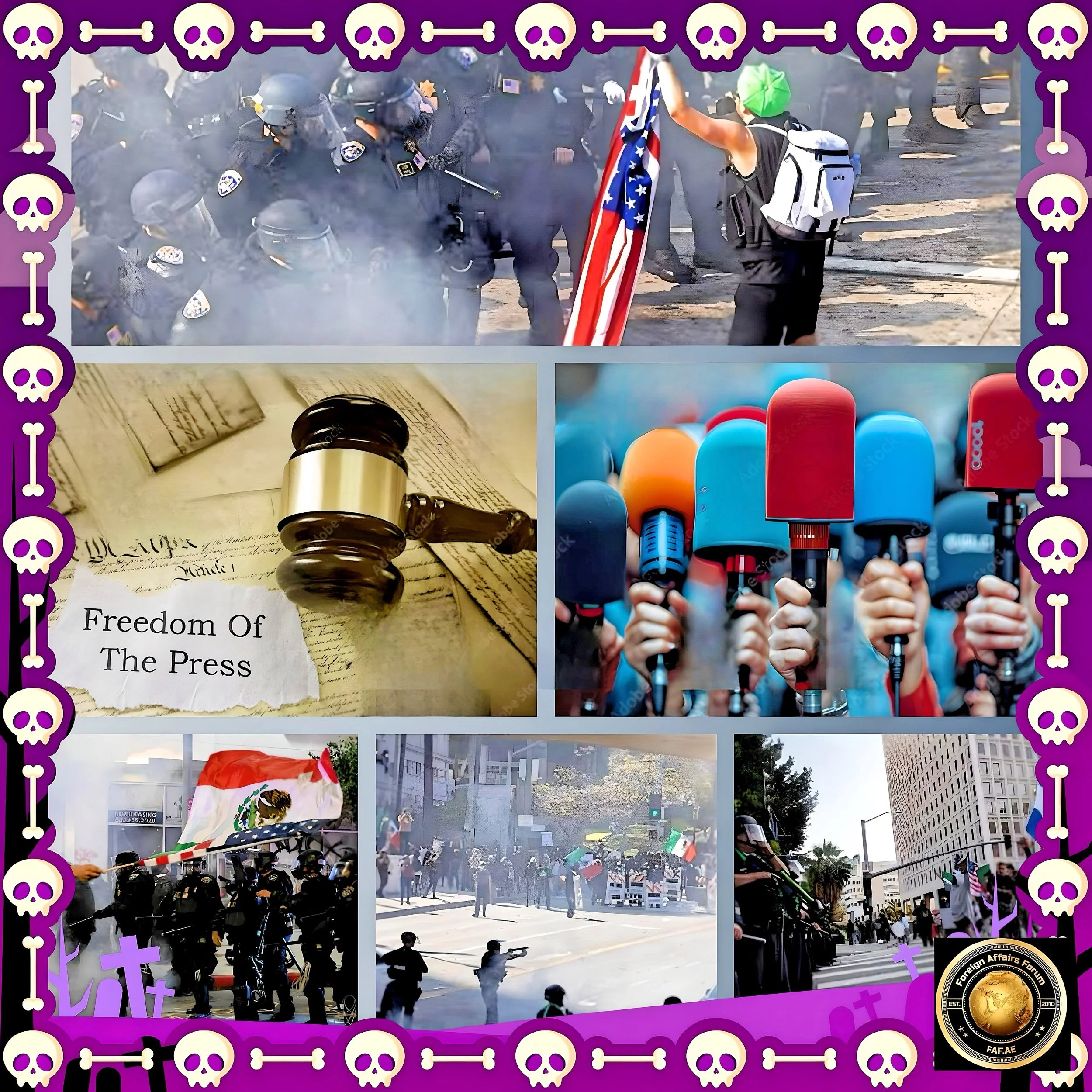
The government’s handling of the protests has included authoritarian measures. Violence has erupted at several demonstrations, with protesters accusing pro-government groups of orchestrating attacks.
Reports indicate that vehicles have attempted to ram into protest crowds, and students have been beaten with bats.
The March 15, 2025, protest in Belgrade was disrupted by what protesters alleged was the use of sonic weapons or Long Range Acoustic Devices (LRADs), which are illegal in Serbia and caused dozens of people to require medical treatment.
President Vučić has made increasingly provocative statements, including announcing the formation of a “loyalist faction” within his party consisting of “17,000 members who swore a blood oath in secrecy” and threatening to deploy special forces against students.
These statements have been widely criticized and ridiculed, contributing to further deterioration of the political climate.
International Community Response
The international response to Serbia’s ongoing crisis has been measured but increasingly critical, with multiple global organizations and governments expressing concern about democratic backsliding and human rights violations.
The European Union, as Serbia’s primary accession partner, has taken a particularly active role in monitoring the situation and calling for adherence to European values.
European Union officials have issued several statements emphasizing the importance of democratic principles and peaceful dialogue.
European Commission President Ursula von der Leyen, following a working dinner with President Vučić in March 2025, stated that “the country needs to deliver on EU reforms, in particular, to take decisive steps towards media freedom, the fight against corruption, and electoral reform.”
The EU delegation to Serbia has emphasized that “freedom of assembly is a fundamental right which needs to be protected and exercised peacefully, while the safety of participants and institutions needs to be ensured.”
The United Nations Human Rights Office has also taken a clear stance, calling for calm ahead of mass rallies and urging Serbian authorities to allow protests “to take place without unwarranted interference.”
UN spokesperson Jeremy Laurence emphasized that Serbia is “bound by its obligations under international human rights law to protect and respect the full exercise of rights to freedom of peaceful assembly and expression.”
The UN has also explicitly called for protecting human rights defenders, journalists, and members of civil society.
The Council of Europe has been particularly active through its Parliamentary Assembly (PACE) and Commissioner for Human Rights.
PACE monitoring co-rapporteurs expressed “very concerned about the escalation of tensions” and called for authorities to “shed light on” allegations regarding the use of sonic weapons during protests.
Commissioner for Human Rights Michael O’Flaherty conducted a mission to Serbia in April 2025, emphasizing the need to maintain democratic policing standards and investigate acts of violence against demonstrators.
Individual European nations have also responded critically. Germany’s Foreign Ministry has been particularly vocal, stating that “the situation in Serbia remains deeply concerning” and that “activists face attacks and smear campaigns for raising their voices.”
German officials have emphasized that Serbia must “uphold the rule of law and human rights” as an EU candidate country.
The Serbian government has rejected these assessments as “generalized accusations” that fail to consider the full context.
As Serbia’s traditional ally, Russia has taken a markedly different approach.
Russian Foreign Ministry spokeswoman Maria Zakharova warned against “chaos” in Serbia and called for demonstrators to “show reason” while expressing support for the Serbian government’s handling of the crisis.
Russia has framed the protests within its broader narrative opposing Western influence in the Balkans.
Current Status and Ongoing Developments
As of June 2025, the protest movement shows no signs of abating, with demonstrators continuing to demand accountability and early elections.
The June 1, 2025 protests marked exactly seven months since the Novi Sad collapse. Thousands of people rallied across 30 Serbian cities and towns, with protesters declaring that “the whole of Serbia has risen” and vowing that “there will be no more silence, there will be no more surrender.”
The legal proceedings related to the Novi Sad collapse continue to progress slowly, with 13 people formally indicted but no convictions yet achieved.
Public skepticism remains high regarding whether the judicial process will reveal the full extent of alleged corruption behind the incident.
The protesters’ demands have expanded beyond accountability for the tragedy to include broader democratic reforms, early elections, and systemic changes to combat corruption.
President Vučić, while initially dismissing the possibility of early elections, suggested in late May 2025 that such elections could take place, though without specifying a timeline.
This potential concession reflects the sustained pressure the government faces from the unprecedented protest movement.
The international community continues to monitor the situation closely, with the European Union maintaining pressure on Serbia to demonstrate its commitment to democratic values and European integration.
The protests have highlighted the complex challenges facing Serbia as it navigates between its traditional ties with Russia and its stated goal of EU membership, while dealing with deep-seated issues of corruption and democratic governance that have been exposed by the Novi Sad tragedy.
Conclusion
The seven-month commemoration of the Novi Sad railway station canopy collapse has revealed the depth of public dissatisfaction with governance in Serbia and the strength of civil society when mobilized around issues of accountability and justice.
What began as mourning for 16 tragic deaths has evolved into Serbia’s largest protest movement in decades, challenging President Vučić’s increasingly authoritarian rule and demanding fundamental democratic reforms.
The international response, while varied, has generally supported the protesters’ rights to peaceful assembly and called for Serbian authorities to address legitimate concerns about corruption and democratic backsliding.
As the movement continues into its eighth month, it represents a critical test of Serbia’s democratic future and its relationship with European values, with implications extending far beyond the borders of the Balkan nation.