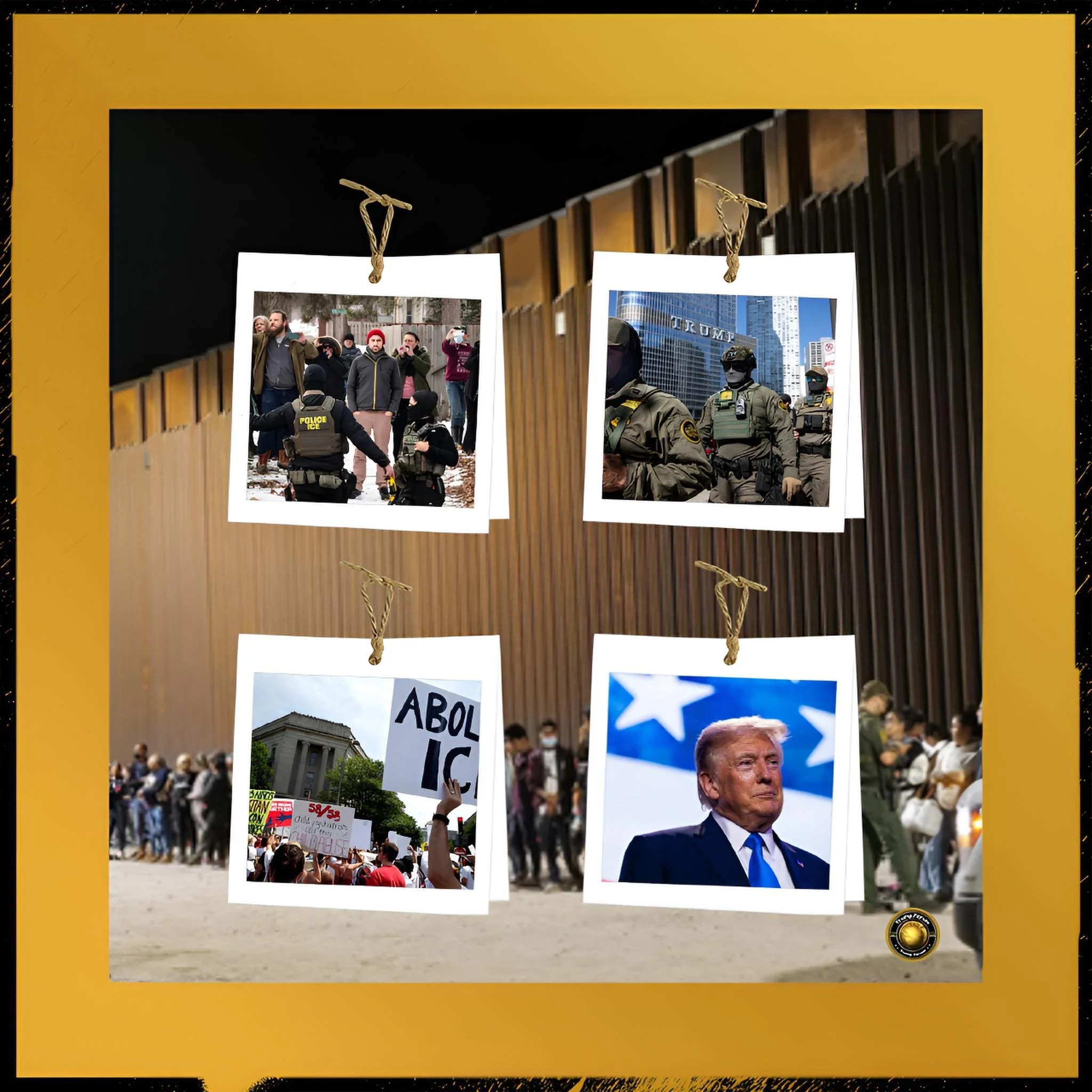
Democrats Navigate Immigration Backlash in Polarized America
Executive Summary
ICE Crackdowns Spark Political Risk for Both Parties
Immigration enforcement has reemerged as one of the most volatile fault lines in American politics.
Immigration and Customs Enforcement (ICE), established in 2003 as part of the Department of Homeland Security, has become both a symbol of state authority and a lightning rod for controversy.
Democrats confront a dual challenge: widespread unease with what many voters perceive as harsh enforcement tactics, and equally widespread concern over border disorder.
Public opinion reflects this tension. While surveys indicate that a majority of Americans disapprove of family separations and aggressive workplace raids, significant shares also express dissatisfaction with federal border management and rising unauthorized migration.
FAF comprehensive analysis contends that Democratic leaders are attempting a delicate recalibration rather than outright dismantlement of enforcement institutions.
Their strategy seeks to constrain ICE’s most controversial practices, increase oversight and humanitarian safeguards, and shift political emphasis toward border management reform and legal migration pathways.
Yet such recalibration carries electoral risks. Republicans portray any curtailment of ICE authority as capitulation to disorder, while progressive activists demand more sweeping changes.
The cause-and-effect dynamic shaping this debate is rooted in institutional design and political polarization.
Enforcement surges generate images that mobilize Democratic constituencies but also reinforce Republican narratives of chaos when border crossings rise.
Conversely, restraint in enforcement may reassure civil libertarians but risks alienating the swing voters anxious about security.
The outcome will hinge on whether Democrats can frame reform as restoring competence and legality rather than weakening deterrence.
Introduction
Border Anxiety Tests Democratic Strategy Before National Elections
On February 10th, congressional hearings into federal enforcement actions in Minnesota underscored the combustible nature of immigration politics.
Exchanges between lawmakers and agency officials were less deliberative inquiry than performative confrontation. The rhetoric illustrated how immigration enforcement has become a proxy for broader disputes about federal authority, civil liberties, and national identity.
Democrats face a political paradox. ICE’s tactics—high-profile raids, detention practices, and rapid deportations—have drawn sustained criticism. Images of shackled migrants and overcrowded facilities galvanize segments of the electorate.
Yet border insecurity also commands attention. Encounters at the southern border have reached historically elevated levels in recent years, straining asylum systems and municipal services. Polling consistently shows that immigration ranks among voters’ top concerns, particularly in battleground states.
Thus, Democrats must navigate between two imperatives: curbing what they depict as excessive enforcement while demonstrating credible control over the border.
The stakes are electoral as well as institutional. Failure to strike equilibrium could reshape coalition politics for years.
History and Current Status
How Democrats Aim to Curb ICE Without Losing Votes
ICE was created after the attacks of 2001 to consolidate interior enforcement functions. Its mandate spans deportations, detention management, and investigations into cross-border crimes.
Over time, ICE’s budget expanded substantially, exceeding $8 billion annually in recent years. Staffing levels rose, and detention capacity increased.
Under successive administrations, enforcement priorities oscillated. During the Obama years, ICE emphasized removal of individuals with criminal records while reducing workplace raids. Nonetheless, deportation numbers remained high, prompting criticism from immigrant advocacy groups.
The Trump administration adopted a maximalist approach, expanding enforcement categories and employing family separation as a deterrence strategy. Deportations surged in certain years, and detention populations rose sharply.
The subsequent administration sought to recalibrate. Enforcement guidelines prioritized national security threats and serious crimes, while asylum access was expanded in principle. Yet surges in border encounters complicated this posture.
At times exceeding 2 million encounters annually, flows overwhelmed processing capacity. Republican governors deployed state resources to border areas, intensifying political theater.
Currently, ICE operates within tightened oversight frameworks but retains broad statutory authority. Detention centers remain operational across multiple states.
Litigation continues over conditions and due process standards. Meanwhile, Customs and Border Protection manages record volumes of asylum seekers and migrants, complicating the narrative that enforcement has simply diminished.
Key Developments
Several developments frame the present moment.
First, public opinion has hardened in nuanced ways. Surveys suggest that while nearly 60% of Americans oppose family separations and prolonged detention of children, roughly similar shares favor increased border enforcement and faster asylum adjudication.
This duality constrains policy design.
Second, state-level activism has intensified. Republican-led states have enacted laws expanding local cooperation with federal authorities.
Conversely, Democratic-led jurisdictions have reinforced sanctuary policies limiting such cooperation. The result is a patchwork enforcement landscape.
Third, urban capacity strains have shifted the debate. Cities receiving large numbers of migrants report budgetary pressures measured in billions of dollars.
This has altered political dynamics even within traditionally pro-immigration constituencies.
Fourth, legal challenges to executive authority over asylum restrictions have proliferated.
Courts have alternately constrained and enabled federal actions, injecting unpredictability into enforcement practices.
Fifth, internal agency controversies have emerged.
Reports of agent misconduct, high-profile fatalities during operations, and disputes over accountability have fueled congressional scrutiny. Such incidents amplify demands for reform.
Latest Facts and Concerns
Recent data indicate that unauthorized border crossings have fluctuated but remain historically elevated compared with pre-2014 levels.
Although monthly figures vary, cumulative annual encounters have exceeded 1.5 million in recent years.
Detention capacity often operates near limits, with average daily populations numbering in the tens of thousands.
Fiscal implications are significant. Combined federal spending on immigration enforcement surpasses $25 billion annually.
Municipal expenditures in major cities hosting asylum seekers can reach hundreds of millions of dollars per year.
Politically, immigration ranks among the top three voter concerns in multiple national surveys.
Swing-state polling reveals that independents frequently prioritize border security over broader immigration reform.
At the same time, Democratic base voters express strong support for due process protections and limits on detention.
Concerns extend beyond numbers.
Critics argue that aggressive raids disrupt communities and deter crime reporting. Supporters counter that lax enforcement incentivizes irregular migration.
This divergence shapes campaign messaging.
Cause-and-Effect Analysis
The political calculus confronting Democrats arises from feedback loops between enforcement actions and public perception.
When ICE conducts visible raids, images circulate rapidly. Advocacy groups mobilize protests, reinforcing narratives of brutality. Democratic lawmakers respond with calls for oversight.
However, if border encounters remain high simultaneously, Republicans frame Democratic criticism as evidence of permissiveness. Voters concerned about disorder may shift allegiance.
Conversely, when enforcement guidelines are narrowed, apprehensions at the border may increase if migrants perceive reduced deterrence. Even if such perception exceeds reality, political consequences follow.
Elevated crossings generate media coverage that undermines claims of control.
Urban fiscal strain produces additional effects. When cities allocate substantial resources to migrant housing and services, local voters may prioritize cost concerns.
This can erode traditional Democratic strongholds.
Institutionally, ICE’s broad mandate complicates reform. Curtailing certain practices without legislative overhaul risks partial measures that satisfy neither critics nor skeptics.
Absent comprehensive immigration reform, executive adjustments remain vulnerable to reversal.
Future Steps
Democratic strategy increasingly emphasizes reframing. Rather than advocating abolition, leaders propose professionalization and oversight. Proposals include independent review boards, body-camera mandates, and clearer detention standards.
Simultaneously, they support accelerated asylum adjudication to reduce backlog-induced incentives.
Legislatively, bipartisan border packages have surfaced intermittently.
Elements often include increased funding for border infrastructure, expanded legal pathways, and humanitarian safeguards. Whether such packages survive electoral cycles remains uncertain.
Messaging will prove pivotal. Democrats aim to present reform as restoring rule of law and administrative competence rather than weakening enforcement.
Highlighting reductions in processing times and increased removals of criminal offenders may reassure moderates.
Longer term, structural reform of asylum laws enacted decades ago may be unavoidable.
Without adjusting eligibility standards and processing capacity, surges will recur. Investment in regional partnerships with Mexico and Central American states could mitigate flows, though geopolitical volatility complicates implementation.
Conclusion
Can Democrats Restrain Enforcement Without Appearing Weak
Immigration enforcement has become an arena in which symbolism often eclipses substance.
For Democrats, the challenge is to reconcile moral critique of certain ICE practices with credible assurances of border management. The objective is not abolition but recalibration.
Whether this balance can be achieved depends on narrative coherence and policy efficacy.
If Democrats demonstrate that reform enhances order while safeguarding rights, they may neutralize Republican attacks. If not, immigration may continue to function as a wedge issue capable of reshaping electoral coalitions.
The debate over ICE thus encapsulates a broader struggle over how the United States defines both security and inclusion in an era of polarized politics.