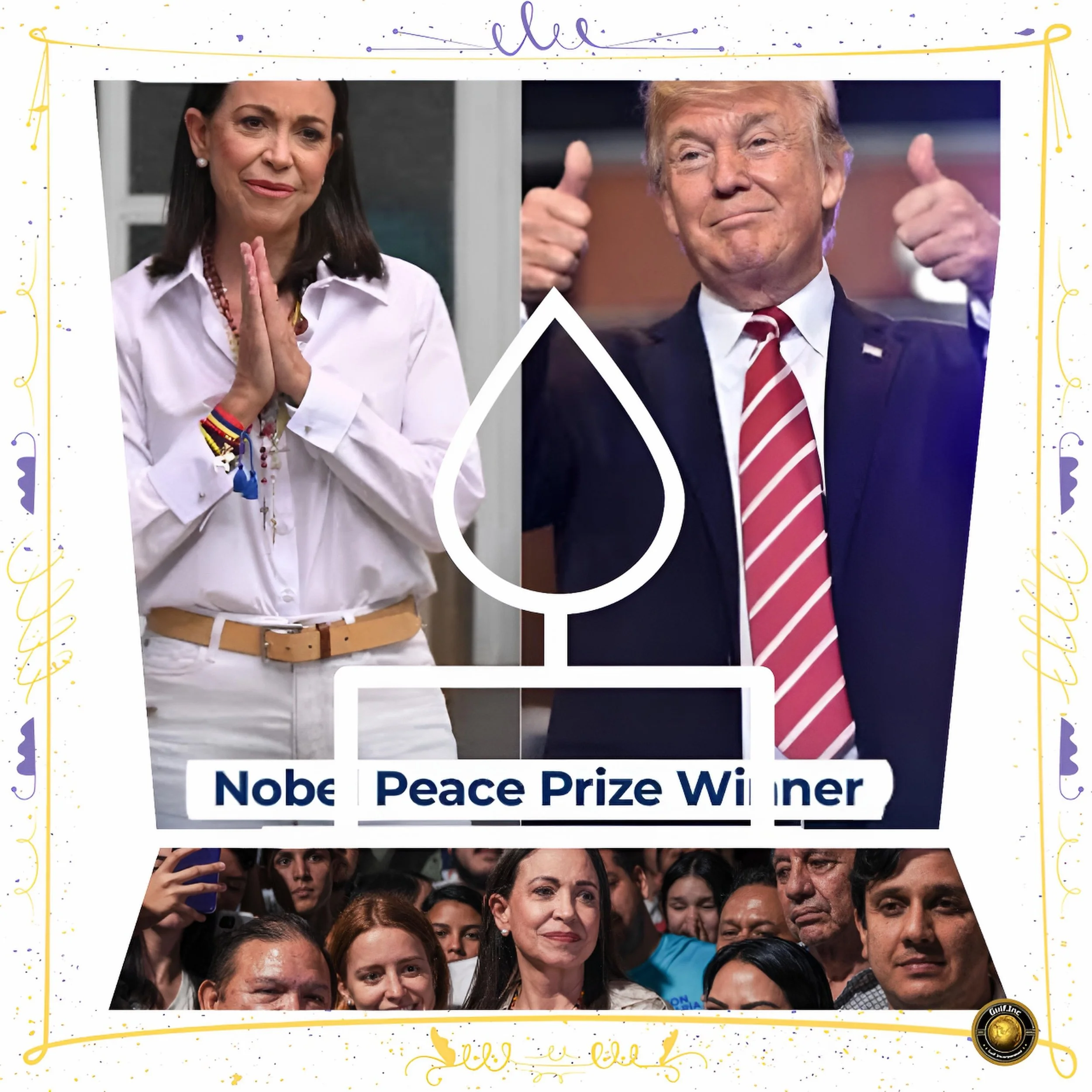
Trump’s Venezuela Strategy and Its Geopolitical Implications
Introduction
María Corina Machado’s Nobel Peace Prize and the Democratic Struggle
María Corina Machado received the 2025 Nobel Peace Prize for her “tireless work promoting democratic rights for the people of Venezuela and for her struggle to achieve a just and peaceful transition from dictatorship to democracy”.
The Norwegian Nobel Committee recognized her as “one of the most extraordinary examples of civilian courage in Latin America in recent times”, honoring her nonviolent resistance against Nicolás Maduro’s authoritarian regime.
Machado won Venezuela’s 2023 opposition primary with over 92% of the vote, giving her an overwhelming popular mandate.
When Maduro’s regime disqualified her from the 2024 presidential election, she backed retired diplomat Edmundo González Urrutia as the opposition candidate.
Despite facing state persecution, intimidation, and being forced into hiding, Machado has remained the de facto leader of Venezuela’s democracy movement.
Opposition-collected electoral tallies from 83% of precincts showed González winning with 67% of votes, though the National Electoral Council declared Maduro victorious with 51%—a result denounced by international observers as fraudulent.
Trump’s Escalating Military and Covert Operations
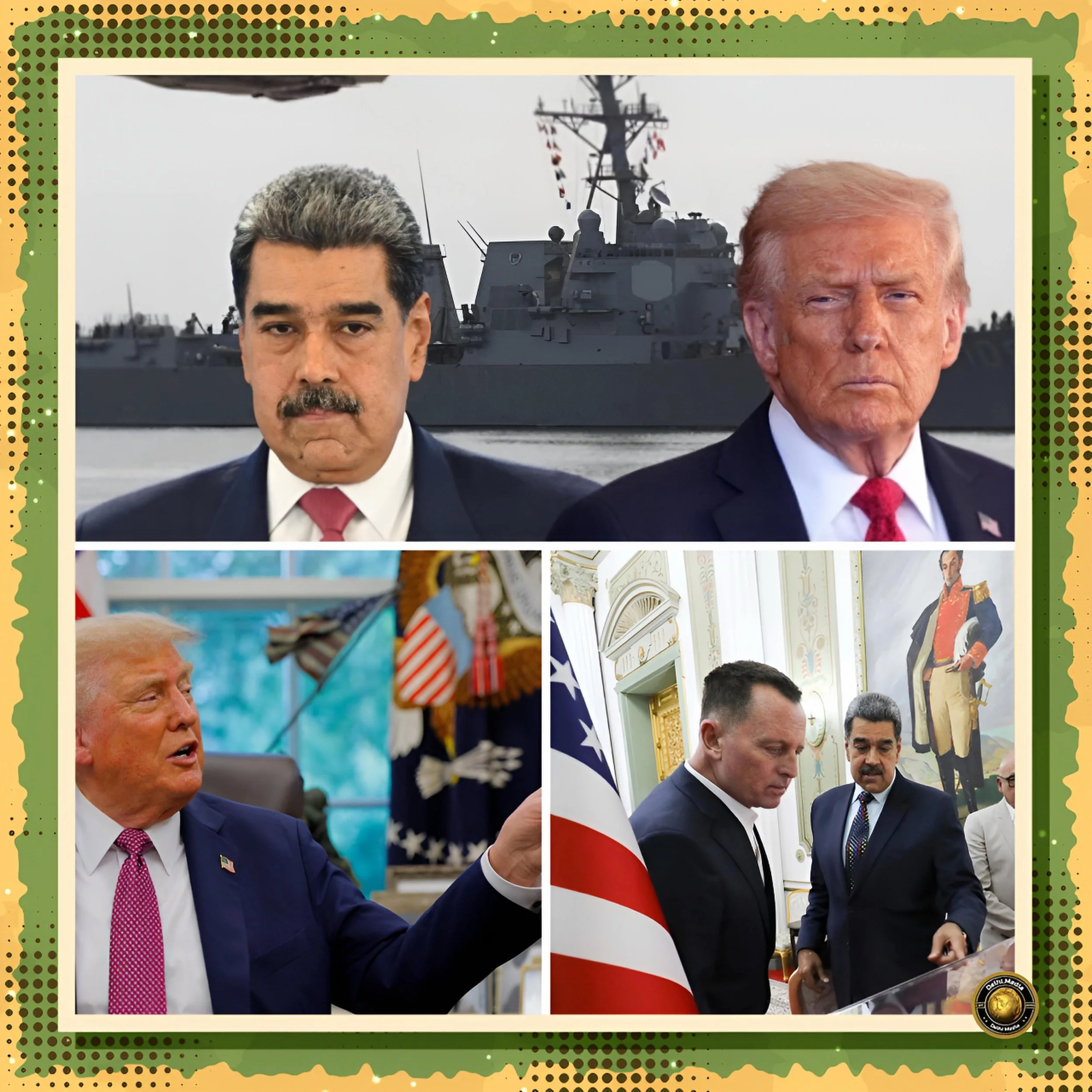
The Trump administration has dramatically escalated U.S. involvement in Venezuela through a multi-pronged campaign that began as counternarcotics operations but has evolved into what many observers characterize as regime change efforts.
As of November 2025, the U.S. has deployed approximately 15,000 military personnel to the Caribbean region, including the USS Gerald R. Ford aircraft carrier—the world’s largest—marking the most significant U.S. military presence in Latin America since the 1989 Panama invasion.
The administration has conducted at least 20 military strikes against alleged drug-trafficking vessels in the Caribbean and Pacific, killing over 80 people.
On October 15, Trump secretly authorized covert CIA operations in Venezuela, including potential lethal missions against Maduro or his administration.
Trump publicly confirmed these authorizations, stating “We certainly looking land now because we got the sea very well under control”.
Secretary of State Marco Rubio, who also serves as National Security Advisor, has emerged as the primary architect of this aggressive approach.
Rubio, a Cuban-American with deep personal and political investment in ousting Maduro, has spent over a decade pursuing the Venezuelan leader’s removal and now possesses “the kind of foreign policy power last seen by Henry Kissinger”.
The administration has designated Venezuela’s alleged “Cartel de los Soles” as a foreign terrorist organization and raised the bounty for Maduro’s arrest to $50 million.
Legal and International Law Violations
The Trump administration’s military actions face severe legal challenges under both international and U.S. domestic law.
According to international law experts, the strikes violate the UN Charter’s Article 2(4) prohibition on the use of force, as narcotics trafficking—however destructive—does not constitute an “armed attack” justifying self-defense under customary international law.
The operations also violate humanitarian law principles of distinction, proportionality, and necessity, with UN experts condemning them as “extrajudicial executions”.
Under U.S. domestic law, the operations exceed constitutional and statutory limits on executive power, as Congress has not declared war or authorized military force, and no imminent armed threat to the United States exists.
The administration has reportedly told Congress it lacks legal justification for strikes inside Venezuela, though officials continue developing such options.
Geopolitical Ramifications: The “Donroe Doctrine” and Great Power Competition
Trump’s Venezuela policy represents what observers have termed a “Monroe Doctrine 2.0” or “Donroe Doctrine”—a reassertion of U.S. hemispheric dominance specifically targeting China’s growing influence in Latin America.
The geopolitical dimension may be the primary driver of Trump’s Venezuela focus, rather than counternarcotics or democracy promotion.
China’s Strategic Stake: Venezuela owes China approximately $62.3 billion—nearly 50% of all Latin American debt to Beijing—with repayment structured through future oil production.
This arrangement has mortgaged the world’s largest oil reserves to China for years to come.
Beyond economics, Venezuela serves as China’s closest geopolitical ally in the hemisphere, unconditionally supporting Beijing on Taiwan reunification, South China Sea disputes, and other revisionist positions.
China has already responded to U.S. pressure by delivering military equipment to Venezuela, including offshore drilling platforms and air defense systems.
Russian and Iranian Connections: Venezuela maintains strategic partnerships with Russia and Iran, forming what some analysts call the “Revisionist Axis”.
Russia has reportedly provided surface-to-air missile systems and technical support, though its capacity is limited by the Ukraine conflict.
These alignments make Venezuela an outlier in Latin America, where most countries maintain primarily economic relationships with China without the geopolitical alignment.
Regional Backlash: Trump’s interventionist approach has triggered widespread condemnation across Latin America, reviving memories of historical U.S. meddling and coups.
Brazilian President Lula da Silva’s adviser warned that military intervention “could inflame South America and lead to radicalization of politics on the whole continent”.
Colombian President Gustavo Petro declared solidarity with Venezuela and promised Colombia would not serve as a launchpad for U.S. attacks.
A May 2025 poll found that most South Americans now view China as the more respectful superpower and more reliable trading partner.
Paradoxically, Trump’s aggressive tactics—including the renaming of the Gulf of Mexico, weaponization of tariffs, and military strikes—have revitalized Latin America’s left-wing “Pink Tide” governments and fueled nationalist sentiment across the political spectrum.
The approach risks pushing the region further into China’s economic and diplomatic orbit, the opposite of its stated intention.
Complex Internal Dynamics and Uncertain Outcomes
The opposition remains divided over strategy. While Machado has controversially endorsed Trump’s military approach, arguing it could catalyze regime collapse, her support for U.S. military action has reportedly caused her popularity to decline and fractured the opposition movement, as most Venezuelans reject foreign military intervention.
Machado has also offered a “massive privatization program” worth $1.7 trillion to U.S. corporations, promising access to oil, gas, gold, and infrastructure—a proposal that contrasts starkly with her Nobel Peace Prize for peaceful democratic transition.
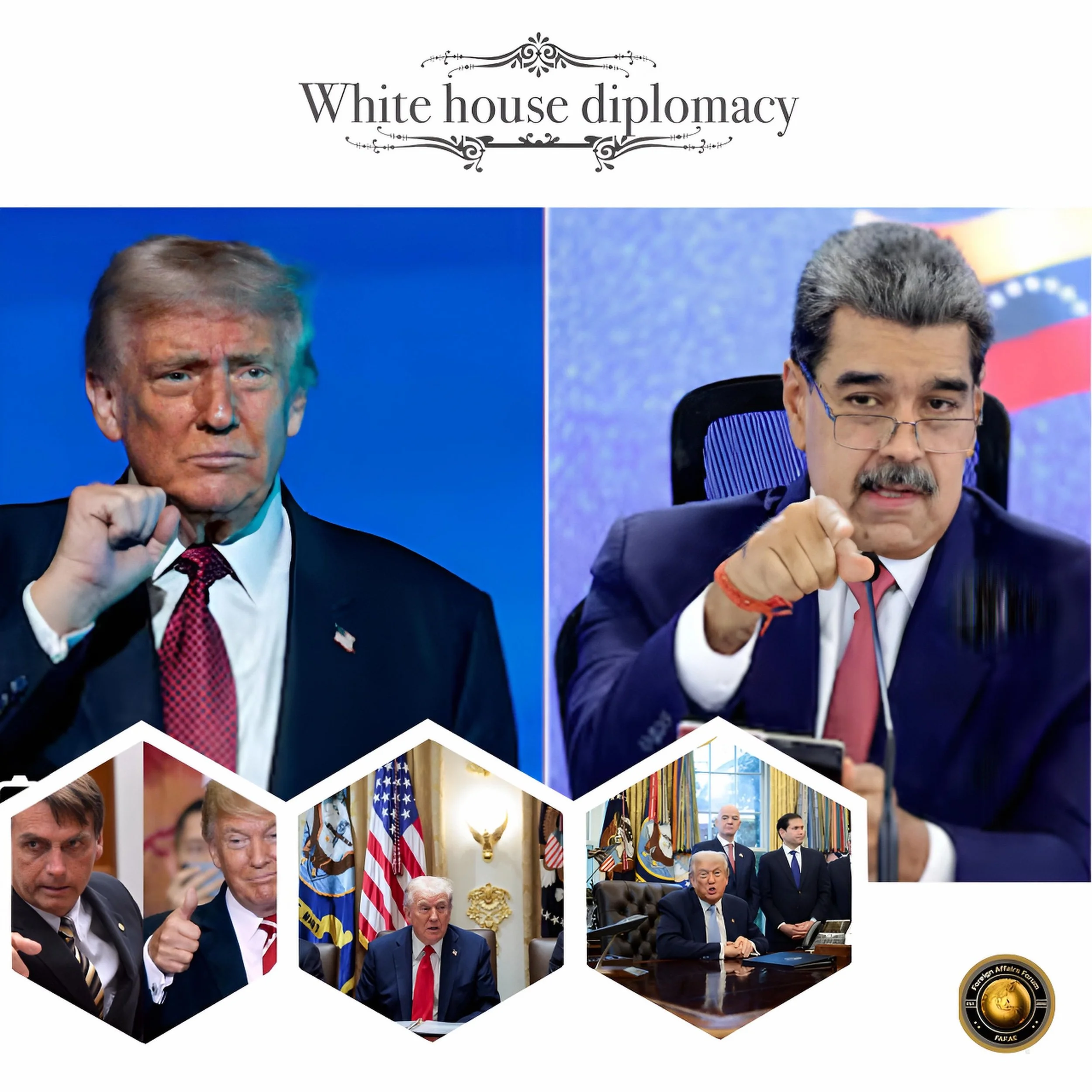
Behind closed doors, Maduro attempted to negotiate with the Trump administration through special envoy Richard Grenell, offering U.S. companies preferential access to all current and future oil and gold projects, redirecting oil exports from China to the U.S., and reducing agreements with Chinese, Iranian, and Russian firms.
The Trump administration ultimately rejected these proposals and ended diplomatic engagement in early October.
The Venezuelan military shows some signs of internal fracturing, with opposition electoral tallies indicating most soldiers voted for González at polling stations on military bases.
However, Maduro maintains effective control through brutal repression, with over 2,400 people arrested following the disputed election and 24 killed in demonstrations.
Strategic Risks and Historical Parallels
Analysts warn that U.S. military intervention in Venezuela could create an Iraq-style nation-building quagmire.
The administration faces a dilemma: if limited strikes fail to topple Maduro, Trump must choose between abandoning the campaign—damaging his credibility—or committing to a full invasion, which would contradict his “America First” doctrine and face domestic opposition.
Any power vacuum following Maduro’s sudden removal could risk further instability rather than a democratic transition.
Historical precedent offers limited encouragement.
The U.S. has intervened militarily in every Latin American country except French Guiana, according to Congressional Research Service data. Columbia University research documents at least 41 U.S.-backed government overthrows in the region between 1898 and 1994.
While the 1989 Panama invasion is sometimes cited as a successful intervention, true democracy only emerged after the U.S. occupation ended and the Panama Canal was transferred in 1999.
European and International Response
The European Union and its member states have provided humanitarian aid—€75 million in 2024—and recognized the electoral fraud, though they have taken a more cautious approach than the U.S. on military intervention.
EU institutions called for the immediate release of political prisoners and condemned human rights violations, while urging diplomatic solutions.
The EU’s approach emphasizes multilateral dialogue, including engagement with Russia and China, to avoid the collapse of democracy in Venezuela.
Trump administration officials claim the military buildup and strikes were not discussed by allies in closed-door G7 meetings, with Rubio dismissing international concerns.
This unilateral approach, casting aside decades of bilateral and multilateral cooperation in Latin America, has sent a “chilling message across the region” about the Trump administration’s disregard for traditional alliances.
Conclusion
On Machado and Democracy:
María Corina Machado won the Nobel Peace Prize for peaceful democratic struggle, yet controversially supports Trump’s military intervention.
The opposition collected evidence showing González won the 2024 election with 67% of votes, but Maduro maintains power through brutal repression with hundreds arrested and killed.
On U.S. Military Action
Trump has deployed 15,000 troops to the Caribbean, conducted 20+ strikes killing 80+ people, and authorized covert CIA operations including potential lethal missions.
These actions violate both international law and U.S. constitutional limits according to legal experts.
On Geopolitical Stakes
Venezuela owes China $62 billion—half of Latin America’s total Chinese debt—and serves as Beijing’s closest geopolitical ally in the hemisphere.
Trump’s aggressive approach risks pushing Latin America further toward China while reviving anti-American sentiment across the region.
On Regime Change Strategy
Secretary of State Marco Rubio leads the campaign to oust Maduro, with the administration rejecting Maduro’s offers of oil concessions while considering strikes inside Venezuelan territory.
The strategy faces criticism for lacking legal justification, clear objectives, and exit planning.
The situation remains fluid and highly volatile, with Trump facing binary choices between escalation and retreat, while Machado bets her political survival on U.S. intervention catalyzing regime collapse from within.
The geopolitical implications extend far beyond Venezuela, potentially reshaping U.S.-China competition, Latin American alignments, and the international legal order governing the use of force.