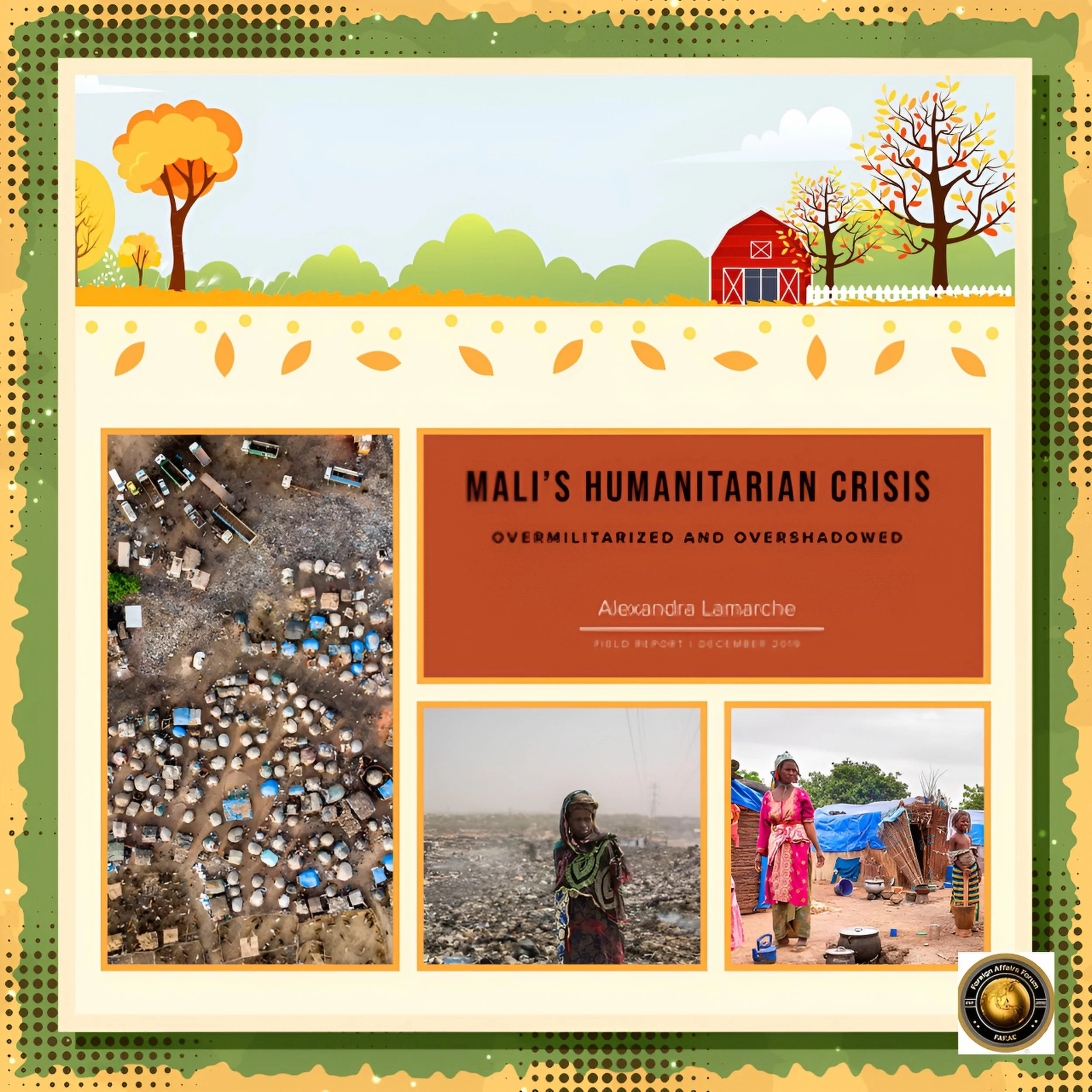
Mali’s Humanitarian Crisis: Historical Origins, Contemporary Catastrophe, and Pathways to Peace
Introduction
Overview: The Scale and Scope of Catastrophe
Mali faces what the United Nations has characterized as one of the world’s most severe humanitarian emergencies, with nearly one-third of the country’s 22 million population—approximately 6.4 million people—requiring urgent humanitarian assistance and protection as of late 2025.
This represents the highest level of need the country has experienced in a decade, with the crisis driven by a convergence of persistent armed conflict, climate shocks, and systemic state failure.
As of October 2025, only 13.6 percent ($104.9 million) of the required humanitarian funding has been secured, forcing organizations to drastically reduce assistance and prioritize aid to the most vulnerable populations.
The displacement crisis has reached catastrophic proportions across the broader Sahel region.
The United Nations High Commissioner for Refugees (UNHCR) reported in October 2025 that approximately four million individuals are currently displaced within Africa’s Sahel region (Burkina Faso, Mali, Niger, and neighboring countries)—representing a two-thirds increase compared to five years ago.
Within Mali itself, as of September 2025, approximately 378,000 internally displaced persons were recorded, with nearly 260,000 refugees having sought shelter in Mali by August 2025, representing an increase of over 70 percent since January 2025.
Notably, women and children constitute 80 percent of the forcibly displaced population across the Sahel region.
The hunger crisis has reached emergency proportions, with Mali designated as one of only five countries globally in 2025 with “highest concern level” requiring “most urgent attention” in the UN’s annual Hunger Hotspots report.
The UN’s Cadre Harmonisé assessment recorded 1.3 million people facing acute hunger, with estimates suggesting that almost 1.51 million Malians will experience acute food insecurity in 2025, and 2.8 million will require emergency nutritional assistance for survival.
Pockets of famine conditions have been reported, particularly among displaced populations in northern and central Mali and those trapped in areas under blockade by armed groups.
Educational collapse accompanies the humanitarian emergency, with 1,984 schools closed due to insecurity, leaving over 595,000 children out of school.
According to UNICEF, more than 14,800 schools across the broader Sahel region have been forced to close, depriving three million children of access to learning and safe spaces.
Additionally, approximately 900 health facilities have shut down across the Sahel, and one of four health facilities in northern and central Mali is non-functional, cutting off an estimated 3.7 million Malians from essential healthcare.
Sexual and reproductive health services have largely collapsed, leaving pregnant women without safe delivery options and survivors of gender-based violence without medical or psychosocial support
Historical Roots: From French Colony to Modern Tragedy
Pre-Conflict Mali: The Illusion of Stability
Mali achieved independence from France on September 22, 1960, becoming a francophone West African nation with considerable potential.
The early post-independence period witnessed the standard challenges of decolonization, but Mali developed a reputation as a relatively stable nation by West African standards.
From 1992 to 2012—two decades spanning the administration of Alpha Konare (1992-2002) and Amadou Toumani Touré (2002-2012)—Mali was celebrated internationally as a model of democratic governance and political stability in the Sahel region.
However, this surface stability masked profound structural vulnerabilities and injustices that would prove calamitous once exposed.
Mali’s political economy was characterized by severe spatial inequality, with power, resources, and state capacity concentrated in the south and center, particularly in the capital Bamako, while the north remained systematically marginalized.
The northern Tuareg population, a semi-nomadic ethnic group with a long historical presence, faced systematic discrimination inscribed in state policy.
Historically, the national military academy was off-limits to Tuaregs; civil service and diplomatic corps positions were largely closed to them; and ministerial positions were extremely limited.
This institutionalized exclusion created what scholars characterize as “horizontal inequality”—systematic disparities between ethnic groups in access to state power, resources, and development opportunities.
Recurring rebellions reflected this deep structural inequality.
The Tuareg had launched major rebellions in 1962-1964 and again in 1990-1996, both driven by demands for greater autonomy and an end to discriminatory governance.
President Amadou Toumani Touré’s ten-year regime (2002-2012) exacerbated these underlying tensions through what analysts describe as deliberate cultivation of divisions rather than reconciliation.
Rather than addressing the grievances of marginalized groups, the Touré government “favored the divisions and inequalities to strengthen its power,” creating what one scholarly analysis terms a “deep gap between the public image of Mali and the existent political reality”.
Additionally, Mali’s structural vulnerability derived from profound state capacity deficits.
The Malian state was unable to provide even basic services—education, healthcare, security, infrastructure—across its vast territory with any consistency or equity.
This fragmented social contract meant that large populations, particularly in the north, had minimal reliance on or trust in state institutions.
As one scholarly assessment notes, “The failure of formal government in Mali lies at the heart of the current crisis—something that is not likely to change in the foreseeable future or be able to be addressed through transitional stabilisation efforts”.
2012: The Catastrophic Conjunction
The year 2012 represents a transformative watershed when multiple crises converged catastrophically.
In January 2012, a severe Tuareg rebellion erupted in northern Mali, driven by demands for greater autonomy and, more radically, independence for the region they called Azawad.
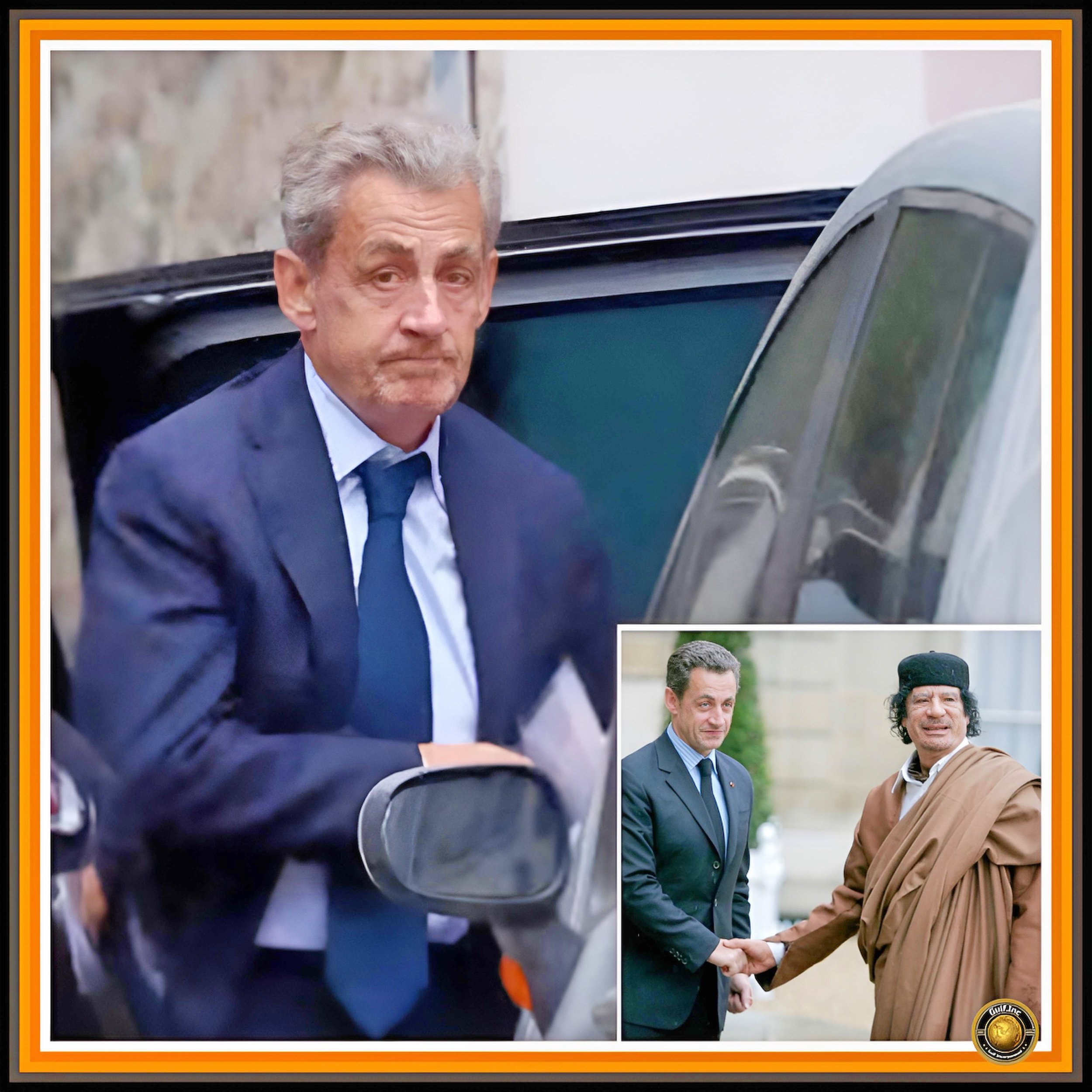
This rebellion was initially led by the secular National Movement for the Liberation of Azawad (MNLA), whose fighters were primarily Tuareg with military experience, many having returned from Libya following the NATO-led overthrow of Muammar Gaddafi in 2011.
However, within months, the rebellion became dramatically radicalized through the emergence of Islamist groups that exploited the chaos for their own geopolitical objectives.
Groups including Ansar Dine (an al-Qaeda-affiliated organization), al-Qaeda in the Islamic Maghreb (AQIM), and the Movement for Oneness and Jihad in West Africa (MOJWA) allied with the MNLA and, through a combination of military pressure and ideological conversion, gradually displaced the secular nationalist Tuareg agenda with an Islamic extremist agenda.
By June 2012, the MNLA had lost effective control of northern Mali as Islamist groups asserted dominance.
The domestic political crisis proved equally destabilizing.
Frustrated soldiers at the Kati military barracks, discontented with President Touré’s management of the northern rebellion and the depletion of military resources, staged a military coup d’état on March 21-22, 2012.
The coup was officially condemned by the international community, but it revealed the depths of state institutional fragility and reflected genuine grievances about military mismanagement and political dysfunction.
The conjuncture of a separatist rebellion transforming into jihadist takeover combined with military coup created a perfect storm.
Over 112,000 Malians fled as refugees to Burkina Faso, Mauritania, or Niger; at least 250,000 more were displaced internally within Mali.
French military intervention began in January 2013, pushing the jihadist forces from their territorial strongholds, but they adapted to guerrilla warfare, embedding themselves within local communities and dispersing across the Sahel.
2015 Peace Agreement: Hope and Disappointment
On May 15 and June 20, 2015, the Malian government and various armed groups (through various coalitions) signed the “Agreement for Peace and Reconciliation in Mali Resulting from the Algiers Process,” brokered by Algeria with international mediation from ECOWAS, the African Union, the European Union, the United Nations, and neighboring states.
This ambitious agreement established comprehensive provisions addressing the root causes of conflict: political decentralization, security sector reform, disarmament-demobilization-reintegration (DDR) of fighters, transitional justice mechanisms, and socioeconomic development projects.
The international community invested considerable optimism in the accord, with over $4 billion pledged in May 2013 for Mali’s reconstruction and stabilization.
A UN peacekeeping mission, MINUSMA (United Nations Multidimensional Integrated Stabilization Mission in Mali), was established in July 2013 with a 12,600-strong force to stabilize the country and monitor agreement implementation.
The accord was intended to address the “root causes” of conflict and establish mechanisms for genuine national reconciliation.
However, the 2015 agreement had profound structural limitations that scholars and analysts would later identify as fatal flaws:
Incomplete Signatory Base
The accord involved only a limited set of signatories—primarily the Malian government, the Coordination of Azawad Movements (CMA, a coalition of armed separatist groups), and the Plateforme (a coalition of armed groups allied with the government).
Critically, the jihadist organizations that had become the primary security threat—particularly the Al-Qaeda-affiliated JNIM (Jama’a Nusrat ul-Islam wa al-Muslimin)—did not sign the agreement and were not brought into the negotiation process.
Limited Scope
The agreement addressed primarily the 2011-2012 separatist rebellion in the north but failed to adequately address “mounting Islamist violence, lethal ethnic tension, and persistent insecurity in Mali’s central regions”.
Implementation Deficits
By 2020, the agreement’s implementation was lagging catastrophically.
Essential pillars, including political decentralization, security sector reform, DDR of combatants, and the establishment of mechanisms for transitional justice, remained substantially incomplete.
Elite Commitment Crisis
Parties to the accord “lacked the political will and buy-in required to implement essential pillars,” with signatory parties frequently defaulting on commitments and engaging in mutual recriminations.
Contemporary Crisis: Actors, Dynamics, and the Spiral of Violence
The Jihadist Landscape: Competing Visions of Islamic State
The dominant security threat in Mali is not the signatories of the 2015 peace agreement but rather the jihadist organizations that reject the entire state system.
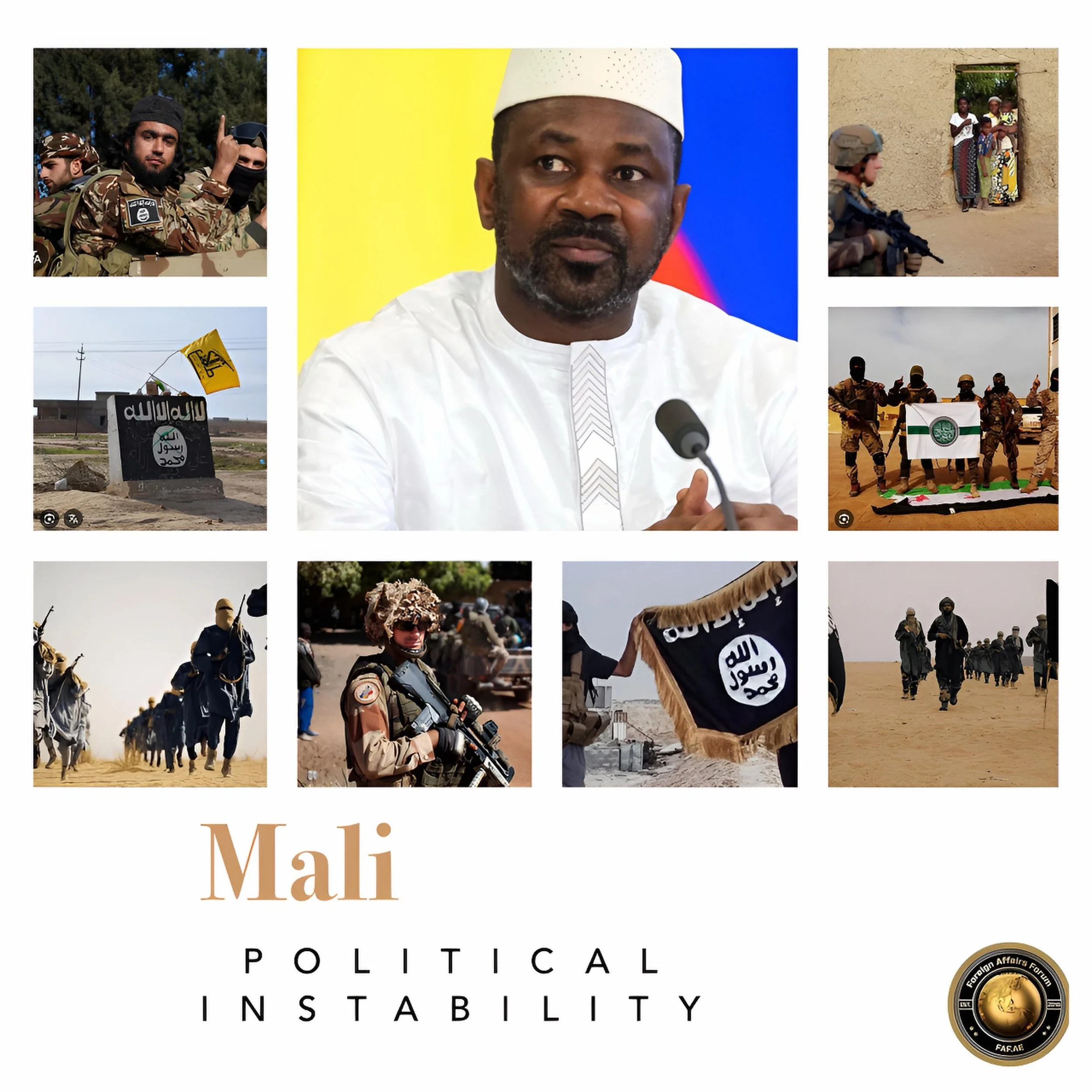
The most powerful jihadist coalition is JNIM (Jama’a Nusrat ul-Islam wa al-Muslimin, meaning “Group for the Support of Islam and Muslims”), established formally in 2017 as an alliance of al-Qaeda-affiliated organizations including Ansar Dine, al-Qaeda in the Islamic Maghreb–Sahel (AQIM-Sahel), al-Mourabitoun, Katibat Macina, and various smaller factions.
JNIM is led by Iyad Ag Ghali, a long-time Tuareg militant and founder of Ansar Dine, who operates primarily in northern and central Mali, creating what amounts to a de facto Islamic state through control of territory and population.
JNIM’s stated objective is to “replace regional governments with an Islamic state” and “expel Western influence” from the Sahel.
The organization operates a network of courts, administrative structures, and social services in areas it controls, creating parallel governance structures that—perversely—sometimes command greater legitimacy than failing state institutions because they are more reliable and predictable.
JNIM has demonstrated sophisticated military capabilities, including the ability to orchestrate complex ground assaults, suicide bombings, and coordinated operations across vast territories.
However, the jihadist landscape is not monolithic.
The Islamic State in the Greater Sahara (ISGS), which pledged allegiance to the Islamic State (ISIS) in 2015 and became formally integrated as the Islamic State West Africa Province (ISWAP) in 2019, has emerged as a rival with arguably even greater capacity for brutality.
ISGS has competed directly with JNIM for territory, particularly in central Mali around the Inner Niger Delta, exploiting internal dissent within JNIM to make territorial gains.
The scholarly analysis notes that both JNIM and ISGS engage in what amounts to “internecine conflict,” with groups competing to demonstrate greater commitment to extremist ideology and competence in executing militant operations.
French military officials have identified ISGS as “the biggest security threat in the Sahel,” while U.S. officials maintain that JNIM remains “the most potent jihadi group in the region”.
The truth is likely that both organizations present catastrophic threats, with different authorities and expertise.
Between 2017 and 2025, the violence perpetrated by these organizations has escalated dramatically, with jihadists increasingly moving southward from their northern strongholds toward Bamako and the central regions of the country.
Military Government, Alliance of Sahel States, and Regional Realignment
On August 18, 2020, Malian military officers staged a coup d’état that deposed President Ibrahim Boubacar Keita, who had been democratically elected in 2013.
The coup was officially condemned by ECOWAS (Economic Community of West African States) and the international community, but the military junta, led by Colonel Assimi Goïta, established a transitional government with promises to organize elections within 18 months.
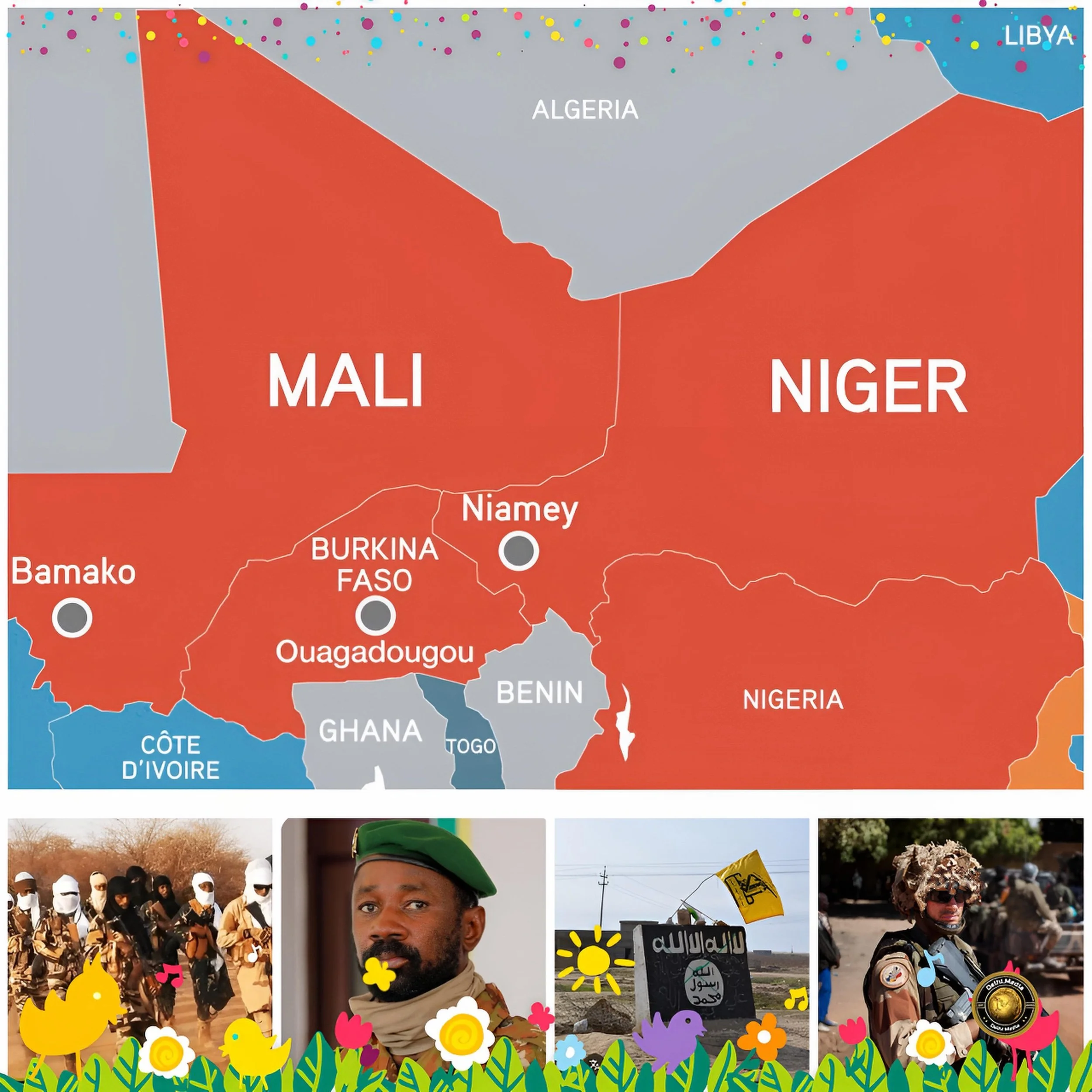
However, successive military governments in Mali, Burkina Faso, and Niger—all claiming to pursue “pan-Africanism” and “revolutionary socialism” while adopting explicitly anti-Western, anti-French postures—gradually consolidated what they termed the “Alliance of Sahel States” (AES), a confederation explicitly positioned as an alternative to the Western-influenced ECOWAS.
In January 2025, Mali, Burkina Faso, and Niger officially withdrew from ECOWAS, a regional organization that had provided security cooperation, military assistance, and development support.
The military governments accused ECOWAS of being “overly aligned with Western interests” and imposed sanctions that the governments claimed were “inhumane”.
Subsequently, the three governments turned toward Russia, inviting Russian private military contractors (most notably the Wagner Group, though now rebranded as the Africa Corps following Wagner’s reorganization).
The paradoxical consequence is that Mali’s military government, which came to power through a coup and continues to indefinitely postpone civilian elections and democratic transitions, has positioned itself as the defender of national sovereignty and revolutionary authenticity against Western “imperialism,” while simultaneously outsourcing security provision to Russian mercenaries.
This reorientation has severely complicated international cooperation on counterterrorism and has exacerbated the humanitarian crisis, as the military government has either expelled or severely restricted the operations of Western humanitarian organizations.
In June 2023, the Malian transitional government requested the withdrawal of MINUSMA, the United Nations peacekeeping mission that had operated in Mali since 2013.
The Security Council unanimously approved the termination of MINUSMA’s mandate, with the mission completing its withdrawal by December 31, 2023.
The Malian government claimed that MINUSMA had failed to bring peace to Mali during its decade-long presence and blamed the UN mission for inadequate performance.
Conversely, international analysts argue that MINUSMA’s withdrawal, combined with the expulsion of French military forces (Operation Barkhane ended in 2022), has created a critical security void that jihadist organizations and organized criminal groups have rapidly filled.
Organized Crime, Arms Smuggling, and Criminal-Militant Nexus
Mali’s humanitarian crisis and security emergency are not solely products of jihadist ideology and state failure but are deeply intertwined with transnational organized crime and arms trafficking.
The Sahel has become one of the world’s primary drug trafficking corridors, with criminal networks utilizing Mali as a transshipment point for cocaine from Latin America destined for European markets, heroin from Afghanistan, and synthetic drugs.
These criminal enterprises generate substantial revenue that finances armed groups, corrupts state officials, and incentivizes the perpetuation of violence.
The scholarly analysis identifies a perverse dynamic: criminal enterprises and jihadist organizations have increasingly found common cause in maintaining state weakness and the “ungoverned spaces” that enable their operations.
As one research paper notes, “certain Malian parties and terrorist organizations, as well as state officials and administrators, may want to prolong conflict and violence as it allows them control of economic resources, criminal enterprises, and power positions”.
The illicit economies in northern Mali have “reshaped political and armed mobilization in the country,” with various groups competing for control of smuggling routes, mining areas, and other revenue sources.
The Mali-Burkina Faso-Niger tri-border region has become particularly destabilized by this confluence of jihadist violence, criminal activity, and militia warfare.
Armed groups exercise effective governance over vast territories, collecting taxes, administering justice through sharia courts, and providing security services—albeit brutally and arbitrarily.
The state’s absence from these regions has created what scholars term a “capacity trap,” where the state’s failure to provide basic services drives populations toward armed groups for security and survival, which further erodes state legitimacy and authority, creating a vicious feedback loop.
Gender-Based Violence and Protection Crisis
The humanitarian crisis has particular and devastating consequences for women and girls, who constitute 80 percent of displaced populations across the Sahel and face exponentially greater protection risks.
Sexual violence has become a systematic tactic of armed groups, perpetrated against displaced populations in camps and transit areas, as a weapon of war and as a means of terrorizing and subjugating populations.
The UN Office for the Coordination of Humanitarian Affairs reported a “significant rise in the number of individuals suffering from widespread gender-based violence” in 2025.
Displaced women and girls face sexual violence, physical abuse, forced child marriage, and systematic denial of basic services and protection.
Survivors often find themselves without medical care, psychological support, or legal recourse, as health facilities have largely ceased functioning and state institutions have collapsed.
The UNFPA reported that only 35.8 percent of required funding had been mobilized for sexual and reproductive health services and gender-based violence response, forcing organizations to drastically curtail programs while demand skyrockets.
Disrupting Actors and Forces Perpetuating the Crisis
State and Non-State Armed Forces
The Malian Armed Forces (FAMa) and successor military government forces have been involved in both counter-insurgency operations and, according to human rights monitors, extrajudicial executions, forced disappearances, and torture of suspected insurgent sympathizers.
The military government’s alliance with the Wagner Group (Africa Corps) has coincided with reports of enhanced military operations but also increased allegations of human rights abuses.
The inherent contradiction between military counter-insurgency operations and humanitarian protection has created what analysts describe as “integration” into the humanitarian space, whereby military actors pursue their own strategic objectives while claiming humanitarian justifications.
Jihadist Organizations
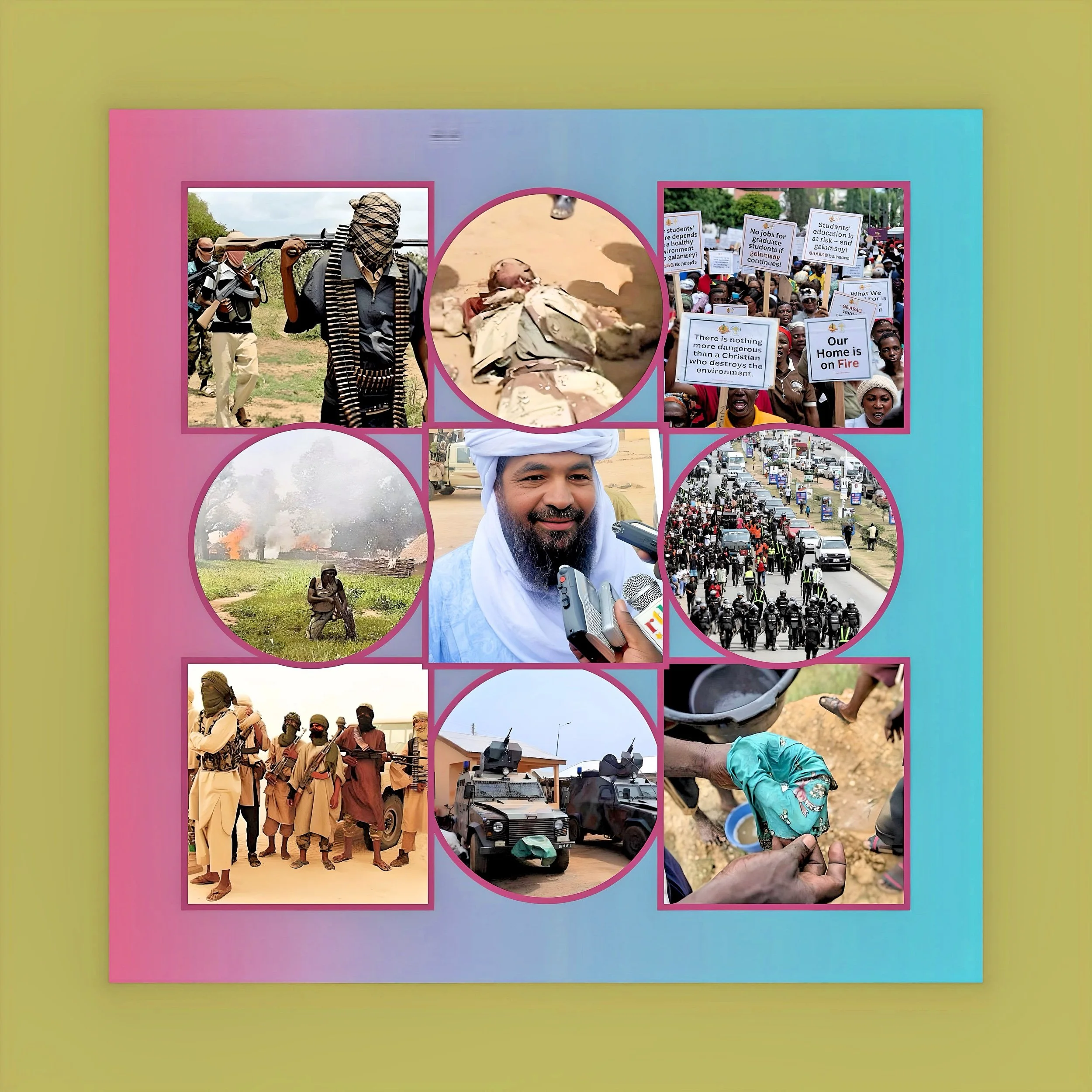
JNIM and ISGS perpetrate systematic violence against civilians through suicide bombings, mass shootings, beheadings, attacks on schools and religious sites, and impositions of brutal sharia law in controlled territories.
Both organizations have demonstrated capacity to conduct sophisticated attacks on military targets while simultaneously terrorizing civilian populations to establish control and suppress resistance.
Organized Criminal Networks
Criminal organizations engaged in drug trafficking, arms smuggling, human trafficking, and protection rackets utilize violence to maintain control of trafficking corridors and extract rents from civilian populations.
These criminal networks cooperate with armed groups, providing financing and weapons in exchange for protection of smuggling operations.
Blockades and Movement Restrictions
Armed groups impose blockades on villages and restrict commercial movement, preventing food and medicine from reaching civilian populations, while simultaneously collecting “taxes” and fees from merchants attempting to conduct trade.
These blockades create de facto starvation conditions for isolated populations and prevent humanitarian workers from reaching the most vulnerable.
Pathways to Peace: Scholarly Analysis and Potential Solutions
The Fundamental Crisis of Liberal Peacebuilding
The most significant scholarly finding of recent years is that Mali’s humanitarian catastrophe and security collapse occurred not despite the 2015 peace agreement and international peacekeeping intervention but, in significant ways, because the approaches adopted—characterized as “liberal peacebuilding”—were fundamentally misaligned with Mali’s context and challenges.
Liberal peacebuilding, the dominant international approach from the 1990s through the 2010s, emphasizes
(1) multiparty elections and democratic transitions
(2) separation of powers and rule-of-law institutions
(3) security sector reform and professionalization of militaries
(4) human rights protections and transitional justice
(5) market-liberalization and development projects.
This framework assumes that these institutional innovations can address conflict and build stable peace.
However, Mali’s specific challenges—jihadist organizations that reject the entire nation-state system, organized crime networks that profit from instability, deeply marginalized populations with no stake in formal state institutions, and external actors (France, Russia) with competing geopolitical interests—are not amenable to liberal peacebuilding solutions.
As one scholarly assessment notes: “Research has concluded that liberal peacebuilding is failing and should be replaced by pragmatic peacebuilding”.
The failure of the 2015 accord—despite its comprehensive provisions, international endorsement, and over a decade of implementation efforts—demonstrates that peace agreements that do not include jihadist signatories and do not address the full spectrum of armed actors cannot succeed.
Moreover, even among the accord’s signatories, “many Malians never accepted the conditions outlined in the Accord and have, unsurprisingly, grown more disillusioned as the framework has failed to curb violence”.
The Root Causes Problem: State Capacity and the Social Contract
Meaningful peacebuilding in Mali must address fundamental structural factors that scholars identify as the deep causes of conflict
State Capacity Deficit
Mali’s state has never possessed adequate capacity to provide security, justice, basic services, and infrastructure across its vast territory.
The scholarly consensus emphasizes that “the failure of formal government in Mali lies at the heart of the current crisis”. Any sustainable peace must involve substantial capacity-building to enable the state to actually deliver on its core functions.
This is not merely an institutional redesign problem but requires resources, personnel, and political commitment on a scale that international donors have heretofore been unwilling to provide.
Addressing Horizontal Inequalities
The systematic exclusion and marginalization of northern Tuareg and other groups from state power and development must be confronted through genuine decentralization, meaningful power-sharing, and substantive resource allocation to neglected regions.
However, scholarly analysis indicates that the 2015 accord’s decentralization provisions have been implemented only superficially, with central authorities continuing to exercise de facto control.
Transitional Justice Framework
Mali must move beyond the limited reparations focus of the Truth, Justice, and Reconciliation Commission (CVJR) to establish mechanisms that hold perpetrators accountable for crimes, validate victims’ suffering, and create foundations for genuine reconciliation.
The Carter Center’s assessment notes that “reconciliation implies forgiveness (…) not to forget, but in order to overcome and make possible a shared and less painful present and future”.
However, for this to occur, perpetrators must be identified and prosecuted, and victims must receive genuine recognition and compensation.
Practical Policy Recommendations: Building Malian-Owned Peace
The scholarly consensus on pathways forward emphasizes several principles:
Malian-Led and Locally-Owned Peace Architecture
International mediation and support can facilitate, but Malian and local actors must drive and own peace processes.
The excessive role of international actors in peace implementation—what scholars characterize as a problem of insufficient “local ownership”—has created dependencies and delegitimized peace processes in Malian eyes.
International stakeholders must shift from “exercising each of the State’s responsibilities” to supporting Malian actors in developing locally appropriate solutions.
Comprehensive Inclusion of Jihadist and Criminal Elements
Any sustainable peace must include representatives of JNIM, ISGS, and significant armed groups, not merely signatories of existing accords.
This is morally uncomfortable but pragmatically necessary—peace agreements signed by only a subset of belligerents cannot end conflicts.
This necessitates negotiating with actors designated as terrorists by various countries, a position requiring careful diplomatic navigation.
Pragmatic Rather Than Liberal Peacebuilding
The international community must abandon the insistence on immediate democratization, Western-style rule of law institutions, and human rights frameworks that may be misaligned with Malian context and capacity. Instead, pragmatic peacebuilding would emphasize
(a) conflict-sensitive approaches that adapt to local dynamics
(b) engagement with traditional conflict resolution mechanisms and informal governance structures
(c) realistic timelines for institutional development
(d) acceptance of illiberal governance solutions that may be more effective than imposed Western models.
Addressing the Organized Crime-Conflict Nexus
Sustainable peace in Mali requires that international actors confront the degree to which organized crime benefits from and perpetuates the conflict.
This necessitates coordinated international action on drug trafficking, arms smuggling, and money laundering that enables criminal networks and jihadist organizations.
Regional Cooperation Within the Sahel
Mali’s security challenges cannot be addressed through Mali-centric interventions because jihadist organizations and criminal networks operate transnationally across Burkina Faso, Niger, Mauritania, and beyond.
Meaningful peace architecture must involve “a regional approach to peacebuilding that takes into account the historic, cultural, (real) economic and ethnic linkages between the various countries”.
However, this regional cooperation is severely complicated by the current political alignment, whereby Mali, Burkina Faso, and Niger have withdrawn from ECOWAS and aligned with Russia, creating a geopolitical realignment that fragments international coordination efforts.
Humanitarian-Military Nexus
Protecting Civilian Space
The instrumental use of humanitarian action by military actors to pursue counter-insurgency objectives threatens the neutrality and effectiveness of humanitarian assistance.
The international community must establish clear protocols ensuring that humanitarian workers maintain independence from military operations and that armed groups respect humanitarian space.
The Geopolitical Complications: Russia, France, ECOWAS, and External Interference
Mali’s path to peace is further complicated by geopolitical competition among external powers.
France, the former colonial power and subsequent military intervener, maintains strategic interests in the Sahel and has supported ECOWAS’ position on democratic transitions and military accountability.
Russia, viewing Mali as an opportunity to expand its influence in Africa and to constrain Western power projection, has provided military support to the military government and positioned itself as an alternative to Western interventionism.
ECOWAS, the regional organization, represents principles of democratic governance and accountability but has been consistently rebuffed by the military governments of Mali, Burkina Faso, and Niger, which view ECOWAS as a tool of Western interests.
The withdrawal of these three states from ECOWAS represents a fundamental fracture in West African regional cooperation architecture.
The scholarly consensus emphasizes that this geopolitical realignment—while reflecting genuine Malian frustration with Western military ineffectiveness and perceived neo-colonial postures—has substantially worsened Mali’s security situation, as Russian military contractors lack the logistical capacity and institutional constraints of Western forces, and their presence has done little to actually degrade jihadist organizations’ capability.
Conclusion
The Narrow Window for Intervention
Mali stands at a critical juncture.
The humanitarian emergency is reaching levels that rival those of the world’s most severe crises, with millions displaced, on the brink of famine, without access to basic healthcare or education, and subject to systematic violence by jihadist organizations and criminal networks.
The withdrawal of MINUSMA and French military forces, combined with the military government’s expulsion of Western humanitarian organizations and its strategic realignment toward Russia, has created a context in which immediate international support mechanisms have been largely severed.
Yet scholarly analysis identifies a paradoxical opportunity: the failure of liberal peacebuilding approaches creates space for new thinking about pragmatic, locally-owned, context-sensitive peace architecture.
The military government’s rhetoric of anti-Western sovereignty, while problematic for democratization, could be leveraged to support genuinely Malian-led peace processes that engage traditional conflict resolution mechanisms and accommodate non-Western governance models.
However, the window for such interventions is narrowing.
As jihadist organizations consolidate territorial control, organize populations under sharia law, and establish alternative governance structures, the capacity of any future central government to reassert authority becomes progressively more diminished.
The scholarly consensus emphasizes that urgent, intensive, and substantially funded international engagement is required—not to impose solutions from without, but to support Malian and regional actors in developing locally appropriate and sustainable peace architecture.
The alternative—continued international disengagement or ineffective engagement divorced from practical context—guarantees that Mali will continue its trajectory toward state collapse, expanded jihadist control, humanitarian catastrophe, and the emergence of Mali as a major sanctuary for transnational terrorism and organized crime affecting not only the Sahel but global security.