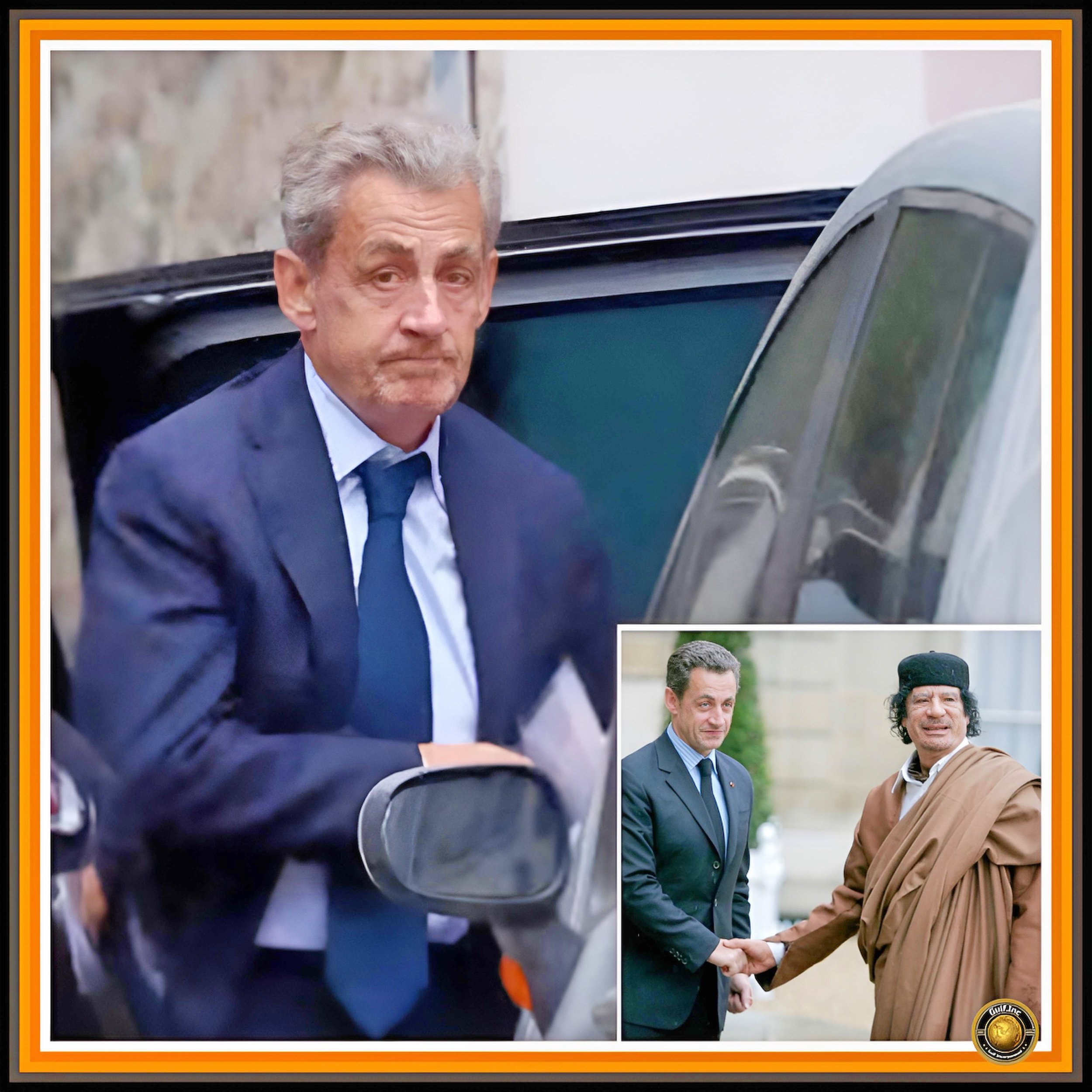
Nicolas Sarkozy: France’s First Post-War Presidential Prosecution and the Libya Funding Scandal
Introduction
The Contemporary Situation: From Prison to Judicial Supervision
Nicolas Sarkozy, France’s former president (2007-2012), experienced a remarkable reversal of fortune in November 2025 that exemplifies the tensions within contemporary French democracy between judicial independence and concerns about politicized justice.
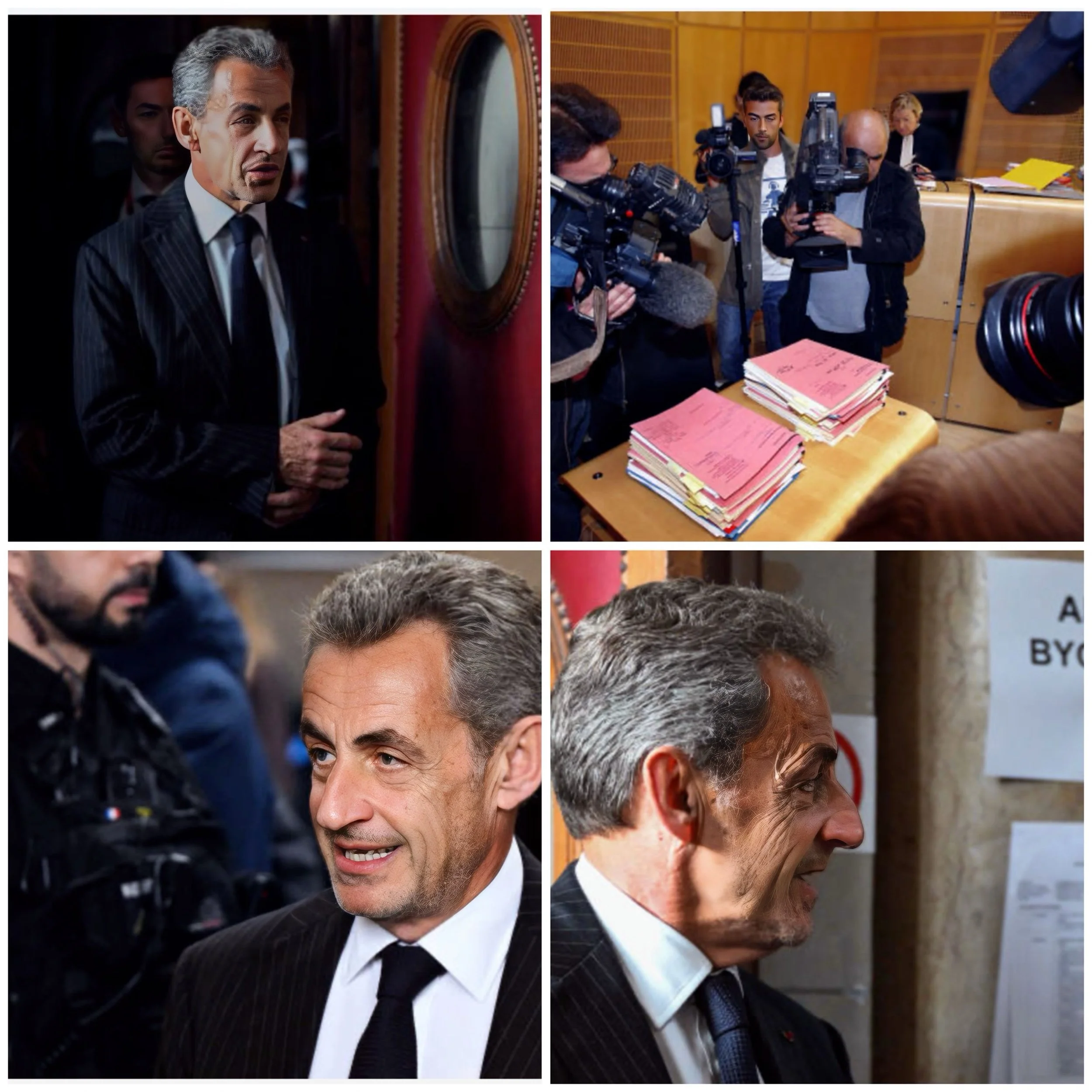
On October 21, 2025, the 70-year-old Sarkozy entered La Santé prison in Paris to begin serving a five-year sentence for criminal conspiracy, becoming the first former French president to be incarcerated since Marshal Philippe Pétain, the Nazi collaborationist leader, in 1945.
However, on November 10, 2025—just three weeks into his sentence—a Paris appeals court ordered his release under judicial supervision, allowing him to return to his home in western Paris while his case awaits appeal, expected in spring 2026.
Under the terms of his release, Sarkozy is prohibited from leaving France and is forbidden from contacting key witnesses and co-defendants in the case, including current French Justice Minister Gérald Darmanin.
He remains banned from holding public office for five years and faces an estimated €100,000 fine.
When released, Sarkozy described his nearly three-week incarceration as “very hard” and “harrowing,” later characterizing it as a “nightmare,” with reports suggesting he consumed only yogurt while imprisoned due to fears that other inmates might contaminate his food.
The Libya Financing Scandal: The Quid Pro Quo Corruption Pact
The Scheme and Evidence
The Libya case represents a complex international corruption scheme with profound implications for French democracy and foreign policy.
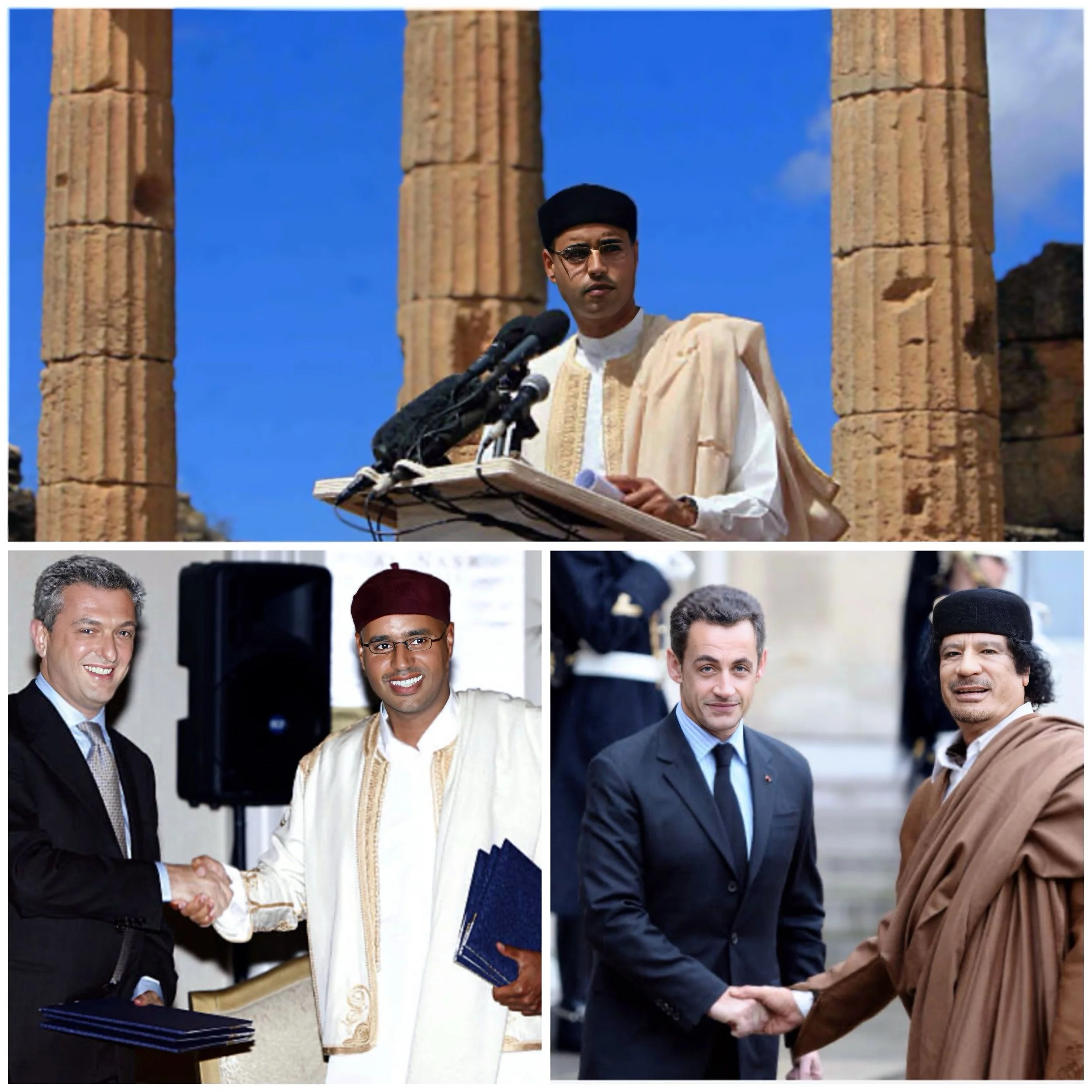
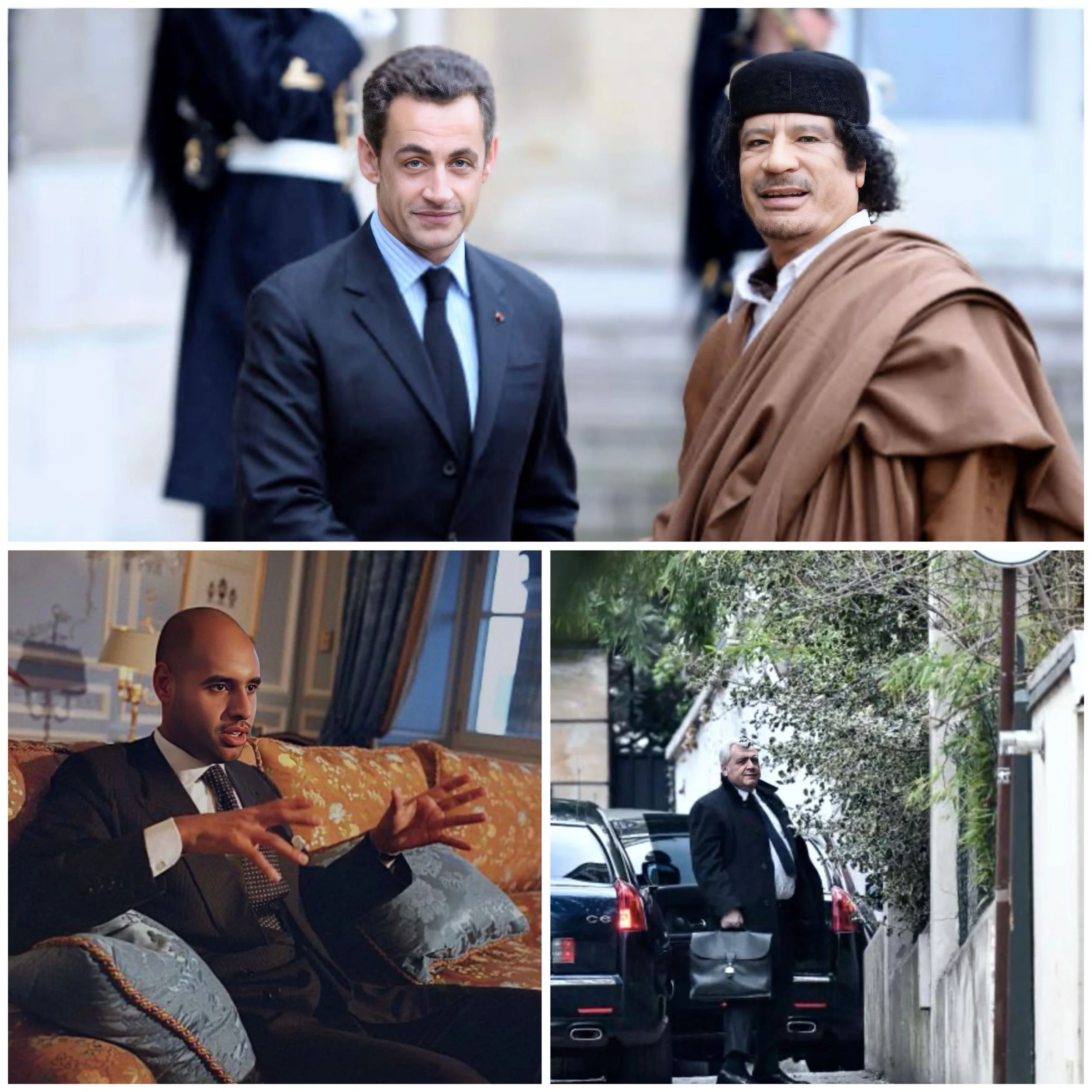
Prosecutors alleged that between 2005 and 2007, Sarkozy—first as France’s Interior Minister under President Jacques Chirac and subsequently as a presidential candidate—orchestrated a “corruption pact” with Libyan dictator Muammar Gaddafi to illegally finance his successful 2007 presidential campaign.
According to the prosecution’s narrative, the scheme operated as a sophisticated quid pro quo arrangement.
Gaddafi and his regime provided approximately €50 million in funds for Sarkozy’s campaign (though some estimates suggest initial payments of €2.5 million that Gaddafi’s son Saif al-Islam acknowledged), in exchange for France’s diplomatic support in the following areas
(1) helping Libya rehabilitate its international image and break free from international isolation
(2) assisting in rehabilitating Abdallah al-Senoussi, Gaddafi’s brother-in-law and intelligence chief, who had been convicted in absentia in France for his role in the 1989 bombing of UTA Flight 772, which killed 170 passengers, and the 1988 Lockerbie Pan Am bombing
(3) facilitating the sale of advanced surveillance equipment to the Libyan regime.
The alleged mechanism of fund transfer emerged through testimony from Ziad Takieddine, a Franco-Lebanese arms dealer and intermediary who had initially introduced Sarkozy to Gaddafi in 2005.
In a recorded November 2016 interview with the investigative website Mediapart, Takieddine dramatically described how, in late 2006 and early 2007, he personally carried three suitcases containing approximately 5 million euros from Gaddafi’s intelligence chief Abdullah al-Senoussi to Paris, where he delivered them to Sarkozy himself in his private flat at the Interior Ministry and to Sarkozy’s chief of staff Claude Guéant at his office.
Takieddine specifically mimicked the scene for cameras: “It’s a suitcase like that. It opens like that. And the money is inside.”
He claimed these transfers were conducted with the collusion of Libyan special services and represented only the initial installment of the promised €50 million.
Corroborating evidence emerged from multiple sources. Gaddafi’s son, Saif al-Islam Gaddafi, publicly alleged in a March 2011 interview with Euronews that France had received Libyan funds: “We helped him [Sarkozy] become president so that he would help the Libyan people, but he has disappointed us. And very soon we will publish all the details and the documents and banking pay slips.”
Later testimony from Saif al-Islam before the International Criminal Court confirmed the financial transfers, specifically referencing the €2.5 million initial payment in which he personally participated.
An agenda note discovered on the corpse of Libya’s former prime minister Choukri Ghanem in 2012 ordered the transaction of 6.5 million euros for Sarkozy’s campaign.
Mediapart’s 2011 investigation uncovered confidential documents from Libyan intelligence dated December 2006 suggesting Gaddafi’s agreement to finance Sarkozy’s presidential campaign.
Additionally, the investigation revealed evidence of clandestine meetings in Tripoli in 2005 between Sarkozy’s ministers and al-Senoussi, as well as bank transfers between Libya and France through offshore accounts.
The Court’s Verdict: Criminal Conspiracy Without Direct Proof
On September 25, 2025, the Paris Criminal Court issued a comprehensive 380-page ruling finding Sarkozy guilty of criminal conspiracy but acquitting him of the more serious charges of passive corruption, embezzlement of Libyan public funds, and illegal campaign financing. This nuanced verdict reveals the judicial reasoning about both what could and could not be proven.
The court concluded that the most serious charge—that Sarkozy directly received or benefited from Libyan funds in his campaign—could not be definitively established.
Judge Nathalie Gavarino noted that despite the “timing being compatible” and the routes the money traveled being “very opaque,” no evidence conclusively proved that Libyan money reached Sarkozy’s campaign coffers.
This absence of direct evidence, combined with subsequent failure to trace the alleged millions despite over a decade of investigation, led to acquittal on the corruption charges.
However, the court found Sarkozy guilty of conspiracy under Article 450-1 of the French Penal Code, which allows prosecution of individuals who take positive steps toward preparing a crime, even if the crime itself is never completed.
The judges determined that Sarkozy, “in his capacity as both a presidential candidate and Interior Minister, exploited his position to orchestrate high-level corruption between 2005 and 2007” by permitting his close associates—particularly Claude Guéant—to approach Libyan officials to “obtain or try to obtain financial support in Libya for the purpose of securing campaign financing.”
The court emphasized that Sarkozy’s actions demonstrated a “conspiracy to corrupt” through the preparation of what would have constituted a major corruption offense, regardless of whether the quid pro quo arrangements were ultimately fulfilled.
The guilty verdict reflected judicial finding that Sarkozy knowingly engaged in a conspiracy with members of his team and Libyan government officials, the court determining that evidence of the complex financial arrangement, the timing of Gaddafi’s subsequent Paris state visit just five months after the election, and the strategic alignment of interests all supported a finding of criminal conspiracy.
The Broader Legal Battle: A Cascade of Convictions
The Libya case represents only the most recent chapter in what has become a devastating legal saga for Sarkozy. His legal troubles encompass three separate major trials, each involving corruption, abuse of power, or campaign finance violations.
The 2021 Wiretapping Scandal Conviction
In March 2021, Sarkozy received a sentence of three years in prison—two suspended and one for home confinement—for corruption and influence peddling in what became known as the “wiretapping scandal.”
This case emerged from wiretapped phone conversations between Sarkozy and his lawyer, Thierry Herzog, conducted under an assumed name from September 2013 to March 2014, which were recorded as part of the Libya investigation.
The investigation revealed that Sarkozy allegedly attempted to bribe Judge Gilbert Azibert by arranging for her to receive a lucrative and prestigious position as advisor to the French embassy in Monaco in exchange for confidential information about investigations into his campaign finances—specifically the allegations regarding Liliane Bettencourt, the heiress to the L’Oreal fortune, who had allegedly made undeclared donations to his 2007 campaign.
The court found both Sarkozy and the judge guilty; notably, Azibert never actually obtained the Monaco position, rendering the bribe attempt unsuccessful.
On May 17, 2023, the Paris Appeals Court upheld this conviction, and on December 18, 2024, France’s highest court, the Court of Cassation, definitively upheld the conviction, making it final and unable to be appealed further.
The defense has announced intentions to challenge this verdict before the European Court of Human Rights, arguing that the use of wiretapped phone conversations as evidence was unlawful.
Sarkozy was released on electronic monitoring in 2021 after serving portions of his sentence under house arrest, but the bracelet was subsequently removed.
The 2021 Bygmalion Campaign Finance Scandal
In September 2021, Sarkozy received a one-year prison sentence (with six months suspended) for illegal campaign financing related to his failed 2012 re-election bid in what became known as the Bygmalion scandal.
The case involved allegations that Sarkozy’s conservative party, acting through his campaign staff, conspired with the public relations firm Bygmalion to conceal the actual expenses of the 2012 campaign, which featured extraordinarily lavish events and exceeded legal spending limits by tens of millions of euros.
The court determined that Sarkozy knowingly spent approximately €42.722 million on his failed 2012 reelection campaign, substantially exceeding the legal threshold.
Rather than serving time in prison, Sarkozy was given the option to serve the remaining portion (six months) under house arrest with electronic monitoring.
An appeals court confirmed this conviction on February 14, 2024, and Sarkozy appealed to the Court of Cassation, with that decision still pending as of November 2025.
The 2025 Libya Conspiracy Conviction
The September 25, 2025 conviction for criminal conspiracy in the Libya case stands as the most serious legal judgment Sarkozy has faced, imposing a five-year prison sentence with immediate enforceability, a €100,000 fine, and a five-year ban from holding public office.
The court issued a deferred committal order (mandat de dépôt différé), allowing Sarkozy time to put his affairs in order before incarceration.
Additionally, in October 2025, prosecutors charged Sarkozy with witness tampering related to the Libya case, while his wife, Carla Bruni-Sarkozy, faced separate charges for concealing evidence and colluding with wrongdoing—charges she denies.
Scholarly Analysis: Judicial Independence vs. Political Weaponization
The Republican Defense: Strengthening Democratic Accountability
Many French legal scholars and analysts view Sarkozy’s conviction not as political persecution but as a validation of republican principles and judicial independence.
Professor Philippe Marlière of University College London observed that the conviction represents “the triumph of democracy: evidence that no citizen, however powerful he or she might be, is above the law,” and praised the Parquet National Financier (the French agency responsible for tracking complex financial crimes) for resisting attempts by Sarkozy and his allies to undermine judicial authority.
Verfassungsblog’s legal analysis argues that the conviction “does not signal the rise of political justice in France; rather, it strengthens the republican ideal at the heart of the Fifth Republic.”
This scholarly perspective emphasizes that under French republicanism, judges serve as “guardians of the integrity and authenticity of political deliberation” by preventing the diversion of democracy for the benefit of elites.
The regulation of campaign financing and prevention of foreign interference in elections are therefore understood not as threats to republican governance but as essential protections of it.
The Palatinate Journal notes that “the conviction sends a powerful message about accountability within French democracy,” with Le Monde editorial commentary suggesting that “the justice system is capable of holding the most powerful to account.”
The Cypriot newspaper Politis emphasized the broader significance: “The Sarkozy case is a reminder of another important point: that political decision makers can be held accountable even after their term in office, and that justice has no expiry date. Sarkozy’s conviction serves as a warning and an inspiration.”
Legal analysis in Just Security emphasizes that Sarkozy’s case represents a test of “the country’s democratic resilience and the judiciary’s capacity to act as a counter-power to leaders bending democratic rules.”
The Political Counterattack: Allegations of Judicial Politicization
However, Sarkozy’s conviction has provoked vigorous political counterattack from the French right, with critics alleging that the conviction represents judicial overreach and politicization of justice.
Marine Le Pen, leader of the far-right National Rally party and herself facing legal troubles related to embezzlement accusations, was among the first to defend Sarkozy, declaring: “A certain number of judges have a sort of hunting trophy board on which they try to pin as many politicians as possible.”
François-Xavier Bellamy, a conservative MEP from Les Républicains, the party Sarkozy once led, explicitly accused the judiciary of conducting a “political trial,” while National Rally spokesperson Philippe Balard warned of “a dangerous precedent that undermines the rule of law.”
Supporters characterized the conviction as evidence of what they term “red judges”—allegedly left-leaning magistrates who use the law as a political weapon against conservative politicians.
Significantly, the immediate enforcement of the sentence (execution provisoire), meaning penalties apply before appeal proceedings are concluded, has generated particular controversy.
Under French law, immediate enforcement is exceptional and typically reserved for cases of “extraordinary gravity.” Sarkozy’s legal team has argued that this decision, combined with the conspiracy conviction despite acquittals on more serious charges, represents judicial overreach.
Some analysts have raised concerns that the visible hunger of certain magistrates to convict prominent politicians risks undermining public confidence in judicial independence.
The Sarkozy-Gaddafi Affair and Its Geopolitical Dimensions
Scholarly analysis reveals that the Sarkozy-Gaddafi affair extends far beyond campaign finance corruption into profound questions about Western foreign policy hypocrisy and the catastrophic consequences for Libya of Franco-American interventionism.
Research from Just Security emphasizes that media coverage has “focused on how the ‘Sarkozy-Gaddafi affair’ is challenging France and its democratic institutions, with too little coverage of how the corruption has harmed the people of Libya.”
The scholarly analysis identifies a troubling paradox: Sarkozy initially sought Gaddafi’s money to finance his presidential campaign while simultaneously positioning himself as an opponent of Libya’s dictatorial regime.
This strategic repositioning culminated in 2011 when Sarkozy became one of the principal advocates for NATO military intervention in Libya, leading to Gaddafi’s overthrow and death.
Gaddafi’s son Saif al-Islam complained bitterly that France had received Libyan funds for the campaign only to betray the regime once Sarkozy achieved power.[lemonde +3]
The scholarly consensus emphasizes that Franco-American intervention in Libya, which deposed Gaddafi and destroyed Libya’s state apparatus, had catastrophic consequences that persist through 2025.
Since 2011, Libya has fractured into two rival governments competing for international legitimacy, with a UN-backed government in the west and a militaristic government led by warlord Khalifa Haftar in the east.
Civil war raged between these factions until October 2020, with elections repeatedly postponed and UN-led peace initiatives repeatedly failing.
Libyans continue to experience profound economic hardship, political instability, repressive authoritarianism, and ongoing foreign interference.
The scholarly literature emphasizes that Sarkozy’s personal corruption involving Libyan funds enabled and was interconnected with broader Western exploitation of Libya.
Specifically, French cybersecurity firm Amesys sold technology to the Gaddafi regime that enabled the dictator to intercept electronic communications and monitor Libyan opposition activists between 2007 and 2011.
This French surveillance technology “enabled Gaddafi to heavily monitor and hunt down government opponents who were subsequently arrested, arbitrarily detained or forcibly disappeared, and tortured.”
In this framework, Sarkozy’s criminality is inseparable from Franco-Western complicity in human rights violations against Libyan civilians.
The Systemic Questions: Rule of Law, Judicial Independence, and Democratic Resilience
Sarkozy’s legal cascade raises fundamental questions about French democracy’s capacity to enforce the rule of law against powerful figures while maintaining public confidence in judicial impartiality.
Several competing interpretations merit consideration
The Democratic Resilience Thesis
From this perspective, Sarkozy’s conviction—despite his former presidential status and continued political influence—demonstrates that modern democracies can successfully prosecute the powerful, strengthening rather than weakening democratic norms.
The thesis emphasizes that equal application of law requires precisely such prosecutions and that judicial independence is strengthened when courts demonstrate willingness to challenge powerful political figures. In this reading, France’s judiciary has passed a crucial test of democratic maturity.
The Selective Prosecution Concern
Critics argue that the concentration of criminal convictions against Sarkozy—now facing jail time across three separate cases—while other prominent figures escape prosecution suggests either selective enforcement or a judiciary that has targeted Sarkozy specifically.
The political use of these convictions by far-right politicians like Le Pen to legitimize their own legal troubles, combined with Sarkozy’s apparent rapprochement with the National Rally, suggests that France’s right wing has consolidated around the narrative of judicial persecution.
The Institutional Legitimacy Question
The fact that Sarkozy was released after just three weeks of a five-year sentence, despite being the first ex-president imprisoned in modern times, highlights the instability and inconsistency in France’s approach to presidential accountability.
Under French law, release is “the general rule pending appeal, while detention remains the exception,” meaning that Sarkozy’s quick release was technically consistent with legal procedures.
However, the dramatic symbolism of his imprisonment and rapid release may undermine both the severity of judicial consequences and public confidence in institutional coherence.
The International Hypocrisy Dimension
As the Večernji list commentary observed, “This case is a prime example of what the countries of the so-called Global South call typical Western hypocrisy.”
The juxtaposition of Sarkozy’s prosecution for corruption involving Libya against the absence of comparable prosecutions for other French officials involved in Libya policy, or for executives of companies like Amesys that profited from the surveillance of Libyan dissidents, raises questions about which dimensions of corruption are prosecuted and which are overlooked.
Sarkozy’s Defense and His Broader Legacy
Throughout his legal ordeals, Sarkozy has maintained steadfast proclamations of innocence, characterizing himself as the victim of a judicial conspiracy orchestrated by associates of the deposed Gaddafi regime seeking revenge.
He declared to the Paris court that “not a single Libyan cent” would ever be found in his campaign accounts and that the evidence against him—particularly the Libyan intelligence documents—represented “a blatant forgery.”
More broadly, Sarkozy has reframed his Libya intervention as a principled defense of democratic values and human rights.
In August 2023, he defended his 2011 decision to lead NATO intervention in Libya: “Our intervention in Libya in 2011 was carried out with mandates from the United Nations, the Arab League, and NATO.”
He claimed that criticisms were “baseless” and suggested that accusations of campaign financing were merely retribution from Gaddafi’s associates for his role in the dictator’s overthrow.
Sarkozy’s historical legacy has been irrevocably transformed by these legal convictions.
Once viewed as a potential elder statesman of French conservatism, his reputation has been catastrophically damaged.
In 2025, the French state revoked his Légion d’honneur (Legion of Honor), France’s highest award, underscoring the depth of his tarnishment.
His presidency, once defined in historical narrative by his management of the 2008 financial crisis and his assertive European leadership, now risks being remembered primarily through the lens of scandal and corruption.
Nonetheless, Sarkozy has vowed to continue fighting, declaring that “the truth will prevail” and announcing his intention to pursue appeals through French courts and ultimately the European Court of Human Rights.
His release from prison on November 10, 2025, after serving just three weeks of his five-year sentence, allows him to pursue these appeals from home while remaining under judicial supervision.
Conclusion
A test of Democratic Maturity
Nicolas Sarkozy’s legal ordeal represents a crucial test of whether mature democracies can maintain rule of law while avoiding weaponization of justice against political opponents.
The Libya case specifically, with its complex international dimensions and powerful geopolitical implications, raises profound questions about whether French democracy is capable of simultaneously holding its leaders accountable for corruption while maintaining public confidence in judicial impartiality and democratic fairness.
The scholarly consensus acknowledges several competing truths:
(1) that Sarkozy’s prosecution demonstrates judicial independence and democratic resilience
(2) that allegations of selective prosecution and political justice contain some merit
(3) and that the failure to more comprehensively prosecute or investigate the broader Franco-Western corruption involving Libya (including corporate profiteering from surveillance technology sold to dictators) represents a significant gap in accountability.
As Sarkozy prepares for his spring 2026 appeals hearing while confined to France under judicial supervision, his case will continue to test whether French democracy has indeed achieved the institutional maturity to punish the powerful—or whether, conversely, judicial proceedings have been weaponized in service of political conflict.
The answer carries implications that extend far beyond France, offering lessons about judicial independence, the rule of law, and democratic resilience across the European Union.