APEC 2025 South Korea Summit (October 27 - November 2)
Introduction
Event Overview
The Asia-Pacific Economic Cooperation (APEC) Economic Leaders’ Meeting is being held in Gyeongju, South Korea, from October 31 to November 1, 2025, with related events extending from October 27 to November 2.
This marks the first time South Korea has hosted APEC in 20 years, having previously hosted in 2005.
The APEC CEO Summit, one of the most prestigious business gatherings, is taking place from October 28-31 at the Gyeongju Arts Center under the theme “Bridge, Business, Beyond”.
Main Theme and Key Agenda
The overarching theme is “Building a Sustainable Tomorrow” with three key priorities.
Connect
Advancing trade and investment within the Asia-Pacific region and strengthening connectivity through physical, institutional, and people-to-people exchanges.
Innovate
Promoting digital innovation by narrowing the digital divide and fostering AI cooperation, leveraging South Korea’s position as a digital powerhouse.
Prosper
Pursuing sustainable and inclusive growth through collective responses to pressing global issues such as energy security, food security, and demographic shifts.
Specific policy priorities include digital economy integration, AI governance, cross-border data flows, carbon-free energy transitions, hydrogen and fuel cell standardization, financial inclusion, structural reform, and addressing the impacts of artificial intelligence on jobs and industries.
Participants and Expected Attendance
Approximately 20,000 people are expected in Gyeongju for the week-long gathering, including world leaders, government officials, CEOs of multinational corporations, and media representatives.
Key Political Leaders
United States President Donald Trump
Chinese President Xi Jinping
South Korean President Lee Jae Myung
Japanese Prime Minister Sanae Takaichi
Australian Prime Minister Anthony Albanese
Indonesian President Prabowo Subianto
Vietnamese President Luong Cuong
Canadian Prime Minister Mark Carney
Peruvian President José Jerí
Mexican President Claudia Sheinbaum (first in-person APEC)
Russian President Vladimir Putin will not attend due to an International Criminal Court arrest warrant; Deputy Prime Minister Alexey Overchuk will represent Russia.
Thai Prime Minister Anutin Charnvirakul is also skipping the summit due to the death of Thai Queen Mother Sirikit, with Foreign Minister Sihasak Phuangketkeow attending instead.
Business Leaders
The APEC CEO Summit has attracted approximately 1,700 global business representatives—the largest gathering of APEC business leaders to date. Key attendees include.
Jensen Huang, CEO of Nvidia (AI chip giant)
Matt Garman, CEO of Amazon Web Services.
Simon Kahn, Chief Marketing Officer for Asia Pacific, Google.
Jane Fraser, CEO of Citigroup
Joaquin Duato, CEO of Johnson & Johnson.
Chey Tae-won, SK Group Chairman and Korea Chamber of Commerce Chair.
Lee Jae-yong, Chairman of Samsung Electronics.
Euisun Chung, Executive Chair of Hyundai Motor Group.
Koo Kwang-mo, Chairman of LG Group.
Preparations Underway
South Korea formed the 2025 APEC Summit Host City Selection Committee in March 2024, reviewing applications from Gyeongju, Incheon, and Jeju Province before selecting Gyeongju in June 2024.
The Gyeongju Hwabaek International Convention Center serves as the main conference hall.
On May 28, 2024, the government established a 33-member APEC Summit Preparation Committee comprising government ministries and economic organizations to coordinate preparations.
Logistical challenges have emerged due to Gyeongju’s status as a smaller historic city. Cruise liners have been rented as temporary accommodations, and costs have risen as foreign delegates and media secured lodging.
A recently constructed gala dinner hall was deemed unsuitable at the last moment, requiring alternative arrangements.
Summit Session Topics
The APEC CEO Summit features multiple thematic sessions across three days.
Wednesday (October 29)
Nine sessions covering AI, finance, culture industry, digital currency, and carbon neutrality. K-pop superstar RM of BTS will deliver a keynote emphasizing Korean cultural soft power.
Thursday (October 30)
Six sessions on supply chains, semiconductors, digital health, and hydrogen energy.[oananews]
Friday (October 31)
Five sessions on data centers, healthcare, and energy transition.
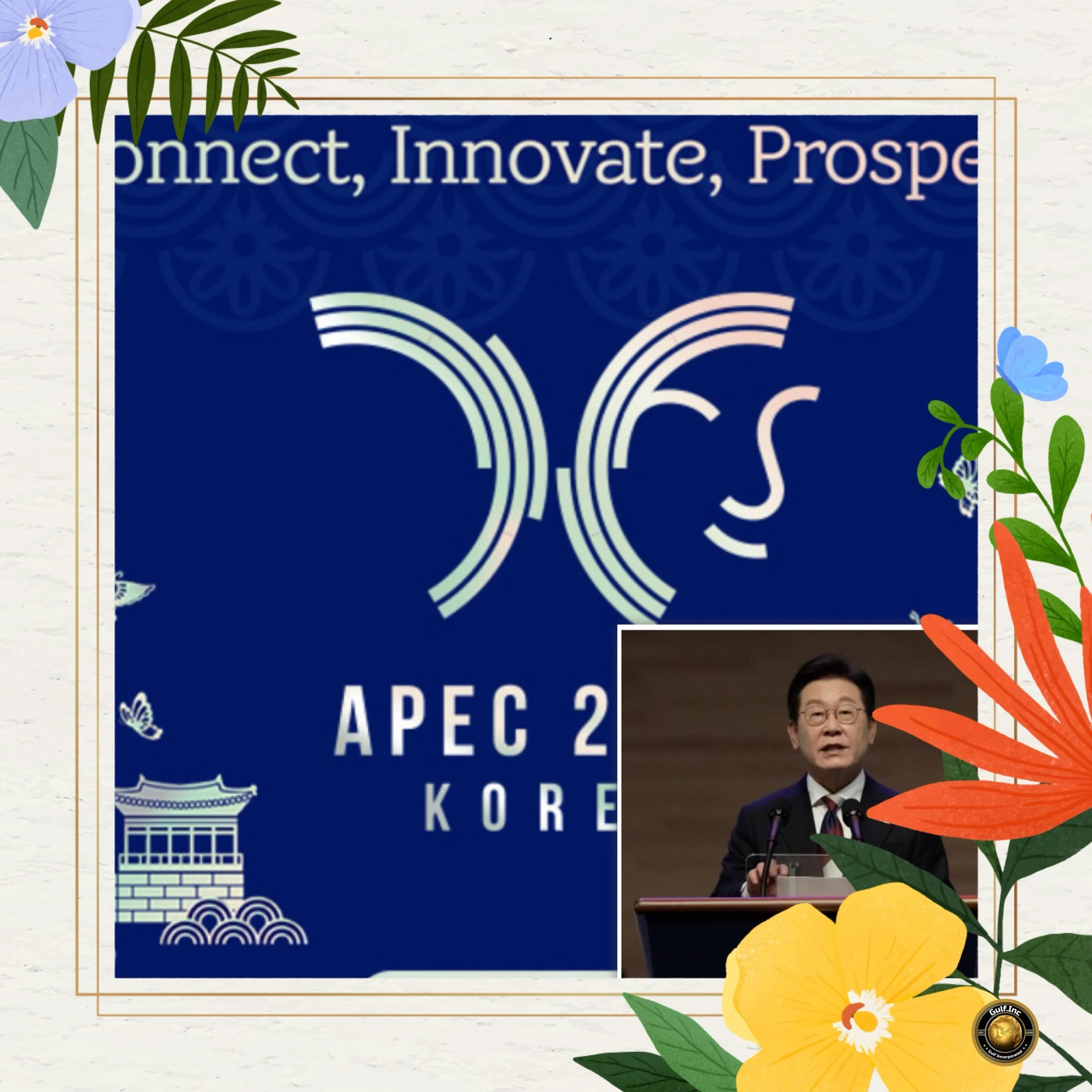
President Lee Jae Myung will deliver a special address on Korea’s vision for advanced industries and sustainable growth during the opening ceremony.
Global Significance of the summit
APEC 2025 provides a platform for leaders from the United States, China, Japan, and other major economies to address trade tensions, digital transformation, climate resilience, and inclusive growth.
With global trade slowing and investment decisions being deferred due to uncertainty, this summit is seen as a critical opportunity to rebuild consensus on open trade and collaborative economic policies.
South Korea, as chair, is leveraging the summit to promote regional cooperation, especially in the realms of AI, digital infrastructure, and sustainable development.
Expected Outcomes
Declarations on trade and digital cooperation
A joint leaders’ statement is anticipated, focusing on strengthening open trade, digital inclusion, and regulatory alignment for AI and digital economies.
Clean energy and climate initiatives
The summit is expected to advance commitments to accelerate the transition to renewable energy and strengthen food supply chains, which are critical given disruptions from climate and conflict.
AI and digital transformation
South Korea is pushing for the “AI Highway” initiative, aiming to create a regional framework for responsible AI development and deployment, with a focus on closing the digital divide and empowering small businesses.
Inclusive growth and youth empowerment
South Korea has committed to supporting youth and next-generation initiatives, with new funding and policy frameworks to foster opportunity and resilience.
Addressing structural challenges
The summit is expected to result in concrete steps to reduce trade barriers, promote supply chain resilience, and reinforce multilateral cooperation amid escalating US-China tensions and rising protectionism.
No binding agreements, but strong policy signaling
While APEC summits rarely produce binding treaties, the tone and language of the leaders’ declaration will signal the region’s intent to push back against protectionism and double down on innovation and sustainable growth.
Predicted Impact
If successful, the summit could help stabilize the region’s growth outlook, which is currently projected to slow to 2.6% in 2025 due to trade tensions and policy uncertainty.
The summit’s outcomes will likely shape corporate investment, regulatory developments, and the broader direction of US-China economic relations, with implications for global supply chains, technology governance, and climate policy.
Conclusion
High-Stakes Diplomacy
The summit carries particular significance as a test of South Korean President Lee Jae Myung’s “pragmatic diplomacy” approach, as he has been in office less than five months.
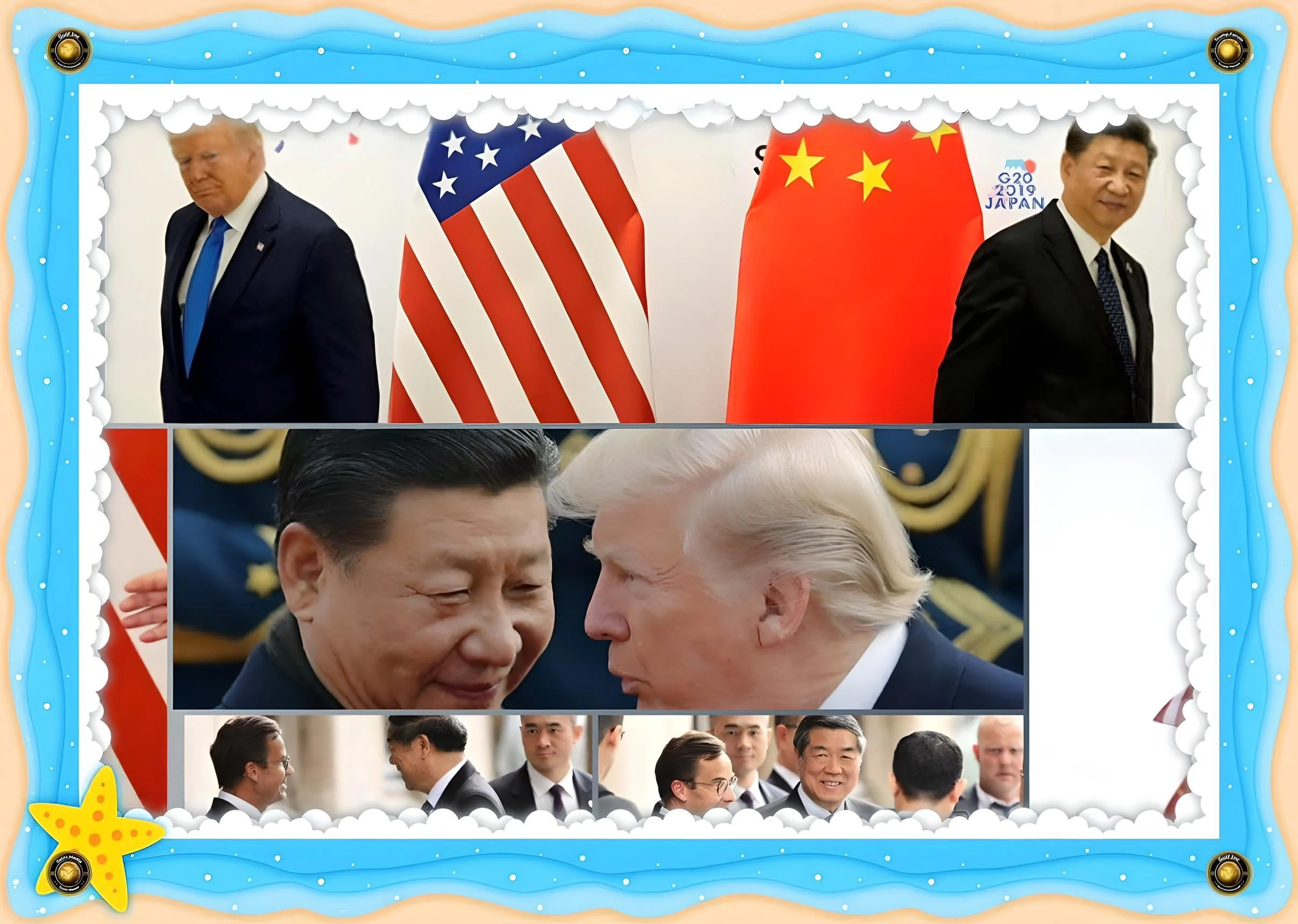
The event is overshadowed by a high-stakes meeting between Presidents Trump and Xi Jinping scheduled for Thursday, with results expected to significantly impact the global economy.
South Korea is working to finalize a trade agreement with the United States involving $350 billion in U.S. investments, though the two countries remain “sharply divided” over how much should be provided as direct cash payments.
U.S. Commerce Secretary Howard Lutnick is hosting a business roundtable on October 29 with approximately 20 Korea-U.S. business leaders, including chairpersons of major Korean conglomerates, to foster a friendly atmosphere amid tariff negotiation difficulties.
South Korean officials have been coordinating with all 21 APEC member economies to issue a joint “Gyeongju Declaration” at the summit’s conclusion, working to avoid the failure to reach consensus that occurred in 2018 in Papua New Guinea due to U.S.-China discord.
The APEC 2025 Summit is a crucial moment for the Asia-Pacific to signal a collective shift toward inclusive, sustainable, and innovative growth in the face of global economic headwinds.