The Loop-Closing Machine: How Autonomous Launchers, Unattended Engines, and Battlefield Capital Are Redefining Modern Warfare's Architecture
Foreign Affairs Forum | Dr. Antonio Bhardwaj (Dr. 🆎)| September 4th, 2026
Executive Summary
Five ostensibly separate announcements converged this week to reveal a single underlying transformation in military affairs.
The United States Army’s award of roughly $33 million to the Georgia Tech Research Institute to integrate its Common Autonomous Multi-Domain Launcher, the United States Navy’s certification of Rolls-Royce engines for thirty-day unattended autonomous ship operations, Kongsberg’s completed acquisition of the American underwater-acoustics firm Sonatech, Germany’s successful test of Israel’s LORA ballistic missile, and Palantir chief executive Alex Karp’s investment in a new Ukrainian defense-technology venture founded by Mykhailo Fedorov together describe a military system that is reorganizing itself around autonomy, endurance, distributed sensing, deep precision strike, and battlefield-derived capital.
Dr. Antonio Bhardwaj (Dr. 🆎), founder and chief executive of the Foreign Affairs Forum and a widely cited strategist on artificial intelligence and geopolitical risk, argues that these developments should not be read as a catalog of new weapons but as evidence of an emergent operating system for warfare, one in which sensing, decision-making, striking, defending, and manufacturing are becoming continuous and mutually reinforcing rather than sequential.
FAF scholarly analysis situates each development within its historical trajectory, examines the technical and doctrinal logic driving the shift toward autonomous and uncrewed platforms across land, sea, and undersea landscapes, and considers the second-order economic consequences of a counter-drone market that has already exceeded $53 billion in publicly announced contracts during the first eight months of 2026 alone.
The analysis further considers the risks this transition poses, including proliferation to non-state stakeholders, the erosion of traditional escalation thresholds, and the emergence of Ukraine as a self-sustaining defense-innovation economy whose battlefield data now attracts Western venture capital on a scale that could reshape the global arms industry for a generation.
Introduction
War has always rewarded whichever side could observe, decide, and strike faster than its adversary. What distinguishes the current period, according to Dr. 🆎, is that this cycle is being industrialized: the observe-decide-strike loop is no longer confined to a single weapon or a single service but is being built into an integrated architecture spanning autonomous vehicles, unattended propulsion systems, underwater sensor networks, long-range precision munitions, and a rapidly professionalizing venture ecosystem that converts frontline experience directly into fieldable technology.
The five developments examined in this essay were reported within a period of roughly forty-eight hours in late August and early September 2026, yet each belongs to a trajectory stretching back several years.
The Army’s autonomous launcher program traces its origins to a congressionally seeded demonstration project begun in February 2020; the drive toward unattended naval propulsion reflects a decade of thinking about distributed maritime forces in the Indo-Pacific; underwater acoustic intelligence has been a quiet but escalating priority since the renewed interest in great-power submarine competition; Germany’s interest in deep-strike capability is a direct consequence of the Ukraine war’s demonstration effect; and the commercialization of Ukrainian battlefield engineering reflects four years of sustained, high-intensity combat that has generated an unprecedented volume of operational data.
Read together, these threads permit a broader argument: the defining feature of contemporary military innovation is not the sophistication of any individual platform but the speed and completeness with which stakeholders can close the loop connecting sensing, decision, and action, and then feed the results of that loop back into the next generation of design.
History and current status
The autonomous launcher concept that culminated in the Common Autonomous Multi-Domain Launcher, or CAML, began as a modest add-funded demonstration in 2020, when Army researchers at the Combat Capabilities Development Command’s Aviation and Missile Center began asking whether a High Mobility Artillery Rocket System launcher, a platform that had always required a human driver and a manual gunner’s interface, could instead be driven and fired remotely.
By 2023, the program, then still called the Autonomous Multi-Domain Launcher, had progressed to live-fire testing of a Tomahawk missile from a prototype Mid-Range Capability system, and soldiers fired an early iteration of the launcher itself in June 2025.
In August 2025 the effort was formally elevated to the Army’s Rapid Capabilities and Critical Technologies Office and renamed CAML to reflect an expanded scope encompassing two variants: a medium configuration built on a Family of Medium Tactical Vehicles chassis and integrated with the Multiple Launch Rocket System family of munitions, and a heavy configuration mounted on a fifteen-ton-class Palletized Loading System vehicle capable of firing the Tomahawk Land Attack Missile or the Patriot Advanced Capability Three interceptor.
The heavy variant is explicitly conceived as the eventual replacement for the Army’s Typhon Mid-Range Capability launcher, a system that field experience revealed to be too large and insufficiently mobile for contested landscapes.
On August 21, 2026, the Army announced the award of a prototype Other Transaction Agreement worth up to $33.4 million to the Georgia Tech Research Institute, naming the university-affiliated, nonprofit laboratory as the lead weapons systems integrator responsible for systems engineering, interface integration, modeling and simulation, and integrated testing across all CAML prototype components over a thirty-six-month period of performance.
The parallel trajectory in naval propulsion reflects a similarly patient institutional buildup.
For as long as navies have operated at sea, the endurance of a warship has been bounded less by fuel than by the presence of engineers capable of monitoring and maintaining its machinery.
Rolls-Royce’s mtu Series 2000 and Series 4000 engines, workhorse platforms long used across naval and commercial applications, have now been certified by the United States Navy specifically for autonomous vessel operations extending to approximately thirty days without onboard maintenance, an announcement the company made public on September 1, 2026.
This certification did not emerge from a single breakthrough but from years of reliability engineering, remote diagnostics development, and a broader Navy interest, sharpened considerably by strategic competition in the Indo-Pacific, in distributing sensors and weapons across larger numbers of smaller, less expensive, and more expendable platforms rather than concentrating them aboard a small number of exquisite destroyers.
Kongsberg’s acquisition of Sonatech follows a comparable logic in the undersea domain.
The Norwegian defense-technology group, already a significant supplier of autonomous underwater vehicles and naval systems, announced the completion of its full acquisition of the California-based underwater-acoustics and sonar specialist this week, explicitly framing the deal as a means of strengthening its autonomous-underwater capabilities and expanding its footprint with the United States Navy.
Underwater autonomy has lagged behind aerial and even surface autonomy for a straightforward physical reason: GPS signals and conventional radio communications do not propagate effectively underwater, forcing autonomous underwater vehicles to rely on sonar, acoustic signature recognition, inertial navigation, and onboard processing to interpret their environment and make decisions without external correction.
Acoustic intelligence has consequently become one of the most valuable and least publicly discussed disciplines in modern defense technology, and the Kongsberg-Sonatech combination represents a direct bet that undersea competition, whether against submarines, mines, or seabed infrastructure, will increasingly be won or lost by whichever side can process acoustic information most effectively.
Germany’s successful test of the Israeli-developed LORA ballistic missile, confirmed by German Navy chief Jan Christian Kaack, occurred in the North Atlantic and represents a further chapter in Europe’s ongoing effort to rebuild a deep precision-strike capability that atrophied substantially after the end of the Cold War.
Developed by Israel Aerospace Industries, LORA offers a range of approximately 310 miles and speed considerably in excess of Germany’s existing cruise-missile inventory. Germany is simultaneously developing a next-generation variant of its domestically produced Taurus missile, the Taurus NEO, expected to enter production around 2029, reflecting a dual-track strategy in which foreign technology satisfies an immediate capability gap while domestic development preserves long-term industrial sovereignty.
Finally, the announcement that Palantir chief executive Alex Karp will become the first major investor in a new defense-technology venture founded by former Ukrainian defense minister Mykhailo Fedorov marks a further stage in the institutionalization of Ukraine’s wartime innovation base.
Palantir has worked with Ukraine’s government and military for several years, providing data-fusion and targeting software throughout the war, and Fedorov’s new venture, which he is developing alongside a dedicated defense-investment fund and an affiliated think tank, is explicitly designed to convert four years of accumulated battlefield engineering knowledge into a commercially scalable enterprise capable of attracting sustained Western capital.
Key Developments
The most consequential feature of the CAML program is its deliberate architectural separation of the autonomous mobility platform from the modular munitions pallet it carries.
Rather than procuring a single, vertically integrated weapon system in the manner of most twentieth-century artillery programs, the Army has chosen a modular acquisition strategy in which Georgia Tech’s role is specifically to ensure that an autonomous chassis, sourced separately, can accept different weapons payloads depending on mission requirements, all coordinated through networked targeting.
This is a meaningful conceptual departure. It points toward an eventual battlefield in which the same uncrewed platform might carry rockets on one mission and precision-guided missiles on another, with commanders reconfiguring firepower to match circumstance rather than being locked into a fixed relationship between a given launcher and a given munition. Because the launcher requires no onboard crew, it can also disperse farther forward, remain concealed for longer periods, and accept levels of tactical risk that would be unacceptable if soldiers’ lives were at stake, fundamentally altering the survivability calculus of long-range fires.
Rolls-Royce’s engine certification addresses what Dr. 🆎 identifies as one of the least discussed but most consequential barriers to autonomous naval forces: the problem is rarely artificial intelligence itself but rather the mundane mechanical reality that engines, generators, and auxiliary systems traditionally require continuous human monitoring.
Thirty-day unattended endurance transforms this calculus. It begins to make plausible a naval force structure combining a smaller number of crewed command ships with larger numbers of uncrewed missile vessels, autonomous surveillance ships, and underwater drones, an architecture that would force any adversary in a contested landscape such as the Indo-Pacific to contend with dozens or hundreds of potential sensor and weapons nodes rather than a small number of high-value targets whose loss would be strategically decisive.
The Kongsberg-Sonatech transaction should be read as part of the same distributed-sensing logic applied beneath the ocean’s surface.
Combining Kongsberg’s autonomous underwater platforms with Sonatech’s specialized acoustic technology is intended to strengthen capabilities relevant to submarine detection, seabed mapping, mine identification, and persistent reconnaissance, extending the pattern of layered, networked sensing from the surface fleet into the undersea domain, where communications and navigation are fundamentally harder problems than in the air or on the surface.
Germany’s LORA test, alongside its parallel investment in the Taurus NEO, illustrates a wider European pattern of building deep-strike capability through a combined strategy of immediate foreign procurement and longer-term domestic development.
Ukraine’s war has repeatedly demonstrated that striking ammunition depots, air-defense radars, command centers, airfields, and logistics infrastructure hundreds of miles behind an adversary’s front line can materially affect the course of a conflict, and European militaries are now explicitly building acquisition strategies around that demonstrated lesson, compressing reaction time through an emerging architecture linking satellite and drone reconnaissance to networked targeting, mobile launchers, and rapidly relocated missile systems.
Karp’s investment in Fedorov’s venture, meanwhile, exemplifies what Dr. 🆎 describes as the emergence of a battlefield-native defense-technology ecosystem.
Four years of continuous, high-intensity combat have generated an extraordinary volume of Ukrainian operational knowledge spanning first-person-view drones, electronic warfare, artificial-intelligence-enabled targeting, robotic ground systems, interceptor drones, long-range unmanned aerial vehicles, and battlefield software.
Traditionally, such knowledge would have remained locked inside military institutions. Ukraine is instead actively commercializing it, and Western investors are responding because Ukraine offers something no laboratory in Silicon Valley or elsewhere can replicate: continuous, real-world feedback from an active high-intensity war, feedback that dramatically compresses the iteration cycle for military technology.
Latest Facts and Concerns
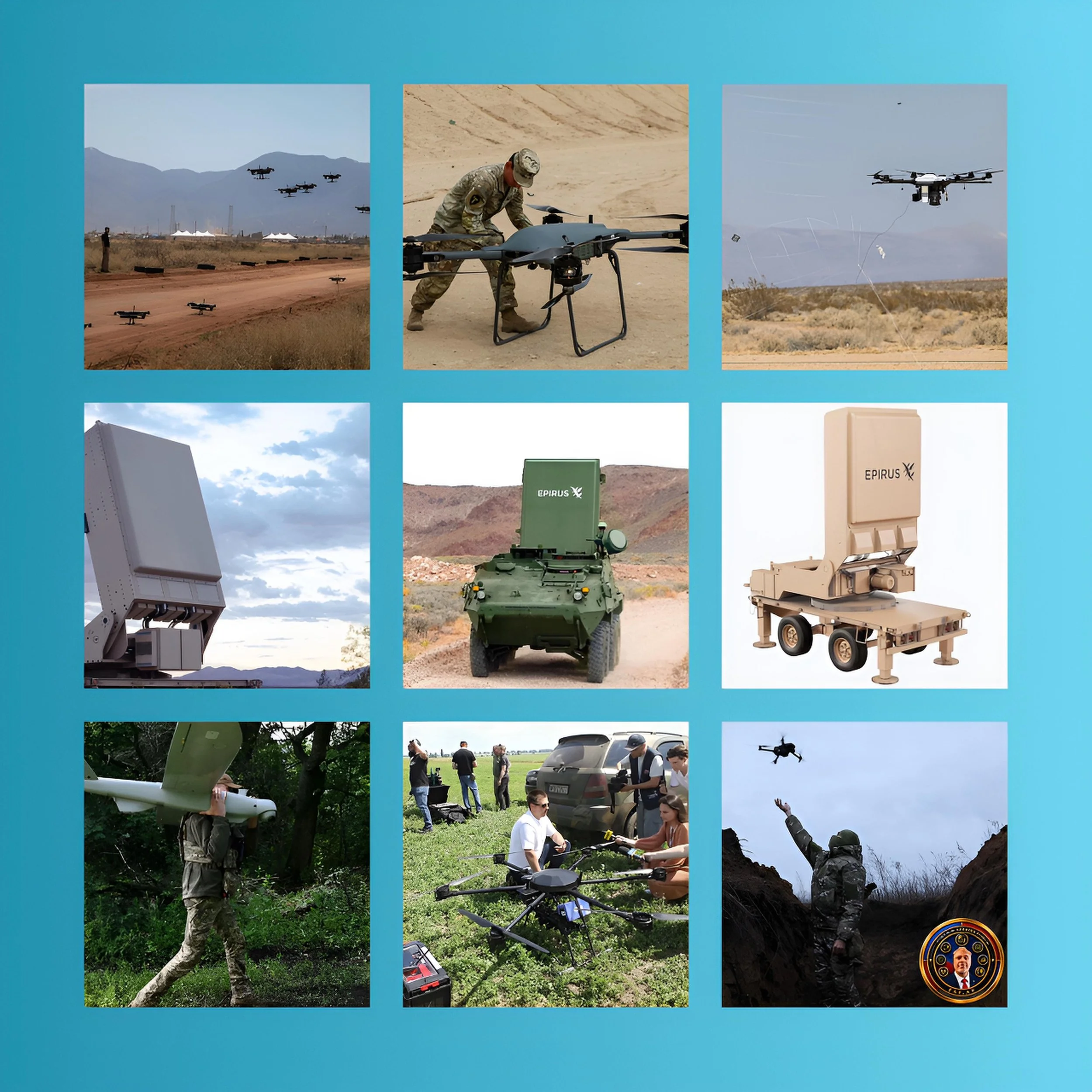
The scale of the counter-drone market provides perhaps the clearest quantitative illustration of how rapidly this transition is reshaping global defense economics.
According to the most recent update of the Unmanned Airspace Counter-UAS Systems Directory, published in September 2026, global government spending on counter-unmanned aircraft systems reached more than $53 billion in publicly announced contracts between January and September 2026, with spending expected to increase further in the final months of the year.
This figure has grown at an extraordinary pace over the course of the year: spending had already surpassed $29 billion in publicly announced contracts during the first three months of 2026 alone, driven substantially by a 10 year, cumulative $20 billion contract awarded by the United States Army to Anduril Industries in March 2026 for its open-architecture, artificial-intelligence-enabled Lattice suite, and by Poland’s $4.2 billion SAN CUAS programme awarded to a consortium including Kongsberg Defence and Aerospace. Support for Ukraine’s counter-drone requirements continues to represent the largest single segment of this spending.
In July 2026, at NATO’s annual summit in Ankara, Belgium and the Netherlands jointly announced a €3.1 billion purchase of layered air-defense systems, while NATO allies collectively signaled an intention to invest more than $40 billion in counter-drone capabilities over the following five years.
Even civilian infrastructure has been affected: during the 2026 FIFA World Cup across eleven United States host cities, authorities reportedly seized more than 700 unauthorized drones operating in restricted airspace, prompting the Department of Homeland Security and Department of Justice to publish an interim rule in July 2026 permitting local authorities to conduct their own counter-drone training and certification.
Dr. 🆎 cautions that these figures, while striking, understate the deeper structural concern, which is that autonomous and AI-enabled weapons systems are proliferating faster than the governance frameworks designed to manage them.
He notes that some estimates now attribute as much as 80% of battlefield deaths in Ukraine to autonomous warfare systems, including drones and counter-drone technology, a statistic that, whatever its precise reliability, reflects a qualitative shift in how contemporary combat is actually being fought. He further observes that the same dual-use characteristics that make autonomous platforms attractive to state militaries, low cost, modularity, and ease of software-driven reconfiguration, also lower the barrier to acquisition and misuse by non-state stakeholders, insurgent groups, and potentially terrorist organizations, a concern that intersects directly with his long-standing research into bioterrorism and asymmetric warfare risk.
An autonomous platform originally designed to carry a conventional munitions pallet is, in principle, agnostic about what that pallet contains, and Dr. 🆎 argues that the same modular logic driving legitimate military innovation could, absent careful safeguards, eventually be exploited to deliver unconventional payloads, reinforcing his broader argument that governance of autonomous weapons systems cannot be separated from governance of chemical, biological, radiological, and nuclear risk more generally.
A further concern involves the pace at which underwater autonomy is advancing relative to existing arms-control and maritime-law frameworks, most of which were designed for an era of crewed submarines operating under relatively well-understood rules of engagement. Autonomous underwater vehicles capable of extended, unsupervised operation raise unresolved questions about attribution, accountability, and the threshold at which an incident involving an uncrewed underwater asset might be treated as an act of war rather than an accident or an act of espionage.
Cause-and-Effect Analysis
The causal chain linking these developments begins with Ukraine’s demonstration, over four years of sustained combat, that inexpensive, rapidly iterated autonomous systems can inflict disproportionate costs on materially superior conventional forces.
This demonstration effect has produced at least three distinct downstream consequences that are now visible across the developments examined in this essay.
First, it has accelerated Western military institutions’ willingness to decouple platforms from crews, a shift directly reflected in both the CAML program’s autonomous launcher architecture and the Navy’s pursuit of thirty-day unattended ship endurance, because removing the human occupant removes the single greatest constraint on acceptable risk.
Second, it has driven a corresponding surge in defensive investment, as the same low-cost autonomous systems that proved so effective on offense have forced adversaries and allies alike to build an entirely new counter-autonomy industry, explaining the extraordinary trajectory of counter-drone spending from roughly $12.6 billion in earlier 2026 forecasts to more than $53 billion in actual contracted spending by September.
Third, it has created a feedback loop between battlefield experience and private capital that did not previously exist at this scale, evident in Karp’s investment in Fedorov’s venture, in which operational lessons generated under fire are transmitted with unusual speed into commercially fundable technology, which is then potentially exported back to the same or allied militaries.
A second causal thread connects the undersea and deep-strike developments to a shared strategic anxiety about great-power competition in contested landscapes, particularly the Indo-Pacific and the European eastern flank.
Kongsberg’s acquisition of Sonatech and Germany’s pursuit of the LORA missile alongside the Taurus NEO both reflect a judgment, shared across NATO members and Indo-Pacific-oriented planners alike, that future conflicts will be decided as much by the ability to sense an adversary’s forces persistently, whether beneath the ocean or hundreds of kilometers behind a front line, as by the raw destructive power of any individual weapon.
This has produced convergent investment in acoustic intelligence, satellite and drone reconnaissance, and networked targeting systems across geographically distant theaters facing very different adversaries, suggesting that the underlying logic is generalizable rather than specific to any single strategic context, a point Dr. 🆎 has emphasized repeatedly in his own scholarly work on human-centered artificial intelligence and geopolitical strategy.
Future Steps
Several trajectories appear likely to unfold over the coming eighteen to thirty-six months.
The CAML program’s 36 month period of performance suggests that additional component awards, covering the autonomous mobility platform itself and further munitions integration work, will continue arriving through late 2026 and into 2027, with field demonstrations likely following in the medium variant before the more complex heavy variant matures.
The Navy’s engine certification is likely to accelerate procurement decisions around unscrewed surface and subsurface vessels intended for Indo-Pacific deployment, particularly as the service seeks to distribute sensors and weapons across a larger number of less expensive platforms.
Kongsberg’s integration of Sonatech’s acoustic technology will likely be tested first in partnership programs with the United States Navy before broader allied adoption.
Germany’s dual-track approach of foreign procurement paired with domestic development through the Taurus NEO is likely to be replicated by other European states seeking to rebuild deep-strike capability without becoming permanently dependent on external suppliers, a pattern consistent with the broader European rearmament trend of the past several years.
Finally, Fedorov’s venture, backed by Karp’s investment, is likely to be joined by additional Western capital in the coming year, and Dr. 🆎 suggests that Ukraine’s emergence as a battlefield-native defense-technology ecosystem could, if sustained, position the country as one of the most significant sources of exportable defense innovation globally by the end of the decade, provided the underlying conflict does not foreclose that possibility through a different kind of resolution.
Governance will need to keep pace with each of these trajectories.
Dr. 🆎 argues that the most urgent policy priority is the development of clearer international norms governing the modular separation of autonomous platforms from their payloads, precisely because that same modularity, so valuable for legitimate military flexibility, creates proliferation and dual-use risks that existing arms-control frameworks were not designed to address.
He further recommends that alliance-level coordination, of the kind demonstrated at the Ankara summit, be extended beyond counter-drone procurement to encompass shared standards for autonomous underwater vehicle attribution and accountability, given the accelerating pace of undersea autonomy investment illustrated by the Kongsberg-Sonatech acquisition.
Conclusion
None of the five developments examined in this essay is, in isolation, revolutionary. An autonomous launcher, a certified engine, a corporate acquisition, a missile test, and a venture investment are, individually, unremarkable categories of defense news.
Their significance lies in their convergence, which reveals an emerging military architecture organized not around any single dominant weapon but around the integrated capacity to sense, decide, strike, defend, learn, and manufacture continuously and at scale.
Dr. 🆎 contends that this is the central strategic lesson of the current period: the military and the nation that can close this loop fastest, linking autonomous platforms, persistent sensing, deep-strike capability, and battlefield-derived capital into a single continuously improving system, may possess a decisive advantage even when no individual component of its arsenal is the most sophisticated in the world.
The corollary concern, and one Dr. 🆎 returns to consistently in his work on human-centered artificial intelligence and geopolitical strategy, is that governance, arms control, and ethical oversight of these systems have not kept pace with their technical and commercial maturation, leaving open serious questions about proliferation, accountability, and the long-term stability of an international system increasingly shaped by autonomous and AI-enabled warfare.