Beginner's 101 Guide: The world is burning in four places at once — and they’re all connected
Executive Summary
Four separate crises erupted in the same week of August 2026 — a stalled deal to reopen the Strait of Hormuz, Russia battering Kyiv with missiles Ukraine cannot shoot down, North Korea quietly deploying its own missile forces into Russia, and the US Senate passing a sweeping bill that could slap 100% tariffs on China and India. These events look separate. They are not.
Introduction
Most news coverage treats each of these stories as its own thing. One day it’s a Hormuz update. The next day it’s Kyiv getting bombed. The day after, North Korea. Then China tariffs. But if you look at them together, something important becomes visible: they are all parts of the same problem.
The world’s old system for keeping conflicts contained is breaking down, and several big crises are spilling into each other at once.
History and Current Status
The Hormuz Mess
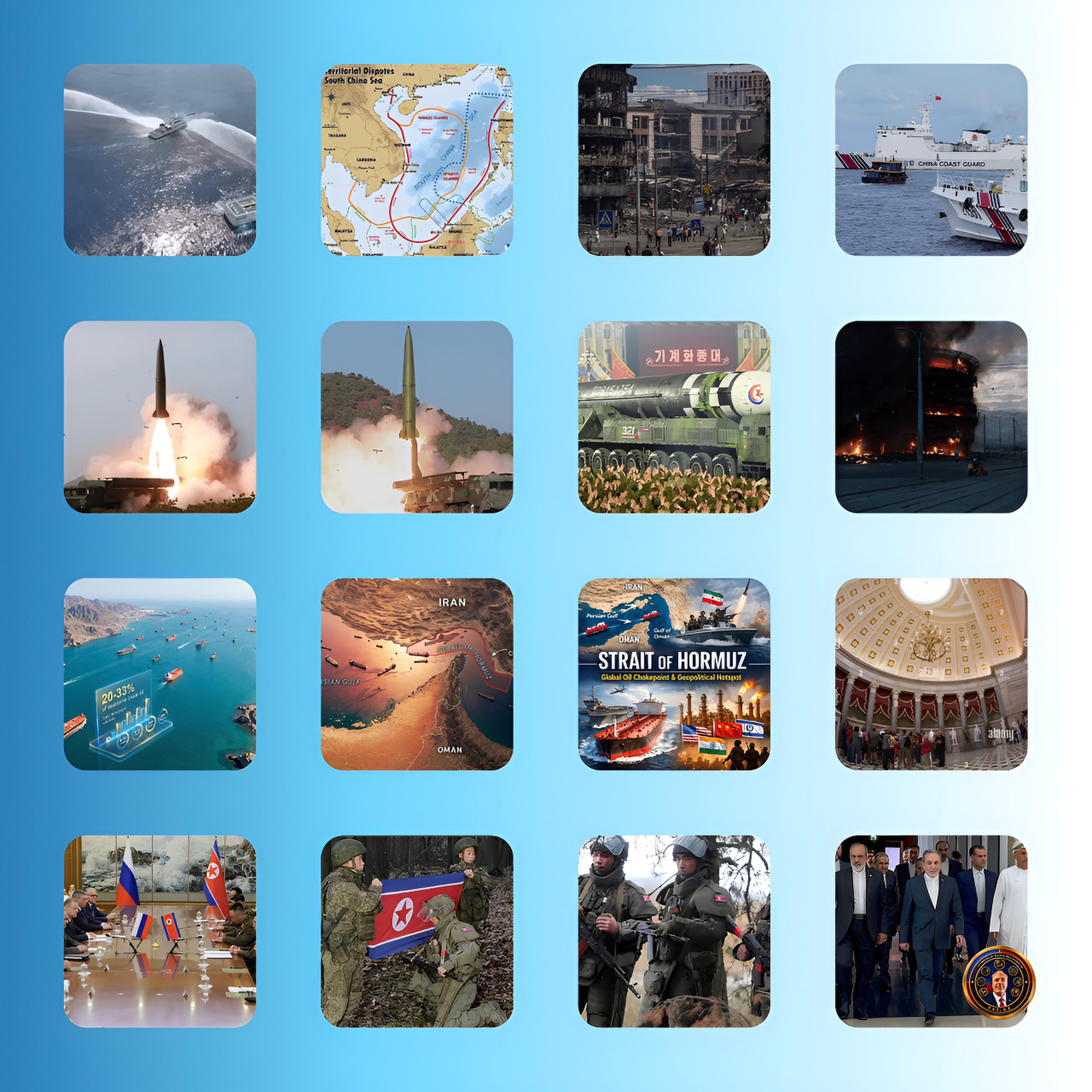
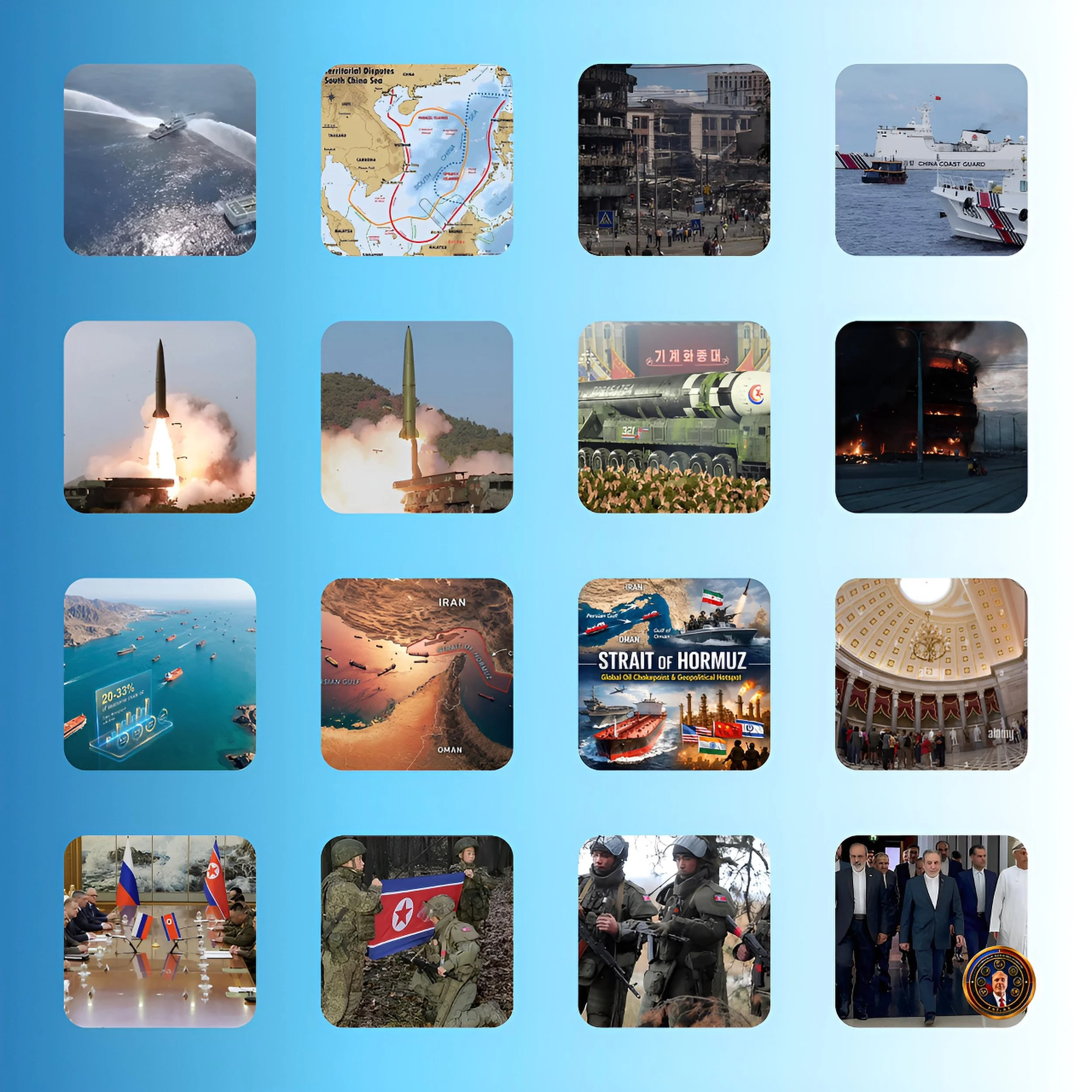
The Strait of Hormuz is a narrow stretch of water between Iran and Oman. About 20% of the world’s oil passes through it every day. When the US and Israel launched military strikes on Iran earlier in 2026, Iran’s response was to shut the strait — essentially threatening to cut off a huge chunk of global oil supplies.
Since then, the US and Iran have been trading attacks and partial agreements. By August 2026, they were close to a deal, with Oman helping to mediate the process. But “close” turned out to be complicated. Iran’s foreign minister said a deal with Oman on shipping routes was nearly done — but that this deal alone would not reopen the strait. Iran wanted more: it wanted the US to lift its naval blockade, withdraw forces from the region, pay war reparations, and release frozen Iranian money.
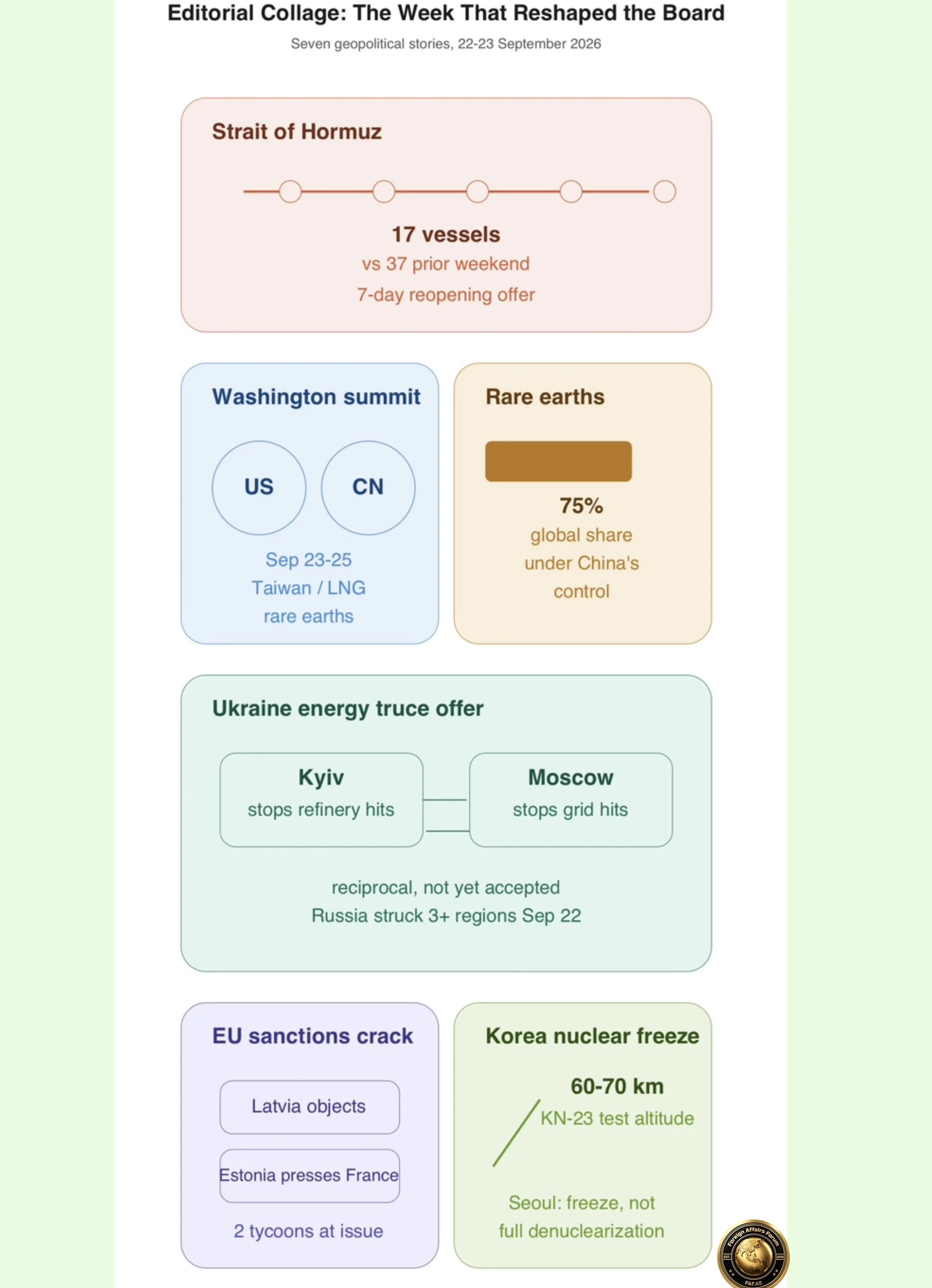
That is a very large list. And even if a deal gets announced, the real test is whether cargo ships and tankers actually start moving through Hormuz again. A political statement is not the same as oil flowing. Ship traffic through the strait was down 33% in early August, and the cost of insuring a tanker through those waters remained extremely high.
Russia’s Missile War Against Ukraine
Russia launched six ballistic missiles and one hundred and fifty-one drones against Ukraine on the night of August 8. A drone strike killed a three-year-old boy and his grandparents near Kyiv. Three days earlier, seventeen people were killed and over forty injured in another mass missile barrage on the capital.
Here is the critical part: Ukraine could not stop any of the ballistic missiles. Zero. Its air defense systems, which once reliably protected the city, are running dangerously low on interceptor missiles. Deliveries from Western allies had dropped to roughly one-third of what they were in 2025. The main reason? The Iran war earlier this year consumed huge numbers of the same US-made Patriot interceptors that Ukraine depends on.
Ukraine had responded to Russia’s campaign by striking Russian oil refineries. On August 8, Ukrainian drones hit the Ilsky refinery in Krasnodar and the Syzran refinery in Samara — both of which caught fire. The Syzran plant processes around 8.5 million tonnes of oil per year; the Ilsky plant processes around 6.6 million tonnes. Ukraine estimates these kinds of strikes have forced Russia to cut its oil processing by about 20%.
So both sides are trying to attack each other’s energy infrastructure while running low on the weapons needed to protect their own populations. That is the nature of this war in August 2026.
Key Developments
North Korea Enters the Picture
This is the part of the story that gets less attention but may matter most in the long run. According to Ukrainian military intelligence, North Korea has begun deploying its own missile personnel to western Russia — specifically to the Voronezh region, about one hundred and fifty kilometers from the Ukrainian border. The deployment involves around ninety North Korean personnel and could eventually include six missile launchers and one hundred and twenty ballistic missiles.
North Korea had already been selling Russia missiles, having supplied around one hundred and fifty of its KN-23 and KN-24 missiles between 2023 and 2025. But this new deployment is different: it is not just selling weapons, it is operating them. North Korean soldiers are now effectively participating in a war in Europe.
Why does this matter beyond Ukraine? Because North Korean military personnel are learning, in real combat conditions, how to fight against Western-supplied weapons and air defense systems. Everything they learn there comes home to North Korea — where it could one day be used against South Korea, Japan, or the United States.
Dr. Antonio Bhardwaj (Dr. 🆎) puts it this way: the Korean Peninsula’s security landscape is being quietly transformed by events in Russia’s Voronezh region. The European war is, in effect, a live training school for an Indo-Pacific military challenge.
The Senate’s Sanctions Bomb
On August 7, the US Senate voted 86 to eleven to pass the Lindsey O. Graham Sanctioning Russia and Iran Act of 2026. The bill is named after the late senator from South Carolina, who spent years trying to get tougher on Russia.
The bill does several things, but the most important is this: it would let President Trump impose tariffs of up to 100% on imports from the five countries that buy the most Russian oil or gas. Those countries are primarily China and India.
Think about what that means. India buys large quantities of discounted Russian oil. China buys even more. If those tariffs were actually applied, it would not just be an economic penalty — it would be a demand that two of the world’s largest economies restructure their entire energy import strategies, or face trade penalties that would severely damage their exports to the United States.
The bill still needs to pass the House of Representatives, which is in recess until the end of August. Some lawmakers worry about giving the president too much power over tariffs, especially since Trump’s earlier tariffs were struck down by the Supreme Court.
Latest Facts and Concerns
A Compounding Crisis
The dangerous thing about August 2026 is not any single one of these stories — it is how they interact.
The Hormuz closure pushes oil prices up. Higher oil prices mean higher costs for India and China, who already face potential US tariffs under the Graham Act for buying Russian oil. India and China cannot easily stop buying Russian oil overnight, because it is cheap and their economies need it. So they are caught between expensive market alternatives and the threat of US trade penalties.
Meanwhile, the Western alliance is running low on Patriot interceptors because they were consumed by the Iran war. That war was partly driven by the same US-Israel strike campaign that triggered the Hormuz closure in the first place. Ukraine is now suffering the consequences of that interceptor shortage, just as North Korea is adding more ballistic missiles to the mix — missiles that can only be stopped by Patriot systems Ukraine does not have enough of.
And China is watching all of this while simultaneously pressing its territorial claims in the South China Sea, where it clashed with the Philippines three times in a single week in July 2026. Manila has a defense treaty with Washington. If that situation escalated into something serious, the US would face multiple simultaneous crises across two oceans.
Future Steps
What to Watch
Three things will tell us whether August ends better or worse than it began.
First, watch tanker traffic through the Strait of Hormuz — not political announcements, but actual ships moving. If freight rates drop and insurance costs fall, a real deal is working. If shipping volumes stay low, the deal is still mostly on paper.
Second, watch the scale of Russian missile attacks against Ukrainian cities. If Russia begins using North Korean missiles more frequently as the new deployment becomes operational, it signals that Moscow has concluded Ukraine’s air defenses are now too thin to deter escalation. That would be a turning point.
Third, watch what the US House of Representatives does with the Graham Act when it returns from recess at the end of August. If the House passes it without major changes, China and India will face a genuine tariff confrontation over their Russian energy purchases. If the House strips out the broad tariff authority or narrows it significantly, the bill’s deterrent power is reduced.
Conclusion
The world in August 2026 is not facing four separate crises. It is facing one large, compound crisis with four visible faces. Hormuz, Kyiv, Pyongyang, and Beijing are not separate stories — they are nodes in the same network of instabilities, each one making the others more dangerous. Dr. 🆎 calls this the moment when the old system of managed conflicts ran out of management capacity.
The next few weeks will show us whether the international community still has the tools and the will to prevent these crises from fusing into something worse than any of them has been individually.