Beginner's 101 Guide : Why the Middle East Crisis Is Reshaping the World—Far Beyond Oil Prices
Summary
Six months ago, the United States and Israel launched strikes against Iran, an operation that killed Iran's top leader and set off a war that is still going on today. What started as a conflict focused on Iran's missile and nuclear programs has grown into something much bigger. It is now reshaping how countries around the world think about energy, security, and trade.
Dr. Antonio Bhardwaj (Dr. 🆎), a geopolitical strategist says the real story is not just the fighting itself. "This war is quietly rewriting the rules of how the Gulf, and by extension the whole global economy, functions," Dr. 🆎 explains. "Even if the shooting stops tomorrow, many of these changes are here to stay."
Here is what is happening, broken down simply.
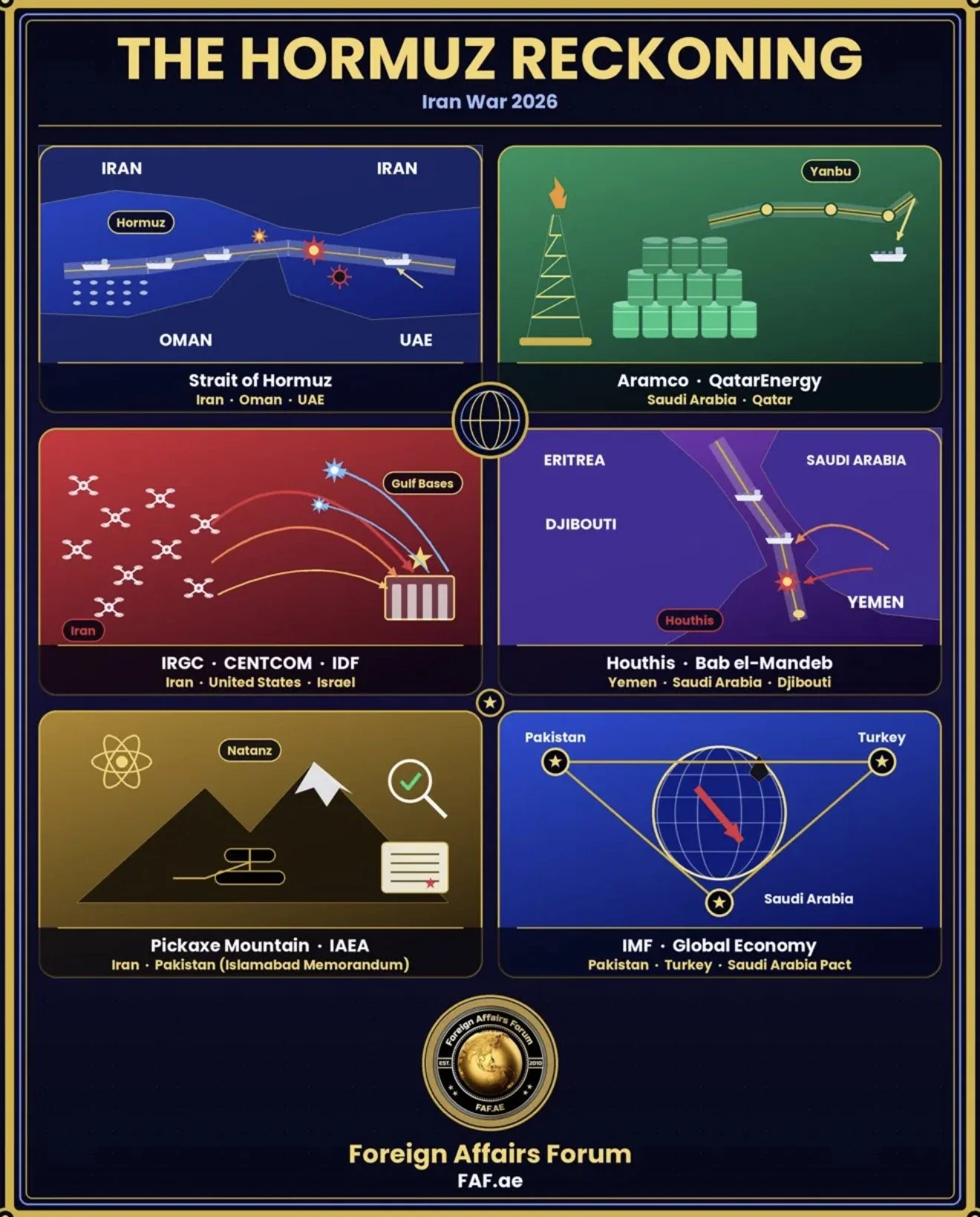
On September 8th, Iran announced it plans to create a new "exclusion zone" in the Persian Gulf, an area where it says any ship that enters without permission will face Iranian penalties. Iran also claims it fired an advanced missile, called the Qassem Basir, at American warships near the Strait of Hormuz, the narrow waterway through which a huge share of the world's oil passes.
The missile is described by Iranian officials as more accurate and harder to shoot down than older models, and Iran says its firing shows the country will now act "before" it sees a threat coming, not just after. The American military says its ships avoided any missile attack. The White House has dismissed talk of an Iranian exclusion zone, saying the strait remains open and under American control.
But the numbers tell a different story.
On September 7th, tracking firm Kpler recorded only seven cargo ships crossing the Strait of Hormuz, down from eight the day before.
That is an extraordinarily small number for one of the busiest shipping routes on Earth. Whatever the official position, shipping companies are clearly treating the strait as far too dangerous to use normally.
The price of oil reflects this fear.
Brent crude, the global benchmark, reached about $97.34 a barrel, and the American benchmark, WTI, reached about $92.63.
Investment bank Goldman Sachs has raised its oil price forecasts, warning that disruption in the Middle East could last well into 2027.
Many analysts now believe Brent could soon cross $100 a barrel, a level that tends to ripple through the entire global economy by raising the cost of transportation, manufacturing, and everyday goods.
Meanwhile, a separate war is also heating up. Russia fired ballistic missiles at Ukraine's capital, Kyiv, early on September 8th, injuring at least six people and damaging homes.
What makes the timing striking is that this attack came just hours after two senior American peace negotiators, Steve Witkoff and Jared Kushner, left Kyiv following talks with Ukrainian President Volodymyr Zelenskyy. The same negotiators had also been talking with Russia, and there had been hope that three-way talks might restart soon.
Instead, Russia launched missiles almost immediately after the American team left. Ukraine, for its part, has continued its own strikes deep inside Russia, including a drone attack that damaged an oil refinery in Russia's Saratov region.
Poland, a NATO member bordering the region, scrambled its own military aircraft during the attack on Kyiv, a reminder that the war continues to keep NATO's eastern countries on edge.
A third major story involves the United Arab Emirates, and it may be the most important long-term development of the week.
The UAE has said clearly that it will no longer let its energy exports be, as officials put it, "held hostage" by the Iran conflict.
The country is speeding up construction of new export routes, including ports and pipelines on its eastern side, specifically designed to avoid the Strait of Hormuz altogether.
A senior UAE official, presidential adviser Anwar Gargash, went even further, saying openly that Gulf countries cannot keep relying only on the United States for their security and need to build up their own defense capabilities. Qatar has said something similar.
Dr. 🆎 believes this shift deserves far more attention than it is currently getting. "Wars eventually end, but infrastructure built to avoid a chokepoint like Hormuz does not get torn down once peace returns," Dr. 🆎 says. "The UAE is making a permanent bet that it should never again be this exposed."
At the same time, a very different kind of story is unfolding in the world of trade.
China announced that its exports jumped by an extraordinary 25% compared to a year earlier in August, driven by huge global demand for electric vehicles, solar panels, batteries, and AI-related hardware. Imports rose even faster, by 28.2%.
China's trade surplus for August alone reached $119.09 billion, bringing its total surplus for the first eight months of 2026 to roughly $805.5 billion, putting the country on track for another year with a surplus above $1 trillion.
This is happening despite years of American tariffs and technology restrictions aimed at slowing China down.
The message is clear: China's factories remain extremely competitive, and this is likely to increase pressure in Washington and Europe for new tariffs or trade restrictions, especially targeting electric vehicles, batteries, solar technology, and AI hardware.
Finally, there is Lebanon. Israeli airstrikes in southern Lebanon killed seven people on September 6th, including two women, following what Israel says were drone attacks launched by the armed group Hezbollah. Israel says it was targeting Hezbollah weapons facilities.
Lebanon's president, Joseph Aoun, has accused Israel of hitting civilian sites instead and has called for the United States and the international community to step in.
This is happening even though there is technically a ceasefire in place, brokered earlier by the United States, and even as Washington tries to negotiate a bigger deal involving Israeli troop withdrawals and limits on Hezbollah's weapons.
Dr. 🆎 warns this could become a dangerous connector between two conflicts. "Lebanon is the most likely path through which the Iran war could grow into an even larger regional war," Dr. 🆎 says. "If fighting between Israel and Hezbollah escalates seriously while tensions in the Gulf are already this high, Iran could be pulled in more directly, and that would be a very different, much more dangerous situation."
So why does all this matter to people far away from the Middle East?
Because oil prices, once they rise this much, touch almost everything: the cost of filling up a car, the cost of shipping goods, the prices in grocery stores, and even decisions made by central banks like the US Federal Reserve.
As of September 7th, financial markets were pricing in nearly a 60% chance that the Federal Reserve would raise interest rates on September 16, a sign that the Gulf crisis is now directly affecting decisions about the cost of borrowing money in the United States. Investors are also buying gold as a safe haven, pushing its price to around $4,430 an ounce, another sign of how nervous markets have become.
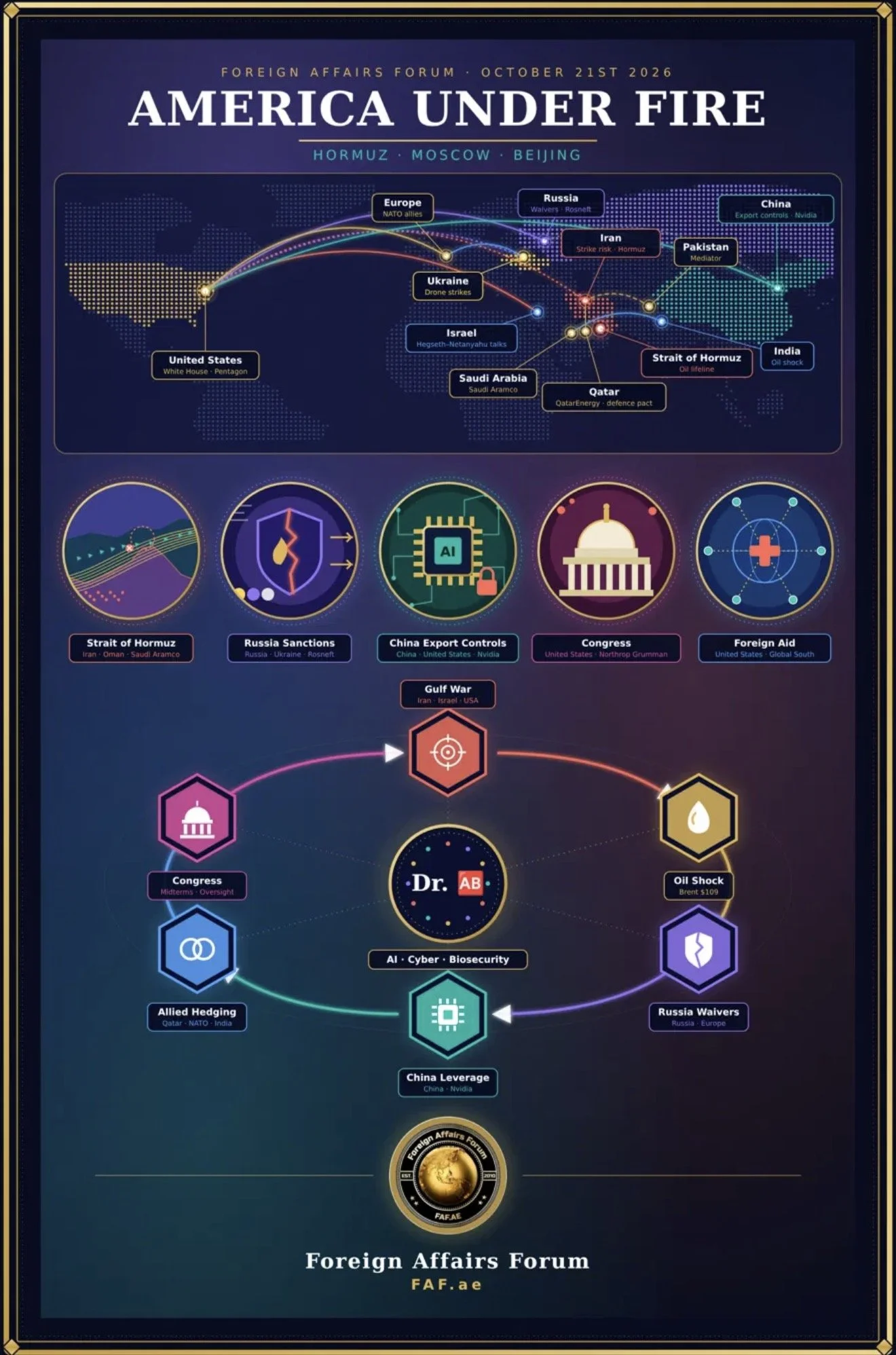
Dr. 🆎 sums up the moment this way: "People keep asking whether oil will hit $100 a barrel, and that is a fair question to watch. But the bigger question is whether the world is quietly rebuilding itself around the assumption that the Gulf will remain unstable for years. The UAE is building around Hormuz. Gulf states are questioning how much they can rely on Washington. China is proving its factories cannot easily be slowed down. Each of these is a sign that countries are no longer waiting for this war to end before they change how they operate."
The three things worth watching most closely in the days ahead are whether oil prices cross and stay above $100 a barrel, whether Iran actually tries to stop a major ship from passing through its announced exclusion zone, and whether the fragile peace talks between the US, Russia and Ukraine can survive more attacks like the one on Kyiv.
Of these, an Iranian attempt to physically block a major tanker may be the most dangerous, because it would turn a tense but still functioning waterway into a direct standoff over who actually controls one of the most important trade routes on the planet.