Foreign Affairs Forum | Dr. Antonio Bhardwaj (Dr. 🆎)| August 20th, 2026
Introduction
On the same day this week that China’s Unitree Robotics made its trading debut on the Shanghai Stock Exchange, surging as much as 629% and closing with a market valuation of roughly $50 billion, Reuters published an investigation that should trouble anyone concerned with the durability of American technological leadership.
The investigation found that the quadruped robots which propelled Unitree to global dominance, and which have since appeared armed and marching alongside People’s Liberation Army troops on Chinese state television, trace their engineering lineage directly to locomotion research funded by the United States Army and conducted at institutions including the Massachusetts Institute of Technology.
This is not an isolated irony. It is, as Dr. Antonio Bhardwaj (Dr. 🆎), the Geopolitical & Geoeconomic Strategist, has argued in his recent work on AI-enabled warfare, symptomatic of a deeper structural weakness in how Washington converts scientific leadership into durable strategic advantage.
The Unitree case arrived this week alongside four other defense-innovation developments, each illustrating a different facet of the same underlying contest: the United States Army’s evaluation of counter-drone technologies from more than fifty companies, a successful Australian-Japanese test of a high-energy laser system called Project Boobook, the emergence of an AI-assisted cybersecurity system credited with helping secure Viasat’s satellite infrastructure, and a fresh funding push for battlefield artificial intelligence explicitly linked to Pentagon pressure for faster operational deployment. Together, these stories describe a landscape in which the decisive competitive advantage in defense technology is shifting away from who invents a breakthrough and toward who can industrialize, manufacture, and field it at scale, faster than everyone else.
Dr. 🆎 has described this reorientation as the central strategic fact of the current era of AI warfare, one with consequences extending well beyond any single weapons system.
History and current status
The story of quadruped robotics begins not in Hangzhou but in American research laboratories more than a decade ago. Boston Dynamics, working initially with funding from the Defense Advanced Research Projects Agency, pioneered much of the foundational engineering behind legged robot locomotion in the 2000s and early 2010s.
That early work catalyzed a broader ecosystem of American academic research, much of it funded directly by the United States military. The Army’s Combat Capabilities Development Command, known as DEVCOM, and its Army Research Laboratory financed a consortium of university researchers, including a program at the University of Pennsylvania and the Massachusetts Institute of Technology’s Biomimetic Robotics Laboratory, whose work on quadruped locomotion produced a series of increasingly capable robot platforms through the mid-2010s.
One of these platforms, a compact, agile quadruped developed at MIT known as Mini Cheetah, became, according to researchers who worked on it, a direct engineering template for what followed in China.
Unitree Robotics was founded in 2016 by engineer Wang Xingxing, whose master’s thesis, according to reporting this week, explicitly cited both MIT research and the University of Pennsylvania work funded by the Army program.
This was, crucially, not a case of espionage or classified technology transfer. The underlying research was published openly, as is standard practice in much of American academic science, and was therefore available to any engineer anywhere in the world willing to study it closely.
What followed diverges sharply from the American experience. Gavin Kenneally, a former University of Pennsylvania researcher who worked on the Army-funded program, went on to commercialize the American breakthroughs through his own company, Ghost Robotics, which today supplies ruggedized quadruped robots to United States special forces.
But Ghost Robotics has shipped, by comparison, only a small fraction of what Unitree has managed.
Unitree’s $1,600 Go2 model, launched in 2023, helped the company rapidly dominate the global quadruped robot market, a dominance built not on superior science but on China’s ability to translate that science into an inexpensive, mass-manufacturable consumer and dual-use product at a price point American competitors could not approach.
The scale of Unitree’s subsequent rise is now a matter of public financial record following its Shanghai listing. The company priced its initial public offering on the Shanghai Stock Exchange’s STAR Market at 150.8 yuan per share, valuing it at approximately 61 billion yuan, or roughly $9 billion, and raising approximately $904 million.
Retail investor demand was extraordinary, with the offering oversubscribed by more than 8,000 times according to some reports, and institutional bids in the offline tranche oversubscribed by more than 2,600 times.
Strategic investors in the offering included the Chinese AI company DeepSeek, and Unitree’s founder was notably received by President Xi Jinping in a February meeting alongside DeepSeek executives, a signal of the explicit political importance Beijing attaches to the sector. When trading began this week, Unitree’s shares surged as much as 629%, giving the company a closing market valuation of roughly 342 billion yuan, or approximately $50 billion, and placing it ahead of other recently listed Chinese technology companies including MetaX Integrated Circuits and Moore Threads Technology.
The company reported 2025 revenue of approximately 1.7 billion yuan, with gross margins around 60%, and disclosed that more than 40% of its sales came from overseas markets. It is worth noting that the Pentagon, in June, had already added Unitree to a list of Chinese military companies, describing it as a contributor to the Chinese defense industrial base, a designation that falls short of a formal trade restriction but signals explicit American concern about the dual-use military applications of the company’s products.
Key developments
The Unitree revelation is the week’s most consequential story precisely because it functions as a diagnostic case study rather than an isolated data point. Reuters, in what it describes as the first media outlet to detail the direct connections between Unitree’s designs and the Army-funded research program, quotes Ben Katz, the MIT researcher who helped develop the Mini Cheetah platform, stating that the dimensions of Unitree’s popular Go series were, in his words, almost identical to the millimeter to his own team’s earlier design.
The episode is being read across the American defense-technology community as underscoring a broader and more troubling pattern: Chinese companies, backed by state subsidies, dense clusters of component manufacturers, and a demonstrated tolerance for sustained losses during a company’s growth phase, have repeatedly seized global market share in strategically significant industries that were originally pioneered with American government or military funding, including solar photovoltaic panels, electric vehicles, consumer drones, and now quantum communications and quadruped robotics.
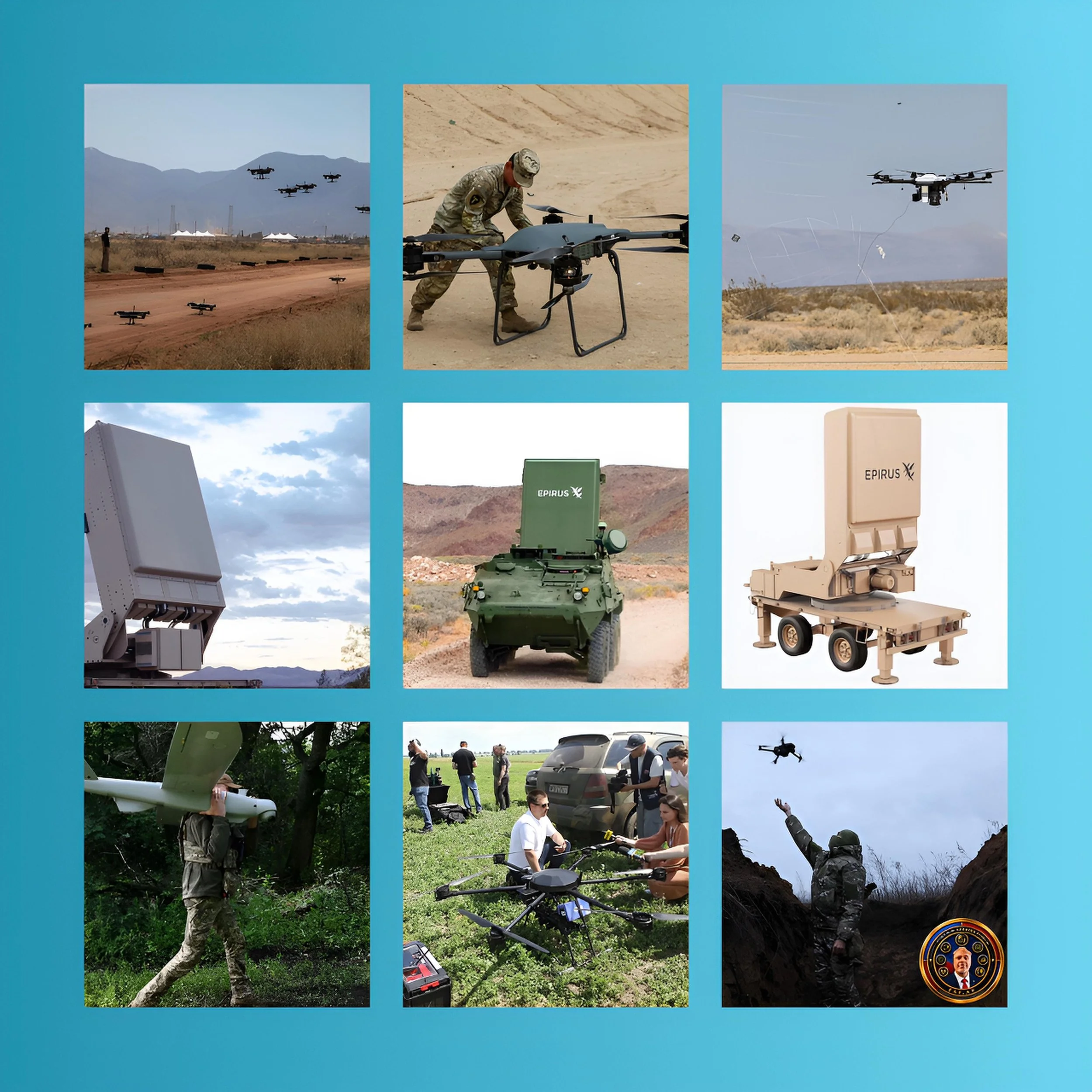
The second major development of the week concerns the United States Army’s evaluation of counter-unmanned aircraft systems. The Army’s XVIII Airborne Corps tested counter-drone technologies submitted by more than fifty companies between August eleventh and thirteenth, in direct preparation for a larger experimentation exercise named Scarlet Dragon scheduled for September.
The exercise reflects a deliberate procurement philosophy shift, moving away from the traditional model in which a single system is selected after years of paperwork-driven acquisition review, and toward competitive, iterative operational experimentation in which battlefield performance data itself determines which technologies advance toward fielding.
The underlying strategic logic, drawn heavily from recent combat experience in Ukraine and the Middle East, is that no single countermeasure reliably defeats the full spectrum of drone threats a modern force now faces, from cheap first-person-view attack drones to more sophisticated loitering munitions.
The emerging American counter-drone architecture increasingly resembles a layered, integrated air-defense model, but compressed to operate at dramatically lower altitudes and against dramatically cheaper threats than the systems traditional air defense was designed to counter: passive detection feeding radar and optical identification, followed by electronic-warfare jamming, then kinetic interceptor drones or guns, with missile or directed-energy systems held in reserve for the most demanding threats.
The third development, the successful test of the Boobook high-energy laser by Australia and Japan, is directly relevant to that final layer of the counter-drone architecture. The trial, conducted at the Cultana Training Area and the Defence Science and Technology Group’s Edinburgh facility in South Australia, represents the first co-development defense project between Australian and Japanese defense industries, involving Australia’s Defence Science and Technology Group alongside Mitsubishi Electric Australia and Mitsubishi Electric Corporation.
Australian Defence Minister Richard Marles described the system’s purpose in a joint press conference with his Japanese counterpart, Shinjiro Koizumi, as an enhanced laser capability deployable on land combat platforms and littoral naval platforms, intended to provide protection and situational awareness by using lasers to optically detect incoming threats.
The project builds on more than twenty years of prior Australian research and development, and follows a formal commitment made in May by Australian Prime Minister Anthony Albanese and Japanese Prime Minister Sanae Takaichi to deepen bilateral defense and security cooperation. Notably, Marles also indicated that Australia would accelerate discussions on providing Japan with expanded access to Australian missile testing ranges, potentially including hypersonic weapons testing, a development he characterized as second in significance only to Japan’s existing testing cooperation with the United States.
The fourth development concerns the defensive rather than offensive application of artificial intelligence in military contexts. An AI-assisted cybersecurity system called Argo, developed by a company named Atalanta, has drawn attention this week for its role in helping secure Viasat’s satellite infrastructure following the reported Russian cyberattack that coincided with the opening of the invasion of Ukraine.
Rather than relying primarily on conventional vulnerability scanning techniques, the Argo system combines artificial intelligence with formal mathematical verification methods to conduct deeper software analysis, building on foundational techniques originally established through research funded by the Defense Advanced Research Projects Agency.
The strategic significance lies in what this suggests about the future architecture of military command-and-control resilience: as militaries become dependent on enormous, interconnected software systems linking satellites, drones, command posts, sensors, and weapons platforms, a single vulnerability in any one component can potentially compromise an entire operational network, and continuous, AI-driven vulnerability discovery and patching may become as essential to maintaining wartime resilience as any physical hardening measure.
The fifth development returns to the theme of accelerating deployment timelines. Smack Technologies, a defense-technology company, is raising new financing to accelerate production of its AI-based military decision-support software and to develop wearable battlefield AI hardware, according to Reuters reporting. The company’s chief executive, Nick Allen, explicitly linked the fundraising effort to direct pressure from the Pentagon to move artificial intelligence capabilities from development into operational battlefield use more rapidly.
The broader objective animating this push is to relocate useful AI processing closer to individual soldiers, drones, and vehicles, rather than requiring every tactical decision to be routed back through centralized computing infrastructure that may be unavailable during actual combat conditions, when satellite links are jammed, communications are intermittent, and cloud connectivity cannot be assumed.
Latest facts and concerns
Several precise facts anchor this week’s developments and merit particular attention. Unitree’s revenue for 2025 stood at approximately 1.7 billion yuan, and the company disclosed that United States sales accounted for approximately 13.3% of that revenue, even as its prospectus explicitly warned that American tariffs, restrictions on government purchases, export controls, or the potential loss of existing regulatory approvals could damage its overseas expansion and disrupt its supply of imported components.
This warning is itself a notable admission: even as Unitree benefits from underlying American-funded research, its own regulatory filings acknowledge vulnerability to American policy responses. The Pentagon’s June designation of Unitree as a contributor to the Chinese defense industrial base already signals that such a policy response is plausible, though the practical scope of any future restriction remains uncertain.
A further concern, one that Dr. 🆎 has emphasized repeatedly in his scholarship on human-centered AI for geopolitical strategy, involves the dual-use ambiguity inherent in platforms like Unitree’s quadruped and humanoid robots. A robot marketed and sold globally as a consumer or research platform, priced low enough for hobbyist and educational purchase, can be, and reportedly has been, adapted for military applications, including appearing armed alongside People’s Liberation Army units in televised exercises.
This ambiguity complicates any straightforward export-control or sanctions response, since the underlying hardware possesses substantial legitimate civilian and research applications, and a blunt restriction risks penalizing commercial use cases far more than it constrains military adaptation, which can often occur with comparatively modest additional engineering.
The counter-drone testing exercise raises a different category of concern, one centered on integration rather than invention.
The United States has no shortage of individual counter-drone technologies; the challenge, as reflected in the Army’s decision to test more than fifty separate company offerings simultaneously, lies in assembling these individually promising technologies into a coherent, interoperable, layered defense architecture that can be fielded at the pace modern drone threats demand.
Recent combat experience in Ukraine has repeatedly demonstrated that adversaries adapt their drone tactics faster than traditional defense-acquisition timelines can accommodate, meaning that even a technically superior individual system risks obsolescence before it completes a conventional fielding process.
The Boobook laser trial, while a genuine technical milestone, remains constrained by well-understood physical limitations that the participating governments have not obscured. High-energy laser systems face persistent challenges from adverse weather, atmospheric interference, substantial power-generation requirements, and the fundamental need for direct line of sight to a target, none of which the Australian and Japanese defense ministries claim to have fully solved through this trial.
The significance of the test lies less in claiming these constraints have been overcome and more in demonstrating that a genuinely novel bilateral defense-industrial co-development model, the first of its kind between the two countries, can move from research to successful field trial, laying institutional groundwork for further collaboration.
Cause-and-effect analysis
The causal thread connecting these five developments runs through a single strategic reality that Dr. 🆎 has identified as the defining feature of the current defense-technology competition: invention and industrialization have become decoupled processes, occurring in different countries, at different speeds, under different economic logics.
The Unitree case is the clearest illustration of this decoupling as a cause with downstream effects. American military funding produced the foundational locomotion research; American academic openness, a genuine strength of the United States research ecosystem, ensured that research was published and internationally accessible; and Chinese industrial policy, including state subsidies, dense component-manufacturing clusters concentrated in China’s advanced manufacturing regions, and investor tolerance for sustained early losses, converted that accessible research into a mass-manufactured, globally dominant commercial and dual-use product far faster and more cheaply than the American ecosystem that originated the underlying science.
This dynamic has a direct causal effect on the second development, the Army’s counter-drone testing exercise.
Precisely because adversary drone technology, much of it originating from the same low-cost, rapidly iterating manufacturing base that produced Unitree’s dominance in quadrupeds, can be fielded and adapted faster than traditional defense procurement cycles allow, the American response has been forced to adopt a similarly accelerated, competitive testing model, evaluating dozens of vendors simultaneously rather than committing years in advance to a single program of record. In effect, the perceived success of adversary industrial speed is causing the United States defense-acquisition system to attempt to compress its own innovation-to-fielding timeline, an effect visible directly in the Scarlet Dragon exercise structure.
The Boobook laser trial and the Argo cybersecurity system, while less directly connected to the Unitree story, share a common causal driver: both represent attempts to address a persistent asymmetry in the cost structure of modern conflict, in which inexpensive offensive systems, whether drones or cyberattacks, threaten to impose disproportionate costs on far more expensive defensive systems.
A defender who must fire an expensive interceptor missile against every inexpensive attack drone eventually loses the economic exchange even while winning every individual engagement, and Australia and Japan’s investment in directed-energy weapons is a direct causal response to this specific vulnerability, since a functioning high-energy laser offers a radically more favorable cost-per-engagement ratio, an expensive system generating thousands of comparatively inexpensive individual shots.
Similarly, the Argo system’s emergence as a response to the Viasat cyberattack reflects the causal recognition that as militaries build increasingly interconnected digital infrastructure linking satellites, sensors, and weapons, a single compromised node can cascade into a strategically significant failure, making continuous, AI-driven vulnerability discovery a direct and necessary countermeasure rather than an optional enhancement.
Smack Technologies’ fundraising, finally, is a direct effect of explicit Pentagon policy pressure, itself likely influenced by the broader recognition, evident across all four other developments, that the country capable of moving artificial intelligence capability from laboratory demonstration to reliable, edge-deployed operational use fastest will possess a meaningful strategic advantage independent of which country’s laboratories produced the underlying algorithmic breakthrough first.
Dr. 🆎’s perspective and broader stakeholder implications
Dr. 🆎 has framed this week’s developments as confirmation of an argument he has advanced consistently in his scholarship on AI warfare and geopolitical strategy: that the decisive military-industrial advantage of the coming decade will not necessarily belong to the stakeholder that invents the most impressive prototype, but to the one capable of moving fastest through the full cycle from research to prototype to manufacturing to cost reduction to mass production to battlefield deployment to operational data collection and, critically, back to redesign. He has described this as a learning loop, and has argued that in the emerging age of autonomous and AI-enabled warfare, the factory, the software update, and the accumulated battlefield learning process may ultimately prove as strategically consequential as the individual weapon system itself. The Unitree case, in his assessment, is a near-perfect empirical illustration of this thesis: the United States retained clear leadership at the earliest, most difficult stage of the cycle, fundamental locomotion research, and nonetheless lost the far more economically consequential later stages of that same cycle to a stakeholder better organized to execute them.
Dr. 🆎’s work on bioterrorism risk and dual-use technology governance is also directly relevant to the Unitree episode, though from an adjacent angle. He has argued that the same structural feature which makes a technology valuable for civilian and commercial application, low cost, ease of manufacture, broad availability, frequently makes it equally attractive for illicit or hostile adaptation, and that policymakers consistently underestimate how quickly a technology marketed for benign consumer or research use can be repurposed for military or even non-state violent application. A four-legged robot sold globally as a hobbyist or research platform, and separately observed armed and operating alongside PLA units, exemplifies precisely the pattern of dual-use diffusion he has warned against in the context of both robotics and, in his broader body of work, biological and chemical technologies with similarly permissive commercial availability.
For the stakeholders involved in this landscape, the implications extend well beyond the United States-China relationship narrowly construed. Allied governments such as Australia and Japan, through initiatives like Project Boobook, are increasingly positioning themselves not merely as recipients of American defense technology but as co-developers and, in some respects, as alternative manufacturing bases capable of moving certain defense-industrial programs forward more nimbly than either country could manage alone.
Private defense-technology companies such as Smack Technologies and Atalanta illustrate a parallel shift, in which venture-funded, commercially structured companies increasingly compete directly with, and in some cases outpace, traditional prime defense contractors in bringing artificial intelligence capabilities into operational military use.
Future steps
Several trajectories appear likely to unfold from this week’s developments. The United States defense-research and acquisition establishment is likely to face intensifying scrutiny, both from within the Pentagon and from congressional oversight, regarding how publicly funded research can be better protected from rapid foreign commercialization without undermining the open scientific culture that remains one of America’s genuine competitive strengths, a difficult balance that Dr. 🆎 has cautioned against resolving through blanket secrecy, which he argues would likely damage American research productivity more than it would meaningfully slow foreign replication. The Army’s Scarlet Dragon exercise in September will offer an important early indication of whether the competitive, multi-vendor testing model can genuinely compress the counter-drone fielding timeline, and its results are likely to shape acquisition strategy across other capability areas facing similar adaptation-speed pressures.
The Boobook laser program is likely to progress toward further development and eventual commercialization discussions, though genuine operational fielding of directed-energy weapons at meaningful scale remains, on the evidence available this week, still some years distant given the unresolved power, weather, and line-of-sight constraints inherent to the technology.
The bilateral cooperation model it establishes between Australia and Japan is nonetheless likely to expand into additional joint defense-industrial programs, reinforcing the broader allied defense-technology network forming around concerns about China’s regional posture.
AI-assisted cybersecurity systems in the mold of Argo are likely to see accelerating adoption across military and critical-infrastructure networks, as the interconnected, software-dependent nature of modern command-and-control architecture makes continuous automated vulnerability discovery increasingly difficult to treat as optional. And the broader push toward edge-deployed battlefield AI, exemplified by Smack Technologies’ fundraising, is likely to continue drawing both private capital and explicit Pentagon policy support, as military planners increasingly conclude that AI capability which cannot function reliably when networks are degraded or unavailable offers limited value in genuine combat conditions.
Conclusion
The developments compressed into this single week in defense innovation, Unitree’s Shanghai debut alongside the Reuters investigation into its American research origins, the Army’s accelerated counter-drone testing, the Australian-Japanese laser trial, the emergence of AI-driven cyber defense, and the Pentagon-driven push toward edge battlefield AI, together illustrate a competitive landscape in which technological invention alone no longer determines strategic outcomes.
As Dr. 🆎 has argued, the United States retains extraordinary strength in fundamental research, a strength the Unitree case does not contradict but rather confirms, since the underlying breakthroughs genuinely originated in American military-funded laboratories. What the case exposes instead is a persistent and consequential gap between invention and industrialization, one that China’s state-directed manufacturing ecosystem has repeatedly proven able to exploit across a widening range of strategically significant technologies.
The stakeholders best positioned to succeed in the coming period of AI-enabled and autonomous warfare will not necessarily be those who publish the most groundbreaking research, but those who most effectively close the loop between laboratory breakthrough and battlefield deployment, and who do so while managing the genuine dual-use risks that increasingly accompany dual-use technologies diffusing at commercial speed across an interconnected global landscape.