Hormuz to Taiwan: The geopolitics of chokepoints in a fracturing global order
Foreign Affairs Forum | Dr. Antonio Bhardwaj (Dr. 🆎)| August 14, 2026
Executive Summary
The convergence of five distinct crises across the global landscape on a single day in mid-August 2026 illustrates a structural transformation in international affairs: military and economic competition among major stakeholders is increasingly being waged through control of chokepoints, critical technologies, and supply chains rather than through direct confrontation.
The Strait of Hormuz, where the United Arab Emirates has now accused Iran of attacking two ADNOC-linked vessels, has emerged as the most acute flashpoint, threatening to draw the Gulf’s most commercially cautious state into open confrontation with Tehran.
Simultaneously, Ukraine’s proposal for a reciprocal Black Sea shipping truce, Washington’s newly announced tariffs of up to 100% on Chinese drones, Taiwan’s unusually realistic rehearsal of blockade survival during its Han Kuang exercises, and the fragile Gaza ceasefire collectively demonstrate that the architecture of twenty-first-century conflict has shifted toward attritional, infrastructure-centered competition.
Dr. Antonio Bhardwaj (Dr. 🆎), whose work examines the intersection of human-centered artificial intelligence, geopolitical strategy, and warfare doctrine, observes that these five developments are not isolated news items but interconnected symptoms of a broader reordering in which control over energy corridors, food routes, semiconductor supply chains, and autonomous weapons technology has become the primary currency of power.
FAF analysis situates each crisis within its historical context, examines the key developments driving today’s headlines, evaluates the cause-and-effect chains linking military action to financial-market transmission, and offers a forward-looking assessment of the choices facing policymakers, investors, and multilateral institutions in the months ahead.
Introduction
Few periods in recent memory have compressed so many overlapping crises into a single news cycle as the present moment. On 14 August 2026, the Strait of Hormuz, the Black Sea, the Taiwan Strait, Gaza, and the emerging geography of unmanned aerial systems each generated developments significant enough to reshape regional balances of power and, in some cases, global commodity markets.
Dr. 🆎 has repeatedly argued that the present era of geopolitics cannot be understood through the lens of any single theater of confrontation; rather, it must be read as a set of interlocking landscapes in which stakeholders test the boundaries of coercion below the threshold of full-scale war.
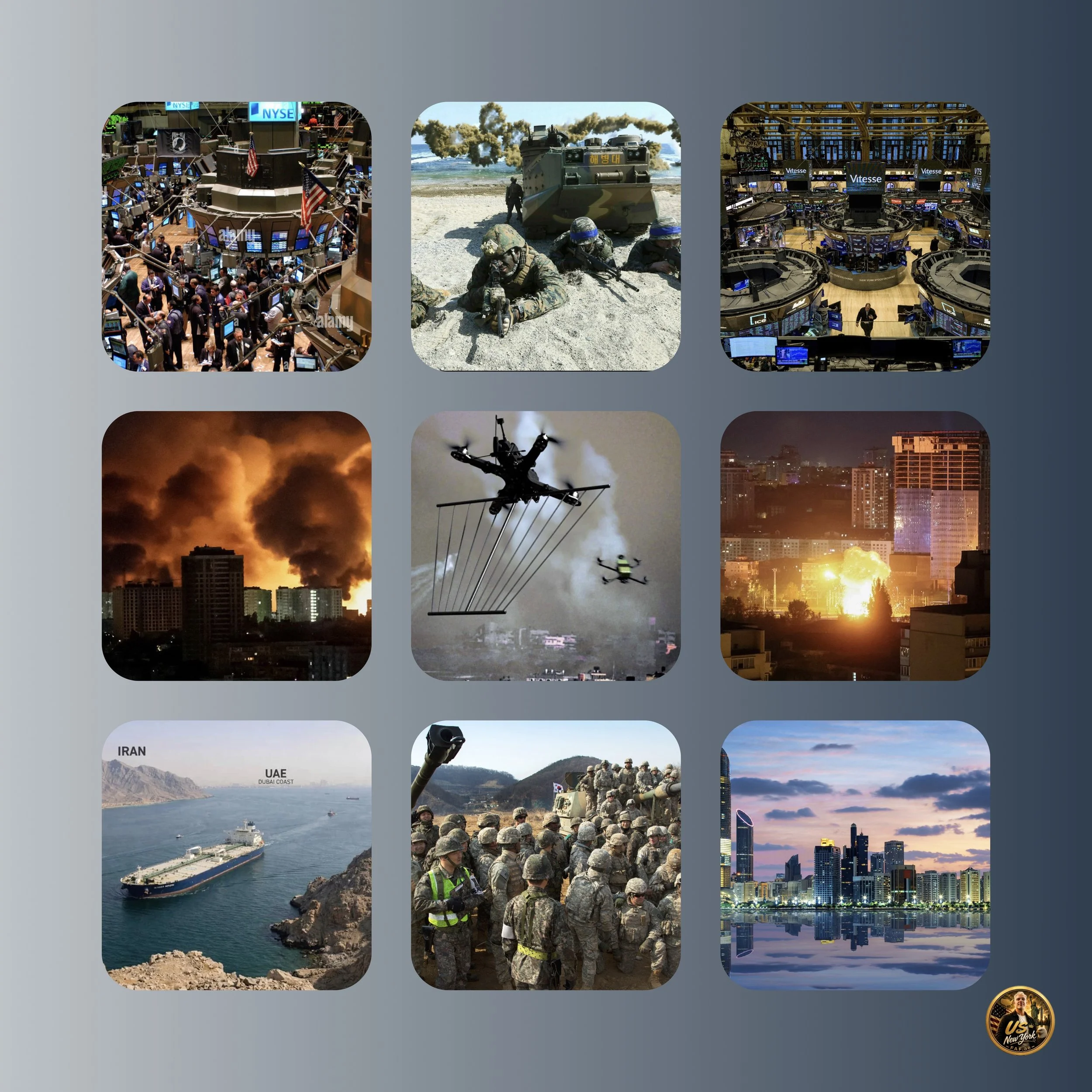
The attacks attributed to Iran against vessels affiliated with the Abu Dhabi National Oil Company, the 16th such assault since the crisis began in February 2026, represent the most immediate and consequential of these developments, not merely because of the physical risk to shipping, but because they threaten to draw the United Arab Emirates, a state that has painstakingly cultivated commercial relationships with Tehran even while hosting American security guarantees, into a posture of direct retaliation.
FAF analysis proceeds from the premise that the interconnected nature of today’s crises reflects a deeper transition in the international system: from a world organized around great-power military parity to one organized around control of chokepoints, critical minerals, semiconductor fabrication, and autonomous systems capable of inflicting disproportionate damage at a fraction of traditional military cost.
History and Current Status
The Strait of Hormuz crisis traces its origins to the eruption of the Iran war in February 2026, when a joint American and Israeli campaign targeted Iranian military infrastructure and, according to widely reported accounts, resulted in the assassination of Iran’s Supreme Leader.
In the immediate aftermath, Iran’s Islamic Revolutionary Guard Corps declared the strait closed to foreign shipping, issuing warnings over maritime radio frequencies and subsequently laying sea mines, boarding merchant vessels, and, in at least one instance, capturing ships outright.
The United States responded with a naval blockade of Iranian ports that persisted from April through late May before an uneasy negotiating process began between Washington, Tehran, and the Sultanate of Oman, which has positioned itself as an intermediary given its unique proximity to the strait and its historically cordial relations with both parties.
Before the outbreak of hostilities, approximately one-quarter of the world’s seaborne oil trade and one-fifth of global liquefied natural gas shipments transited this corridor, which narrows to barely thirty-three kilometers at its tightest point between Oman and Iran.
Since February, ADNOC alone has reported that fifteen of its vessels have been struck by missiles and drones, a campaign that has killed one crew member and injured 20 others even as diplomatic negotiations over navigation arrangements proceeded in what Omani officials described as a constructive atmosphere.
The events of the past week have complicated this fragile diplomatic trajectory considerably.
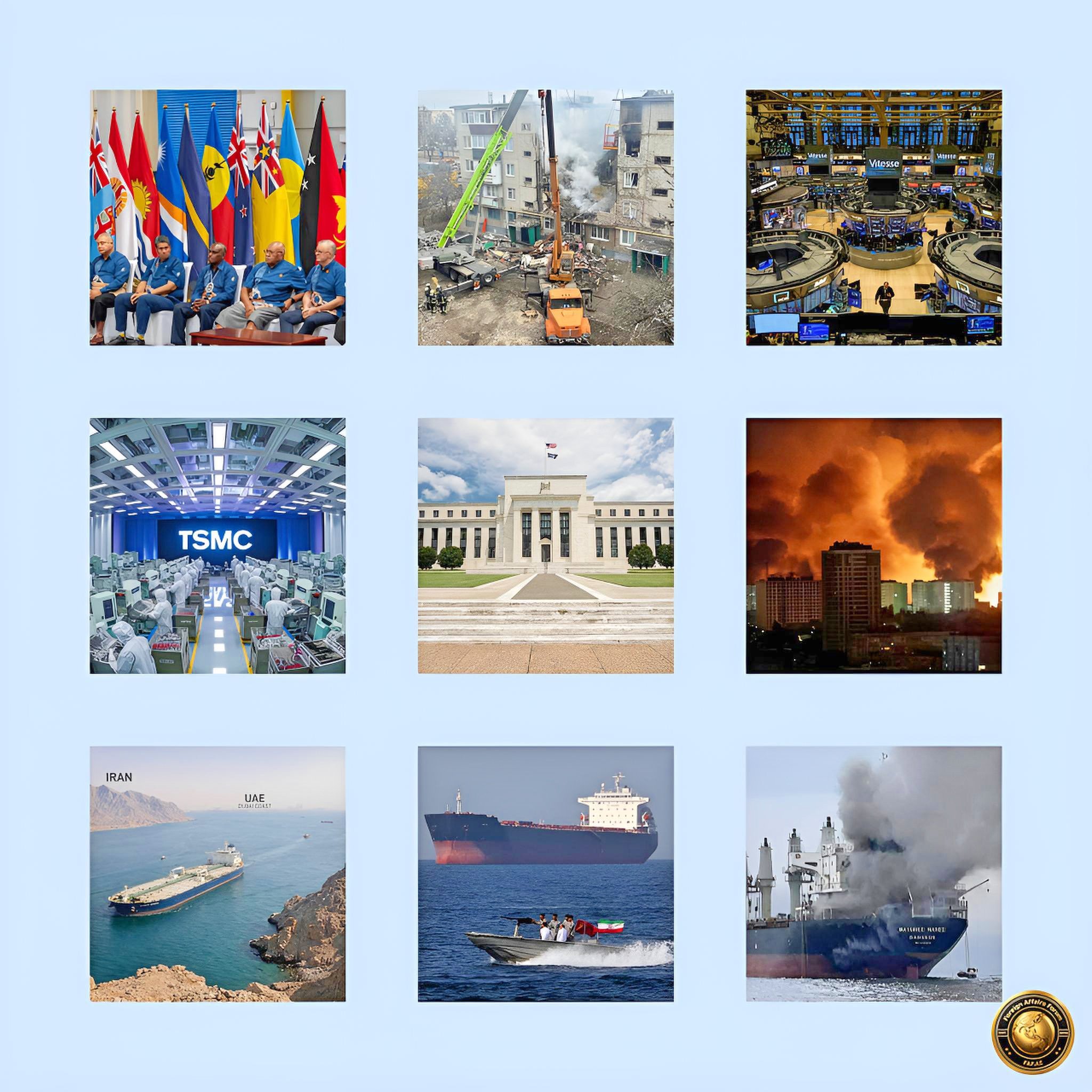
On 8th August, an ADNOC tanker was struck by a missile while transiting the strait, an attack the UAE Foreign Ministry attributed directly to the Revolutionary Guard Corps and characterized as a violation of international maritime law.
Less than a week later, on 13 and 14 August, two additional ADNOC-linked vessels came under attack, prompting Abu Dhabi to invoke United Nations Security Council Resolution 2817, which affirms freedom of navigation and explicitly rejects the targeting of commercial shipping.
The Gulf Cooperation Council’s Secretary-General characterized the latest strikes as a dangerous and unacceptable escalation, while Bahrain and Qatar issued their own condemnations, with Doha explicitly rejecting what it termed the use of the strait as a bargaining chip.
Dr. 🆎 notes that the significance of these events lies less in their individual severity, since none has yet produced fatalities among the recent incidents, than in their cumulative effect on the risk calculus of a state that has historically sought to avoid direct confrontation with Iran.
The UAE’s economic model depends on regional stability and its role as a logistics and financial hub; a sustained campcampaign against its national oil company’s fleet threatens the foundation of that model in ways that are difficult for Abu Dhabi to absorb indefinitely without a response.
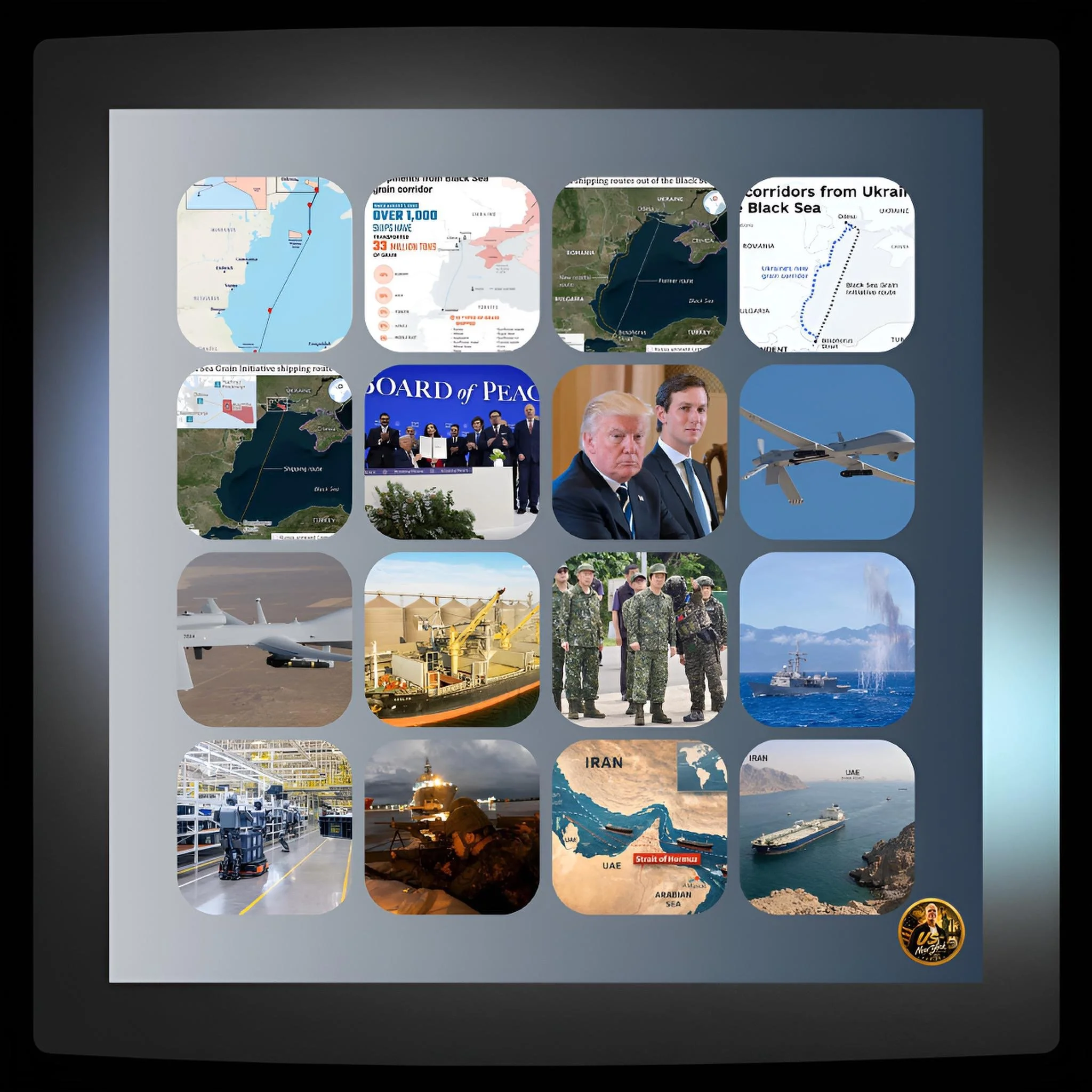
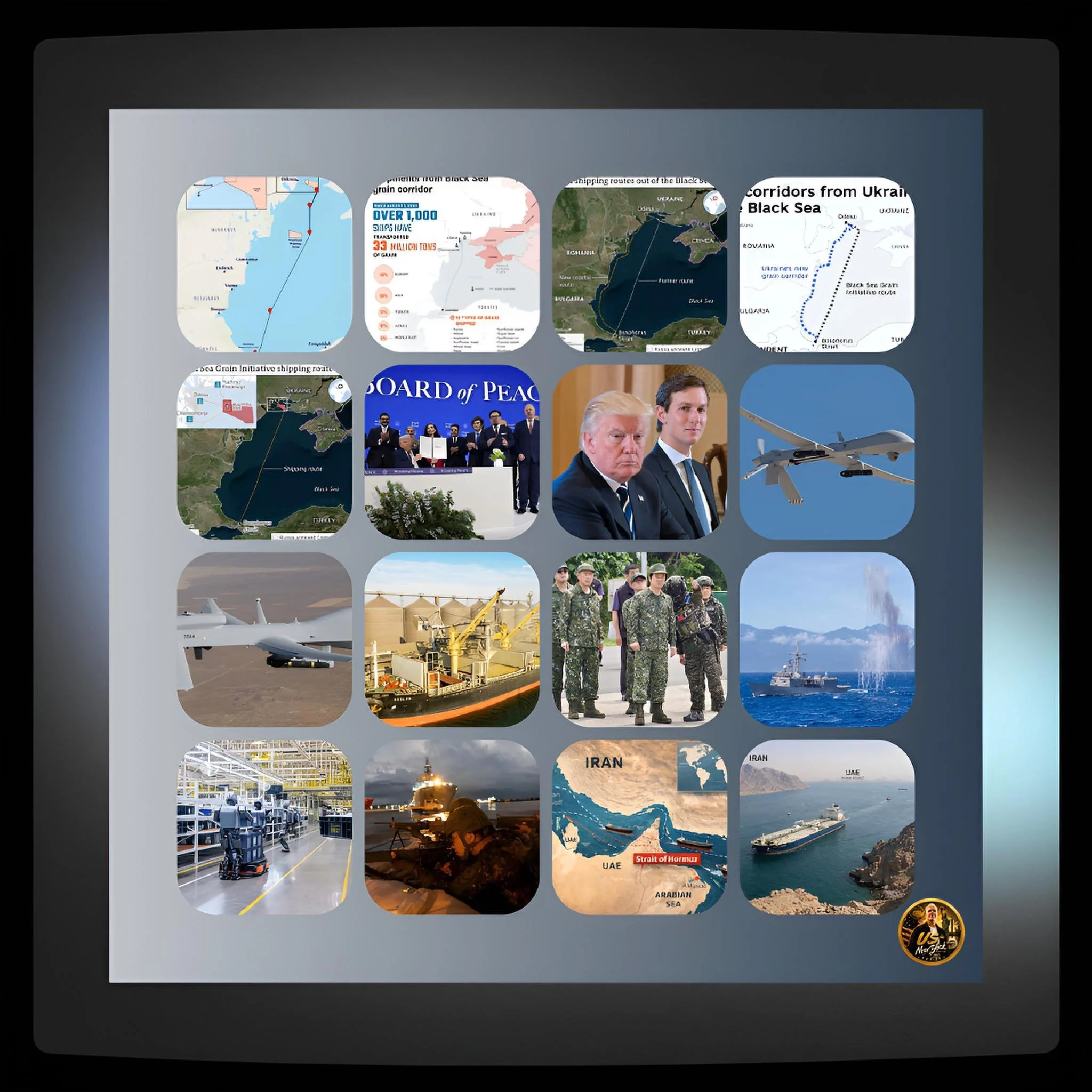
Parallel to the Gulf crisis, the Black Sea has remained a zone of continuous attritional warfare between Russia and Ukraine since the initial invasion, with maritime commerce serving as both a battlefield and a bargaining chip.
Ukraine’s grain exports, historically vital to food security across North Africa and the Middle East, have been repeatedly constrained by Russian strikes on port infrastructure, even as Kyiv has developed an increasingly effective campaign of maritime drone strikes against Russian naval assets and, more recently, against Russian energy infrastructure, including refineries whose output feeds both domestic consumption and export revenue.
The Taiwan Strait, meanwhile, has evolved along a separate but conceptually related trajectory. Beijing’s military modernization and its increasing use of coast guard vessels for what it terms law-enforcement patrols off Taiwan’s eastern coast have shifted Taipei’s defense planning away from a singular focus on repelling an amphibious invasion toward preparing for the more probable scenario of a blockade or quarantine designed to compel capitulation without a shot being fired in anger.
Gaza, for its part, remains embedded within the broader regional architecture reshaped by the Iran war, with a ceasefire that has held only imperfectly since its negotiation and a diplomatic process now entering a delicate phase as American mediators prepare renewed engagement.
Key Developments
The most consequential development of the past several days is the marked deterioration in the security of commercial shipping through the Strait of Hormuz specifically targeting vessels affiliated with the United Arab Emirates rather than exclusively American or Israeli-linked shipping.
This represents an important escalatory threshold. Throughout the earlier phases of the crisis, Iranian attacks were broadly, though not exclusively, understood as directed at the United States and its closest regional partner, Israel.
The UAE occupied a more ambiguous position, having maintained diplomatic channels with Tehran even as it hosted American military assets and joined broader Gulf security architecture.
The targeting of ADNOC vessels, now on at least 16 occasions since February, forces Abu Dhabi to choose between continued restraint, which risks appearing weak to both domestic and regional audiences, and retaliation, which risks drawing the UAE into a direct military confrontation with Iran that neither party has sought.
Dr. 🆎 emphasizes that this dynamic exemplifies a recurring pattern in contemporary chokepoint warfare: state and non-state stakeholders increasingly select targets calibrated to maximize economic disruption while technically remaining below thresholds that would trigger overwhelming retaliation, a strategy that becomes progressively more dangerous as the number of incidents accumulates and the probability of miscalculation rises correspondingly.
A second key development concerns Ukraine’s proposed Black Sea shipping truce, an initiative that, if reciprocated by Moscow, would represent one of the few durable confidence-building measures to emerge from more than four years of continuous conflict.
The proposal arrives against a backdrop of intensifying rather than diminishing hostilities at sea and along energy infrastructure: Russian drone strikes have targeted civilian rail transport near Odesa, while Ukrainian strikes have forced the shutdown of at least one major Russian refinery and ignited fires at facilities linked to Gazprom in Bashkortostan.
The juxtaposition of an offer to de-escalate maritime targeting alongside continued attacks on energy infrastructure illustrates the increasingly compartmentalized character of the conflict, in which stakeholders pursue selective de-escalation in domains that serve their interests, in this case Ukraine’s need to restore agricultural export capacity, while continuing to escalate in domains that inflict maximum strategic cost on the adversary.
The third major development, Washington’s announcement of tariffs reaching 100% on Chinese drones and their components, marks a significant deepening of the technological bifurcation between the American and Chinese economic and defense ecosystems.
The new tariff structure imposes its highest rate on larger unmanned aircraft systems and those incorporating sensitive capabilities such as thermal imaging and automated docking, while smaller consumer-oriented systems face a lower duty of 25%.
Notably, the administration has carved out preferential rates for allied producers, with drones originating in the European Union, Japan, South Korea, Switzerland, Liechtenstein, and Taiwan facing a reduced 15% tariff, and British-made systems facing only 10%, contingent on substantially all hardware and software originating within those allied jurisdictions.
Beijing responded within days by imposing its own export controls on drone technology and blacklisting a number of companies, in what Dr. 🆎 characterizes as the drone sector’s arrival at the same strategic inflection point semiconductors reached several years earlier: a technology simultaneously indispensable to civilian economic life and to modern battlefield lethality, and therefore no longer treatable as a purely commercial matter by either Washington or Beijing.
The fourth development, Taiwan’s completion of unusually realistic elements within its annual Han Kuang exercises, reflects Taipei’s growing conviction that a blockade or quarantine scenario is more probable in the near term than a full amphibious assault.
The drills incorporated a genuine reduction in mobile internet speeds to near text-only capacity across parts of the island, evacuation and air-raid rehearsals that emptied streets in several cities, the activation of underground medical facilities including a converted hospital parking structure in New Taipei City, and, for the first time, a joint navy and coast guard anti-blockade exercise involving the escort of a simulated merchant vessel and the clearance of a safe navigation channel by minesweepers.
Taiwan’s ten-year modernization program additionally calls for the construction of 141 new coast guard vessels, several of which will be capable of carrying anti-ship missiles, an unmistakable signal that Taipei now regards its coast guard as an integral component of wartime maritime defense rather than a purely civilian law-enforcement body.
The fifth development, continued fragility in the Gaza ceasefire following strikes that killed two Palestinians including a senior police official, occurs as Jared Kushner prepares renewed diplomatic engagement in Israel and Egypt, with Prime Minister Benjamin Netanyahu having rejected significant elements of the American-backed framework for Hamas disarmament and transitional governance.
Latest Facts and Concerns
The immediate factual record surrounding the Hormuz crisis indicates that the attacks on ADNOC vessels on 13 and 14 August caused no reported injuries, a pattern broadly consistent with the majority of incidents since February, though the cumulative toll across the sixteen documented attacks includes one crew fatality and twenty injuries.
Iran has not formally acknowledged responsibility for the most recent strikes, though the UAE Foreign Ministry has explicitly attributed the pattern to the Islamic Revolutionary Guard Corps.
The absence of Iranian acknowledgment complicates the diplomatic calculus considerably, since it denies the UAE and its Gulf partners a clear interlocutor for de-escalation while simultaneously preserving Tehran’s ability to disclaim responsibility should retaliation follow.
Oman’s continued characterization of the broader Hormuz navigation negotiations as proceeding in a constructive atmosphere suggests that a diplomatic channel remains open even as the security situation on the water deteriorates, a bifurcation that Dr. 🆎 regards as symptomatic of a wider pattern in contemporary conflict in which formal negotiating tracks and informal escalatory tracks proceed simultaneously and with only limited coordination between the political and military wings of the stakeholders involved.
Concerning market transmission, oil prices have registered only a modest upward movement in response to the latest attacks, a restraint that reflects the collision between geopolitical risk and a global supply environment characterized by relatively ample inventories and softening demand growth, particularly from certain Asian importers.
This restraint should not be read as complacency. Analysts monitoring the situation widely concur that the calculus would shift abruptly should attacks migrate from individual commercial vessels toward fixed export infrastructure, port facilities, or production platforms, an escalation that would immediately threaten the physical capacity of Gulf producers to bring barrels to market rather than merely raising the insurance and security premium attached to existing flows.
On the Black Sea front, the principal concern is whether Moscow will reciprocate Ukraine’s proposed shipping truce or regard the continued campaign against Ukrainian ports as strategically preferable, particularly given the leverage that constrained Ukrainian grain exports provide over food-insecure importing economies in Africa and the Middle East, several of which have historically depended heavily on Black Sea wheat.
Regarding the drone tariff regime, the principal implementation concern involves the effectiveness of enforcement against circumvention.
American officials have accused more than forty countries of facilitating the rerouting of Chinese-origin drone components through third markets to evade tariff classification, a practice with clear precedent in earlier rounds of semiconductor and solar-panel trade enforcement.
The bifurcated tariff structure, favoring allied producers while penalizing Chinese-origin systems, is explicitly designed to accelerate the emergence of an American and allied drone manufacturing base, though Dr. 🆎 cautions that the speed of this transition will be constrained by the depth of China’s existing dominance, with a single Chinese manufacturer, DJI, having captured more than two-thirds of the global commercial drone market since its founding two decades ago.
On Taiwan, the principal concern articulated by defense analysts is that China’s use of coast guard vessels for ostensibly civilian law-enforcement patrols, reportedly inspecting close to two hundred ships in a single month, occupies a genuinely ambiguous legal and operational space that complicates Taipei’s ability to characterize the activity definitively as coercive without appearing to escalate the rhetorical temperature itself, a classic grey-zone dilemma.
In Gaza, the concern is that the transitional governance framework championed by Washington, requiring Hamas disarmament and the transfer of administrative authority to a Palestinian technocratic body, faces direct opposition from Netanyahu on terms that remain unresolved ahead of Kushner’s forthcoming visit.
Cause-and-Effect Analysis
The causal architecture linking these five developments can be understood through a single organizing logic that Dr. 🆎 has articulated across his broader body of work: military and economic competition among major stakeholders increasingly manifests as contests for control over chokepoints, critical technology supply chains, and industrial capacity, which in turn produces disruption to energy and trade flows, which subsequently transmits into inflationary pressure and financial-market volatility.
In the case of the Strait of Hormuz, the causal chain begins with Iran’s strategic incentive to impose costs on stakeholders perceived as aligned with American and Israeli interests without provoking a response so severe as to invite renewed direct military confrontation with Washington.
The selection of UAE-linked commercial vessels, rather than American or Israeli assets directly, reflects a calculated effort to exploit the ambiguity of Abu Dhabi’s position, testing whether the UAE will tolerate sustained economic coercion in service of preserving its broader regional relationships or whether it will be compelled toward retaliation that could, in turn, widen the conflict considerably.
The effect of continued attacks, should they persist or intensify, would likely include a hardening of the UAE’s posture toward Tehran, increased demand for American and allied naval escort capacity in the strait, and a corresponding rise in insurance premiums and freight costs that would transmit into global energy prices even absent any actual reduction in the physical volume of oil reaching market.
In the Black Sea theater, the causal logic differs somewhat in that both parties retain incentives for selective de-escalation alongside continued escalation in adjacent domains.
Ukraine’s proposed shipping truce reflects a calculation that restoring reliable grain export capacity serves both its immediate economic interests and its broader diplomatic standing among food-importing states whose support, or at minimum neutrality, remains valuable in the wider contest for international legitimacy.
Russia’s continued willingness to strike Ukrainian port and rail infrastructure, even amid the truce proposal, suggests Moscow calculates that maintaining pressure on Ukraine’s export capacity retains greater strategic value than the diplomatic benefit of reciprocating de-escalation, at least for the present.
Should Russia decline the proposal, the effect would likely be continued volatility in global grain markets and prolonged food security stress in import-dependent regions, whereas acceptance would produce a mildly bearish effect on grain prices and a meaningful reduction in shipping and insurance costs across the Black Sea corridor.
The drone tariff announcement operates through a distinct but related causal mechanism, in which Washington’s objective is not merely to penalize Chinese exporters but to reshape the underlying industrial geography of a dual-use technology sector before it becomes irreversibly dependent on a single foreign supplier.
The effect of the tiered tariff structure, Dr. 🆎 argues, will likely be threefold: an acceleration of capital investment toward American, European, Japanese, and other allied drone and component manufacturers; a corresponding increase in procurement costs for both civilian and military end users in the near term as supply chains reorganize; and a deepening of the broader technological bifurcation between American-aligned and Chinese-aligned economic blocs that has already characterized competition in semiconductors and is now extending to autonomous systems, sensors, optics, and communications hardware.
China’s retaliatory export controls compound this effect by constraining the very components, including specialized batteries, cameras, and flight-control systems, on which even non-Chinese drone manufacturers have historically relied, thereby imposing near-term costs on the allied manufacturing base that the tariffs are simultaneously intended to strengthen.
Taiwan’s blockade-focused exercises represent an anticipatory rather than reactive causal chain, in which Taipei’s defense planners have concluded, based on China’s demonstrated preference for grey-zone coercion over direct military confrontation, that a quarantine or blockade scenario carries a higher near-term probability than a full invasion.
The effect of this planning shift is observable in the structural reallocation of defense investment toward coast guard capacity, underground medical infrastructure, and civilian resilience measures, alongside continued investment in conventional deterrence capability.
Should Beijing eventually translate its grey-zone coast guard patrols into an actual blockade attempt, the transmission effect to global markets would be immediate and severe, given Taiwan’s centrality to advanced semiconductor fabrication and East Asian shipping routes, with equities tied to the electronics and shipping sectors, alongside regional currencies, positioned to reprice sharply within a very short window.
Future Steps
Several distinct trajectories merit close monitoring over the coming weeks and months.
In the Gulf, the central question is whether the UAE opts for continued strategic restraint, potentially paired with intensified diplomatic pressure through the Gulf Cooperation Council and appeals to the United Nations Security Council invoking Resolution 2817, or whether the accumulation of attacks eventually compels a more assertive response, whether through expanded naval escort operations, sanctions coordination with Washington, or, in a less likely but not impossible scenario, direct military retaliation against Iranian assets.
Dr. 🆎 suggests that the most probable near-term path involves intensified multilateral diplomatic pressure combined with expanded international naval escort arrangements, given the UAE’s structural incentive to avoid a conflict that would jeopardize its carefully cultivated position as a regional financial and logistics hub, though this calculus could shift rapidly should casualties occur in a future incident.
On the Black Sea, the coming days will reveal whether Moscow responds substantively to Ukraine’s shipping truce proposal, a decision likely to hinge on Russia’s broader assessment of the trajectory of ceasefire negotiations and its calculation of relative leverage.
A reciprocal arrangement, even if partial or informal, would represent a meaningful, if narrow, precedent for confidence-building measures that could persist independently of a comprehensive settlement.
Regarding the drone tariff regime, implementation questions will dominate the coming month, particularly enforcement against the rerouting practices Washington has already flagged involving more than forty countries, and the pace at which allied manufacturers, benefiting from preferential tariff treatment, can scale production to meet both civilian and defense demand previously satisfied by Chinese suppliers.
Taiwan’s trajectory will depend substantially on whether Beijing’s coast guard patrols continue to intensify in frequency and scope, and whether Taipei’s ten-year coast guard modernization program, including the planned addition of 141 new vessels, proceeds on schedule amid competing budgetary demands.
In Gaza, Kushner’s forthcoming visit to Israel and Egypt represents the most immediate diplomatic test, with the central unresolved question being whether Netanyahu’s government can be brought toward acceptance of the technocratic governance transition that anchors the broader American-backed framework, or whether continued strikes and political resistance in Jerusalem will further erode the ceasefire’s already fragile foundation.
Conclusion
The events converging on 14 August 2026 across the Strait of Hormuz, the Black Sea, the Taiwan Strait, the emerging geography of drone manufacturing, and Gaza collectively illustrate a world in which the primary battlegrounds of great-power and regional competition have migrated toward the control of chokepoints, supply chains, and dual-use technologies rather than direct confrontation between major militaries.
Dr. 🆎 frames this transition as the defining structural feature of the present geopolitical landscape: stakeholders increasingly calibrate their actions to inflict maximum strategic and economic cost while remaining below thresholds likely to trigger uncontrolled escalation, a strategy that becomes progressively more precarious as incidents accumulate and the margin for miscalculation narrows correspondingly.
For policymakers, investors, and multilateral institutions alike, the imperative moving forward is to develop frameworks capable of monitoring and responding to this diffuse, infrastructure-centered mode of competition, recognizing that the next major disruption to the global economic order is unlikely to arrive through a single decisive military confrontation, but rather through the gradual, cumulative erosion of the chokepoints, technologies, and supply chains upon which the interconnected global system continues to depend.